Current Kitchen and Bathroom Design Trends: Creating Modern Spaces
By Housey · Last reviewed 31st of May 2026
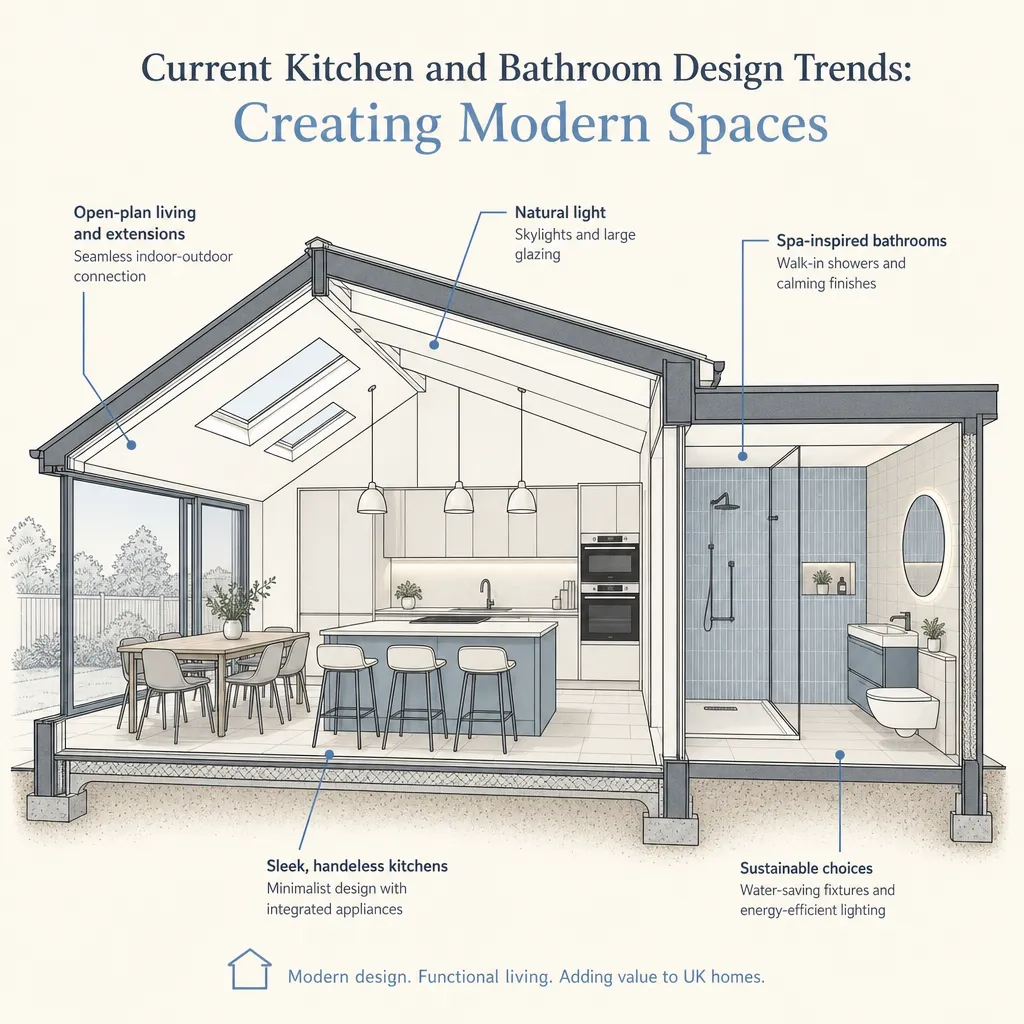
Current Kitchen and Bathroom Design Trends: Creating Modern Spaces
Kitchens and bathrooms are the two rooms most closely scrutinised by buyers, mortgage valuers, and the people who use them daily. A dated kitchen can suppress an estate agent's valuation, while a well-designed bathroom can transform a cramped Victorian terrace into a genuinely comfortable home. Whether you are planning a kitchen-diner extension or a bathroom refresh before listing your property, understanding which design choices have lasting appeal — and which date quickly — helps you allocate your budget wisely.
Key points
- Open-plan kitchen-dining extensions often qualify as permitted development under Class A: single-storey rear extensions up to 8 m deep (detached) or 6 m (semi-detached and terraced), subject to the prior approval notification process for the larger dimensions.
- Handleless cabinetry using J-pull or push-to-open mechanisms accounts for a growing share of fitted kitchen orders in the UK, partly because it reduces cleaning effort and photographs well in estate agent listings.
- Wet rooms require waterproofing systems compliant with BS 8102 and drains meeting BS EN 1253 — a botched wet room is among the costliest bathroom defects to correct retrospectively.
- Building Regulations Part F requires a minimum 15 litres per second of extract ventilation in bathrooms — ventilation specification is often overlooked during cosmetic redesigns.
- Bespoke larder units and integrated pantry storage are returning to favour as homeowners shift from purely visual kitchens to practical layouts that support real meal-preparation habits.
Open-plan kitchen-dining: what works and what to watch
The open-plan kitchen-diner remains the most requested layout in UK renovation briefs — particularly in 1930s semis and Victorian terraces where a single-storey rear extension connects kitchen to garden. The benefits are well understood: borrowed light, sociable cooking, and a sense of space that can add measurable value per square metre.
Current design direction has moved towards zoning within open-plan layouts. Rather than one undifferentiated open room, designers now use ceiling height changes, pendant clusters, contrasting floor materials, and cabinetry peninsulas or islands to define cooking, dining, and relaxed-living zones. A kitchen island with a waterfall-edge worktop serves as both prep station and visual anchor — though it requires a minimum 1,000 mm of clear circulation on working sides.
What not to assume
- Removing a load-bearing wall between kitchen and dining room requires structural engineer input and a Building Regulations application — it is not a permitted development matter and should never be attempted without structural calculations.
- Not every rear extension qualifies for permitted development; conservation areas, Article 4 directions, and previous extensions that have consumed the permitted envelope change the calculation entirely.
- Open-plan spaces can increase heating costs if insulation and glazing specifications are not carefully managed; discuss thermal performance with your designer before committing to a layout.
Current kitchen design trends worth considering
Trend | Best suited for | Watch out for |
|---|---|---|
Handleless cabinetry (J-pull, push-to-open) | Modern and minimalist kitchens; easy daily cleaning | Push-to-open dampers can fail on heavy doors |
Painted Shaker-style timber | Period properties; country and transitional settings | Brush marks on low-quality paint; periodic repainting needed |
Two-tone cabinetry (dark lower, light upper) | Mid-century or eclectic interiors | Colour combinations can date if chosen too trendily |
Fluted glass cabinet inserts | Display units and larder doors | Shows fingerprints; poor choice adjacent to a hob |
Fully integrated appliances | Any kitchen where clean sightlines matter | Higher initial cost; repair access can be restricted |
Quartz composite worktops | Busy households prioritising durability | Seams visible on long runs; cutout joints need expert fitting |
Colour direction in 2026: deep greens (sage, forest), warm whites, and greyed blues are outperforming stark white, which many designers now associate with a dating 2010s aesthetic. Terracotta and brick tones are appearing as accent colours on islands in otherwise neutral Shaker kitchens.
Bathroom design: from functional to spa-like
The defining shift in UK bathroom design over recent years has been the move from purely functional rooms to spaces homeowners genuinely want to spend time in. Key trends driving this shift include:
- Walk-in showers and wet rooms taking precedence over baths, particularly in en-suites — though a family bathroom retaining a full bath typically performs better in sales of family homes.
- Freestanding baths in principal bathrooms where floor area allows (typically requiring at least 1,800 × 800 mm for the bath plus access clearance on all sides).
- Fluted and ribbed tiles, which add tactile interest and light-play without complex patterning; popular in floor-to-ceiling shower enclosures and as feature walls behind vanity units.
- Matt black and brushed brass brassware, which have largely replaced chrome in mid-range and premium renovations; chrome remains practical where lower-maintenance finishes are preferred.
- Concealed cisterns and wall-hung sanitaryware, which simplify cleaning and give a streamlined visual line — particularly useful in compact UK bathrooms.
Wet room installation checklist
Before specifying a wet room, confirm the following with your contractor:
Finishes that last versus trends that date
Choices that tend to age well
- Neutral grout colours (pale grey or white between wall tiles) age more gracefully than charcoal or bold grouts.
- Simple, well-proportioned tile formats over complex feature patterns.
- Matte or satin kitchen cabinet finishes in neutral or muted tones.
- Solid timber or stone details used sparingly as accents rather than as dominant surfaces.
What to avoid for longevity
- Standard wallpaper in bathrooms — unless humidity-rated for wet areas, it will delaminate rapidly in steam-prone positions near showers.
- Ultra-thin worktops (under 20 mm) in kitchens used for heavy cooking — they crack at cutouts and require precise cabinetry support.
- Dark matt laminate surfaces near hobs — oil residue is extremely difficult to remove from some finishes.
- Overly distinctive statement fixtures that suit a very specific aesthetic and cannot be updated without a full refurbishment.
When to get professional help
Kitchen and bathroom projects involving structural changes, drainage alterations, wet room waterproofing, or extension works require qualified professionals — not only experienced tradespeople.
Red flags that require specialist input:
- Any wall removal between kitchen and an adjacent room (structural engineer required before drawings are submitted to building control).
- Wet room installation on a suspended timber floor without expert advice on membrane detailing and structural loading.
- Relocation of a soil stack or drainage alterations affecting a shared or adoptable drain run.
- Kitchen extraction penetrating an external or party wall (may require planning consent or a party wall notice).
- Any bathroom or kitchen work within a listed building or conservation area where materials and fittings may be restricted.
How Housey can help
If your kitchen or bathroom project involves an extension or structural alteration, connecting with an experienced design-and-build firm from the outset saves time and reduces the risk of misaligned trades. For projects combining kitchen-diner extensions with structural and building control coordination, the extension builders listed on Housey can manage the full scope from design through to completion.
Frequently asked questions
Do kitchen and bathroom renovations add value to a UK home?
Kitchens and bathrooms consistently rank among the top value-influencing renovations in UK estate agent guidance, though the return varies by location, property type, and finish quality. A well-executed kitchen extension in a high-demand area tends to recover costs more readily than a cosmetic refresh in a lower-value market. RICS-registered valuers typically note the condition of both rooms when forming a market valuation.
Does a bathroom wet room need building regulations approval?
Structural changes, drainage alterations, and electrical work associated with a wet room project typically require building regulations approval or certification by a competent person scheme. The waterproofing membrane itself does not trigger notification, but associated plumbing and electrical works usually do. Confirm the full scope with your local authority building control or an approved inspector before starting work.
How long does a full kitchen renovation take in the UK?
A kitchen replacement without structural work typically takes one to three weeks. A kitchen-diner extension involving structural works, drainage alterations, and new fitting-out can take eight to twenty weeks, depending on planning approvals, structural requirements, and the number of trades coordinated.
What is the difference between a wet room and a walk-in shower?
A wet room is a fully tanked (waterproofed) bathroom where the shower is open to the room and the entire floor drains. A walk-in shower uses a low-profile tray or partial enclosure, with waterproofing limited to the shower zone. Wet rooms cost more and require more rigorous installation but offer superior accessibility and a cleaner aesthetic.
Sources and further reading
Useful next reads
 Improvement & Build
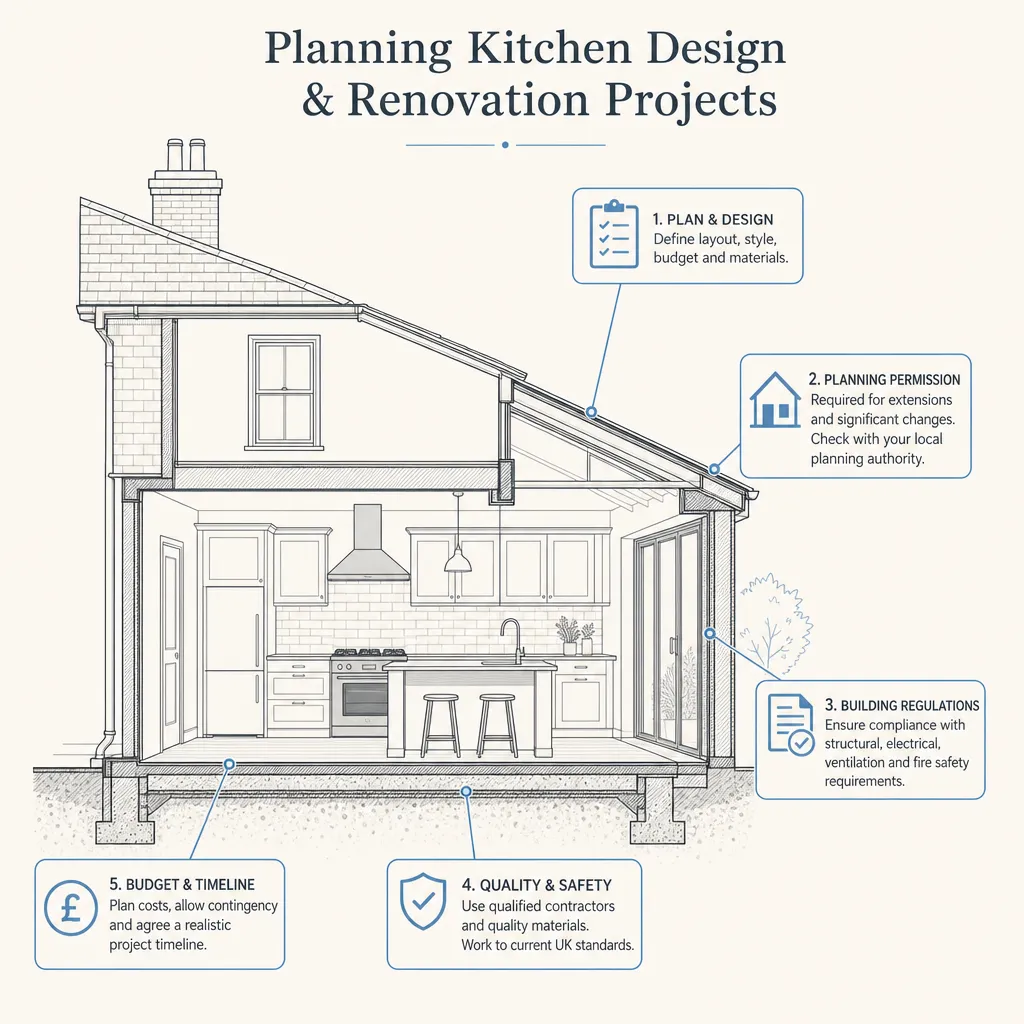
Planning kitchen design and renovation projects
Planning a kitchen renovation in the UK typically involves choosing a layout, setting a budget, deciding which contractors you need, and understanding which regulations apply.
 Improvement & Build
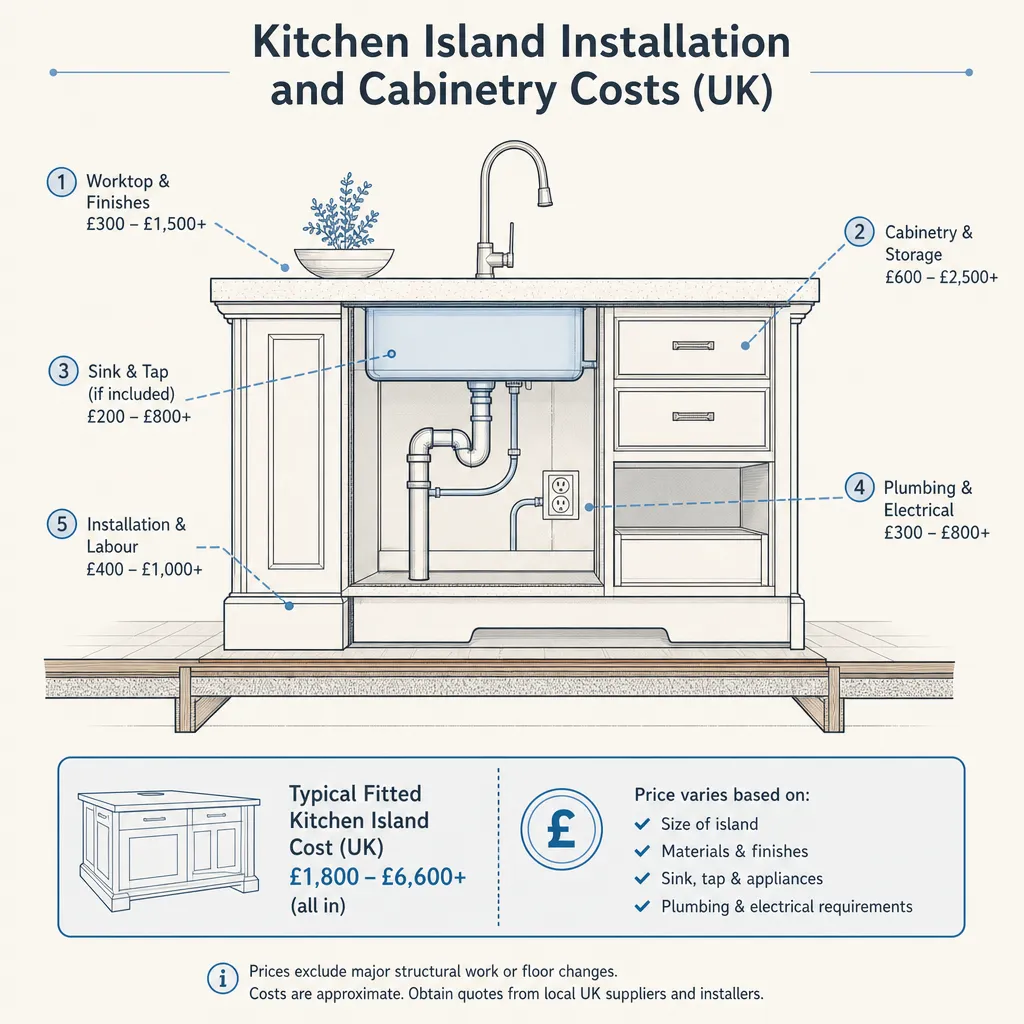
Kitchen Island Installation and Cabinetry Costs
A freestanding kitchen island costs £200–£2,000; a fitted island with full cabinetry and a worktop typically costs £4,000–£10,000 including labour.
 Improvement & Build
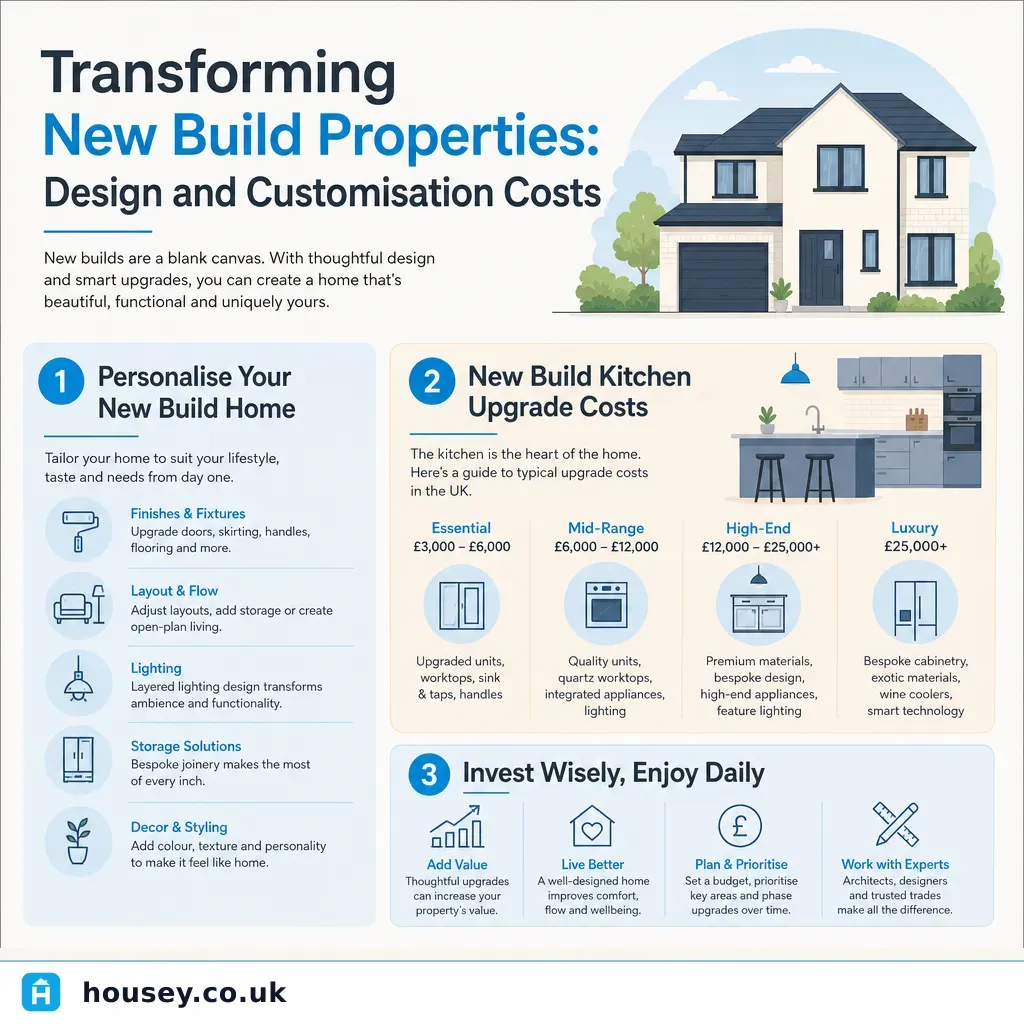
Transforming New Build Properties: Design and Customisation Costs
Transforming a new build typically costs between £5,000 and £50,000 or more depending on scope — from cosmetic upgrades like flooring and paint to full kitchen replacements or rear extensions.
 Improvement & Build
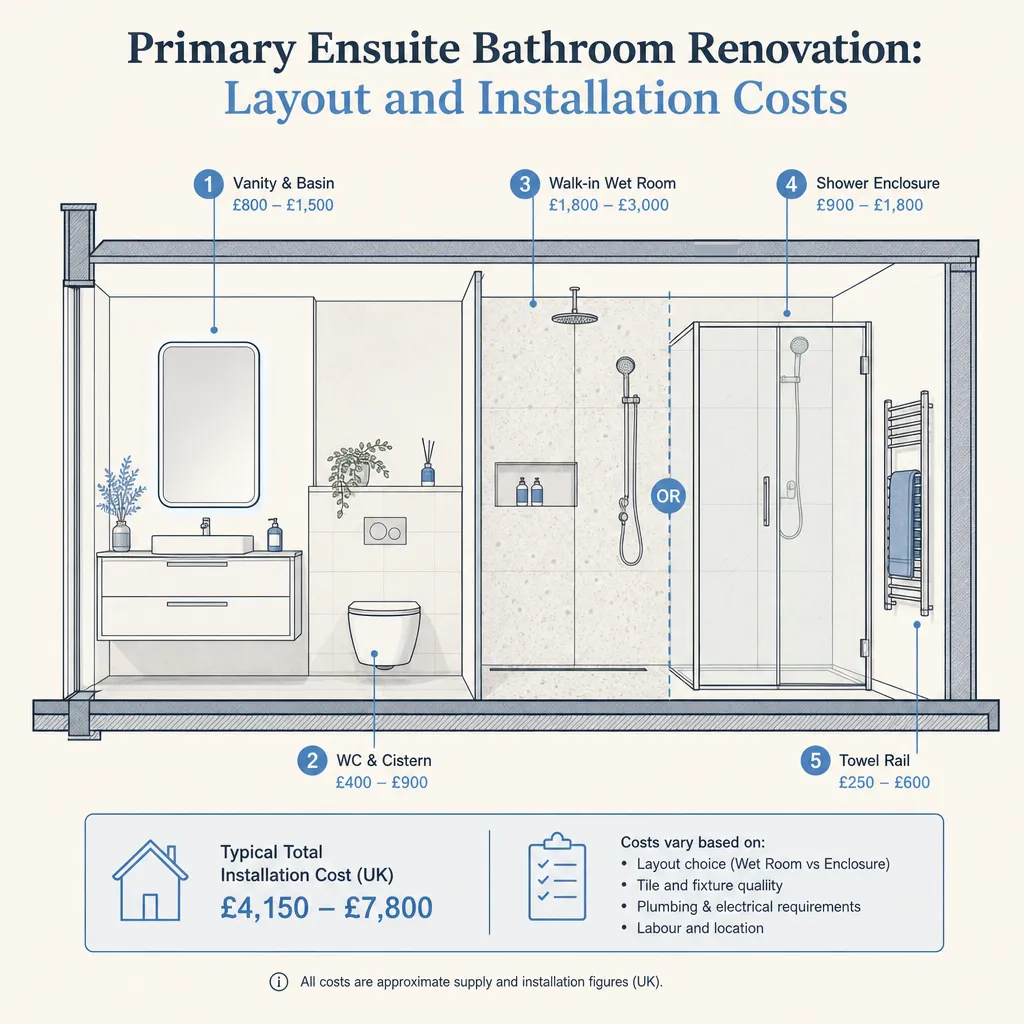
Primary Ensuite Bathroom Renovation: Layout and Installation Costs
A primary ensuite renovation in the UK typically costs between £3,000 and £12,000, depending on size, layout, and specification.
 Improvement & Build
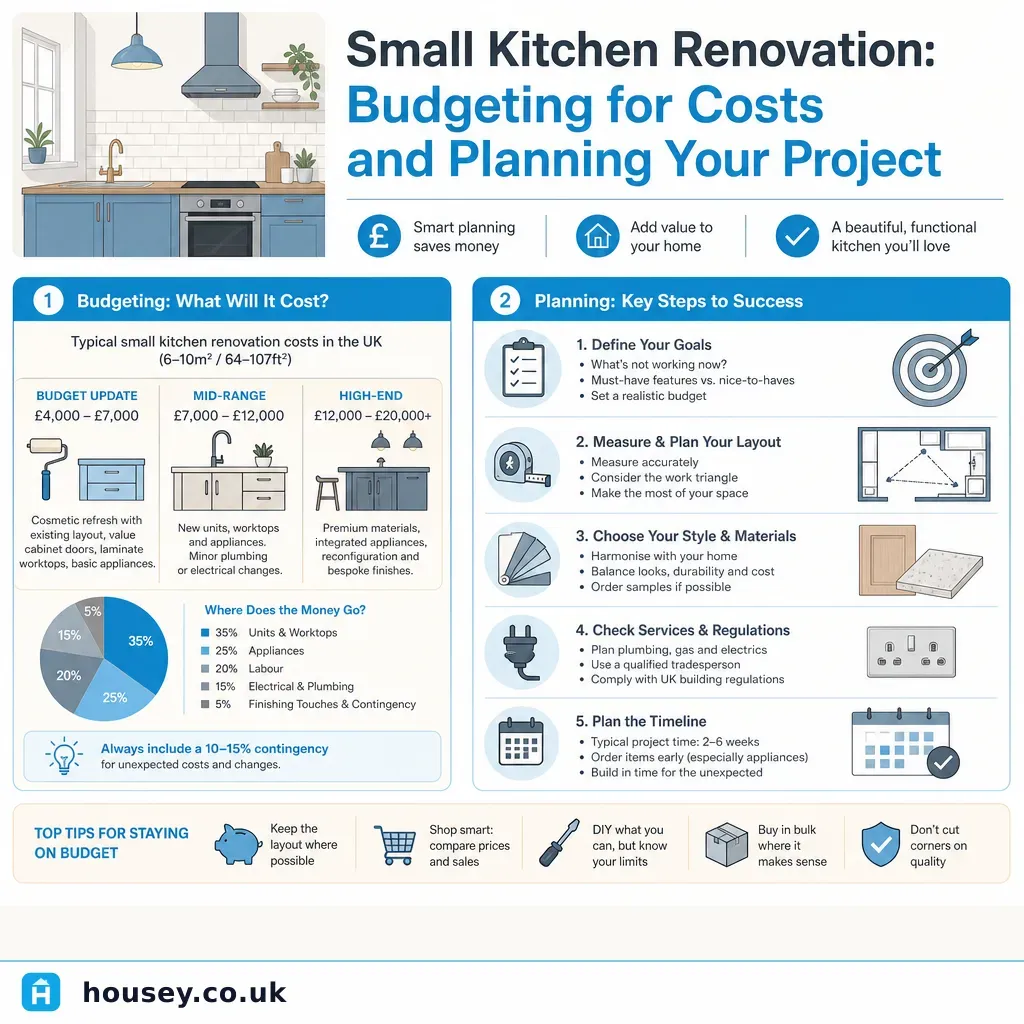
Small kitchen renovation: budgeting for costs and planning your project
A small kitchen renovation in the UK typically costs £5,000–£15,000 for a full refresh including new units, worktops, tiling, and appliances, though costs vary widely by specification, region, and whether structural changes or rewiring are involved.