Kitchen Island Installation and Cabinetry Costs
By Housey · Last reviewed 7th of May 2026
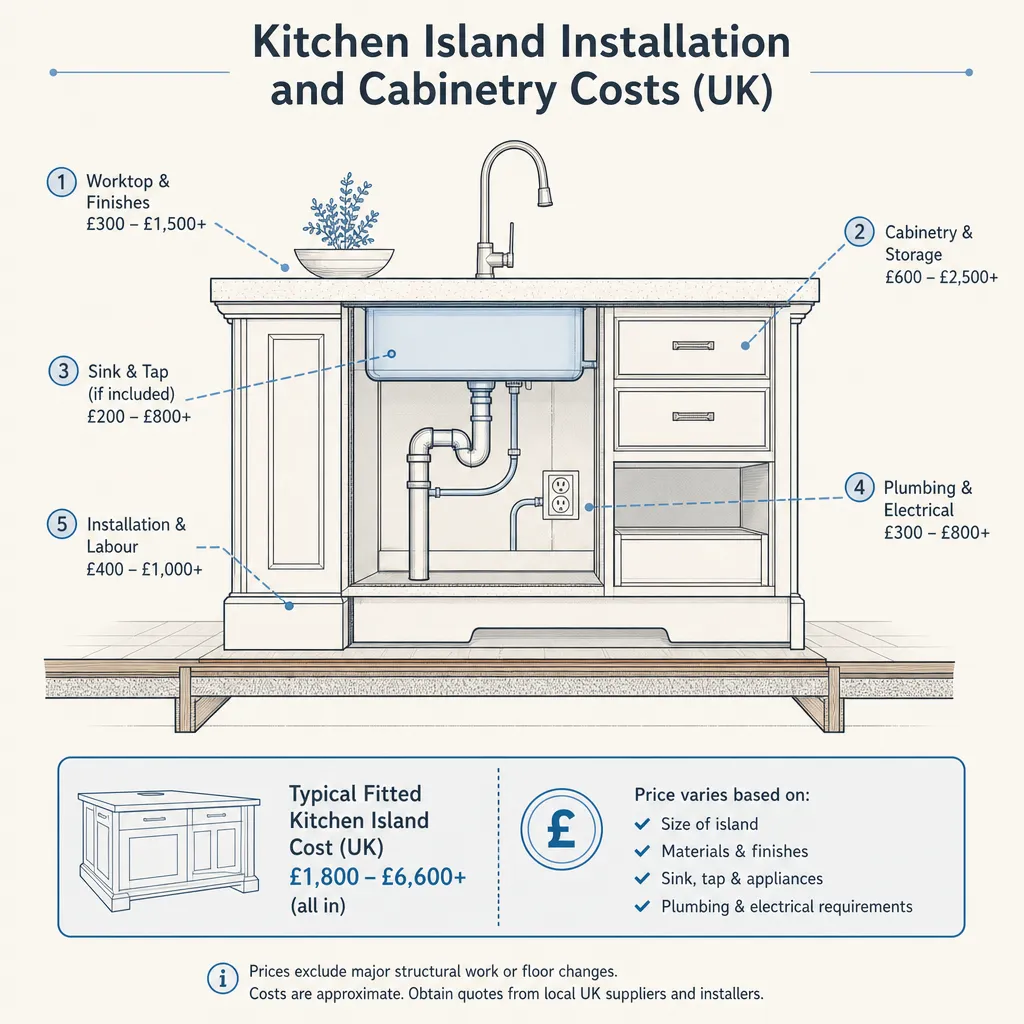
Kitchen Island Installation and Cabinetry Costs
A kitchen island is one of the most significant additions a UK homeowner can make to a kitchen — it adds worktop space, storage, and often a social focal point for family life. The question of cost typically arises during a kitchen refit, a house extension, or when reorganising an existing open-plan space. The range is genuinely wide: from a freestanding butcher's block at a few hundred pounds to a fully bespoke fitted island with integrated cabinetry, a stone worktop, and plumbed utility connections costing well into five figures. Understanding which option suits your kitchen, and what each element costs, is the starting point for any meaningful quote comparison.
Key points
- Freestanding kitchen islands start from around £200–£500 for flat-pack or off-the-shelf units; bespoke fitted islands with full cabinetry and a worktop typically cost £3,000–£15,000 supply and fit (indicative UK costs, last reviewed 2026-05-07).
- Adding a sink or hob to an island requires both plumbing and electrical work by qualified tradespeople; this typically adds £800–£3,000 depending on access and route complexity.
- Kitchen islands positioned with seating require a minimum clearance of 900 mm on all working sides — confirm this against your kitchen dimensions before committing to a size or ordering cabinetry.
- Building Regulations Approved Document P applies to any new electrical circuit installed in a kitchen island; work must be carried out by a registered electrician (NICEIC, NAPIT, or equivalent) or formally notified to the local building control authority.
- A fitted island that is permanently fixed to the floor and plumbed in counts as a fixture for conveyancing purposes; include it in the fixtures and fittings schedule if you sell the property.
Freestanding vs fitted: which option suits your kitchen?
The first decision is whether to choose a freestanding or permanently fitted island. Each carries distinct cost, flexibility, and trade-involvement implications.
Feature | Freestanding island | Fitted island with cabinetry |
|---|---|---|
Typical cost | £200–£2,000 | £3,000–£15,000+ |
Trades required | None (self-assembly possible) | Kitchen fitter; often plumber and electrician |
Planning permission | Not required | Not required (unless part of an extension) |
Flexibility | Can be moved or resold | Permanent fixture |
Storage quality | Limited cabinetry options | Full drawer and cupboard configuration |
Worktop | Usually bundled in price | Specified and priced separately |
Best for | Rental properties, smaller kitchens, shorter-term stays | Owner-occupied homes, open-plan extensions, long-term use |
What does a fitted kitchen island cost?
Fitted kitchen island costs break into four main components: cabinetry units, worktop, installation labour, and utility connections (plumbing and electrical where needed).
Indicative UK costs, last reviewed 2026-05-07.
Component | Budget | Mid-range | Premium |
|---|---|---|---|
Cabinetry units (supply only) | £500–£1,500 | £1,500–£4,000 | £4,000–£12,000+ |
Worktop (supply only) | £150–£400 (laminate) | £400–£900 (quartz/granite) | £900–£3,000+ (stone slab) |
Cabinet installation labour | £500–£1,000 | £1,000–£2,000 | £2,000–£4,000 |
Plumbing — sink connection | £400–£900 | £700–£1,500 | £1,000–£2,500 |
Electrical — sockets or hob circuit | £300–£600 | £500–£1,200 | £800–£2,000+ |
Flooring repair or extension to island area | £100–£400 | £300–£800 | £500–£1,500 |
Indicative total | £1,500–£4,000 | £4,500–£10,500 | £12,000–£25,000+ |
Worktop material options compared
The worktop accounts for a significant share of both cost and appearance. Choosing the material early prevents surprises after cabinetry has been ordered, as fabrication cutouts for sinks and hobs add to cost.
Material | Approximate supply cost | Durability | Maintenance |
|---|---|---|---|
Laminate | £80–£200/linear m | Moderate | Low — wipe clean; avoid sharp knives directly on surface |
Solid wood (oak, walnut) | £150–£400/linear m | Good with care | Requires periodic oiling; avoid prolonged water contact |
Quartz composite | £250–£600/linear m | High | Very low; resistant to staining |
Granite | £200–£500/linear m | Very high | Seal annually; heavy to handle during installation |
Porcelain slab | £250–£700/linear m | Very high | Very low; heat and scratch resistant |
Dekton / sintered stone | £300–£800/linear m | Exceptional | Very low; UV stable for island areas near glazing |
Indicative UK supply-only costs, last reviewed 2026-05-07. Fabrication and fitting typically adds £200–£600 depending on the number of cutouts for sinks and hobs.
A worked UK property example
An open-plan kitchen in a 2010s new-build terrace in the North West, being reconfigured as part of a single-storey extension.
The homeowners want a fitted island approximately 2,400 mm × 900 mm with four base units, a quartz worktop, a single integrated sink with dishwasher beneath, and two double plug sockets on the island face.
Item | Cost |
|---|---|
4 × base cabinet units (mid-market flat-pack, supply) | £1,200 |
Quartz worktop 2.6 m² (supply, fabrication, and fit) | £1,560 |
Cabinet assembly and installation labour | £900 |
Plumber: sink connection and dishwasher waste (half day) | £350 |
Part P electrician: 2 island double sockets with RCD protection (1 day) | £550 |
Decorative end panels and island leg panels | £280 |
Total (ex-VAT) | £4,840 |
VAT at 20% | £968 |
Total (inc. VAT) | £5,808 |
Indicative only. Actual costs will vary by region, specification, and site access. Obtain at least three written quotes.
Decision tree: which type of island do you need?
Work through these questions before approaching any tradespeople or kitchen suppliers.
- Choose a freestanding island if your kitchen is smaller than 12 m², you rent the property, or you want the flexibility to change the layout in the future without losing money.
- Choose a fitted island if you have a kitchen of 15 m² or more with at least 900 mm clear on all working sides, you own the property, and you plan to stay for five or more years.
- Add a sink or hob only after confirming with a qualified plumber and Part P electrician that services can be practically routed to the island location — check access under floors and through walls before ordering any cabinetry.
- Commission bespoke cabinetry if you need non-standard dimensions, unusual materials, or integrated appliances such as a wine fridge, drawer dishwasher, or warming drawer that off-the-shelf units cannot accommodate.
- Consult a kitchen designer if the island is part of a wider kitchen redesign; design fees of £200–£1,500 can prevent costly mistakes in layout, traffic flow, and appliance positioning.
- Check your lease if the property is leasehold — some leases require written freeholder consent for alterations that affect plumbing or the kitchen's structural layout.
Homeowner checklist: before installation
When to get professional help
Kitchen island installations are generally low-risk domestic improvements, but some elements require qualified professionals by law or for safety:
- Electrical circuits: Any new circuit serving the island must comply with Building Regulations Approved Document P and be certified by a registered electrician (NICEIC, NAPIT, or equivalent). Do not install new circuits yourself unless you are a qualified electrician.
- Plumbing connections: A qualified plumber should carry out all supply and waste connections to a sink or dishwasher. Poor connections can cause concealed water damage to cabinetry and flooring that may not be visible until significant harm has occurred.
- Structural openings: If the island sits in an open-plan space created by removing a wall, confirm with a structural engineer that any beam or padstone above the opening is correctly specified — this is entirely separate from the island installation itself.
- Leasehold properties: Check whether alterations affecting plumbing or kitchen layout require the freeholder's written consent under the lease terms before commissioning any work.
How Housey can help
If your kitchen island project is part of a larger renovation — such as a single-storey extension to create an open-plan kitchen-diner — Housey can help you find and compare quotes from local professionals. Request quotes from extension builders who can coordinate structural work, fit-out, plumbing, and electrical installation together under a single managed project.
Frequently asked questions
How much does a kitchen island cost in the UK?
A freestanding island can cost as little as £200–£500. A mid-range fitted island with cabinetry, a quartz worktop, and no plumbing typically costs £4,000–£8,000 including labour. Adding a sink, hob, or integrated appliances increases costs to £8,000–£15,000 or more. Indicative UK costs, last reviewed 2026-05-07; get written quotes for your specific kitchen.
Does a kitchen island add value to a property?
A well-designed island in a correctly sized kitchen is generally viewed positively by buyers, particularly in open-plan layouts. However, an oversized island in a small kitchen can feel cramped and may reduce appeal. Value added depends on the local market, finish quality, and how well the island suits the property's overall layout and flow.
Do I need planning permission for a kitchen island?
A kitchen island itself does not require planning permission. However, if it forms part of a wider kitchen extension, that extension may require permission depending on its size and your property's permitted development rights. Check with your local planning authority if the island is associated with any external structural changes.
What size should a kitchen island be?
A common fitted island size is 2,400 mm × 900 mm, but dimensions should be guided by the clearances available. Allow at least 900 mm on all working sides and 1,200 mm if two people will frequently work alongside each other or if bar seating is planned. Always measure carefully before ordering cabinetry.
Can I add a sink to a kitchen island?
Yes, but it requires a qualified plumber to run a water supply and waste pipe to the island's location. In many UK kitchens this involves lifting floorboards or routing pipes through cabinetry. Get a plumber involved at the planning stage to confirm feasibility and cost before ordering cabinets or a worktop with a sink cutout.
Sources and further reading
- VAT Notice 708: buildings and construction — HM Revenue & Customs
- Approved Document P: electrical safety in dwellings — Ministry of Housing, Communities and Local Government
- Find a registered electrician — NICEIC
- Getting building or decorating work done — Citizens Advice
Useful next reads
 Improvement & Build
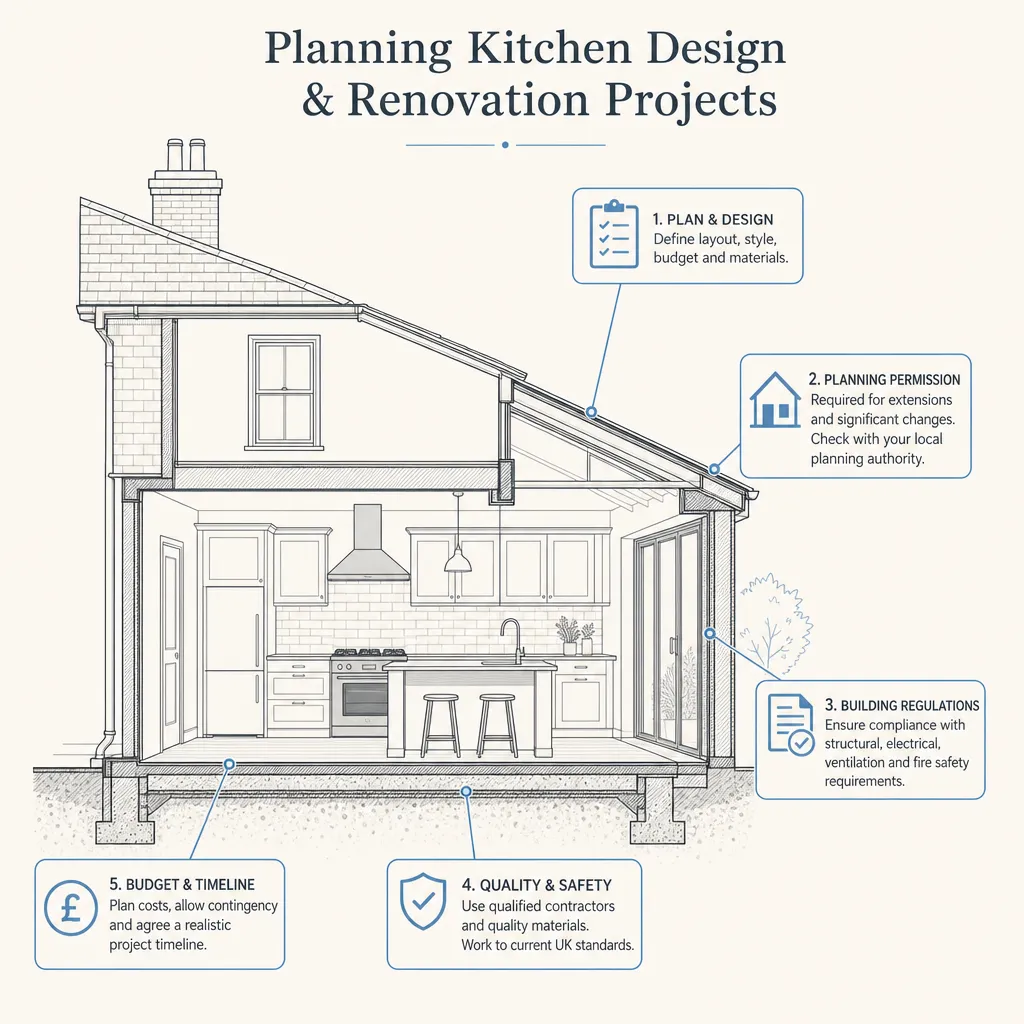
Planning kitchen design and renovation projects
Planning a kitchen renovation in the UK typically involves choosing a layout, setting a budget, deciding which contractors you need, and understanding which regulations apply.
 Improvement & Build
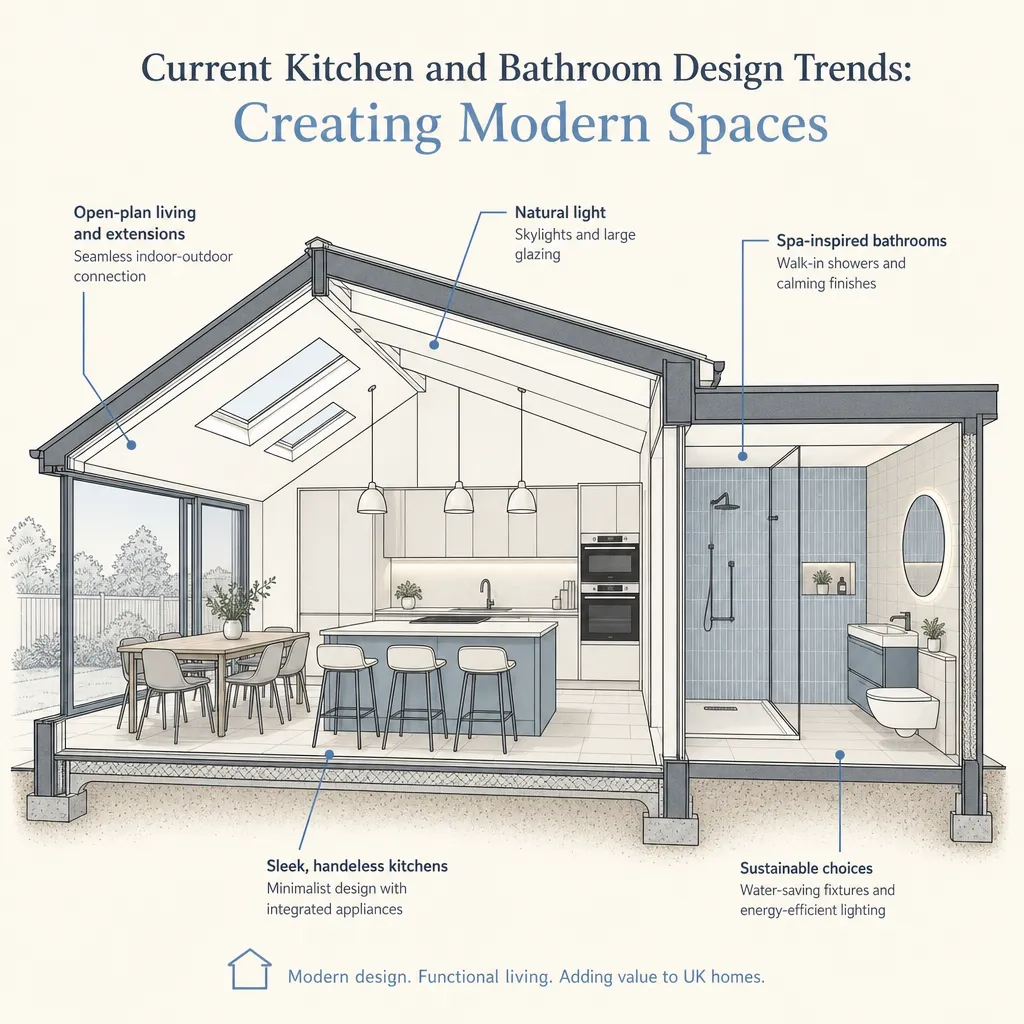
Current Kitchen and Bathroom Design Trends: Creating Modern Spaces
In 2026, UK kitchen design favours open-plan layouts, handleless cabinetry, and quartz composite worktops, while bathrooms trend towards walk-in showers, freestanding baths, and fluted tiles.
 Improvement & Build
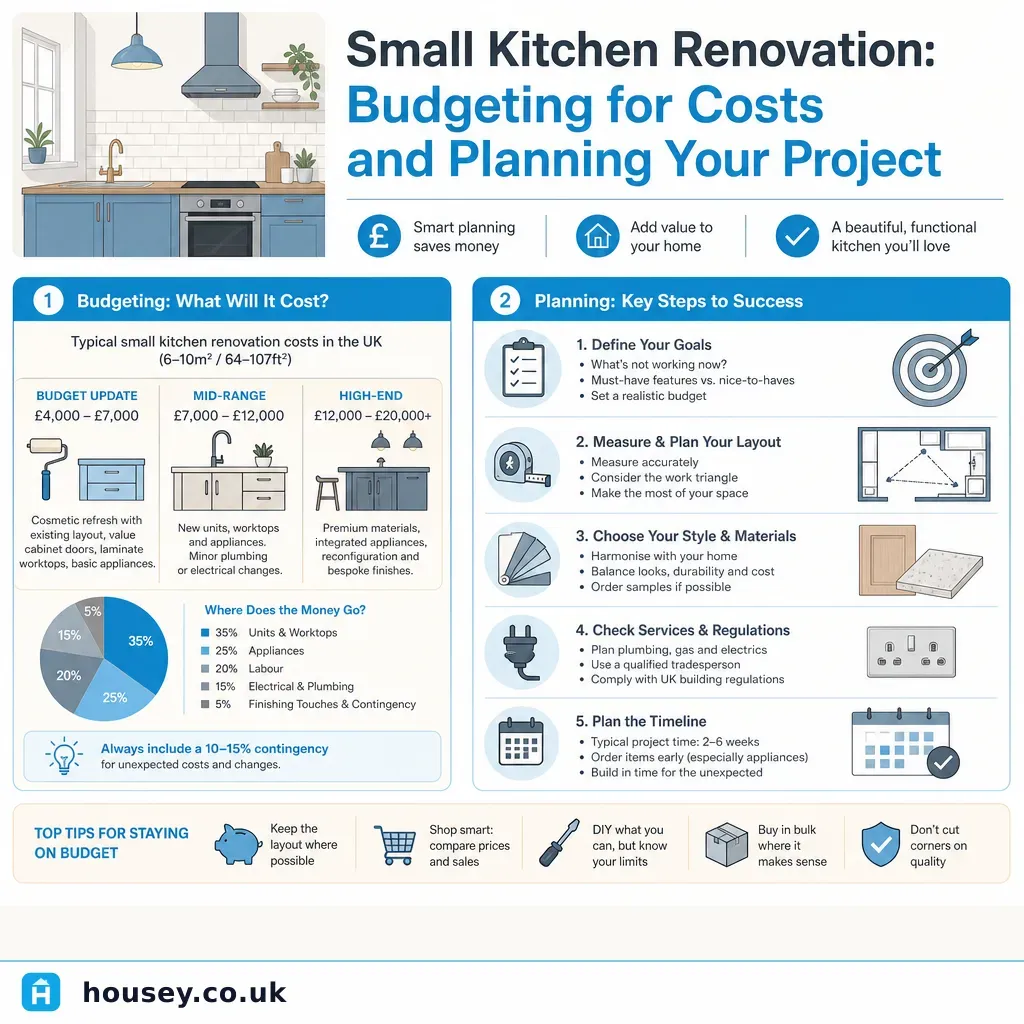
Small kitchen renovation: budgeting for costs and planning your project
A small kitchen renovation in the UK typically costs £5,000–£15,000 for a full refresh including new units, worktops, tiling, and appliances, though costs vary widely by specification, region, and whether structural changes or rewiring are involved.
 Improvement & Build
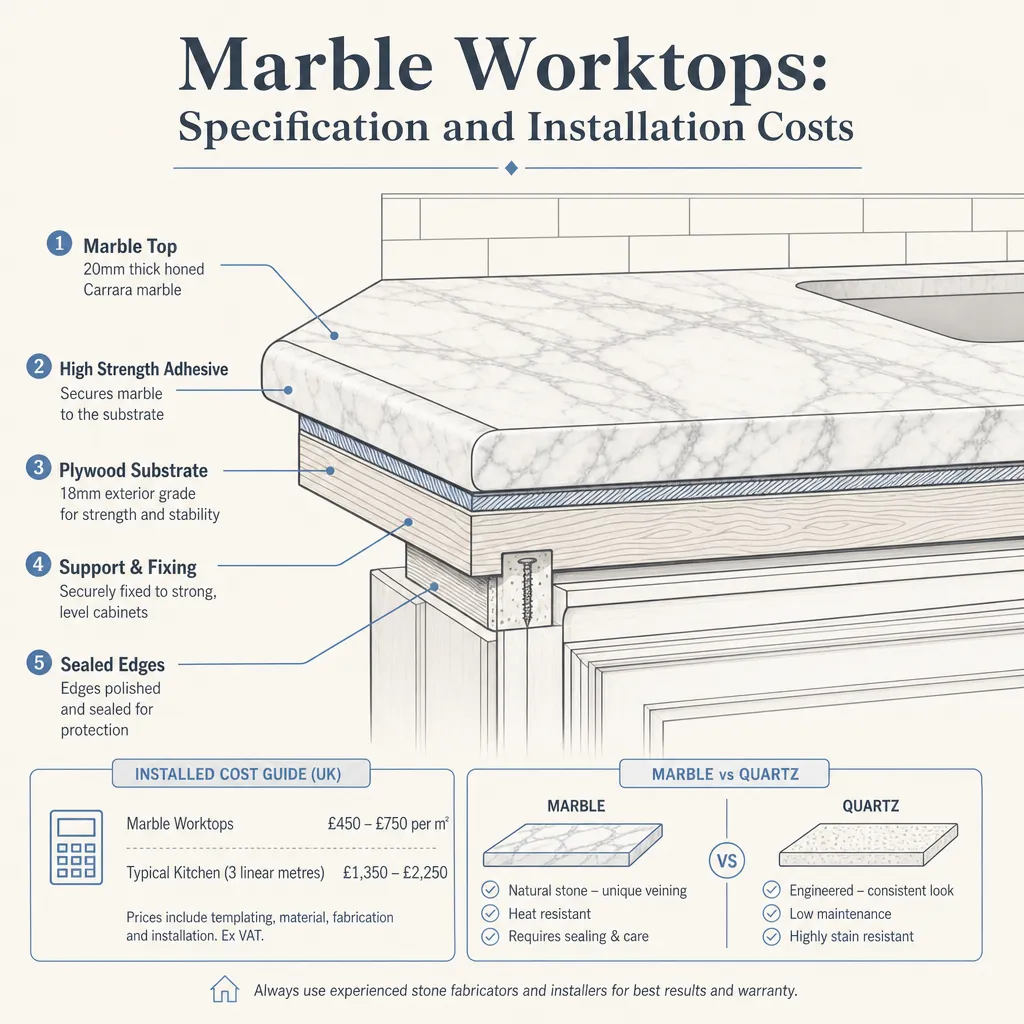
Marble Worktops: Specification and Installation Costs
Marble worktops in the UK typically cost £300–£800 per linear metre installed, depending on marble grade, slab thickness, finish, and edge profile.
 Improvement & Build
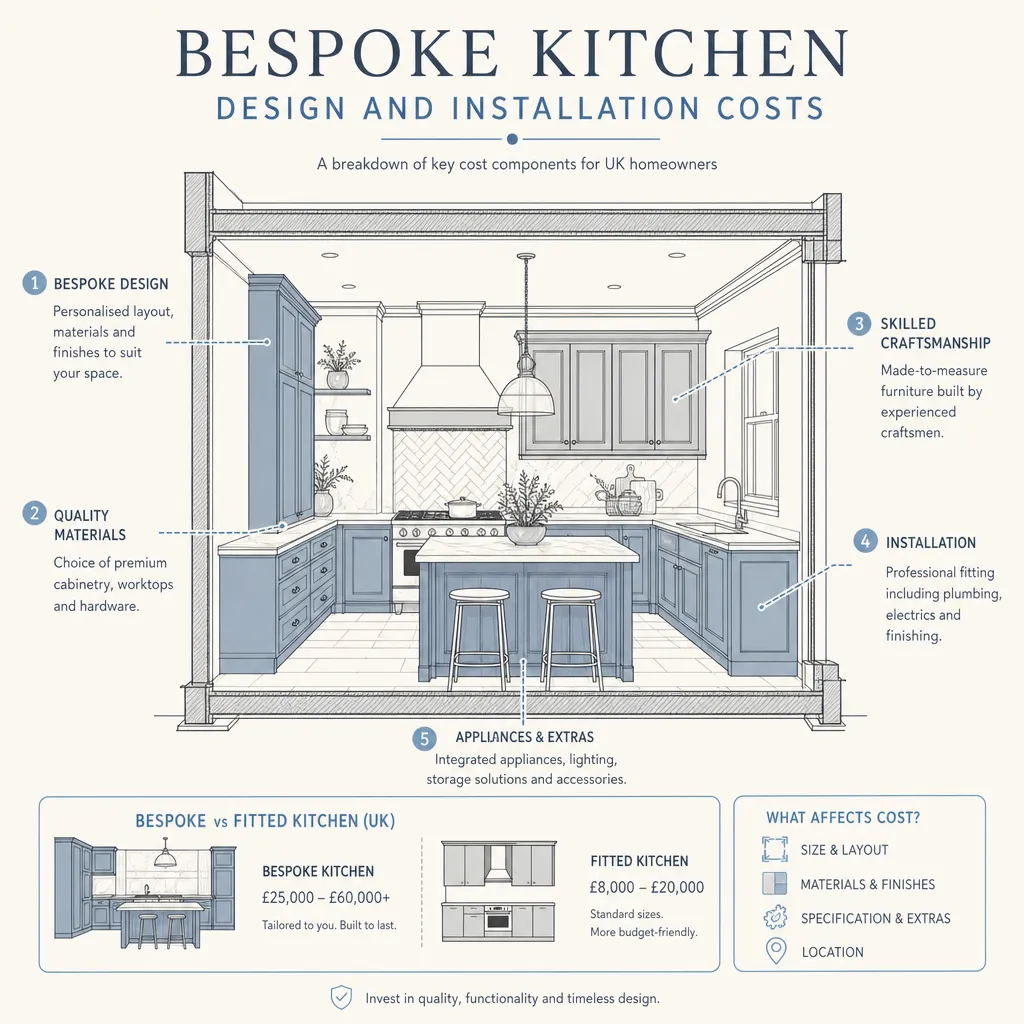
Bespoke Kitchen Design and Installation Costs
Bespoke kitchens in the UK typically cost £15,000–£60,000+ for design, cabinetry, worktops, and installation combined, with high-end commissions reaching £100,000 or more.