Custom Concrete Homes: Design, Building, and Considerations
By Housey · Last reviewed 24th of May 2026
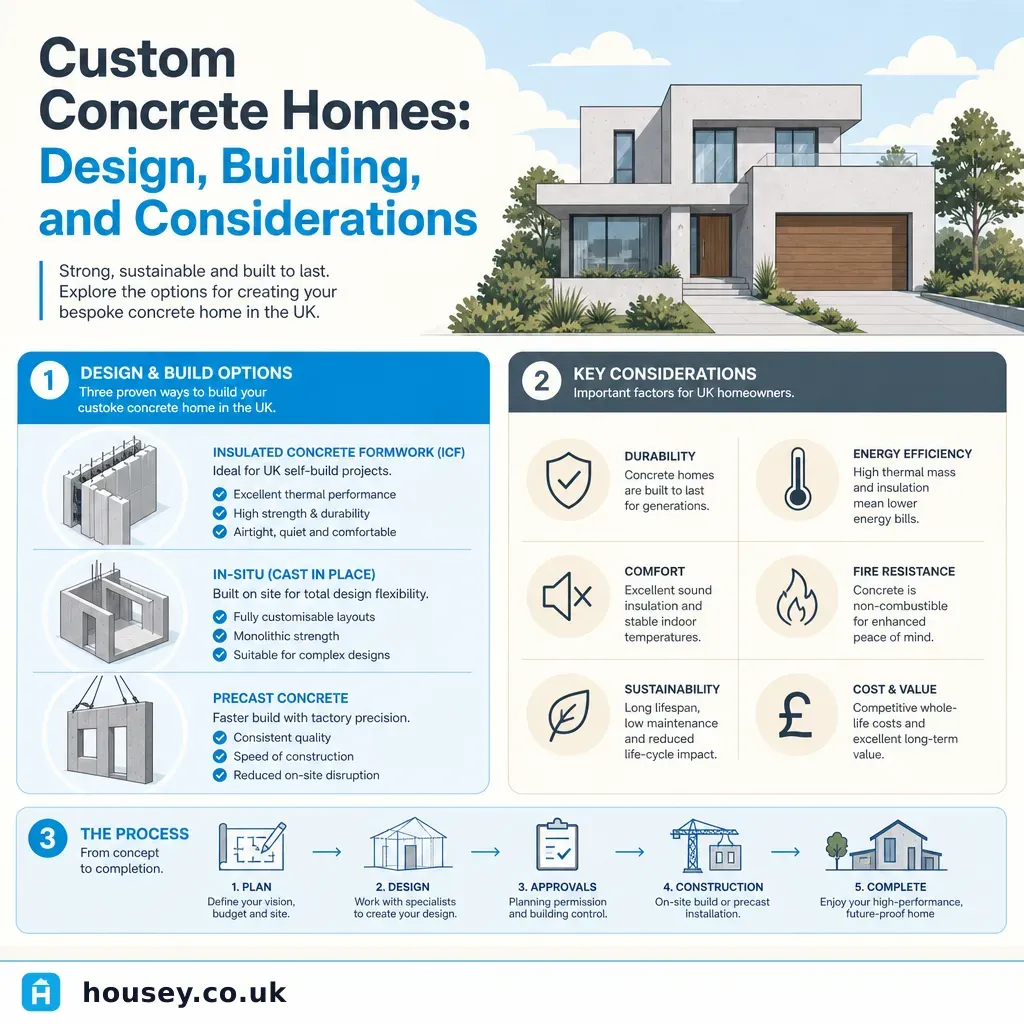
Custom Concrete Homes: Design, Building, and Considerations
Concrete homes sit outside the mainstream of UK timber-frame and masonry construction, but they are attracting growing interest from self-builders and developer-clients seeking structural longevity, high thermal mass, and architectural distinctiveness. The path from concept to completion is more complex than a conventional build, requiring a professional team with specific experience in concrete systems and a clear understanding of UK planning and building regulations.
Key points
- Insulated Concrete Formwork (ICF) is the most common method for UK concrete self-builds, using expanded polystyrene (EPS) formwork blocks that remain in place as permanent insulation after the concrete is poured.
- ICF walls typically achieve U-values of 0.17–0.22 W/m²K depending on block type and configuration — comfortably below the Approved Document L notional standard for new-build external walls.
- Precast concrete panel systems are manufactured off-site and craned into position, reducing on-site programme time but requiring higher upfront engineering coordination and factory lead-in time.
- All concrete home designs require full structural engineering input, building regulations approval, and planning permission under the Town and Country Planning Act 1990 in most circumstances.
- Post-war prefabricated reinforced concrete (PRC) homes — types such as Airey and BISF — are designated defective under the Housing Defects Act 1984 and are a categorically different issue from modern concrete construction.
What types of concrete construction are used for custom homes?
Insulated Concrete Formwork (ICF)
ICF is the most widely adopted approach for bespoke concrete homes in the UK. Hollow EPS blocks or panels are stacked to form the wall profile and filled with poured concrete. The EPS formwork remains in place as continuous insulation on both faces of the wall. Key advantages include:
- Good airtightness — the continuous concrete pour minimises gaps and cold bridges at the wall core
- High thermal mass — the concrete core absorbs and re-releases heat slowly, moderating internal temperature swings
- Strong acoustic performance — useful for plots near roads, railways, or in dense urban settings
- Structural robustness — particularly appropriate for exposed coastal or high-wind sites
ICF is well-established with UK building control authorities and has published technical guidance from the Concrete Centre and major ICF system manufacturers.
Precast concrete panels
Factory-produced wall, floor, and sometimes roof panels are delivered to site and craned into position. Precast suits rectilinear designs and developer-led projects where off-site quality control and weather-independence are priorities. Factory production lead-in time must be carefully factored into the project programme.
In-situ poured concrete
Traditional poured concrete using temporary timber or steel formwork is highly flexible for sculpted, complex, and architecturally ambitious designs. It is more labour-intensive than ICF, and formwork removal must be carefully sequenced. This approach is generally favoured by architects designing statement homes where geometric freedom is the overriding priority.
Hybrid approaches
Many custom concrete homes combine systems — for example, ICF ground and first floors with a structural timber roof, or an in-situ concrete frame with masonry or timber infill panels. The optimal combination depends on design intent, site conditions, structural requirements, and budget.
Method | Design flexibility | On-site speed | Structural engineering input | Typical use case |
|---|---|---|---|---|
ICF | Moderate | Fast | Standard — follow manufacturer's system | Self-build, high-performance homes |
Precast panels | Low–moderate | Very fast | High — factory design stage | Developer-led, rectilinear designs |
In-situ poured concrete | High | Slower | High — bespoke design required | Architecturally complex, statement builds |
Hybrid (concrete + timber) | High | Moderate | Variable | Complex designs balancing cost and performance |
Planning and building regulations
A custom concrete home is treated the same as any other new residential dwelling for planning purposes. Planning permission under the Town and Country Planning Act 1990 is required in England for most new-build dwellings; equivalent legislation applies in Scotland, Wales, and Northern Ireland under their respective planning regimes.
Key planning considerations include:
- Local plan policy: new dwellings in open countryside are generally resisted except in specific circumstances such as agricultural ties or rural exception sites. Local authorities maintain self-build and custom housebuilding registers under the Self and Custom Build Housebuilding Act 2015, which may support access to suitable plots.
- Design and materials: some local planning authorities require materials that respond to local character or vernacular. Exposed architectural concrete may require additional design justification in sensitive landscapes, conservation areas, or near listed buildings.
- Building Regulations: full compliance with Approved Document A (Structure), Part B (Fire Safety), Part C (Site Preparation and Resistance to Moisture), Part E (Acoustic), Part F (Ventilation), and Part L (Energy) is required. An approved building control inspector must be engaged before structural work begins.
Design considerations for concrete homes
Thermal mass and heating strategy
Concrete's high thermal mass is an advantage in a well-insulated, tightly controlled building but requires a compatible heating strategy. Wet (hydronic) underfloor heating — particularly when designed for use with a heat pump at low flow temperatures — is the standard pairing with concrete floors and walls. Radiators are generally less effective in high-mass buildings because quick-cycle heat-up does not suit the slow thermal response of concrete surfaces.
Airtightness and ventilation
ICF and in-situ concrete homes routinely achieve airtightness levels of 2–4 m³/h/m² at 50 Pa, which is tighter than most masonry or timber-frame equivalents. At this level of airtightness, mechanical ventilation with heat recovery (MVHR) is usually essential — relying on background ventilation alone risks elevated CO₂ levels and interstitial condensation within the fabric.
Damp-proof membrane detailing
Concrete slabs and walls require a continuous damp-proof membrane with carefully detailed junctions at wall-to-floor and wall-to-roof interfaces. Poor DPM continuity is a common source of defects in both ICF and in-situ concrete builds. Your structural engineer and building control inspector should review all junction details before concrete is poured.
What to ask a design-and-build or architectural firm
Before instructing anyone to design and build a concrete home, ask:
- Have you delivered ICF or in-situ concrete homes through planning and building regulations in the UK, and can you provide references for completed projects?
- Who carries out the structural engineering, and at what stages will calculations be issued to building control?
- What building control route do you recommend — local authority or approved inspector — and what is included in your fee for managing this process?
- How will you detail and verify the DPM and airtightness at wall-to-floor and wall-to-roof junctions, and who signs these off on site?
- What is your approach to MVHR design, and which party is responsible for commissioning the ventilation system?
- What is the programme from planning permission grant to practical completion, and what are the main programme risk events?
- What structural warranty do you offer, and will the build be registered with NHBC or a comparable structural warranty provider before work starts?
Important limitations
This article provides general information about concrete construction methods for residential buildings. Structural performance, planning outcomes, thermal performance, and buildability all depend on site-specific conditions, local planning authority requirements, and the design and execution quality of your professional team. Rules differ between England, Scotland, Wales, and Northern Ireland. Always instruct a qualified structural engineer, architect or chartered architectural technologist, and approved building control inspector before any concrete is poured.
When this becomes urgent
Seek immediate professional advice if:
- Concrete has been poured without the structural engineer's sign-off or before building control approval is in place
- You notice cracking, displacement, or honeycombing (surface voids) in poured concrete after formwork removal
- Condensation or damp appears at floor or wall junctions during construction, which may indicate DPM failure
- The proposed design has been materially changed from the approved planning drawings or issued structural calculations
What to ask a qualified professional
When meeting a structural engineer or specialist ICF contractor for the first time, ask:
- What ICF system or in-situ concrete specification do you recommend for this site's ground conditions, wind exposure, and insulation targets, and why?
- How and when will structural calculations be prepared and submitted to building control?
- What concrete mix design and pour sequence will you use, and how will you manage cold-weather concreting if the programme runs into winter?
- How will the DPM be maintained as a continuous layer through all ground-floor junctions, and who is responsible for signing this off before the slab is poured?
- What airtightness target do you design to, and what is your experience of achieving this in concrete homes?
When to get professional help
A concrete home requires professional input from the outset. The core team typically includes:
- A structural engineer for all concrete frame, slab, and panel design
- An architect or chartered architectural technologist for planning, building regulations drawings, and detailed design
- An approved building control inspector — local authority or independent
- A specialist ICF contractor or in-situ formwork team with concrete home experience
- An MVHR designer and commissioning engineer for the airtight building envelope
- An NHBC or equivalent structural warranty provider registered before work starts
How Housey can help
Housey connects you with experienced design-and-build firms who have delivered concrete homes through the UK planning and building regulations process and can coordinate structural engineering, specialist trades, and building control approval on your behalf.
Frequently asked questions
Is an ICF concrete home more expensive to build than a traditional masonry house?
ICF construction costs are broadly comparable to or slightly higher than traditional masonry at the shell-and-core stage. The stronger thermal performance and airtightness typically reduce running costs over the building's lifetime. Costs vary significantly by region, design complexity, specification, and procurement route — obtain at least three comparable quotes. Indicative UK costs, last reviewed 2026-05-24.
Do modern concrete homes have mortgage or resale problems in the UK?
Modern ICF and in-situ concrete homes built under current Building Regulations and with a recognised structural warranty (NHBC or equivalent) are generally mortgageable and do not carry systemic resale problems. Historical concerns relate specifically to defective post-war PRC types such as Airey or BISF houses under the Housing Defects Act 1984 — a categorically different issue from modern concrete construction.
Do I need planning permission for a new concrete home on my land?
Yes, in almost all circumstances. A new dwelling requires full planning permission — permitted development rights do not apply to new-build houses. The application must include design and access statements, drainage proposals, and sufficient materials information. Rules on what is permissible vary by local planning authority, location, and site constraints; always seek pre-application advice before committing to a design or purchasing land.
How long does an ICF self-build take from planning approval to completion?
Programme length varies considerably with design complexity, professional team experience, and supply chain. A straightforward ICF self-build of 150–200 m² might achieve shell and roof in 3–5 months from groundworks, with a total build time of 12–18 months from planning grant to handover. Complex designs, large glazed areas, or MVHR commissioning add programme time. Agree a realistic project programme with your team before work starts.
Sources and further reading
- The Concrete Centre — guidance on ICF and concrete construction — The Concrete Centre
- GOV.UK — Planning permission guidance for England and Wales — GOV.UK
- Approved Document A — Structure — GOV.UK
- Self and Custom Build Housebuilding Act 2015 — legislation.gov.uk
- NHBC — Structural warranties for new homes — NHBC
Useful next reads
 Improvement & Build
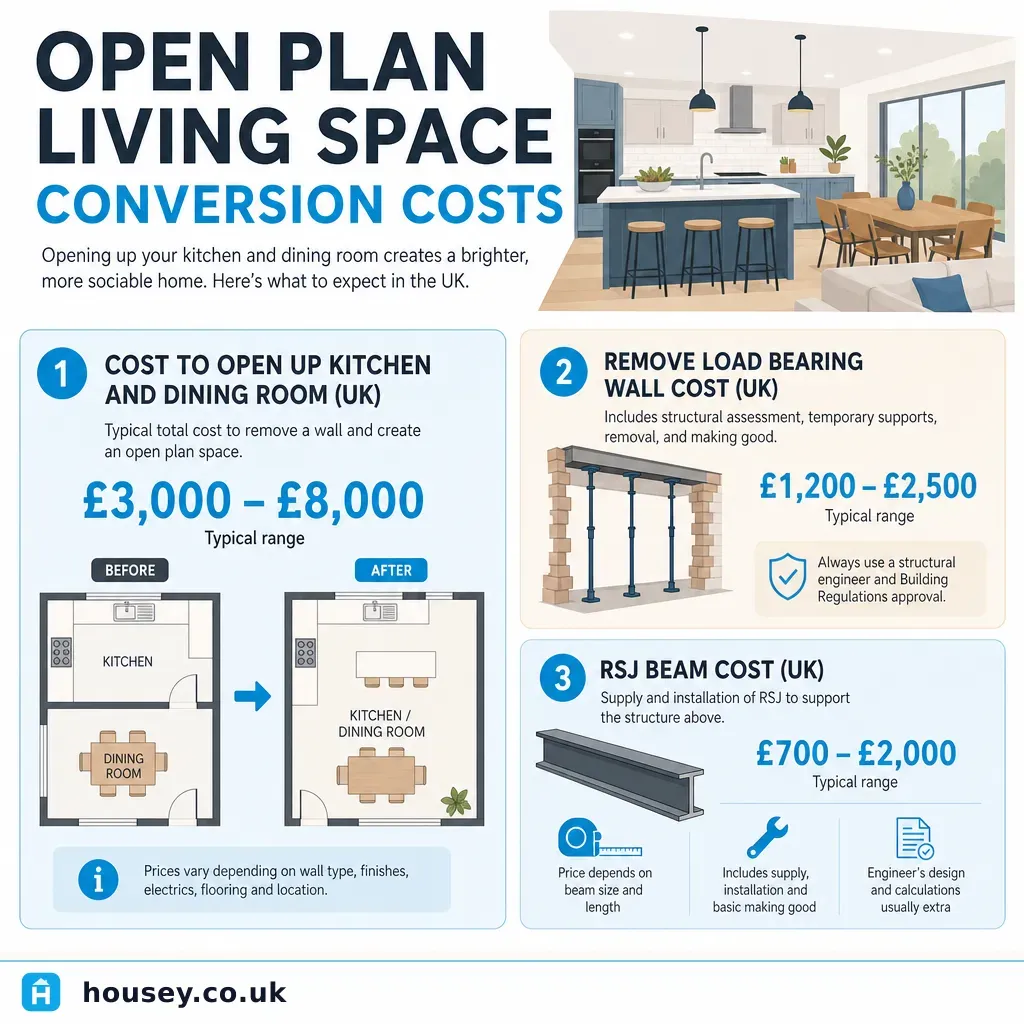
Open Plan Living Space Conversion Costs
Opening up a living space in the UK typically costs £3,000–£15,000+ depending on whether walls are load-bearing, the beam specification required, and the extent of remodelling.
 Improvement & Build
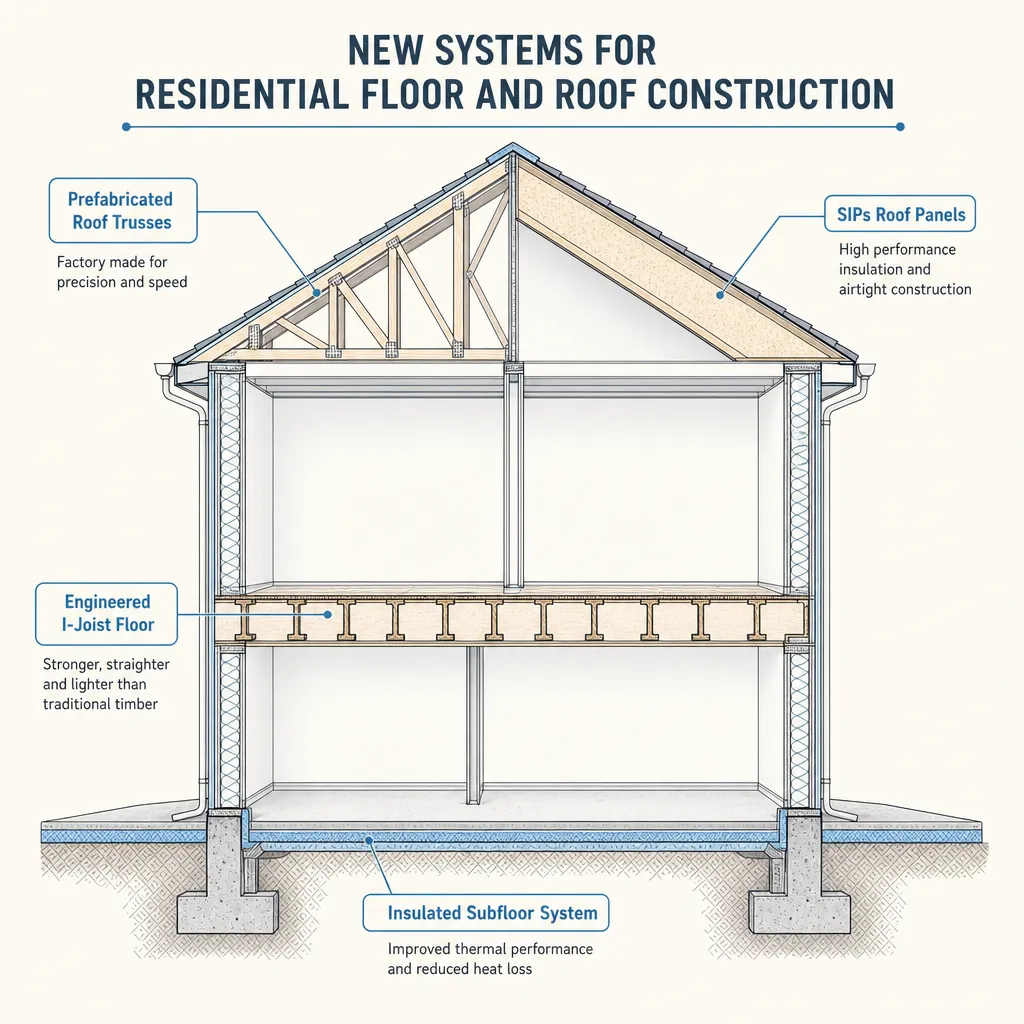
New Systems for Residential Floor and Roof Construction
Modern UK residential floors use solid timber joists, engineered I-joists, metal web joists, or beam and block depending on span and insulation needs.
 Improvement & Build
Enhancing Kerb Appeal: Architectural Design Choices That Add Character and Value
Improving kerb appeal in the UK starts with windows, doors, and boundary treatments matched to your property's era and planning context.
 Improvement & Build
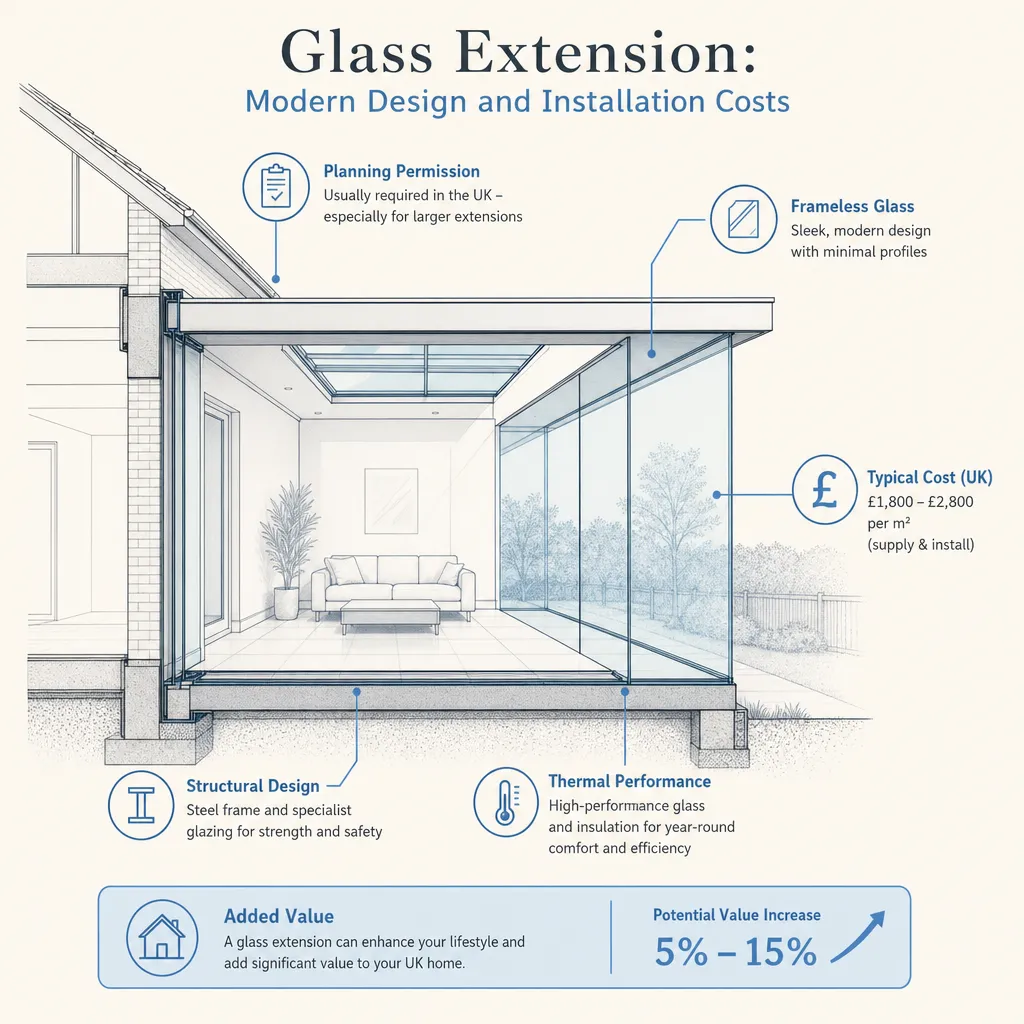
Glass Extension: Modern Design and Installation Costs
A glass extension in the UK typically costs £3,500–£6,500 per square metre fully installed for a bespoke structural glass system.
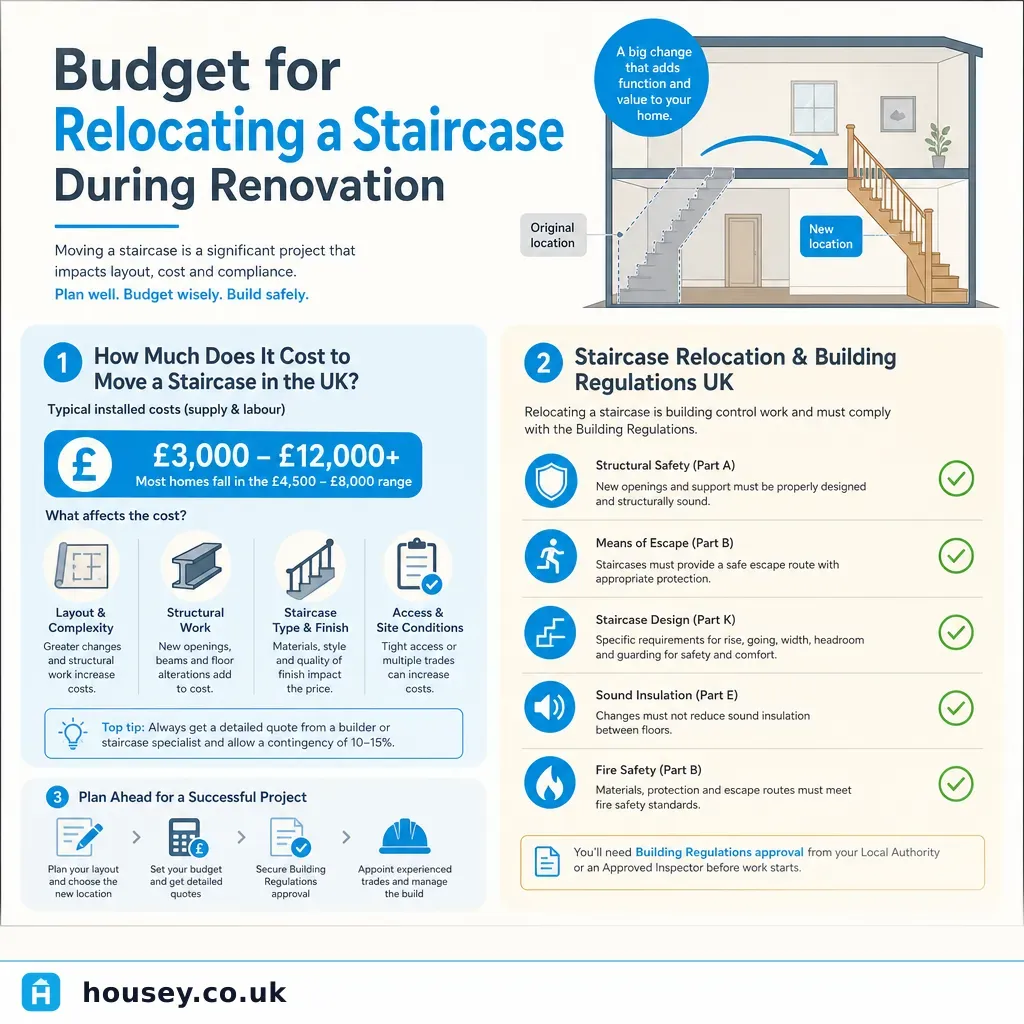 Improvement & Build
Budget for Relocating a Staircase During Renovation
Relocating a staircase in a UK home typically costs £6,000 to £20,000 or more, depending on structural complexity and staircase design.