Enhancing Kerb Appeal: Architectural Design Choices That Add Character and Value
By Housey · Last reviewed 31st of May 2026
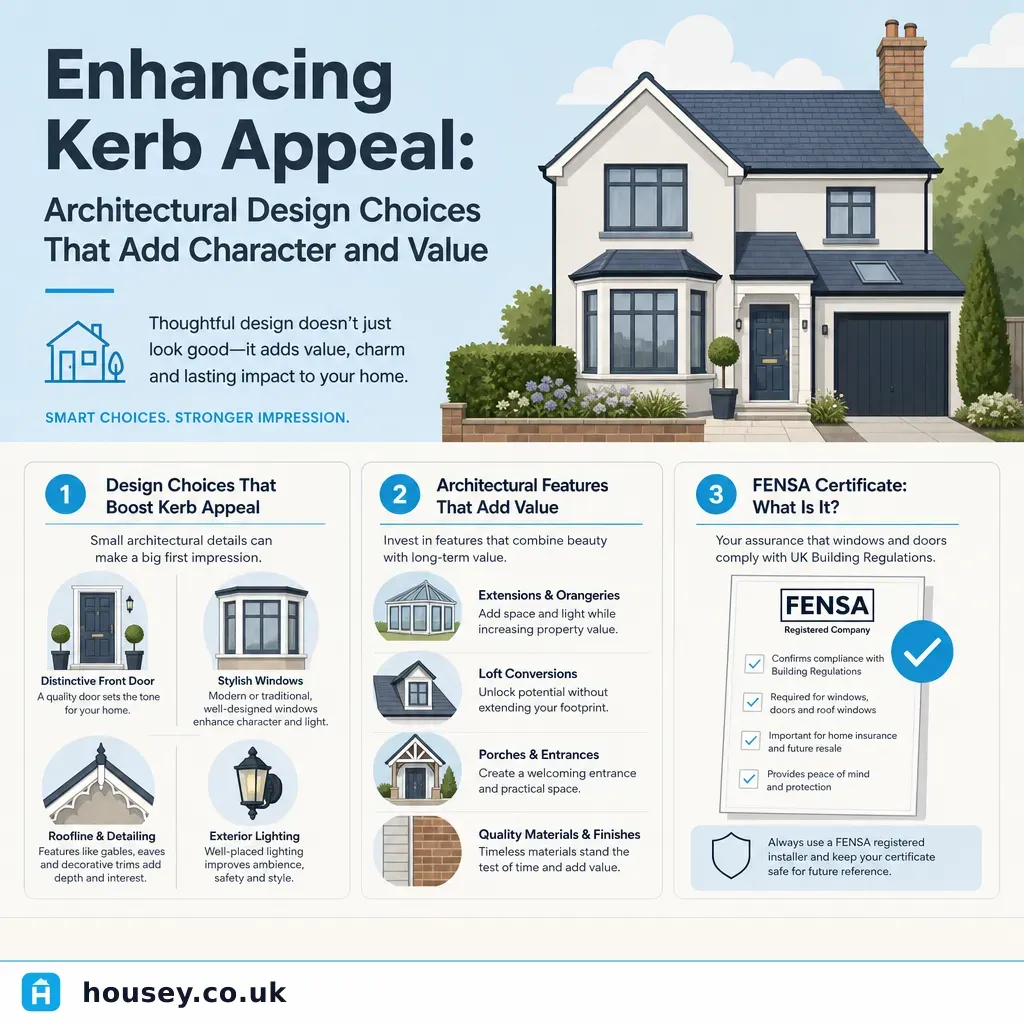
Enhancing Kerb Appeal: Architectural Design Choices That Add Character and Value
First impressions shape a buyer's — or visitor's — perception of a property before they step through the door, and kerb appeal is increasingly recognised as a genuine contributor to value rather than a purely cosmetic concern. For UK homeowners, decisions about the front elevation sit at the intersection of planning constraints, conservation area rules, the character of the local street scene, and practical maintenance considerations over time. Getting the balance right can meaningfully improve both how a home looks and what it is worth.
Key points
- Window and door replacements in England must either be carried out by a FENSA-registered installer (who self-certifies compliance with Building Regulations) or be subject to a building control application; the resulting certificate is a standard conveyancing requirement.
- Properties in conservation areas typically cannot replace windows, doors, or roof materials under permitted development rights without prior approval from the local planning authority.
- Applying cement render or non-breathable coatings to pre-1919 solid-wall properties can cause interstitial condensation and accelerate structural decay; natural hydraulic lime render is the appropriate breathable alternative.
- Boundary walls and fences adjacent to a highway are restricted to 1 m height under permitted development in England; structures above this height require a planning application.
- Front gardens larger than 5 m² surfaced with an impermeable material in England require planning permission; permeable alternatives such as gravel, permeable block paving, or resin-bound aggregate do not.
Why kerb appeal matters beyond aesthetics
Kerb appeal shapes how quickly a property sells and, in competitive markets, the price it achieves. Estate agents consistently report that well-maintained, characterful frontages attract more viewings and reduce the time on market. Beyond resale, a well-designed front elevation contributes positively to the local streetscape and to the day-to-day enjoyment of where you live.
The challenge is that meaningful external changes often fall into a regulatory grey area. What is routine permitted development for one property can require a planning application for a neighbour in a conservation area or for a listed building a few doors away. The rules depend on designation, property history, and local planning policy — so checking before starting work is always the right approach.
Windows and doors: the highest-impact single change
Windows and doors have a disproportionate influence on a frontage's character. Choosing materials and profiles suited to the property's era avoids the most common kerb-appeal mistake: mismatched replacements that diminish rather than enhance the home's character.
Property era | Original style | Character-appropriate modern option | What to avoid |
|---|---|---|---|
Victorian and Edwardian (pre-1920) | Timber sash or casement, small panes, single glazing | Timber sash or heritage-profile slim aluminium with slim sightlines | Thick-framed white uPVC; horizontal sliding windows at the front elevation |
1930s semi or detached | Timber casement with leaded lights, bay windows, steel Crittall in some cases | Slim-profile aluminium or timber casement; authentic leaded glazing units | High-gloss uPVC incongruous with Arts and Crafts detailing; inappropriate glazing bar patterns |
Post-war (1945–1980) | Standard casement, often aluminium or uPVC | Like-for-like replacement uPVC or aluminium; upgrade to slimmer contemporary profiles | Decorative glazing bars that do not reflect the period; mismatched styles across floors |
1980s to 2000s | uPVC casement, often in white | Modern uPVC or aluminium in a matched RAL colour; can upgrade to more slender profiles | Mismatched glazing bar patterns between floors or in bay windows |
All replacements in England must comply with Building Regulations — specifically the thermal performance standards in Approved Document L and safety glazing requirements in Approved Document N. A FENSA-registered window and door installer self-certifies compliance and issues a certificate; non-FENSA work requires a building control application. Keep the certificate: it is a standard conveyancing requirement.
Render, masonry, and surface treatments
Render can unify an inconsistent frontage or give a dated elevation a cleaner, more contemporary appearance. However, the choice of render system carries real building physics implications that are often overlooked.
- Pre-1919 solid-wall properties (Victorian, Edwardian) rely on permeable masonry to manage moisture through the wall thickness. Applying cement render or non-breathable silicone coatings traps water within the wall, accelerating decay and causing interstitial condensation. Natural hydraulic lime render (NHL 3.5 or NHL 5) is the historically appropriate and technically correct choice; it allows the wall to breathe.
- 1930s and post-war cavity-wall properties tolerate a wider range of render systems, but the junction between render and existing brickwork or stonework must be detailed carefully to prevent water ingress at reveals and sills.
- K-render and monocouche through-colour renders are durable on modern cavity construction but can look visually heavy on older properties, particularly when applied to complex elevations.
In conservation areas and on listed buildings, render application — and even changes to render colour — may require planning consent or listed building consent respectively. Check with your local planning authority before proceeding.
Front doors: character and colour
A well-chosen front door is one of the most cost-effective kerb-appeal improvements available. The strongest choices align with the property's era and the character of the street:
- Victorian and Edwardian homes: deep gloss or satin colours — navy, forest green, black, deep red — on timber or quality composite doors with period-appropriate ironmongery (cast iron or brass lever handles, period letterbox, matching numerals).
- 1930s semi-detached properties: arched fanlights, stained glass panels, and Art Deco-influenced ironmongery complement the original character. Original doors are worth restoring where structurally sound rather than replacing.
- Post-war and modern properties: composite doors with flat or lightly textured surfaces and contemporary brushed-steel or matte-black ironmongery sit well with the cleaner lines of the period.
Any replacement front door in England is subject to Building Regulations for thermal performance and, where applicable, safety glazing, and the same FENSA or building control compliance route applies.
Boundary treatments, gates, and landscaping
Boundary walls, railings, and gates define the transition between house and street and set the tone for the whole frontage. The key permitted development rules in England:
- Up to 1 m height adjacent to a highway — no planning permission needed.
- Up to 2 m height elsewhere on the boundary — no planning permission needed.
- Above these heights, or in conservation areas: a planning application is required.
Character-positive choices typically include reclaimed or matching-brick piers, painted steel or cast-iron railings appropriate to the era, simple timber picket fencing for pre-war properties, or clipped hedging such as yew, hornbeam, or beech. Large areas of closed timber-panel fencing to the front elevation is generally poor planning practice and can appear oppressive within an open street scene.
Kerb appeal improvement decision tree
- Is your property listed? — Any external change, however minor, requires listed building consent from the local planning authority. Appoint an architectural technologist with experience in listed buildings before planning any work.
- Is your property in a conservation area? — Check with your local planning authority before replacing windows, doors, render, or boundary treatments; specific prior approval may be required.
- Are you replacing windows or doors? — Use a FENSA-registered installer, or submit a building control application; retain the certificate for conveyancing.
- Are you surfacing a front garden larger than 5 m²? — Use a permeable material (gravel, permeable block paving, resin-bound aggregate) to avoid the need for planning permission and to meet sustainable drainage principles.
- Are you planning a boundary wall or gate above 1 m at the highway boundary? — A planning application is required before construction.
- Are you applying render to a pre-1919 solid-wall property? — Take advice from a surveyor or conservation architect before selecting any render system.
Red flags: common kerb appeal mistakes to avoid
- Removing a chimney stack for visual symmetry without structural advice — chimney removal affects the stability and thermal mass of older properties and requires building control notification.
- Unapproved changes in a conservation area — conservation area controls can be very specific; even repainting render in a significantly different colour may require consent in some designated areas.
- Over-specification relative to the local market — a premium bespoke door on a modestly priced terraced house is unlikely to be recovered at resale; improvements should be proportionate to the property's price bracket and the surrounding street.
- Impermeable paving without drainage — this is both a planning breach in most of England and a practical flood risk to neighbouring land and public drainage.
- Mismatched replacement windows — different frame depths, glazing bar patterns, or materials across floors or within a bay window can undermine character rather than improve it.
When to get professional help
Most kerb-appeal improvements can be managed with appropriate tradespeople and no specialist design input. However, consider taking professional advice before starting if:
- Your property is listed (any external changes require listed building consent from the local planning authority).
- You are in a conservation area and unclear about what does or does not require prior approval.
- You are planning structural changes to the front elevation — a bay window extension, new porch, or chimney removal.
- Your property is a pre-1919 solid-wall building and you are considering any external coating or render system.
How Housey can help
Housey connects you with architectural technologists who can advise on planning position and prepare drawings for front elevation projects, window and door installers who are FENSA-registered and issue the compliance certificates required at conveyancing, and garden designers who can design front gardens that enhance character and meet permeable paving requirements.
Frequently asked questions
Does replacing windows and doors require planning permission in England?
Most window and door replacements are permitted development and do not need a planning application. However, all replacements must comply with Building Regulations, and either a FENSA-registered installer must certify the work or a building control application must be submitted. In conservation areas, replacement windows must match the existing appearance, and some installations may require prior consent. Always check with your local planning authority if your property is in a designated area.
What is a FENSA certificate and why does it matter at conveyancing?
A FENSA certificate confirms that a replacement window or door installation complies with Building Regulations. It is issued by the registered installer and lodged with the local authority. Solicitors routinely request this document during property transactions. If a previous installation lacks a certificate, a retrospective building control application or an indemnity insurance policy is typically required before exchange can proceed.
Can I apply render to the outside of my house without planning permission?
In most of England, applying render to an existing house is permitted development and does not require a planning application. However, conservation areas, Article 4 Direction areas, and listed buildings are exceptions where external changes including render may require prior consent. Separately, applying impermeable render to a pre-1919 solid-wall property carries a genuine moisture risk — take specialist advice from a surveyor or conservation architect before proceeding.
How much does improving kerb appeal add to property value?
There is no single figure. Improvements that are well-matched to the property's era and local price bracket — appropriate windows, a characterful front door, tidy front-garden landscaping — can improve sale prospects and support a higher asking price in competitive markets. The return is highest when improvements address visible maintenance issues or replace clearly incongruous elements. Over-investing relative to the neighbourhood is less likely to be recovered at sale.
Sources and further reading
- FENSA — Window and door compliance certificates — FENSA
- Planning Portal — Fences, gates and garden walls — Planning Portal
- GOV.UK — Conserving and enhancing the historic environment — GOV.UK / Historic England
- Historic England — Maintaining and repairing your home — Historic England
- Town and Country Planning (General Permitted Development) (England) Order 2015 — legislation.gov.uk
Useful next reads
 Improvement & Build
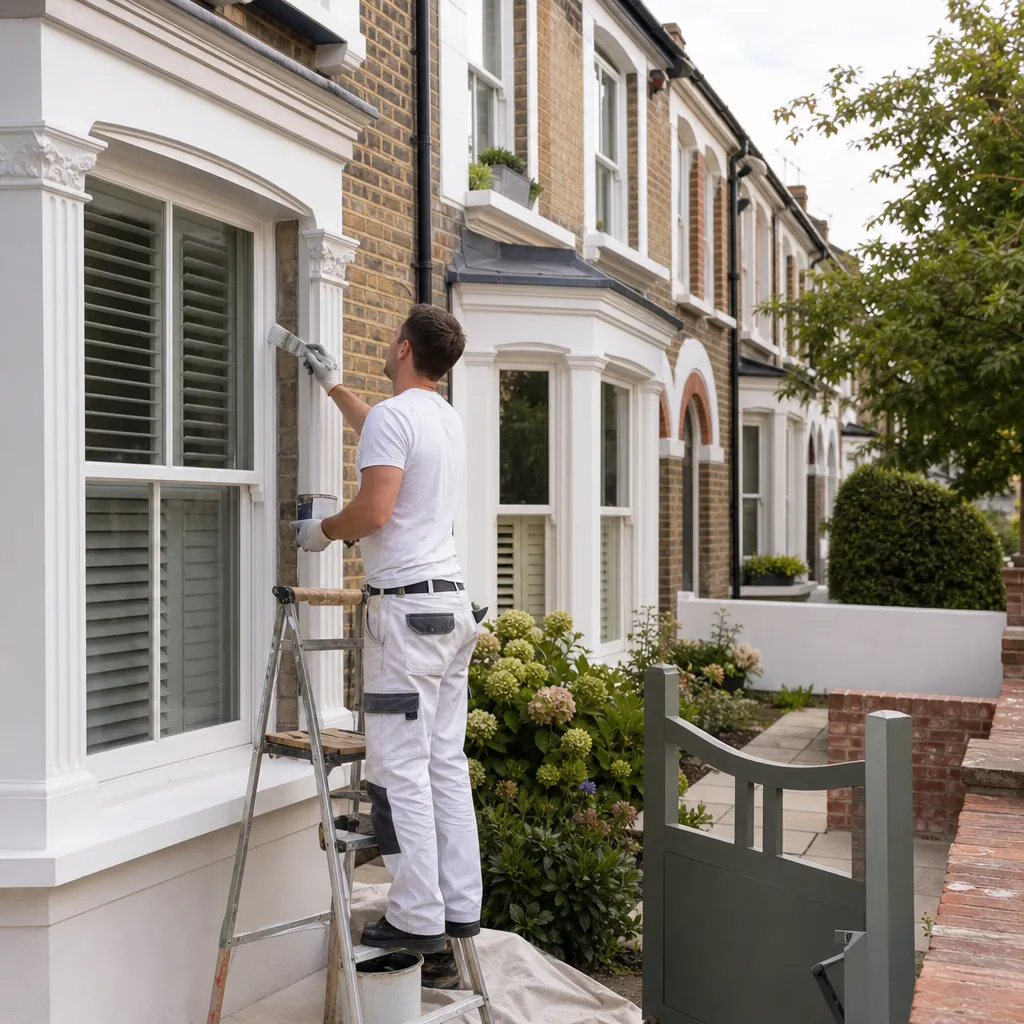
Essential Home Improvements to Boost Appeal Before Selling
The highest-return pre-sale improvements are usually the simplest: fresh neutral décor, thorough cleaning, and kerb-appeal fixes such as a new front door or tidy garden.
 Improvement & Build
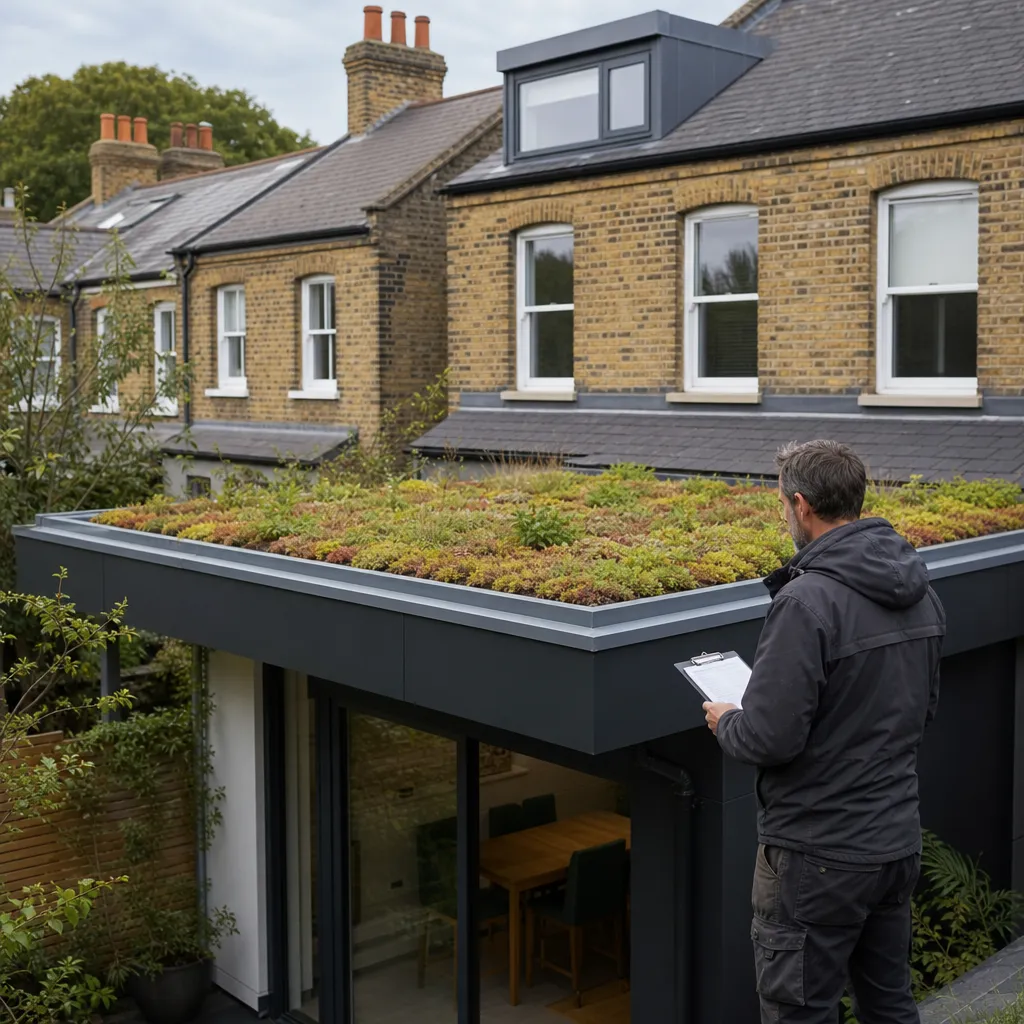
Exterior Colour Schemes for Green Roofs: Design Coordination
Warm greys, earth tones, natural timber, and dark charcoals tend to work best with green or living roofs, complementing the seasonal shift from vivid green in summer to bronze and straw in autumn and winter.
 Improvement & Build
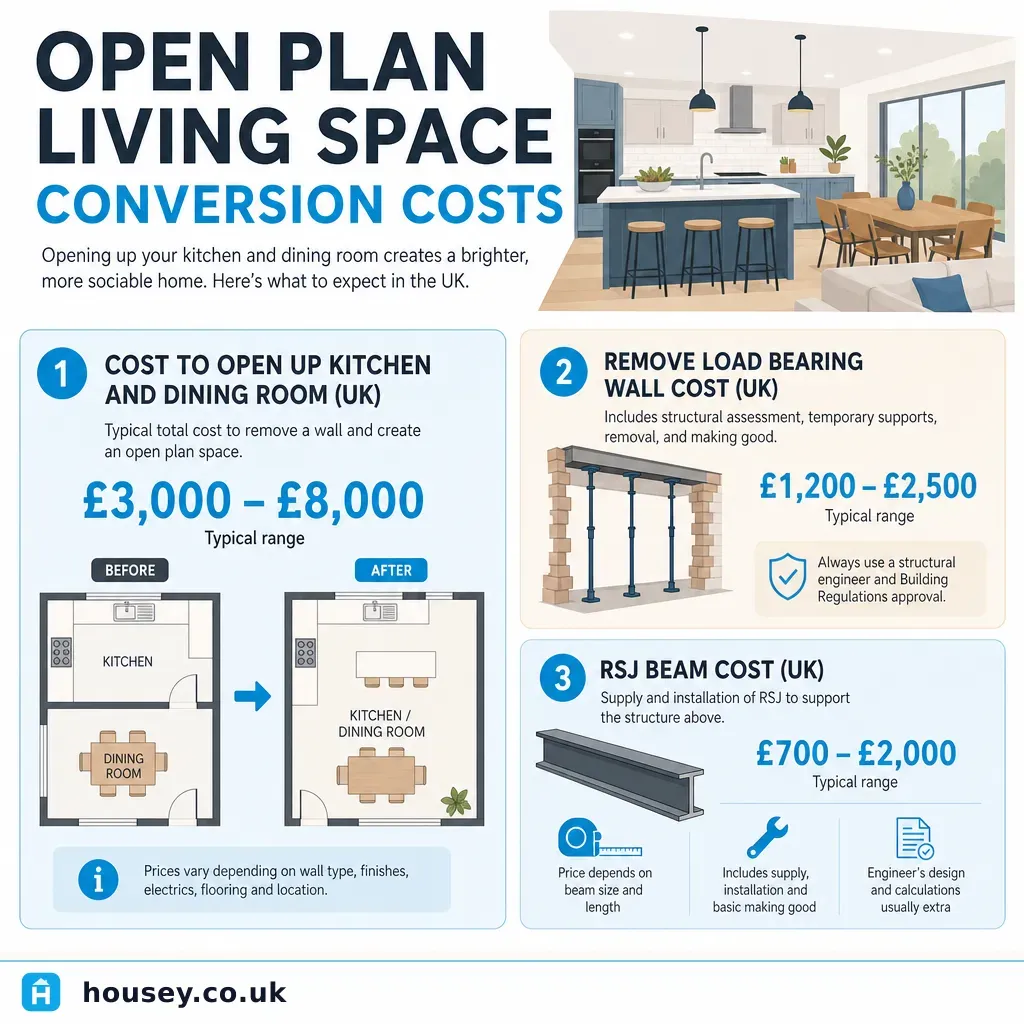
Open Plan Living Space Conversion Costs
Opening up a living space in the UK typically costs £3,000–£15,000+ depending on whether walls are load-bearing, the beam specification required, and the extent of remodelling.
 Improvement & Build
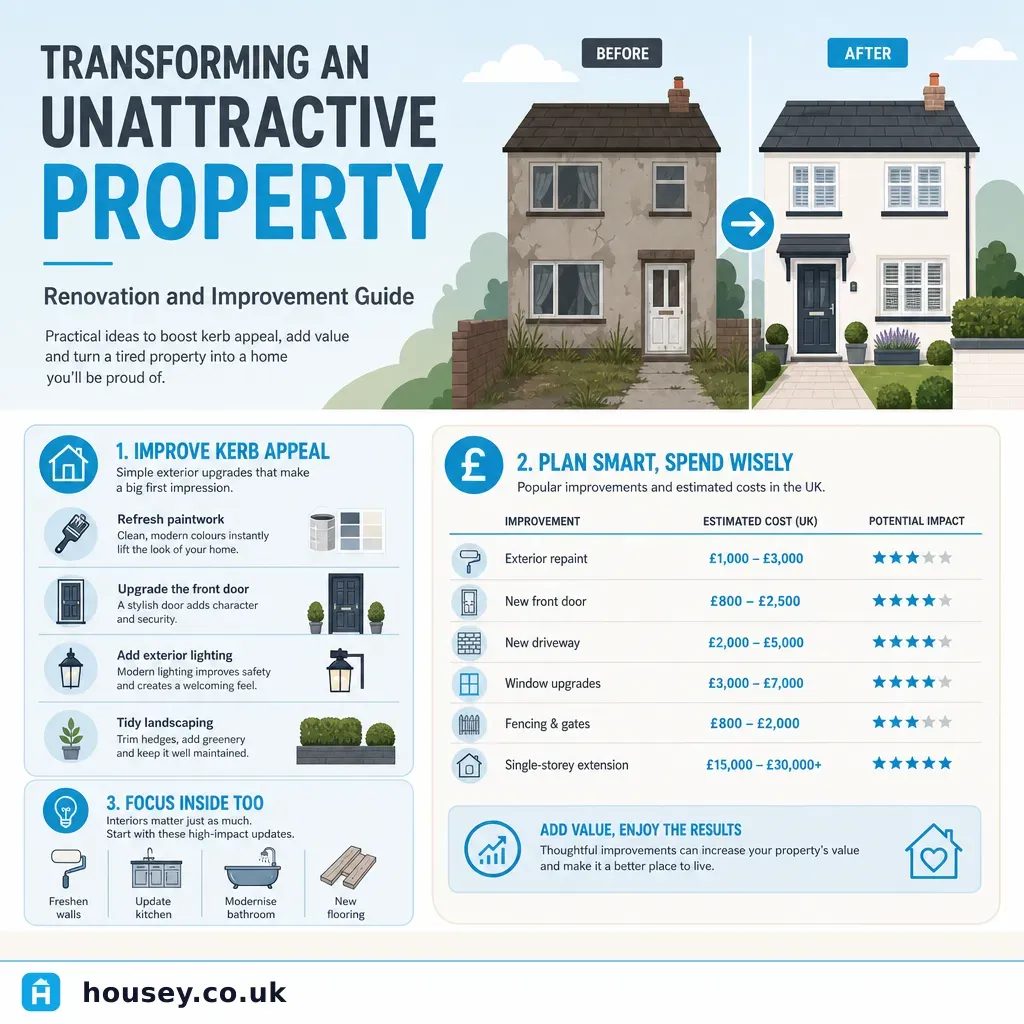
Transforming an Unattractive Property: Renovation and Improvement Guide
Transforming an unattractive UK property usually starts with surface-level improvements — render, windows, doors, and front landscaping — before tackling structural changes like extensions.
 Improvement & Build
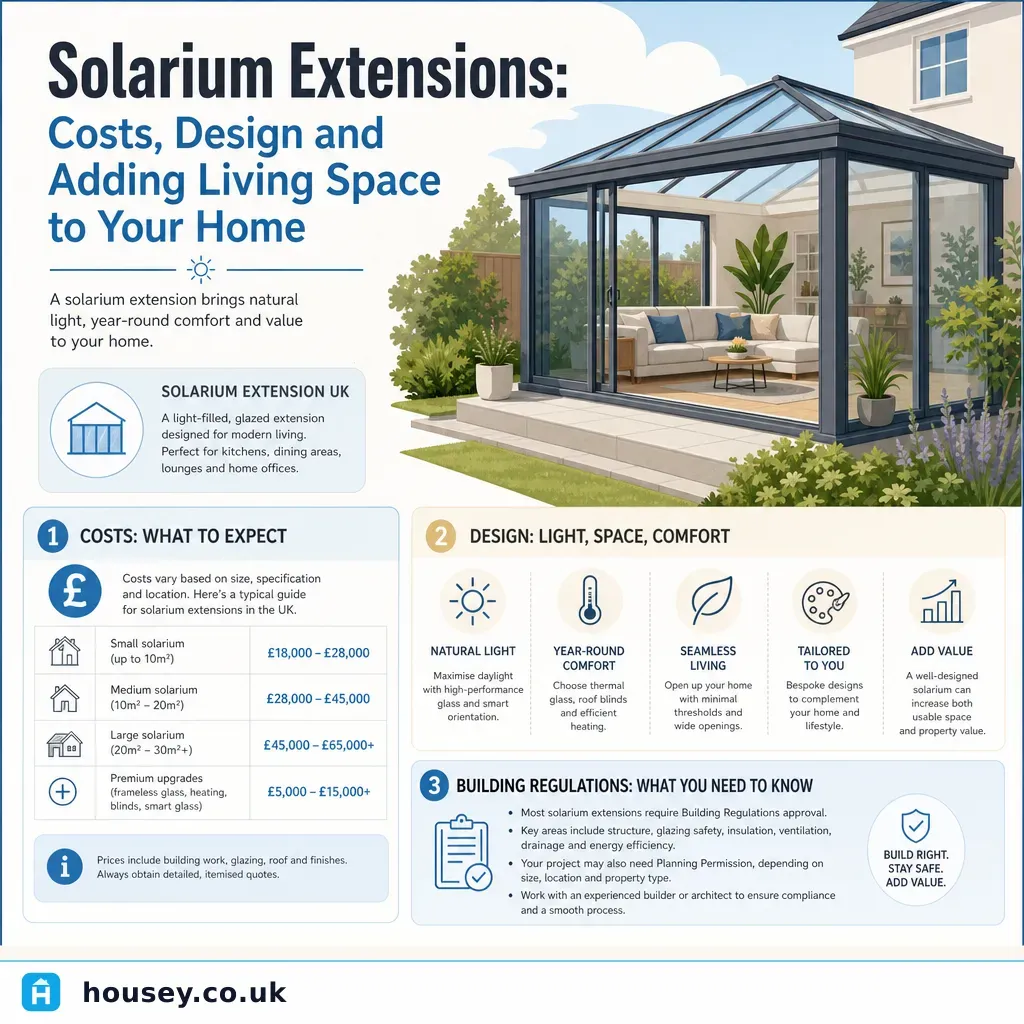
Solarium extensions: costs, design and adding living space to your home
A solarium extension is a predominantly glazed room addition with a structural glass roof, typically costing £28,000–£130,000 in the UK depending on size and specification.