Applying Damp Proof Courses to Dry Ridge Installation: Technical Compatibility
By Housey · Last reviewed 4th of May 2026
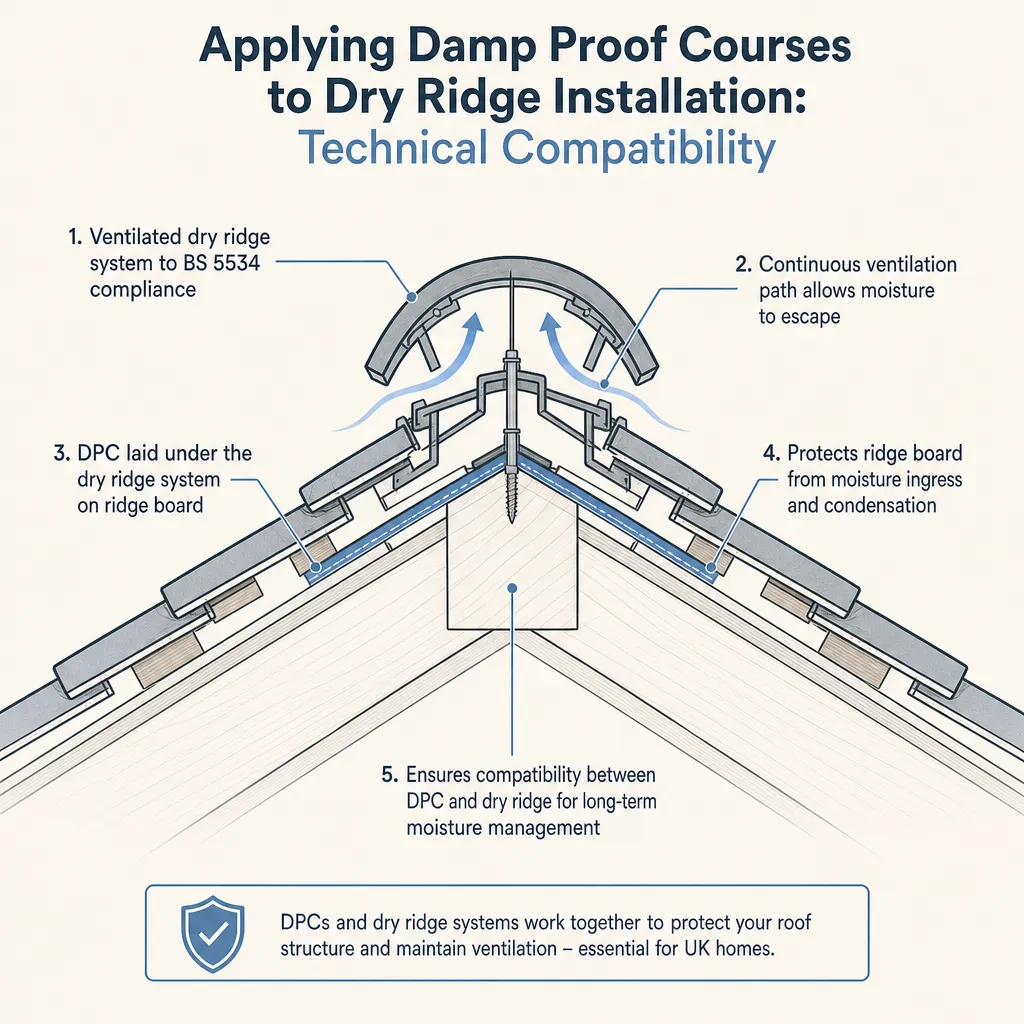
Applying Damp Proof Courses to Dry Ridge Installation: Technical Compatibility
Dry ridge systems have largely replaced traditional mortar-bedded ridge tiles on new-build and re-roofing projects across the UK, offering better long-term performance and lower maintenance demands. However, questions about moisture management at the ridge — specifically how damp proof courses (DPCs) interact with dry ridge details — remain a common point of uncertainty for homeowners, roofers, and building control officers alike. Getting this detail wrong allows water to track undetected into the roof structure, where it can cause timber decay and void the system's certification.
Key points
- BS 5534:2014+A2:2018, the British Standard for slating and tiling, requires mechanically fixed ridge systems and endorses the use of DPC underlays at ridge components to prevent moisture ingress at the apex.
- Many proprietary dry ridge systems — including Marley Dry Fix, Redland Dry Fix, and equivalent products — incorporate an integral ventilating underlay that functions as the DPC within the kit, making a separate membrane unnecessary.
- Where a separate DPC strip is required, it must be specified as compatible by the ridge system manufacturer; substituting an incompatible material (such as certain bituminous DPCs used with plastic batten covers) can cause adhesion failure or void the BBA certification.
- Building control may request evidence of compliance with BS 5534 on notifiable roofing projects — typically a British Board of Agrément (BBA) certificate for the specific system installed.
- At hip ends, valleys, and abutments, DPC detailing is more complex than at the main ridge run and requires specific manufacturer guidance; standard strip DPC alone is insufficient at these junctions.
What is a dry ridge system, and where does moisture risk arise?
A dry ridge system replaces the traditional approach of bedding ridge tiles in mortar with a mechanical fixing assembly. Components typically include a roll-out ventilating underlay (which also acts as a moisture barrier), aluminium or polymer batten covers, and mechanically fixed ridge tiles secured with screws or proprietary clips.
The moisture management challenge arises from the geometry of the ridge: the top course of tiles on each slope terminates just below the apex, leaving a gap that the ridge tile bridges. In a mortar system, the mortar fills this gap. In a dry ridge system, the underlay and batten assembly fills it — but if water is driven horizontally by wind pressure or tracks down from the underside of the ridge tile, it must be intercepted before it reaches the timber structure (rafters, ridge board, or batten ends).
This is where DPC compatibility becomes critical, and where poorly specified or substituted materials create a hidden long-term risk.
How DPCs function in dry ridge installations
A DPC in this context acts as a moisture interceptor at the ridge-to-tile interface. It is typically a flexible membrane strip (150–225mm wide, depending on roof pitch and the specific system) laid beneath the ridge tile, over the final batten, and across the head of the top tile course. Any water penetrating beneath the ridge tile is diverted back onto the tile surface rather than tracking into the structure.
Installation scenario | DPC approach | Compatibility notes |
|---|---|---|
Proprietary dry ridge system, new installation | Manufacturer-supplied polyethylene or EPDM underlay included in kit | Follow system specification exactly; substituting alternatives may void the BBA certification and system warranty |
Retrofit of dry ridge to existing mortar-bedded roof | Self-adhesive butyl or polyethylene strip beneath new batten covers | Confirm compatibility with the existing underlay and any DPC layers beneath the tile courses |
New build to BS 5534 compliance | Ventilated underlay system with integral moisture barrier | Confirm with building control that the system BBA certificate covers the roof pitch and tile type in use |
Listed building or heritage property | Specialist breathable membrane to avoid vapour lock | Consult heritage officer or specialist roofing contractor; standard systems may not be approved |
Do all dry ridge installations need a separate DPC?
Not always. Many proprietary dry ridge systems incorporate a roll-out underlay that fulfils the DPC function as an integral part of the kit. In these cases, installing an additional separate DPC membrane may be unnecessary — and in some configurations can interfere with fixing screw penetration depth or create an unintended double-lap moisture trap that prevents drainage.
The key principle is that the ridge detail must provide a continuous, watertight, and appropriately ventilated barrier at the roof apex. Whether this is achieved by an integral system underlay, a separately supplied DPC strip, or a combination depends on the specific system and the roof configuration.
Always refer to the manufacturer's full installation guide (not just the product brochure) and, where building control is involved, confirm what evidence of compliance is required. For most proprietary systems this means presenting the BBA certificate or equivalent third-party approval that covers the roof pitch, tile profile, and exposure zone of the building.
Homeowner checklist: dry ridge and DPC compatibility
Red flags to watch for
- A roofer who is unfamiliar with the specific dry ridge system being installed — proprietary systems have specific fixing sequences that must be followed for BBA certification to remain valid.
- No reference to BS 5534 or BBA certification when specifying a dry ridge system for a notifiable project, or when replacing a system following a leak at the ridge.
- DPC material substituted from a different product range without checking manufacturer compatibility guidance.
- Ridge tiles fixed before the DPC or underlay installation is complete and photographically documented.
- Gaps, inadequate laps, or torn sections visible in the DPC or underlay strip — particularly at ridge ends, hips, valleys, and abutments where additional detailing is essential.
- Evidence of existing moisture damage at the ridge board or upper rafter section — this must be assessed, dried out, and remedied before new dry ridge components are installed over it.
When to get professional help
Ridge details are concealed once the ridge tiles are fixed, making post-installation inspection difficult without intrusive investigation. If you have any doubt about whether your dry ridge installation includes correct DPC detailing — or if a previous ridge replacement has not resolved a leak — a specialist roof survey, including thermal imaging to identify moisture ingress patterns, can identify a problem before it causes structural timber decay.
Seek professional advice if:
- The property has experienced leaks at or near the ridge previously, even where a dry ridge system has subsequently been installed.
- You are unsure whether the current DPC detailing satisfies BS 5534 requirements or whether the system installed has a valid BBA certificate.
- Building control has raised questions about the ridge installation on a notifiable project.
- The roof is on a listed building or in a conservation area where heritage-appropriate details may differ significantly from standard dry ridge specifications.
- Moisture staining, mould, or dampness is visible inside the roof void at or near the apex.
How Housey can help
For roof work involving dry ridge and DPC detailing, Housey can connect you with experienced roofers who are familiar with BS 5534 compliance and the installation requirements of proprietary dry ridge systems. If you suspect moisture damage has already occurred at the ridge or in the roof void, our network of damp proofing specialists can also provide assessments and remediation advice.
Frequently asked questions
Is a separate DPC always required under a dry ridge system?
Not as a standalone item — but the DPC function (intercepting moisture at the ridge-to-tile interface) must be provided by the installation. Many proprietary systems include an integral underlay that fulfils this role within the kit. Whether a separate DPC strip is additionally needed depends on the specific system, the manufacturer's specification, and the roof configuration.
Does fitting a dry ridge system require building regulations approval?
Like-for-like replacement of ridge tiles — including upgrading from mortar to a dry fix system — is generally not notifiable under Building Regulations when it constitutes routine maintenance. If the work forms part of a wider re-roofing project or involves structural changes, Building Regulations may apply. Check with your local building control authority if the scope of work is unclear.
Can a dry ridge system be used on a listed building?
Yes, but listed building consent may be required, and the system specified must be acceptable in heritage terms. Some planning authorities require traditional mortar bedding on listed buildings. Always consult the local planning authority and your heritage officer before specifying a dry ridge product on a listed property, as requirements vary by authority and building significance.
What is BS 5534 and why does it matter for dry ridge installations?
BS 5534:2014+A2:2018 is the British Standard for slating and tiling for pitched roofs and vertical cladding. It sets minimum requirements for fixing, lap, and weathertightness — including for mechanically fixed ridge systems. Compliance is expected by building control on notifiable roofing work and provides assurance that the installation meets recognised technical standards across the UK.
Sources and further reading
- BS 5534:2014+A2:2018 Slating and tiling for pitched roofs and vertical cladding — BSI Group
- National Federation of Roofing Contractors: Technical guidance — National Federation of Roofing Contractors
- British Board of Agrément: Certificate search for roofing systems — British Board of Agrément
- Historic England: Roofing guidance for traditional and historic buildings — Historic England
- Building Regulations Approved Document C: Site preparation and resistance to moisture — GOV.UK
Useful next reads
 Improvement & Build
Evaluating And Planning Renovations For Properties Requiring Modernisation
Start by commissioning a condition survey — RICS Level 3 for pre-1919 properties — to identify structural defects, damp, and services issues before finalising a budget.
 Improvement & Build
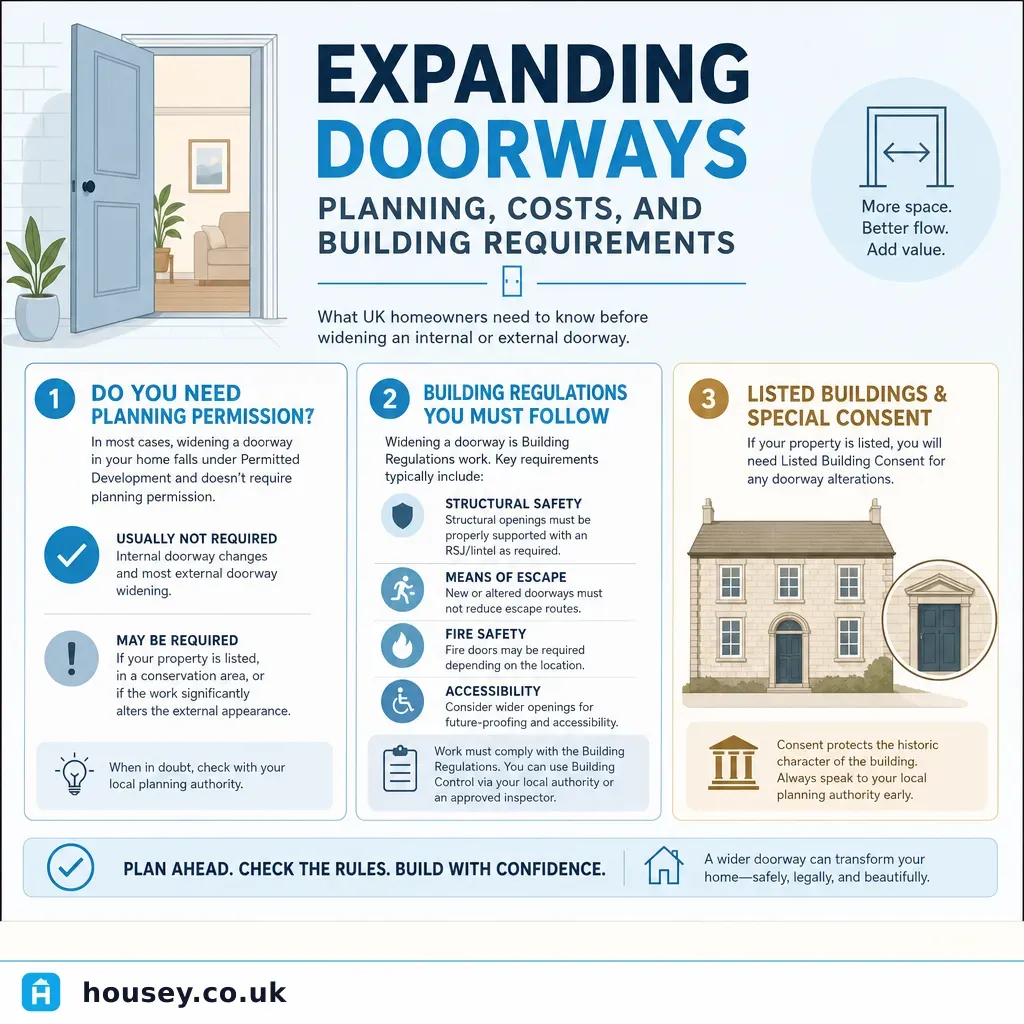
Expanding Doorways: Planning, Costs, and Building Requirements
Expanding a doorway in a load-bearing wall requires Building Regulations Part A approval and a structural engineer's lintel design.
 Improvement & Build
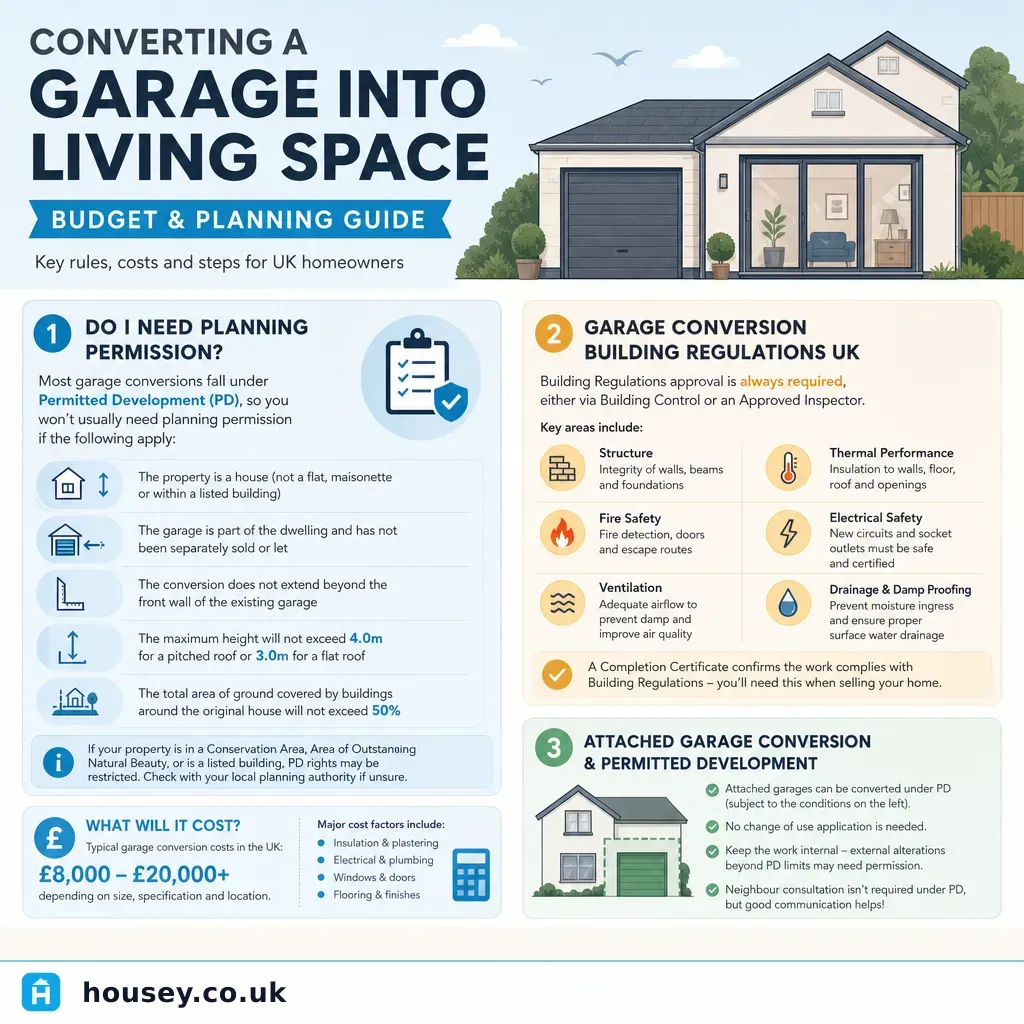
Converting a Garage into Living Space: Budget and Planning Guide
A single-garage conversion typically costs £8,000–£20,000 in the UK.
 Improvement & Build
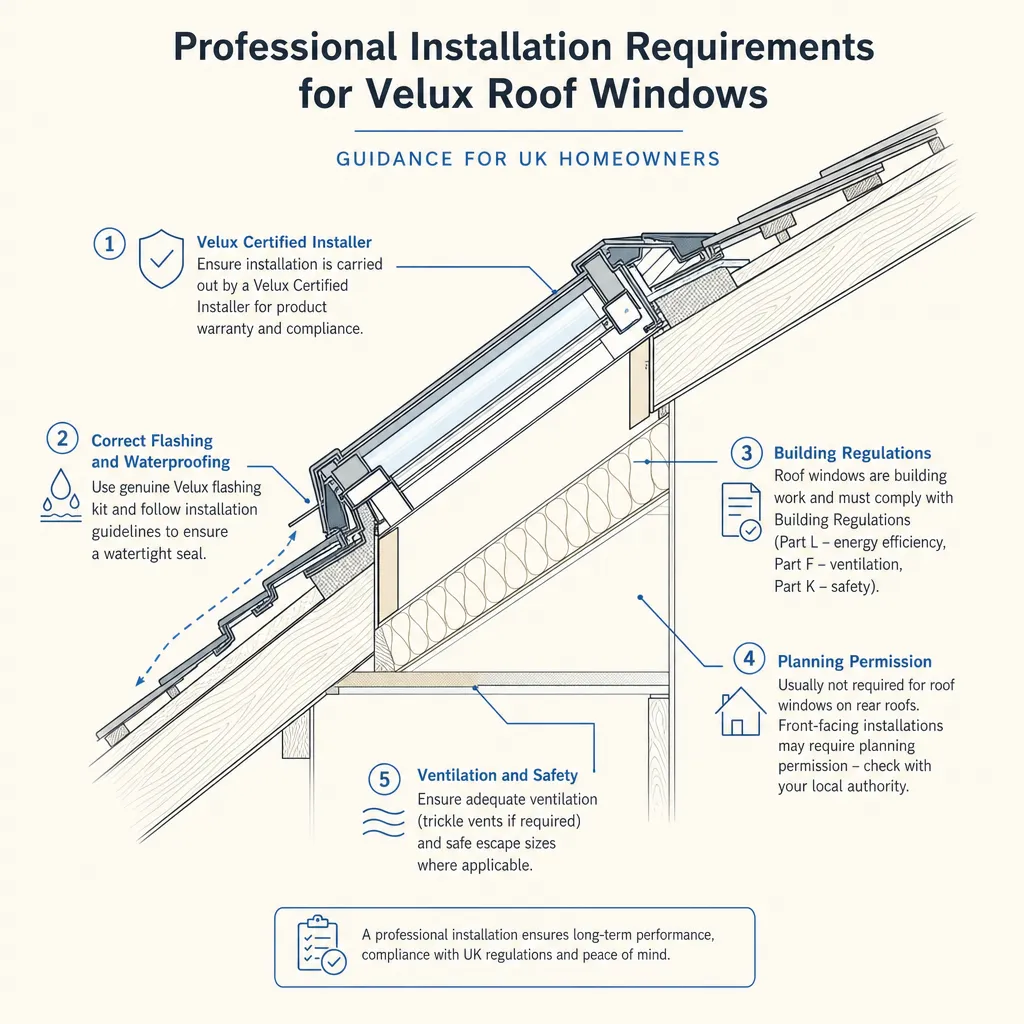
Professional Installation Requirements for Velux Roof Windows
Velux roof windows installed as replacements in the same opening usually fall under permitted development, but new openings or changes on listed buildings or in conservation areas require planning permission.
 Improvement & Build
Budget Guide for Two-Storey House Extensions
A two-storey house extension in the UK typically costs £1,800–£3,000+ per square metre for the build alone.