Damp Survey Costs and Professional Assessment Fees
By Housey · Last reviewed 6th of May 2026
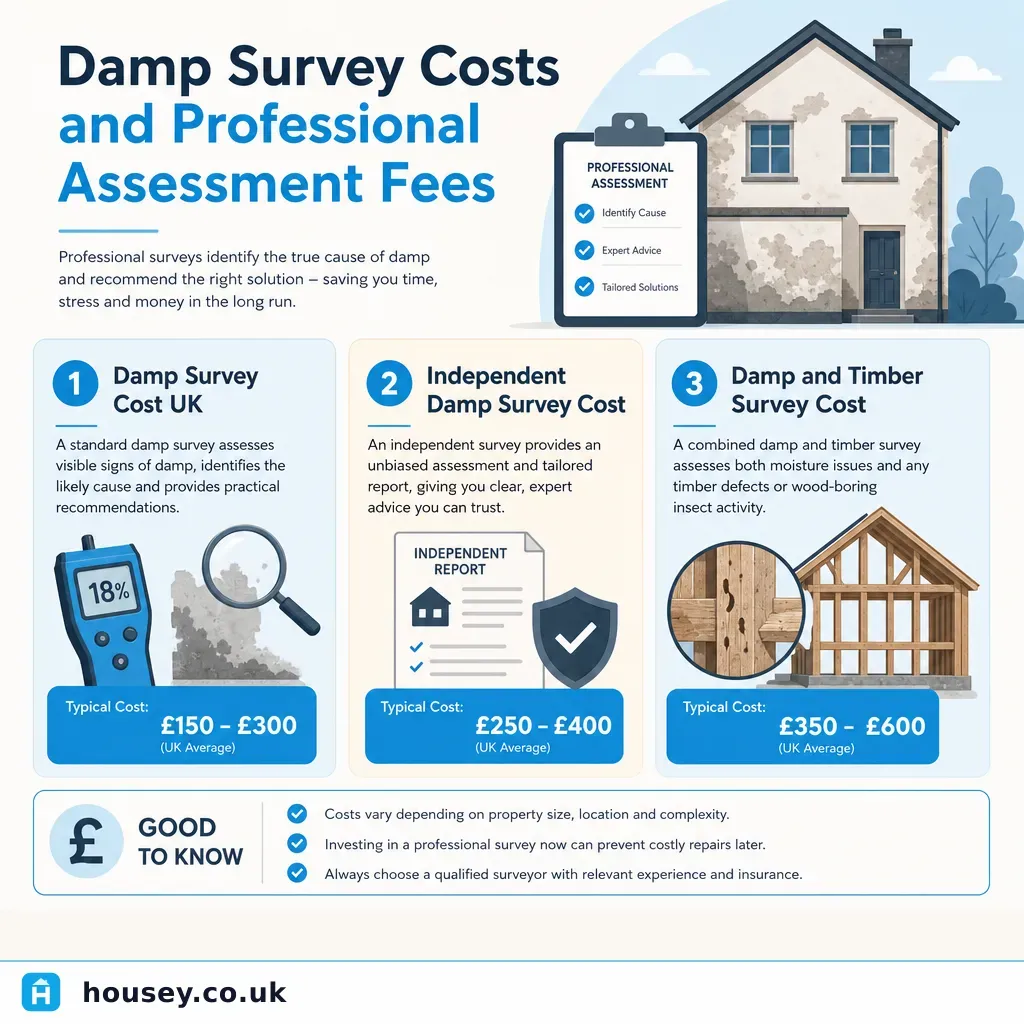
Damp Survey Costs and Professional Assessment Fees
Unexplained damp patches, peeling wallpaper, or a persistent musty smell are among the most common reasons UK homeowners and buyers seek professional advice. Whether a RICS surveyor has flagged moisture in a pre-purchase report, a recurring damp problem will not respond to decoration, or you have been handed a remediation quote for thousands of pounds, understanding what a professional damp assessment involves — and what it should cost — helps you commission the right report and avoid unnecessary expenditure.
Key points
- An independent damp and timber survey from a qualified specialist typically costs between £200 and £500 for most UK residential properties; larger or more complex properties may cost more. (Indicative UK costs, last reviewed 2026-05-06.)
- Free surveys offered by damp proofing companies are commercial inspections, not independent assessments — findings typically lead directly to a remediation quotation.
- The Property Care Association (PCA) maintains a register of Certificated Surveyors in Remedial Treatment (CSRT) and Certificated Surveyors of Timber and Dampness in Buildings (CSTDB), both recognised qualifications for independent damp specialists.
- Damp can have multiple causes — condensation, rising damp, penetrating damp, or plumbing leaks — and correct diagnosis directly determines whether remediation is needed and what form it should take.
- A RICS Level 3 Building Survey will flag visible damp but does not always include the targeted moisture readings, timber probing, and specialist diagnosis that a dedicated damp and timber survey provides.
What does a damp survey cost in the UK?
The cost depends significantly on who carries out the inspection, the size and age of the property, and whether the survey is genuinely independent.
Survey type | Typical cost | Who provides it | Best for |
|---|---|---|---|
Free damp survey | £0 | Damp proofing company | Getting a rough sense of problems; not independent |
Independent specialist damp survey | £200–£500 | PCA CSRT/CSTDB surveyor | Impartial diagnosis before or after purchase |
RICS Level 3 Building Survey (with damp commentary) | £600–£1,500+ | RICS Chartered Surveyor | Pre-purchase full inspection; damp flagged but rarely fully diagnosed |
Thermal imaging add-on | £100–£300 | Specialist thermographer | Identifying cold bridges and hidden moisture pathways |
Timber-only inspection | £150–£350 | Timber specialist or PCA surveyor | Suspected woodworm, wet rot, or dry rot |
Indicative UK costs, last reviewed 2026-05-06. Prices vary by region, property size, and firm. Always obtain at least two quotes.
What affects the cost?
Several factors push prices up or down:
- Property size and age: A large Victorian terrace with a cellar, original timber floors, and solid walls will take longer to survey than a 1990s semi-detached.
- Accessibility: Roof voids, cellars, and suspended timber floors require more time and sometimes specialist access equipment.
- Scope: A full damp and timber survey covering all elevations, roof space, and subfloor costs more than a single-room moisture investigation.
- Qualifications and independence: PCA-accredited independent surveyors charge professional fees; some are also RICS-qualified, which may increase their overhead.
- Location: London and South-East prices are generally higher than equivalent inspections in Northern England or Wales.
Independent survey vs free company survey
This is one of the most important distinctions for homeowners to understand before instructing anyone.
Factor | Independent specialist survey | Free survey from damp company |
|---|---|---|
Cost | £200–£500 | £0 |
Objective | Impartial diagnosis | Commercial assessment aimed at generating a quote |
Qualification | PCA CSRT/CSTDB or RICS | Often unqualified or in-house assessor |
Likely outcome | Diagnosis with treatment recommendation if needed | Quotation for remediation works |
Conflict of interest | None | High — assessor benefits from recommending works |
Useful as primary report? | Yes | No — only as a second opinion after independent survey |
An independent survey is strongly recommended before commissioning any damp proofing work. The Building Research Establishment (BRE) and PCA both note that condensation — which requires no chemical injection or tanking — accounts for a significant proportion of damp complaints that are misdiagnosed and treated unnecessarily.
Which type of damp survey do you need?
- Choose an independent damp and timber survey if you have been told damp is present in a RICS report, you are buying a property with suspected moisture problems, or you want a second opinion before accepting a remediation quote.
- Choose a RICS Level 3 Building Survey if you are buying an older, larger, or unusual property and want a comprehensive pre-purchase report covering damp alongside all other structural and condition issues.
- Request a timber-specific inspection if a surveyor has flagged possible wet rot, dry rot, or woodworm and you need a more detailed diagnosis of the timber condition.
- Instruct a thermographic survey if you suspect hidden cold bridges or moisture pathways not visible to the naked eye, particularly in solid-wall or cavity-wall properties with internal insulation.
- Ask a structural engineer if the damp is accompanied by cracking, movement, or bulging in the external fabric — this may indicate a structural issue alongside, or instead of, a moisture problem.
What a damp and timber survey should include
A thorough independent survey should cover:
- Visual inspection of all accessible internal and external areas
- Moisture readings using a calibrated moisture meter at multiple points
- Identification of the damp type: rising damp, penetrating damp, condensation, or interstitial condensation
- Timber inspection, including probing for rot and identification of woodworm species where relevant
- Photography of all significant findings
- A written report with a diagnosis, causes, and any recommended remediation works
- A clear statement of whether the surveyor is independent or has a commercial interest in any recommended remediation
Ask for the surveyor's PCA registration number or RICS membership number before instructing. Both bodies maintain searchable online registers.
Red flags to watch for
- A surveyor who cannot produce a professional qualification or PCA registration number on request.
- A report that recommends chemical injection for rising damp without first ruling out condensation or penetrating damp through proper diagnostic testing.
- A free survey that moves directly to a quotation without explaining the underlying diagnosis or cause.
- Findings that conveniently require the surveyor's own company to carry out expensive remediation works.
- A report that lacks moisture meter readings, photographs, or a clear statement of the damp cause.
- Pressure to instruct works immediately, without time to seek a second opinion.
Important limitations
This article provides general information about damp survey types and typical costs. Damp diagnosis is a specialist field: the cause of moisture in a property can vary significantly depending on its age, construction type, orientation, drainage, and heating patterns. This guide cannot substitute for a site inspection by a qualified professional. If damp is flagged during a property purchase, instruct your own independent surveyor — do not rely solely on any report commissioned by the vendor or provided by a company with a remediation interest.
What to ask a qualified professional
Before instructing a damp surveyor, ask:
- Are you registered with the Property Care Association (PCA) and do you hold a CSRT or CSTDB qualification?
- Are you independent, or do you also offer damp proofing remediation services? If so, how do you manage that conflict of interest?
- What does the survey fee include — written report, moisture readings, timber inspection, photographs?
- Will your report state the type of damp and its likely cause, not just a remediation recommendation?
- Do you carry professional indemnity insurance?
- If you recommend remediation works, will that be a separate quotation, and can I seek a second opinion first?
When to get professional help
You should commission a professional damp survey rather than relying on a visual inspection alone if:
- A mortgage lender or RICS surveyor has flagged damp and recommended further investigation.
- You can see tide-mark staining on walls, salt crystallisation on plaster, or spalling brickwork that may indicate rising or penetrating damp.
- There is a persistent musty smell even after ventilation improvements — this may indicate concealed timber decay.
- You have received a remediation quote for several thousand pounds and want an independent second opinion.
- You are buying or selling a property and want a clear written record of moisture conditions at the time of transaction.
How Housey can help
Housey connects homeowners and buyers with qualified, independent damp and timber survey specialists across the UK. Request quotes from PCA-accredited surveyors and compare independent assessments before committing to any remediation work.
Frequently asked questions
Do I need to pay for a damp survey, or is a free survey enough?
A free survey from a damp proofing company is a commercial assessment, not an independent report. The assessor may be unqualified and has a financial interest in recommending works. For any significant purchase decision or before spending money on remediation, paying for an independent survey from a PCA-registered or RICS-qualified surveyor is usually money well spent.
What is the difference between rising damp and penetrating damp?
Rising damp is moisture drawn upward through masonry from the ground; it is less common than often assumed. Penetrating damp enters through defective building fabric — failed pointing, cracked render, or blocked gutters. Condensation, which deposits moisture from warm air onto cold surfaces, is the most common form of damp in UK homes and typically requires no chemical treatment.
Will a RICS survey identify damp?
A RICS Level 2 or Level 3 Building Survey will flag visible evidence of damp and may recommend further investigation. It is not a dedicated damp and timber survey: the surveyor may not carry moisture meters, probe timber, or provide a detailed diagnosis of cause. Where damp is a significant concern, a separate specialist report is usually advisable.
How long does a damp survey take?
For a standard three-bedroom house, a thorough independent damp and timber survey typically takes one to three hours on-site. The written report usually follows within five to ten working days, though some surveyors offer faster turnaround for an additional fee.
Can I carry out a damp inspection myself?
Consumer moisture meters are widely available, but interpreting readings correctly requires experience. False positives from salt contamination and normal moisture gradients are common. A DIY reading cannot reliably distinguish between damp types or identify concealed timber decay. For any consequential decision — buying a property or instructing remediation — professional assessment is advisable.
Sources and further reading
- Find a PCA Member — Property Care Association
- Home Surveys guidance — Royal Institution of Chartered Surveyors
- Damp and mould in the home — HM Government
- Good Building Guide 33: Diagnosing the causes of dampness — Building Research Establishment
- Problems with damp and mould — Citizens Advice
Useful next reads
 Surveys & Inspections
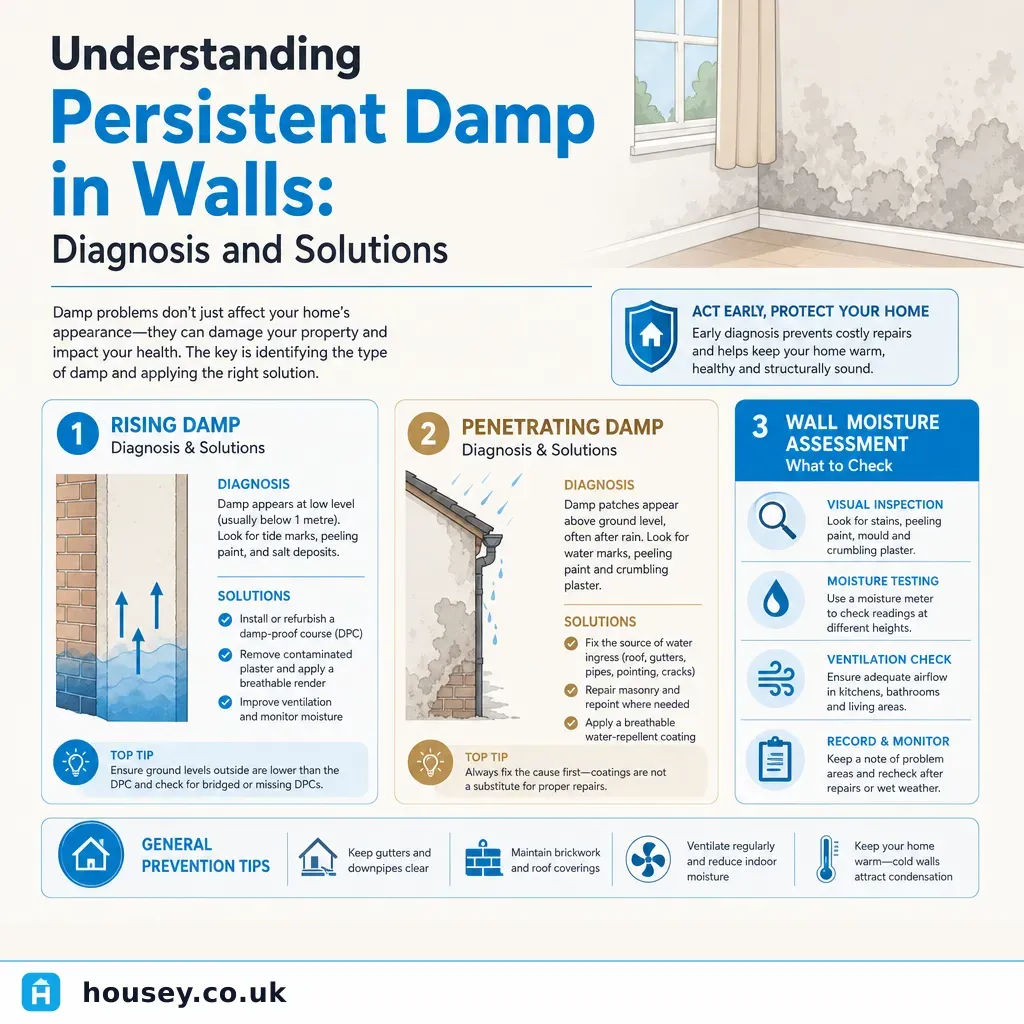
Understanding Persistent Damp in Walls: Diagnosis and Solutions
Persistent wall damp in UK homes most commonly stems from penetrating damp, rising damp, or condensation — and these are frequently confused with one another.
 Surveys & Inspections
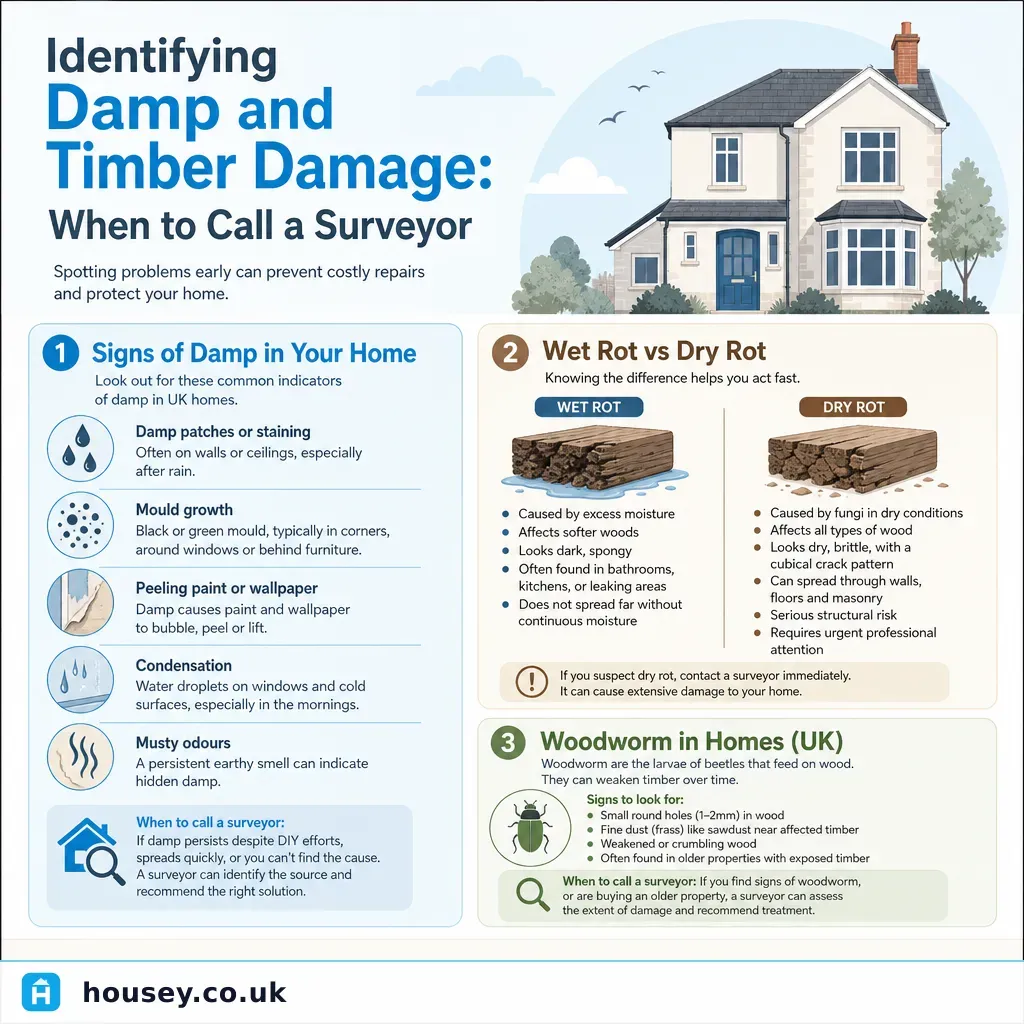
Identifying Damp and Timber Damage: When to Call a Surveyor
Damp and timber damage often appear together — damp conditions attract wood-boring insects and fungal decay.
 Surveys & Inspections
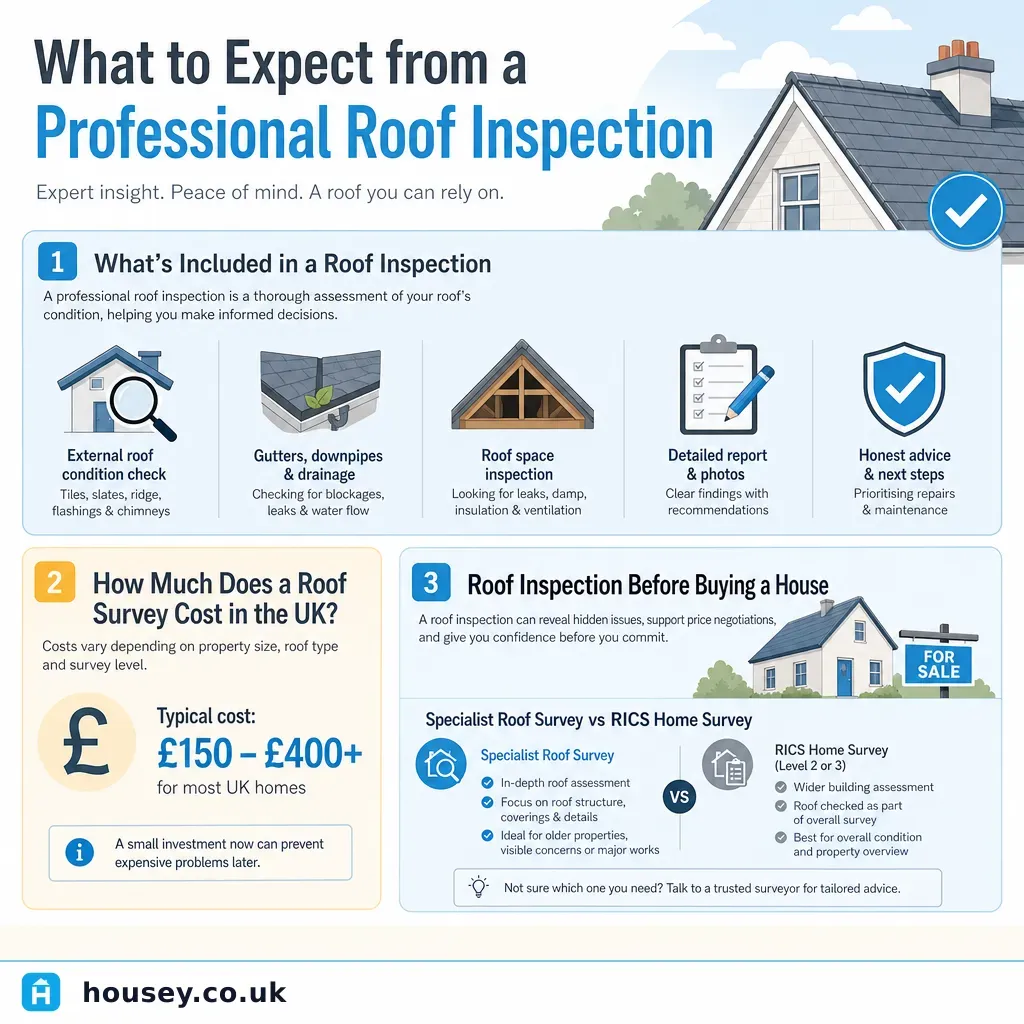
What to Expect from a Professional Roof Inspection
A professional roof inspection involves a qualified specialist examining your roof coverings, flashings, mortar, gutters, and structure.
 Surveys & Inspections
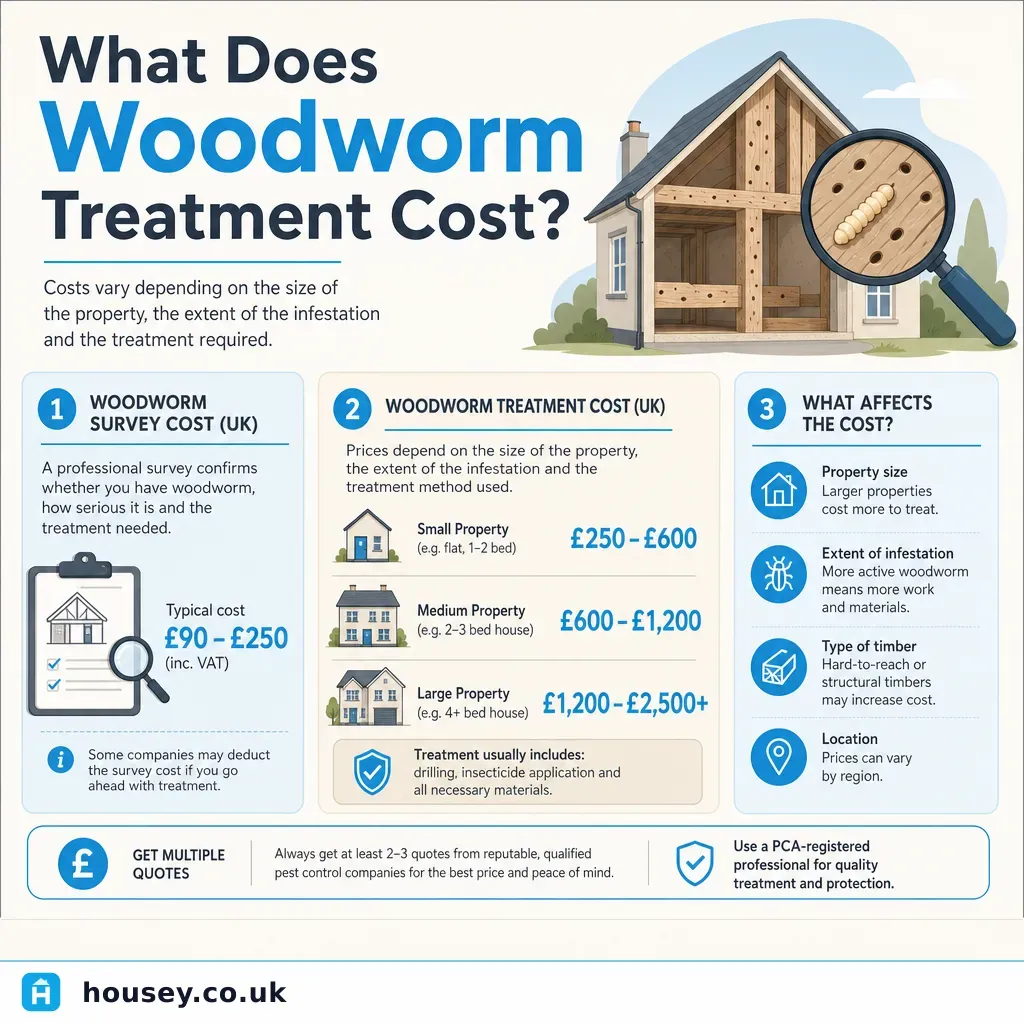
What Does Woodworm Treatment Cost?
Woodworm treatment in the UK typically costs £300–£900 for a standard three-bedroom home, depending on the extent of infestation and timbers affected.
 Surveys & Inspections
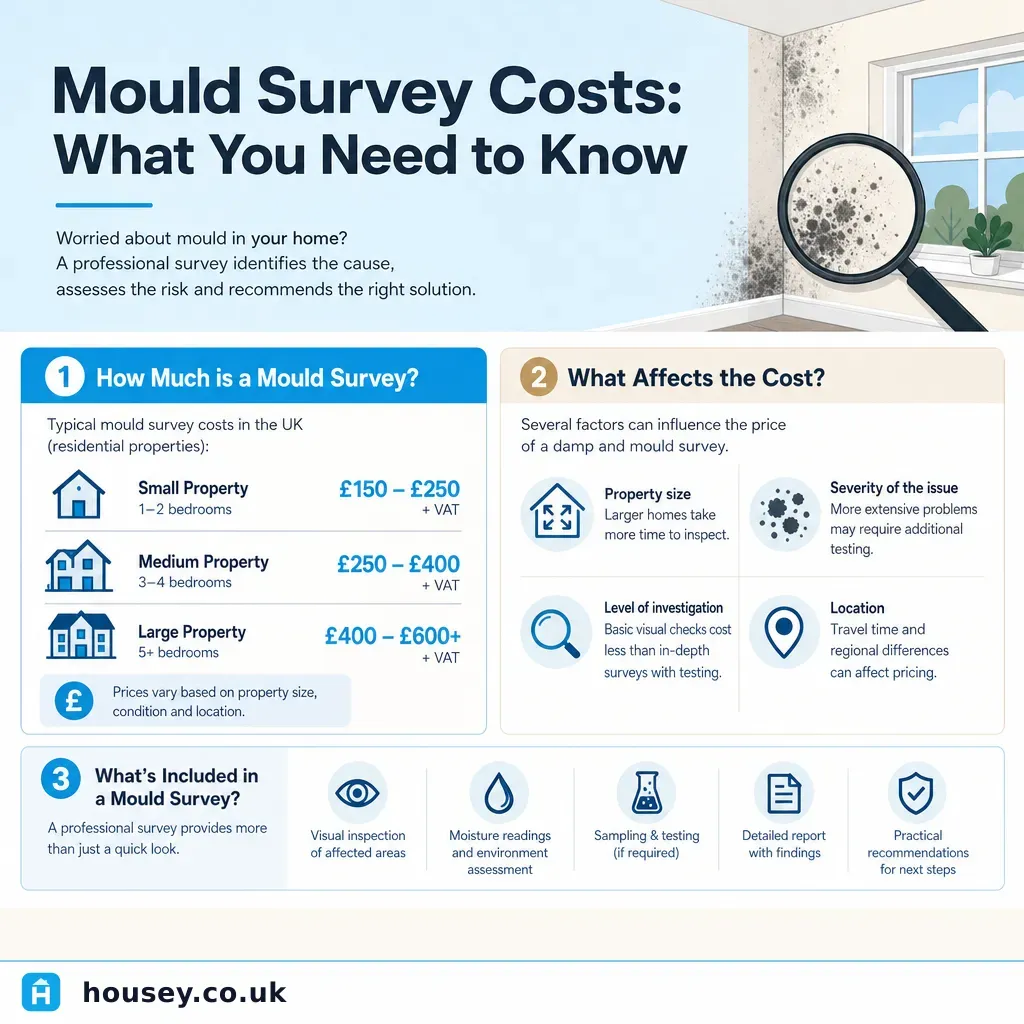
Mould Survey Costs: What You Need to Know
A basic mould inspection typically costs £150–£300 in the UK; a full damp and timber survey from a qualified specialist costs £250–£500 for an average semi-detached home.