Understanding Persistent Damp in Walls: Diagnosis and Solutions
By Housey · Last reviewed 11th of May 2026
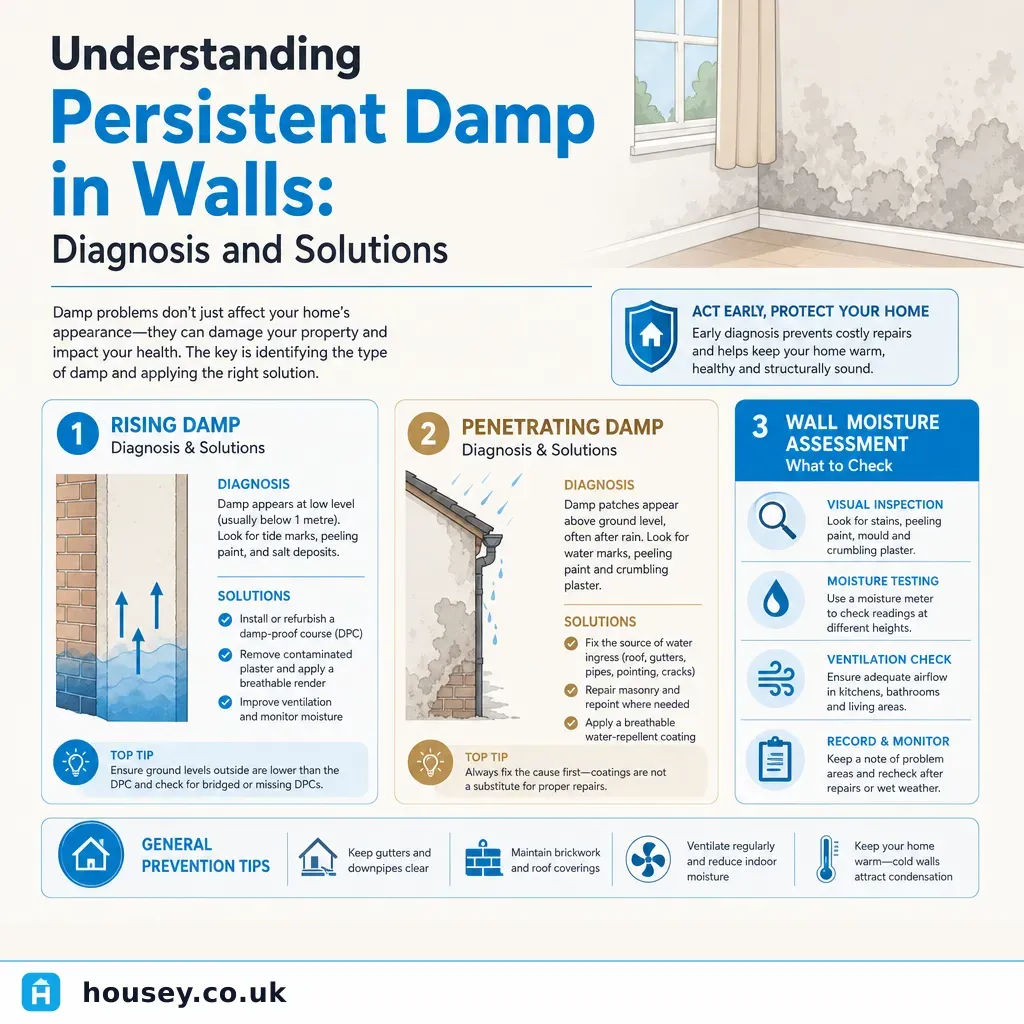
Understanding Persistent Damp in Walls: Diagnosis and Solutions
Damp in walls is one of the most frequently reported defects in UK housing surveys, appearing across property types from Victorian terraces to 1970s cavity-wall semis. Persistent or recurring damp — moisture that returns after apparently successful treatment — is a particular frustration for homeowners and often signals a deeper underlying problem that cosmetic remedies cannot fix. Correct diagnosis is the essential first step; treating the wrong type wastes money and can cause further damage to the fabric of the building.
Key points
- Three distinct types of wall damp affect UK properties: rising damp (capillary action through masonry), penetrating damp (rainwater ingress through the building fabric), and condensation-related surface moisture — each with different causes, patterns, and solutions.
- The BRE has long cautioned that rising damp is frequently over-diagnosed in UK housing; many cases attributed to it are, on investigation, penetrating damp, condensation, or a combination of both.
- A professional damp survey should include a physical inspection and contextual assessment — not solely a conductance meter reading, which can give false positives in the presence of hygroscopic salts.
- PAS 2035:2023 requires a moisture risk assessment before internal wall insulation is installed on any wall with a damp history; unresolved damp behind insulation creates mould and timber decay risk.
- Property Care Association (PCA) guidance sets the professional standard for damp diagnosis in the UK; PCA-affiliated surveyors are expected to follow its diagnostic framework rather than relying solely on meter readings.
How are the three types of damp different?
Damp type | Typical height | Pattern | Common causes | First step |
|---|---|---|---|---|
Rising damp | Up to ~1 m above floor level | Horizontal tide mark, hygroscopic salts, flaking plaster | Failed or absent damp-proof course (DPC) | PCA-affiliated independent survey; check for DPC bridging first |
Penetrating damp | Variable; follows defect location | Patches at wall-head, around openings, or near flashings | Defective pointing, failed flashings, cracked render, blocked gutters | External inspection; identify and repair the source defect |
Condensation | Anywhere; especially cold bridges and corners | Black mould growth, surface moisture, no tide mark | Poor ventilation, insufficient insulation, cold surfaces | Improve ventilation; address thermal bridges; instruct RICS surveyor if persistent |
Note: a wall can show more than one type simultaneously, and distinguishing them accurately requires more than a single meter reading.
What does a professional damp assessment involve?
A competent damp survey goes well beyond pointing a meter at a wall. Expect a qualified surveyor to:
- Inspect the external envelope — pointing condition, render, flashings, guttering, ground levels, and drains near the wall.
- Check the DPC — trace its course visually and assess whether bridging has occurred through raised ground levels, internal screeds, render, or debris against the wall.
- Assess internal finishes — look for tide marks, hygroscopic salt crystallisation, plaster condition, and the specific pattern and location of staining.
- Use a calibrated carbide meter (Speedy test) where a quantitative reading is needed — not a conductance meter alone, which can give false positives in the presence of salts.
- Consider ventilation and occupancy patterns — cooking, washing, and heating habits all affect internal moisture levels and condensation risk.
- Review structural context — the construction type (solid wall, cavity wall, stone, brick) and age both affect moisture behaviour.
The output should be a written report with specific findings, identified causes, and recommended remedial works with prioritisation — not just a list of readings.
What not to assume
A common source of expensive misdiagnosis in UK properties:
- Do not assume a tide mark means rising damp. Salt contamination in old masonry can hold moisture and produce tide-mark-like patterns long after the original damp source was remedied. A building that was flooded, had a leaking pipe, or had a previously defective roof may show similar patterns. Context and probing are essential.
- Do not assume a moisture meter reading alone is diagnostic. Conductance-type meters measure electrical resistance, which is affected by hygroscopic salts and can read high even in dry plaster that was previously wet.
- Do not assume a previous treatment guarantee means the problem is solved. Retrospective guarantees may have been issued for incorrectly diagnosed work. Check whether the remedy addressed the actual source of moisture, not just the symptoms.
- Do not assume new internal insulation will be damp-free. Installing internal wall insulation on a wall with unresolved penetrating damp risks trapping moisture and encouraging mould growth behind the insulation layer — a core risk explicitly addressed in PAS 2035 retrofit assessments.
Decision tree: which type of damp do I have?
- Damp starts at floor level and rises to a consistent horizontal line (~1 m) with white crystalline salts and flaking plaster → suspect rising damp. Instruct a PCA-affiliated independent surveyor, not a remedial contractor.
- Damp patches appear after rain, near a chimney, around window frames, or at wall-head level → suspect penetrating damp. Inspect the external fabric first — check gutters, downpipes, pointing, and flashings before instructing any treatment.
- Black mould on internal wall surfaces, especially in corners or behind furniture, with no tide mark, in rooms with poor ventilation → suspect condensation. Improve ventilation and heating patterns; instruct a RICS surveyor if problems persist after ventilation improvements.
- Multiple symptoms at different heights, or damp recurring after previous treatment → instruct an independent qualified surveyor. A RICS Level 3 survey or specialist damp and timber survey is appropriate; avoid instructing a remedial contractor with a financial interest in recommending treatment.
Red flags that indicate a more serious underlying problem
Some damp presentations suggest issues that go beyond straightforward moisture ingress:
- Damp with white or rust-coloured staining following the line of wall ties → possible corroding cavity wall ties; a separate structural issue requiring specialist investigation by a building surveyor.
- Damp concentrated where an extension meets the main house → possible flashing or DPC tray failure; may indicate poor original construction of the extension.
- Damp in a lower ground floor flat or basement → may indicate failed tanking, a high water table, or defective drainage runs; structural waterproofing to BS 8102 may be needed rather than a surface treatment.
- Persistent damp on an internal wall with no adjacent external wall → consider a leaking pipe, shower tray, or flat roof above — this may not be a damp issue at all.
- Any damp in a solid-wall property being considered for internal wall insulation → must be assessed under PAS 2035 before retrofit proceeds.
Important limitations
This article sets out general diagnostic principles for wall damp in UK residential properties. Damp diagnosis is genuinely complex; the same visual symptoms can arise from multiple causes with very different solutions. The information here does not replace a professional survey. Remedial specifications, particularly for retrofit involving insulation, should comply with PAS 2035 and be carried out by appropriately qualified professionals. Costs and appropriate remedies vary significantly by property type, construction, and location.
What to ask a qualified professional
- Are you PCA-affiliated or RICS-registered, and under which professional body's standards are you reporting?
- What investigation methods will you use beyond a surface moisture meter reading?
- Will you inspect the external envelope as part of the assessment?
- If you recommend chemical DPC injection, what is the diagnosis basis, and what would the alternative diagnosis be?
- Will I receive a written report identifying the cause, not just the symptoms?
- If I am planning to install internal wall insulation, can you assess moisture risk under PAS 2035?
- Are you independent, or does your company also supply the treatments you recommend?
When to get professional help
Instruct a qualified independent surveyor — not a remedial damp contractor — when:
- Damp has returned after previous treatment.
- You are purchasing a property and a survey flags damp.
- You are planning to install internal wall insulation and there is any history of damp.
- Black mould is present and persistent despite improved ventilation.
- Damp is affecting timber elements such as floor joists, window frames, or wall plates — this can indicate timber decay risk that a combined damp and timber survey should assess.
How Housey can help
Housey connects you with qualified independent surveyors for damp and timber surveys that provide objective diagnoses rather than treatment sales. If your survey reveals wider defect concerns, you can also compare quotes for a structural survey to understand the full condition of the property.
Frequently asked questions
How do I know if I have rising damp or penetrating damp?
Rising damp typically appears as a horizontal stained band from floor level up to around 1 m, often with white crystalline salt deposits and flaking plaster at a consistent height. Penetrating damp tends to appear as irregular patches linked to an external defect — cracked render, a failed flashing, or a blocked gutter — and often worsens after heavy rain. A professional survey using a calibrated carbide meter and external inspection is the only reliable way to distinguish them, as salt contamination can confuse conductance readings.
Can I treat damp myself?
Minor external repairs — repointing small areas, replacing a damaged downpipe, clearing a blocked gutter — are within most homeowners' abilities and can resolve penetrating damp if the source is correctly identified. However, diagnosing persistent or structural damp, specifying chemical DPC injection, or carrying out structural waterproofing to basements should be done by qualified professionals. Incorrect treatment of the wrong damp type wastes money and can worsen the underlying problem.
Does a damp-proof injection guarantee transfer when I sell?
Guarantees issued under schemes such as the Property Care Association's Guarantee Protection Insurance (GPI) scheme are generally assignable to new owners, but the guarantee covers only the specific treatment installed. If the treatment was incorrectly specified — for instance, a DPC injection for what was actually penetrating damp — the guarantee covers the injection, not the underlying problem. Solicitors routinely request damp-proofing guarantees during conveyancing; retaining the original report and specification is advisable.
Is damp covered by buildings insurance?
Gradual damp ingress, rising damp, and condensation are usually excluded from UK buildings insurance policies as maintenance issues. Sudden damage from a burst pipe, storm, or escape of water may be covered if it causes wall moisture or internal damage. Check your policy wording carefully; most standard policies explicitly exclude gradual deterioration and refer homeowners to maintenance as the appropriate remedy.
Sources and further reading
- Building Regulations Approved Document C: Site preparation and resistance to contaminants and moisture — GOV.UK
- Property Care Association: Surveying and treating damp — Property Care Association
- PAS 2035: Retrofitting dwellings for improved energy efficiency — BSI
- RICS Home Survey Standard — RICS
- BRE: Dampness in buildings guidance — BRE (Building Research Establishment)
Useful next reads
 Surveys & Inspections
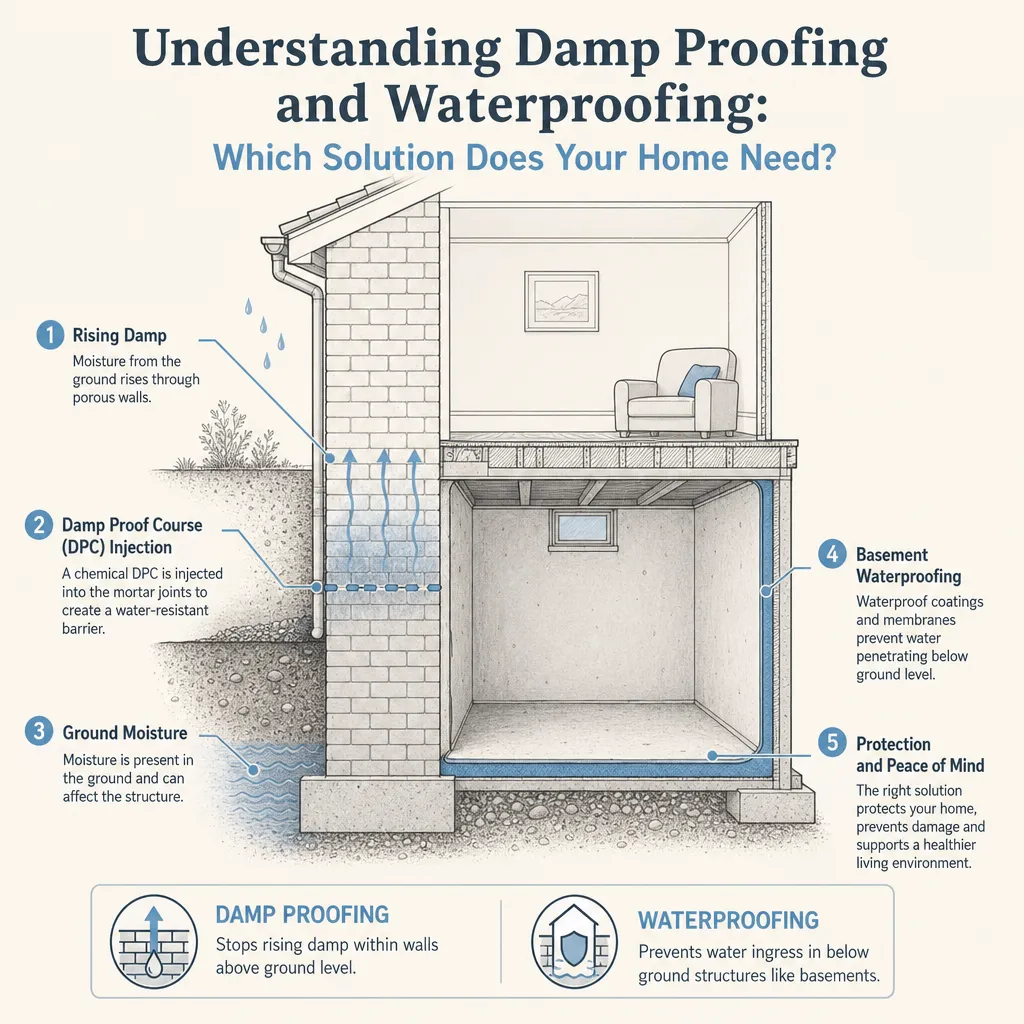
Understanding Damp Proofing and Waterproofing: Which Solution Does Your Home Need?
Damp proofing controls moisture movement through above-ground walls, while waterproofing excludes groundwater from below-ground structures.
 Surveys & Inspections
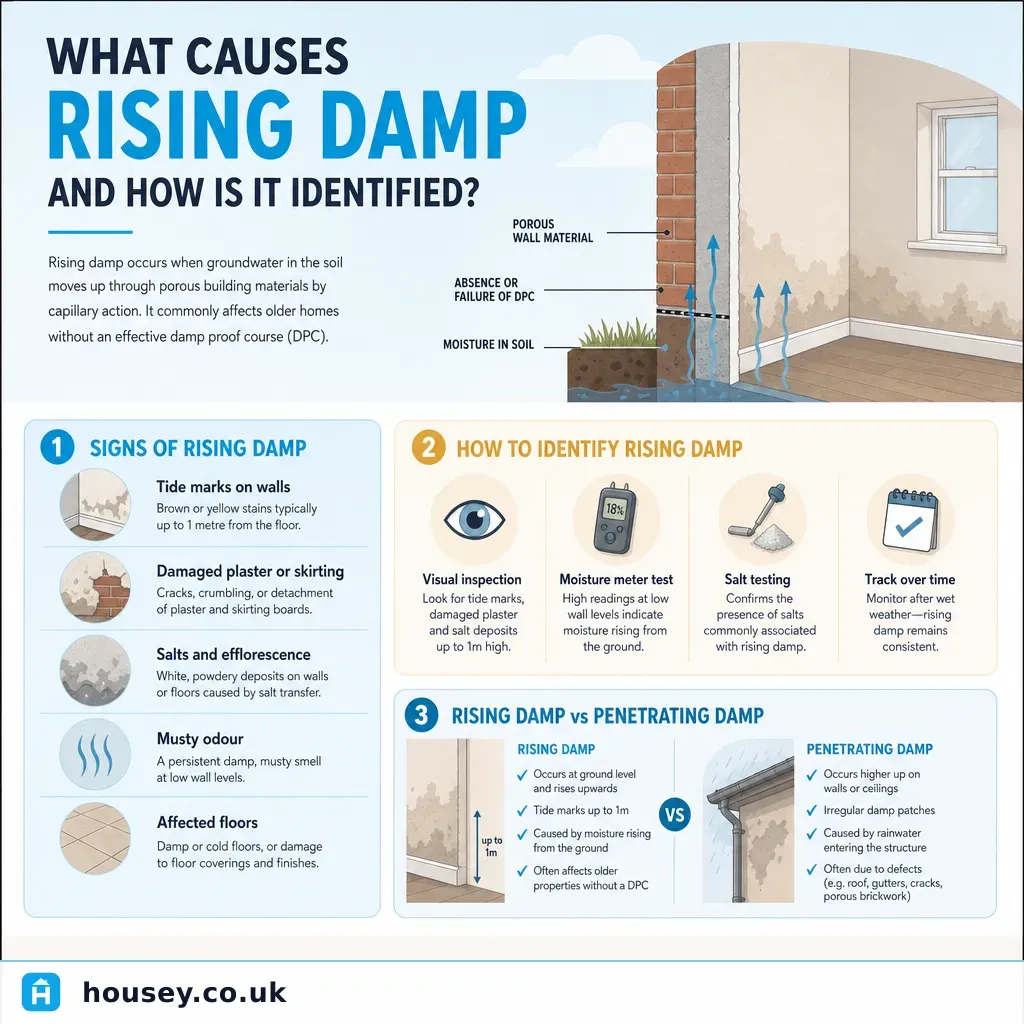
What Causes Rising Damp and How Is It Identified?
Rising damp occurs when groundwater travels upward through masonry via capillary action, usually because the damp-proof course (DPC) has failed, is absent, or has been bridged.
 Surveys & Inspections
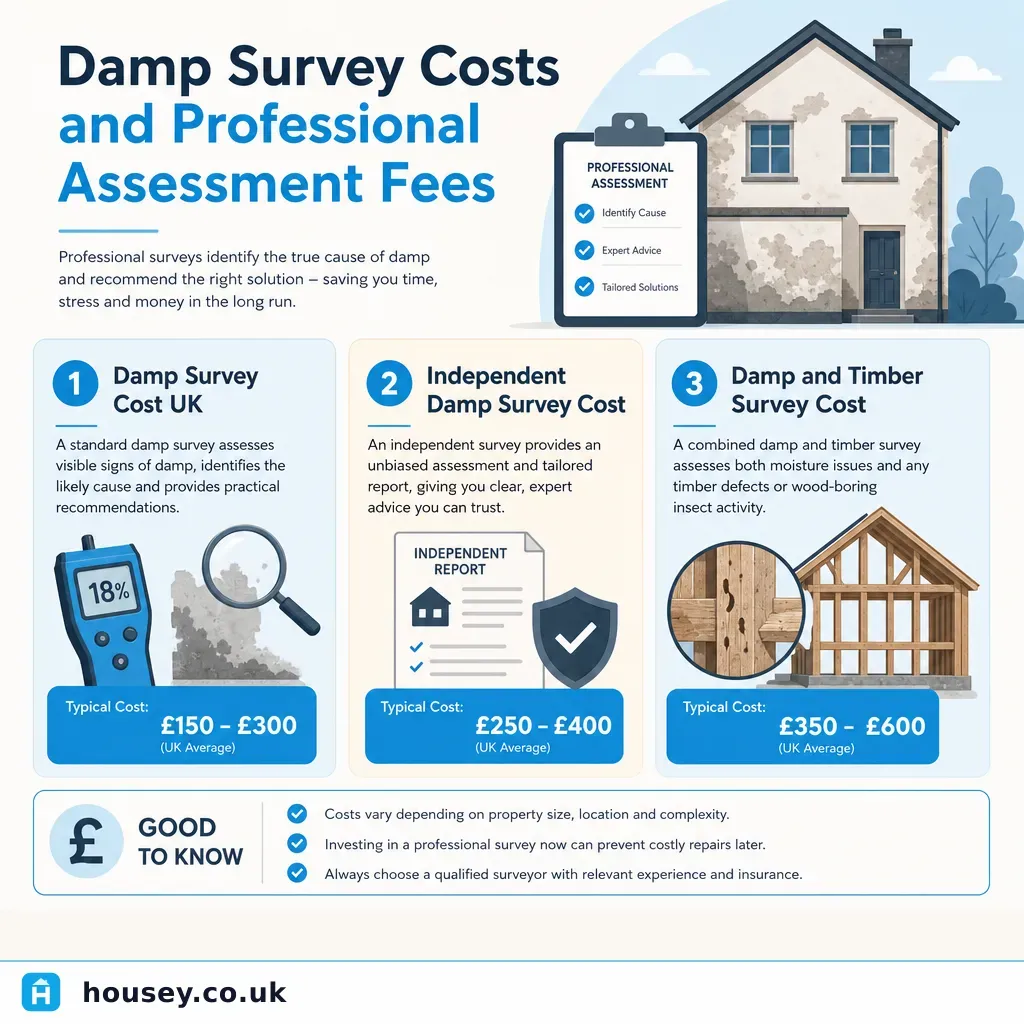
Damp Survey Costs and Professional Assessment Fees
An independent damp and timber survey in the UK typically costs between £200 and £500, depending on property size, age, and surveyor qualifications.
 Surveys & Inspections
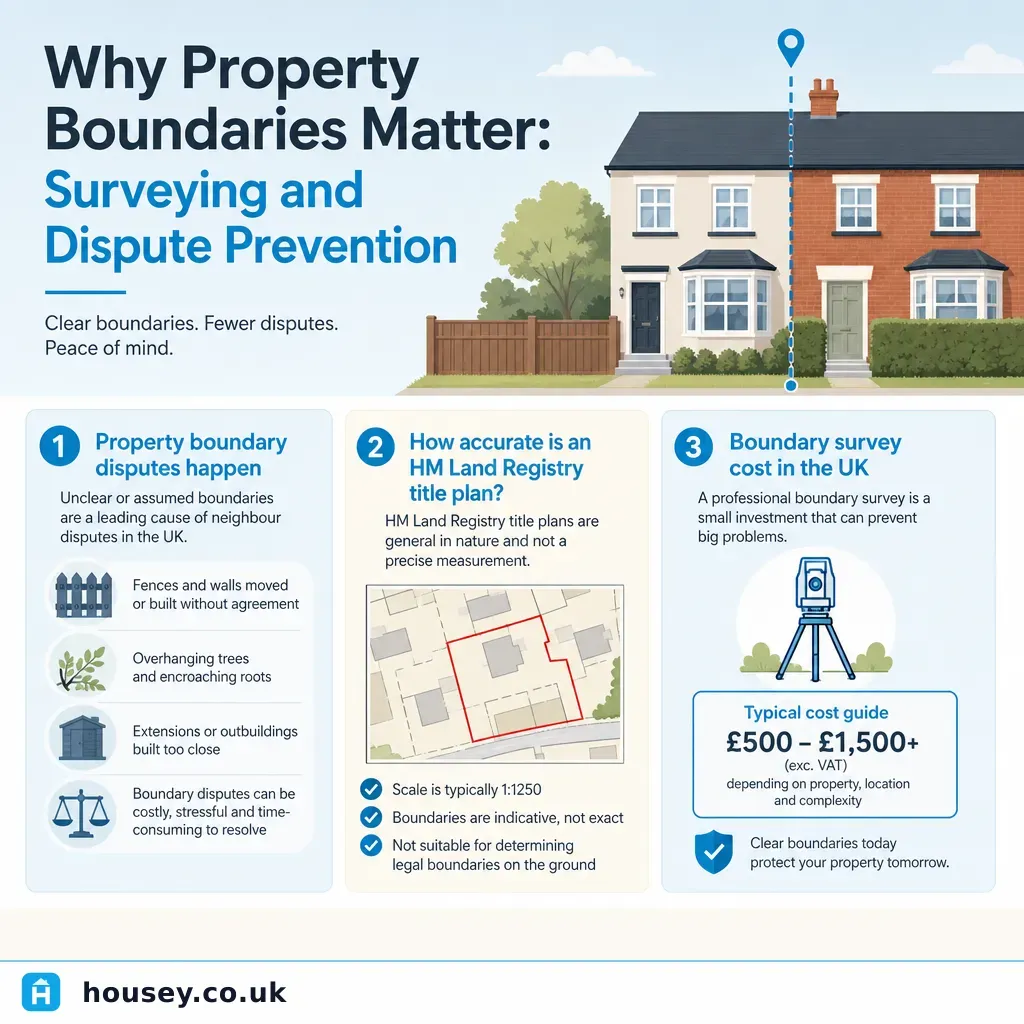
Why Property Boundaries Matter: Surveying and Dispute Prevention
Property boundaries in England and Wales are recorded as general boundaries by HM Land Registry — not precise measurements.
 Surveys & Inspections
Safe Property Viewing Practices: Protecting Yourself During Inspections
When viewing a property in the UK, always tell someone where you are going and share the full address before you leave.