Identifying Damp and Timber Damage: When to Call a Surveyor
By Housey · Last reviewed 30th of May 2026
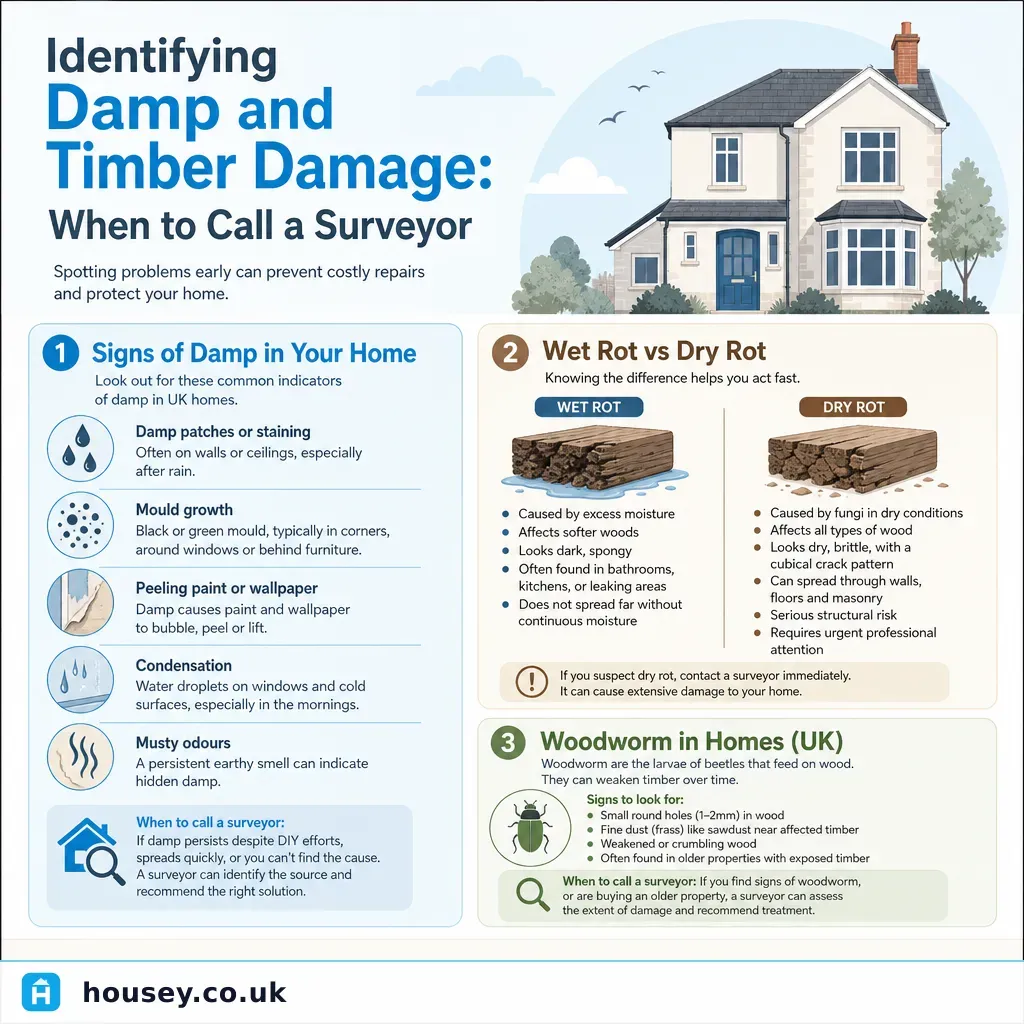
Identifying Damp and Timber Damage: When to Call a Surveyor
Damp and timber decay are among the most common findings in UK housing stock, particularly in properties built before 1945 when solid-wall construction and limited ventilation were standard. The question of whether a damp patch or a soft piece of skirting board warrants professional investigation typically arises during a property purchase, after a RICS survey flags a concern, or when signs that have been present for months begin to worsen. Acting on the right information early can prevent a cosmetic issue from becoming a structural one.
Key points
- Dry rot (Serpula lacrymans) can spread through masonry, mortar, and plaster, travelling several metres from the original infection site — making it a far more extensive and costly defect to remediate than wet rot.
- The most common wood-boring insect in UK homes is the Common Furniture Beetle (Anobium punctatum), identifiable by circular exit holes of approximately 1–2 mm diameter; fresh frass (fine powder) around holes indicates active infestation.
- Rising damp is widely misdiagnosed — the Property Care Association (PCA) and independent building surveyors have noted that many cases labelled rising damp are actually caused by condensation or penetrating damp.
- A damp and timber survey by a PCA Certificated Surveyor in Remedial Treatments (CSRT) provides a diagnosis backed by professional indemnity insurance, independent of any remediation contractor.
- Moisture meter readings alone cannot determine damp cause; a competent surveyor interprets readings alongside building age, construction type, and ventilation conditions.
What causes damp in UK homes?
Damp is a symptom, not a single cause. The three main types differ significantly in how they should be treated.
Damp type | Common signs | Likely cause | Typical solution |
|---|---|---|---|
Condensation | Black mould on cold surfaces (window reveals, external corners), musty smell | Warm humid air meeting cold surfaces; poor ventilation | Improved ventilation, heating, and insulation — not chemical injection |
Penetrating damp | Horizontal tide marks, localised wet patches after rainfall, damp on one wall only | Failed pointing, cracked render, damaged guttering or flashing | Repair of source: pointing, render, roofline, or DPC bridging |
Rising damp | Tide marks up to approximately 1 m on ground-floor walls, efflorescence (white salts) below the mark, decayed skirting | Failed or absent damp-proof course (DPC) | DPC replacement or insertion — often over-diagnosed |
Correctly identifying the type is essential before any work is carried out. Injecting a chemical damp-proof course into a wall affected only by condensation will not resolve the problem and wastes money.
Types of timber damage
Wet rot
Wet rot develops when timber moisture content is consistently above approximately 30–40%. Affected wood becomes soft, may darken, and feels spongy or fibrous when probed with a sharp implement. Common locations include external joinery (window sills, door frames), ground-floor floor joists below a poorly ventilated sub-floor void, and loft timbers beneath a leaking roof covering.
Unlike dry rot, wet rot does not spread through masonry. Remediation involves addressing the moisture source first, then repairing or replacing the affected timber.
Dry rot
Dry rot (Serpula lacrymans) is considerably more serious. It can spread through mortar, brickwork, and plaster, and fruiting bodies — rust-red spore dust and bracket-like growth — may appear some distance from the original infection. Signs include cuboidal cracking of timber, white or silver mycelium growth, and a distinctive mushroom-like smell. The PCA treats dry rot as a major defect requiring specialist investigation and remediation.
Wood-boring insects
Species | Exit hole size | Timber type affected | Active season | Risk level |
|---|---|---|---|---|
Common Furniture Beetle (Anobium punctatum) | 1–2 mm round | Sapwood of hardwood and softwood | April–September | Generally low in seasoned, dry timber |
Death Watch Beetle (Xestobium rufovillosum) | 3 mm round | Hardwoods, often already weakened by fungal decay | March–June | Can be high in historic buildings |
House Longhorn Beetle (Hylotrupes bajulus) | 6–10 mm oval | Softwood roof timbers | July–September | Significant structural risk; restricted area in parts of Surrey and adjacent counties |
Bark Borer (Ernobius mollis) | 1–2 mm round | Green or recently milled softwood | Variable | Usually self-limiting once timber dries |
Fresh frass (fine, powdery dust) around exit holes indicates active infestation. Compacted or absent frass suggests a historic infestation that may have become dormant.
Red flags: when to stop and call a professional
Do not rely on visual assessment alone — contact a qualified surveyor if any of the following apply:
- Timber sounds hollow when tapped and a sharp probe penetrates more than a few millimetres with little resistance, suggesting significant structural softening.
- Fungal growth is visible — white, grey, silver, or rust-red — on or behind a wall surface, on skirting boards, or on structural timbers.
- Floor boards or skirting boards flex, bounce, or feel soft across a wide area, suggesting widespread joist decay.
- A RICS Level 2 or Level 3 survey has assigned a Condition 3 rating to damp or timber defects and recommended specialist investigation.
- You are purchasing a property with any of the above signs — a specialist survey before exchange can fundamentally change the negotiating position or decision to proceed.
- Damp tide marks appear above 1 m in height, or horizontal damp patterns occur on upper floors or internal partitions.
- There is a persistent smell of mushrooms or compost in a closed space: under a suspended floor, inside a fitted cupboard, or in a cellar.
What a professional damp and timber survey involves
A specialist survey by a PCA CSRT-qualified surveyor typically covers:
- Visual inspection of all accessible areas — walls, floors, roof space, sub-floor void, and basement if present.
- Moisture meter readings taken at multiple heights and locations, interpreted in context rather than in isolation.
- Timber probing — physical testing of structural and non-structural timbers using a sharp probe.
- Cause identification — distinguishing condensation, penetrating damp, and rising damp through observation and building investigation.
- Written report — a schedule of findings, diagnosis, and recommended remediation with an indicative scope of work.
Indicative UK costs, last reviewed 2026-05-30. A PCA CSRT damp and timber survey typically costs £250–£600 depending on property size and location. Obtain at least two independent opinions before commissioning any remediation work.
Important limitations
This article provides general guidance only. Damp and timber defects vary considerably by property construction, age, location, and maintenance history. The information here is not a substitute for a physical inspection by a qualified professional. Correct diagnosis requires hands-on assessment — moisture readings, probing, and knowledge of the building's specific construction type. Rules, standards, and product recommendations change over time.
When this becomes urgent
Seek professional advice without delay if:
- Floor joists are visibly decayed, feel springy underfoot across a wide area, or appear structurally compromised.
- A wall is showing movement — cracking or leaning — alongside damp, which may indicate a more serious structural defect.
- You identify what may be dry rot — treating it as wet rot will fail and allow it to spread further through the building fabric.
- You are approaching exchange of contracts on a property with unresolved damp or timber concerns flagged in a survey report.
What to ask a qualified professional
Before instructing a surveyor or remediation contractor, ask:
- Are you a PCA CSRT-qualified surveyor? Is your report covered by professional indemnity insurance?
- Will you identify the cause, or only recommend treatment products?
- Are you independent from any remediation contractor — do you have a commercial interest in recommending works?
- What does the survey include and exclude — will you inspect the sub-floor void and roof space?
- What guarantee will any remediation works carry, and is it insurance-backed by an independent provider?
- How will you distinguish between wet rot, dry rot, and condensation-related damage?
When to get professional help
Damp and timber assessment beyond simple visual checks should involve a qualified professional. The consequences of misdiagnosis — unnecessary chemical injection, missed dry rot, untreated moisture sources — can be structurally damaging and costly to correct. If a RICS survey flags a concern, the appropriate next step is a specialist damp and timber survey by an independent CSRT-qualified surveyor, not a free survey from a damp-proofing contractor who profits from recommending treatment works.
How Housey can help
Housey connects homeowners with independent damp and timber surveyors who carry out assessments and provide written reports with diagnosis and remediation schedules — without a commercial interest in selling treatment products.
Frequently asked questions
How do I tell the difference between dry rot and wet rot?
Dry rot (Serpula lacrymans) produces cuboidal cracking of timber, white or silver mycelium, and rust-red spore dust, and can spread through masonry. Wet rot darkens and softens timber but stays within the damp zone and does not spread. If you see any fungal growth in an enclosed or poorly ventilated space, treat it as potentially dry rot and arrange a professional inspection before disturbing anything.
Can I treat woodworm myself?
Permethrin-based treatment fluids are available for DIY use and are appropriate for active infestations in accessible, non-structural timber such as furniture or floorboards. If the affected timber is structural — floor joists, rafters, or wall plates — or the infestation is extensive, a professional survey and structural assessment is advisable before relying on chemical treatment alone. Confirm the infestation is active by looking for fresh frass near exit holes.
Is rising damp common in UK homes?
Genuine rising damp is less common than widely believed. The Property Care Association and independent surveyors have noted that many cases labelled rising damp are actually caused by condensation or penetrating damp incorrectly diagnosed. An independent survey by a PCA CSRT-qualified surveyor — rather than a free assessment from a damp-proofing company — is the most reliable way to obtain an accurate, unbiased diagnosis before commissioning any work.
What documents should I keep after a damp and timber survey?
Keep the written survey report, photographic evidence, the schedule of recommended works, and all guarantees issued on any remediation carried out — confirming whether each guarantee is insurance-backed by an independent provider. These documents will be requested during conveyancing when you sell. Ensure any guarantee certificate names an independent warranty provider rather than the remediation contractor alone.
Does a RICS Level 2 survey cover damp and timber defects?
A RICS Level 2 Home Survey flags visible signs of damp and timber defects using a Condition 1, 2, or 3 rating. It does not diagnose the specific cause in the depth that a specialist survey provides, and it cannot access concealed areas such as sub-floor voids. A Condition 3 rating from a RICS Level 2 or Level 3 survey should be followed up with a specialist damp and timber investigation.
Sources and further reading
- Property Care Association — CSRT qualification and member search — Property Care Association
- RICS — guidance on damp in buildings — Royal Institution of Chartered Surveyors
- Historic England — timber decay in historic buildings — Historic England
- GOV.UK — Building Regulations Approved Documents — GOV.UK
- Citizens Advice — getting a survey when buying a home — Citizens Advice
Useful next reads
 Surveys & Inspections
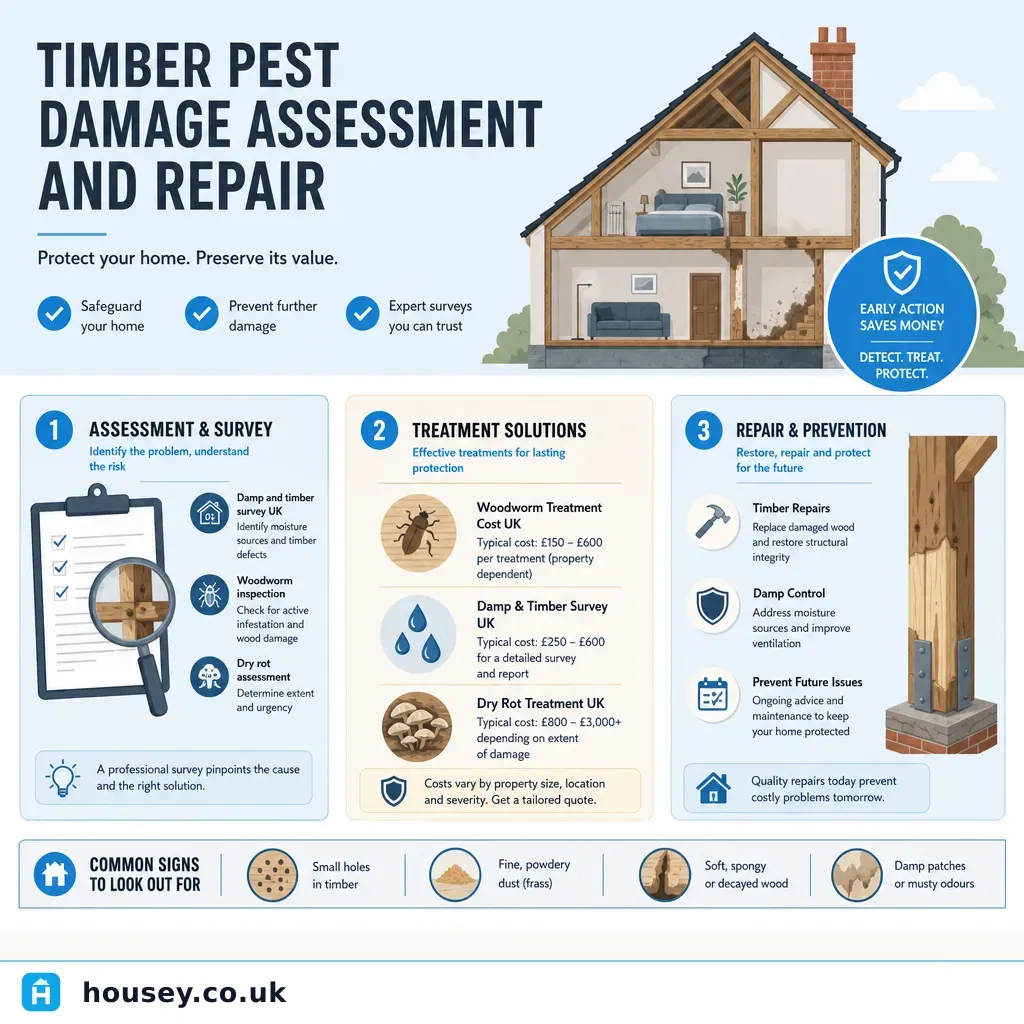
Timber Pest Damage Assessment and Repair
Timber pest damage in UK homes is most commonly caused by Common Furniture Beetle (woodworm), Death Watch Beetle, or fungal decay such as dry rot.
 Surveys & Inspections
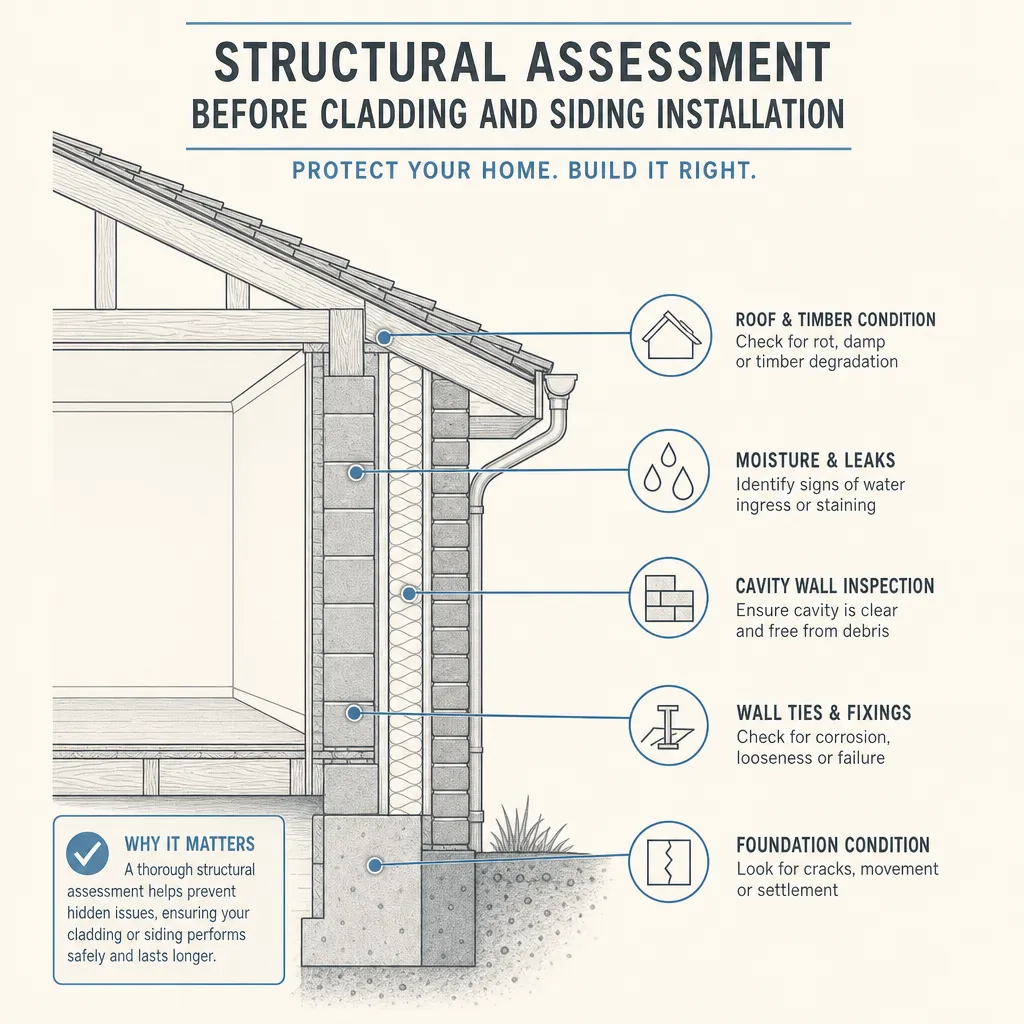
Structural Assessment Before Cladding and Siding Installation
Before installing external cladding or siding, a structural or specific defect assessment is needed to identify hidden timber decay, damp penetration, cavity wall defects, and any load-bearing implications.
 Surveys & Inspections
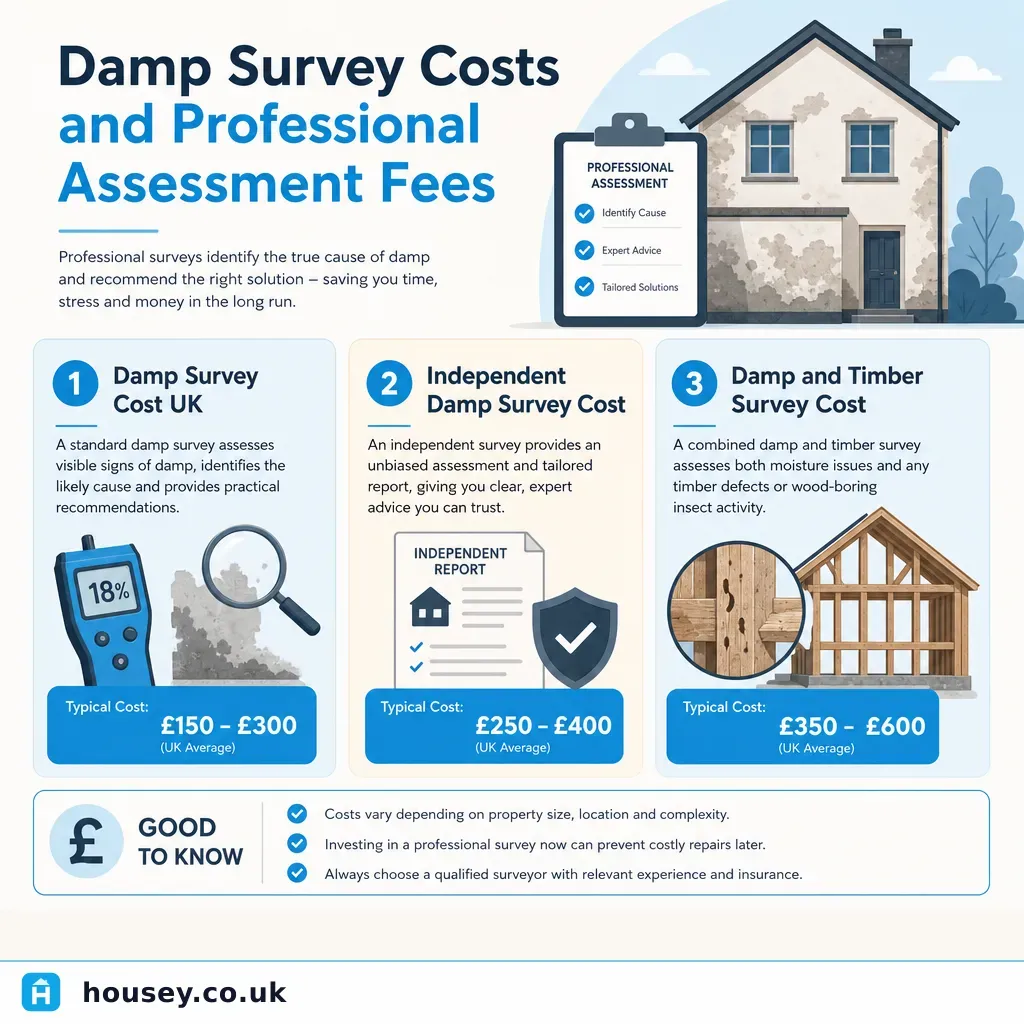
Damp Survey Costs and Professional Assessment Fees
An independent damp and timber survey in the UK typically costs between £200 and £500, depending on property size, age, and surveyor qualifications.
 Surveys & Inspections
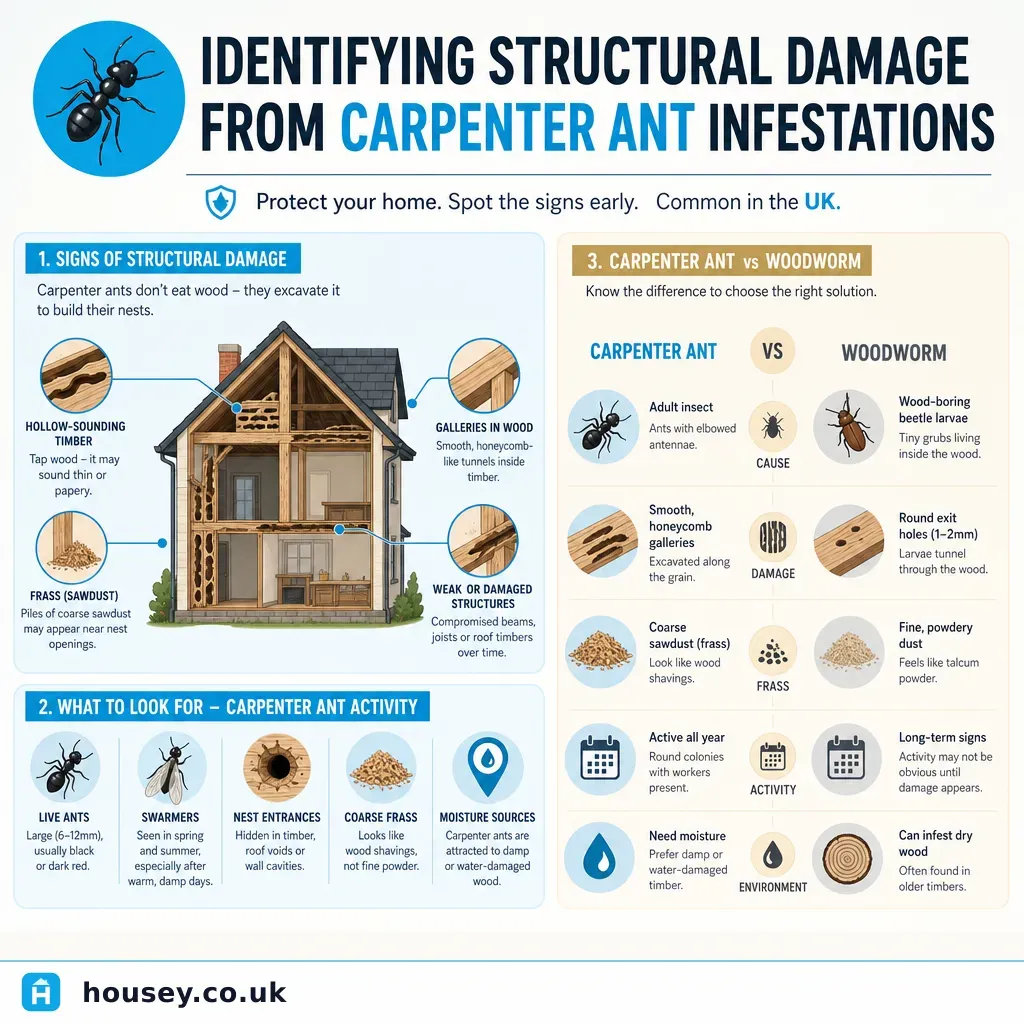
Identifying Structural Damage from Carpenter Ant Infestations
Carpenter ants excavate galleries in damp or decayed timber, leaving coarse frass and smooth, clean channels distinct from woodworm's fine bore dust and round exit holes.
 Surveys & Inspections
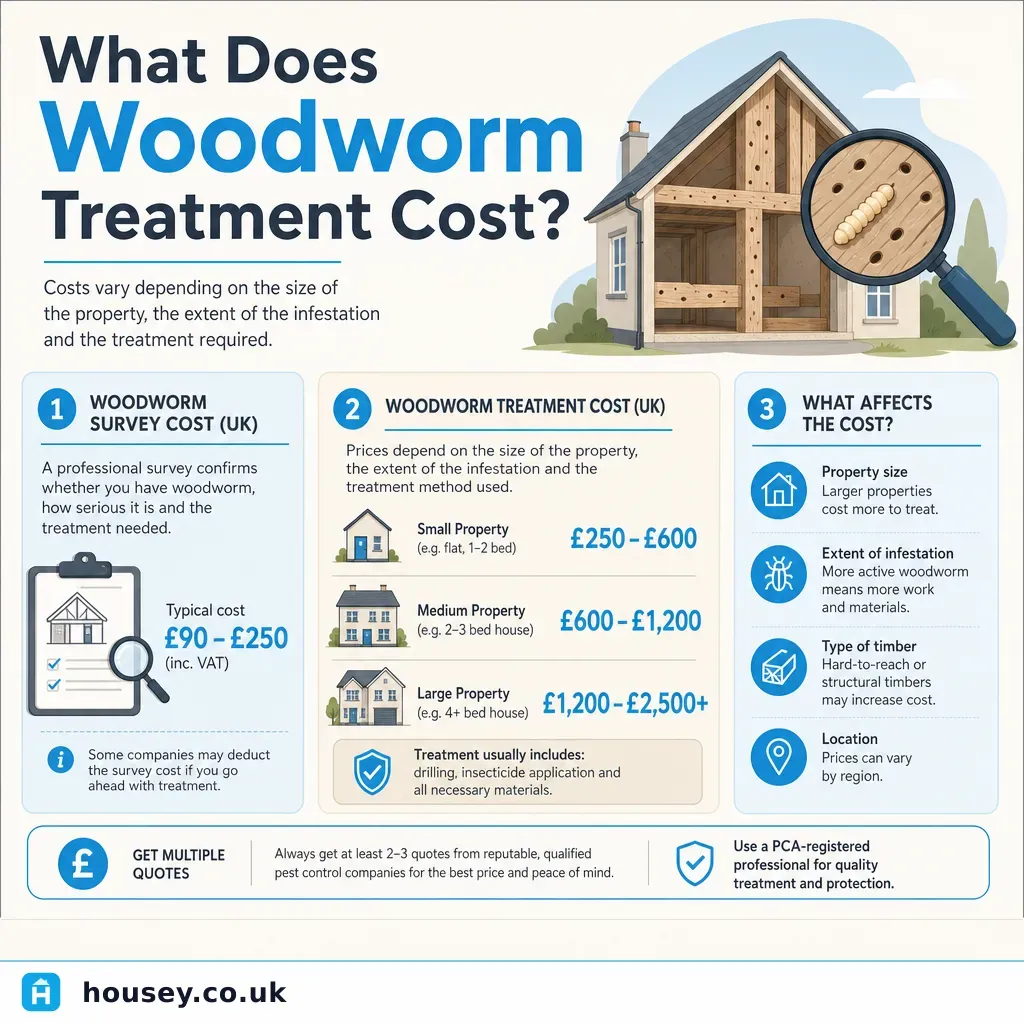
What Does Woodworm Treatment Cost?
Woodworm treatment in the UK typically costs £300–£900 for a standard three-bedroom home, depending on the extent of infestation and timbers affected.