Dead Tree Removal and Clearance Services
By Housey · Last reviewed 11th of May 2026
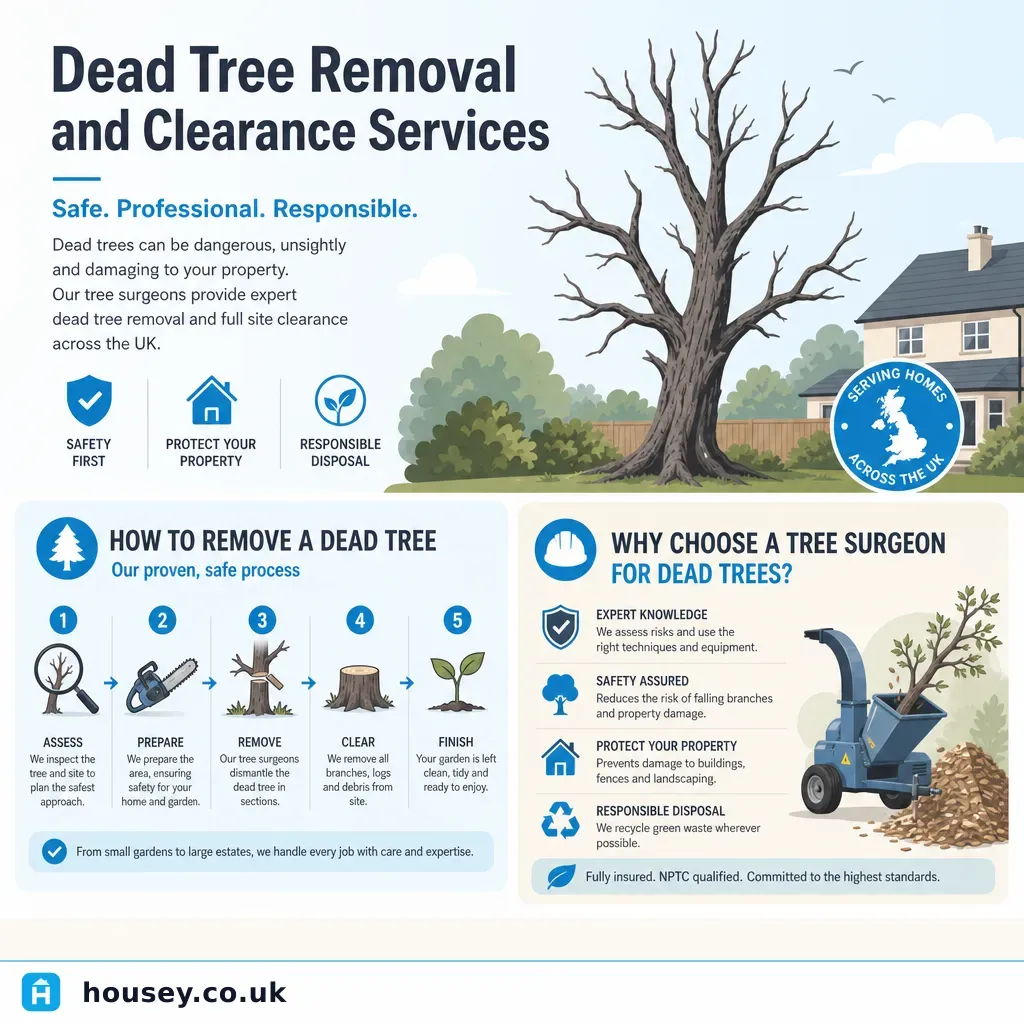
Dead Tree Removal and Clearance Services
A dead tree in a garden or on a cleared site can become a hazard quickly — weakened wood sheds branches unpredictably, and a standing dead trunk may fail in high winds. Whether you are dealing with a single garden tree that has declined over a season or clearing a plot before construction begins, understanding the legal checks, contractor requirements, and removal process helps you act promptly and within the rules.
Key points
- Trees protected by a Tree Preservation Order (TPO) cannot be felled without written consent from the local planning authority (LPA), even if the tree is dead or dying.
- Trees in a conservation area with a trunk diameter over 75mm (measured at 1.5m above ground) require six weeks' prior written notice to the LPA before any felling begins.
- Reputable tree surgeons should hold NPTC (Lantra Awards) chainsaw and climbing certificates and carry public liability insurance of at least £5 million.
- Emergency felling of a TPO-protected dead tree is permitted where there is an immediate risk to persons, but written notice to the LPA must follow as soon as reasonably practicable.
- Stump grinding is usually quoted separately; indicative UK prices range from £50 to £200 per stump depending on diameter and site access (Indicative UK costs, last reviewed 2026-05-11).
Do you need permission to remove a dead tree?
Planning rules apply based on the tree's legal protection status, not its condition. Two protections can restrict what you do regardless of whether the tree is alive or dead.
Tree Preservation Orders: A TPO covers individual trees, groups, or woodlands and is registered with the local planning authority. You can check whether a tree has a TPO through your LPA's planning portal or the national Planning Portal. Consent is required before felling — the LPA will usually grant consent quickly for a demonstrably hazardous dead tree, but you must apply first.
Conservation areas: Any tree with a trunk over 75mm diameter in a designated conservation area requires six weeks' prior notification to the LPA before removal. The LPA can issue a TPO within that six-week window; if it does not, work can proceed. Failing to give notice is a criminal offence under the Town and Country Planning Act 1990.
If neither protection applies and the tree stands entirely within your boundary, you can generally remove it without prior permission — but check with your LPA if you are uncertain, as local policies occasionally add complexity.
Trees near boundaries or in shared spaces
Where a tree straddles a boundary or its branches extend onto neighbouring land, civil law governs alongside planning law. A neighbour may remove overhanging branches (returning them to you), but clear communication and ideally a written agreement are advisable before instructing any work close to a shared boundary. Your tree surgeon can advise on access requirements.
Which contractor do you need?
Situation | Recommended contractor | Key requirement |
|---|---|---|
Small dead tree (under 6m) in open garden | Qualified tree surgeon | NPTC chainsaw certificate, public liability insurance |
Large dead tree near buildings or overhead lines | AA Approved Contractor | Technical rigging skills, higher insurance coverage |
Multiple dead trees — site clearance | Arboricultural contractor with machinery | Chipping or haulage capacity, waste disposal |
Tree with suspected fungal decay or lean increase | Arborist with diagnostic experience | Structural assessment before the felling plan |
Woodland or commercial-scale clearance | Forestry contractor | Timber handling, regulatory compliance, scale |
AA = Arboricultural Association.
How to find and assess a tree surgeon
Tree surgery involves working at height with chainsaws and heavy machinery. These checks help you engage a competent, properly insured contractor:
- Arboricultural Association (AA) membership or Approved Contractor status — the AA runs a contractor approval scheme with periodic site assessments. Search at trees.org.uk.
- NPTC / Lantra Awards chainsaw and climbing certificates — the standard UK professional qualifications for tree work.
- Public liability insurance — request the certificate before work begins. £5 million is the common minimum for residential work.
- Written quote and method statement — a professional contractor will describe the felling or dismantling approach, debris management plan, and any stump treatment included.
What to ask before accepting a quote
- Will the tree be felled in one cut or dismantled in sections — and why?
- What happens to timber and chippings — removed from site, left, or split by agreement?
- Is stump grinding or chemical stump treatment included, or quoted separately?
- Will you confirm the tree's TPO status and conservation area classification before starting?
- Who will personally carry out the work, and can I see their NPTC certificates and AA registration?
- Can I see the current public liability insurance certificate?
- Is VAT included in the quoted price?
- What site access is required — vehicle width, gate dimensions, neighbour notification?
Red flags to watch for
Before instructing any tree surgeon, watch for these warning signs:
- No written quote or method statement provided.
- Reluctance or refusal to show an insurance certificate.
- Chainsaw qualifications not mentioned when asked directly.
- Contractor does not ask about TPOs or conservation area status before quoting.
- Full cash payment demanded upfront.
- No registered company address or contact details beyond a mobile number.
- Quote significantly lower than all others, with no explanation of what is excluded.
- Work proposed to start the same day without a site assessment or written agreement.
When to get professional help
Any dead tree standing within falling distance of a building, boundary, parked vehicle, or public footpath should be assessed by a qualified arborist before any work is instructed. Seek professional input urgently if:
- Fungal fruiting bodies (brackets or toadstools at the base or on the trunk) are visible, indicating possible structural decay.
- The tree is visibly leaning and the lean appears to have increased recently.
- Large branches have already dropped from the crown.
- The root zone shows heaving, cracking, or undermined ground.
- The tree is over 8–10 metres tall or positioned near overhead electricity lines.
Do not attempt to fell or climb a dead tree of significant size without proper training and equipment. Dead wood behaves unpredictably during cutting, and working at height above 2m carries serious risk.
How Housey can help
Housey connects you with vetted tree surgeons across the UK who can assess dead and hazardous trees, confirm any TPO or conservation area implications, and provide written quotes for safe removal and stump treatment. Submit your job details to compare quotes from qualified local arboricultural contractors.
Frequently asked questions
Do Tree Preservation Orders still apply to dead trees?
Yes. A TPO protects the tree regardless of its condition. You must apply to your local planning authority for consent before felling. Where the tree poses an imminent risk to people, emergency works may proceed, but written notice to the LPA must follow as soon as practicable after the work.
How much does dead tree removal cost in the UK?
Costs vary with tree height, trunk diameter, access, and whether stump removal is included. As a rough guide, small trees (under 6m) may cost £150–£400, medium trees £400–£900, and large specimens over £1,000 — but prices differ significantly by region and site conditions. Obtain at least three written quotes. (Indicative UK costs, last reviewed 2026-05-11.)
Can I leave a dead tree stump after felling?
You can, but stumps can harbour honey fungus, attract wood-boring insects, and present a trip hazard in lawns. Stump grinding — reducing the stump to below ground level — is the most practical solution and leaves the area level and suitable for replanting or re-turfing.
Who is liable if a dead tree falls and damages a neighbour's property?
Liability generally rests with the landowner if they were aware of the hazard and failed to act. A written arborist's assessment and records of action taken help demonstrate due diligence. For specific liability questions, consult a solicitor.
How long does dead tree removal typically take?
A single medium-sized garden tree is usually removed within half a day to a full day, including stump grinding and basic site clearance. Larger trees, restricted access, or multiple trees extend the programme — your contractor should provide a clear time estimate in the written quote.
Sources and further reading
- Tree Preservation Orders and trees in conservation areas — GOV.UK
- Find a tree surgeon — Arboricultural Association
- Tree works: applications and notifications — Planning Portal
Useful next reads
 Improvement & Build
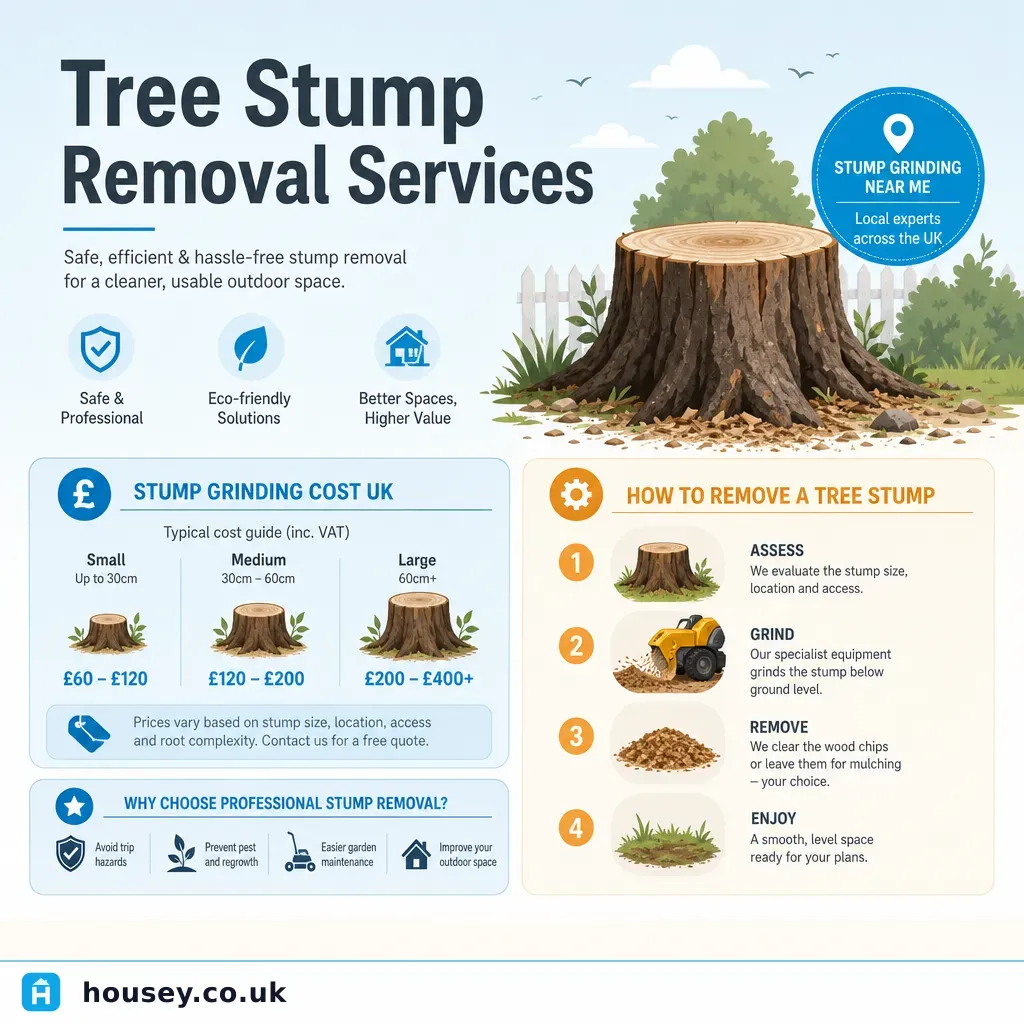
Tree Stump Removal Services
Tree stump removal in the UK is most commonly done by stump grinding, which reduces the stump to around 150–300 mm below ground level.
 Improvement & Build
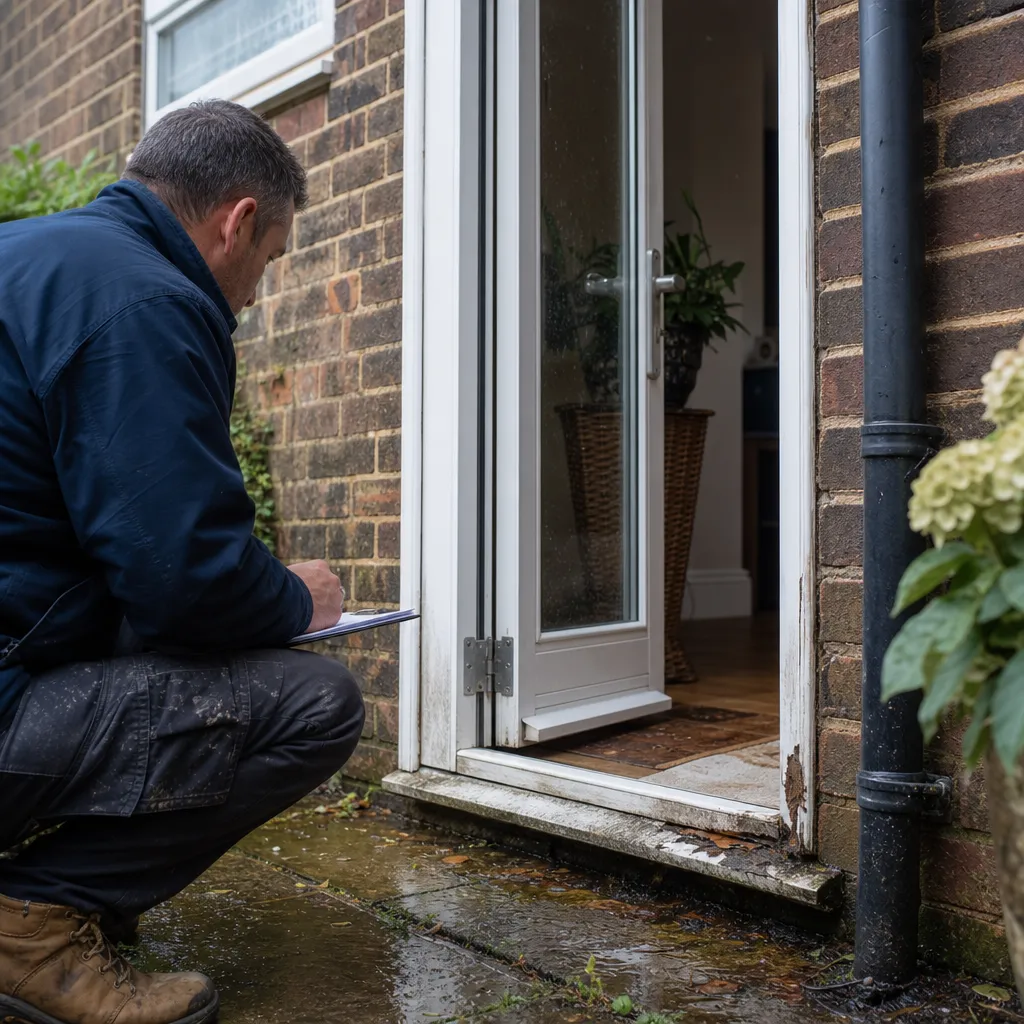
Fixing Leaking Back Doors and Water Ingress
Most leaking back doors in UK homes fail at one of three points: the threshold or door sill joint, the frame-to-masonry mastic seal, or the door weatherstrip.
 Improvement & Build
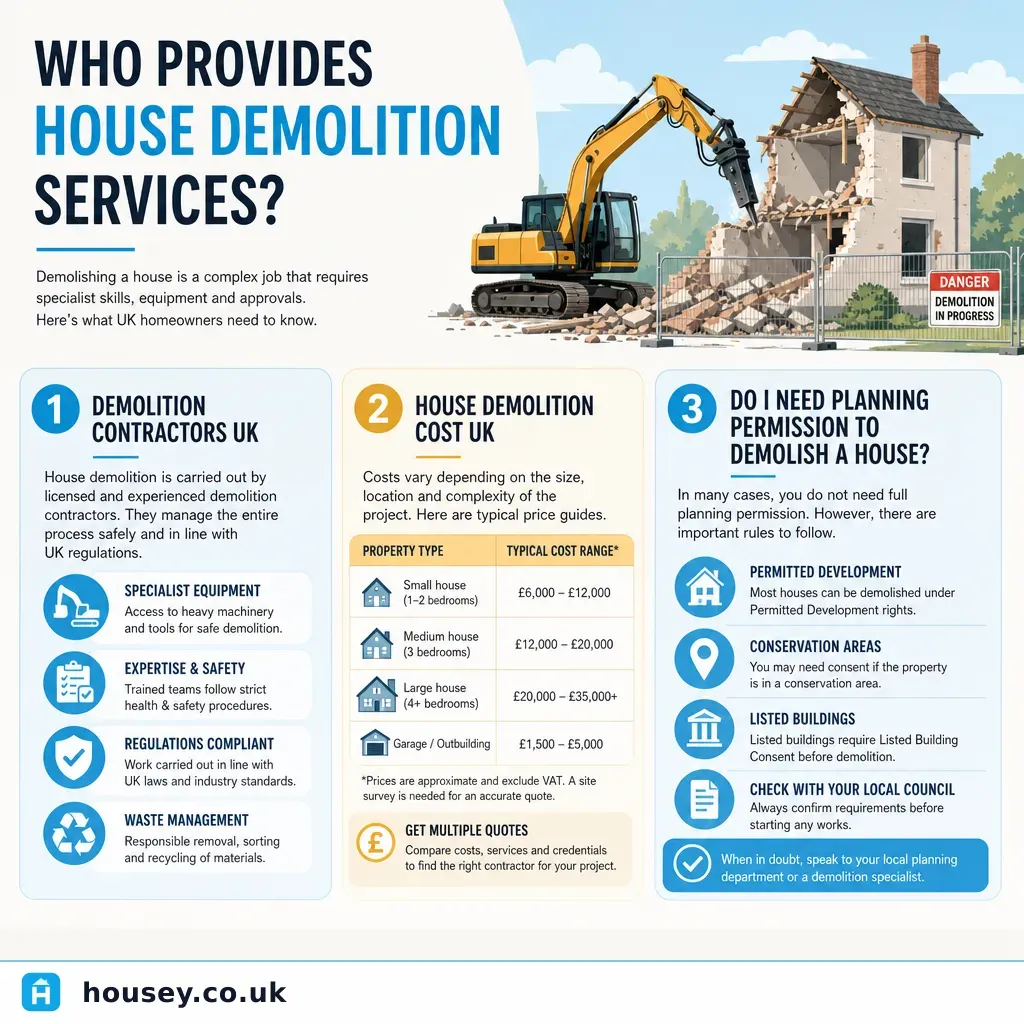
Who Provides House Demolition Services
House demolition in the UK is carried out by specialist demolition contractors, often members of the National Federation of Demolition Contractors (NFDC).
 Improvement & Build
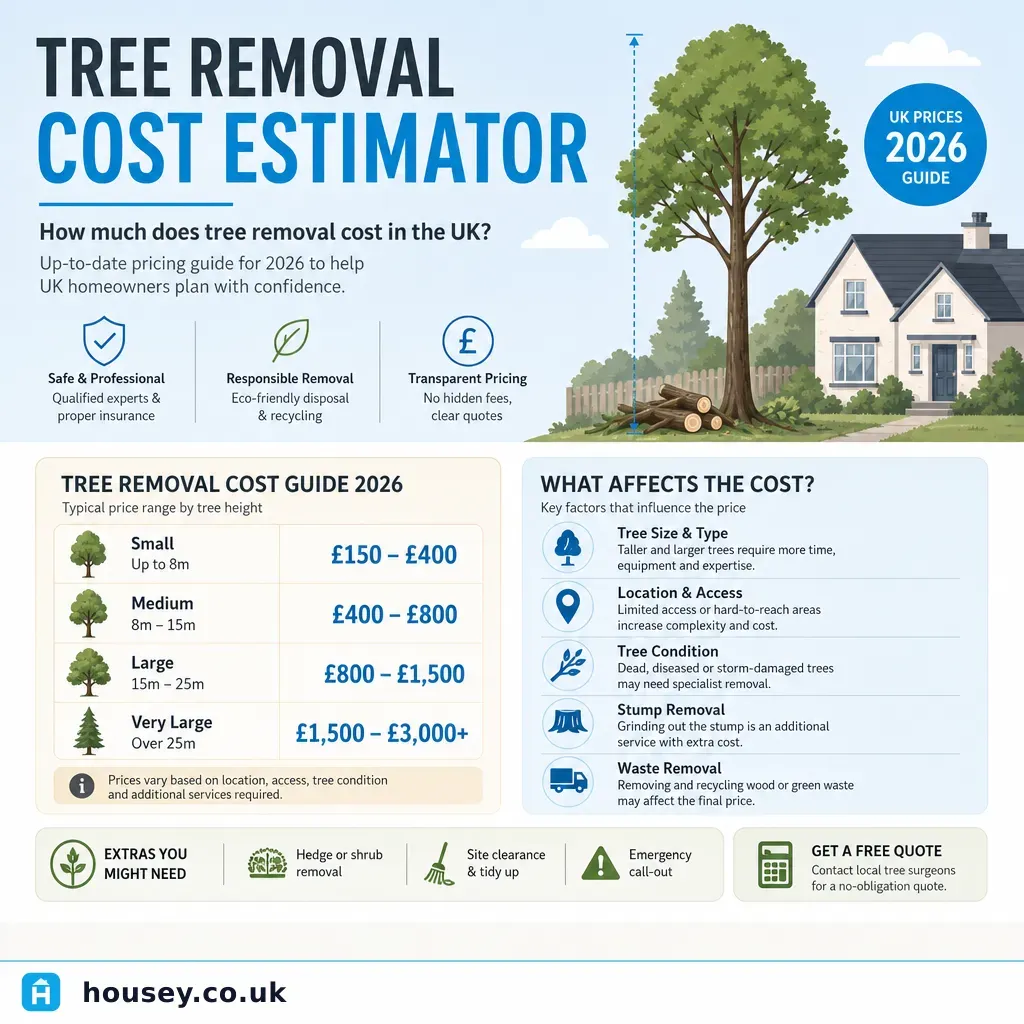
Tree Removal Cost Estimator
Tree removal in the UK costs roughly £150 to £5,000 or more, depending on the tree's height, species, access conditions, and whether stump removal is needed.
 Improvement & Build
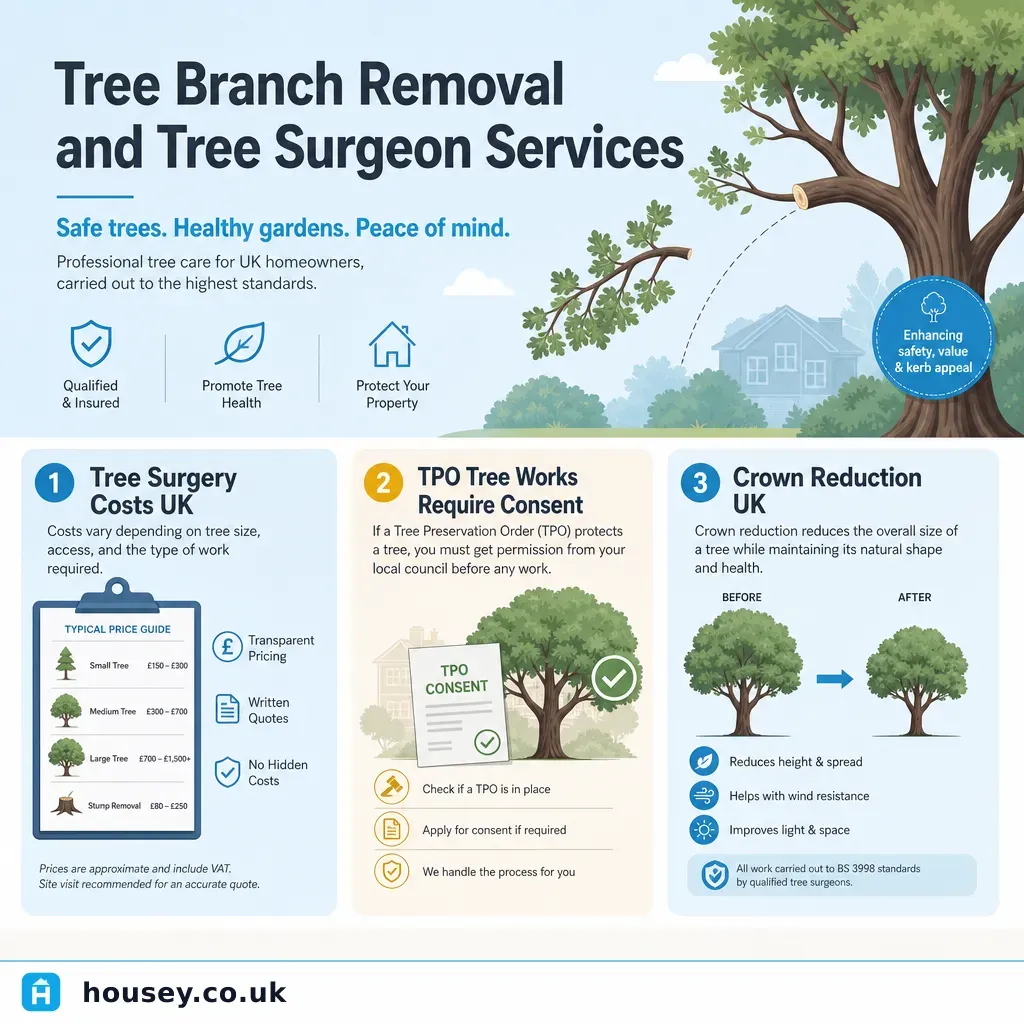
Tree Branch Removal and Tree Surgeon Services
Tree surgery — from deadwooding and crown reduction to branch removal and felling — must be carried out by qualified, insured contractors in the UK.