Decommissioning and removal of an old domestic heating oil tank
By Housey · Last reviewed 7th of May 2026
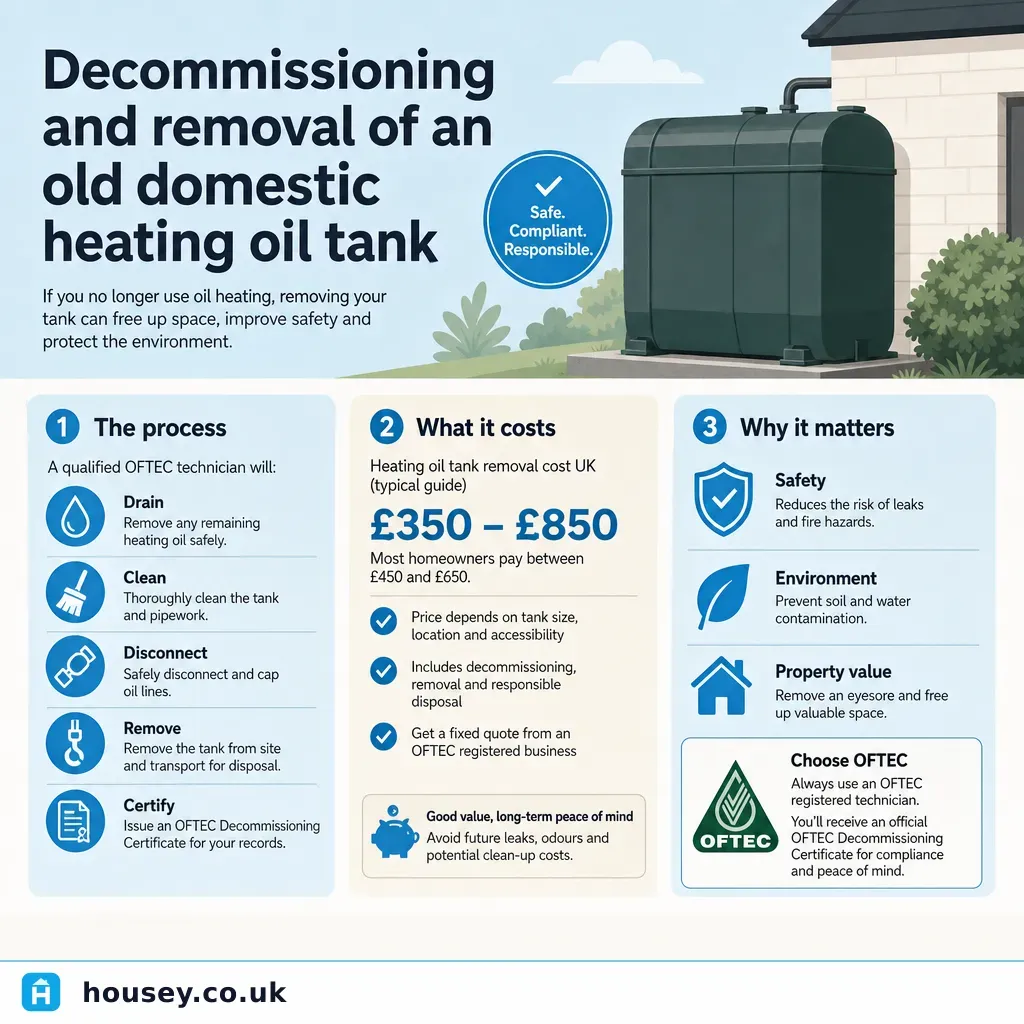
Decommissioning and removal of an old domestic heating oil tank
Domestic heating oil tanks often outlast the boilers they once served, sitting redundant in gardens or outbuildings for years after a household has switched to mains gas or an alternative heat source. Whether you are changing your heating system, preparing for a house sale, or simply clearing a neglected site, correctly decommissioning an old oil tank is a legally and environmentally significant step — one that touches building regulations, environmental law, and your property's saleability in ways that are easy to underestimate.
Key points
- Oil tank decommissioning in England and Wales falls under Building Regulations Approved Document J; work should be carried out by an OFTEC-registered engineer who can self-certify compliance.
- The Control of Pollution (Oil Storage) (England) Regulations 2001 sets minimum standards for domestic oil storage; improperly abandoned tanks that still contain oil or sludge can constitute an environmental offence.
- Before removal, the tank must be purged of all remaining oil; residual oil is classified as controlled waste under the Environmental Protection Act 1990 and must be disposed of lawfully — pouring waste oil to drain is an offence under the Water Resources Act 1991.
- If oil has leaked into surrounding soil, that contaminated ground is also controlled waste and may require professional remediation costing from hundreds to tens of thousands of pounds.
- Retain the OFTEC DC1 decommissioning certificate; buyers' solicitors increasingly request evidence of proper decommissioning during conveyancing.
What does decommissioning involve?
Decommissioning an oil tank is not simply disconnecting the pipework and driving the tank away. A proper decommission involves several distinct stages:
- Oil removal: Any remaining heating oil is pumped out and either reused, returned to the supplier, or disposed of as controlled waste by a licensed carrier.
- Purging and cleaning: The tank is cleaned of sludge and residues. For steel tanks, this may involve gas-freeing procedures to remove flammable vapours before any cutting or welding is carried out.
- Pipe and valve isolation: All supply pipework, valves, and fire valves are isolated, capped, or removed.
- Physical removal: The tank is either dismantled on site or removed whole, depending on size and access.
- Ground inspection: The area beneath and around the tank should be examined for oil staining, odour, or other signs of contamination.
- Documentation: The contractor provides a written decommissioning record; OFTEC-registered contractors can issue the OFTEC DC1 certificate.
Typical costs
Stage | Indicative UK cost |
|---|---|
Decommissioning only (purge, clean, isolate) | £200–£500 |
Tank removal (up to 1,250 litres) | £300–£700 |
Large bunded tank removal (2,500 litres+) | £500–£1,500 |
Soil sampling and testing | £200–£600 |
Minor soil remediation | £1,000–£5,000+ |
Major contamination remediation | £5,000–£50,000+ |
Indicative UK costs, last reviewed 2026-05-07. Costs vary by contractor, region, tank size, and site conditions. Obtain at least three written quotes from OFTEC-registered contractors.
Documents and records to prepare
Document preparation list
- Current oil supply contract: Notify your supplier to cancel future deliveries and arrange collection or transfer of any remaining fuel before the contractor attends.
- OFTEC DC1 certificate (or written decommissioning record): Issued by the contractor on completion. Retain this permanently as part of your property documents.
- Waste transfer notes: Under the Waste (England and Wales) Regulations 2011, movement of controlled waste must be documented. Your contractor should provide copies for all waste removed.
- Site investigation report (where soil testing is carried out): Solicitors will request this if contamination was found or investigated during the decommissioning.
- Building regulations completion certificate (if a replacement heating system is being installed): A new boiler, heat pump, or alternative fuel system may trigger a separate building regulations notification.
- Planning records: If the original tank installation was subject to building regulations approval, any completion certificate may be requested during conveyancing.
Selling a property with a decommissioned oil tank
Conveyancing solicitors and buyers' surveyors are increasingly attentive to oil tank history. If you are selling a property:
- Disclose the presence or former presence of an oil tank in the TA6 property information form.
- Provide the OFTEC DC1 certificate or written decommissioning record as part of your pre-contract documentation.
- Where soil investigation was carried out, provide the full report — a clean result is reassuring to buyers; suppressing a contamination report can have serious legal consequences.
- If the tank has been removed but no documentation exists, a qualified environmental consultant may be able to carry out a desk study and site inspection to provide evidence to support the sale.
For properties in Scotland, similar requirements apply but the regulatory framework references the Scottish Building Standards rather than Approved Document J. For Northern Ireland, contact the Northern Ireland Environment Agency.
Important limitations
This article provides general information about domestic oil tank decommissioning in England and Wales. Regulations, costs, and procedures vary depending on property location, tank size, construction, age, and whether contamination is present. Nothing in this article constitutes legal, environmental, or technical advice. A qualified OFTEC-registered engineer and, where contamination is suspected, a competent environmental consultant should assess your specific situation before any work is instructed.
Red flags to watch for
- A contractor who does not treat residual oil and sludge as controlled waste requiring lawful disposal.
- No offer of an OFTEC DC1 certificate or written decommissioning record on completion.
- Inability or unwillingness to provide an OFTEC registration number for verification.
- Waste being removed without a waste transfer note being issued.
- Very low quotes that exclude soil inspection, waste disposal, or documentation.
- Cash-only payment demanded upfront with no written contract or quotation.
What to ask a qualified professional
- Are you registered with OFTEC, and can I verify your registration number on the OFTEC website?
- Will you provide an OFTEC DC1 decommissioning certificate on completion?
- How will residual oil and sludge be disposed of, and will I receive a waste transfer note?
- Will you inspect the ground beneath and around the tank for signs of contamination?
- If contamination is found, do you carry out remediation, or can you refer me to an environmental specialist?
- Is the quoted price fixed, or could costs increase if contamination or access difficulties are discovered?
- Is VAT included in the quoted price?
- What public liability insurance do you carry, and can I see the certificate?
When to get professional help
Always use an OFTEC-registered contractor for oil tank decommissioning. Do not attempt to drain, purge, or remove an oil tank yourself — residual oil and vapours are a fire and environmental hazard, and improper disposal of waste oil is a criminal offence.
If you notice any of the following, engage an environmental consultant in addition to your decommissioning contractor:
- Oil staining or a petroleum smell in the soil around the tank base or in nearby drains.
- An oil sheen on surface water anywhere on the property.
- Dead or dying vegetation in a pattern around the tank location.
- Neighbour reports of fuel odours from the property boundary.
Severe contamination may need to be reported to the Environment Agency. Failure to report a significant pollution incident can carry penalties under the Environmental Permitting (England and Wales) Regulations 2016.
How Housey can help
Housey helps homeowners understand the services they need and prepare to instruct qualified professionals with confidence. For oil tank decommissioning, always verify your contractor's OFTEC registration at oftec.org before instructing any work. If you are preparing for a house sale or planning wider property improvements, Housey can signpost you to the relevant services for your next steps.
Frequently asked questions
Do I need building regulations approval to remove an oil tank?
Removal of an oil tank does not normally require a separate building regulations application in England and Wales. However, if decommissioning is part of a system change — such as installing a new boiler or heat pump — the new installation must comply with Building Regulations Approved Document J. OFTEC-registered contractors can self-certify the new installation in many cases, removing the need for a separate local authority building control application.
Can I just leave the old tank in situ without decommissioning it?
Leaving a tank in place is sometimes unavoidable where removal would cause significant disruption, but it must still be properly decommissioned — emptied, cleaned, purged, and sealed. An abandoned tank containing oil or sludge risks pollution and may breach the Control of Pollution (Oil Storage) (England) Regulations 2001. Undeclared tanks can also create complications during conveyancing when selling the property.
How long does oil tank decommissioning take?
For a straightforward single-skin tank of average size, an OFTEC-registered contractor can typically complete purging, isolation, and removal in a half-day to a full day. Larger bunded tanks, difficult access, or the presence of soil contamination can extend the work to two or more days on site.
What happens if oil has leaked into the ground?
Contaminated soil is classified as controlled waste and must be handled by a licensed contractor. Minor surface contamination may be resolved by excavating and removing affected soil. More serious contamination requires specialist remediation, which can be costly. Your OFTEC contractor should advise on next steps or refer you to a qualified environmental consultant if needed.
Does oil tank removal affect house insurance?
Removing a redundant oil tank generally reduces rather than increases environmental risk in the eyes of most insurers. Notify your insurer of significant changes to your heating system. If contamination is found and remediated, inform your insurer at renewal — suppressing material facts can affect the validity of your cover.
Sources and further reading
- Storing oil at a domestic property — GOV.UK
- OFTEC — Oil Firing Technical Association — OFTEC
- Control of Pollution (Oil Storage) (England) Regulations 2001 — legislation.gov.uk
- Building Regulations Approved Document J: Combustion appliances and fuel storage systems — Ministry of Housing, Communities and Local Government
- Waste transfer notes: a guide for businesses — GOV.UK / Environment Agency
- Environmental Permitting (England and Wales) Regulations 2016 — legislation.gov.uk
Useful next reads
 General property advice
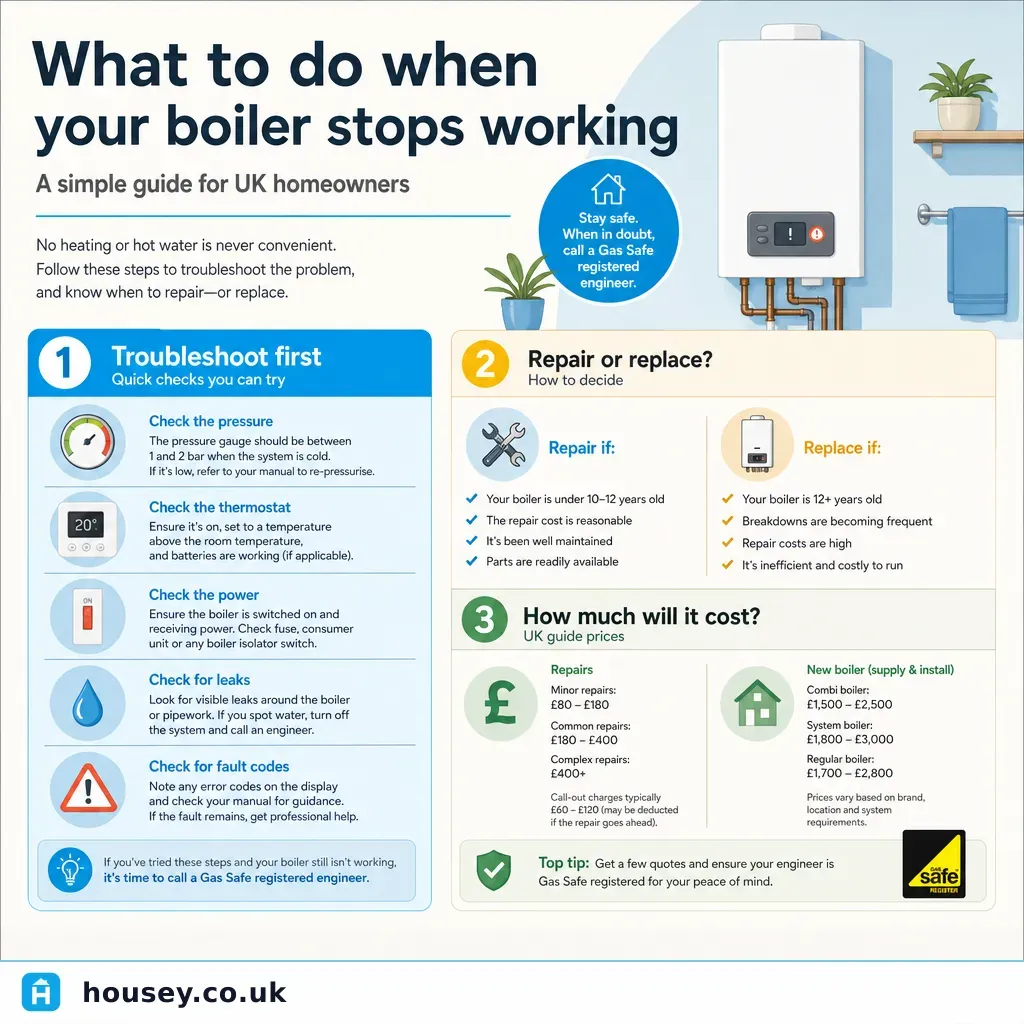
What to do when your boiler stops working
When your boiler stops working, check the pressure gauge (should read 1–1.
 General property advice
Property Market Trends: Activity Growth and Price Movements
UK property market activity is measured through completed sale registrations (HM Land Registry), lender mortgage data, and transaction volumes from HMRC.
 General property advice
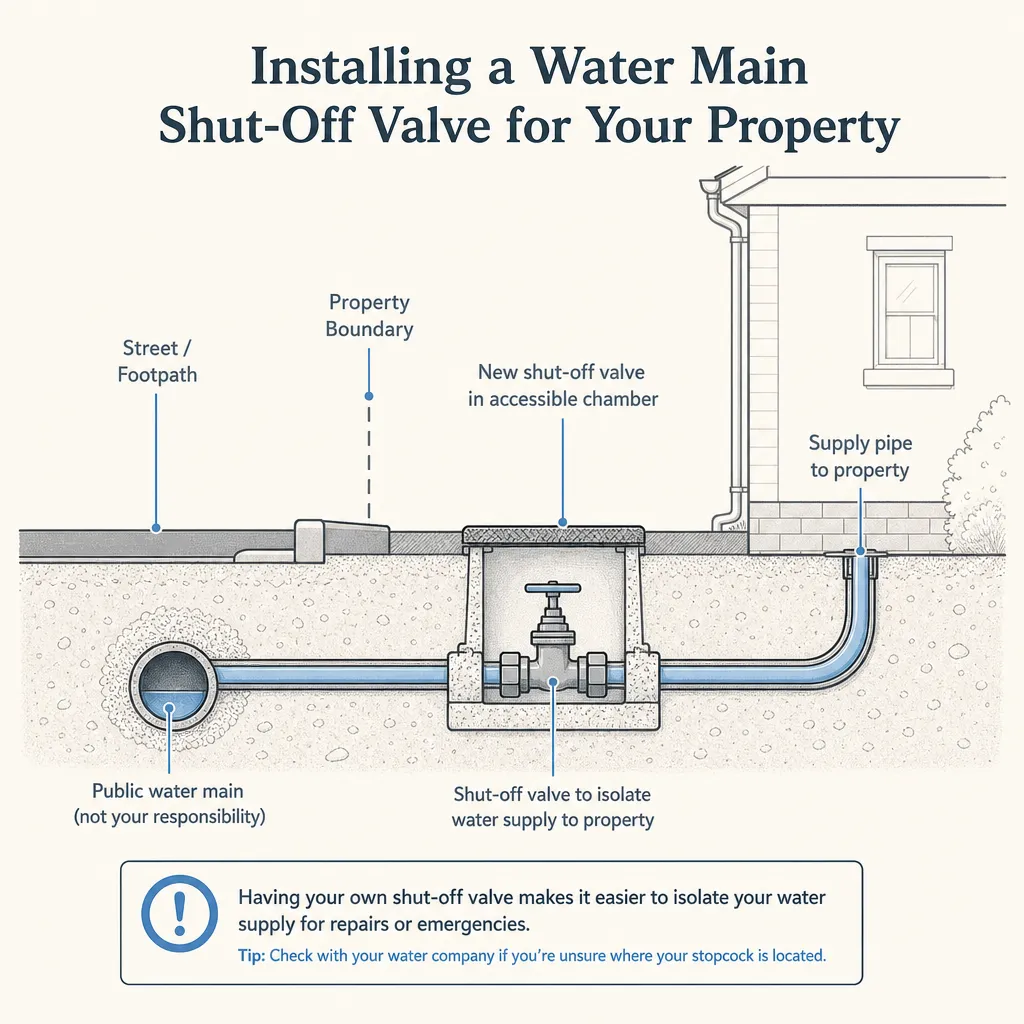
Installing a water main shut-off valve for your property
A water main shut-off valve — commonly called a stopcock — controls all water entering your home from the mains.
 General property advice
Monthly House Price Index: August Market Report and Analysis
The UK House Price Index is published monthly using completed Land Registry transaction data, meaning August figures typically reflect sales agreed months earlier.
 General property advice
Scottish Property Market: Activity and Regional Trends
Scotland's property market operates under distinct legal rules: sellers must provide a Home Report before marketing, transactions become legally binding at conclusion of missives rather than exchange of contracts, and Land and Buildings Transaction Tax replaces Stamp Duty.