Decorative Aggregate Finishes for Concrete Surfaces
By Housey · Last reviewed 25th of May 2026
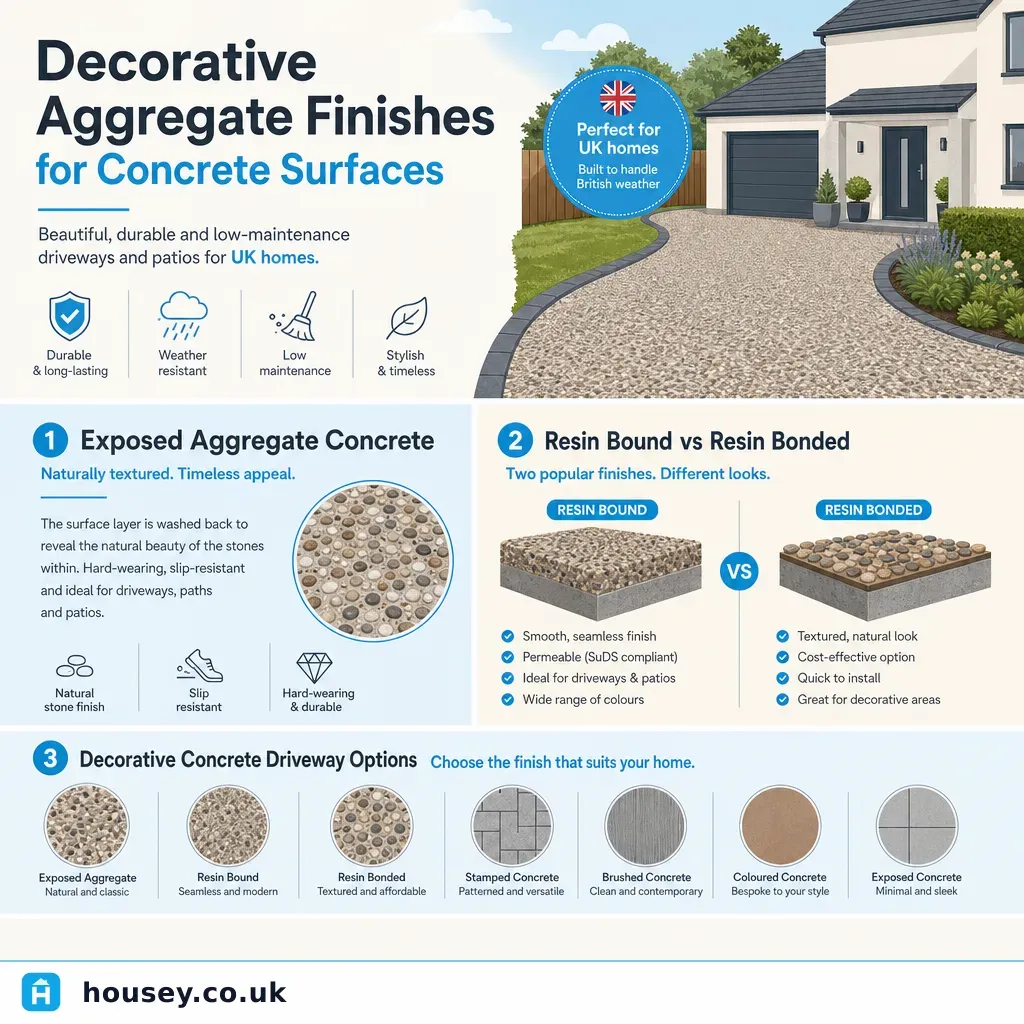
Decorative Aggregate Finishes for Concrete Surfaces
Whether you are planning a new driveway, path, or patio, the surface finish affects how it looks, how it performs underfoot, and how long it lasts before needing attention. Decorative aggregate finishes — where stones, pebbles, or granular materials create a textured surface — are among the most popular choices for UK residential projects, offering a wide range of colours and textures as well as practical differences in drainage and planning compliance that are worth understanding before you commit to a specification.
Key points
- The four main aggregate finish types used on UK driveways and paths are exposed aggregate concrete, resin-bound aggregate, resin-bonded aggregate, and tar-chip — each with different drainage properties, durability, and planning implications.
- Resin-bound aggregate is permeable (water passes through the surface itself) and qualifies as a SuDS-compliant surface; resin-bonded aggregate is not permeable, as the stones are bonded on top of an impermeable base.
- For front garden driveways over 5 square metres in England, resin-bound aggregate qualifies for permitted development (no planning permission required), whereas resin-bonded on an impermeable base typically does not.
- Exposed aggregate concrete achieves its finish by removing the surface cement paste — by brushing before set or using a chemical surface retarder — to reveal the coarse aggregate beneath; the concrete slab itself is not inherently permeable.
- Slip resistance varies significantly between aggregate types; angular granite or recycled glass performs better when wet than smooth, rounded pebbles, and surfaces can be assessed using the Pendulum test to BS 7976-2.
The four main decorative aggregate finish types
Exposed aggregate concrete
The concrete is poured in the standard way, then the surface layer of cement paste is removed — either by wire-brushing, pressure-washing, or applying a chemical surface retarder before the concrete fully cures — to reveal the decorative aggregate embedded in the mix. The aggregate can be selected by the homeowner, with options including natural flint, granite chips, quartz, or river pebbles in a range of colours and sizes.
Exposed aggregate is a durable, low-maintenance finish that becomes an integral part of the concrete slab. Because the concrete matrix is not gap-graded, the slab itself is not inherently permeable, and it therefore does not qualify as a SuDS-compliant surface for planning purposes on front driveways over 5m².
Resin-bound aggregate
A UV-stable polyurethane or epoxy resin is mixed with dried, sieved aggregate and laid onto a prepared base — typically a compacted Type 1 or Type 3 sub-base with a tarmac or concrete binder course. The aggregate particles are individually coated in resin, leaving voids between them through which water can pass freely.
Resin-bound surfaces are SuDS-compliant, qualify for permitted development on front driveways, and produce a smooth but textured finish with good slip resistance. They require a correctly prepared base and accurate resin-to-aggregate ratios — poor installation practice is a leading cause of delamination and premature surface failure.
Resin-bonded aggregate
Here, a resin adhesive is applied to an existing or new impermeable surface, and loose aggregate is scattered over the top and allowed to bond. The resin grips the stones, but the surface beneath is typically impermeable. The visual result is similar to resin-bound, but water cannot pass through the surface.
Resin-bonded is generally quicker and cheaper to install than resin-bound, but does not qualify as a permeable surface for planning purposes and can lose individual stones over time, particularly under regular vehicle traffic.
Tar-chip (gravel with binder)
Loose gravel or shingle is stabilised with a bitumen or resin binder to create a surface that retains the appearance of loose stone while being more stable underfoot and under vehicles. This finish is permeable and relatively low in cost, but produces a coarser texture than resin-bound systems and may not suit formal or contemporary settings.
Comparison: decorative aggregate finish types
Finish type | Permeable? | Planning (front drive over 5m²) | Typical lifespan | Maintenance | Indicative cost per m² |
|---|---|---|---|---|---|
Exposed aggregate concrete | No | Planning permission likely required | 20–30+ years | Low | £60–£100 |
Resin-bound aggregate | Yes | Permitted development | 15–25 years | Low (occasional clean) | £70–£130 |
Resin-bonded aggregate | No | Planning permission likely required | 5–15 years | Medium (stone loss) | £40–£70 |
Tar-chip | Yes | Permitted development | 5–10 years | Medium (periodic top-up) | £25–£45 |
Indicative UK costs, last reviewed 2026-05-25. Costs vary significantly by region, surface area, sub-base condition, and contractor. Obtain at least three comparable quotes before committing.
Choosing the right aggregate for your project
Colour and appearance: Aggregate is available in natural stone tones — granite greys, limestone creams, flint silvers, sandstone browns — and in dyed or coated variants. Colours typically appear darker when wet, and some resin coatings can affect the perception of the stone's colour in different light conditions. Always ask for a physical sample viewed in natural UK daylight, not just a printed brochure image.
Size: Aggregate size affects both texture and slip resistance. A 6–10mm aggregate gives a finer, smoother feel underfoot; 10–14mm gives a more pronounced texture. Very large aggregate is less common on residential surfaces and can be uncomfortable to walk on barefoot or in soft-soled shoes.
Slip resistance: The Pendulum test (BS 7976-2) is the UK standard for assessing slip resistance of pedestrian surfaces. Angular aggregate — such as granite chippings or recycled glass — generally achieves better slip resistance ratings than smooth, rounded pebbles, particularly in wet conditions. For paths used regularly by elderly or mobility-impaired residents, this is a practical consideration worth raising with your installer.
Conservation areas and listed buildings: In conservation areas or where planning conditions restrict materials, the aggregate colour and type may need to complement the character of the area. Check with your local planning authority before specifying strongly contrasting or non-traditional aggregate colours on a prominent frontage.
What not to assume
Resin-bound and resin-bonded are not interchangeable terms. Some contractors use them loosely; always ask specifically whether the finished surface will be permeable and whether water passes through it or across it to a drain.
A decorative aggregate surface does not automatically resolve existing drainage problems. If the ground beneath drains poorly, a new surface finish alone will not correct it. Any drainage issues should be assessed and addressed before specifying a new surface above.
A lower quote may reflect lower-quality resin, untreated aggregate, or insufficient sub-base preparation. Resin-bound surfaces installed on an inadequate or poorly prepared base are prone to cracking, edge lifting, and early delamination — problems that are costly and disruptive to rectify.
Colours in brochures and digital renders may not match what appears on site in UK daylight. Request a physical sample installed outdoors, and ask to view an existing project installed 12–18 months ago if the contractor can arrange it.
Homeowner checklist: before agreeing an aggregate finish
When to get professional help
Most decorative aggregate installations are carried out by specialist driveway contractors, and the process is relatively straightforward for standard residential plots. Consider seeking additional professional input if:
- Your driveway is in a conservation area or within the curtilage of a listed building — local planning guidance may restrict material choices.
- You are unsure whether your chosen surface qualifies for permitted development under the current rules.
- Existing drainage beneath the surface is poor — this must be addressed before any new surface layer is laid.
- Your surface area is large (over 100m²), where drainage management may require more detailed design to meet SuDS expectations.
How Housey can help
Housey connects you with experienced driveway installers who can advise on aggregate specifications, sub-base requirements, drainage compliance, and planning rules for your specific property and location. For larger projects where decorative surfaces form part of a wider outdoor scheme, our landscapers can help integrate driveway and path finishes into a coherent garden design from the outset.
Frequently asked questions
How long does a resin-bound aggregate driveway last?
A correctly installed resin-bound driveway typically lasts 15–25 years, depending on the quality of the resin system, sub-base preparation, and maintenance. UV-stable resins last longer before discolouration or brittleness develops. Avoid oil spills and harsh chemical cleaners, which can degrade the resin bond. Edge detailing quality and correct installation practice significantly affect the long-term performance and appearance of the surface.
Does exposed aggregate concrete need sealing?
Exposed aggregate concrete is generally durable without sealing, but applying an impregnating sealer every three to five years can reduce staining, limit water absorption, and extend the life of the finish. Some installers include an initial seal coat as part of the installation process. Ask your contractor what they recommend for your specific aggregate type, exposure level, and local conditions before the job starts.
Can I overlay an existing concrete driveway with a resin-bound finish?
It is possible to apply a resin-bound system over an existing sound concrete or tarmac base, provided it is structurally intact, free of cracks, and thoroughly clean. Any cracks or movement in the base will eventually reflect through to the new surface above. Your installer should assess the existing surface carefully before providing a quote, and document any limitations or risks found during that assessment.
Is an aggregate finish suitable for wheelchair or pushchair access?
Loose gravel is generally unsuitable for wheelchairs or pushchairs. Resin-bound aggregate provides a firm, stable surface that is considerably more accessible. A 6–10mm aggregate gives better accessibility than coarser options. For formal accessibility requirements or where inclusivity is a design priority, refer to BS 8300 or discuss your requirements with your installer or architect before specifying a finish.
Sources and further reading
- Planning Portal: driveways and hard standing guidance — Planning Portal
- Town and Country Planning (General Permitted Development) Order 2008 — legislation.gov.uk
- CIRIA SuDS Manual C753 — CIRIA
- BS 7976-2: Measurement of slip resistance of surfaces using the pendulum tester — BSI Group
- Sustainable Drainage Systems guidance — GOV.UK
Useful next reads
 Improvement & Build
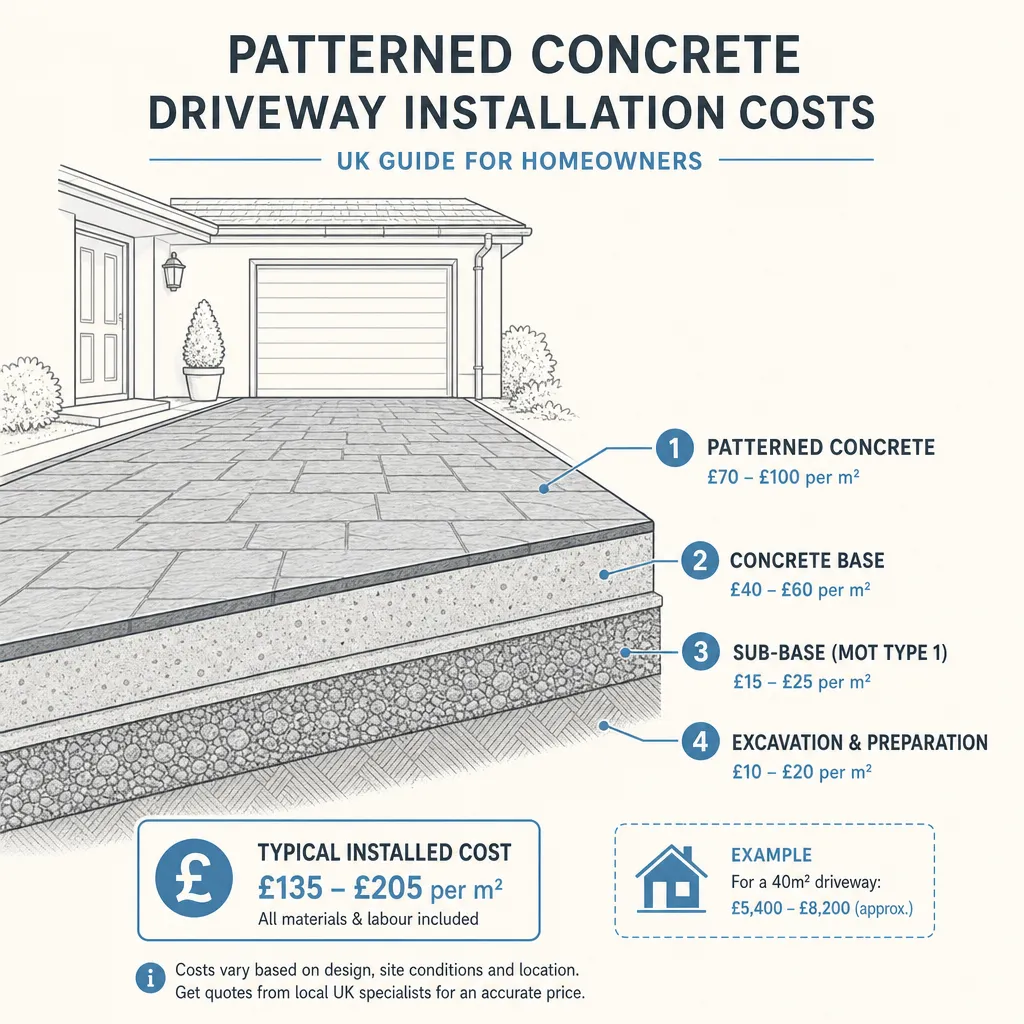
Patterned Concrete Driveway Installation Costs
A patterned concrete driveway in the UK typically costs £50–£120 per square metre installed, depending on pattern complexity, site preparation, and driveway size.
 Improvement & Build
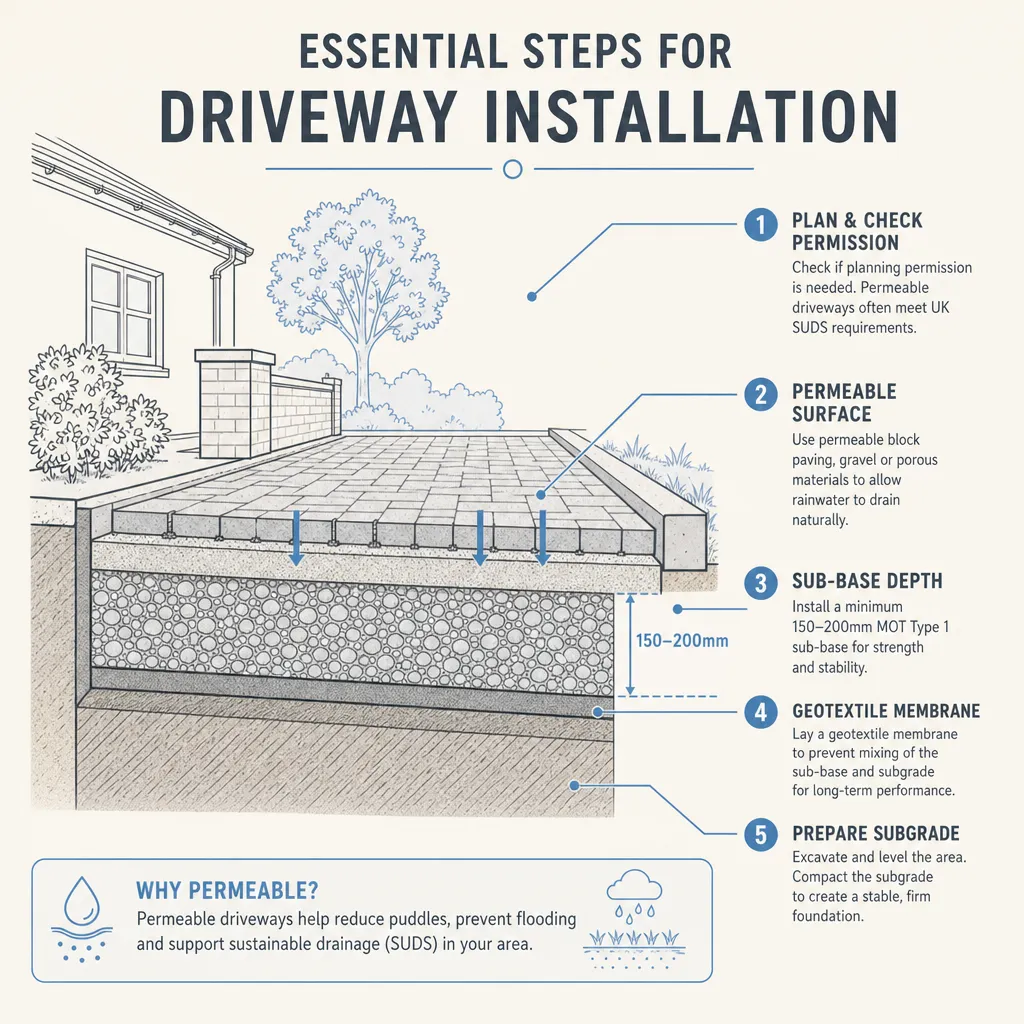
Essential Steps for Driveway Installation
Installing a driveway in England requires planning permission only when using an impermeable surface (standard tarmac, concrete, or block paving) on a front garden area over 5 m².
 Improvement & Build
Window Types for Homes: A Comprehensive Overview
UK homes use several main window styles: casement (outward-swinging), sash (vertically sliding), tilt-and-turn, fixed light, and bay or bow.
 Improvement & Build
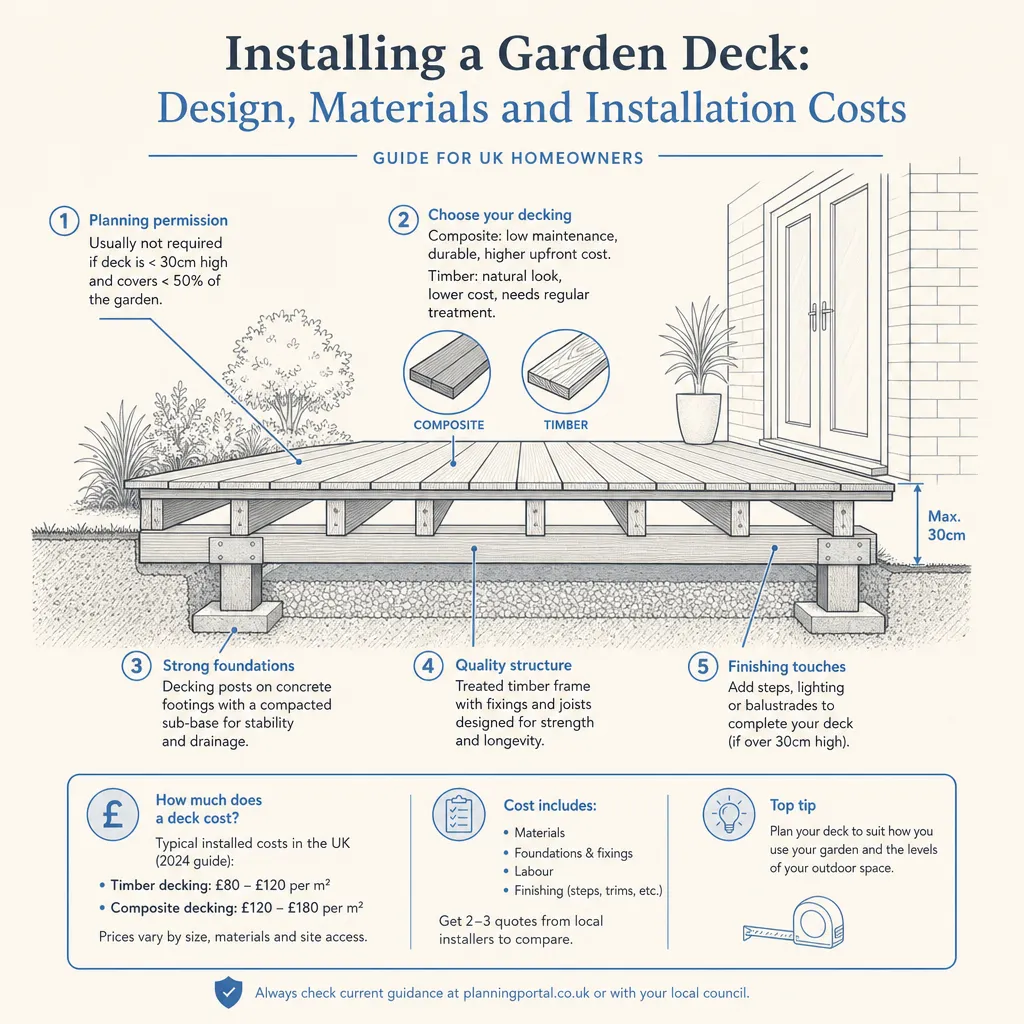
Installing a Garden Deck: Design, Materials and Installation Costs
Garden decking costs £80–250 per m² installed in the UK depending on material — softwood is cheapest, composite the most durable.
 Improvement & Build
Why UK Builders Are Specifying Engineered Building Products
UK builders increasingly specify engineered building products — I-joists, LVL beams, metal web joists, and aircrete blocks — because they offer consistent dimensions, predictable structural performance, and compliance documentation that supports Building Regulations sign-off.