Patterned Concrete Driveway Installation Costs
By Housey · Last reviewed 7th of May 2026
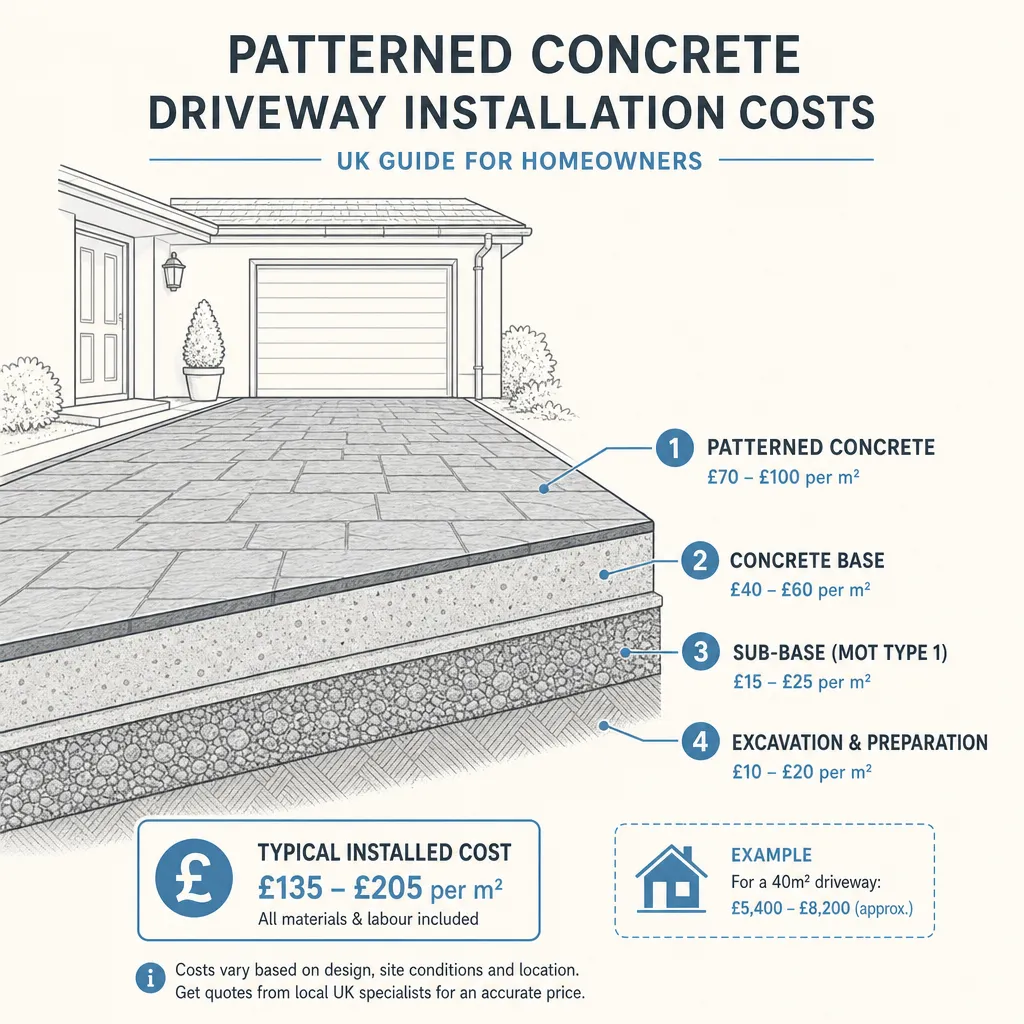
Patterned Concrete Driveway Installation Costs
Replacing or adding a driveway is one of the most visible home improvements you can make, and patterned (imprinted) concrete has become one of the most popular choices for UK homeowners wanting a decorative finish at a lower price than natural stone. Questions about cost typically arise when homeowners are comparing materials, planning a full driveway replacement, or trying to understand why contractor quotes vary so widely. The answer depends on a combination of driveway size, ground conditions, pattern complexity, and regional labour rates.
Key points
- Patterned concrete driveways typically cost £50–£120 per square metre installed in the UK, giving a total of roughly £2,500–£6,000 for a standard 50m² drive (indicative UK costs, last reviewed 2026-05-07).
- Base preparation — excavation, compacted hardcore sub-base, and edge restraints — commonly accounts for 30–40% of the total project cost and cannot be skipped without risking cracking.
- Most patterned concrete driveways require a surface sealant reapplied every 3–5 years to preserve colour and prevent surface degradation.
- Under the Town and Country Planning (General Permitted Development) (England) Order 2015, Schedule 2, Part 1, Class F, an impermeable driveway surface over 5m² in front of a house requires permitted development consent unless surface water drains to a permeable area such as a lawn; permeable concrete avoids this requirement.
- More complex stamped patterns (cobblestone, fan, ashlar) generally attract a higher price than simple linear designs due to additional labour time and material use.
What is patterned concrete and how is it installed?
Patterned concrete — also called imprinted concrete, pattern-imprinted concrete (PIC), or stamped concrete — is a decorative concrete surface finished while wet using textured mats or rollers pressed into the surface. Colour hardeners are broadcast onto the slab before stamping, and release agents prevent the mats from sticking, creating depth and contrast in the finished surface.
The typical installation process in the UK involves:
- Excavation — removing the existing surface and topsoil to a depth of 150–200mm.
- Sub-base laying — compacted Type 1 MOT hardcore to at least 100mm depth.
- Edge restraints — laying kerbs or edging to contain the concrete pour.
- Concrete pour — usually C30 or C35 ready-mix concrete, 100–125mm thick.
- Stamping and colouring — applying colour hardener and release agent, then pressing pattern mats while the slab is in the plastic phase.
- Sealing — applying two coats of polyurethane or acrylic sealer once cured (typically 24–72 hours after pour).
A competent installer should use a reinforced slab (A393 steel mesh or polypropylene fibres) to minimise cracking risk over time.
How much does a patterned concrete driveway cost?
Costs depend on driveway size, site conditions, pattern complexity, regional labour rates, and material quality. The table below gives indicative installed price ranges for common driveway sizes.
Driveway size | Simple pattern (e.g. cobble, slate) | Complex pattern (e.g. fan, ashlar) |
|---|---|---|
30m² (single car, terraced) | £1,500–£2,700 | £2,100–£3,600 |
50m² (single car with turning area) | £2,500–£4,500 | £3,500–£6,000 |
80m² (double width) | £4,000–£7,200 | £5,600–£9,600 |
120m² (large detached) | £6,000–£10,800 | £8,400–£14,400 |
Indicative UK costs, last reviewed 2026-05-07. Prices vary by region and site conditions. Obtain at least three quotes.
Key cost drivers
- Site preparation: Difficult ground, tree roots, poor drainage, or steep gradients increase excavation costs significantly.
- Access: Narrow side passages or restricted entry can prevent machinery access, increasing labour time.
- Pattern and colour: More elaborate patterns take longer to stamp and use more release agent and colour hardener.
- Sealer quality: Premium solvent-based sealers cost more upfront but typically last longer than water-based alternatives.
- Reinforcement: A steel mesh reinforced slab is usually worth the additional cost to reduce cracking risk.
Patterned concrete vs other driveway surfaces
Surface | Typical installed cost (per m²) | Lifespan | Maintenance | Drainage |
|---|---|---|---|---|
Patterned (imprinted) concrete | £50–£120 | 20–30 years (with sealing) | Reseal every 3–5 years | Impermeable unless specified |
Block paving | £50–£120 | 25–40 years | Weed control, re-sanding | Can be permeable |
Resin-bound gravel | £50–£90 | 10–20 years | Low | Permeable (SuDS compliant) |
Tarmac | £25–£60 | 15–25 years | Very low | Impermeable |
Loose gravel | £10–£25 | Ongoing topping up | Low | Permeable |
Natural stone (Indian sandstone) | £80–£150 | 30–50 years | Occasional re-pointing | Impermeable unless laid with gaps |
Indicative UK costs, last reviewed 2026-05-07. Sources: Homeowners Alliance cost data and contractor market rates.
Planning permission and drainage rules
Under the Town and Country Planning (General Permitted Development) (England) Order 2015, Schedule 2, Part 1, Class F, you can replace or add a driveway in front of your house without planning permission only if it uses a porous or permeable surface, or if surface water drains to a lawn or border rather than the road. A standard impermeable patterned concrete driveway over 5m² in front of a dwelling in England does require a permitted development application. Scotland, Wales, and Northern Ireland have different rules; always check with your local planning authority (LPA) before starting work.
Permeable concrete options — such as pervious concrete or imprinted concrete with integrated drainage channels — can satisfy the drainage requirement while still delivering a decorative finish.
Homeowner checklist: before you hire a driveway contractor
Use this list before committing to a contractor or quote:
What to ask before accepting a quote
- What is the concrete mix specification (e.g. C30, C35) and slab thickness?
- Is reinforcement (steel mesh or polypropylene fibres) included?
- What sub-base depth and material is specified?
- Which sealer brand and how many coats are included?
- Who supplies and installs the edge restraints?
- Is VAT included in the price?
- What warranty or guarantee is offered on workmanship and materials?
- Who handles skip hire and waste removal?
- What drainage solution is proposed, and does it comply with permitted development rules?
When to get professional help
A standard patterned concrete driveway is a contractor-led project that does not usually require a specialist architect or structural engineer for most residential drives. However, you should seek professional input if:
- The ground is unstable, waterlogged, or shows signs of subsidence.
- You are installing a driveway on a steeply sloping plot.
- The property is in a conservation area or is listed — additional planning conditions may apply.
- You are unsure whether your proposed surface meets permitted development drainage requirements.
- The drive abuts a highway — the local authority may need to be consulted about a dropped kerb, which typically requires a separate permit.
How Housey can help
If you are ready to get quotes for a new patterned concrete driveway, Housey can connect you with vetted driveway installers in your area. Describe your project and up to four local contractors will be matched to your request.
Frequently asked questions
How long does a patterned concrete driveway last?
A well-installed patterned concrete driveway with a properly prepared sub-base can last 20–30 years. The surface sealant will need reapplying every 3–5 years to protect the colour and pattern from UV fading and moisture ingress. Poor sub-base preparation or inadequate concrete thickness are the most common causes of early cracking and failure.
Does a patterned concrete driveway need planning permission?
In England, an impermeable patterned concrete surface over 5m² in front of a house generally requires a permitted development application under Schedule 2, Part 1, Class F of the Town and Country Planning (General Permitted Development) (England) Order 2015. Permeable or porous surfaces are exempt. Rules differ in Wales, Scotland, and Northern Ireland. Always check with your local planning authority before starting work.
What is the difference between patterned concrete and block paving?
Patterned concrete is a single monolithic slab stamped to look like stone, brick, or cobble. Block paving consists of individual interlocking blocks laid on a compacted sand bed. Block paving allows individual units to be lifted and replaced if damaged; concrete repairs are usually visible. Both offer similar durability, but concrete is faster to install and block paving is generally easier to repair locally.
Can a patterned concrete driveway be repaired if it cracks?
Surface cracks can be filled with a flexible concrete filler and re-sealed, but colour-matching is rarely perfect and repairs are usually visible. Structural cracking caused by sub-base failure or ground movement typically requires full or partial removal and reinstatement. This is why proper sub-base preparation and reinforcement are important upfront investments.
Sources and further reading
- When is permission required? (GOV.UK) — HM Government
- Town and Country Planning (General Permitted Development) (England) Order 2015, Schedule 2 — legislation.gov.uk
- Hard surfaces and permeable paving (GOV.UK) — HM Government
- How much does a new drive cost? — Homeowners Alliance
Useful next reads
 Improvement & Build
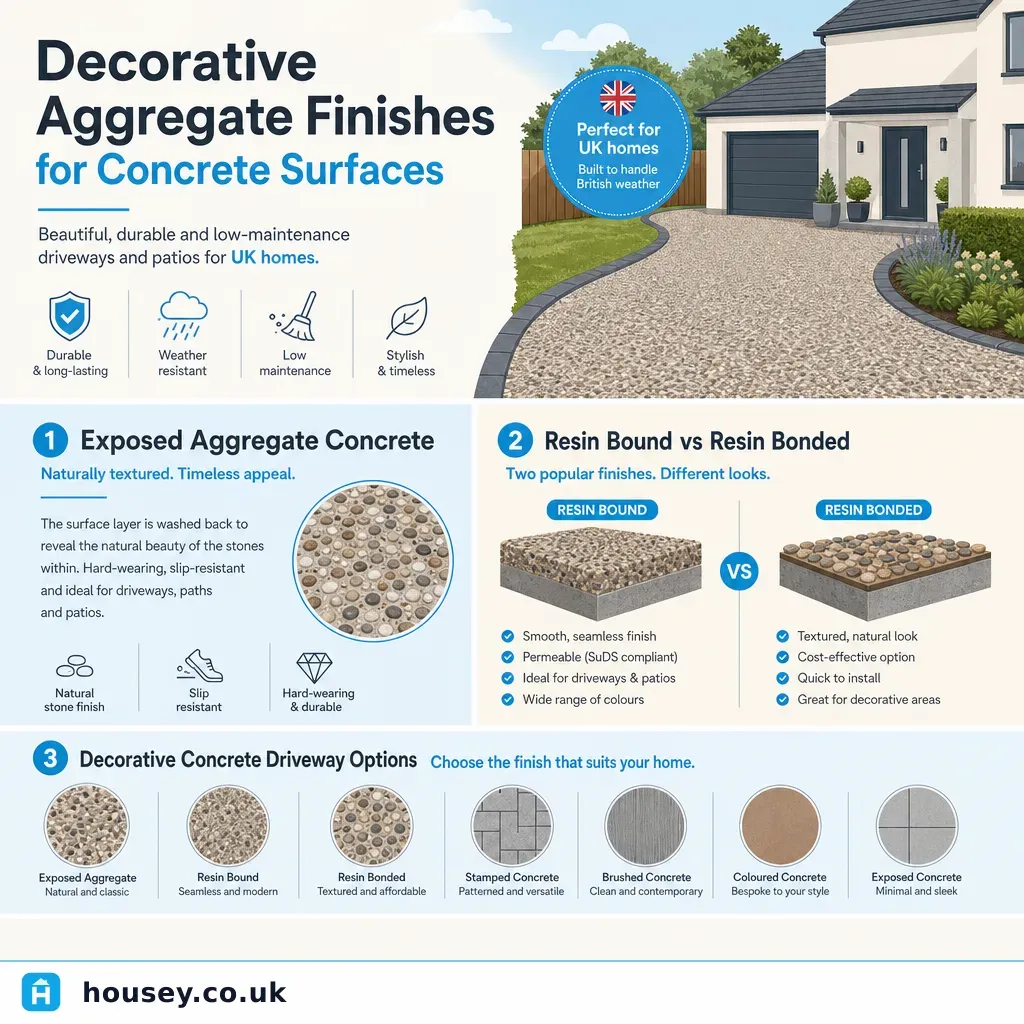
Decorative Aggregate Finishes for Concrete Surfaces
Decorative aggregate finishes for driveways and paths fall into four main types: exposed aggregate concrete, resin-bound aggregate (permeable and SuDS-compliant), resin-bonded aggregate (not permeable), and tar-chip.
 Improvement & Build
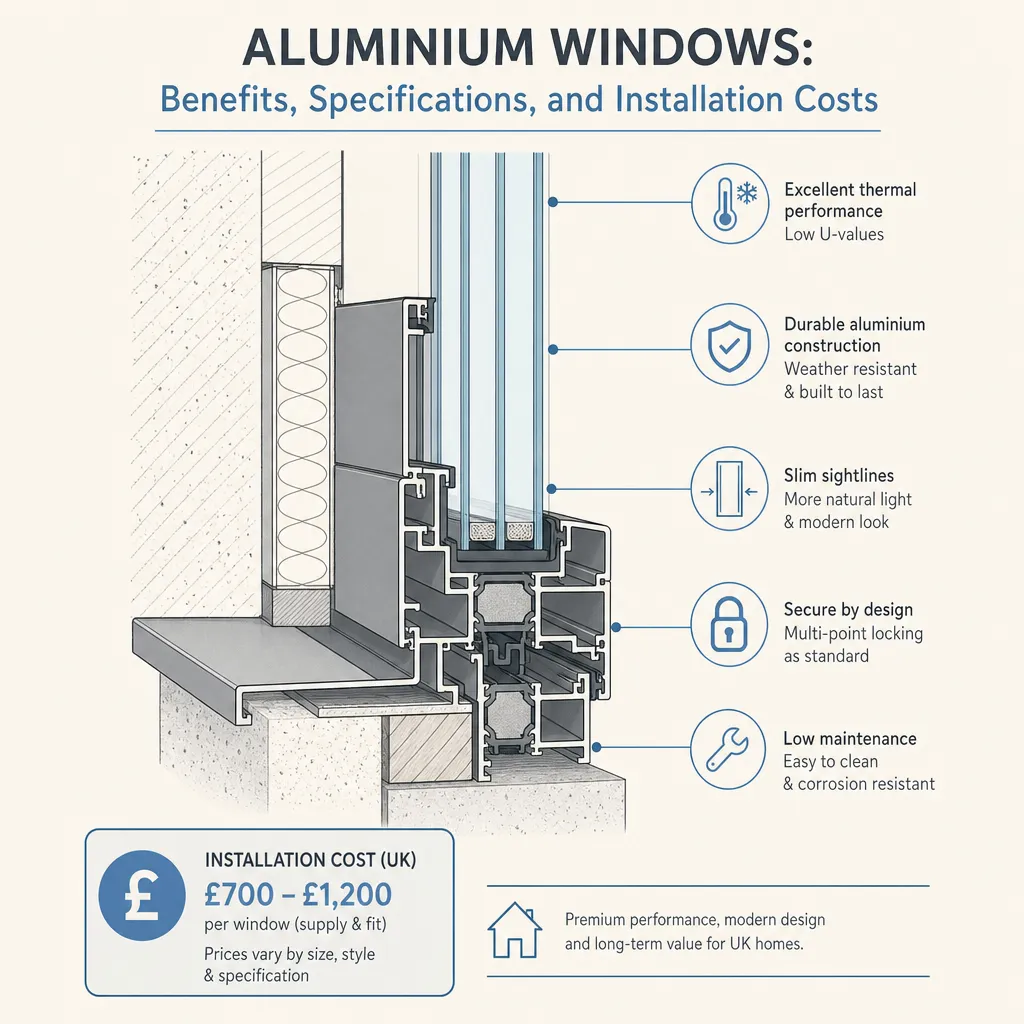
Aluminium Windows: Benefits, Specifications, and Installation Costs
Aluminium windows typically cost £600–£1,800 per window installed in the UK, depending on size and specification.
 Improvement & Build
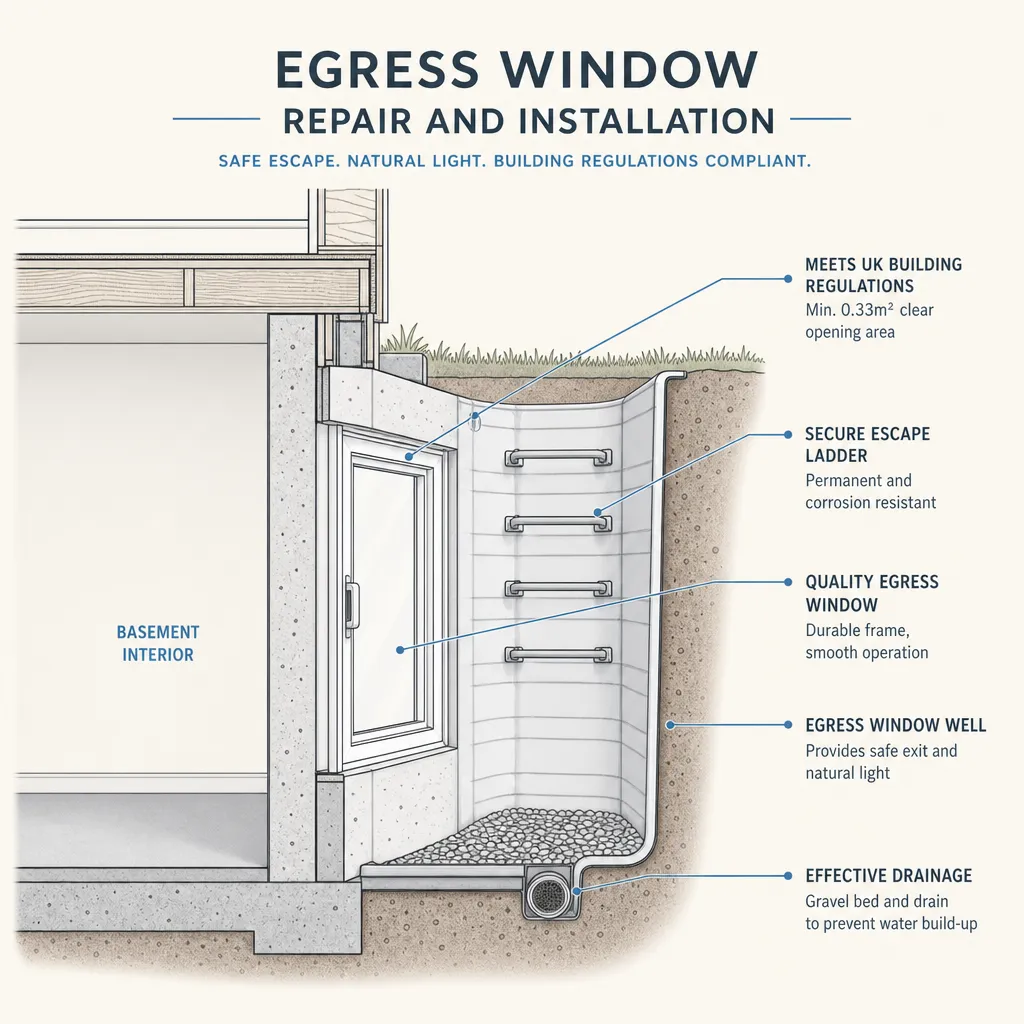
Egress Window Repair and Installation
An egress window is a window large enough to serve as an emergency escape route from a habitable room.
 Improvement & Build
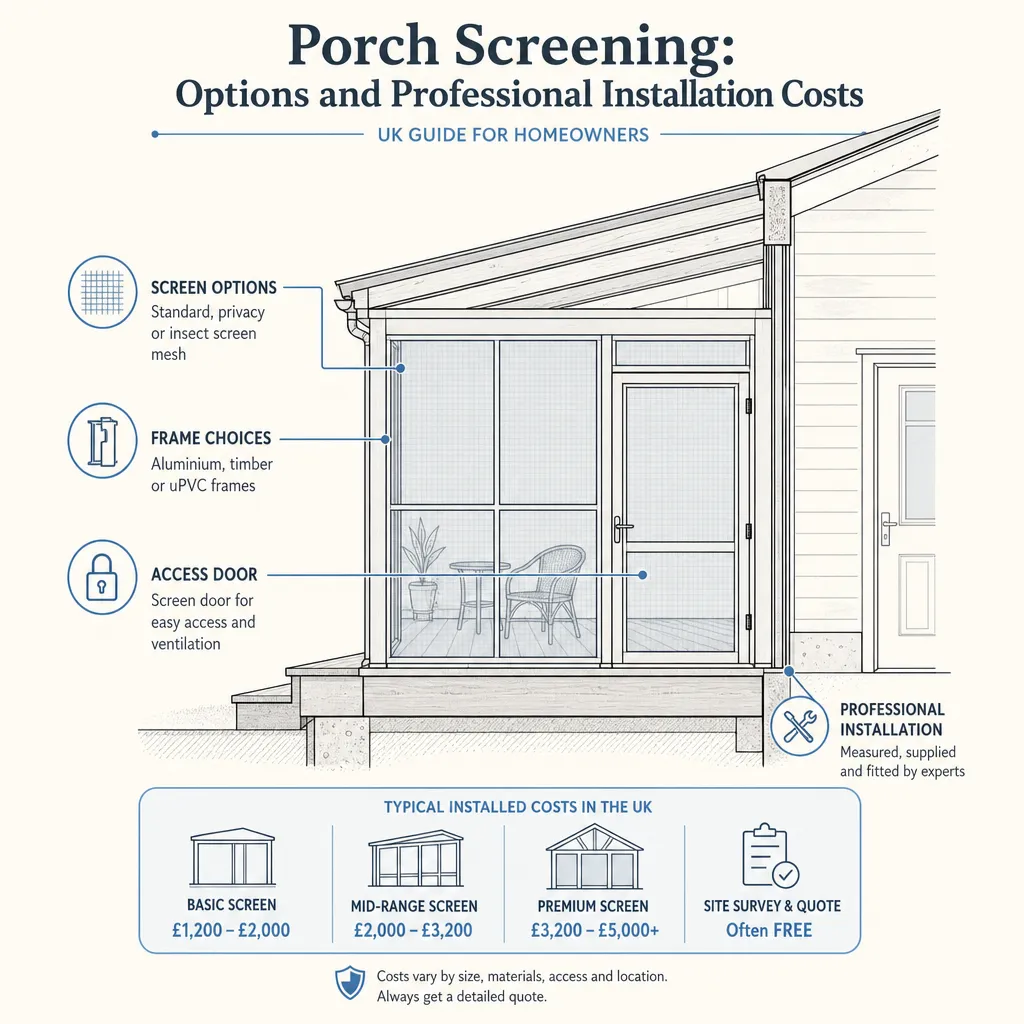
Porch Screening: Options and Professional Installation Costs
Porch screening ranges from simple insect mesh on a timber frame to bespoke aluminium-framed glazed enclosures.
 Improvement & Build
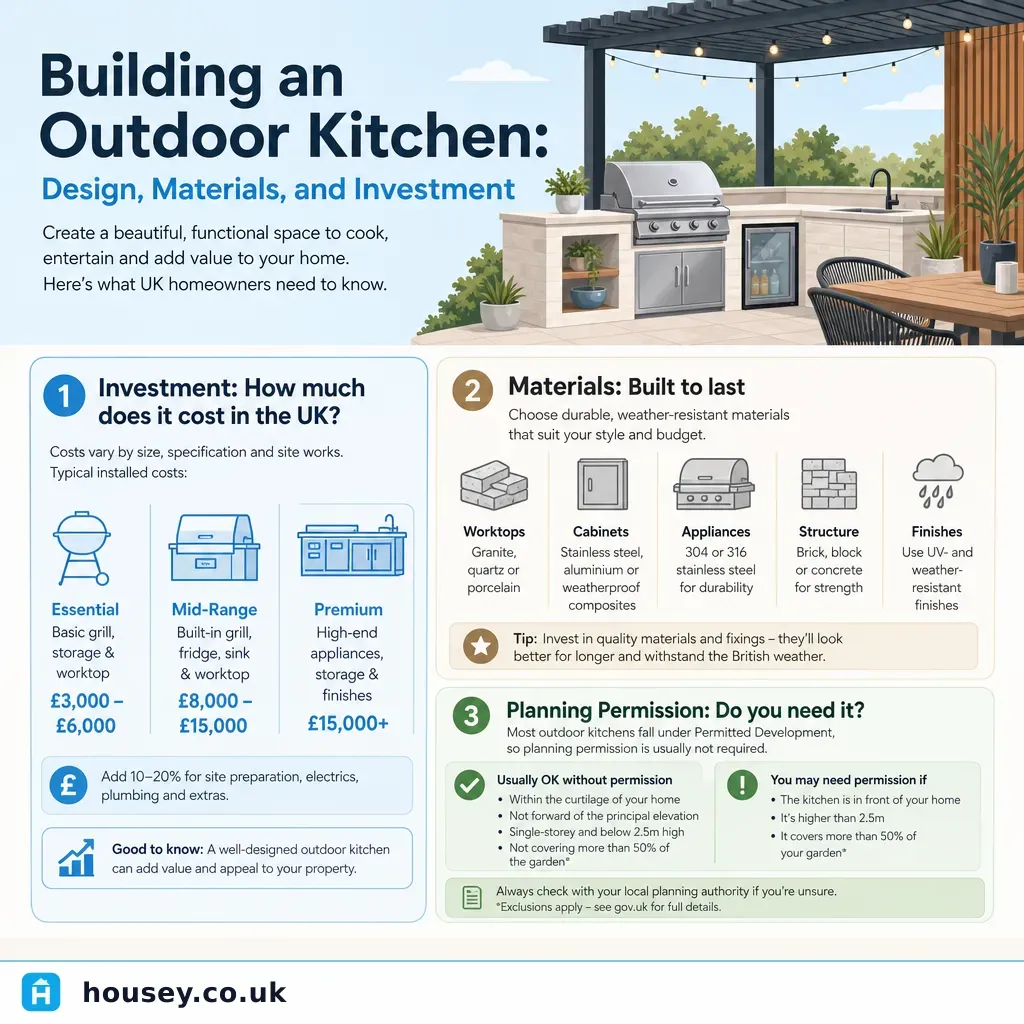
Building an Outdoor Kitchen: Design, Materials, and Investment
Building an outdoor kitchen in the UK costs roughly £3,000–£25,000 depending on size and materials.