Decorative Concrete Driveway Installation Pricing
By Housey · Last reviewed 10th of May 2026
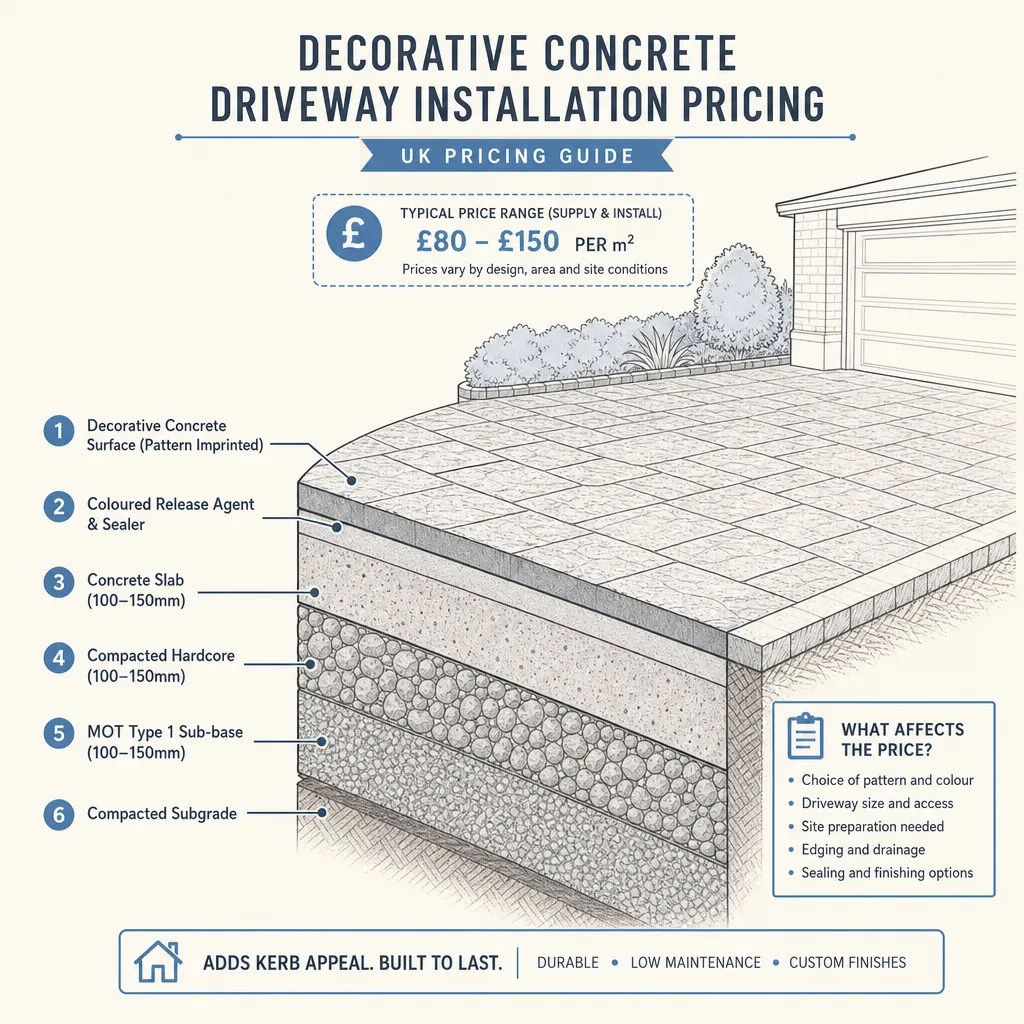
Decorative Concrete Driveway Installation Pricing
Decorativeconcrete driveways — most commonly pattern-imprinted concrete (PIC) — typically come up when homeowners are replacing a deteriorating tarmac surface, upgrading a front garden, or specifying a new drive as part of an extension project. The work represents a substantial one-off investment expected to last two decades or more, so understanding what drives the price and why quotes vary so widely makes a real difference before you commission any work.
Key points
- Pattern-imprinted concrete (PIC) is formed by pressing textured rollers into a freshly poured slab and applying colour hardener before the concrete sets — it differs from brushed concrete, exposed-aggregate concrete, and resin-bound surfaces.
- Indicative installed costs range from £70 to £130 per square metre for a standard residential driveway, with larger areas and simpler patterns typically at the lower end. (Indicative UK costs, last reviewed 2026-05-10.)
- Any new or replacement impermeable hard surface over 5m² at the front of an English property that drains to the road may require a householder planning application, under changes introduced in 2008 to permitted development rights.
- A compacted sub-base of MOT Type 1 aggregate to a minimum depth of 100mm — increased to 150–200mm on weaker or clay ground — is required beneath a residential concrete driveway slab.
- PIC surfaces should be resealed with a compatible sealer every 3–5 years to maintain colour intensity and protect against oil staining, frost damage, and UV fading.
What is pattern-imprinted concrete?
Pattern-imprinted concrete is poured as a conventional concrete slab and then worked while still wet: a release agent and colour hardener are broadcast over the surface, and textured rollers or stamps are pressed into the concrete to create the pattern. Common UK finishes include cobblestone, slate, European fan, stone flag, and wood-plank effects.
PIC is distinct from:
- Brushed concrete — plain surface without pattern or texture.
- Exposed aggregate concrete — a surface retarder releases the top layer to reveal the stone within the mix.
- Resin-bound surfacing — aggregate bound with a clear resin, a different material category with different drainage properties.
How much does a decorative concrete driveway cost in the UK?
Indicative UK costs, last reviewed 2026-05-10. Prices exclude VAT unless stated. Always obtain at least three itemised quotes, as regional rates and site conditions vary considerably.
Scope | Indicative cost |
|---|---|
PIC supply and installation (per m²) | £70–£130 |
Sub-base excavation and preparation (per m²) | £15–£35 additional |
Edging or kerb installation (per linear metre) | £15–£30 |
Drainage channel or gully (per unit) | £200–£600 |
Colour sealer recoat (per m²) | £8–£18 |
Small driveway (~25m²), finished | £2,000–£3,500 |
Medium driveway (~50m²), finished | £4,000–£7,000 |
Project size significantly affects the per-m² rate: installers price larger areas more efficiently. A 20m² drive may cost more per square metre than a 60m² one with the same finish.
What drives the price up or down?
Cost drivers that increase price:
- Multiple colours or complex pattern layouts, such as border insets or two-tone designs
- Deep excavation required on clay, made ground, or unstable soil
- Removal and licensed disposal of an existing concrete or tarmac surface
- Drainage requirements — sustainable drainage channels, gullies, or connections to soakaways
- Restricted access that prevents machinery use, increasing manual labour
Cost drivers that reduce price:
- Large total area, giving better labour efficiency
- Simple single-colour, single-pattern finish
- Solid, stable existing sub-base requiring minimal preparation
- Good vehicle and plant access to the site
Decorative concrete vs alternative driveway surfaces
Surface | Typical installed cost/m² (indicative) | Lifespan | Maintenance | Planning note |
|---|---|---|---|---|
Pattern-imprinted concrete | £70–£130 | 20–30 years | Reseal every 3–5 years | May need permission if impermeable |
Block paving | £60–£120 | 20–30 years | Weed control; re-levelling | Permeable options available |
Tarmac (asphalt) | £30–£70 | 15–20 years | Sealing; crack repair | As above |
Exposed aggregate concrete | £65–£110 | 20–30 years | Resealing | As above |
Gravel (loose) | £15–£40 | Ongoing | Raking; periodic top-up | Usually permitted development |
Resin-bound surfacing | £60–£130 | 15–25 years | Low; replace worn areas | Permeable — usually no permission |
Indicative UK costs, last reviewed 2026-05-10. VAT is additional unless confirmed otherwise.
Planning permission and drainage rules
Since 2008, householder permitted development rights in England have required that any new or replacement hard surface over 5m² at the front of a property either be permeable or drain to a lawn or border — not directly to the road or a surface water drain. Sealed concrete is classified as impermeable, so if your driveway exceeds this size and run-off reaches the highway, a householder planning application may be required.
Check the GOV.UK guidance on when permission is required and the Planning Portal driveway page for current rules. In Scotland and Wales, rules differ — always verify with your local planning authority before work begins. Check GOV.UK for current planning application fees, as these can change.
Homeowner checklist before you get quotes
What to ask before accepting a quote
- What is included — excavation, sub-base material, concrete supply, stamping, edging, drainage, and sealing?
- What concrete slab thickness and sub-base depth is specified?
- What release agent and colour hardener system will be used?
- Is VAT included in the quoted price?
- How many coats of sealer are included, and what is the sealer product and specification?
- What is the cure time before vehicles can use the drive?
- What guarantee or warranty applies to the workmanship and surface finish?
- What could change the price once work has started — for example, if the sub-base proves inadequate?
When to get professional help
Pattern-imprinted concrete installation is a specialist trade job and is not suitable for DIY. The stamping window on wet concrete is short and the equipment involved is industrial. Seek advice before proceeding if:
- The ground is showing signs of subsidence or significant settlement.
- Your property is in a conservation area or is listed — additional restrictions may apply to materials and finishes.
- The existing drainage arrangement is unclear or may be legally connected to a surface water sewer.
- Work will involve altering a kerb crossing — this requires separate approval from your highway authority.
How Housey can help
Housey connects you with vetted driveway installers who can provide itemised quotes for pattern-imprinted concrete and comparable surfaces. Compare quotes and installer credentials side by side before you commit.
Frequently asked questions
How long does a pattern-imprinted concrete driveway last?
A well-installed PIC driveway typically lasts 20–30 years. Longevity depends on sub-base quality, concrete mix design, and maintenance. Resealing every 3–5 years protects colour and surface integrity. Cracking can develop if the sub-base settles unevenly, so thorough ground preparation at installation is the most important long-term factor.
Can I have a decorative concrete driveway without planning permission?
Possibly — it depends on drainage. If the sealed surface drains to a lawn or border rather than directly to the road or a surface water drain, permitted development rights generally apply in England for drives over 5m². If run-off goes to the highway, a householder planning application may be needed. Always confirm with your local planning authority before work starts.
Will a decorative concrete driveway crack?
All concrete can crack over time, particularly if ground movement occurs or the sub-base is inadequate. Expansion joints are cut into the slab to manage thermal movement. Crack risk is significantly reduced by proper sub-base preparation, a correct concrete mix, and adequate slab thickness — at least 100mm on a compacted MOT Type 1 sub-base. Minor surface cracks can often be filled and resealed.
Does VAT apply to driveway installation?
Residential driveway installation is standard-rated for VAT at 20% in the UK. Always confirm whether a quote includes or excludes VAT, as this makes a significant difference to the final price. Some small or sole-trader installers may not be VAT-registered — always clarify before signing any contract.
Sources and further reading
- When is permission required? Hard standings and driveways — GOV.UK
- Driveways and hard standings — Planning Portal
- SuDS design guidance for designers and planners — CIRIA
- Approved Document H: Drainage and waste disposal — GOV.UK Building Regulations
Useful next reads
 Improvement & Build
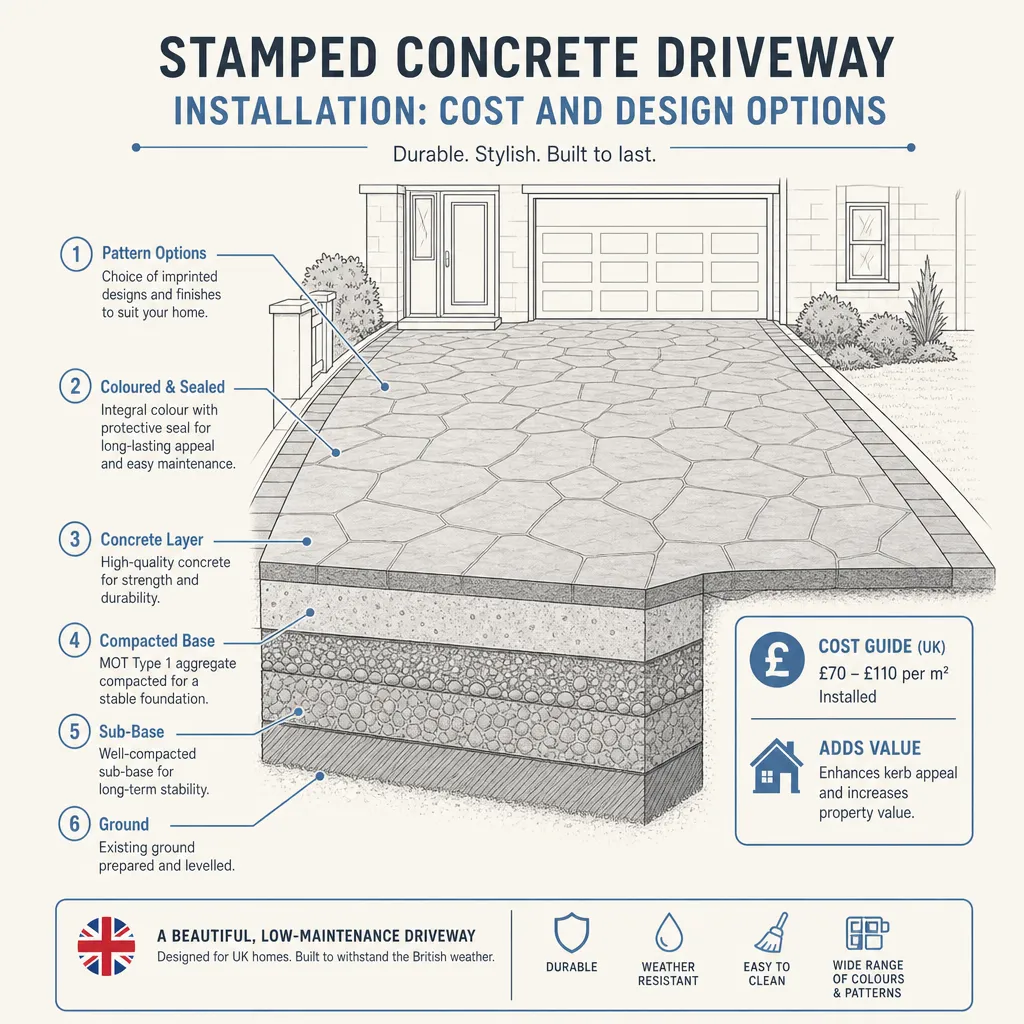
Stamped Concrete Driveway Installation: Cost and Design Options
Imprinted (stamped) concrete driveways typically cost £75–120 per square metre installed in the UK, making a 40 m² front driveway around £3,000–£4,800 before preparatory groundworks.
 Improvement & Build
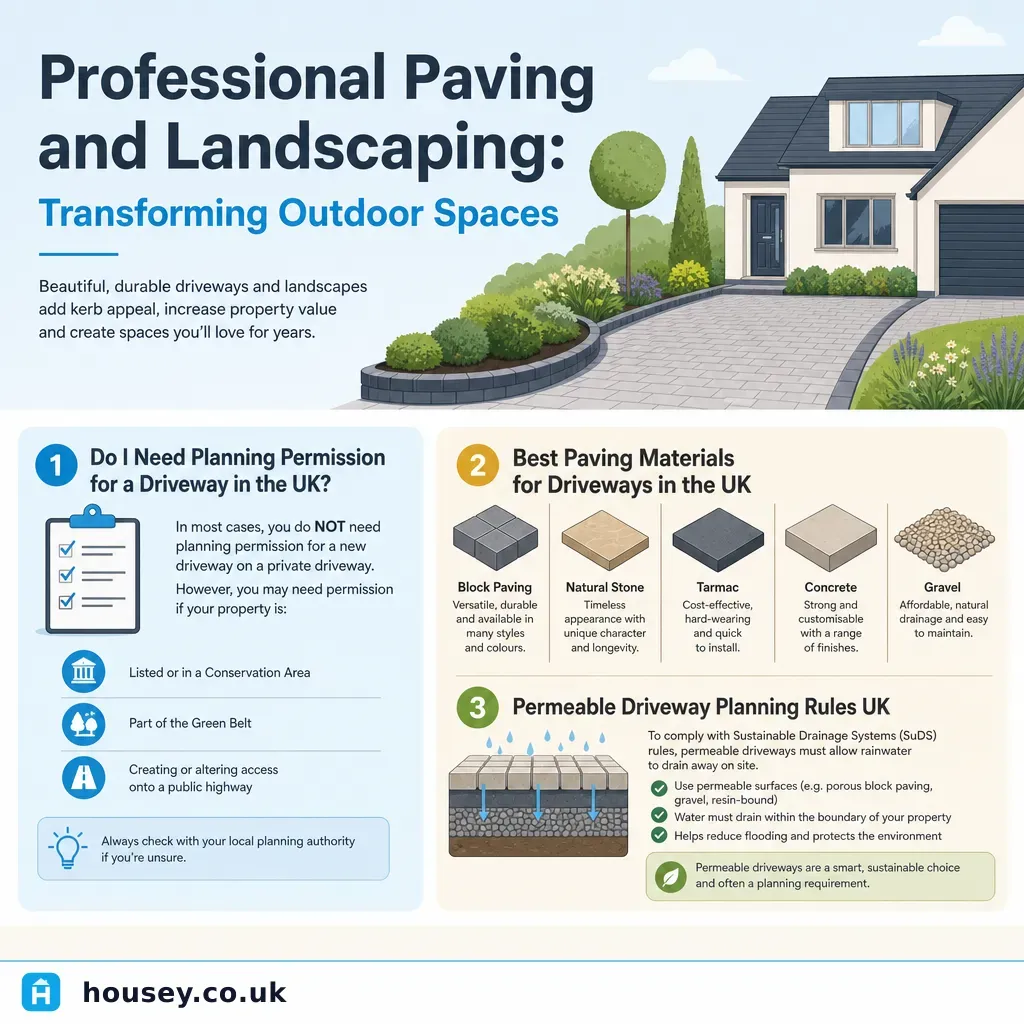
Professional Paving and Landscaping: Transforming Outdoor Spaces
Professional paving and landscaping can transform a garden or driveway, improving kerb appeal and adding usable outdoor space.
 Improvement & Build
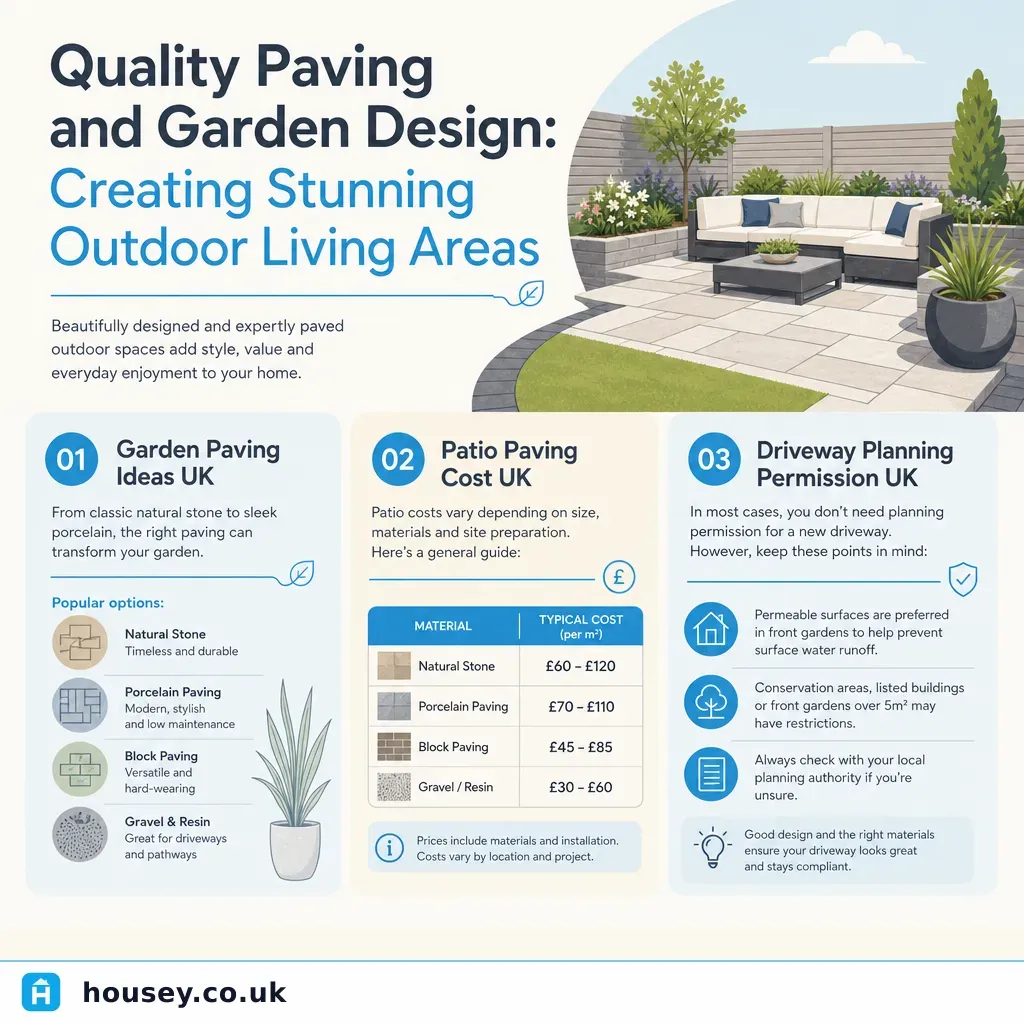
Quality Paving and Garden Design: Creating Stunning Outdoor Living Areas
Paving a front garden driveway over 5 square metres in England requires planning permission unless a permeable material is used and drainage is managed on site.
 Improvement & Build
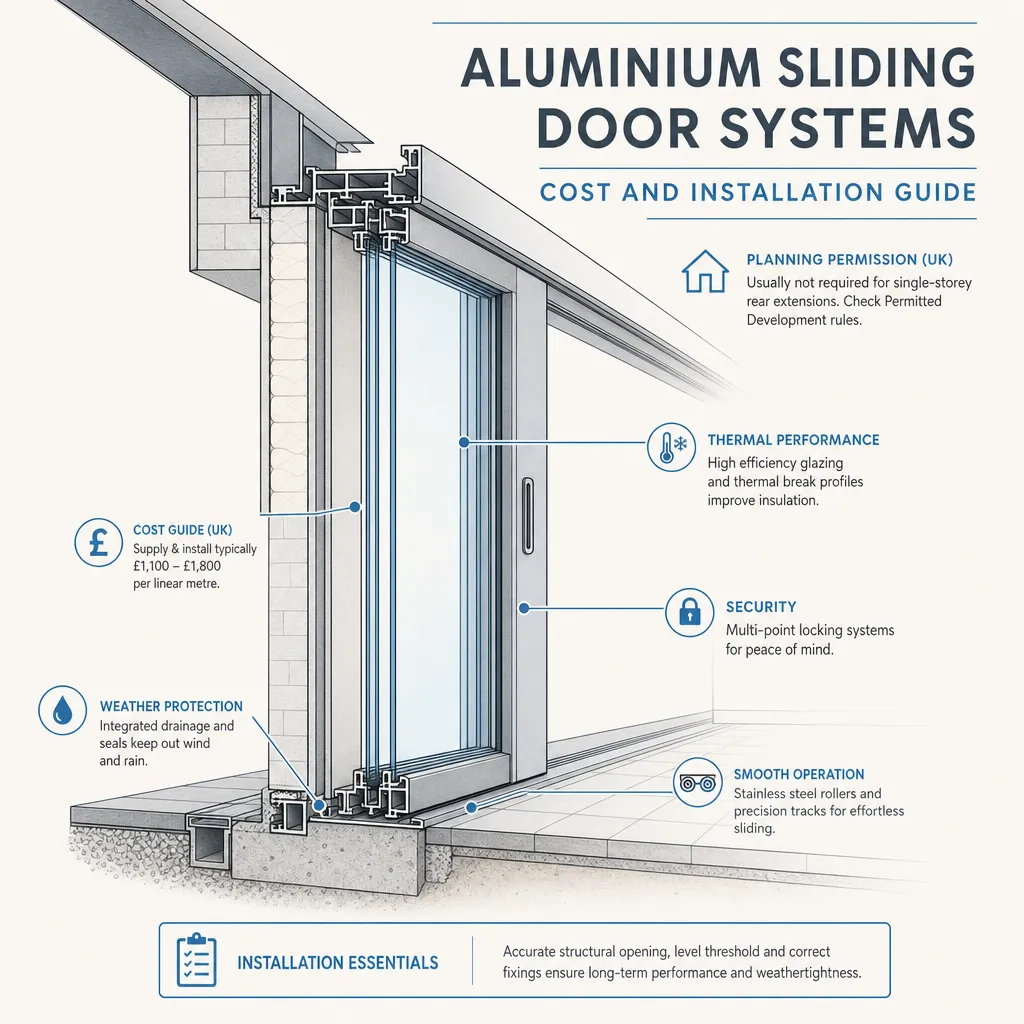
Aluminium Sliding Door Systems: Cost and Installation Guide
Aluminium sliding doors typically cost £2,500–£7,000 supply and fitted for a standard opening.
 Improvement & Build
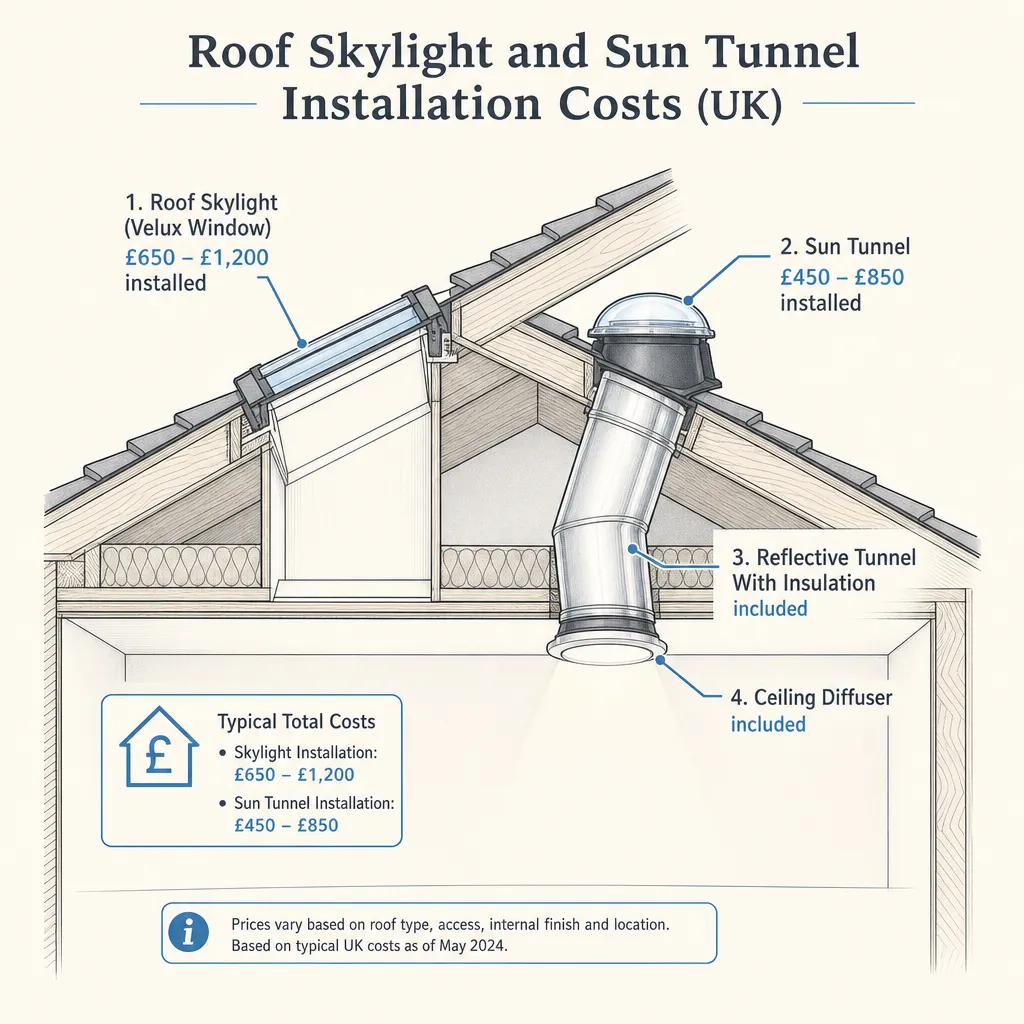
Roof Skylight and Sun Tunnel Installation Costs
A standard pitched-roof skylight costs £800–£3,000 installed in the UK, including flashings and basic making good.