Decorative Concrete in Gardens: Exposed Aggregate Benefits and Design
By Housey · Last reviewed 25th of May 2026
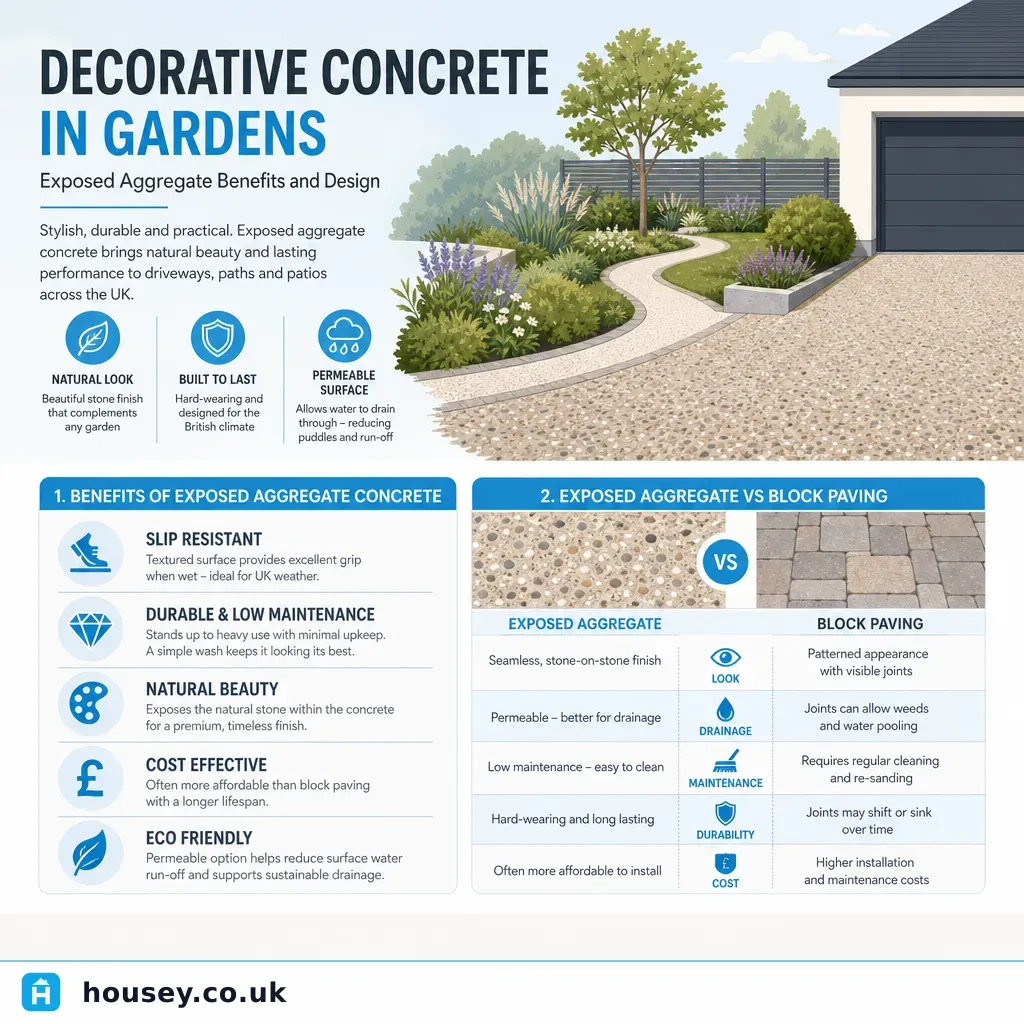
Decorative Concrete in Gardens: Exposed Aggregate Benefits and Design
When planning a garden redesign or driveway replacement, homeowners frequently compare decorative concrete finishes alongside block paving, resin-bound gravel, and natural stone flags. Exposed aggregate — where the surface layer of cement paste is removed to reveal the underlying stone — has grown in popularity as a durable and visually distinctive option. Decisions typically arise when a front driveway needs replacing, a new rear patio is being planned, or a homeowner wants a low-maintenance surface that performs better in wet conditions than plain brushed concrete.
Key points
- Exposed aggregate concrete for residential use should specify a minimum C25/30 concrete mix for pedestrian areas and C30/37 for vehicle-bearing surfaces such as driveways.
- Slab thickness should be at least 100 mm for pathways and patios, and 150 mm for driveways, laid on a compacted sub-base of at least 100 mm Type 1 MOT crushed stone.
- In England, replacing more than 5 m² of front garden with a non-permeable hard surface requires planning permission under permitted development rules amended in 2008 — standard exposed aggregate concrete is non-permeable.
- The aggregate reveal depth is controlled by the retarder method and timing: shallow reveal (up to 3 mm) gives a fine texture; deep reveal (5–10 mm) gives a bold stone effect.
- A penetrating silane or siloxane sealer applied after initial cure and reapplied every 2–3 years significantly reduces freeze-thaw surface spalling, which is a genuine risk in UK winters.
What is exposed aggregate concrete and how is it made?
Standard concrete has a smooth cement paste surface that conceals the stone aggregate within the mix. Exposed aggregate concrete reveals that aggregate by removing — or preventing the setting of — the top few millimetres of cement paste, exposing the stones beneath.
There are two main production methods:
Surface retarder method: A chemical retarder is sprayed or painted onto freshly placed concrete before or immediately after screeding. The retarder slows cement hydration at the surface while the body of the slab cures normally. After 12–24 hours, the softened surface paste is washed off with a pressure washer, leaving the aggregate exposed. This is the most common method for driveways and large patio areas.
Seeded aggregate method: A standard concrete base is placed and levelled, then selected decorative aggregate — pebbles, crushed stone, glass, or recycled materials — is scattered onto the surface and tamped in with a hand float before the concrete sets. The result is more controllable in terms of aggregate type and density, but more labour-intensive. Often used for bespoke feature areas within a garden.
Comparing exposed aggregate with other hard-landscaping surfaces
Feature | Exposed aggregate concrete | Block paving | Plain brushed concrete | Natural stone flags |
|---|---|---|---|---|
Wet slip resistance | Good — textured surface | Moderate to good | Moderate | Variable — can be low |
Durability for vehicles | High | High (if well-jointed) | High | High |
Joint maintenance (weeds) | Low — no surface joints | Moderate — jointing sand weeds | Low | Moderate — pointed joints |
Freeze-thaw risk | Moderate without sealer | Low | Low | Low to moderate |
Permeable option available | No (standard mix) | Yes (open-jointed) | No | Yes (open-jointed) |
Repairability | Difficult — visible patching | Easy — replace individual blocks | Difficult | Moderate |
Indicative installed cost | £70–120/m² | £60–110/m² | £50–90/m² | £80–150/m² |
Indicative UK costs, last reviewed 2026-05-25. Prices vary by region, access, sub-base condition, and contractor. Always obtain at least three written quotes.
Design options: aggregate, colour, and texture
The visual character of exposed aggregate concrete is almost entirely determined by the aggregate choice. Standard ready-mix uses crushed limestone or granite in grey or buff tones. For decorative applications, alternatives include:
- River gravel — rounded pebbles in warm tones (beige, ochre, rust); suits informal or naturalistic garden styles.
- Crushed granite or basalt — angular and dark; gives a contemporary urban finish.
- White calcite or quartz — bright and high-contrast; effective alongside dark renders or hardwood decking.
- Recycled glass aggregate — available in multiple colours; distinctive and environmentally considered.
- Mixed-size aggregate — combining stone sizes creates visual depth and reduces monotony across large areas.
The cement matrix visible between stones can be tinted with pigmented cement or coloured sands to complement or contrast with the aggregate. Always ask to see a cured sample panel before committing — colour and texture can look quite different once the surface is dry and sealed.
Planning and drainage: what to check before you start
Before installing any hard surface in a front garden in England, check the following:
- The 5 m² rule: installing more than 5 m² of non-permeable hard standing in a front garden or side elevation visible from a highway requires planning permission. This applies under the Town and Country Planning Act 1990, as amended by secondary legislation in 2008.
- Permeable alternatives: block paving with open joints or resin-bound gravel are more straightforwardly permeable and can avoid the planning requirement. Exposed aggregate concrete can be laid over a permeable sub-base with drainage channels, but is not classified as a permeable surface under standard specifications.
- SuDS compliance: many local authorities now expect compliance with Sustainable Drainage Systems guidance for new hard standing, particularly for larger areas. Check with your local planning authority before starting work.
- Listed building or conservation area: any change to a surface visible from a public highway in a conservation area, or works affecting a listed building, may require additional consent. Check before specifying any hard landscaping.
What to ask before hiring a landscaper or contractor
Before accepting a quote for exposed aggregate concrete, ask:
- What concrete mix strength will be used, and what is the sub-base specification and depth?
- Is a surface retarder or seeded aggregate method proposed, and why is that method appropriate for this project?
- What aggregate type and source are being proposed, and can I see a cured sample panel before work starts?
- How will drainage falls be formed, and where will surface water discharge?
- Will a sealer be applied on completion, what product will be used, and is this included in the quoted price?
- What cure time is needed before pedestrian and vehicle use?
- What warranty or aftercare do you offer for surface spalling or cracking within the first two years?
- Are you aware of the planning rules for front garden hard standing in England?
- Is the quoted price inclusive of waste removal and reinstatement of edges and boundaries?
Maintenance in UK conditions
UK winters bring freeze-thaw cycling — water enters micro-pores in the surface, freezes, expands, and can eventually spall the surface around the aggregate. The key mitigation is regular sealing:
- Initial seal: apply a penetrating silane or siloxane sealer once the concrete has cured for at least 28 days. Applying too soon traps moisture.
- Resealing: reapply every 2–3 years, or when water no longer beads visibly on the surface.
- Cleaning: brush off leaf litter promptly — decomposing leaves stain the cement matrix. An annual low-pressure wash removes surface grime without dislodging aggregate.
- Moss and algae: apply a proprietary algaecide in autumn and spring. North-facing surfaces are particularly prone to biofilm growth in the UK climate.
- De-icing salts: avoid entirely. Salt accelerates freeze-thaw damage and stains the aggregate. Use sharp sand or grit instead in icy conditions.
When to get professional help
Consult a landscaper or specialist concreting contractor if:
- The area exceeds 20 m² or involves complex drainage requirements such as a sloping site or proximity to a building foundation.
- You are unsure about planning rules for front garden hard standing in your specific location or property type.
- The ground has variable bearing capacity, a history of waterlogging, or is above a drainage run that may need diverting.
- You want to match an existing surface in aggregate type or tone — sourcing compatible aggregate can require specialist knowledge.
How Housey can help
Housey can connect you with vetted landscapers and garden designers who can advise on surface options, drainage requirements, and planning rules, and provide competitive quotes for installation.
Frequently asked questions
Does exposed aggregate concrete require planning permission in England?
The surface itself does not require permission, but the area of hard standing does. In England, more than 5 m² of non-permeable hard surface in a front garden requires planning permission under the Town and Country Planning Act 1990 (as amended). Rear gardens are generally exempt. Conservation areas and listed buildings may involve additional consents — check with your local planning authority before starting work.
How long does exposed aggregate concrete last?
With a well-prepared sub-base, correct mix design, and regular sealing, exposed aggregate concrete in a residential setting typically lasts 20–30 years before significant surface degradation. The main failure modes are freeze-thaw spalling (prevented by sealing with a penetrating silane or siloxane product) and differential settlement (prevented by adequate sub-base compaction). Actual longevity varies by site conditions.
Can cracked exposed aggregate concrete be repaired invisibly?
Repairs are difficult to make invisible because the aggregate type, colour, and weathering will differ between old and new sections. Small hairline cracks can be filled with a flexible polyurethane sealant in a matching colour. Larger cracked sections usually require breaking out and relaying, with a visible colour mismatch. This limited repairability is worth considering when comparing surface options for driveways.
Is exposed aggregate concrete slippery when wet?
The textured surface generally provides better wet slip resistance than plain brushed or power-floated concrete. The coarser the aggregate and the deeper the reveal, the higher the coefficient of friction. However, moss and algae growth in shaded areas can significantly reduce grip — regular cleaning and an autumn algaecide treatment are important maintenance steps in the UK climate.
Sources and further reading
- Town and Country Planning Act 1990 (as amended) — legislation.gov.uk: Planning law framework for hard standing
- When is permission required? — GOV.UK / DLUHC: Permitted development rules for front garden surfacing
- The Concrete Society — Technical guidance on concrete mix design and decorative finishes
- CIRIA SuDS Manual C753 — CIRIA: Sustainable drainage guidance for hard surfaces
- Energy Saving Trust — garden surfaces — Guidance on rainwater management and permeable surfaces
Useful next reads
 Improvement & Build
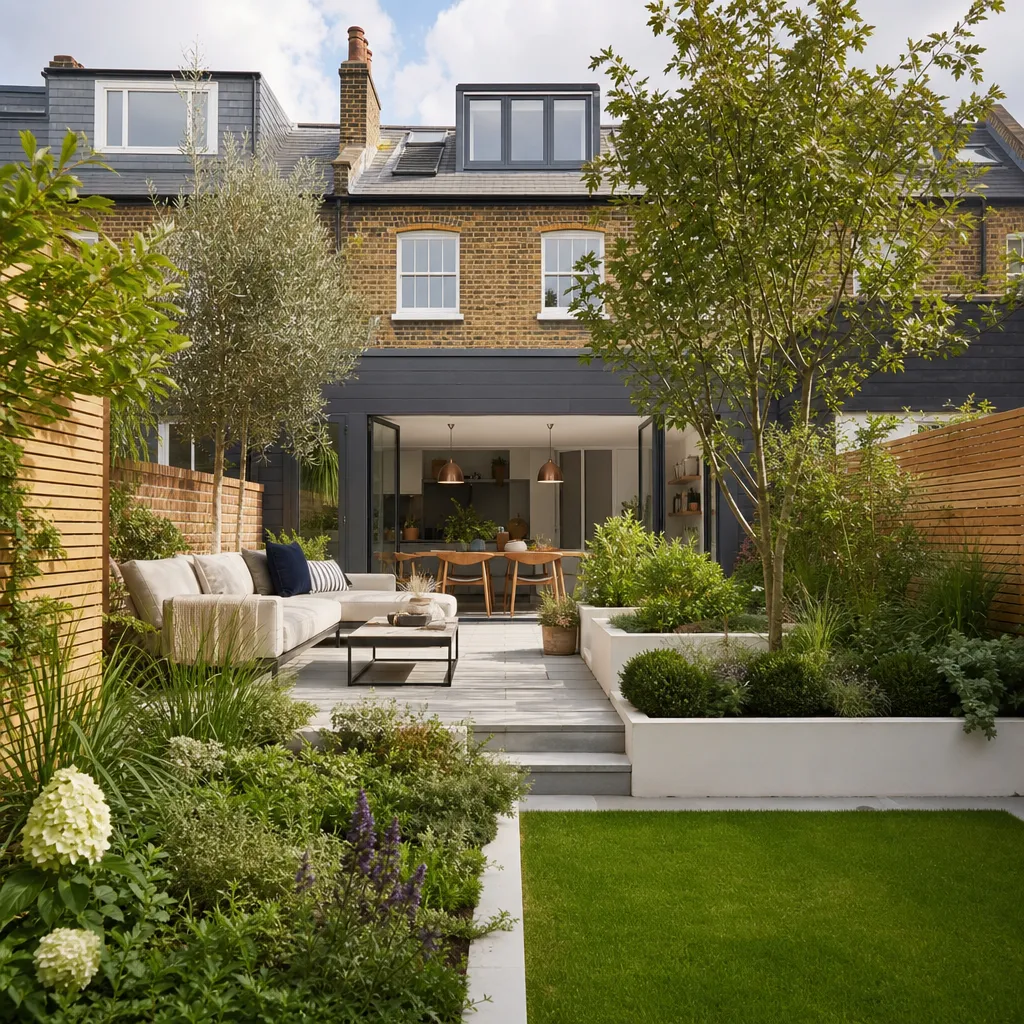
Seasonal Garden Transformations and Outdoor Design Ideas
A successful garden transformation in the UK works with the seasons rather than against them — establishing structure and hard landscaping in autumn or winter, planting in spring, and enjoying the results through summer.
 Improvement & Build
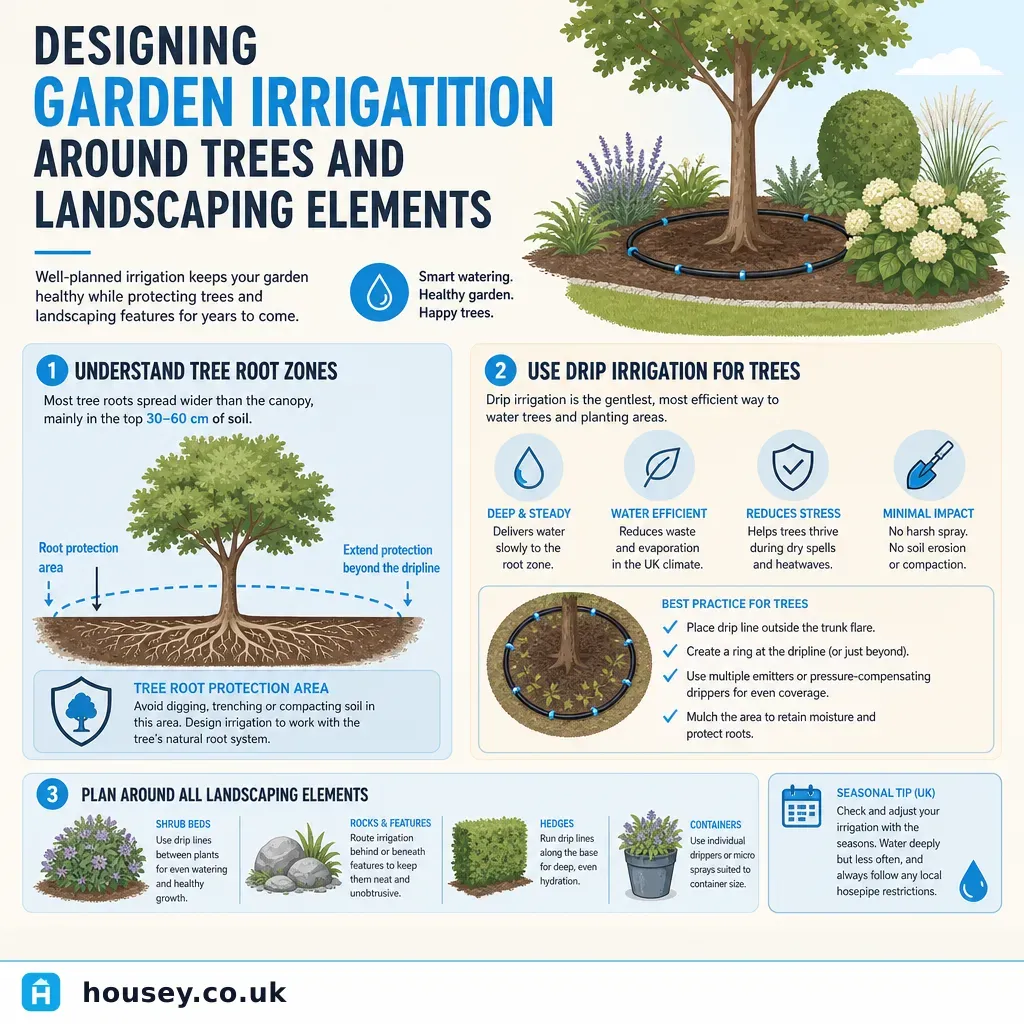
Designing Garden Irrigation Around Trees and Landscaping Elements
Design irrigation around trees by respecting the root protection area defined under BS 5837:2012, using drip or leaky pipe delivery rather than spray heads, and putting the tree zone on its own circuit.
 Improvement & Build
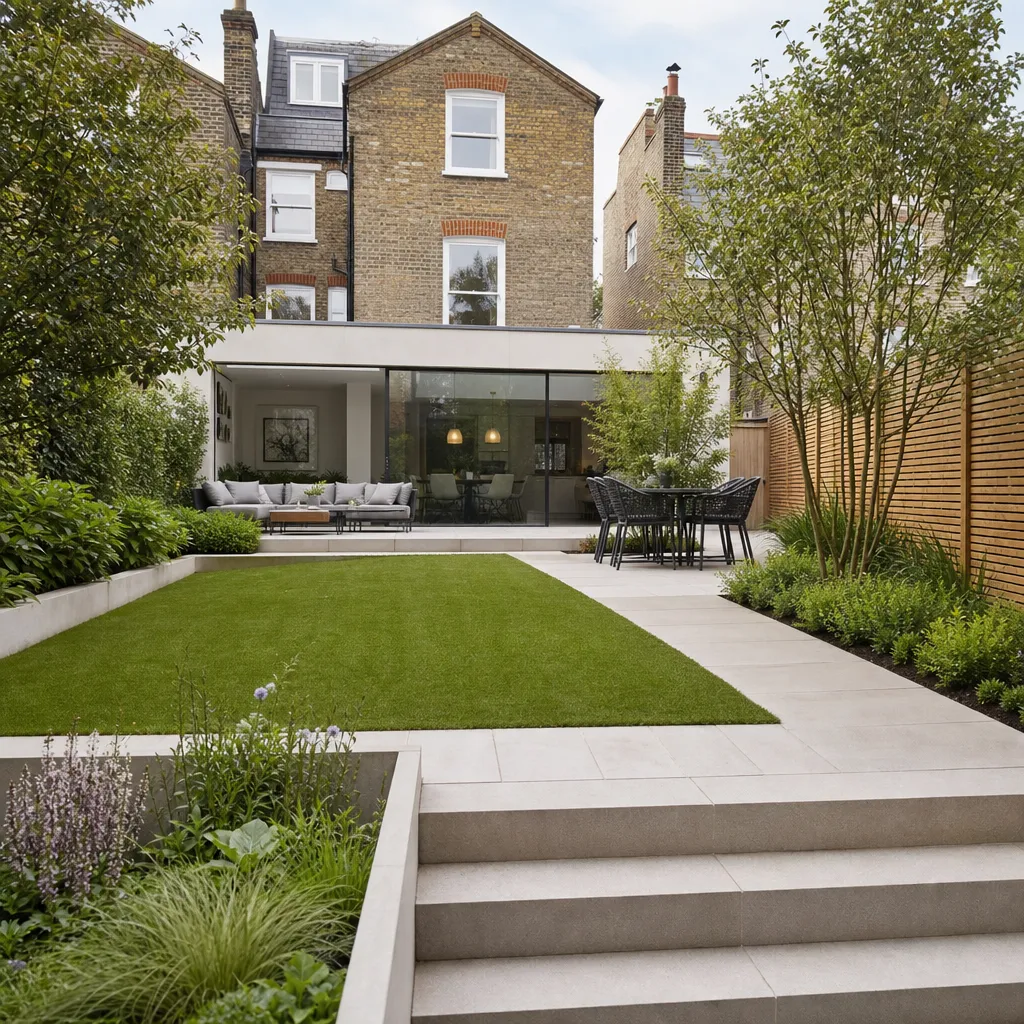
Garden Design Trends and Contemporary Landscaping Ideas
Contemporary UK garden design centres on low-maintenance naturalistic planting, multi-functional outdoor spaces, sustainable hard landscaping materials, and wildlife-friendly rewilded areas.
 Improvement & Build
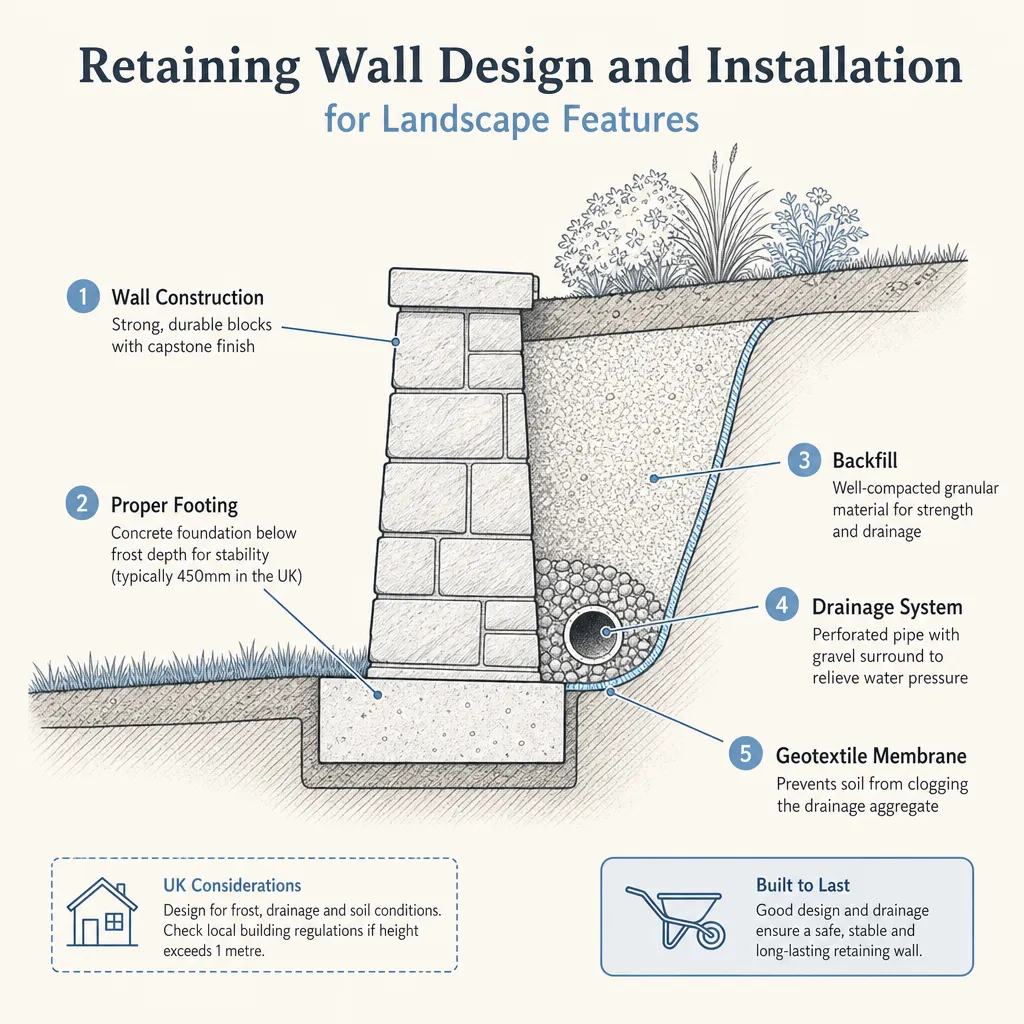
Retaining Wall Design and Installation for Landscape Features
A garden retaining wall holds back soil on a sloped plot using concrete blocks, stone, or timber.
 Improvement & Build
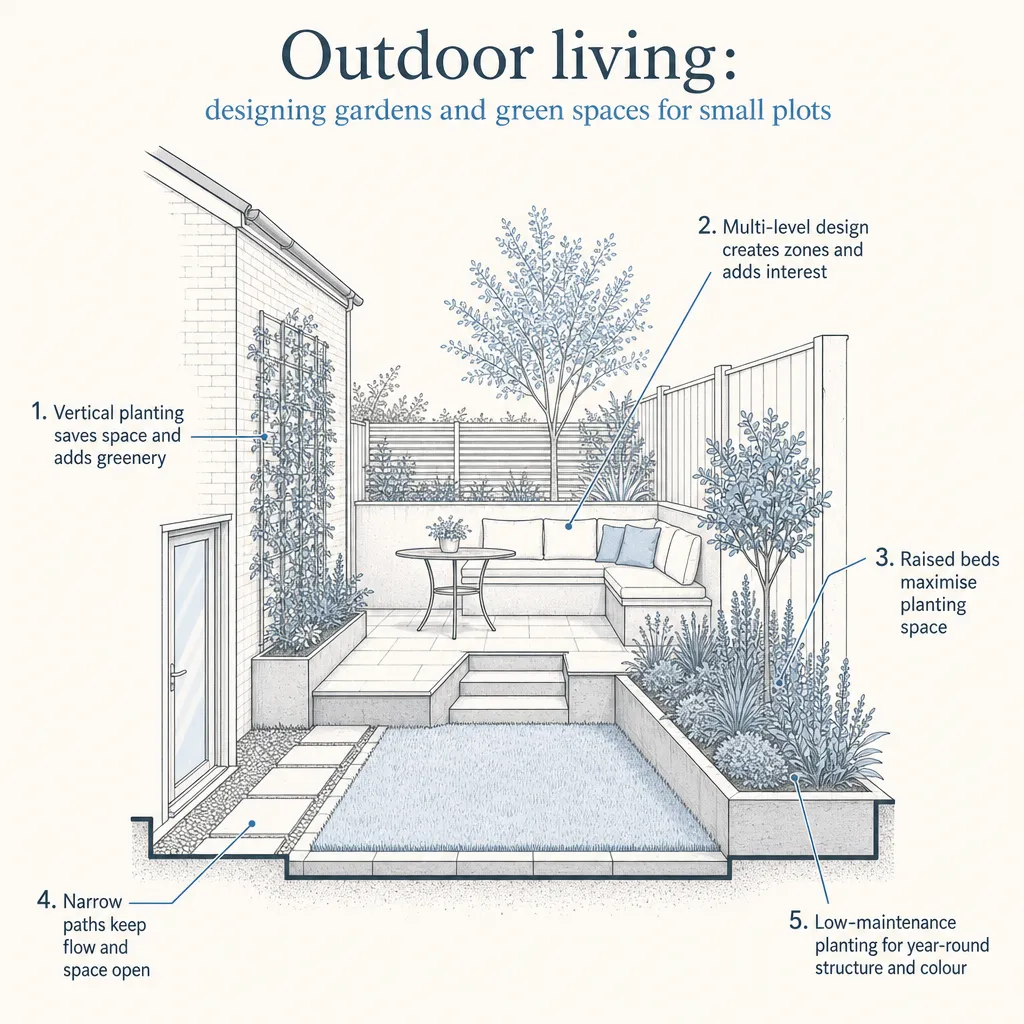
Outdoor living: designing gardens and green spaces for small plots
Small plots work best when divided into defined zones — seating, planting, and utility — before materials are chosen.