Decorative Concrete Paving Installation Costs
By Housey · Last reviewed 7th of May 2026
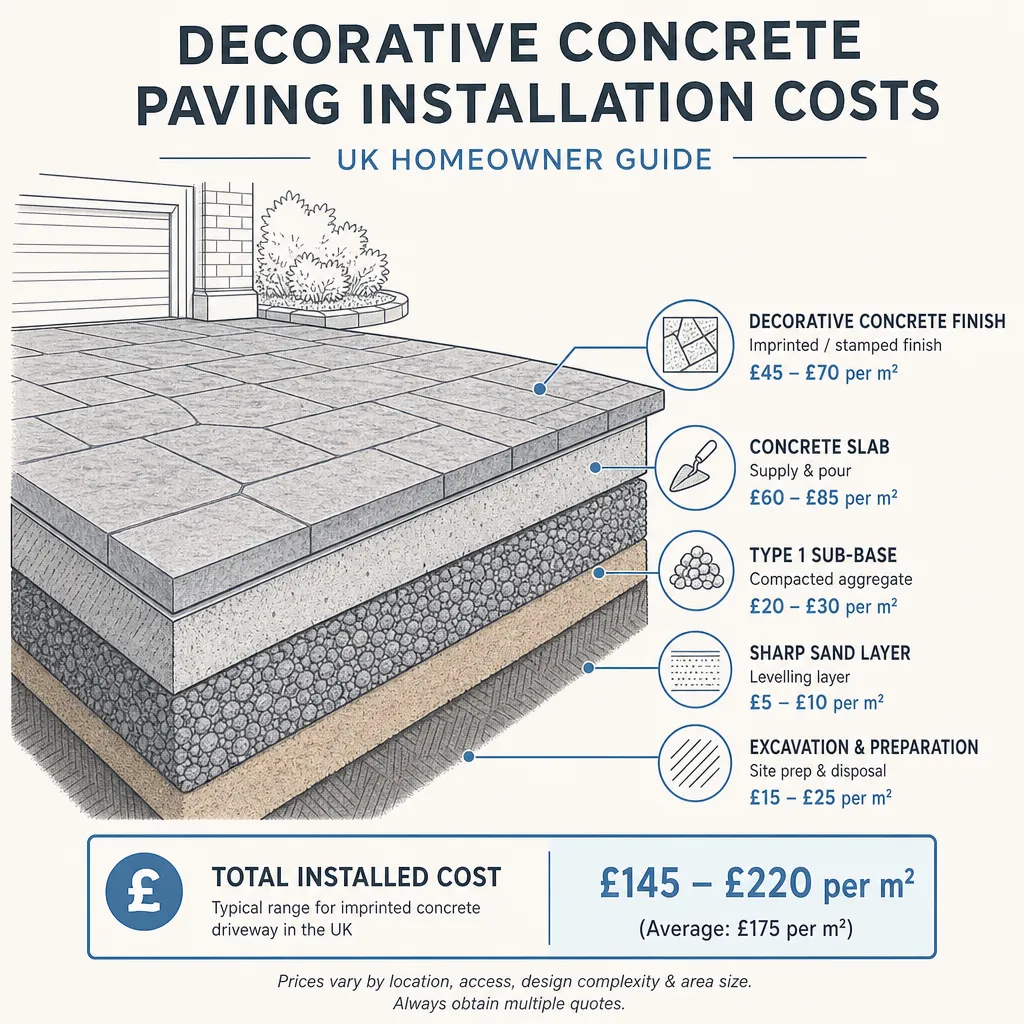
Decorative Concrete Paving Installation Costs
Pattern imprinted concrete — also marketed as decorative concrete, stamped concrete, or textured concrete — has become one of the most popular driveway and patio finishes in the UK over the past two decades. It is valued for lower ongoing maintenance compared with block paving and for its ability to replicate the appearance of stone, slate, or brick at a moderate installed cost. Whether you are replacing a tired tarmac drive, creating a new patio, or surfacing an area as part of a larger home improvement, knowing what realistic costs look like — and what questions to ask before signing a contract — helps you get genuinely comparable quotes and avoid common pitfalls.
Key points
- Pattern imprinted concrete typically costs £70–£120 per square metre installed in the UK, including sub-base preparation, colouring, stamping, and initial sealing.
- A compacted sub-base of 100–150mm hardcore is essential for durability; inadequate sub-base preparation is the most common cause of premature cracking and is not covered by most contractor warranties.
- Front driveways over 5m² that discharge rainwater onto the highway require either a permeable surface or drainage to a soakaway under planning rules introduced in England in 2008 — always check with your local authority before committing to a design.
- Imprinted concrete should be resealed every 3–5 years; neglecting this allows UV fading, oil staining, and freeze-thaw damage to degrade the surface and the colour significantly.
- Cracked or subsided decorative concrete is difficult and expensive to repair invisibly because matching the colour and pattern of aged concrete is rarely achievable — prevention through proper installation is far cheaper than remediation.
What is decorative concrete paving?
Decorative concrete paving involves pouring a reinforced concrete slab, stamping or pressing patterns into the surface while still workable, applying colour via integral pigments or surface hardeners, and sealing the cured surface. Common pattern options available from UK contractors include cobblestone, random slate, Yorkstone, brick, and herringbone.
It is a specialist process: the stamping window is narrow (concrete must be at the correct plasticity), colour application requires skill to achieve consistent results, and the sub-base must be correctly specified for the anticipated loads. Poor workmanship is difficult to reverse once the concrete has cured, making contractor selection critical.
Typical UK costs for decorative concrete paving
The table below shows indicative installed costs for standard residential projects. Costs include excavation, sub-base, reinforced concrete, colouring, pattern stamping, and one coat of sealant.
Indicative UK costs, last reviewed 2026-05-07. Prices vary by region, design complexity, and site conditions.
Project | Estimated total cost | Notes |
|---|---|---|
Small patio, 20 m² | £1,400–£2,400 | Simple single-colour pattern, good access |
Medium driveway, 40 m² | £2,800–£4,800 | Standard cobblestone or slate finish |
Large driveway, 60 m² | £4,200–£7,200 | Multiple colours or premium patterns add cost |
Reseal only (per m²) | £8–£20/m² | Recommended every 3–5 years |
What is typically included: excavation to formation level, disposal of spoil, 100–150mm compacted hardcore sub-base, steel mesh reinforcement, coloured concrete pour, pattern stamping, curing compound, and one application of sealant.
What may cost extra: decorative edging or border insets, drainage channels, steps, removal of an existing concrete slab (add approximately £15–£30/m²), premium multi-colour or bespoke designs, and pump hire where mixer truck access is restricted.
Decorative concrete vs alternative paving surfaces
Surface | Installed cost per m² | Typical lifespan | Repairability | Ongoing maintenance |
|---|---|---|---|---|
Decorative (imprinted) concrete | £70–£120 | 20–30 years if sealed | Difficult — colour matching rarely exact | Reseal every 3–5 years |
Block paving | £60–£120 | 20–30 years | Good — individual blocks replaced | Occasional weed control, re-sanding joints |
Plain tarmac | £30–£60 | 15–25 years | Moderate — patch repairs visible | Minor patching over time |
Natural stone paving | £80–£200+ | 30+ years | Moderate — individual slabs replaced | Occasional repointing |
Resin-bound gravel | £50–£100 | 15–25 years | Moderate — section replacement | Low; permeable by design |
All costs indicative, last reviewed 2026-05-07.
Choose decorative concrete if you want a low-maintenance, seamless-looking surface that can mimic premium materials at moderate cost, and you are committed to the resealing schedule.
Consider block paving if repairability and drainage flexibility are priorities — individual blocks can be lifted to access underground services without breaking up the whole drive.
Avoid decorative concrete if the site has significant tree roots near the surface, a history of ground movement, or where drainage complexity is high — repairs will be conspicuous and costly.
What affects the cost of decorative concrete?
Sub-base depth and ground conditions: If existing ground is soft, contaminated, or in a frost-susceptible clay area, more extensive excavation and a deeper sub-base are needed, raising costs. Heavy vehicle use (large vans, SUVs) may require a thicker slab or additional reinforcement.
Pattern and colour complexity: A single-colour, single-pattern pour is the most affordable. Multiple border colours, inset feature panels, or bespoke multi-tone designs add significant labour time and material cost.
Site access for concrete delivery: Restricted access for a ready-mix truck — narrow gates, slopes, or tight urban streets — may require a concrete pump (typically £300–£600 additional) or smaller batched deliveries.
Drainage provision: Where surface run-off must be directed to a drainage channel or soakaway rather than absorbed naturally, channel drain installation adds cost and should be included in the written specification.
Regional labour rates: Prices in London and the South East typically run 15–25% above the national average for the same specification of work.
Red flags when choosing a contractor
Watch for these warning signs when requesting and evaluating quotes:
- Unusually low price per m²: Quotes under £55/m² often reflect a thin slab, inadequate sub-base, absent reinforcement, or no sealant — all of which lead to early failure.
- No written specification: Any reputable installer will confirm in writing the sub-base depth, concrete strength class, reinforcement type, and whether sealing is included. Verbal-only assurances offer no protection.
- Pressure for a large cash-only deposit: Always use traceable payment methods and retain a proportion until satisfactory completion.
- No local reference installations to inspect: Colour consistency, pattern quality, and long-term wear are best assessed in person on a nearby completed job — ask for an address you can visit.
- No mention of drainage or planning for front driveways: A contractor who does not raise run-off management for a front driveway project may not be working to current permitted development requirements.
Planning permission for decorative concrete driveways
In England, householders installing a new front driveway can do so under permitted development only if the surface is permeable, or if rainwater is directed to a lawn, border, or soakaway rather than onto the public highway. A standard impermeable concrete driveway of over 5m² on the principal elevation will typically require planning permission under rules introduced in 2008.
Standard pattern imprinted concrete is not permeable — confirm the drainage arrangement with your installer and check with your local planning authority before committing to a design. Permitted development rules differ in Wales, Scotland, and Northern Ireland.
What to ask before accepting a quote
Before instructing a contractor, ask these questions and confirm the answers in writing:
- What depth and specification of sub-base will you lay, and how will it be compacted?
- What concrete strength class is specified, and will steel mesh reinforcement be included?
- How many colour passes or hardener applications does the price include?
- Is sealant included, and if so, how many coats and what product?
- What happens if the concrete begins to set faster than expected on a warm day?
- Does the price include spoil removal and disposal?
- Can you provide the address of a local completed project I can inspect?
- What drainage provision is included for managing driveway surface run-off?
- Is VAT included in the quoted price?
When to get professional help
Decorative concrete installation is not a DIY task. It requires specialist equipment — power floats, stamping mat sets, potentially a concrete pump — precise timing during the workability window, and experience in colour application. Always instruct a contractor with verifiable local references and a written specification.
If a newly installed surface develops cracks wider than 2mm, significant sinkage, or surface delamination within the first two years of installation, the work may be defective. Document the defects photographically, notify the contractor in writing, and if the matter is unresolved, Citizens Advice can provide guidance on contract disputes.
How Housey can help
If you are planning a new driveway or patio surface, Housey can connect you with qualified local contractors. Request quotes from driveway installers experienced in decorative concrete and imprinted surfaces, or contact groundworkers for excavation, drainage, and sub-base preparation if your project involves significant groundworks as part of a larger build.
Frequently asked questions
How long does decorative concrete paving last?
With correct installation and resealing every 3–5 years, pattern imprinted concrete typically lasts 20–30 years. The main threats to longevity are an inadequate sub-base (causing cracking), neglected sealing (allowing water ingress and freeze-thaw damage in winter), and vehicle loads heavier than the slab was designed for.
Does a new concrete driveway need planning permission?
For front driveways in England, any new impermeable surface over 5m² typically requires planning permission unless rainwater run-off is directed to a lawn or soakaway rather than the highway. Check with your local planning authority before work begins. Rules differ in Wales, Scotland, and Northern Ireland, so always confirm locally.
Can cracked imprinted concrete be repaired to match the original?
Matching aged imprinted concrete is difficult because the surface fades and changes tone over time. Small hairline cracks can be filled and sealed, but significant cracking or pattern damage usually results in a visibly patched appearance. This is why a correctly engineered sub-base and proper drainage at installation are far cheaper than remedial repair.
How often does imprinted concrete need resealing?
Most installers recommend resealing every 3–5 years, or sooner if the surface looks dull or stained. Resealing costs roughly £8–£20 per m² and protects against UV fading, oil staining, and freeze-thaw damage. Always check sealant compatibility — applying a solvent-based sealant over a water-based one can cause permanent surface hazing.
Sources and further reading
- Permeable surfacing of front gardens: best practice guidance — GOV.UK
- Permitted development rights for householders: technical guidance — GOV.UK
- Find your local council for planning enquiries — GOV.UK
- The Concrete Society — The Concrete Society
Useful next reads
 Improvement & Build
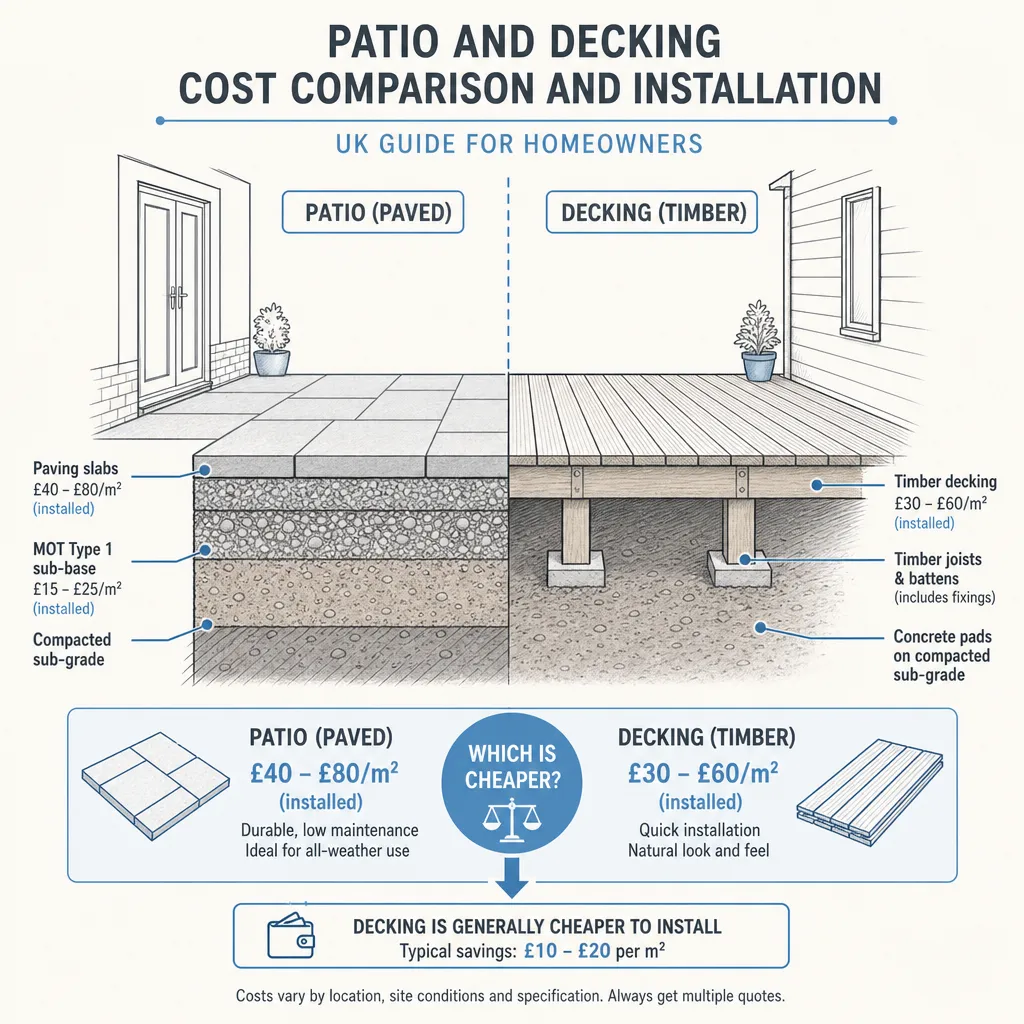
Patio and Decking Cost Comparison and Installation
A 20 m² porcelain or natural stone patio typically costs £2,000–£5,000 installed; block paving starts lower at £1,200–£3,000.
 Improvement & Build
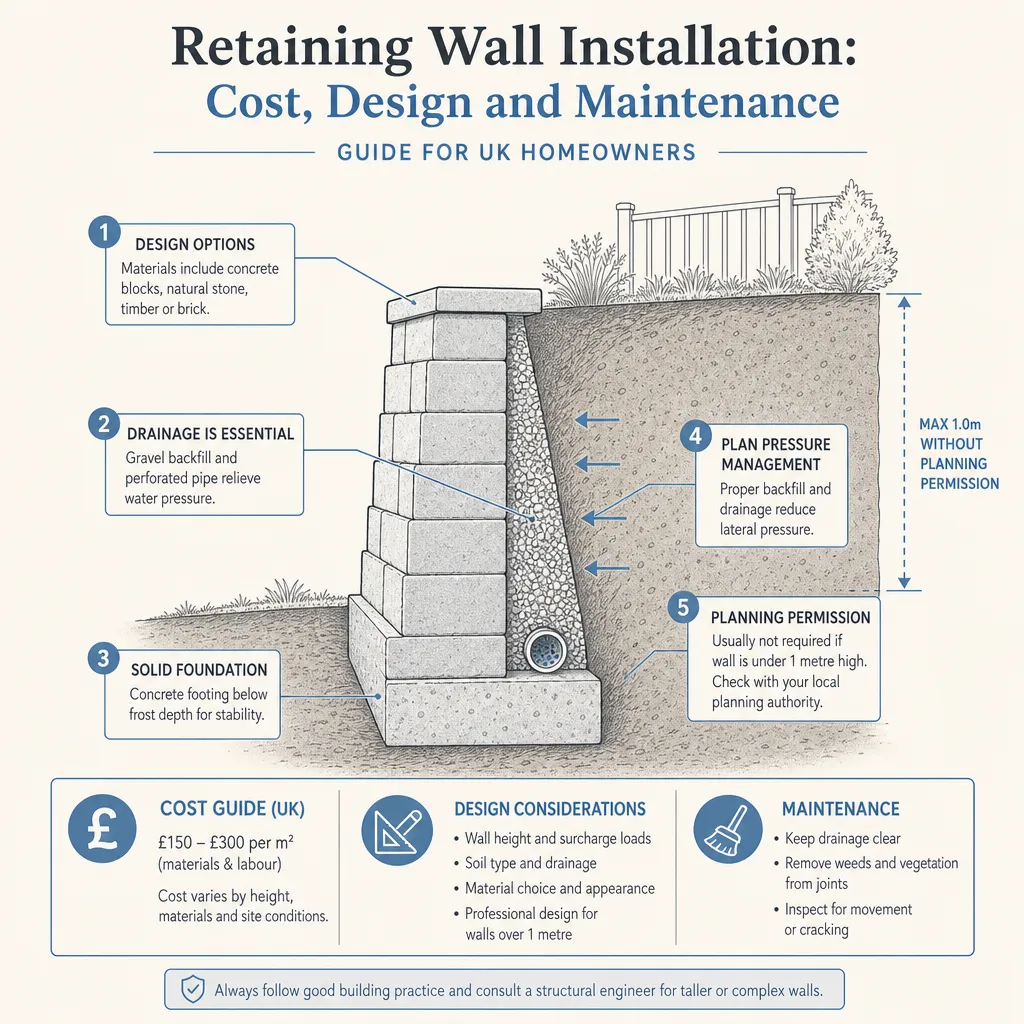
Retaining Wall Installation: Cost, Design and Maintenance
A retaining wall holds back soil on a sloped or banked site.
 Improvement & Build
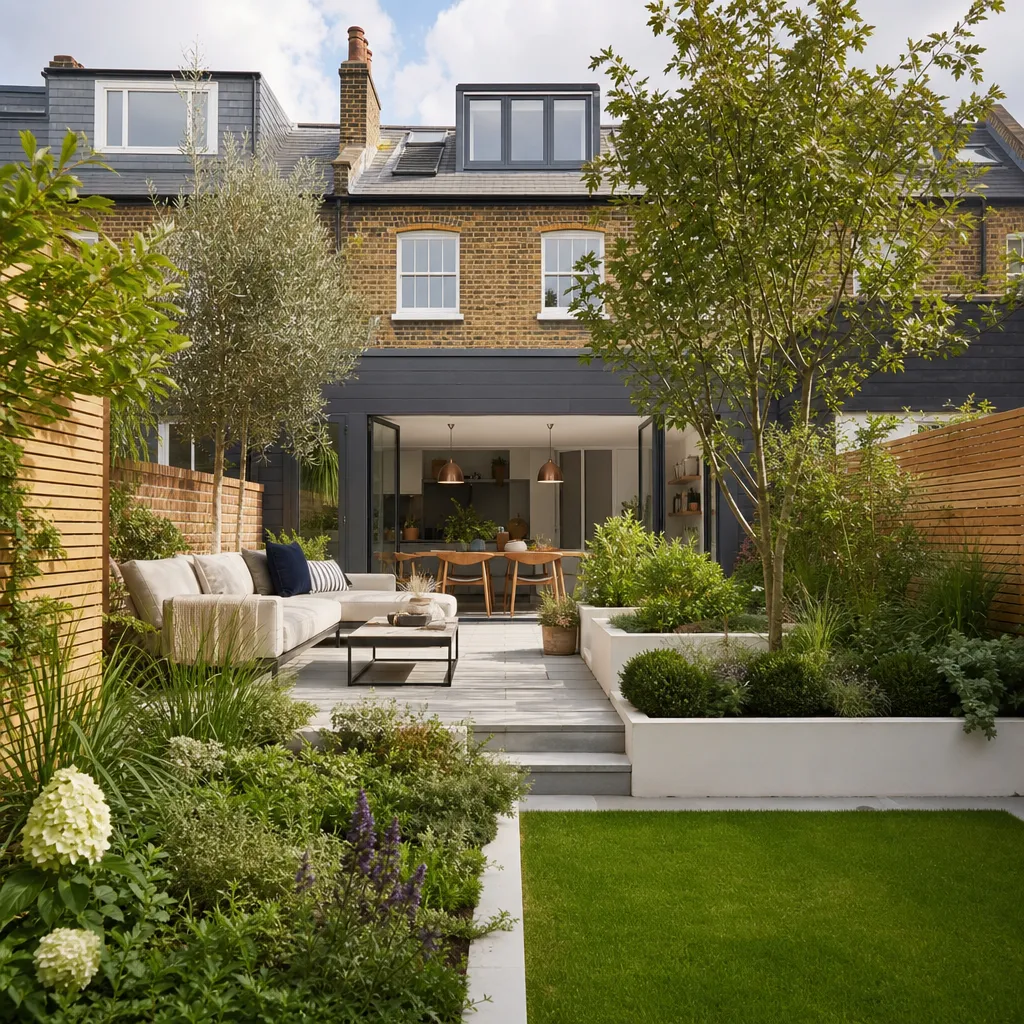
Seasonal Garden Transformations and Outdoor Design Ideas
A successful garden transformation in the UK works with the seasons rather than against them — establishing structure and hard landscaping in autumn or winter, planting in spring, and enjoying the results through summer.
 Improvement & Build
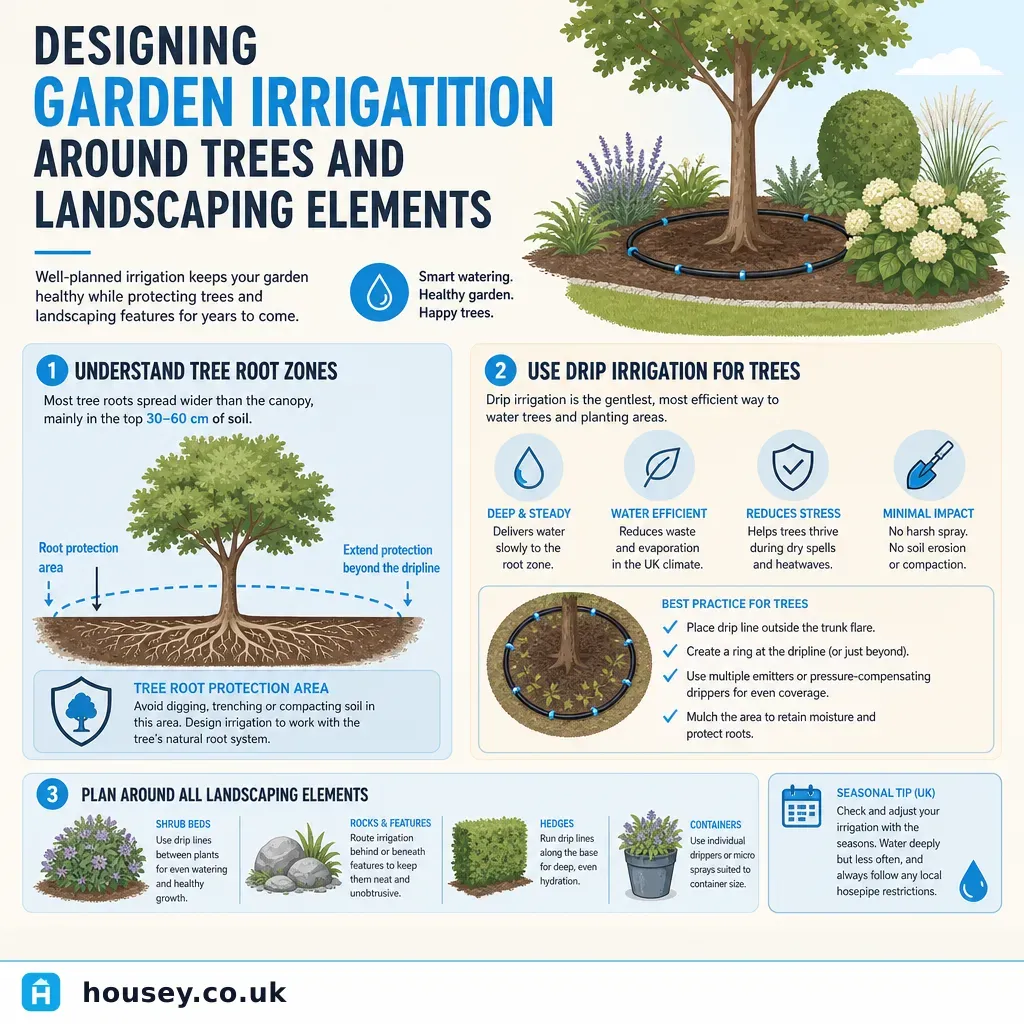
Designing Garden Irrigation Around Trees and Landscaping Elements
Design irrigation around trees by respecting the root protection area defined under BS 5837:2012, using drip or leaky pipe delivery rather than spray heads, and putting the tree zone on its own circuit.
 Improvement & Build
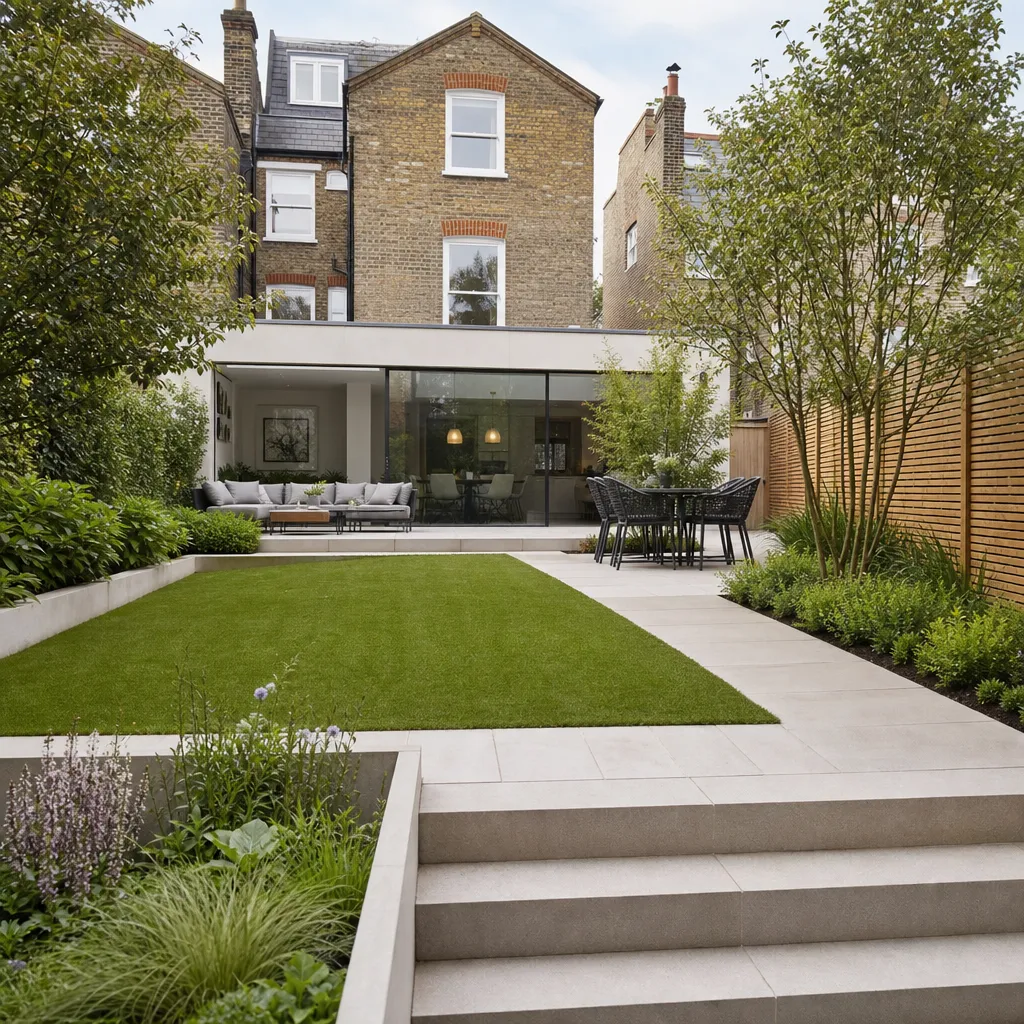
Garden Design Trends and Contemporary Landscaping Ideas
Contemporary UK garden design centres on low-maintenance naturalistic planting, multi-functional outdoor spaces, sustainable hard landscaping materials, and wildlife-friendly rewilded areas.