Patio and Decking Cost Comparison and Installation
By Housey · Last reviewed 7th of May 2026
Patio and Decking Cost Comparison and Installation
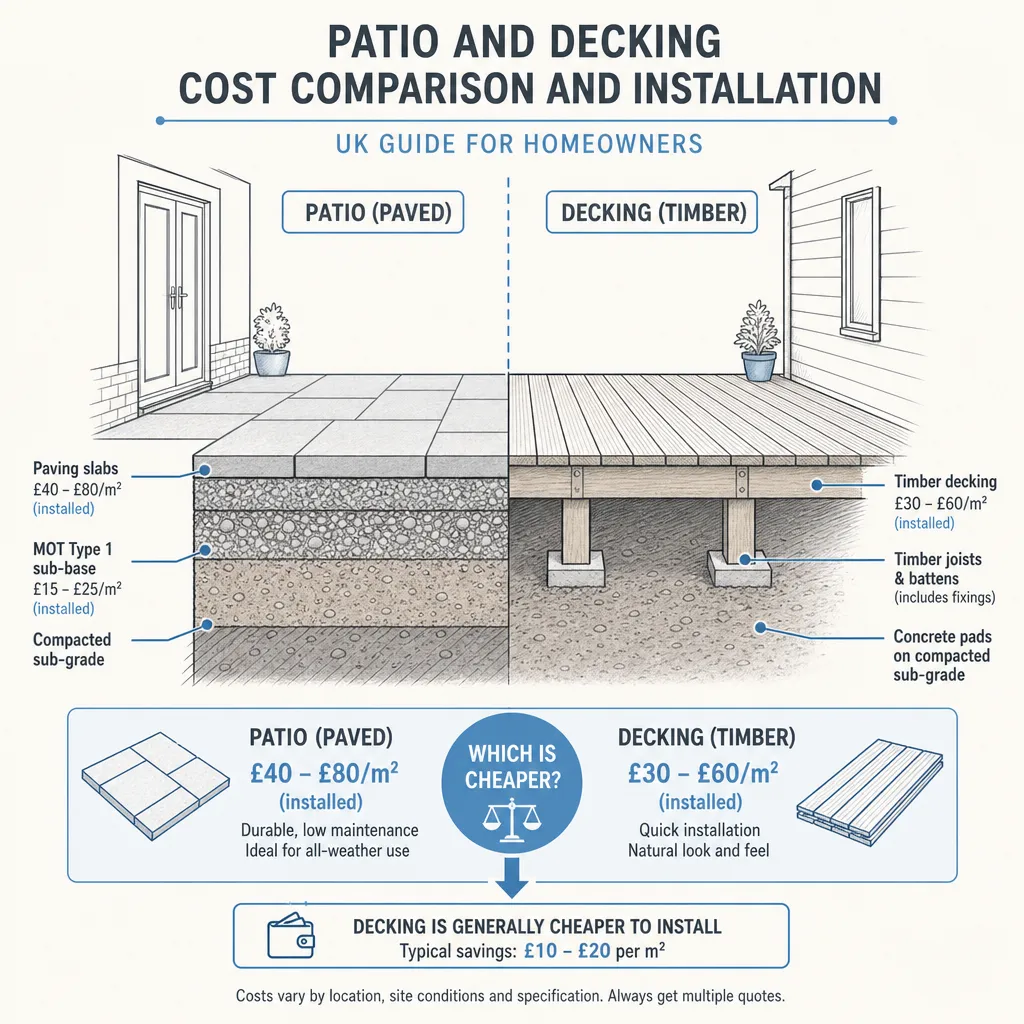
Choosing between a patio and decking is rarely just about aesthetics. Garden slope, soil conditions, drainage constraints, maintenance appetite, and budget all shape which option makes practical sense — and the total installed cost regularly exceeds the headline figure in an initial quote. Understanding cost drivers before approaching contractors puts you in a much stronger position to compare like-for-like proposals.
Key points
- A porcelain or natural stone patio typically costs £2,000–£5,000 installed for 20 m²; concrete block paving starts at £1,200–£3,000 for the same area.
- Softwood timber decking runs £1,200–£3,500 installed for 20 m²; composite decking costs £2,500–£7,000 or more depending on brand and board specification.
- Groundwork — excavation, sub-base, and spoil removal — typically accounts for 30–50% of patio installation cost and is the element most frequently underestimated at the quote stage.
- Decking raised more than 300mm above ground level may require Building Regulations approval under Part A (structural safety) — check with your local building control body before starting.
- Covering more than 5 m² of a front garden with impermeable paving requires planning permission; permeable paving or drainage to a lawn or border avoids this requirement under Approved Document H.
Patio vs decking: cost and suitability at a glance
Factor | Porcelain or stone patio | Concrete or block patio | Softwood decking | Composite decking |
|---|---|---|---|---|
Typical installed cost (20 m²) | £2,000–£5,000 | £1,200–£3,000 | £1,200–£3,500 | £2,500–£7,000+ |
Material lifespan | 20–30+ years | 15–25 years | 8–15 years | 20–25 years |
Annual maintenance | Low (re-pointing as needed) | Low to moderate | Medium to high (treating, sealing) | Low |
Sloped garden suitability | Poor without levelling groundwork | Poor without levelling | Good (frame follows contours) | Good |
Frost resistance | High (porcelain) / moderate (stone) | Moderate | Variable; depends on treatment | High |
Building Regulations risk | Low | Low | Raised decks may need approval | Raised decks may need approval |
Front garden planning risk | >5 m² impermeable needs permission | >5 m² impermeable needs permission | Low | Low |
Indicative UK costs, last reviewed 2026-05-07. Prices vary by region, ground conditions, material grade, and site access. Obtain at least three quotes before committing.
Which option suits your garden?
Choose a patio if…
- Your garden is relatively flat, or you are prepared to invest in levelling groundwork upfront.
- You want a low-maintenance surface that ages well in the UK climate with minimal annual treatment.
- You are creating a surface adjacent to the house at or close to ground level.
- You prefer the durability and appearance of natural stone, porcelain, or concrete block paving.
Choose decking if…
- Your garden slopes significantly and full ground-levelling would be disproportionately expensive.
- You want a softer underfoot feel — particularly around a seating area, hot tub, or outdoor dining space.
- Ground conditions (clay, waterlogged soil, or dense root systems) make a reliable compacted sub-base difficult.
- You want to bridge a level change between the house and garden, or create a raised viewing platform.
Ask a professional first if…
- You are unsure whether the ground is stable enough for raised decking — a ground investigation or structural engineer's input may be needed.
- The deck will be raised more than 300mm above ground — building control notification or formal approval may be required under Part A.
- The property is listed or in a conservation area — check planning requirements with your local planning authority before purchasing any materials.
What drives patio installation costs?
Material supply costs vary widely: porcelain tiles run £30–£80 per m²; natural stone (sandstone, limestone, granite) ranges from £25–£100+ per m² depending on origin and finish; concrete block paving costs £15–£40 per m². All figures exclude installation labour.
Groundwork is the most underestimated cost element. A properly laid patio requires excavation to at least 150mm (deeper for clay soils or heavy use), a compacted MOT Type 1 sub-base of 100mm minimum, a bedding layer of sharp sand or mortar, and jointing compound. For a 20–30 m² patio, groundwork alone commonly costs £500–£2,000 depending on access, soil type, and spoil volume.
Surface water drainage must slope away from the building at a minimum 1:60 gradient under Approved Document H. Water must not be directed to the public sewer unless the drainage system is designed for it — a soakaway or permeable paving may be required depending on ground permeability and local authority requirements.
What drives decking installation costs?
Pressure-treated softwood is the entry-level material and requires annual or biannual treatment with deck oil or stain. Hardwood (Ipe, Balau, Cumaru) is more naturally durable but costs more upfront and should be FSC-certified. Composite decking — wood fibre combined with recycled plastic — runs £40–£120 per m² for boards and requires minimal maintenance. Premium composite brands carry 20–25-year product warranties.
The subframe (joists, posts, and bearers) typically adds £300–£800 to installed cost and is critical to long-term performance. A poorly ventilated frame will rot below the surface regardless of the board quality above. Fixings should be stainless steel or hot-dip galvanised to prevent rust staining, particularly on pale composite boards.
Decking raised more than 300mm above ground may need Building Regulations approval under Part A. Check with your local authority building control before construction begins.
Document checklist for getting accurate quotes
Having the following ready when approaching contractors helps you receive comparable, accurate proposals:
- Garden sketch or site plan with approximate dimensions and distance to the house and boundaries.
- Photographs of the existing garden showing level changes, drainage gullies, existing surfaces, and any soft or waterlogged ground.
- Ground condition notes — clay soil, slope gradient, tree roots, or seasonal waterlogging.
- Access route details — narrow side-gate access restricts machinery and increases spoil-removal cost.
- Planning constraint notes — listed building, conservation area, or whether any front garden area is included.
- Material preference — surface type, colour, finish, and any reference images or product names.
- Drainage outlet locations — position of existing gullies, soakaways, or channels adjacent to the proposed area.
When to get professional help
Most patios and decks can be installed by an experienced landscaper or groundworker. Seek additional professional input if:
- Raised decking over 300mm is planned — a structural engineer may need to review the subframe specification and fixing method.
- The new surface drainage needs to connect to existing soakaways or drains — a drainage contractor should check capacity first.
- More than 5 m² of front garden is being covered with impermeable material — confirm planning requirements before committing.
- The project includes integrated planting, lighting, irrigation, or boundary structures — a garden designer adds significant value at this stage and can help avoid costly layout mistakes.
How Housey can help
Housey connects you with experienced landscapers and garden designers for patio and decking projects across the UK. For projects with substantial groundwork or drainage requirements, groundworkers are also available via Housey. Compare multiple quotes in one place before committing.
Frequently asked questions
Is a patio or decking cheaper to install?
On a flat garden, basic block paving is often the lowest cost per square metre. On sloped ground, decking can be more cost-effective because the subframe avoids expensive levelling and excavation. On a flat plot, a patio usually offers better long-term value due to substantially lower maintenance costs across its lifespan.
Does decking add value to a house?
Well-built composite or hardwood decking can improve usable space and attract buyers, particularly in urban gardens where outdoor space is limited. Poorly maintained softwood decking is often viewed negatively by buyers and surveyors. The impact on market value varies considerably by property type, location, and overall garden condition at the time of sale.
How long does it take to install a patio or deck?
A 20–30 m² patio typically takes two to five days depending on ground preparation and material. A comparable deck usually takes two to four days. Complex projects with retaining walls, integrated lighting, or multi-level designs take longer. Allow extra time for groundwork in wet weather, when clay soils in particular can slow excavation considerably.
Do I need planning permission for a patio or decking?
Most patios and decks do not need planning permission. Covering more than 5 m² of a front garden with impermeable paving is an exception and does require permission. Decking raised more than 300mm, or on a listed property or in a conservation area, may also need consent. Check with your local planning authority before starting.
What is the most durable patio material for the UK climate?
Porcelain paving is widely regarded as the most durable and lowest-maintenance option for UK gardens — frost-resistant, low-porosity, and stain-resistant. Quality natural stone such as granite or limestone performs well when correctly sealed and pointed. Avoid cheap sandstone from unverified quarries, which can flake and spall when subjected to freezing temperatures.
Sources and further reading
- Hard surfaces in your garden: planning permission — Planning Portal
- Approved Document H: Drainage and waste disposal — GOV.UK
- Do I need building regulations approval? — GOV.UK
- Planning permission guidance — Citizens Advice
Useful next reads
 Improvement & Build
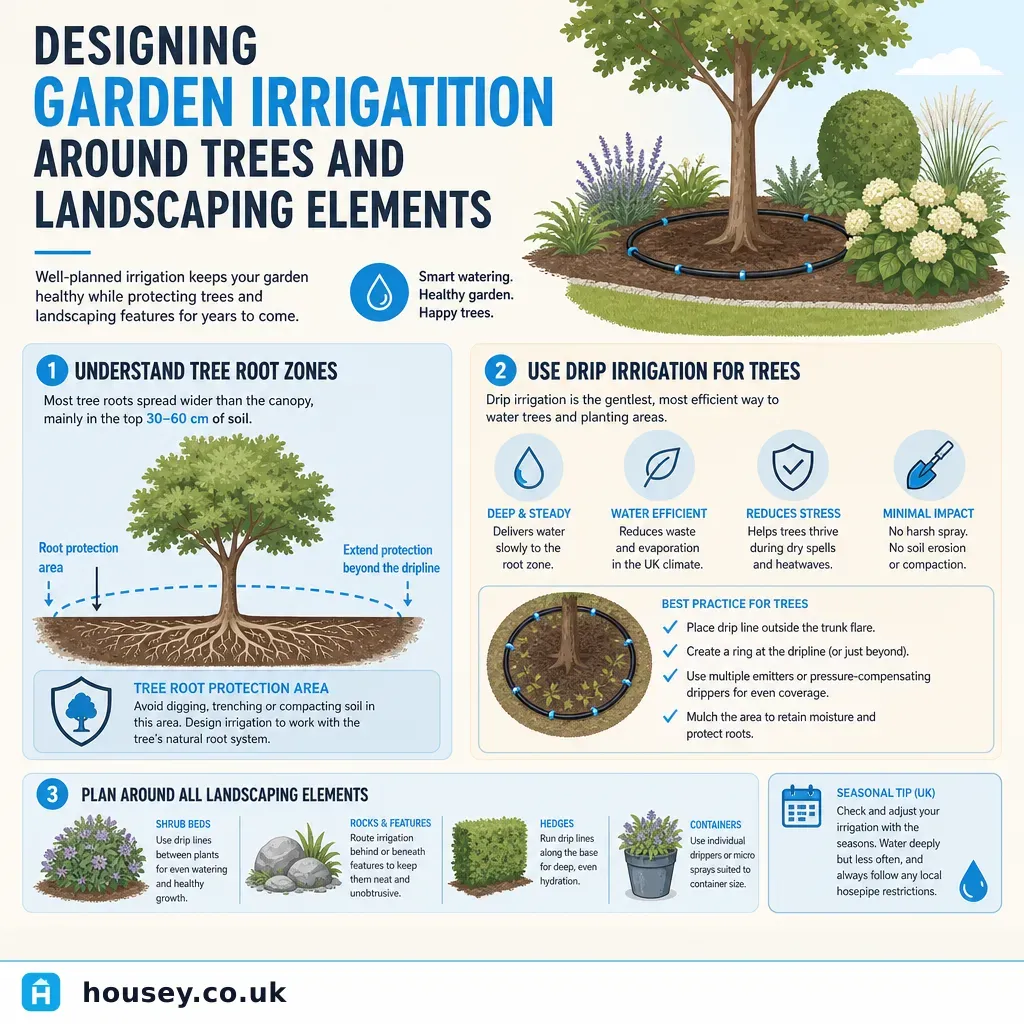
Designing Garden Irrigation Around Trees and Landscaping Elements
Design irrigation around trees by respecting the root protection area defined under BS 5837:2012, using drip or leaky pipe delivery rather than spray heads, and putting the tree zone on its own circuit.
 Improvement & Build
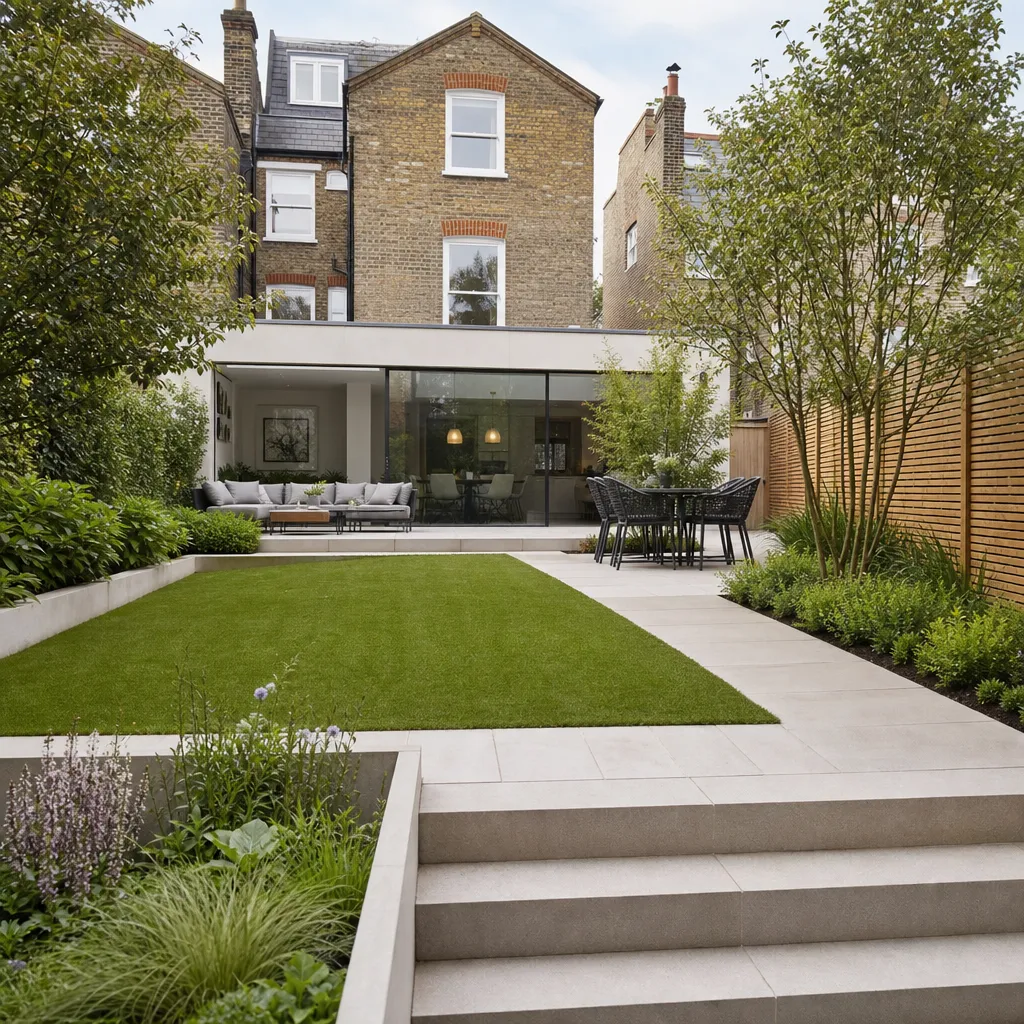
Garden Design Trends and Contemporary Landscaping Ideas
Contemporary UK garden design centres on low-maintenance naturalistic planting, multi-functional outdoor spaces, sustainable hard landscaping materials, and wildlife-friendly rewilded areas.
 Improvement & Build
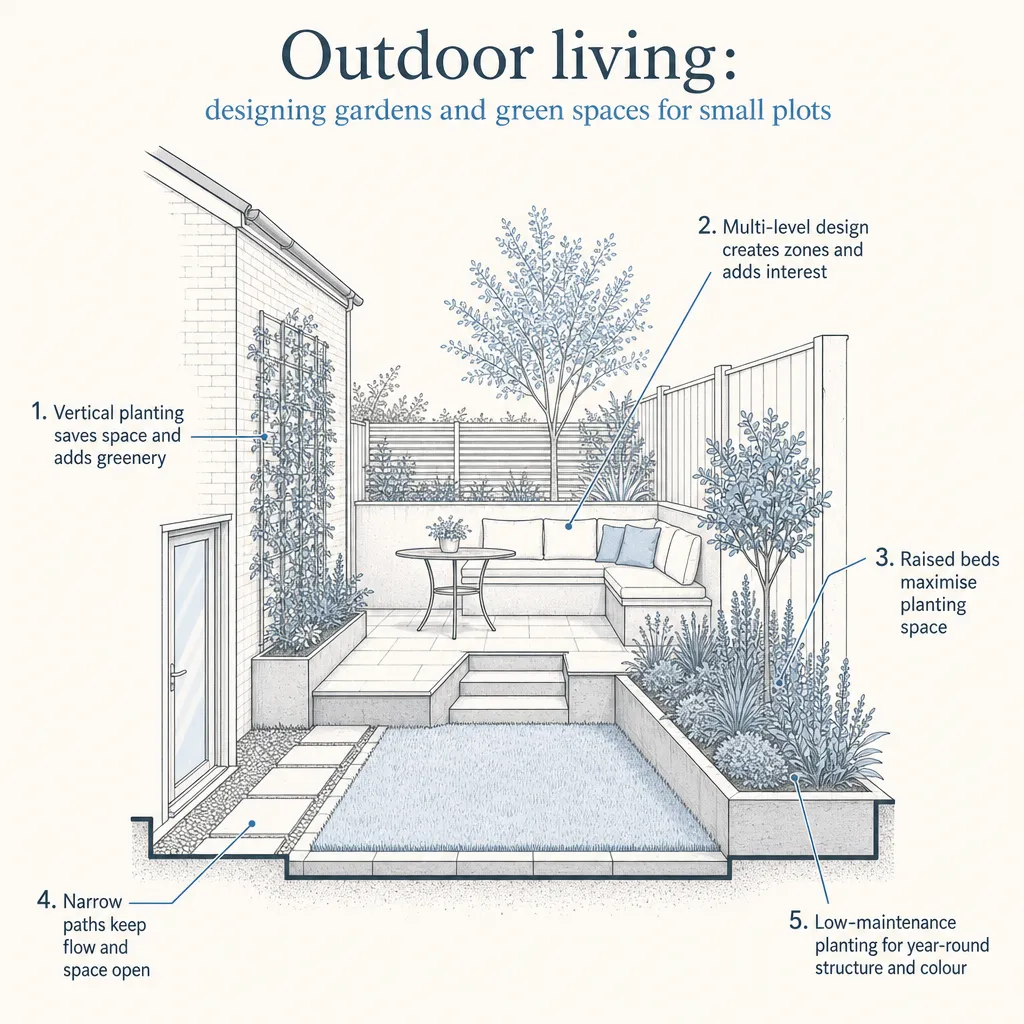
Outdoor living: designing gardens and green spaces for small plots
Small plots work best when divided into defined zones — seating, planting, and utility — before materials are chosen.
 Improvement & Build
Spring Garden Transformations: Design Ideas to Enhance Your UK Property
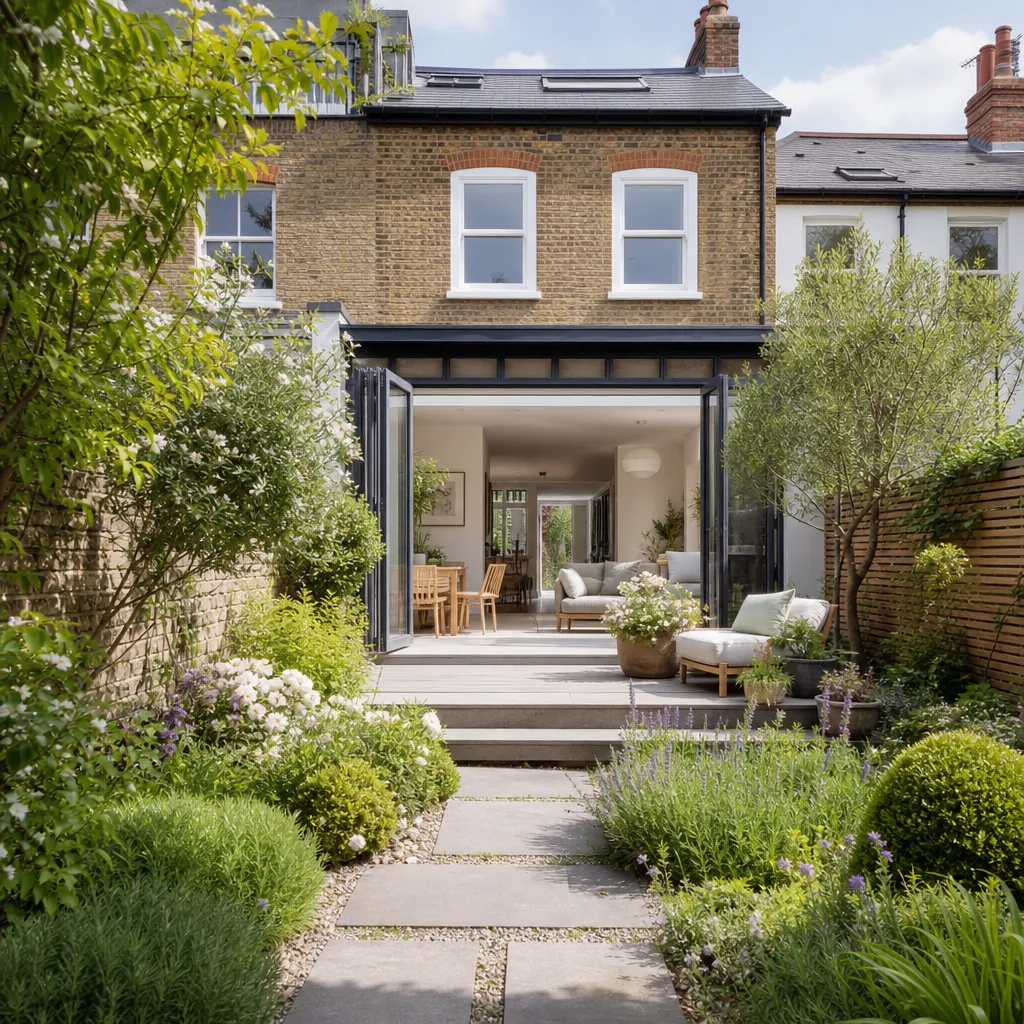
Spring is the best time to transform a UK garden, with mild temperatures and longer days ideal for planting and landscaping.
 Improvement & Build
Establishing a Parking Strip Garden or Verge Planting Area
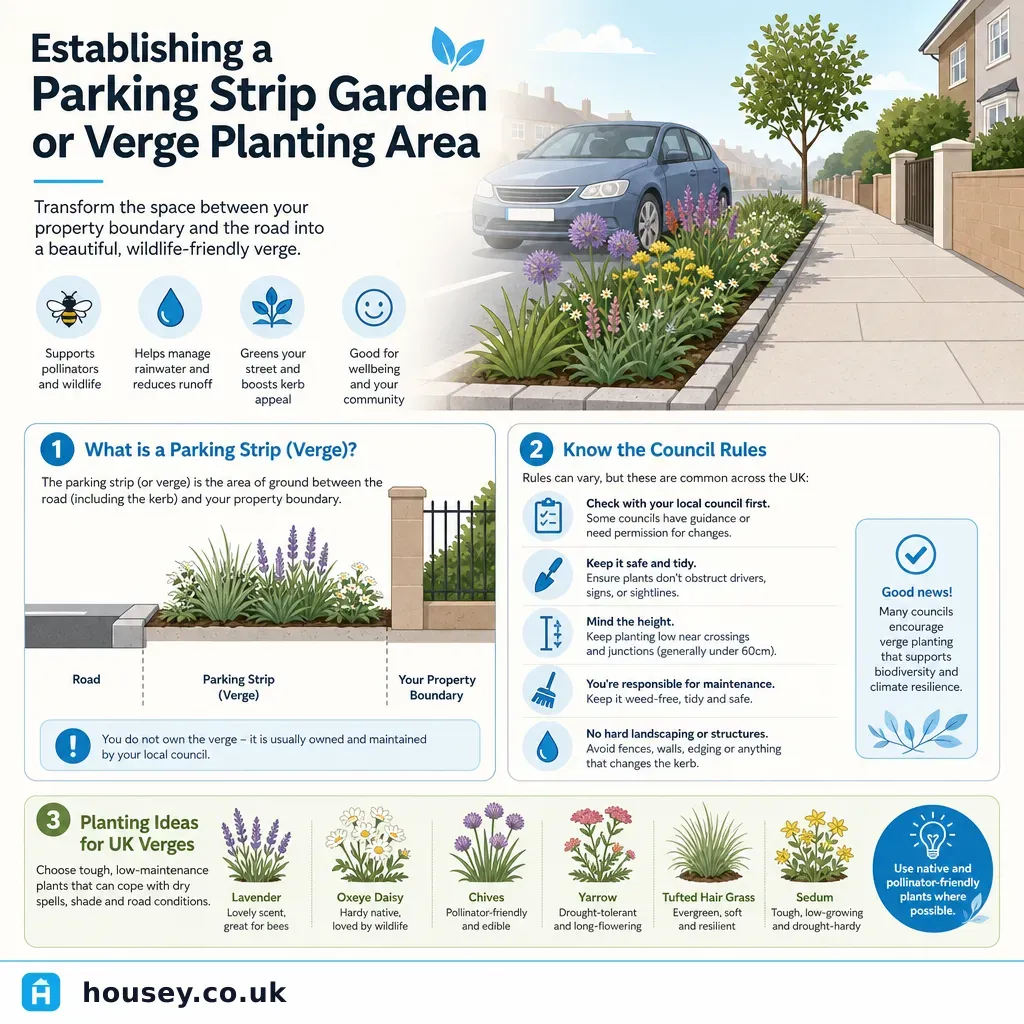
A parking strip or verge sits between your garden boundary and the road.