Decorative Paver Options for Residential Outdoor Spaces
By Housey · Last reviewed 24th of May 2026
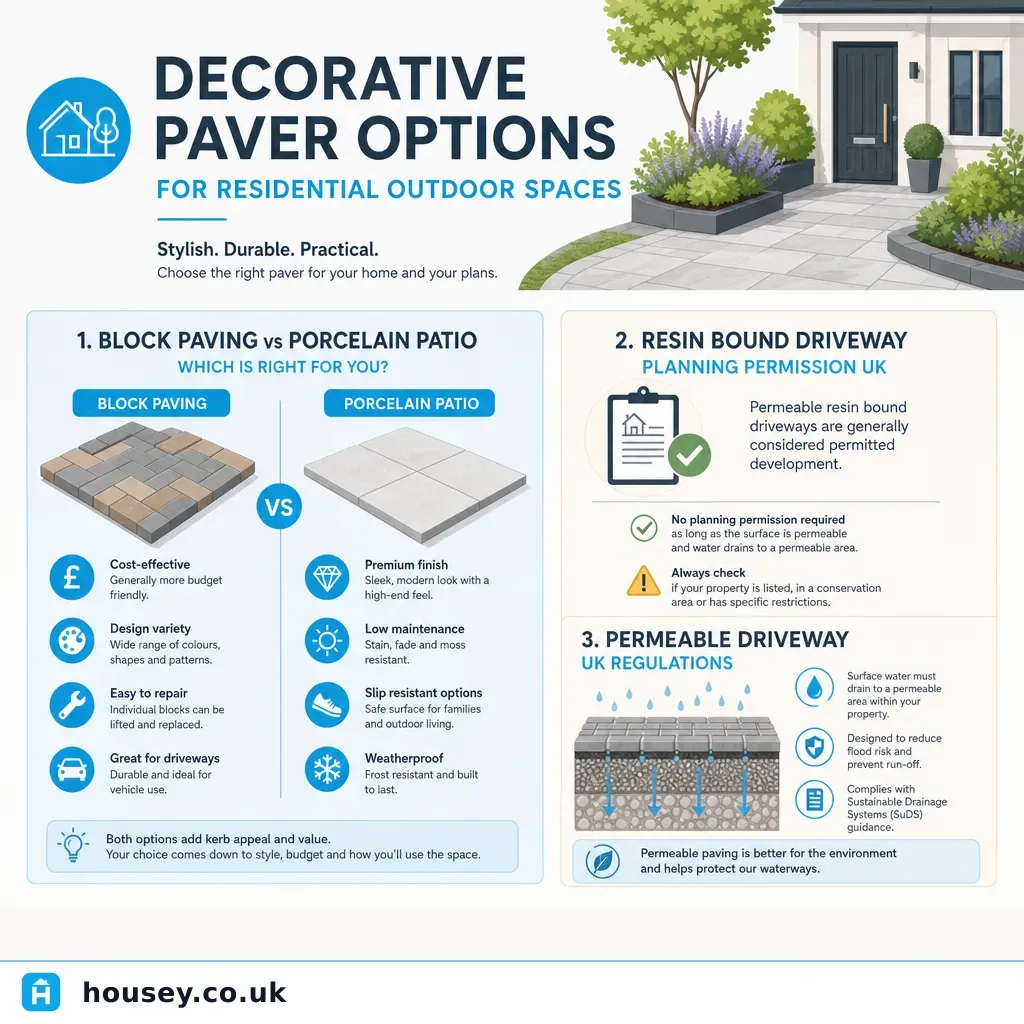
Decorative Paver Options for Residential Outdoor Spaces
Choosing paving materials for a driveway or patio quietly shapes how your property looks and functions for decades. Whether you are replacing a tired tarmac drive, designing a new patio from scratch, or extending an existing outdoor space, the range of products available in the UK market is broader than it has ever been. Understanding the trade-offs between materials, drainage rules, and installation quality will help you spend wisely and avoid common regrets.
Key points
- Front driveways larger than 5 square metres must use permeable surfacing or drain to a border or soakaway — otherwise householder planning permission is required under Schedule 2, Part 1, Class F of the Town and Country Planning (General Permitted Development) (England) Order 2015.
- Porcelain pavers for outdoor use should carry a minimum R11 anti-slip classification; always check the technical datasheet before ordering for a driveway or steps.
- Resin-bound systems are classified as SuDS-compliant by most local planning authorities; resin-bonded gravel — which sits on a solid impermeable base — is not permeable and does not qualify.
- Block paving should be laid on a minimum 150 mm compacted sub-base for driveways, per BS 7533 — inadequate sub-base preparation is the single most common cause of premature paver failure.
- Natural stone (sandstone, limestone, granite) varies significantly in hardness and frost resistance; always specify an external grade with a Class 1 or Class 2 frost resistance rating to BS EN 12371.
Comparing the main paver types
Material | Best for | Indicative installed cost (2026) | Permeable? | Key maintenance |
|---|---|---|---|---|
Concrete or clay block paving | Driveways, paths | £60–£120/m² | Usually no (unless permeable block type) | Re-sand joints annually |
Natural stone (sandstone, limestone) | Patios, paths | £80–£150/m² | No | Annual sealing recommended |
Porcelain (20 mm external grade) | Patios, contemporary driveways | £90–£160/m² | No | Keep clean; check for lippage on installation |
Resin-bound aggregate | Driveways, paths | £70–£130/m² | Yes (SuDS-compliant) | Occasional edge weed control |
Permeable concrete block | Driveways | £70–£125/m² | Yes | Top up jointing aggregate periodically |
Granite setts | Decorative features, edging, threshold details | £100–£180/m² | Depends on jointing | Re-pointing over time |
Indicative UK costs, last reviewed 2026-05-24. Prices vary significantly by region, existing ground conditions, and contractor. Always obtain itemised quotes.
Drainage and planning rules you need to know
Since October 2008, laying an impermeable hard surface over 5 square metres on the front garden or driveway of a house in England requires householder planning permission. The practical alternative is to use a permeable surface, or to ensure run-off drains to a lawn, border, or soakaway rather than directly into a highway drain. This rule is set out in Schedule 2, Part 1, Class F of the Town and Country Planning (General Permitted Development) (England) Order 2015, and is explained in GOV.UK's permeable surfacing booklet.
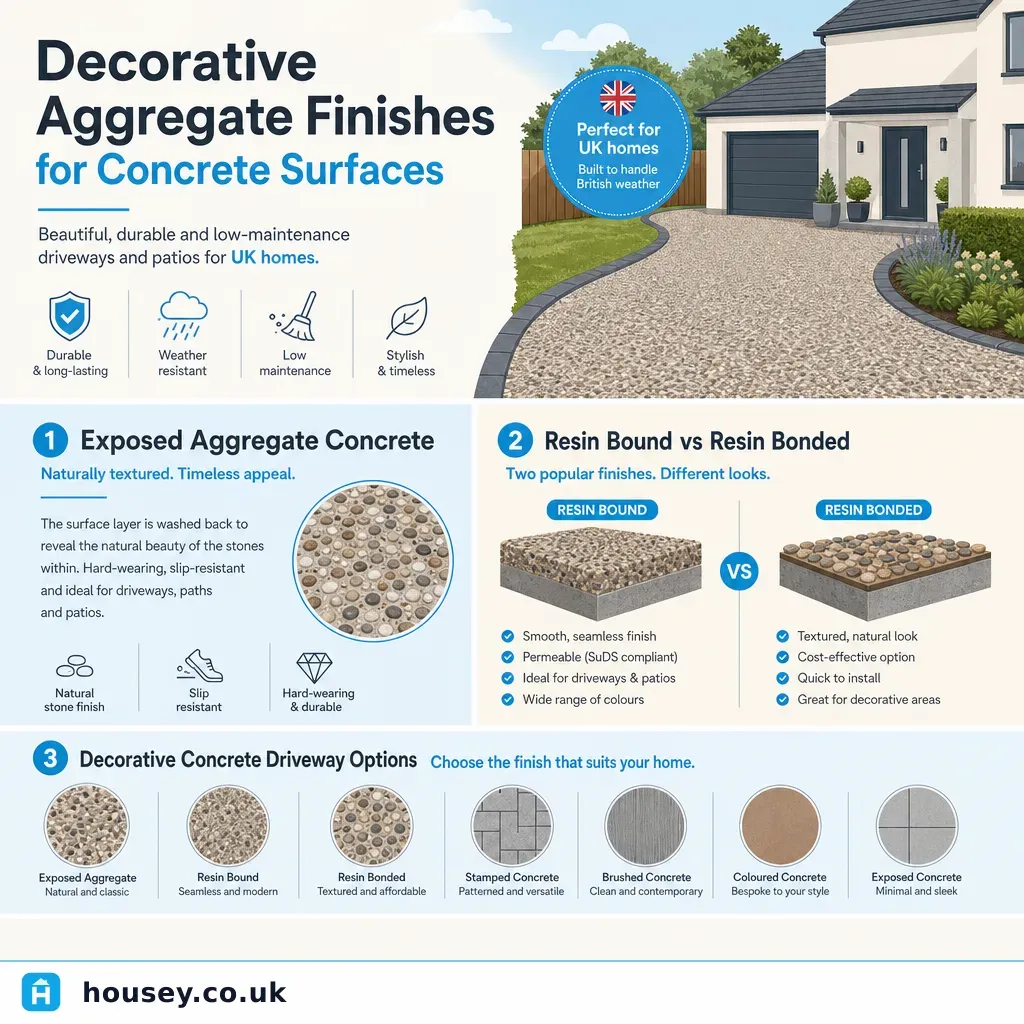
Resin-bound surfacing — where aggregate is fully coated in resin and pressed flat — is genuinely permeable, as water passes through the voids in the surface. Resin-bonded surfacing, by contrast, uses resin to fix aggregate onto a solid base and is not permeable. The distinction is important for planning compliance and drainage performance.
If your property is in a conservation area or is listed, additional consent from your local planning authority may be required even for small paved areas. Always check before starting work rather than retrospectively.
Which professional do you need?
Task | Professional |
|---|---|
Design, levels, and drainage planning for patios and paths | Landscaper or hard landscaping contractor |
Driveway installation including sub-base and surface | Driveway installer |
New kerb crossover onto a public highway | Driveway installer holding a Section 184 licence (highway authority approval required) |
Drainage calculations for large or sloped areas | Civil or drainage engineer |
Works in a conservation area or on a listed property | Local planning authority conservation officer or planning consultant |
Homeowner checklist before you order
What not to assume
Do not assume all resin products are the same. Resin-bound and resin-bonded products look almost identical when freshly installed but have completely different drainage properties. Confirm in writing which system your installer is proposing and whether it qualifies as a SuDS-compliant surface under your local planning authority's requirements.
Do not assume all block paving requires planning permission. Permeable block systems — with voids in the block itself or open joints filled with gravel — comply with the front garden drainage rules without planning permission. Ask your installer for the product specification.
Do not assume thinner porcelain is suitable for driveways. Tiles of 10–12 mm depth marketed for outdoor use can crack under vehicular loading or freeze-thaw cycling. Specify a minimum 20 mm depth for any area that will carry vehicle traffic.
When to get professional help
For patios and garden paths, a competent landscaper can usually manage design and installation. Driveways are more demanding: vehicle loading, drainage gradients, and potential kerb crossover works mean errors are costly to correct after the fact. Seek professional advice if:
- The ground has poor drainage, made-up ground, or significant tree roots nearby.
- You need a new kerb crossover (this requires local highway authority approval).
- The project is on a slope requiring careful level and channel drain planning.
- The site is in a conservation area or involves a listed property.
How Housey can help
Housey connects you with vetted driveway installers and landscapers who can provide quotes tailored to your surface type, ground conditions, and drainage requirements — whether that is a permeable resin-bound driveway, a natural stone patio, or a full hard landscaping redesign.
Frequently asked questions
Do I need planning permission for a new driveway?
If the surface is impermeable — solid concrete, standard block paving, or porcelain without a drainage channel — and the area exceeds 5 square metres, householder planning permission is required for a front driveway in England. Permeable surfaces, including resin-bound aggregate and permeable block paving, are generally exempt under permitted development. Rules differ in Wales and Scotland, so check with your local planning authority first.
How long does block paving last?
A properly installed block paving driveway with an adequate sub-base — typically 150 mm compacted Type 1 MOT — and sand-set jointing can last 20–25 years or more. Early failure is almost always due to insufficient sub-base preparation rather than defective blocks. Re-sanding joints every one to two years prevents weed growth and maintains the interlocking structure that gives block paving its load-spreading strength.
Is porcelain better than natural stone for a patio?
Porcelain is easier to maintain, more uniform in colour, and more resistant to staining and frost damage. Natural stone — sandstone, limestone, slate — has a warmer, more varied appearance that many homeowners prefer. Natural stone may require annual sealing to prevent staining and freeze-thaw damage. Both materials perform well when correctly installed on a full mortar bed with an appropriate external-grade specification.
Can I lay pavers myself?
Small patio areas using porcelain on a prepared sub-base are within the reach of a confident DIYer with access to cutting equipment. Driveways and larger areas involving excavation, sub-base compaction, and drainage gradient setting are best left to experienced installers. Incorrect falls cause water pooling, and poor sub-base preparation leads to sinking and joint failure that is expensive to remedy later.
Sources and further reading
Useful next reads
 Improvement & Build
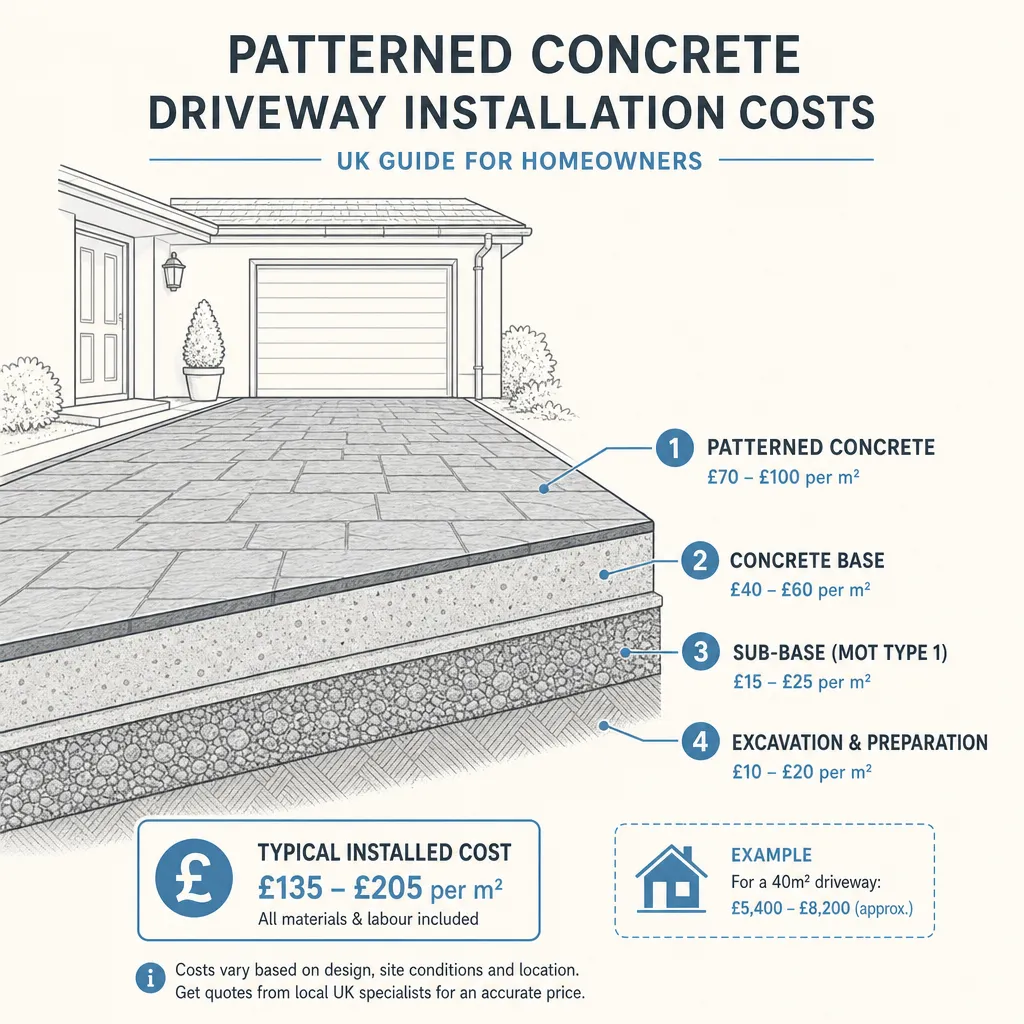
Patterned Concrete Driveway Installation Costs
A patterned concrete driveway in the UK typically costs £50–£120 per square metre installed, depending on pattern complexity, site preparation, and driveway size.
 Improvement & Build
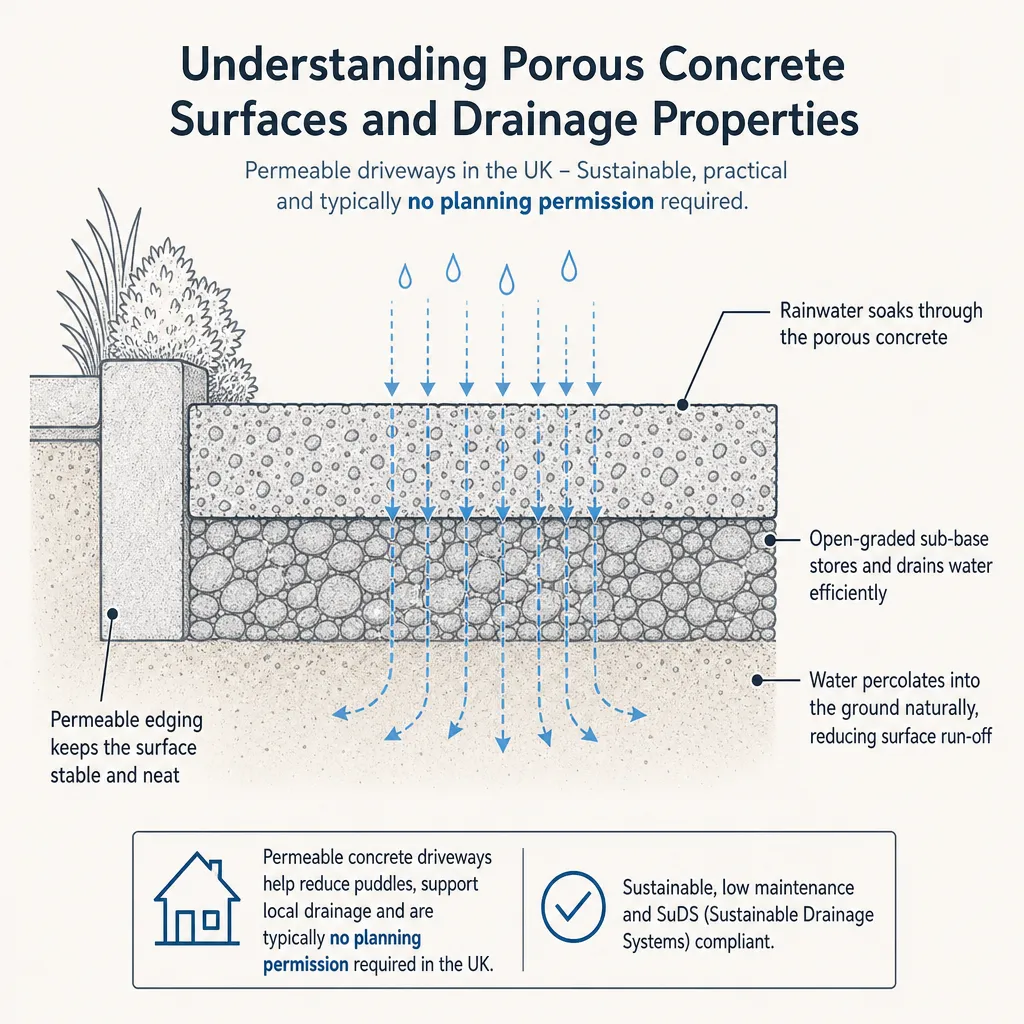
Understanding Porous Concrete Surfaces and Drainage Properties
Porous concrete — also called pervious or no-fines concrete — achieves permeability by omitting fine aggregate, leaving interconnected voids that rainwater passes through freely.
 Improvement & Build
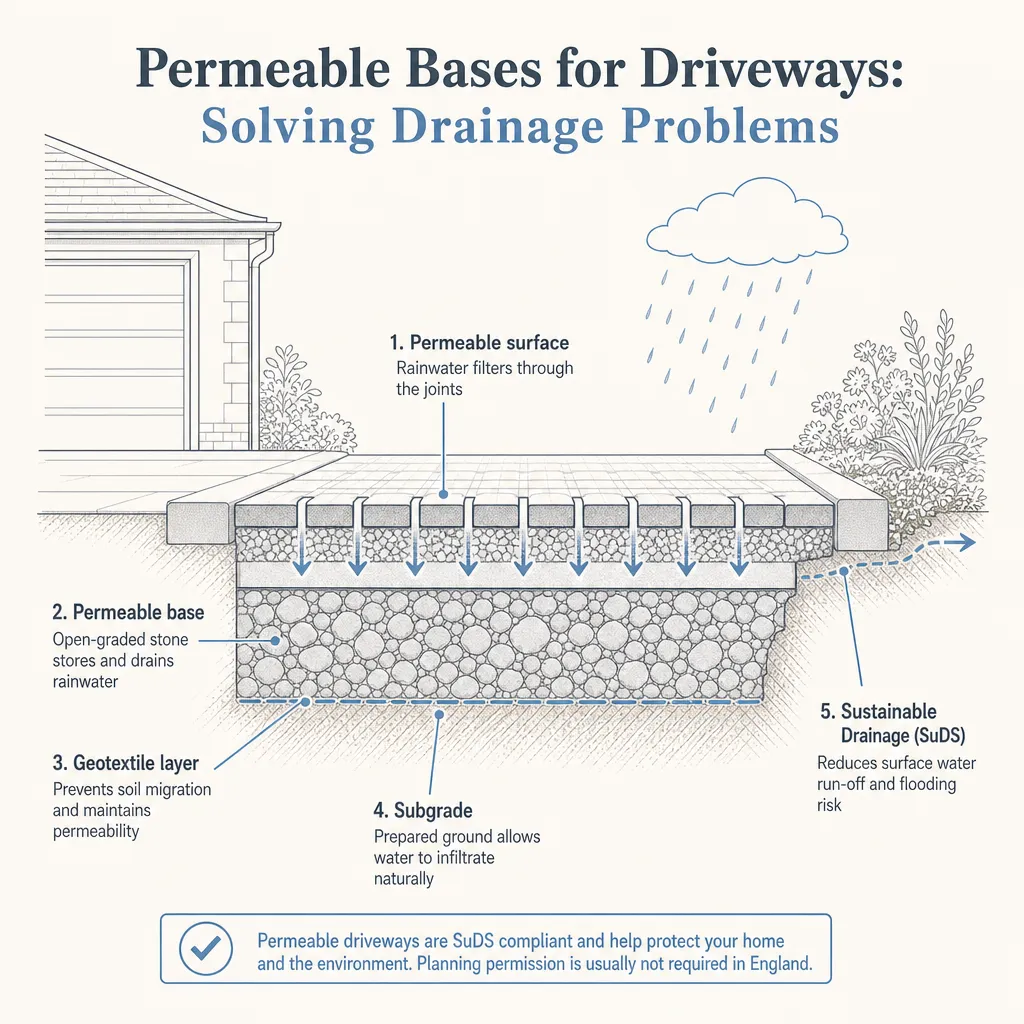
Permeable Bases for Driveways: Solving Drainage Problems
A permeable driveway base allows rainwater to drain through the surface into a sub-base layer or the ground below, reducing run-off and surface pooling.
 Improvement & Build
Decorative Aggregate Finishes for Concrete Surfaces
Decorative aggregate finishes for driveways and paths fall into four main types: exposed aggregate concrete, resin-bound aggregate (permeable and SuDS-compliant), resin-bonded aggregate (not permeable), and tar-chip.
 Improvement & Build
Enhancing Kerb Appeal Through Strategic Landscaping and External Design
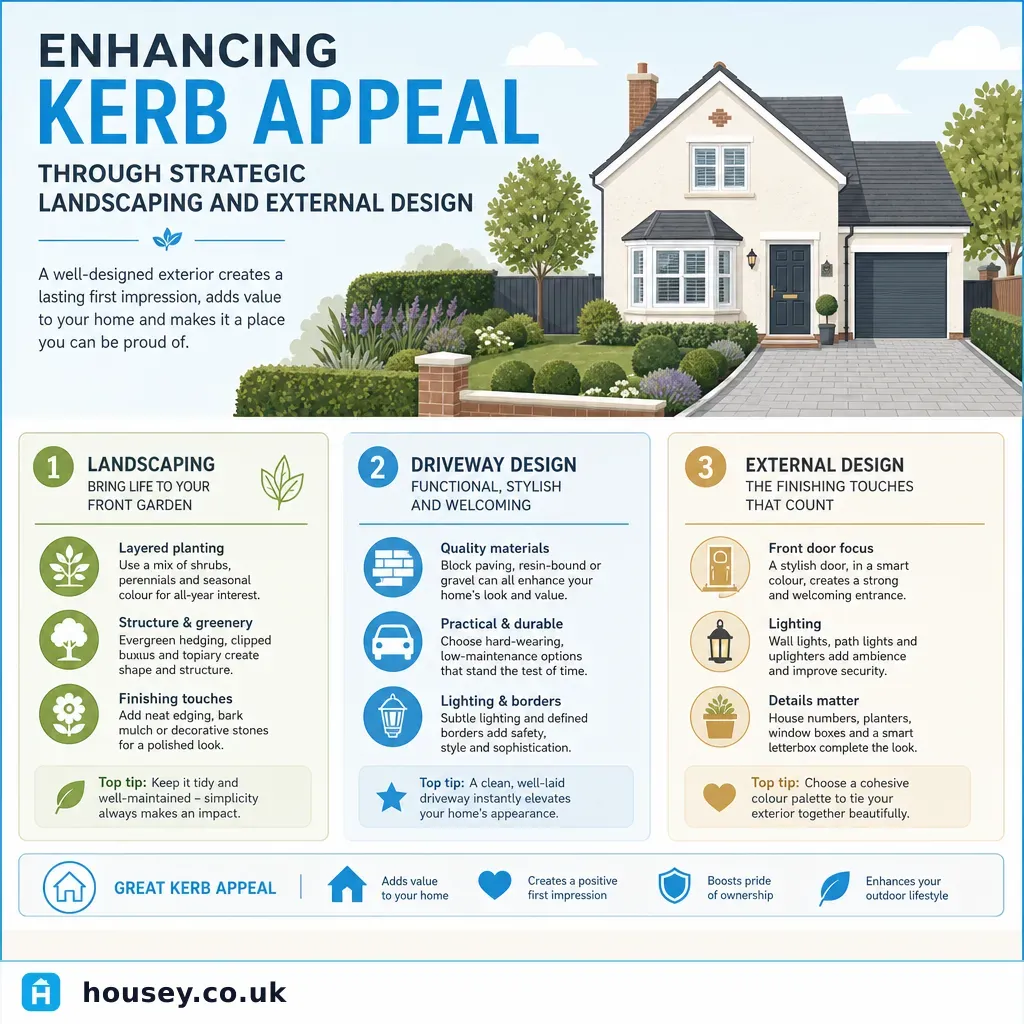
Kerb appeal improvements typically combine a well-maintained front garden or driveway, a smart front door, clean gutters and fascias, and appropriate boundary treatments.