Enhancing Kerb Appeal Through Strategic Landscaping and External Design
By Housey · Last reviewed 30th of May 2026
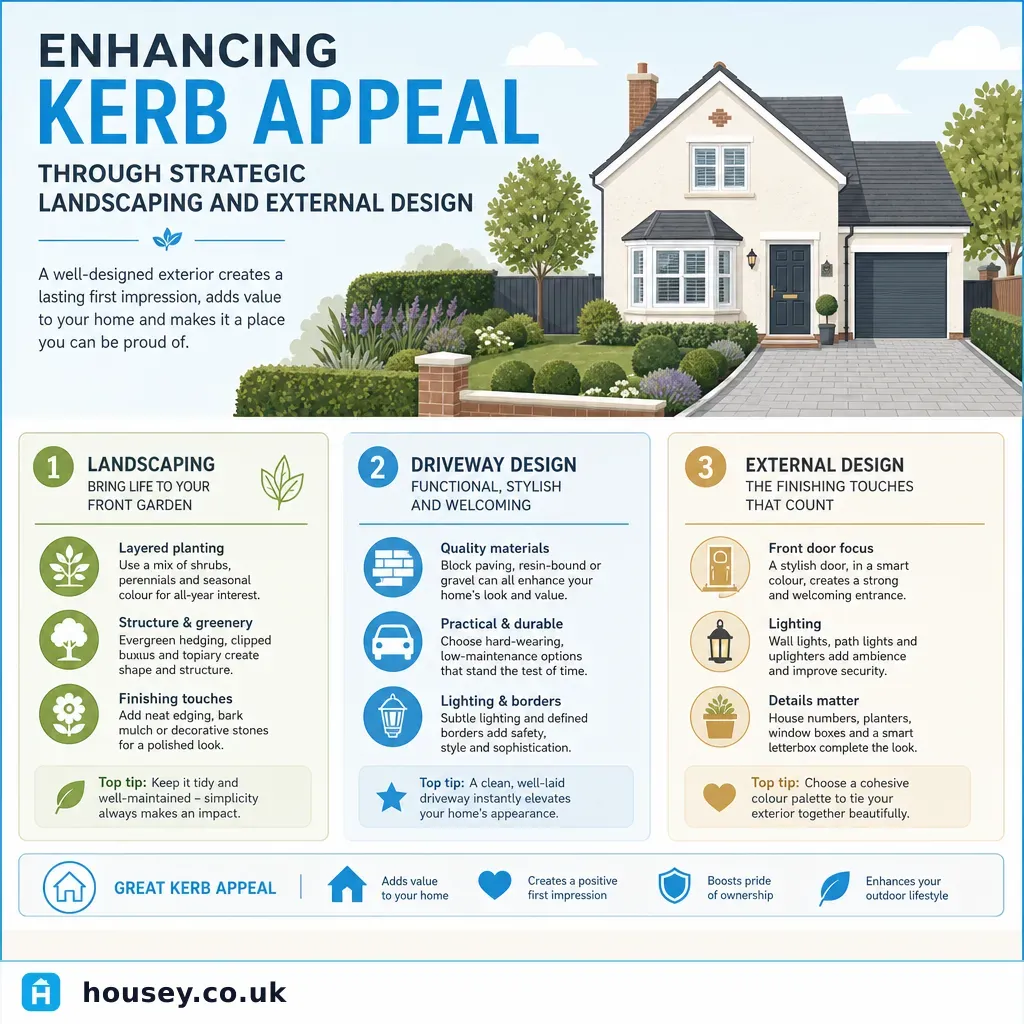
Enhancing Kerb Appeal Through Strategic Landscaping and External Design
Whether you're preparing to sell, remortgage, or simply take more pride in your home's exterior, kerb appeal matters more than many homeowners realise. For properties ranging from a 1930s bay-fronted semi to a Victorian mid-terrace, the front elevation is the first thing a buyer, visitor, or valuer sees — and first impressions form quickly. The right combination of surface, planting, and external detailing can significantly change how a property reads from the street, yet the investment required is often modest compared with internal works.
Key points
- Replacing a front garden surface with an impermeable material covering more than 5 m² requires planning permission unless a permeable alternative (such as gravel, permeable block paving, or a soakaway drainage system) is used — as set out in the Town and Country Planning (General Permitted Development) (England) Order 2015.
- Listed buildings and properties in conservation areas require consent for many external changes, including door and window replacements and boundary treatments — check with your local planning authority before any work.
- A new driveway installation costs approximately £1,500–£8,000 depending on material, size, and whether a dropped kerb is needed (Indicative UK costs, last reviewed 2026-05-30).
- A dropped kerb requires written consent from your local highways authority — starting work without consent is illegal and may result in a requirement to reinstate the original kerb at your cost.
- UK estate agents and the HomeOwners Alliance consistently identify the front garden, driveway condition, and front door as among the first features prospective buyers notice and react to when visiting a property.
What Counts as Kerb Appeal?
Kerb appeal is the overall visual impression a property makes from the street. In the UK context, it typically encompasses:
- The front garden or forecourt: Lawn or planted border condition, hedge or boundary treatment, and whether the space feels maintained.
- The driveway: Material quality, condition, edging, and whether vehicles can park neatly without mounting the kerb or grass verge.
- The front door and porch: Colour, condition, door furniture, and whether it looks welcoming.
- External walls and render: Pointing condition, paint or render finish, visible damp patches or staining.
- Windows: Frame condition, cleanliness, any visible rot or peeling paintwork.
- Roof, gutters, and fascias: Visible blocked or overflowing gutters, damaged fascias, heavy moss growth on tiles.
- Lighting and house numbers: Path lighting, clearly visible house numbers, and gate hardware in good condition.
Not all of these carry equal weight. The front door, garden tidiness, and driveway condition tend to have the greatest immediate impact on buyer perception.
Driveway Options: A Comparison
Surface | Kerb appeal impact | Planning notes | Typical installed cost | Maintenance |
|---|---|---|---|---|
Permeable block paving | High — smart and defined | No permission needed if permeable | £3,000–£6,000 | Occasional re-sanding of joints |
Resin-bound gravel | Very high — premium finish | Permeable — no permission needed | £3,500–£7,000 | Minimal; check for edge delamination |
Imprinted concrete | High — variety of finishes | Impermeable — check 5 m² rule | £2,500–£5,000 | Reseal every 3–5 years |
Loose gravel/shingle | Moderate — informal look | Permeable — no permission needed | £800–£2,500 | Occasional top-up; may scatter |
Tarmac/asphalt | Functional — limited premium | Impermeable — check 5 m² rule | £1,500–£3,500 | Durable; limited kerb appeal premium |
Indicative UK costs, last reviewed 2026-05-30. Quotes vary by region, driveway size, and whether a dropped kerb is required.
Front Garden Design: Principles That Work
A front garden rarely has space for elaborate planting, but a few principles reliably improve the appearance of most UK properties:
- Define the boundary clearly. A low wall, neat hedge, iron railing, or a planted border at the property line signals that the garden is maintained.
- Use a clear, well-surfaced path to the front door. A direct path (not a worn grass strip) guides the eye and is practical in wet weather.
- Choose low-maintenance planting. Box hedging, lavender, ornamental grasses, and hardy perennials look smart year-round with minimal upkeep. Avoid fast-growing hedges such as Leylandii in small front gardens — they quickly become a maintenance burden and can cause boundary disputes.
- Frame the front door with planting. Topiary, climbing plants on a trellis, or flanking shrubs draw attention to the entrance in a positive way.
- Keep bins and utilities out of sight. Bin stores, meters, and cycle storage screened from the street make the forecourt look cleaner and more spacious.
Red Flags: Things That Harm Kerb Appeal Most
The following are the features buyers and valuers tend to notice negatively, sometimes before they've left the car:
- Cracked or sunken driveway — suggests deferred maintenance and possible drainage issues underneath.
- Overgrown or dead boundary hedge — one of the fastest signals that a property has been neglected.
- Peeling or chipped paint on windows, fascias, or the front door — immediately undermines the impression of a well-kept home.
- Visible damp or staining on external walls — raises concern about the fabric of the property, even if the underlying cause is minor.
- Cluttered forecourt — old plant pots, unused furniture, and general clutter reduce the sense of space and upkeep.
- Mismatched or broken boundary treatment — a half-repaired fence or gates that don't close looks unfinished.
- Blocked or overflowing gutters — staining on the brickwork below is a visible maintenance signal that buyers will notice.
What to Ask Before Hiring a Landscaper or Driveway Installer
- Does the proposed driveway surface require planning permission, and will you handle the application if so?
- Is a dropped kerb required, and have you included the highways authority consent process and fee in your quote?
- What sub-base preparation is included? (Inadequate sub-base is the most common cause of premature driveway failure.)
- What edging detail is proposed, and how will surface drainage be managed?
- What waste removal is included in the price?
- Does your company carry public liability insurance, and are workers suitably trained?
- What is the expected lifespan of the surface and what maintenance is required?
- Is VAT included in the quoted price?
Planning Permission and Regulations: Key Points
Most front-of-property improvement work does not require planning permission under permitted development rights. The key exceptions for kerb appeal projects:
- Front garden hard-standing over 5 m² with an impermeable surface — requires planning permission. Using a permeable surface avoids this requirement.
- Dropped kerb — requires written consent from the local highways authority before work begins. Do not use a contractor who proposes to cut the kerb without confirmed consent.
- Listed buildings — almost all external changes require listed building consent, including painting external walls and replacing front doors.
- Conservation areas — changes that would be permitted development elsewhere (including some window replacements and cladding changes) may require consent.
Check the Planning Portal or contact your local planning authority if you are unsure about any specific work.
When to Get Professional Help
Many kerb appeal improvements are straightforward contractor jobs. Consider bringing in a specialist if:
- The front garden has significant level changes or drainage issues that need resolving as a first step.
- You want a cohesive scheme across garden, planting, and external finishes — a garden designer can ensure the parts work together visually.
- The property is listed or in a conservation area — a planning consultant can help navigate consent requirements.
- The driveway project is large, involves proximity to a public footpath, or sits adjacent to an adopted highway.
How Housey Can Help
Housey connects you with local, vetted landscapers, garden designers, and driveway installers who can help you plan and deliver kerb appeal improvements. Request quotes through Housey to compare specifications, costs, and timelines before committing to any contractor.
Frequently Asked Questions
Does improving kerb appeal add value to a UK property?
Evidence from UK estate agents and property researchers suggests that strong kerb appeal can positively influence buyer perception and time on market, though precise percentage uplifts are difficult to isolate. Presentation matters most when competing with similar properties in a price-sensitive bracket or when trying to achieve a prompt sale.
Do I need planning permission to pave my front garden in the UK?
If you use a permeable surface — such as permeable block paving, resin-bound gravel, or loose gravel — no planning permission is required regardless of size. If the surface is impermeable and covers more than 5 m², planning permission is required in England. Rules may differ in Scotland, Wales, and Northern Ireland. Check with your local planning authority.
How much does a replacement front door cost in the UK?
A composite or timber replacement front door typically costs £800–£2,500 supplied and fitted, depending on style, glazing, and specification (Indicative UK costs, last reviewed 2026-05-30). Listed building or conservation area consent may be needed before replacing a front door — check with your local planning authority first.
What is the quickest way to improve kerb appeal?
High-impact, low-cost actions include repainting the front door, pressure-washing the driveway and path, tidying planted areas and cutting the lawn, repairing or repainting boundary treatments, and clearing gutters and fascias. These changes are visible within a day and require no professional tradespeople.
Sources and Further Reading
- Permitted development rights for householders: technical guidance — GOV.UK
- Planning Portal: Driveways — Planning Portal
- Town and Country Planning (General Permitted Development) (England) Order 2015 — legislation.gov.uk
- Historic England: Guidance for owners of historic homes — Historic England
- HomeOwners Alliance: How to add value to your home — HomeOwners Alliance
Useful next reads
 Improvement & Build
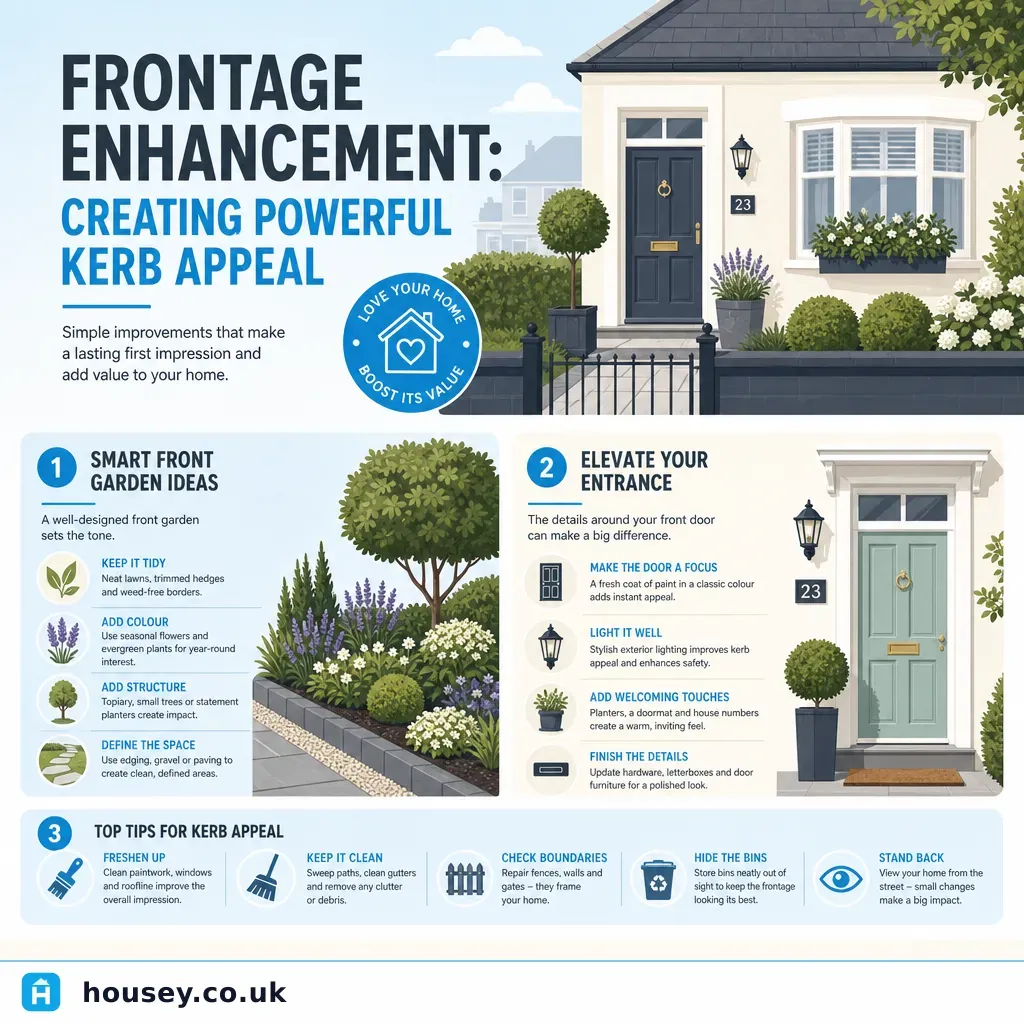
Frontage Enhancement: Creating Powerful Kerb Appeal
Improving your home's kerb appeal means refreshing visible elements — the front door, boundary walls, path or driveway, and planted areas — in a way that reads well from the street.
 Improvement & Build
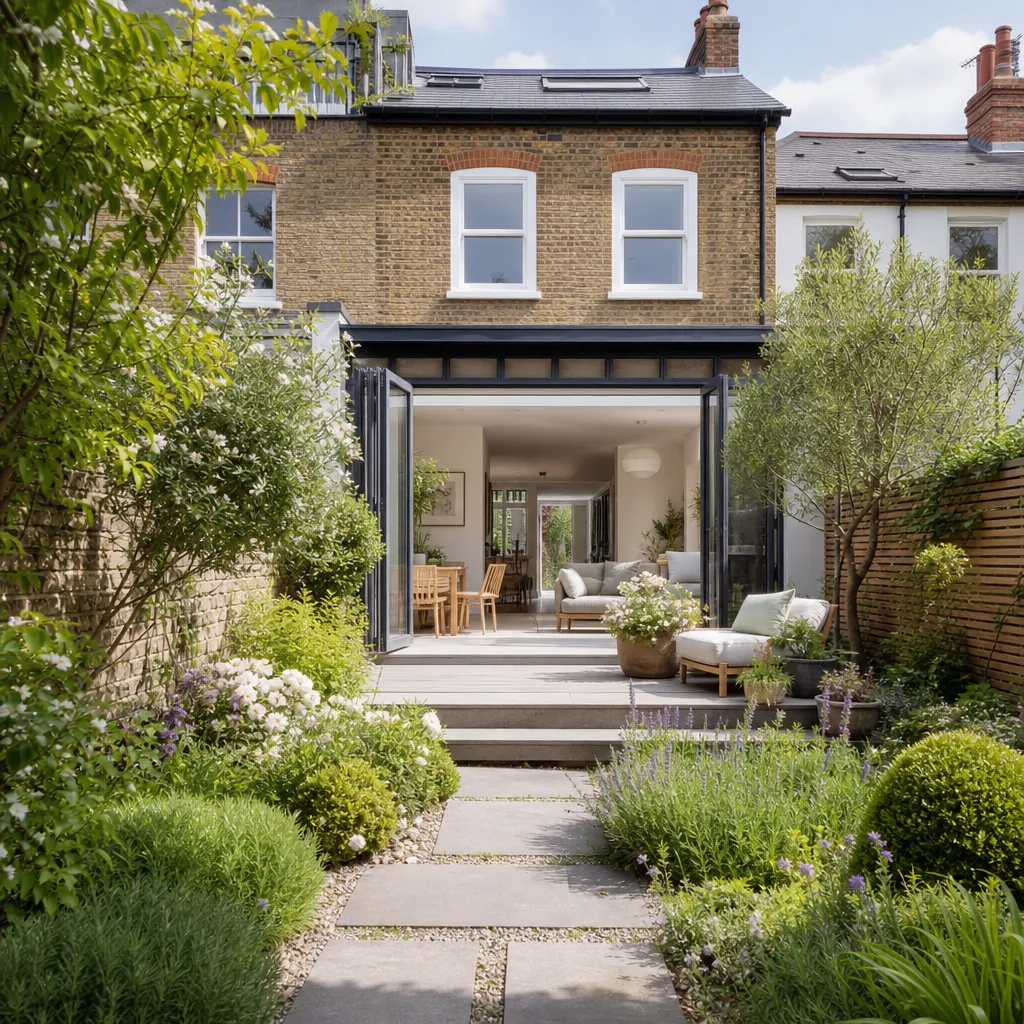
Spring Garden Transformations: Design Ideas to Enhance Your UK Property
Spring is the best time to transform a UK garden, with mild temperatures and longer days ideal for planting and landscaping.
 Improvement & Build
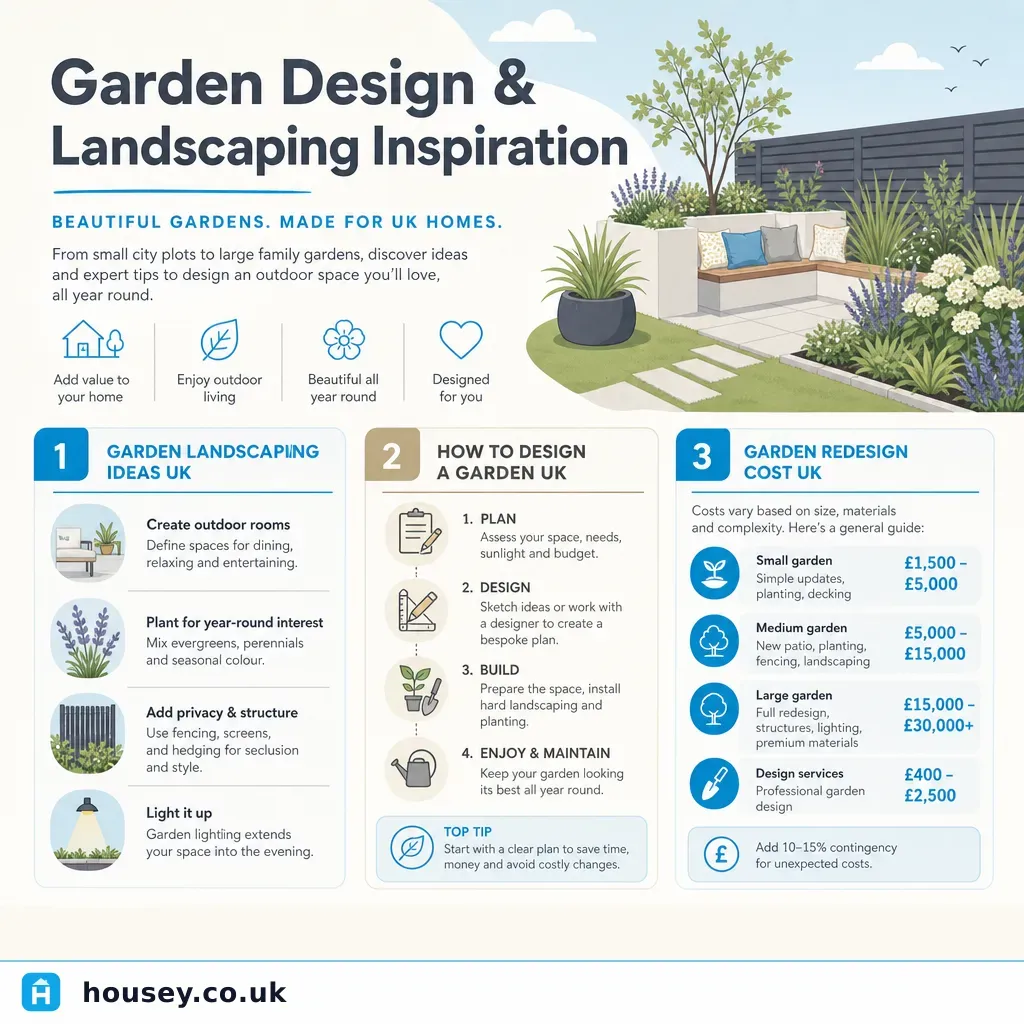
Garden Design and Landscaping Inspiration
Effective garden design starts with assessing your aspect, soil type, and existing features before commissioning any planting or hard landscaping.
 Improvement & Build
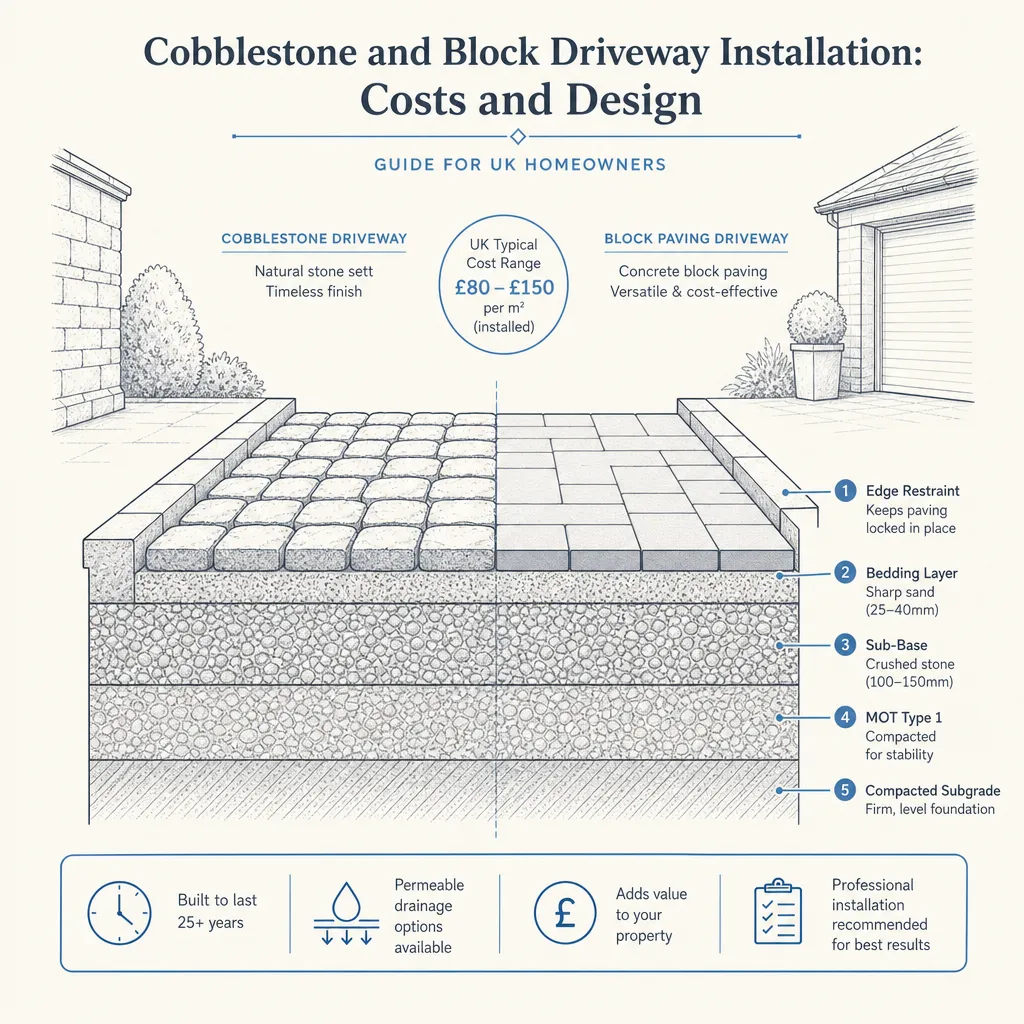
Cobblestone and Block Driveway Installation: Costs and Design
Cobblestone and block paving driveways cost roughly £50–£200 per m² installed in the UK, depending on material and site conditions.
 Improvement & Build
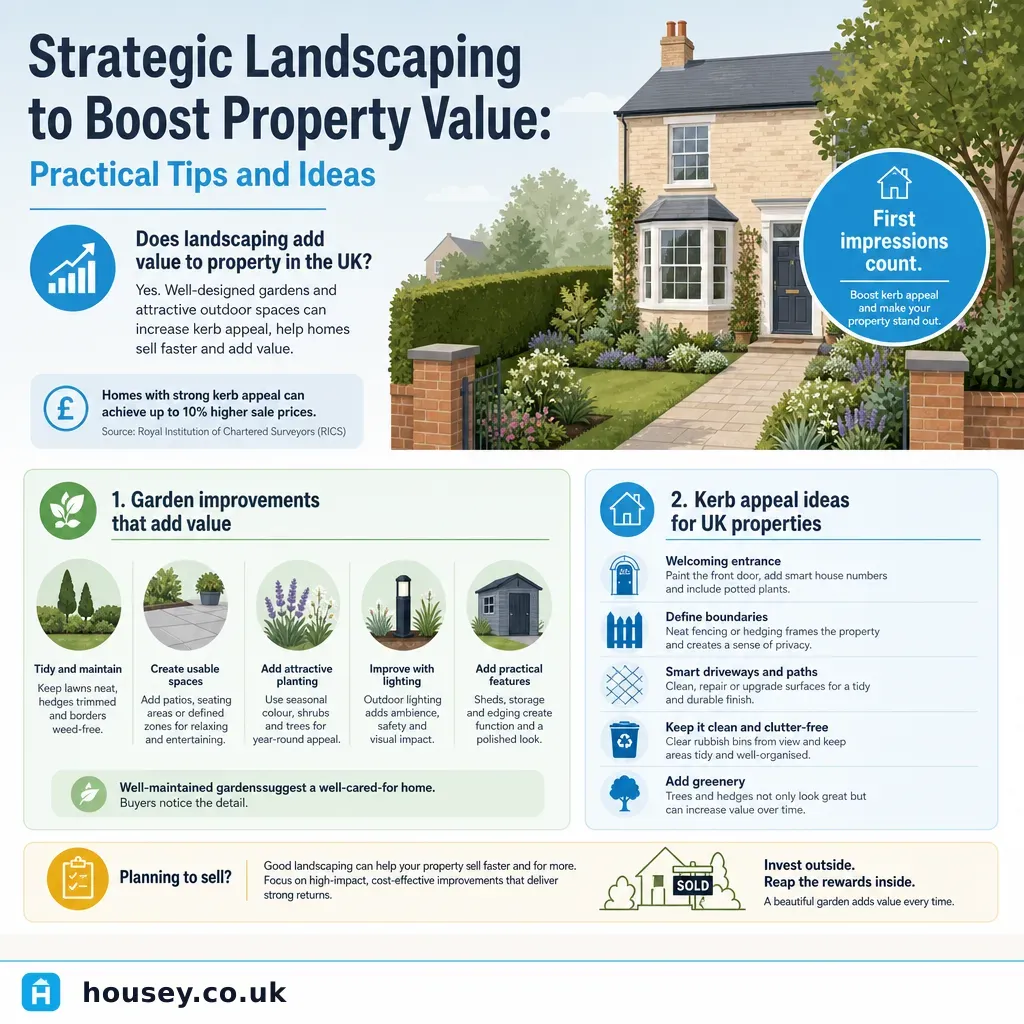
Strategic Landscaping to Boost Property Value: Practical Tips and Ideas
Landscaping can add 5–15% to a UK property's perceived value, though the return varies by improvement type.