Decorative Tile Fireplace Installation Costs
By Housey · Last reviewed 11th of May 2026
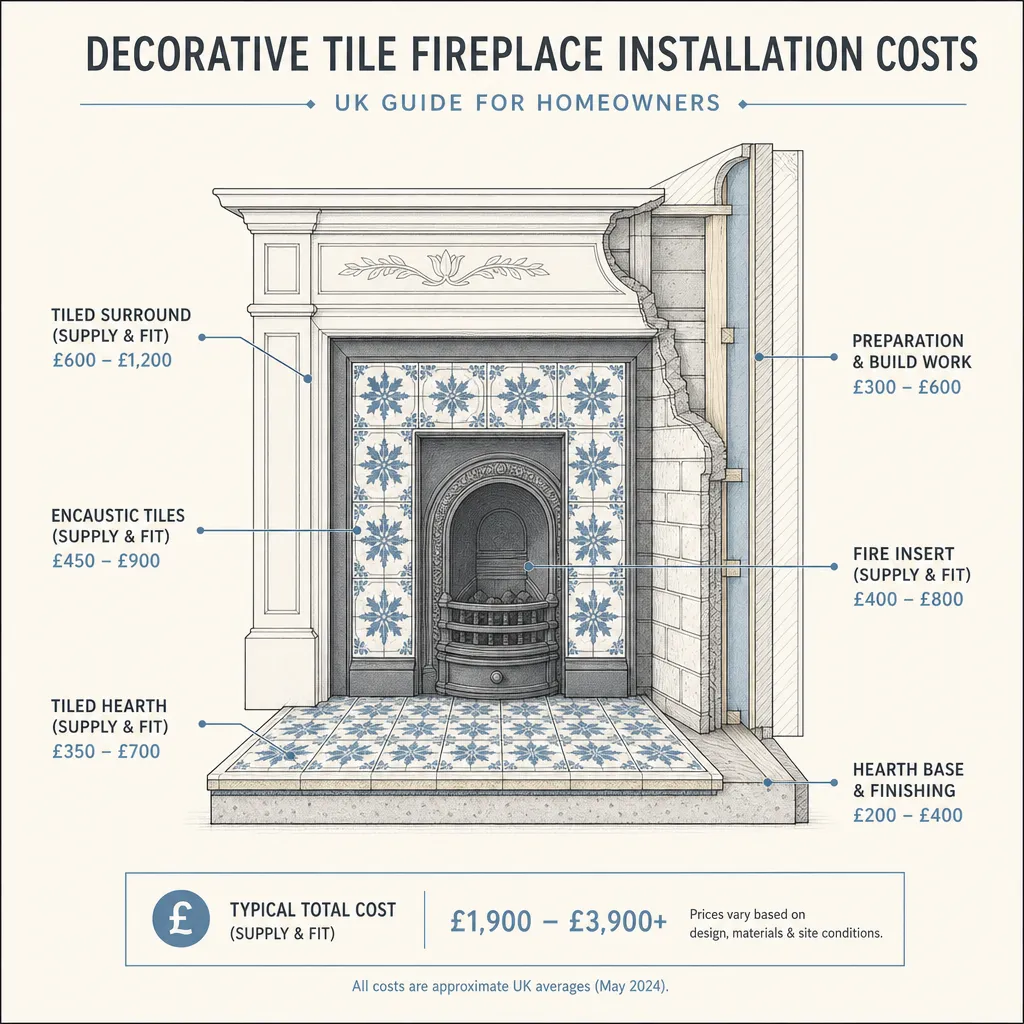
Decorative Tile Fireplace Installation Costs
Period fireplaces are one of the most distinctive features of Victorian and Edwardian homes — and one of the most frequently stripped out during mid-century modernisation. Whether you are restoring original cast-iron surround tiles, installing reproduction encaustic or geometric tiles, or creating a contemporary tiled surround from scratch, this guide covers what to budget, which tile types suit which fireplaces, and what to look out for before you start.
Key points
- Heat-resistant tile adhesive and grout rated to at least 120°C is required for any tiled surface immediately adjacent to a working fireplace; solid-fuel or gas appliances require materials rated to higher temperatures.
- Reproduction encaustic and geometric hearth tiles typically cost £40–£100 per m² (supply only); standard ceramic or porcelain tiles for a decorative surround start from £15–£40 per m².
- A typical Victorian or Edwardian fireplace has 1–2 m² of inset tiles and 0.5–1 m² of hearth tiles — most decorative tile projects total 2–4 m² of coverage.
- In listed buildings, removing or covering original tile work may require listed building consent; even repairs should be sympathetic to the original material.
- If the fireplace connects to a working flue or gas supply, a Gas Safe registered engineer must be involved before any tiling or alteration to the firebox or hearth.
What counts as a decorative tile fireplace?
For this guide, decorative tile fireplace installation covers:
- Restoring or replacing the tile slips in a traditional cast-iron insert or wooden surround.
- Tiling a new or existing hearth (the projecting area at floor level in front of the fire opening).
- Tiling the surround of a purely decorative (non-functional) chimney breast feature.
- Replacing a plain tile surround with period-appropriate or contemporary tiles.
It does not cover installing a new gas fire, solid-fuel appliance, or stove — those are separate, regulated works requiring Gas Safe or HETAS-registered professionals.
How much does decorative tile fireplace installation cost?
Indicative UK costs, last reviewed 2026-05-11. Costs vary by region, tile choice, and existing condition of the surround.
Scope of work | Indicative cost range |
|---|---|
Replacing inset tile slips only (cast-iron insert, reproduction tiles) | £300–£700 |
New hearth tiling (0.5–1 m², including adhesive and grout) | £200–£500 |
Full surround and hearth tiling (2–4 m²) | £500–£1,400 |
Original tile restoration (specialist cleaning, repair, re-grouting) | £300–£900 |
Bespoke encaustic tile commission and installation | £800–£2,500+ |
Indicative UK costs, last reviewed 2026-05-11.
Cost drivers:
- Tile type and source: reproduction Victorian encaustic tiles cost significantly more than standard ceramic. Salvaged original tiles can be cost-effective but matching unusual patterns is difficult.
- Existing condition: a cast-iron insert in poor condition may need repair or replacement before tiling.
- Access and preparation: removing existing tiles, filling, and priming adds 1–2 hours of labour.
- Jointing style: Victorian tile work typically uses tight butt-joints; a specialist tiler familiar with period work may charge a premium.
- Hearth build-up: if the hearth needs to be built up to regulation depth for a working fireplace, additional screeding or board work is required.
Which tile type should you choose?
Tile type | Best for | Indicative supply cost (per m²) | Heat rating needed |
|---|---|---|---|
Encaustic/geometric (reproduction) | Victorian, Edwardian, and Arts and Crafts fireplaces | £45–£100 | 120°C+ adhesive if near heat |
Plain ceramic or porcelain | Contemporary surrounds, non-functional fireplaces | £15–£40 | Standard adhesive for decorative use |
Hand-painted Delft-style | Period kitchens and traditional settings | £60–£150 | 120°C+ if near heat |
Marble or natural stone | Contemporary and classical schemes | £50–£120 | Stone-specific adhesive |
Salvaged original tiles | Authentic period restoration | Variable (£5–£50+ each) | 120°C+ if near heat |
Worked UK property scenario
Property: 1895 Victorian mid-terrace in Sheffield, three-bed. The lounge fireplace has a cast-iron insert with broken and missing tile slips in a geometric red-and-black pattern. The hearth has plain Victorian red quarry tiles, several cracked.
Approach: The homeowner sources reproduction geometric tile slips at £65 per m² to match the original pattern. The cast-iron insert is cleaned and re-blacked. The quarry-tile hearth is repaired with matching salvaged tiles sourced from a local architectural salvage yard at approximately £3.50 each. A specialist tiler with period-property experience quotes £650 for the tile slip replacement and hearth repair, including heat-resistant adhesive and matching grout.
Total estimated cost: approximately £950 including tiles, adhesive, and labour.
Outcome: the fireplace is restored to period appearance, supporting the property's appeal to buyers who value original features and avoiding the irreversible loss of a character element.
Planning and legal considerations
Most decorative fireplace tile work is internal and does not require planning permission or building regulations approval — provided:
- The fireplace is decorative or non-functional (no connection to a live flue or gas supply).
- The property is not listed.
- You are not altering the flue, chimney breast, or hearth depth.
For listed buildings, internal alterations affecting original features — including historic tile work — require listed building consent from the local planning authority. Removal or covering of original Victorian tile inserts is unlikely to be approved without strong justification.
If the fireplace connects to a working gas supply, you must use a Gas Safe registered engineer for any work near the firebox. A Gas Safe professional must certify the installation before the appliance is used again.
When to get professional help
For most decorative tile projects, a skilled tiler with period-property experience is sufficient. Seek additional advice if:
- The existing cast-iron insert is cracked, corroded, or structurally unsound — a fireplace specialist should inspect before any tiling begins.
- The chimney breast shows signs of damp (staining, efflorescence) — a RICS chartered surveyor should identify the source before you tile over it.
- The property is listed — consult your local planning authority or a heritage consultant before removing or covering any original tiles.
- The fireplace is connected to a live gas or solid-fuel appliance — Gas Safe (gas) or HETAS (solid fuel) professionals must be involved in any work near the appliance or flue.
How Housey can help
Housey helps homeowners connect with skilled tradespeople for interior improvement projects, including fireplace restoration and tiling. Comparing quotes from multiple specialists gives you a clearer picture of market pricing and helps you check installer credentials before committing to work.
Frequently asked questions
Do I need building regulations approval to re-tile a decorative fireplace?
No — if the work is purely cosmetic (replacing or repairing the tile surround and hearth of a decorative fireplace with no live connection to a flue or gas supply), building regulations approval is not required. Works that affect the hearth depth or flue of a working appliance are subject to Part J of the Building Regulations.
What adhesive should I use for fireplace tiles?
Any tiled surface close to a working heat source requires a heat-resistant tile adhesive and grout, typically rated to 120°C or above. For solid-fuel stoves and open fires, use adhesive rated to 300°C or higher. For purely decorative fireplaces (sealed and non-functional), a standard flexible adhesive is usually sufficient — check the tile manufacturer's recommendations.
Can I match original Victorian encaustic tiles?
Original geometric and encaustic tiles were made in standard patterns, and good-quality reproduction versions are widely available from specialist suppliers. For an exact match on an unusual pattern, a small-batch commission from an encaustic tile maker is possible but costs significantly more. Architectural salvage yards occasionally stock original tiles.
Will a restored tiled fireplace add value to my home?
Period fireplace features — particularly original or sympathetically restored Victorian tile work — are generally well received by buyers of period properties. Restoring rather than removing an original fireplace is usually the more defensible long-term decision, both for character value and increasingly for buyer expectations in the period property market.
Sources and further reading
- Building Regulations Approved Document J (combustion appliances) — GOV.UK
- Listed building consent guidance — GOV.UK
- Gas Safe Register: find a registered engineer — Gas Safe Register
- HETAS: solid fuel and wood-burning appliance standards — HETAS
- Historic England: advice on traditional building materials — Historic England
Useful next reads
 Improvement & Build
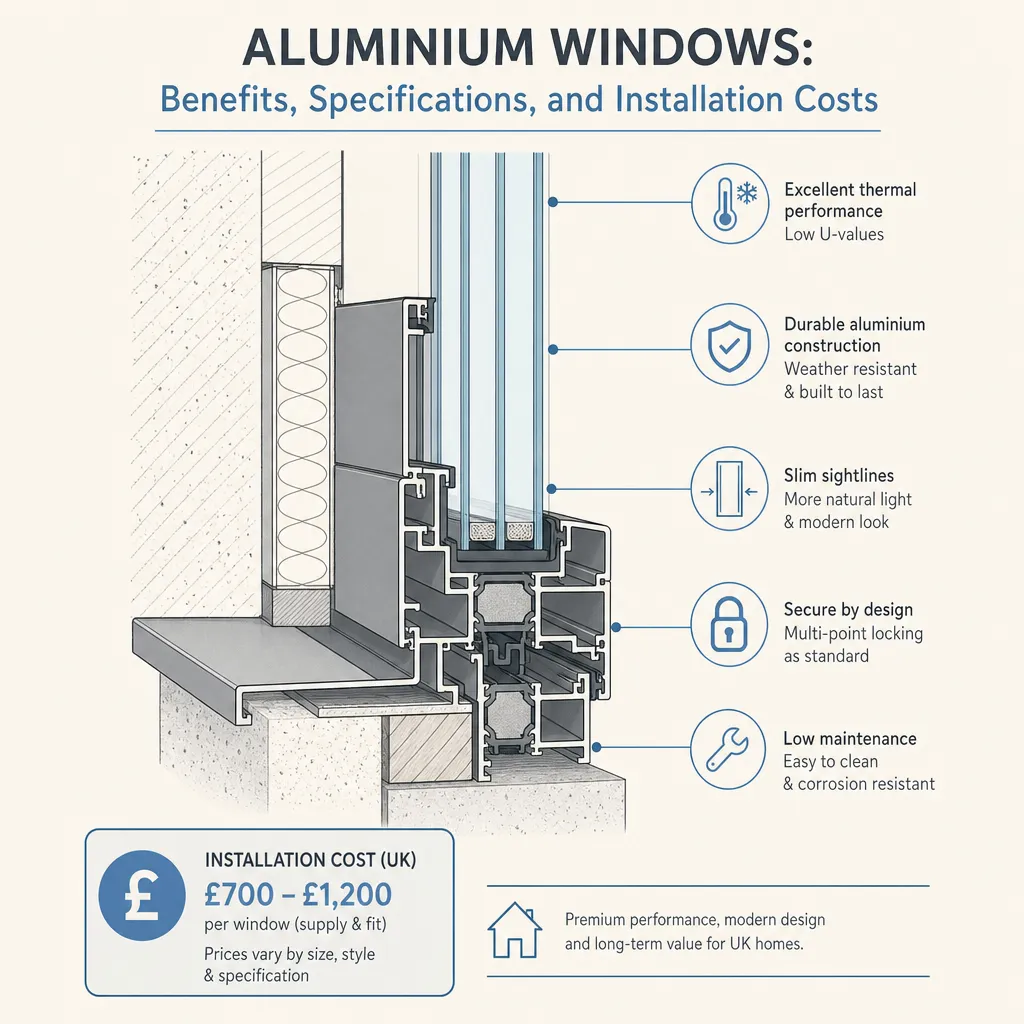
Aluminium Windows: Benefits, Specifications, and Installation Costs
Aluminium windows typically cost £600–£1,800 per window installed in the UK, depending on size and specification.
 Improvement & Build
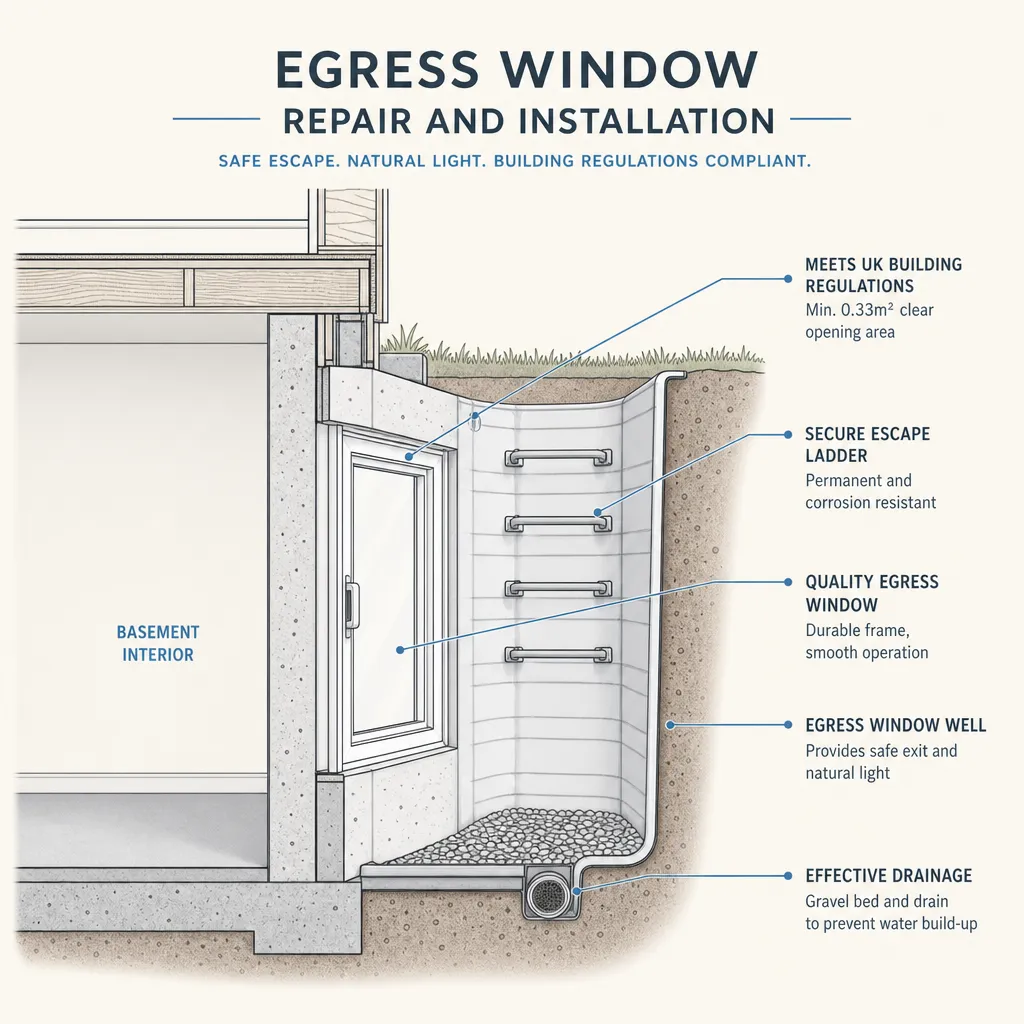
Egress Window Repair and Installation
An egress window is a window large enough to serve as an emergency escape route from a habitable room.
 Improvement & Build
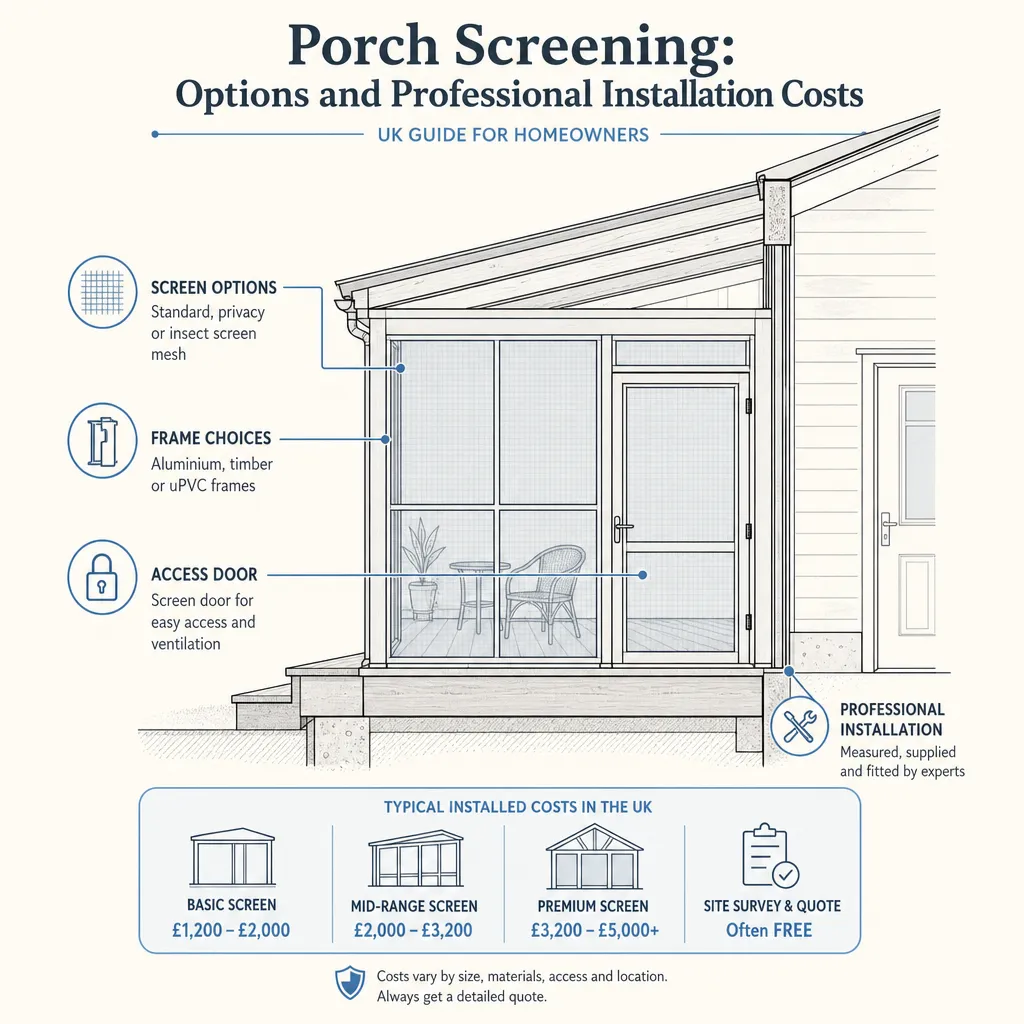
Porch Screening: Options and Professional Installation Costs
Porch screening ranges from simple insect mesh on a timber frame to bespoke aluminium-framed glazed enclosures.
 Improvement & Build
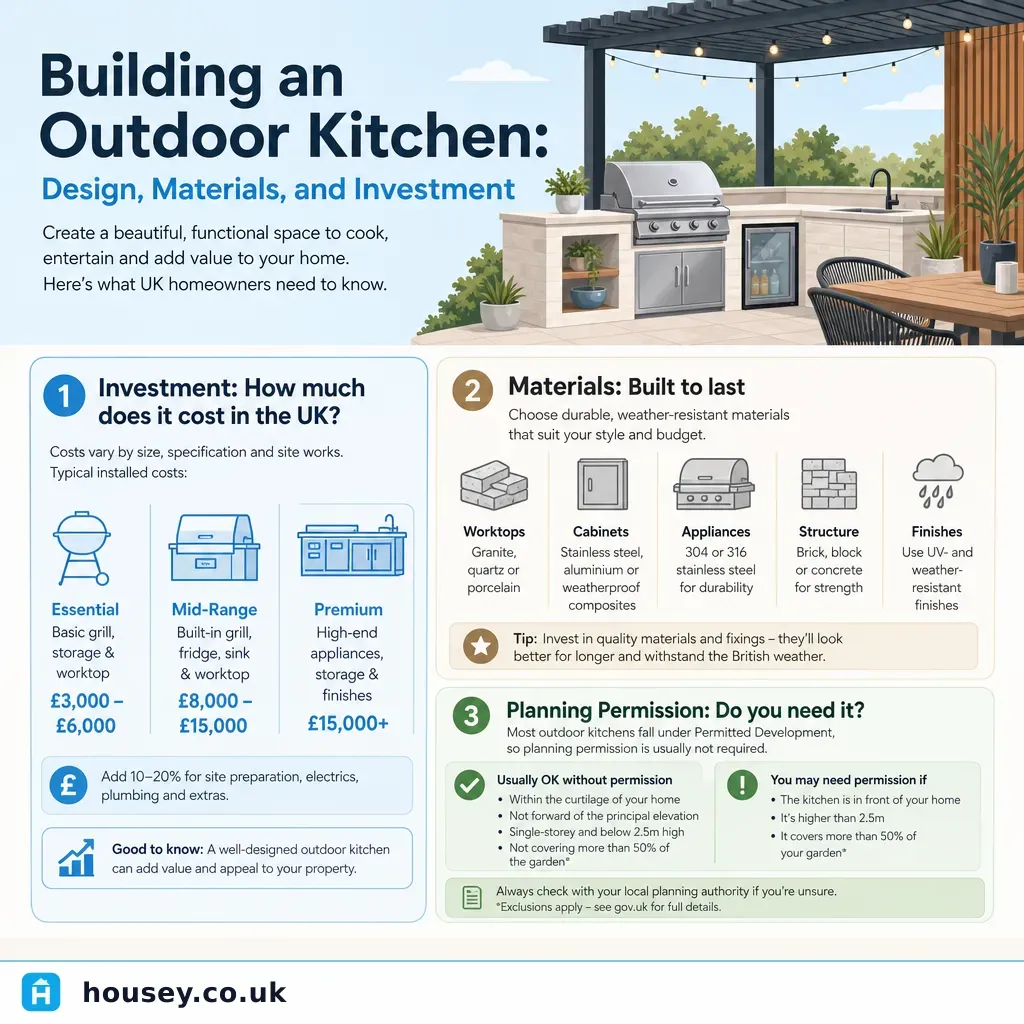
Building an Outdoor Kitchen: Design, Materials, and Investment
Building an outdoor kitchen in the UK costs roughly £3,000–£25,000 depending on size and materials.
 Improvement & Build
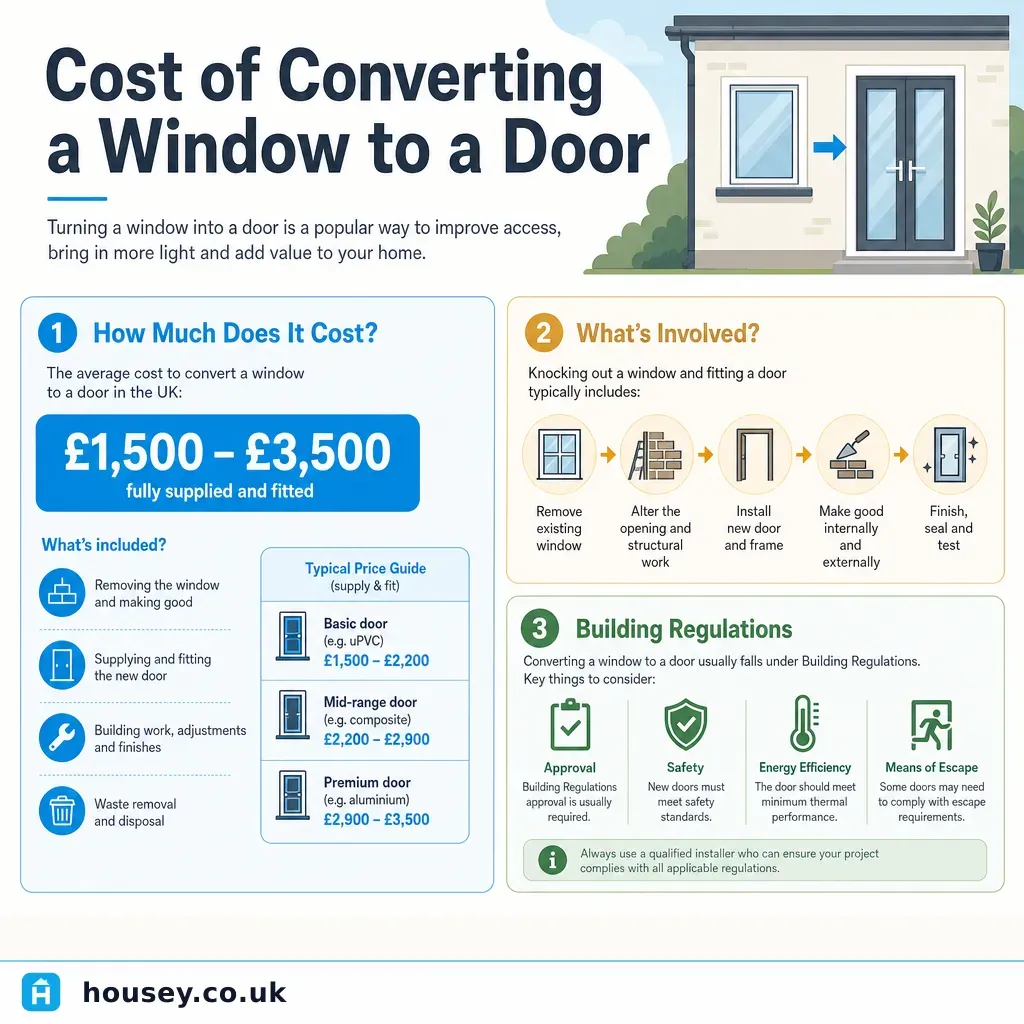
Cost of converting a window to a door
Converting a window to a door in the UK typically costs £1,500–£5,000 or more, depending on wall construction (cavity, solid, or timber frame), the type of door fitted, and whether a new or enlarged lintel is required.