Demolition and Structural Removal: Planning Major Property Work
By Housey · Last reviewed 24th of May 2026
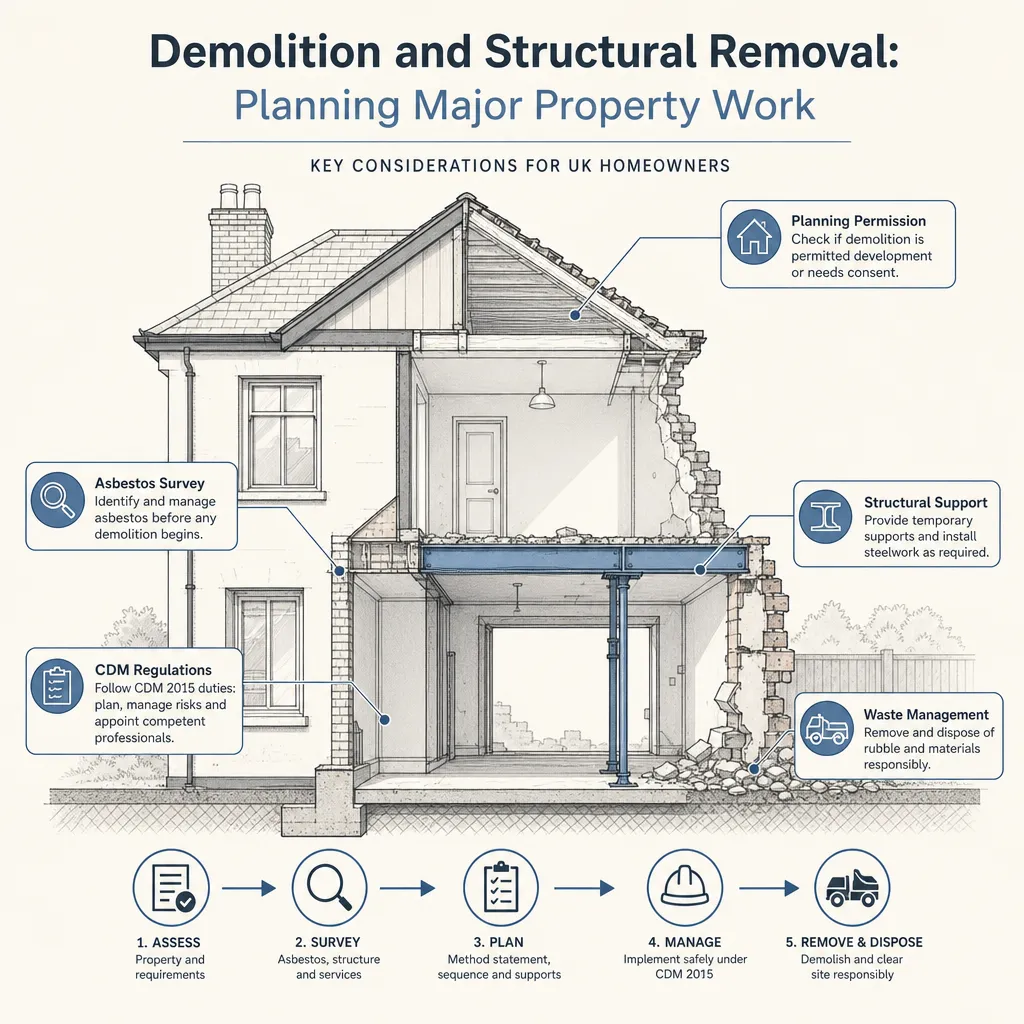
Demolition and Structural Removal: Planning Major Property Work
Demolition work — whether removing an entire building, a structural wall, or a derelict outbuilding — sits at the higher-risk end of any building project. Most UK homeowners encounter it when planning a self-build, a major extension, or a conversion that requires clearing existing structures. The stakes are significant: poorly planned demolition can endanger workers, neighbours, and adjacent buildings, trigger enforcement action, and create costly delays if hazardous materials such as asbestos are discovered mid-project rather than managed in advance.
Key points
- Demolition of a building with a volume over 1,750 m³, or any demolition of a listed building or structure in a conservation area, requires an application to your local planning authority before work begins.
- Under the Control of Asbestos Regulations 2012, a licensed asbestos contractor must remove all licensed asbestos-containing materials before demolition commences; a Type 3 demolition asbestos survey is mandatory for pre-2000 buildings.
- The Construction (Design and Management) Regulations 2015 (CDM 2015) apply to virtually all demolition projects regardless of size — the client has statutory duties that cannot be ignored.
- Section 80 of the Building Act 1984 requires at least six weeks' written notice to your local building control body before any demolition work begins.
- Hazardous waste from demolition — including asbestos, lead paint, and contaminated soil — must be handled, transported, and disposed of under the Hazardous Waste (England and Wales) Regulations 2005.
What counts as demolition under UK law?
Not all structural removal is legally classed as "demolition", and the distinction matters for planning and notification purposes.
Full demolition — the complete removal of a building — triggers the most extensive regulatory requirements, including Section 80 notification and potentially planning permission depending on building size, designation, or location.
Partial demolition — removing walls, roofs, or significant structural elements — may be permitted development in some cases, but structural alterations always require Building Regulations approval. Removing a load-bearing wall without structural calculations and building control sign-off is unsafe and can create a legal liability when the property is sold.
Internal structural removal — for example, removing a chimney breast or load-bearing internal wall — does not usually require planning permission but always requires Building Regulations approval and, in most cases, a structural engineer's specification.
Type of work | Planning permission needed? | Building Regs notification? | Structural engineer needed? |
|---|---|---|---|
Full demolition (residential, volume over 1,750 m³) | Yes — prior approval at minimum | Yes — Section 80 notice | Strongly recommended |
Full demolition (small outbuilding, no designation) | Usually not | Yes — Section 80 notice | Depends on adjacency to other structures |
Partial demolition (external wall removal) | Often yes | Yes | Yes |
Load-bearing internal wall removal | No | Yes | Yes |
Non-load-bearing internal wall | No | No | No |
Asbestos: the mandatory first step
Asbestos-containing materials (ACMs) were used extensively in UK buildings constructed before 2000, including in textured coatings (artex), insulating board, cement roof sheets, pipe lagging, and floor tiles. Before any demolition or structural removal in a building of this era, a Type 3 demolition asbestos survey must be conducted by a UKAS-accredited surveyor.
The Control of Asbestos Regulations 2012 imposes strict duties:
- Licensed ACMs — such as sprayed coatings and pipe lagging — must be removed by an HSE-licensed asbestos removal contractor before demolition begins.
- Notifiable non-licensable work (NNLW) materials must be removed by trained, supervised operatives before the main demolition phase.
- A waste transfer note and consignment note must accompany all asbestos removed from site.
Do not allow demolition contractors to proceed on any pre-2000 building without first seeing the asbestos survey report and a written ACM removal plan. This is not a step that can be skipped to save time or cost.
Planning requirements for demolition
The planning position for demolition is more complex than many homeowners expect.
Under the Town and Country Planning (Demolition — Description of Buildings) Direction 2014, demolition of a building with a cubic content exceeding 1,750 m³ requires prior approval from the local planning authority before any work begins. Listed buildings require listed building consent for any demolition, regardless of size. Buildings in conservation areas require conservation area consent for the demolition of most structures within the curtilage.
Even where formal planning permission is not required, permitted development rights for demolition are not universal — your local planning authority may have removed them via an Article 4 Direction. Always check before starting.
For new structures intended to replace demolished buildings, a full planning application is almost always required as a separate process.
CDM 2015 duties for homeowners
The Construction (Design and Management) Regulations 2015 apply to all demolition work, including residential projects. As a domestic client, you have duties under CDM, though many of these can be transferred to the principal contractor by agreement. Key requirements include:
- Appointing a Principal Designer and Principal Contractor if the project involves more than one contractor.
- Ensuring a pre-construction information pack is prepared and shared with all contractors before work begins.
- Notifying the HSE if the project lasts more than 30 working days with more than 20 workers simultaneously, or exceeds 500 person-days in total.
In practice, most residential demolition projects involve a single specialist contractor who takes on CDM duties by default, but confirm this in writing before work starts and ask for evidence of their arrangements.
Waste management and site clearance
Demolition generates significant volumes of mixed, and often hazardous, waste. Key legal requirements include:
- All waste carriers must be registered with the Environment Agency (or Natural Resources Wales).
- Hazardous waste requires separate documentation and disposal at a licensed site; fly-tipping demolition waste is a criminal offence.
- Concrete, brick, and clean timber can often be recycled or crushed on site, but a waste management plan should be agreed before demolition starts.
- As the site owner, you may bear responsibility if waste is illegally disposed of by a contractor you appointed. Always ask for waste transfer notes for all removed material.
Important limitations
This article provides general information about demolition regulations in England. Requirements differ in Scotland, Wales, and Northern Ireland. Planning legislation, permitted development rights, and Building Regulations details can change; always verify current requirements with your local planning authority and building control body before proceeding. This article does not constitute legal, structural, or engineering advice. A qualified structural engineer, planning consultant, and specialist demolition contractor should be involved in any significant demolition project from the earliest planning stage.
When to get professional help
Seek professional advice before proceeding if any of the following apply — these are red flags that should stop speculative work immediately:
- Any building or wall you intend to demolish appears to be load-bearing or structurally connected to a neighbouring property.
- The building predates 2000 and you have not yet obtained a Type 3 demolition asbestos survey.
- Your property is listed, sits in a conservation area, or is subject to any planning condition restricting demolition.
- A party wall is involved — the Party Wall etc. Act 1996 applies to work on or near shared walls, and neighbours must be formally notified before work begins.
- Your demolition contractor cannot demonstrate appropriate public liability insurance, CDM compliance arrangements, and Environment Agency waste carrier registration.
What to ask a qualified professional
Before instructing a demolition contractor or structural engineer, ask:
- Are you registered as a waste carrier with the Environment Agency, and can you show me your registration?
- Do you hold public liability insurance, and to what level of cover?
- Who will act as Principal Contractor for CDM purposes, and who will take the role of Principal Designer?
- Have you reviewed the asbestos survey report, and what is your written plan for ACM removal and documentation?
- Will you advise on and serve Section 80 notification, and what notice period applies to my project?
- If a party wall is involved, have you previously worked alongside party wall surveyors on similar projects?
- What structural calculations or engineer sign-off is included within your quoted scope of work?
- What waste management plan will you prepare, and will I receive waste transfer notes for all removed material?
How Housey can help
Housey connects you with experienced demolition contractors who operate within the full scope of UK regulations, including CDM compliance and asbestos management. For structural assessments and wall removal calculations, our structural engineering specialists can provide the sign-off your building control body will require. For guidance on Building Regulations notification and approval throughout your project, our building control consultants can advise from initial planning through to final sign-off.
Frequently asked questions
Do I need planning permission to knock down a house?
Full demolition of a residential building with a volume over 1,750 m³ requires prior approval from your local planning authority. Listed buildings and conservation area structures face additional, stricter requirements regardless of size. Even where prior approval is not required, Section 80 notification to your building control body is always needed at least six weeks before demolition begins.
Can I knock down a garden wall without permission?
Low boundary and garden walls are generally permitted development and do not require planning permission. However, if the wall forms part of a listed building, sits within a conservation area, or is a shared party wall, different rules apply. The Party Wall etc. Act 1996 requires you to give notice to neighbours before work on or near a party wall. Check with your local planning authority if you are unsure.
How long does demolition take?
A small domestic outbuilding may be cleared in a single day. A full house demolition typically takes one to two weeks, depending on size, access, and the volume of asbestos removal required. If licensed asbestos removal is needed, this phase alone can add several additional weeks to the programme before demolition itself can begin.
Who is responsible if demolition damages a neighbour's property?
Both the property owner and the demolition contractor carry potential liability. CDM 2015 requires risk management planning to protect adjacent properties and the public. If a party wall is involved, the Party Wall etc. Act 1996 provides a framework for protecting neighbours' interests, recording pre-works condition schedules, and resolving any disputes that arise from the works.
Sources and further reading
- Section 80 of the Building Act 1984: demolition notification — legislation.gov.uk
- Control of Asbestos Regulations 2012 — legislation.gov.uk
- Construction (Design and Management) Regulations 2015: guidance — HSE
- Planning permission and demolition — GOV.UK
- Asbestos: the survey guide HSG264 — HSE
Useful next reads
 Planning & Pre-Build
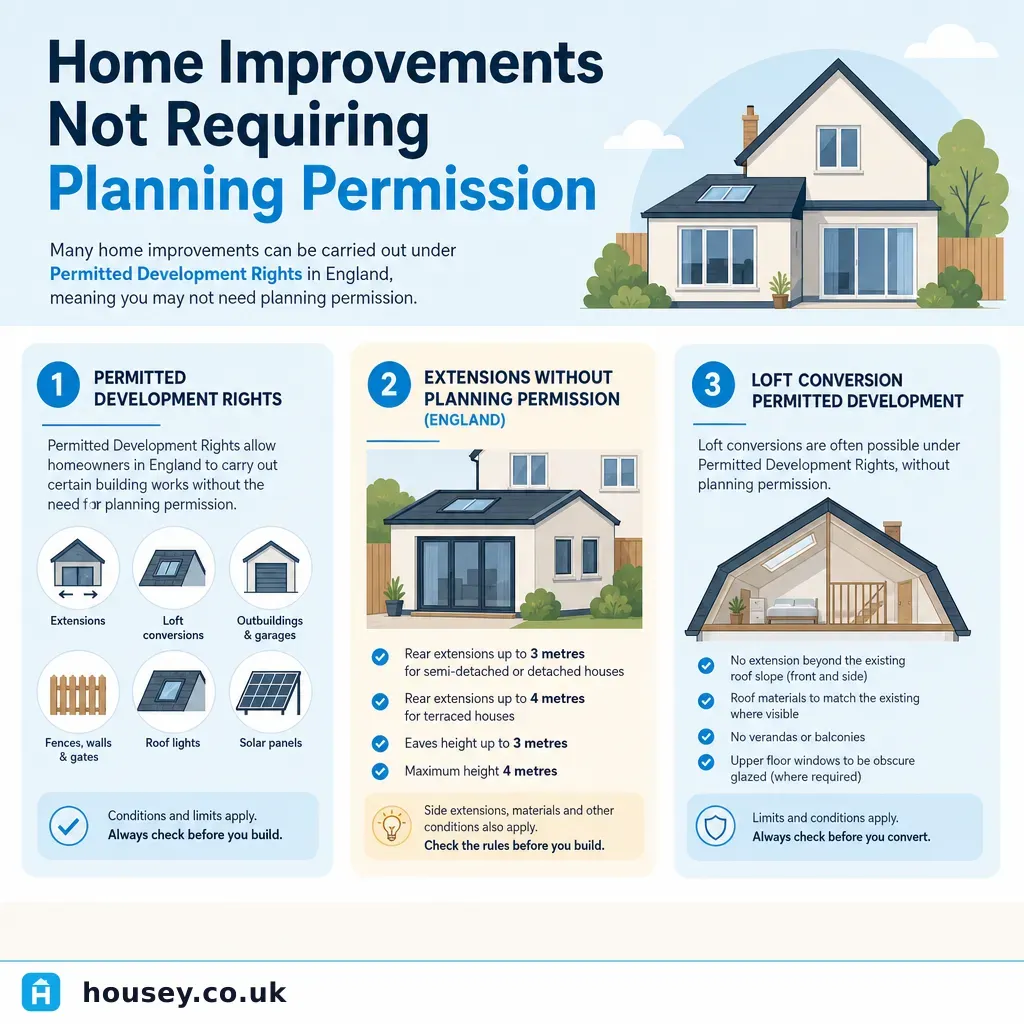
Home Improvements Not Requiring Planning Permission
Many common home improvements in England fall under Permitted Development Rights and do not require a planning application.
 Planning & Pre-Build
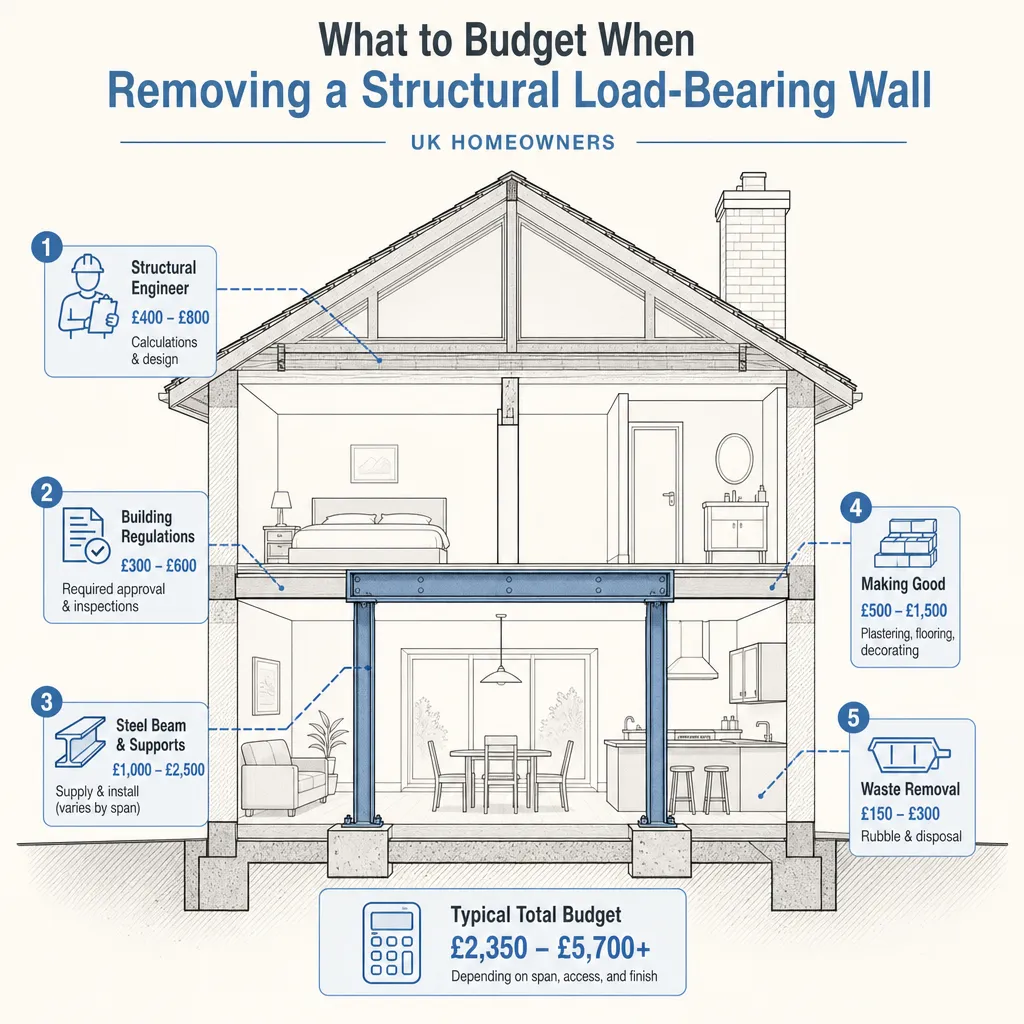
What to Budget When Removing a Structural Load-Bearing Wall
Removing a load-bearing wall in a typical UK home costs £2,500–£8,000 or more in total, covering a structural engineer's calculations, Building Regulations approval, the steel beam, builder's labour, and replastering.
 Planning & Pre-Build
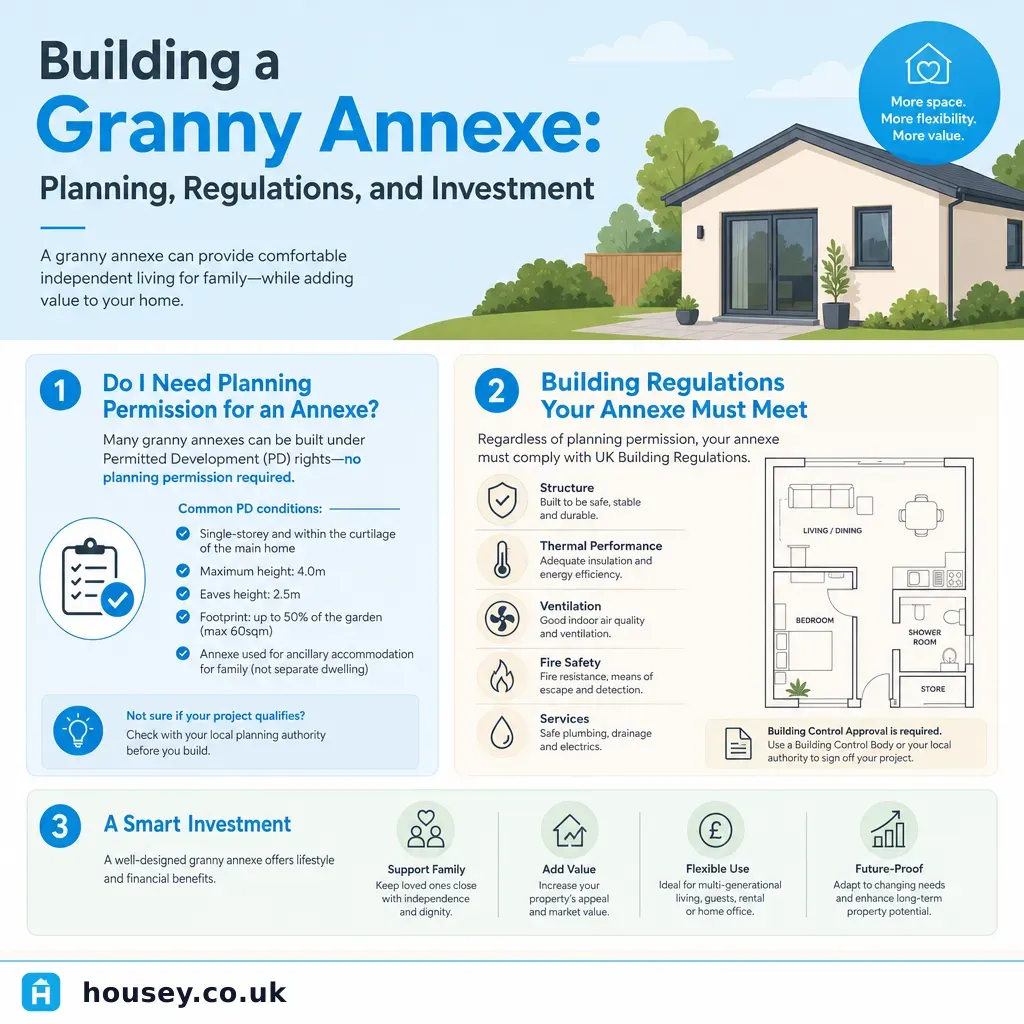
Building a Granny Annexe: Planning, Regulations, and Investment
A granny annexe in the UK may or may not need planning permission depending on whether it is classed as incidental to the main house or as a separate dwelling.
 Planning & Pre-Build
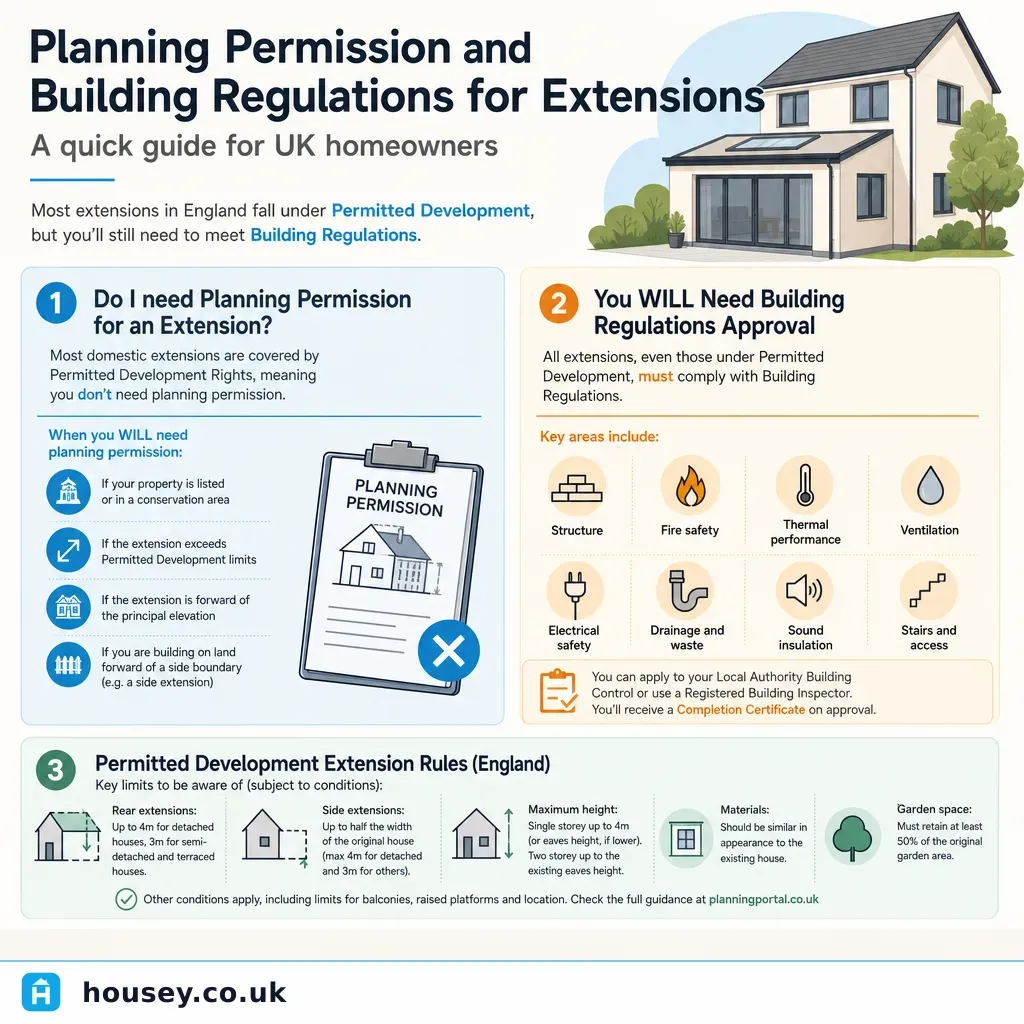
Planning Permission and Building Regulations for Extensions
UK home extensions usually require both planning permission and Building Regulations approval, though most smaller rear extensions qualify as Permitted Development under the GPDO 2015 and need no planning application.
 Planning & Pre-Build
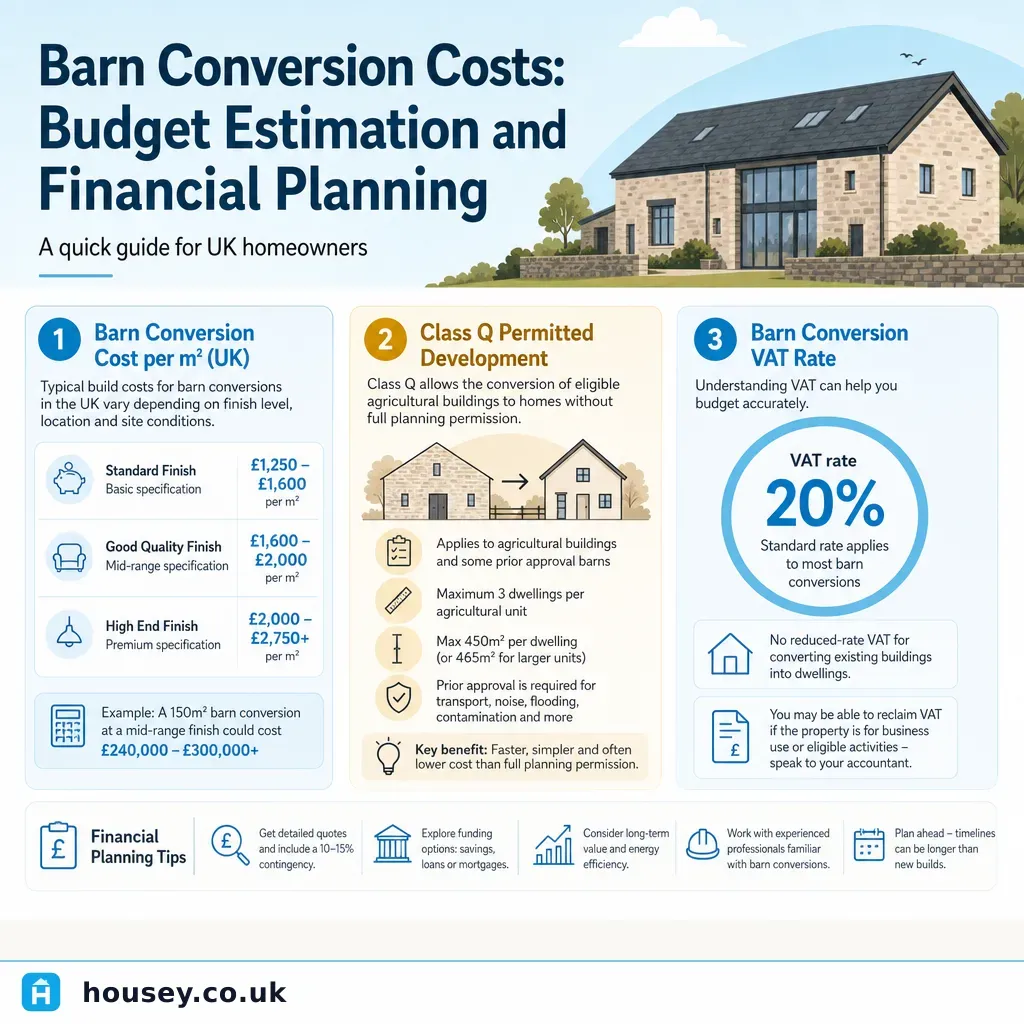
Barn Conversion Costs: Budget Estimation and Financial Planning
Barn conversions in the UK typically cost £1,500–£3,000 or more per square metre depending on structural condition, specification, and location.