Designing and Building Pilasters: Structural and Aesthetic Elements
By Housey · Last reviewed 11th of May 2026

Designing and Building Pilasters: Structural and Aesthetic Elements
Pilasters appear across a wide range of UK properties — from the stucco-rendered Classical porticos of Georgian townhouses to the brick pilasters framing garage openings in 1930s semis and the blockwork piers flanking entrances on modern extensions. Whether a pilaster is purely decorative or genuinely structural — and what this means for planning consent, building control, and professional involvement — is a distinction that must be resolved at the design stage, not discovered mid-construction.
Key points
- A pilaster is a flat rectangular projection from a wall face resembling a column — with base, shaft, and capital — but attached to and formed as part of the wall itself.
- Structural pilasters that carry vertical loads, provide lateral restraint, or form part of a masonry wall system must comply with Building Regulations Approved Document A (Structure) and typically require a structural engineer's calculations.
- In conservation areas, pilasters are frequently identified as positive character features in conservation area appraisals; altering or removing them may require planning permission even where the work would otherwise be permitted development.
- On listed buildings, any alteration to a pilaster — including repair with non-matching materials — requires Listed Building Consent under the Planning (Listed Buildings and Conservation Areas) Act 1990.
- The NPPF (2023) requires new development to be well-designed and reflect local architectural character; design guides in many areas specifically address pilasters and Classical detailing.
What is a pilaster and where are they used?
Pilasters originate in Classical Greek and Roman architecture as flattened columns attached to a wall face. In UK residential and commercial buildings they appear most commonly in:
- Georgian and Regency townhouses (1714–1837): rendered stucco pilasters flanking doorways, often with Ionic or Corinthian capitals.
- Victorian commercial and civic buildings: decorative brick pilasters dividing bay windows or articulating street-facing façades.
- 1930s suburban houses: brick piers and pilasters defining porch recesses and garage openings.
- Modern extensions and new builds: pilasters used to create visual weight, break up large masonry areas, or reference existing Classical detailing on the host building.
- Boundary walls and gate piers: technically pilasters when attached to a continuous wall rather than standing free.
Structural vs decorative: the critical distinction
Feature | Structural pilaster | Decorative pilaster |
|---|---|---|
Load bearing? | Yes — carries vertical loads from beams, lintels, or upper masonry | No — surface feature only |
Lateral restraint? | Often — helps resist wind load on tall masonry panels | Rarely |
Typical materials | Solid brick, blockwork, reinforced concrete, or stone | Brick, render over blockwork, GRP, stone veneer, fibrous plaster |
Building Regulations | Approved Document A calculations required | Not required for minor decorative additions |
Professional needed? | Structural engineer for design | Architect or architectural technologist for design |
Building control sign-off? | Yes, when part of notifiable works | Only if part of wider notifiable works |
Heritage considerations | Both types may need consent in sensitive locations | Same |
If you are uncertain whether an existing pilaster is structural, do not assume it is decorative. Visual inspection alone may not reveal whether a brick pilaster carries a lintel, floor joist loading, or roof thrust. A structural engineer or chartered building surveyor can confirm this before any work begins.
Which professional do I need?
Scenario | Professional needed |
|---|---|
Designing new pilasters on a planned extension or new build | Architect or architectural technologist; structural engineer if load-bearing |
Removing or altering an existing pilaster | Structural engineer's assessment first; architect and builder to execute |
Repairing render or stone cladding on a decorative pilaster | Specialist plasterer, stonemason, or heritage contractor |
Designing pilasters on a listed building | Conservation architect (ideally AABC-registered); Historic England guidance |
Planning application in a conservation area involving pilasters | Architect experienced in local design guidance; pre-application advice from conservation officer |
Structural brick pilasters on a self-build or extension | Structural engineer for calculations; architectural technologist for drawing package |
Planning and heritage considerations
Conservation areas
In conservation areas, the character and appearance of the area — including its architectural detailing — is protected under the Planning (Listed Buildings and Conservation Areas) Act 1990. Many conservation area appraisals specifically identify buildings with pilasters or Classical detailing as positive contributors to local character. Altering, removing, or adding pilasters on such a building may require planning permission or conservation area consent, even where the work would otherwise fall within permitted development.
Review your council's conservation area appraisal document (available on most planning portals) and seek pre-application advice from the conservation officer before committing to a design approach.
Listed buildings
If the building is listed at Grade I, Grade II*, or Grade II, any alteration that affects its character as a building of special architectural or historic interest requires Listed Building Consent from the LPA. This includes the removal of original pilasters, the addition of new ones, and repair using materials that do not match the original fabric — for example, using cement render on a building with original lime stucco. Historic England's guidance on alterations to listed buildings is the appropriate starting point.
New development and design quality
The NPPF (2023) requires planning authorities to ensure new development is well-designed and responds to the character of its location. Design guides and neighbourhood plans in many areas address Classical detailing directly — some encourage pilasters as part of a locally responsive design language; others restrict historicist detailing on new buildings. A pre-application discussion with the LPA's design officer is worth pursuing before committing to a scheme that relies on prominent architectural elements.
Building Regulations and structural design
Where a pilaster is structural — carrying vertical loads, providing lateral restraint, or forming part of a designed masonry wall system — its construction must comply with Approved Document A (Structure). Key considerations include:
- Slenderness ratio: the height-to-least-dimension ratio of the masonry element must not exceed the limits in Approved Document A Table 5 or those supported by a structural engineer's calculation.
- Mortar specification: structural masonry requires the appropriate mortar designation; your structural engineer will specify this for the application.
- Ties and junctions: where a pilaster abuts a wall, masonry ties or through-bonding must ensure composite structural behaviour.
- Lintel loads: where a pilaster supports a lintel over a garage or window opening, bearing length and load transfer must be formally designed.
Building control notification is required when pilasters form part of notifiable building works — typically extensions or structural alterations.
What not to assume
- Don't assume a pilaster is decorative because it looks like one. Many brick pilasters in older properties are integral to the wall's structural behaviour even if they were primarily detailed for visual effect. Always seek a structural assessment before removal or significant alteration.
- Don't assume GRP or foam pilasters need no planning consideration. In conservation areas or on listed buildings, even lightweight applied features may require consent.
- Don't assume matching materials will automatically satisfy a conservation officer. Lime-based mortars, natural hydraulic lime render, or natural stone are frequently required on historic fabric — agree the specification with the conservation officer before ordering materials.
- Don't assume permitted development covers pilasters on a front elevation. Permitted development rights (Part 1, Class A of the GPDO 2015) do not apply in conservation areas, on listed buildings, in AONBs, or where an Article 4 direction is in force.
Important limitations
This article provides general guidance on design, planning, and structural considerations affecting pilasters in UK residential and mixed-use buildings. It is not a substitute for a structural engineer's assessment, professional planning advice, or consultation with a conservation officer. Requirements vary significantly between local planning authorities, building types, and heritage designations. Seek qualified professional advice before altering, removing, or adding pilasters to any building — particularly in conservation areas or on listed properties.
When this becomes urgent
- Visible cracking at the base or head of a masonry pilaster, particularly stepped cracks, widening joints, or movement in surrounding masonry — arrange a structural assessment promptly.
- A pilaster showing separation or a visible gap from the adjacent wall face — may indicate loss of masonry ties or foundation movement.
- Render delaminating from a pilaster on a listed building — a heritage contractor should investigate substrate condition before any re-rendering is attempted.
- Proposed demolition or removal of a pilaster without a prior structural assessment — stop and seek professional advice first.
What to ask a qualified professional
- Can you confirm whether this pilaster is structural or decorative, and what evidence supports that conclusion?
- If structural, what loads does it carry and can they be safely redistributed if alteration is needed?
- Is this property in a conservation area or listed, and what consents are required for the proposed works?
- What materials and mortar specification are appropriate for matching or repairing this pilaster?
- Will the proposed work require building control notification or a structural engineer's calculations?
- If designing new pilasters, can you provide drawings and a specification suitable for a planning application or Listed Building Consent submission?
When to get professional help
Any work involving a structural pilaster — new, altered, or removed — requires a structural engineer's input. Any work on a listed building or in a conservation area requires early contact with the LPA's conservation officer and, ideally, a conservation-specialist architect. Do not progress design based on desktop research alone for structurally or heritage-sensitive sites.
How Housey can help
Housey can connect you with experienced architects and architectural technologists who advise on pilaster design within planning and heritage constraints, as well as structural engineers who can assess and sign off structural masonry elements as part of your project.
Frequently asked questions
Are pilasters always decorative?
Not always. While many residential pilasters are primarily aesthetic, brick, blockwork, and stone pilasters in older properties can be integral to the wall's structural behaviour — carrying vertical loads, providing lateral restraint, or stiffening a masonry panel. A structural engineer should assess any pilaster before alteration or removal, particularly in properties built before 1945.
Do I need planning permission to add pilasters to my house?
In many cases, adding pilasters to external walls falls within permitted development rights (Part 1, Class A of the GPDO 2015) and does not require a planning application. However, this does not apply in conservation areas, on listed buildings, in AONBs, or where an Article 4 direction has removed permitted development rights. Always confirm with your LPA before starting design.
What materials are traditionally used for pilasters?
Traditional UK residential pilasters are most commonly constructed from brick (in the same bond as the main wall), natural stone, or rendered blockwork. Applied decorative pilasters use fibrous plaster, GRP, or natural stone veneer. In heritage contexts, lime-based renders and mortars are typically required to allow moisture movement and protect original fabric from entrapment behind rigid modern materials.
How do pilasters differ from piers and columns?
A pier is a free-standing or partially engaged vertical masonry support. A column is a free-standing circular or polygonal vertical member. A pilaster is a shallow rectangular projection integrated into a wall face — it has a base, shaft, and capital derived from Classical orders. The defining distinction is that a pilaster is always attached to a wall, never free-standing.
Sources and further reading
- Approved Document A: Structure — GOV.UK
- National Planning Policy Framework 2023 — GOV.UK
- Owning a listed building — Historic England
- Conservation areas: designation, appraisal and management — Historic England
- Planning (Listed Buildings and Conservation Areas) Act 1990 — legislation.gov.uk
Useful next reads
 Planning & Pre-Build
Space planning and architectural design: optimising your property layout
Space planning defines how rooms, circulation routes, and services are arranged within a property to make the best use of available area.
 Planning & Pre-Build
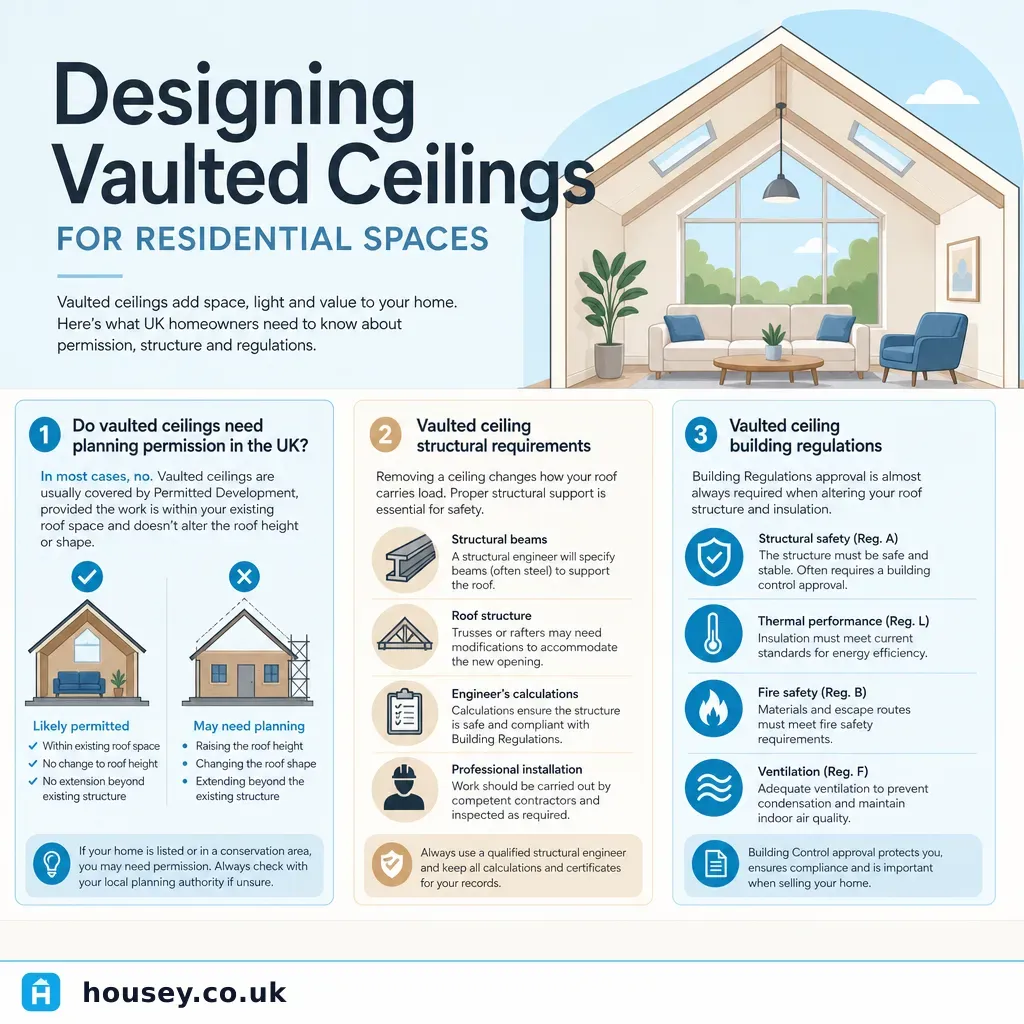
Designing vaulted ceilings for residential spaces
Creating a vaulted ceiling in an existing home involves restructuring the roof timbers that form the structural triangle, which always requires a structural engineer's calculations and Building Regulations approval under Approved Document A.
 Planning & Pre-Build
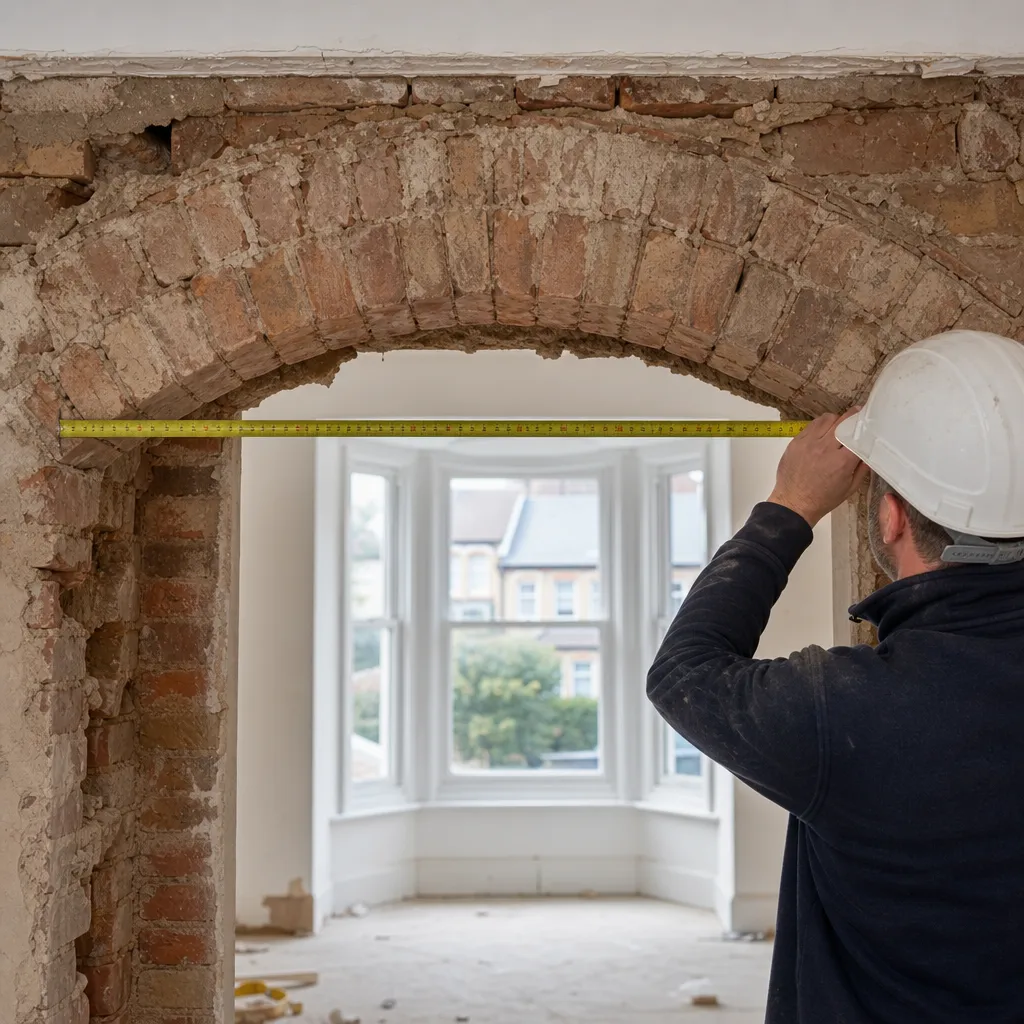
Structural Arching in Walls: Load Distribution and Design
Structural arching occurs when masonry redistributes compressive loads in a triangular or parabolic path around an opening, reducing the load on the lintel below.
 Planning & Pre-Build
Building a Custom Home: Essential Questions Before Breaking Ground
Building a custom home in the UK requires planning permission, separate Building Regulations approval, and a professional team typically including an architect or architectural technologist, structural engineer, and building control body.
 Planning & Pre-Build
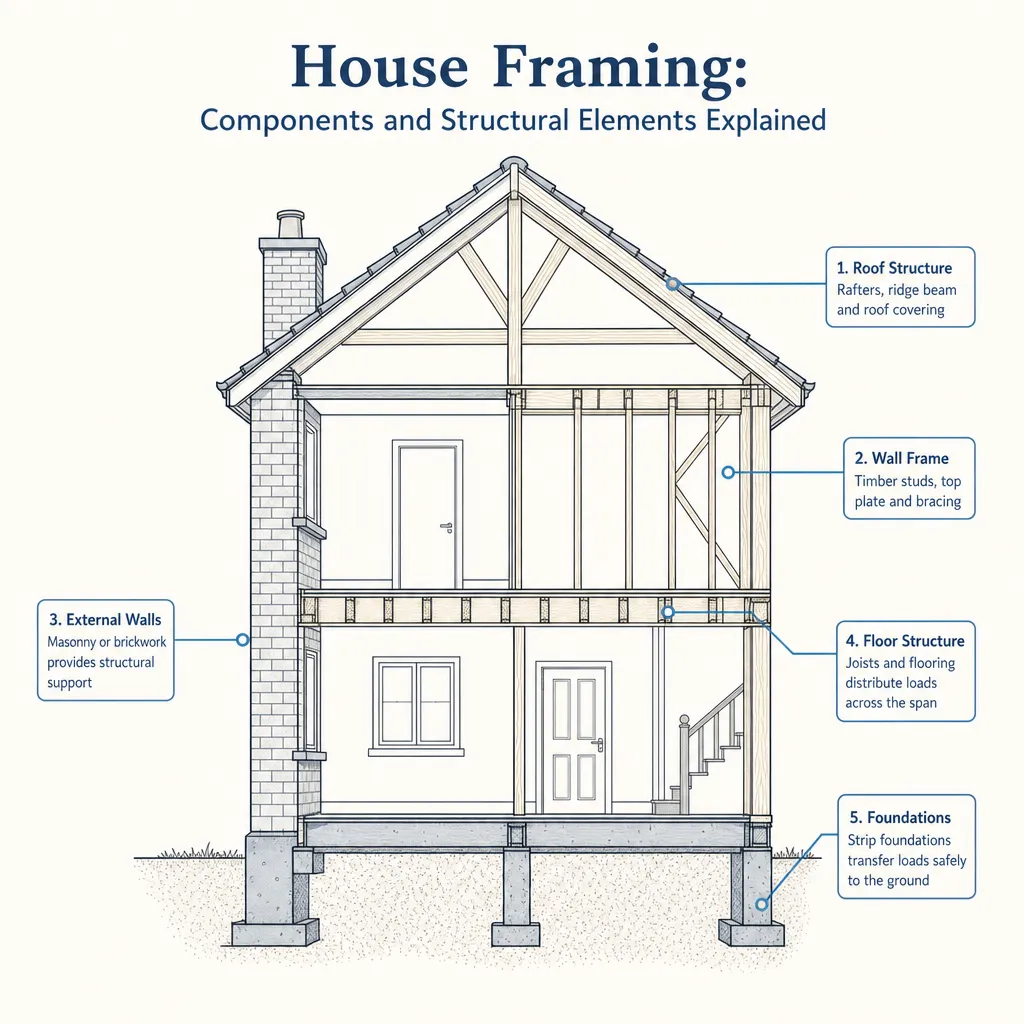
House Framing: Components and Structural Elements Explained
Most UK homes are built from load-bearing masonry — brick and block cavity walls — or, increasingly, from factory-engineered timber frames where the masonry outer leaf is non-structural cladding.