House Framing: Components and Structural Elements Explained
By Housey · Last reviewed 31st of May 2026
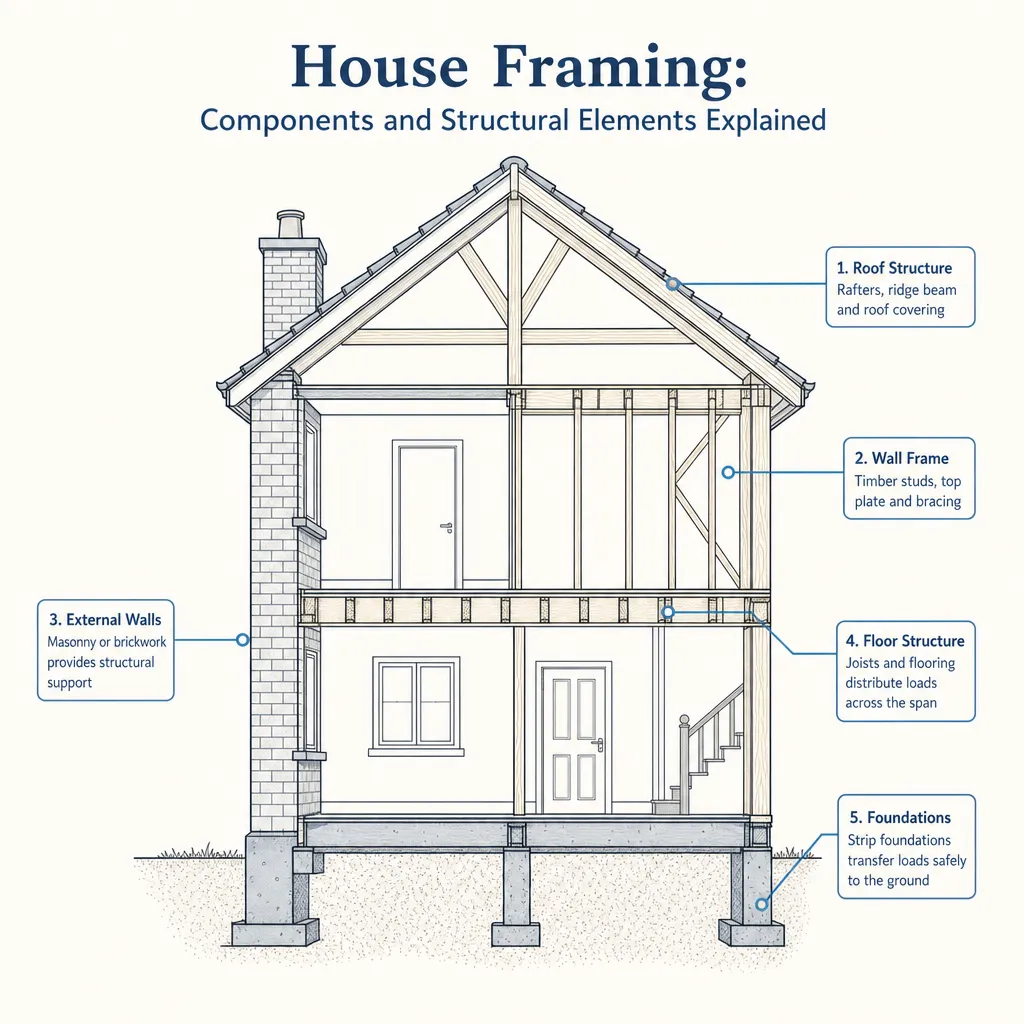
House Framing: Components and Structural Elements Explained
Whether you are planning a self-build, considering a loft conversion, or trying to interpret what a surveyor's report says about load-bearing walls, understanding how a house is framed matters. In the UK, most homes built before the 1980s use load-bearing masonry, but timber frame, steel frame, and modern methods of construction are increasingly common — each with different implications for modifications, extensions, and structural assessments.
Key points
- The majority of UK homes built before the 1980s use traditional masonry cavity wall construction: two leaves of brick or block with a cavity between them, tied with wall ties conforming to BS EN 845-1.
- Timber frame construction — where an engineered timber frame carries structural loads and the masonry outer leaf is non-structural cladding — accounts for approximately 27% of new-build homes in Great Britain (NHBC Foundation).
- Building Regulations Approved Document A (Structure) governs structural design requirements for all new and altered dwellings in England; equivalent standards apply in Wales, Scotland, and Northern Ireland.
- Load-bearing walls cannot be removed or altered without structural calculations from a chartered structural engineer and building regulations approval — these are legal requirements, not optional.
- Modern Methods of Construction (MMC), including Structural Insulated Panels (SIPs) and Cross Laminated Timber (CLT), are increasingly used in UK self-build and developer projects and require specialist assessment before any alteration.
The two dominant framing systems in UK housing
Traditional masonry construction
In a traditionally built UK home, the outer walls — built from brick, stone, or concrete block — carry structural loads from the floors and roof down to the foundations. This is called load-bearing masonry.
Key structural components include:
- Cavity walls: Two leaves (typically 102 mm brick outer, 100 mm block inner) separated by a cavity of 50–100 mm, tied with wall ties
- Party walls: Shared walls between semi-detached or terraced properties, governed by the Party Wall etc. Act 1996
- Lintels: Horizontal beams — steel, precast concrete, or natural stone — spanning openings in load-bearing walls such as doors and windows
- Padstones and ring beams: Concentrating and distributing point loads from beams or steelwork into the masonry below
- Strip foundations: The most common foundation type in traditional homes, bearing wall loads directly onto the ground
Timber frame construction
In a timber frame home, a factory-engineered structural timber panel — typically treated softwood studs at 400 mm or 600 mm centres, sheathed with OSB (Oriented Strand Board) — carries the structural loads. The external brick or render cladding is non-structural.
Key components include:
- Sole plate: The bottom horizontal timber member anchored to the floor slab or ring beam
- Head plate: The top horizontal member transferring loads into the studs
- Structural studs: Vertical members at regular centres carrying vertical loads
- OSB sheathing: Provides racking resistance against lateral wind loads
- Breather membrane: A moisture-vapour-permeable layer on the outer face of the frame, critical for moisture management
- Cavity: Maintained between the timber frame and the external cladding for drainage and ventilation
Comparison: masonry, timber frame, and steel frame
Feature | Traditional masonry | Timber frame | Light gauge steel frame |
|---|---|---|---|
Main structural material | Brick or block | Treated engineered timber | Cold-rolled steel sections |
Speed of construction | Slower, weather-dependent | Faster with factory-engineered panels | Fast, factory precision |
Typical UK use | Pre-1990s housing stock | ~27% of new builds (NHBC) | Commercial, self-build, extensions |
Modification and extension | Well understood by most builders | Requires frame design input | Specialist knowledge required |
Thermal performance | Moderate, improved with cavity insulation | Excellent with well-insulated panels | Good with thermal break detailing |
Moisture risk | Low if cavity is maintained | Higher — vapour control detailing critical | Condensation risk at cold bridges |
Structural alterations | Calculations + building regs required | Calculations + building regs required | Calculations + building regs required |
Key regulatory reference | Approved Document A | Approved Document A and C | Approved Document A |
Floor and roof structural elements
Floor structures
- Ground floor: Suspended timber (joists spanning between sleeper walls), solid concrete slab, or beam-and-block construction (common in newer homes)
- Upper floors: Timber joists in traditional homes; engineered I-joists or metal web joists in modern construction, offering longer spans and service routes within the web depth
- Trimmer and trimming joists: Doubled-up members framing around openings such as stairwells and loft hatches to transfer loads around the gap
Roof structure
- Cut roof (traditional pitched): Rafters, ridge board, purlins, struts, and ceiling joists cut and assembled on site — typical in homes built before the 1960s
- Trussed rafter roof: Factory-engineered triangulated trusses at 600 mm centres spanning wall-to-wall — standard in most homes since the 1970s; the loft void created is not designed for habitable floor loads
- Flat roof: Typically timber joists with a weatherproof deck (felt, GRP, or single-ply membrane); the joist span often limits conversion potential
What not to assume
Common misunderstandings about house structure that cause expensive problems:
- Partition walls are never load-bearing. Many internal partition walls in masonry homes ARE load-bearing, particularly those running perpendicular to the floor joists. No wall should be removed without a structural assessment.
- Loft boards mean a load-bearing floor. Trussed rafter lofts often have boards laid on ceiling joists that are not designed for habitable floor loads. Overloading can cause deflection and cracking.
- Timber frame means it is not a solid build. Modern engineered timber frames are designed to Eurocodes and, when correctly detailed, perform comparably to masonry in durability, acoustic performance, and fire resistance.
- Fitting an RSJ completes the job. Installing a steel beam to remove a load-bearing wall requires correct bearing lengths, padstones, temporary support during installation, and building regulations sign-off — the steel size must be calculated by a structural engineer.
- Permitted development covers structural work. Permitted development rights relate to planning permission only. Structural alterations also require building regulations approval — these are entirely separate consent regimes.
Which professional do you need?
Task | Professional | Qualification to look for |
|---|---|---|
Assessing whether a wall is load-bearing | Chartered structural engineer | MIStructE, CEng, or MRICS with structural specialism |
Designing a steel beam or new structural frame | Chartered structural engineer | MIStructE or CEng |
Designing a new timber frame self-build | Structural engineer or specialist timber frame designer | Timber frame accreditation plus structural engineering qualification |
Building regulations submission for structural work | Structural engineer or architect | Full structural calculations required |
Identifying structural defects before purchase | RICS Level 3 surveyor or structural engineer | MRICS, FRICS, or MIStructE |
Party wall matters adjacent to structural work | Party wall surveyor | FPWS (Faculty of Party Wall Surveyors) or RICS member |
Important limitations
This article is a general educational overview of common UK residential framing systems. Structural behaviour varies with property age, construction method, ground conditions, alteration history, and loading. Nothing here constitutes structural advice or a structural assessment. Any structural alteration — removing walls, creating new openings, converting a loft, or adding an extension — must be assessed and designed by a chartered structural engineer and approved under Building Regulations before work begins.
What to ask a qualified professional
- Is this wall load-bearing, and what does removing it involve structurally?
- What are the bearing conditions for the proposed beam, and are the existing foundations adequate to carry the new loads?
- What temporary works will be needed during the structural alteration?
- Will you provide full structural calculations for building regulations submission?
- Are there any signs of existing structural movement I should be aware of before planning changes?
- Is the existing roof structure suitable for conversion to habitable use under Approved Document A and Part L?
When to get professional help
Seek professional structural advice before:
- Removing or altering any internal or external wall
- Commencing a loft conversion — to assess whether the existing truss or cut roof structure can be adapted
- Buying an older or non-standard construction property
- Any work involving cutting through or bearing onto a load-bearing element
Contact a chartered structural engineer without delay if you notice:
- Stepped cracks through brickwork, cracks wider than approximately 5 mm, or cracks that appear to be widening
- Cracks accompanied by sticking doors or windows — a sign of active structural movement
- A sagging ridgeline, spread at the eaves, or visible deflection in floor joists
How Housey can help
Housey connects you with chartered professionals who provide structural engineering services — from load-bearing wall assessments and beam design to structural calculations for building regulations submissions and pre-purchase structural appraisals.
Frequently asked questions
How can I tell if a wall is load-bearing?
You cannot determine this definitively without a professional assessment. Common indicators include walls running perpendicular to the floor joists, walls appearing in the same position on multiple floors, and walls that directly support a ridge or purlin. These are indicators only — a chartered structural engineer must confirm before any removal work is carried out.
Do I always need building regulations approval for structural work?
Yes. Any work involving structural alterations — removing load-bearing walls, creating new openings, installing beams, or converting a loft to habitable use — requires building regulations approval in England and Wales. This applies even to internal work that would otherwise fall under permitted development and is entirely separate from planning permission.
What is the difference between a structural engineer and a building surveyor?
A chartered structural engineer (MIStructE or CEng) specialises in calculating loads, designing structural elements, and specifying connections and materials. A building surveyor (MRICS or FRICS) assesses the overall condition and construction of a building. For structural alteration design and calculations you need a structural engineer; for a condition assessment before purchase, a RICS Level 2 or Level 3 surveyor is usually the right starting point.
What are Eurocodes and are they relevant to my renovation?
Eurocodes are the European structural design standards adopted in the UK, including BS EN 1995 for timber structures and BS EN 1993 for steel. Structural engineers use them when designing new structural elements. They apply to any new structural work installed during a renovation, including beams, connections, and new floor or roof structures.
Sources and further reading
- Building Regulations Approved Document A (Structure) — GOV.UK / MHCLG
- The Institution of Structural Engineers — IStructE
- Party Wall etc. Act 1996 — legislation.gov.uk
- NHBC Standards for timber frame construction — NHBC
- BS EN 1995-1-1 Eurocode 5: Design of timber structures — BSI
Useful next reads
 Planning & Pre-Build
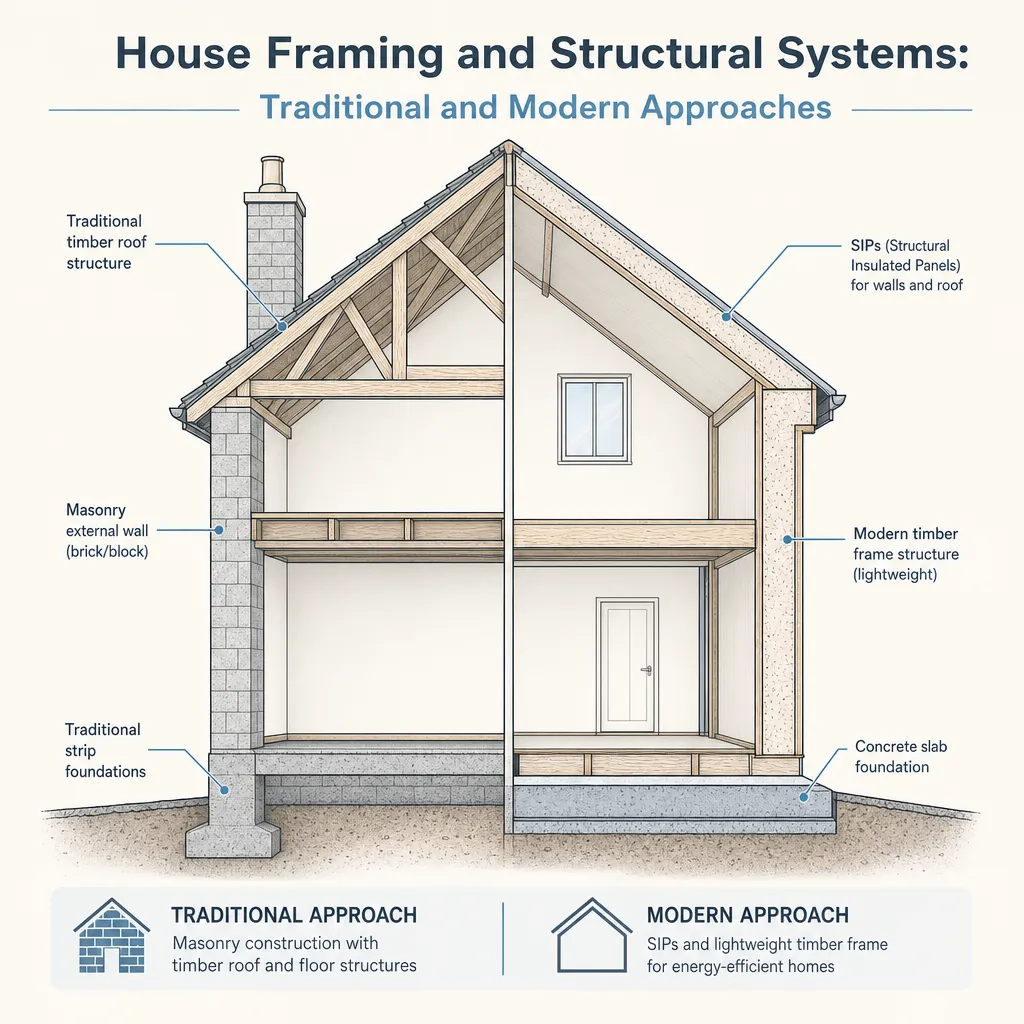
House Framing and Structural Systems: Traditional and Modern Approaches
UK homes are built using four main structural systems: traditional masonry (brick and block), timber frame, structural insulated panels (SIPs), and insulated concrete formwork (ICF).
 Planning & Pre-Build
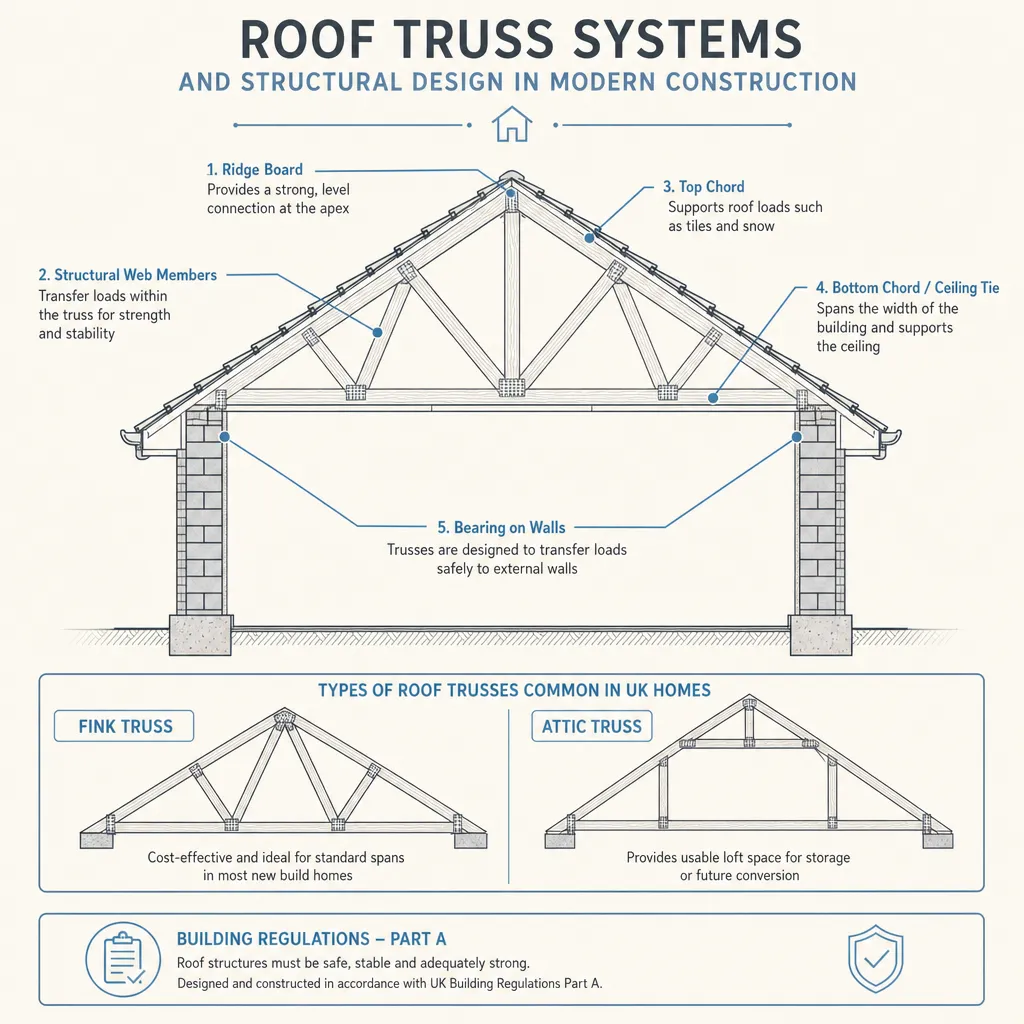
Roof Truss Systems and Structural Design in Modern Construction
Roof trusses are factory-engineered frames that carry roof loads to load-bearing walls.
 Planning & Pre-Build
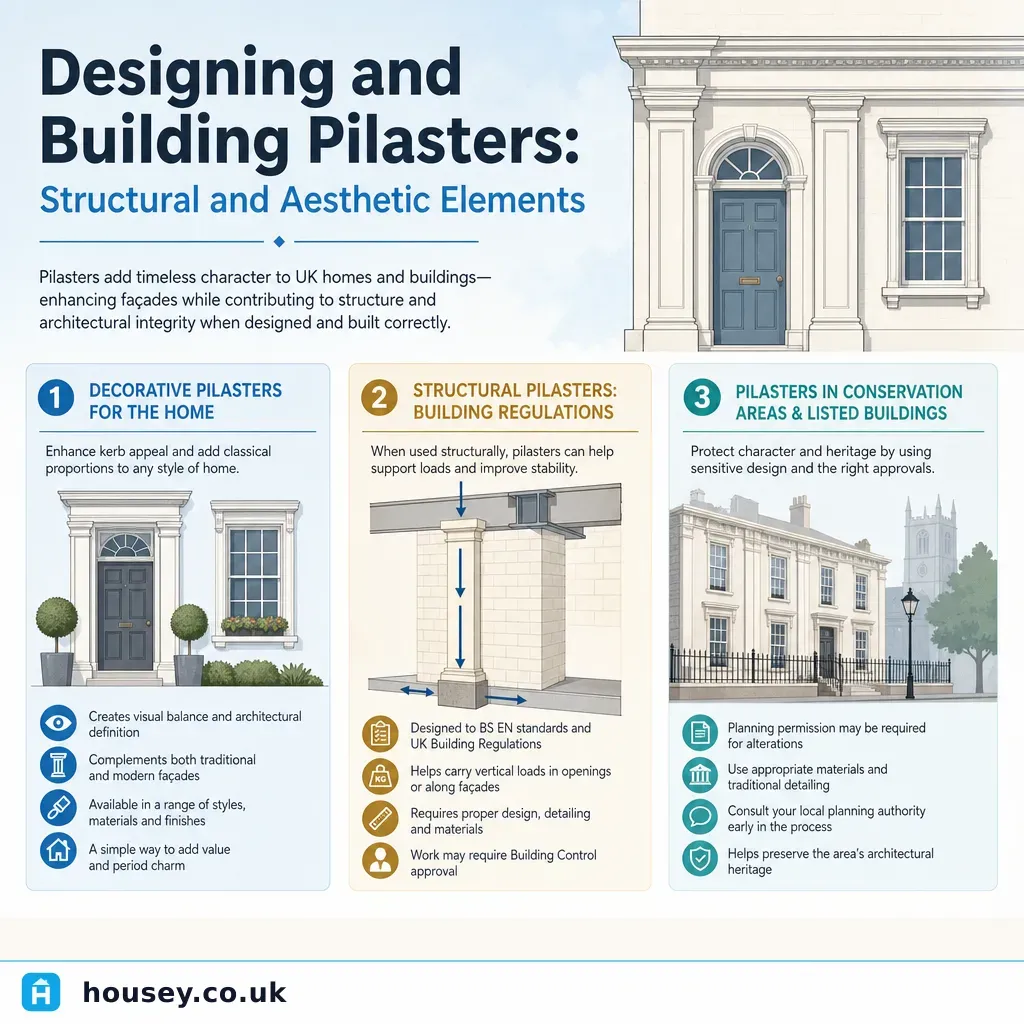
Designing and Building Pilasters: Structural and Aesthetic Elements
Pilasters in UK buildings may be purely decorative or genuinely structural, carrying vertical loads or providing lateral restraint in masonry walls.
 Planning & Pre-Build
Changes to Loft Conversion Rules: Permitted Development and Planning Updates
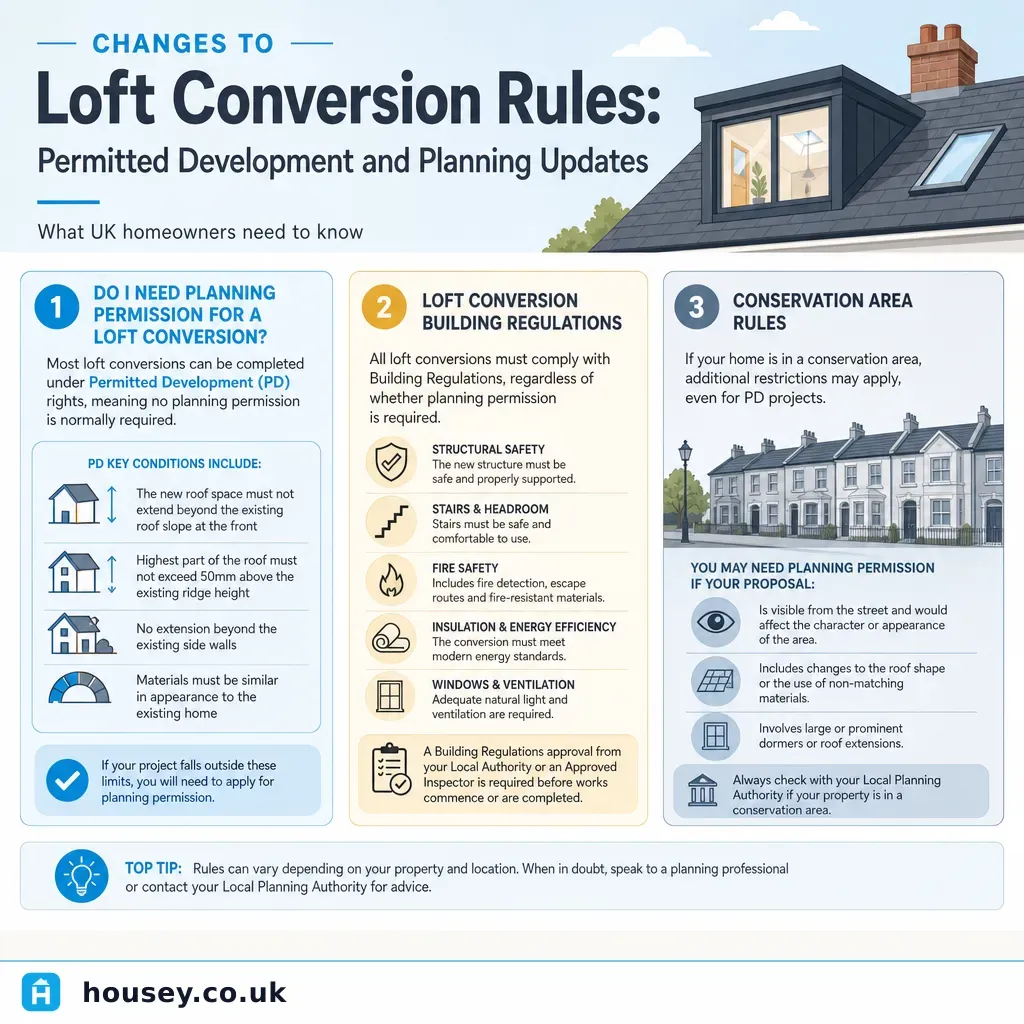
In England, most loft conversions on standard houses qualify as Permitted Development under Class B of the GPDO 2015, allowing up to 40 cubic metres (terraced) or 50 cubic metres (detached or semi-detached) without a planning application — if conditions are met.
 Planning & Pre-Build
Residential Properties Built with Concrete Construction Methods
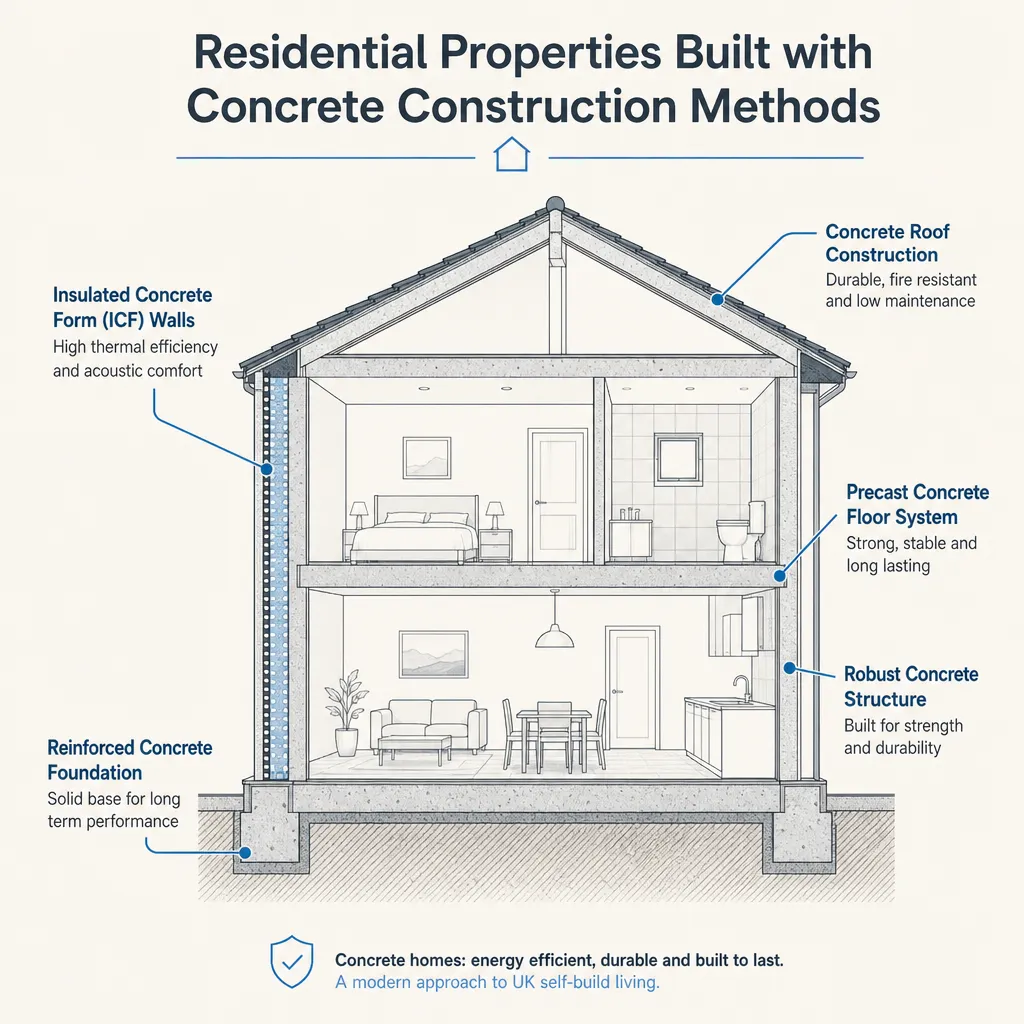
UK homes are built using several concrete methods: in-situ cast concrete, precast panel systems, insulating concrete formwork (ICF), and older non-traditional types such as Wimpey No-Fines and Laing Easiform.