Designing and Building High-Performance Sustainable Homes with Eco-Friendly Systems
By Housey · Last reviewed 9th of May 2026

Designing and Building High-Performance Sustainable Homes with Eco-Friendly Systems
The UK's commitment to reaching net zero by 2050 has fundamentally changed what good looks like for both new homes and existing properties undergoing significant renovation. Building Regulations Part L (conservation of fuel and power) was substantially updated in 2021 and again under the Future Homes Standard trajectory, and any project involving a new build, extension, or major retrofit now needs to engage with energy performance in a way that was not required a decade ago. For homeowners, navigating the intersection of standards, grant schemes, and technology choices can be genuinely complex.
Key points
- The Future Homes Standard, expected to apply to new residential buildings with planning permission from 2025 onwards in England, targets a 75-80% reduction in carbon emissions compared to 2013 Part L standards — primarily through fabric-first design, heat pumps, and high-efficiency ventilation.
- PAS 2035:2023 is the UK standard for retrofitting domestic buildings; it requires a Retrofit Coordinator to oversee any project using ECO4 or Great British Insulation Scheme funding, and is recommended best practice for all significant multi-measure retrofits.
- The Boiler Upgrade Scheme (BUS), administered by Ofgem, currently provides a £7,500 grant for air source and ground source heat pumps in England and Wales; installers must be MCS-accredited and the property must have a valid Energy Performance Certificate (EPC) with no outstanding insulation recommendations.
- Heat pump sizing must follow MCS 020 methodology, which requires a full heat loss calculation for the specific property — incorrect sizing leads to efficiency loss, increased running costs, and comfort problems.
- SAP 10.2 (Standard Assessment Procedure) is the current UK methodology for calculating the energy performance of dwellings and is used to demonstrate compliance with Building Regulations for new builds and notifiable extensions.
- Under Part S of the Building Regulations (introduced 2022), new dwellings with associated parking must include electric vehicle charge point infrastructure.
What makes a home genuinely high-performance?
High-performance sustainable homes are built on three interconnected principles — fabric first, then systems, then renewables — and addressing them in the wrong order produces poor returns. Fitting solar panels to a poorly insulated, draughty house is far less effective than first maximising the building envelope performance.
Fabric first means achieving the lowest practical U-values (a measure of heat loss through a building element) before adding any mechanical or renewable systems:
- Wall U-values of ≤0.15 W/m²K — substantially better than the 2021 Part L minimum of 0.26 W/m²K for new dwellings
- Roof U-values of ≤0.11 W/m²K
- Floor U-values of ≤0.13 W/m²K
- Triple glazing with a centre-pane U-value of ≤0.8 W/m²K for very low-energy buildings
- Airtightness of ≤3m³/(h·m²) at 50 Pa; the Passivhaus standard is significantly more demanding at ≤0.6 air changes per hour at 50 Pa
Low-carbon systems sit on top of the efficient fabric:
- Air source or ground source heat pumps as primary heating, operating at flow temperatures of 35-45°C rather than the 65-70°C of a conventional gas boiler — meaning radiators must be correctly sized for lower flow temperatures
- Mechanical Ventilation with Heat Recovery (MVHR) to supply fresh air without heat loss in airtight dwellings; mandatory airtightness testing at practical completion is required under Part F of the Building Regulations
- Hot water heat pumps or solar thermal for domestic hot water
Renewables integration layers on top of efficient fabric and systems:
- Solar photovoltaic (PV) panels, with or without battery storage
- EV charging infrastructure, now required under Part S for new dwellings with associated parking
New build vs retrofit: which route achieves more?
Approach | Achievable performance | Key standards | Main challenges | Typical professionals needed |
|---|---|---|---|---|
New build to Future Homes Standard | 75-80% below 2013 Part L; near-Passivhaus achievable with additional specification | SAP 10.2, Part L 2021, Part F, Part S | Cost premium; airtightness detailing; contractor availability | Architect or architectural technologist, SAP assessor, airtightness tester, MCS-accredited heat pump installer |
Whole-house retrofit under PAS 2035 | EPC C or above; 50-70% energy reduction depending on starting point | PAS 2035:2023, ECO4, TrustMark, PAS 2030 | Moisture risk, interstitial condensation, occupant disruption | Level 5 Retrofit Coordinator, Retrofit Assessor, energy consultant |
Fabric-only retrofit | Improved U-values; EPC improvement of 1-3 bands | Part L for extensions, Building Regulations for notifiable work | Moisture risk if ventilation not upgraded simultaneously | Insulation assessor, building surveyor |
Renewables-only retrofit | Reduced energy bills; lower operational carbon emissions | MCS, DNO approval, G99/G98 connection standards | Cannot compensate for poor fabric performance | MCS-accredited PV or heat pump installer, DNO liaison |
Renewable energy systems: practical UK considerations
Solar PV: A typical 4 kWp system on a south-facing roof produces approximately 3,400–3,800 kWh per year in Southern England, and somewhat less in Scotland and Northern England. Planning permission is generally not required for roof-mounted panels on non-listed buildings under permitted development, provided they project no more than 200mm from the roof surface. Battery storage can increase self-consumption from approximately 30% to 60-70% of generated electricity. The Smart Export Guarantee (SEG) now applies to exported electricity, with rates typically 3–15p per kWh depending on supplier.
Heat pumps: Air source heat pumps (ASHP) achieve a Coefficient of Performance (CoP) of approximately 2.5–4.0 in UK conditions, depending on outdoor temperature and system flow temperature. Ground source heat pumps (GSHP) are more consistent but require significant groundworks. The Boiler Upgrade Scheme currently offers £7,500 for both ASHP and GSHP in England and Wales — check Ofgem for current rates and eligibility before assuming the grant applies to your property.
MVHR: Mechanical Ventilation with Heat Recovery systems recover 70–90% of heat from extracted air. They require filter cleaning every 3–6 months and must be commissioned by a qualified ventilation engineer. Poor installation is one of the most common causes of condensation and indoor air-quality problems in new airtight homes.
PAS 2035 and whole-house retrofit
PAS 2035:2023 sets out the framework for assessing, designing, and installing energy efficiency measures in UK domestic buildings. Under the framework:
- A Retrofit Assessor surveys the property and produces a Whole House Plan identifying all appropriate improvement measures in a coordinated sequence.
- A Retrofit Coordinator — registered with TrustMark and holding a Level 5 qualification — oversees all measures from design through to installation and handover.
- All installers must be TrustMark-registered and, for heat pumps and solar PV, MCS-accredited.
The framework exists specifically because uncoordinated retrofit — adding insulation without also addressing ventilation, for example — can cause serious moisture and interstitial condensation problems. This risk is particularly significant in solid-wall properties such as Victorian and Edwardian terraces, where breathability and vapour management are critical.
Important limitations
This article provides general information about high-performance sustainable home design and retrofit in the UK. Standards, grant schemes, and regulations are subject to change and may vary by property type, tenure, local authority area, and specific circumstances. Nothing in this article constitutes professional energy, structural, planning, or financial advice.
In particular:
- Heat pump sizing requires a full heat loss calculation to MCS 020 for your specific property — rule-of-thumb estimates based on floor area are not sufficient for proper system design.
- Insulation in solid-wall properties carries a real risk of interstitial condensation if incorrectly specified. A Retrofit Assessor should carry out a moisture risk assessment before any insulation measure is installed in a solid-wall home.
- SAP calculations and EPC ratings must be carried out by qualified, accredited assessors. An incorrect SAP calculation can cause compliance problems at practical completion and complications on resale.
- Grant eligibility changes frequently. Always check GOV.UK, Ofgem, and your local authority for current ECO4, Great British Insulation Scheme, and Boiler Upgrade Scheme rates and eligibility criteria before proceeding.
What to ask a qualified professional
Before instructing any professional for sustainable home design, new build, or retrofit, ask:
- Are you MCS-accredited for the specific technology being installed — heat pump, solar PV, or battery storage?
- Are you registered with TrustMark for retrofit work?
- What qualifications do you hold — are you a Level 5 Retrofit Coordinator, a qualified SAP assessor (RdSAP or full SAP), or a CIBSE-accredited energy consultant?
- Will you carry out a full heat loss calculation to EN 12831 and MCS 020 before sizing the heating system?
- How will you assess and manage the risk of interstitial condensation following insulation installation?
- What warranties and guarantees come with the work, and are they backed by an insurance-backed guarantee from a recognised scheme?
- Have you worked on properties of my construction type — solid brick, cavity wall, or timber frame?
- What happens if actual energy savings or EPC outcomes differ from those projected?
When to get professional help
- Immediately, if you are considering adding insulation to a solid-wall property — a moisture risk assessment by a qualified Retrofit Assessor is essential before specifying any insulation measure.
- Before any heat pump installation — MCS-accredited heat loss calculation and system design is not optional; an incorrectly sized system will underperform and may fail to heat the home adequately in cold weather.
- Before applying for ECO4 or Great British Insulation Scheme funding — a Retrofit Assessor must survey the property and produce a Whole House Plan first.
- Before significant airtightness improvements — improving airtightness without adequate mechanical ventilation causes condensation, mould growth, and poor indoor air quality.
- Before planning a new high-performance build — engage an architect or architectural technologist with specific low-energy design experience from the outset; thermal bridge detailing and airtightness strategy must be integral to the design, not added retrospectively.
How Housey can help
Housey connects UK homeowners with qualified professionals across the full sustainable home journey. Whether you need a retrofit assessment to map your options, an energy-efficiency consultant to develop a coordinated whole-house plan, heat pump surveys or solar surveys to assess technical suitability, or professional insulation assessments and ventilation and condensation assessments to manage moisture risk, you can request quotes from accredited local professionals through Housey.
Frequently asked questions
What is the Future Homes Standard and when does it apply?
The Future Homes Standard is the UK government's framework for new homes, targeting a 75-80% reduction in carbon emissions compared to 2013 Building Regulations Part L. It is expected to apply to new residential buildings with planning permission from 2025 onwards in England. It means heat pumps replacing gas boilers, high-performance building fabric, and low-carbon ventilation systems. Scotland and Wales have separate regulatory frameworks.
Do I need planning permission for solar panels?
In most cases, roof-mounted solar PV panels are permitted development in England and do not need planning permission, provided they project no more than 200mm from the roof surface and do not protrude above the ridgeline. Listed buildings and properties in conservation areas have different rules. Always confirm with your local planning authority before installation, as restrictions vary by location.
What is the Boiler Upgrade Scheme grant?
The Boiler Upgrade Scheme (BUS), administered by Ofgem, provides grants to help homeowners in England and Wales replace fossil-fuel heating with heat pumps. As of 2026, the grant is £7,500 for air source and ground source heat pumps. The installer must be MCS-accredited and the property must have a valid EPC with no outstanding insulation recommendations. Check Ofgem for current grant amounts.
What is PAS 2035 and do I need to follow it?
PAS 2035:2023 is the UK specification for retrofitting domestic buildings. It is mandatory for projects receiving ECO4 or Great British Insulation Scheme funding and strongly recommended for all significant multi-measure retrofits. It requires a TrustMark-registered Retrofit Coordinator to oversee all work from assessment through to installation, reducing the risk of moisture and ventilation problems common in uncoordinated retrofit projects.
Can I achieve an EPC rating of A or B through retrofit alone?
Reaching EPC A or B through retrofit is technically possible for many properties, but typically requires a combination of fabric improvements, a heat pump, and solar PV. Feasibility varies significantly by construction type — solid-wall Victorian terraces face higher costs than cavity-wall 1970s semis. A Retrofit Assessor can produce a Whole House Plan mapping practical and cost-effective measures for your specific property.
Sources and further reading
- Future Homes and Buildings Standards: 2023 consultation — Department for Energy Security and Net Zero
- Conservation of fuel and power: Approved Document L — GOV.UK
- PAS 2035:2023 — Retrofitting dwellings for improved energy efficiency — BSI / TrustMark
- Boiler Upgrade Scheme — Ofgem
- MCS — Microgeneration Certification Scheme — MCS
- Heat pumps: everything you need to know — Energy Saving Trust
- TrustMark — find a retrofit professional — TrustMark
Useful next reads
 Energy & Retrofit
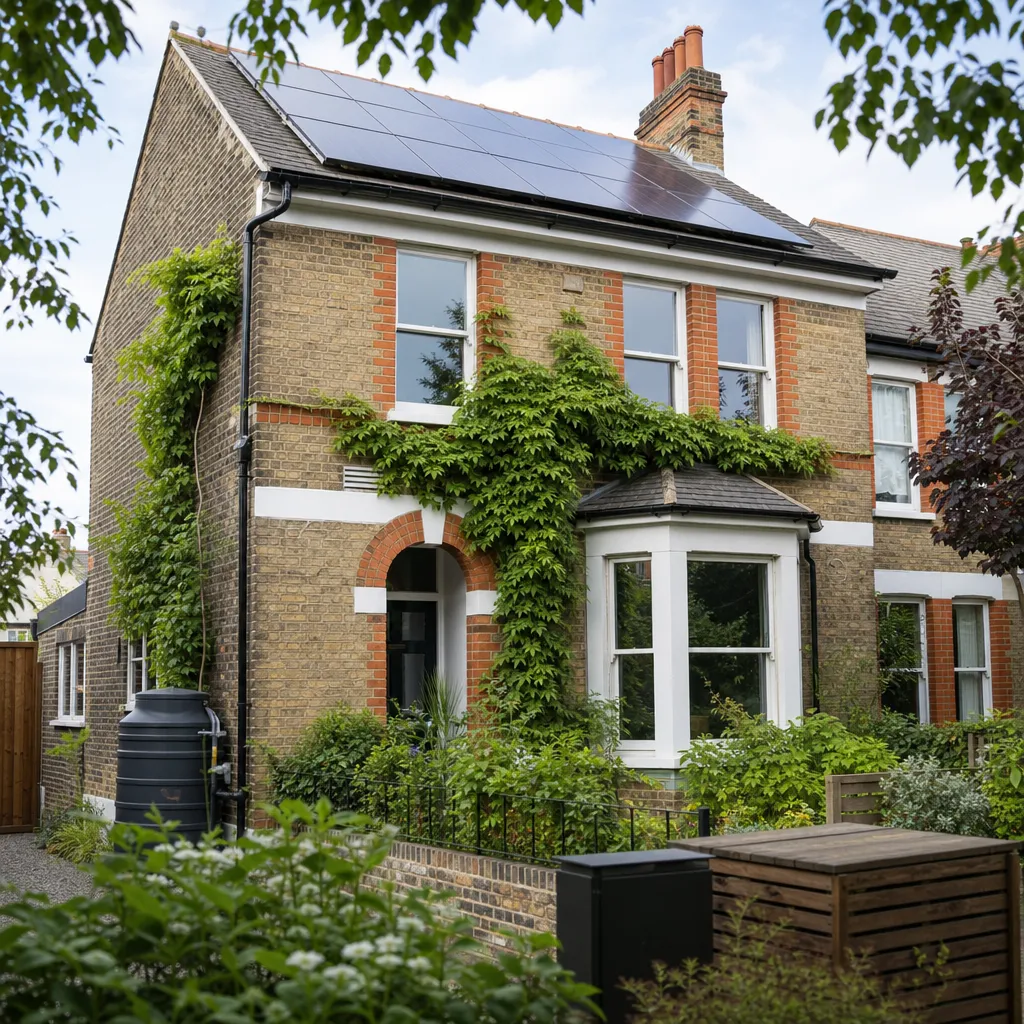
Sustainable Homes: Features That Reduce Environmental Impact
Sustainable homes reduce environmental impact through high levels of insulation, airtight construction, low-carbon heating such as heat pumps, solar energy generation, efficient water use, and responsibly sourced materials.
 Energy & Retrofit
Eco-Conscious Home Features for Sustainable Living
The highest-impact eco home features for UK homeowners are insulation, solar PV panels, air source heat pumps, and smart controls.
 Energy & Retrofit
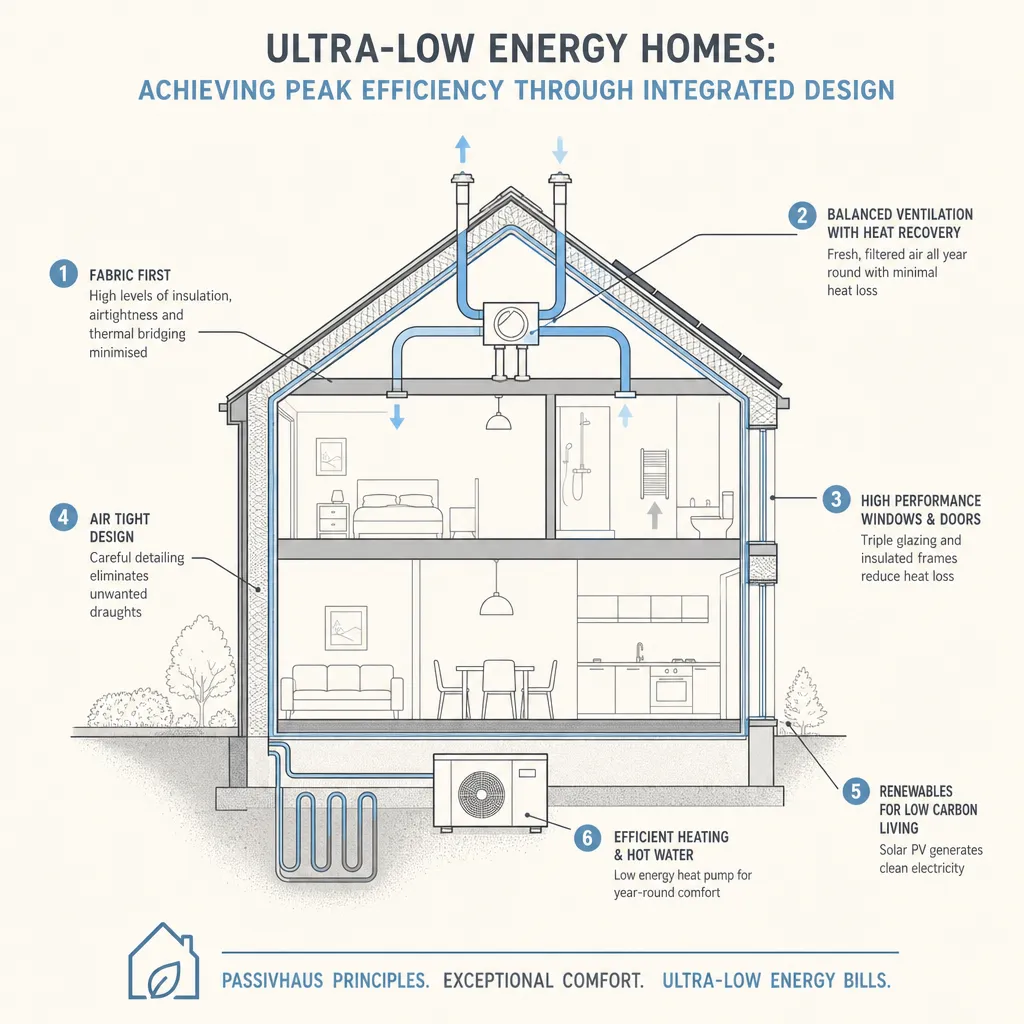
Ultra-Low Energy Homes: Achieving Peak Efficiency Through Integrated Design
Ultra-low energy homes reduce heating demand through high-performance insulation, airtight construction, and mechanical ventilation with heat recovery (MVHR).
 Energy & Retrofit
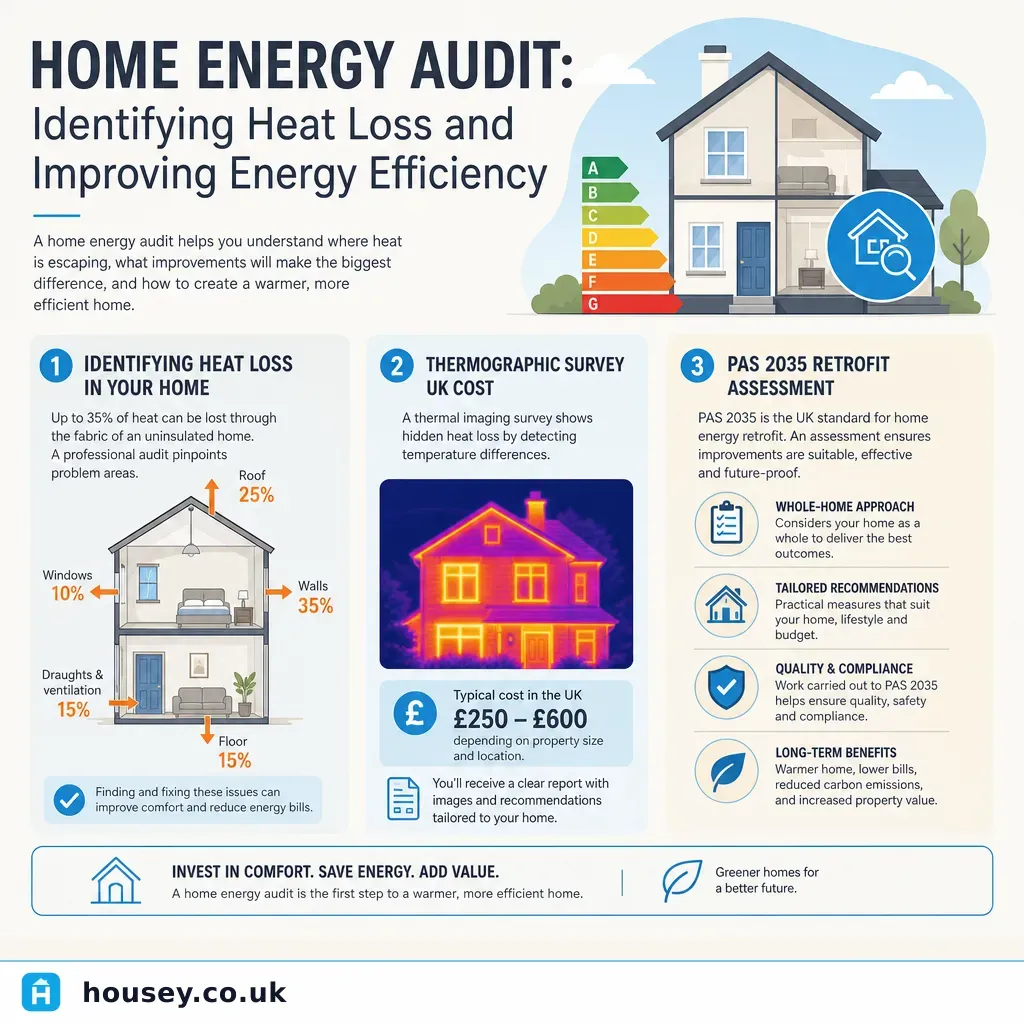
Home Energy Audit: Identifying Heat Loss and Improving Energy Efficiency
A home energy audit is a structured assessment of where your property loses heat and how efficiently it uses energy.
 Energy & Retrofit
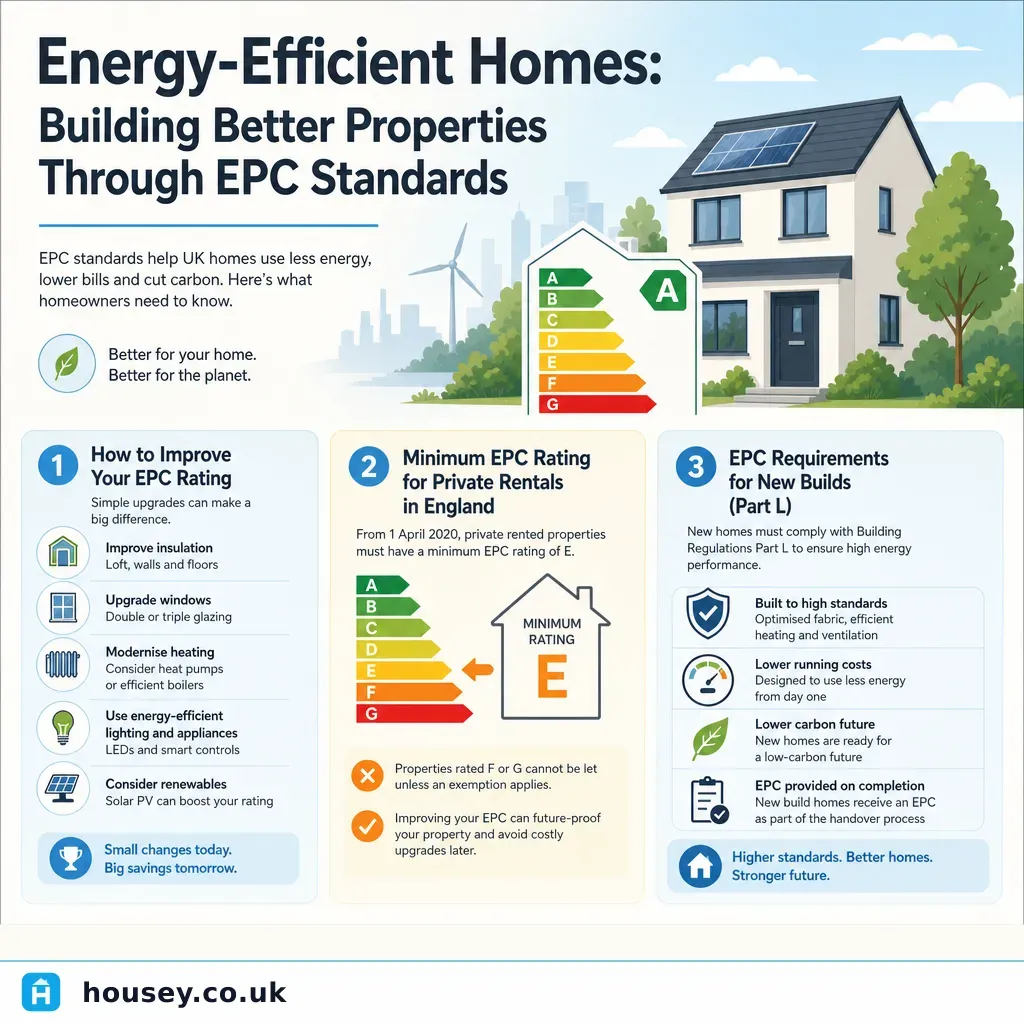
Energy-Efficient Homes: Building Better Properties Through EPC Standards
An EPC rates your home from A (most efficient) to G (least) using the Standard Assessment Procedure.