Designing Your Garden and Outdoor Living Space
By Housey · Last reviewed 9th of May 2026
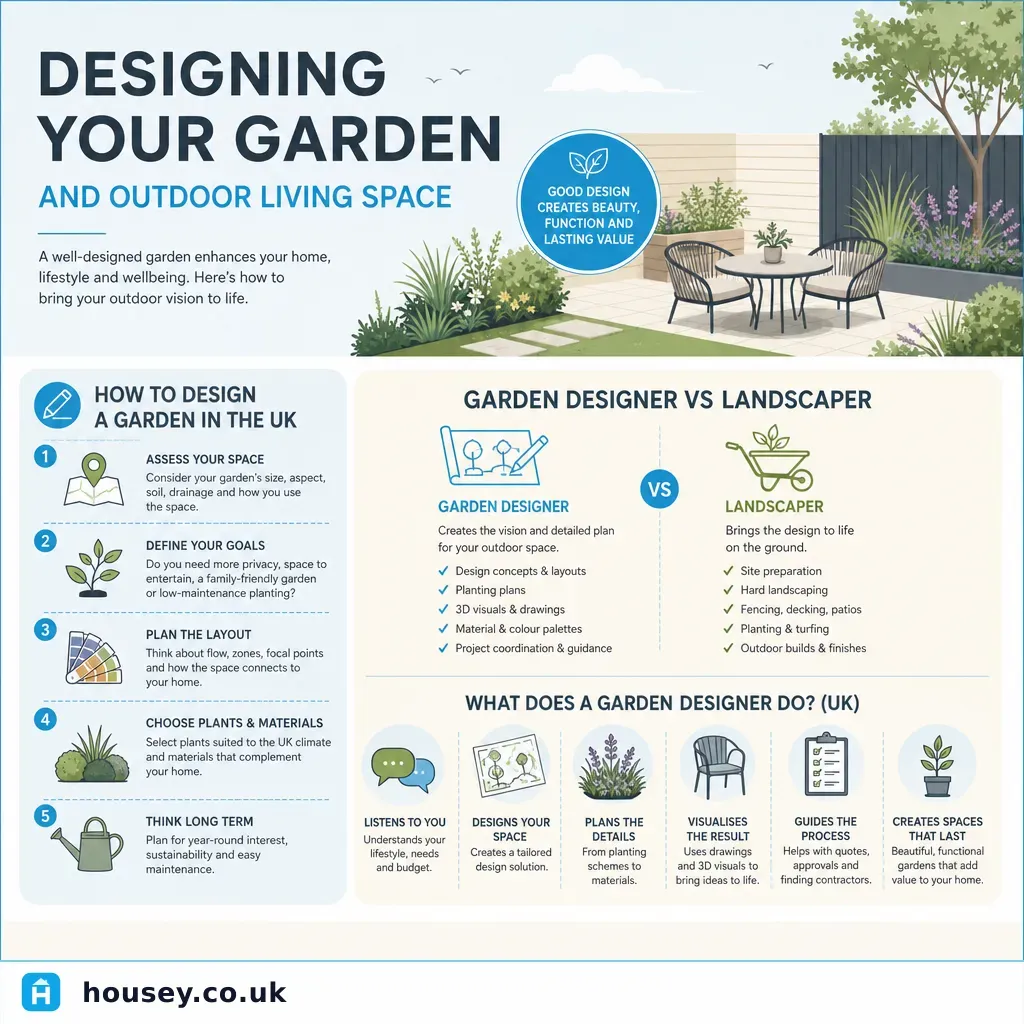
Designing Your Garden and Outdoor Living Space
A garden redesign typically comes into focus when moving into a new property, when the household's needs change, or when a plot that has been left to drift finally demands attention. In the UK, where aspect, soil, rainfall, and local microclimate can vary considerably even within a single garden, investing time in coherent design before landscaping begins avoids expensive mid-project changes and delivers a space that actually functions as intended.
Key points
- The Society of Garden Designers (SGD) and the Landscape Institute both maintain searchable registers of qualified professionals with formal training and, typically, professional indemnity insurance.
- Planning permission is required for outbuildings exceeding 4m in height (dual-pitch roof) or 3m (any other roof), structures covering more than 50% of the land around the original house, or any structure in front of the principal elevation.
- Trees subject to a Tree Preservation Order (TPO) and trees in conservation areas require prior consent before any works under the Town and Country Planning (Tree Preservation) (England) Regulations 2012 — removal without consent can result in an unlimited fine.
- Permitted development rights for garden structures are removed for listed buildings and may be restricted in Article 4 Direction areas — check with your local planning authority before building.
- A full garden design service typically includes a site survey, measured drawings, concept design, planting plan, materials schedule, and a contractor briefing pack; confirm the exact scope in writing before appointing.
Garden designer, landscaper, or both?
One of the most common points of confusion is understanding what a garden designer and a landscaper each do — and which is needed for a given project.
| Garden designer | Landscaper |
|---|---|---|
Primary role | Plans the garden: layout, planting, materials, drainage, levels | Builds the garden: groundworks, hard landscaping, planting installation |
Qualifications | SGD, Landscape Institute, RHS Level 4+ | No single required qualification; BALI membership is a useful indicator |
What they deliver | Survey, drawings, planting plan, materials specification, contractor brief | Completed garden construction |
When to appoint | Before any significant work starts | Once the design is finalised |
Design-and-build option | Some designers offer this; check whether it limits contractor choice | Some landscapers carry in-house design capability; quality varies |
Risk if skipped | Landscaping without a coherent plan often causes expensive mid-project changes | Building without professional design can produce a garden that neither functions nor looks as intended |
For a straightforward replanting or tidy-up, an experienced landscaper may be sufficient. For changes to levels, drainage, structures, a complex planting scheme, or a specific aesthetic brief, appoint a garden designer first.
Which approach suits your project?
- Appoint a designer only if you want a full set of drawings and then competitive quotes from separate landscapers.
- Choose a design-and-build landscaper if speed and a single point of contact are the priority and their portfolio satisfies you.
- Appoint a designer then a separate landscaper for complex or high-value projects where independent design oversight during construction adds real value.
- Consult your LPA if your plans include structures of uncertain planning status, or if your property is listed or in a conservation area.
- Speak to an arborist first if significant tree removal is planned — TPO consent must be in place before any works begin.
Homeowner brief checklist
A clear brief reduces revision rounds and helps a designer produce a scheme that genuinely suits how you live. Before your first consultation, work through these questions:
- How do you currently use the garden, and what do you wish you could do in it?
- Who uses it — young children, elderly relatives, pets?
- What do you want to keep from the existing garden?
- Are there materials, styles, or planting approaches you like or strongly dislike?
- What structures are you considering: pergola, summerhouse, greenhouse, outdoor kitchen, water feature?
- How much weekly maintenance time are you willing to commit?
- What is your budget for design fees, landscaping, and plants separately?
- Are there trees, hedges, or boundary constraints that limit what is possible?
- Do you want external lighting, irrigation, or power incorporated into the scheme?
What the design process typically involves
- Initial consultation — site visit and brief discussion; some designers charge for this, others include it in the overall fee.
- Site survey — measured drawings covering levels, drainage, boundaries, existing plants, services, and aspect.
- Concept design — layout options as sketches or mood boards; your feedback shapes the direction before detailed work begins.
- Detailed design — finalised layout drawings, sections showing level changes, a materials schedule, and a full planting plan.
- Contractor tender — the designer may prepare a schedule of works for competitive landscaper quotes on your behalf.
- Construction oversight — site monitoring or contract administration is worth requesting on complex or high-value projects.
- Aftercare guidance — a maintenance schedule for the first growing season is sometimes included for naturalistic or prairie-style planting schemes.
What to ask before accepting a quote
- What is included in the fee — will I receive a full set of drawings, a planting plan, and a materials specification?
- Are you a member of the SGD, the Landscape Institute, or BALI — and do you hold professional indemnity insurance?
- Who will carry out the work on site, and will you be present during construction?
- How do you handle unexpected ground conditions such as buried concrete, poor drainage, or contaminated soil?
- Does the quote include VAT?
- What guarantees do you offer on hard landscaping materials and workmanship?
- Can I speak to previous clients or visit a recently completed project?
When to get professional help
A professional garden designer adds the most value when the project involves changes to levels or drainage, structures of uncertain planning status, a complex planting scheme, or a budget above £15,000 — at that scale, design fees typically represent good value against the cost of getting landscaping decisions wrong without a coherent plan. If your property is listed, in a conservation area, or has protected trees on or adjacent to the plot, take planning and arboricultural advice before appointing any contractor. Removing a TPO-protected tree without consent can result in an unlimited fine under the Town and Country Planning Act 1990.
How Housey can help
Whether you need a garden designer to develop a full design scheme or a landscaper to build an existing plan, Housey can connect you with local, vetted professionals so you can compare quotes and make a confident decision.
Frequently asked questions
Do I need planning permission for a garden redesign?
Replanting, new lawns, patios, and most fences under 2m do not require planning permission. Outbuildings such as summerhouses and garden offices may need permission depending on size, height, and position. Structures in front of the principal elevation, structures covering more than 50% of the land around the original house, and any works on a listed building are more likely to require consent. Check the Planning Portal or your local planning authority before building.
What is the difference between a garden designer and a landscaper?
A garden designer plans the garden — layout, planting, materials, drainage, and aesthetics — and produces drawings and specifications. A landscaper builds the garden according to those plans. Many homeowners appoint a designer first and then obtain competitive quotes from landscapers. Some firms offer design-and-build as a combined service, which suits straightforward projects but removes the option of independent design oversight during construction.
How long does a garden design project take from start to finish?
A straightforward redesign may take 4–8 weeks from first consultation to completed drawings. A complex scheme involving level changes, structures, and detailed planting can take 3–6 months to design, followed by a construction phase of 4–16 weeks depending on scope and season. Planting schemes for naturalistic or wildlife gardens may be phased over one or two growing seasons. Discuss programme expectations with your designer before committing.
How do I find a qualified garden designer in the UK?
The Society of Garden Designers (SGD) and the Landscape Institute both maintain searchable registers of qualified members. RHS-qualified designers (Level 4 and above) have a recognised horticultural foundation. BALI accreditation is a useful indicator for landscaping contractors. Always review a portfolio, check references, and confirm that professional indemnity insurance is in place before signing any contract.
Sources and further reading
- Outbuildings: permitted development rules — Planning Portal
- Tree Preservation Orders and trees in conservation areas — GOV.UK
- Find a garden designer — Society of Garden Designers
- Find a landscape professional — Landscape Institute
- Find a landscaper — British Association of Landscape Industries
- Sustainable drainage systems — GOV.UK
Useful next reads
 Improvement & Build
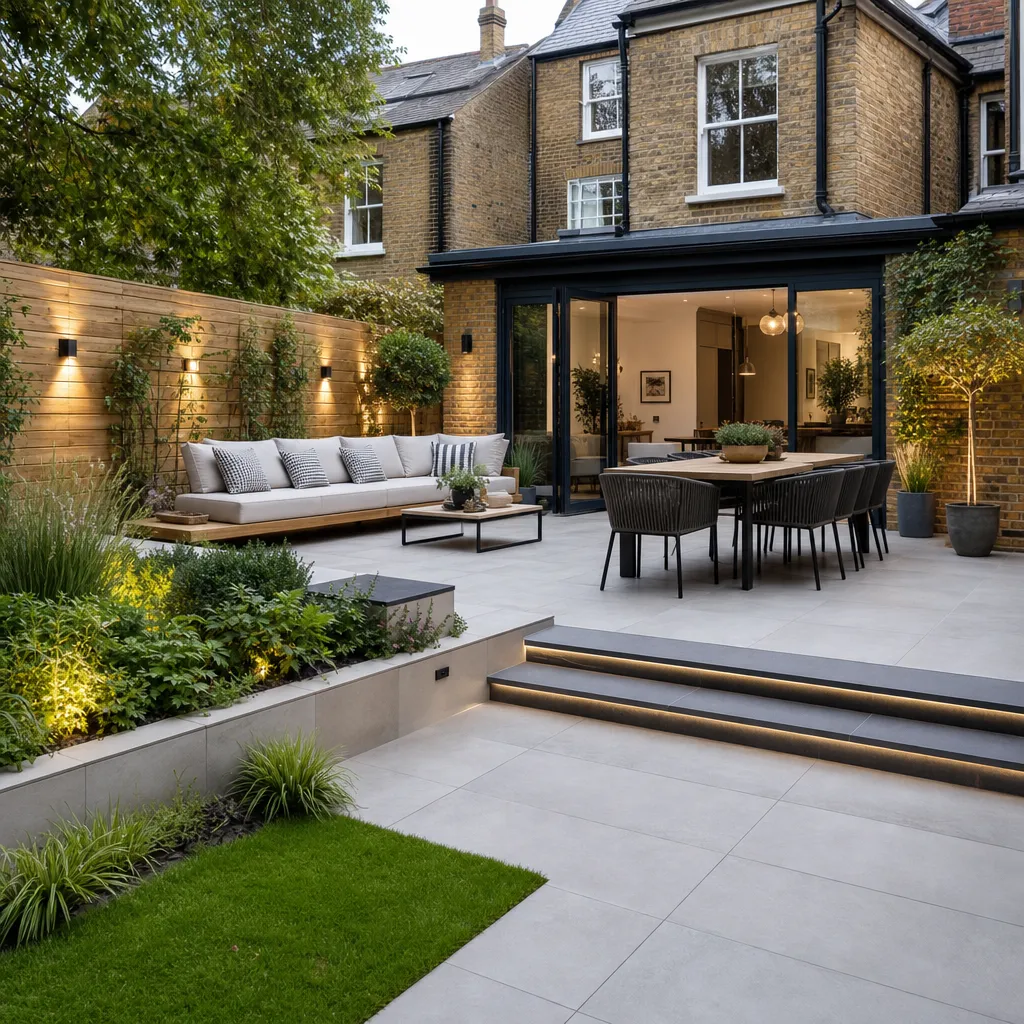
Creating Functional and Attractive Outdoor Entertainment Areas
A well-planned outdoor entertainment area combines a level surface — patio, decking, or gravel — shelter or shade, appropriate lighting, and power access if needed.
 Improvement & Build
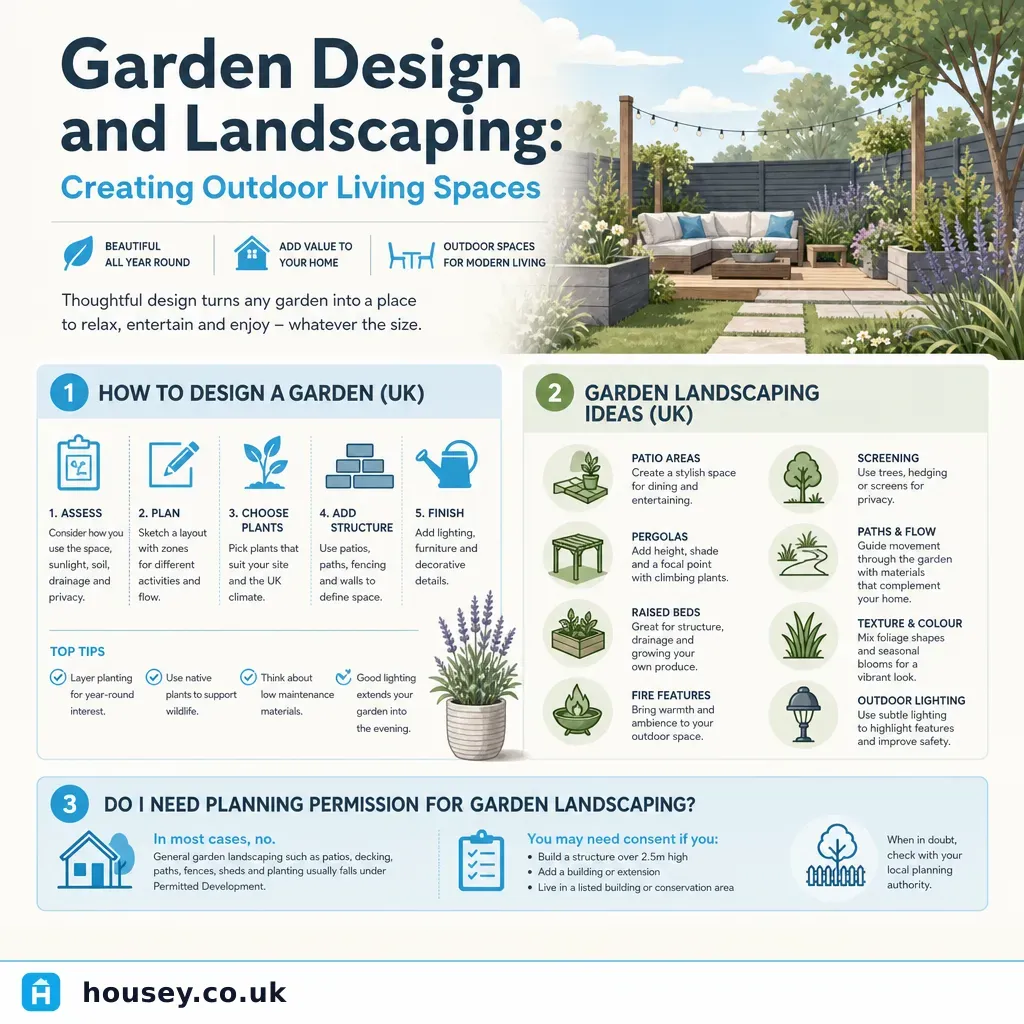
Garden Design and Landscaping: Creating Outdoor Living Spaces
Garden design creates functional outdoor living spaces through a combination of hard landscaping such as paving and decking, soft landscaping including planting and lawns, and structures such as pergolas or raised beds.
 Improvement & Build
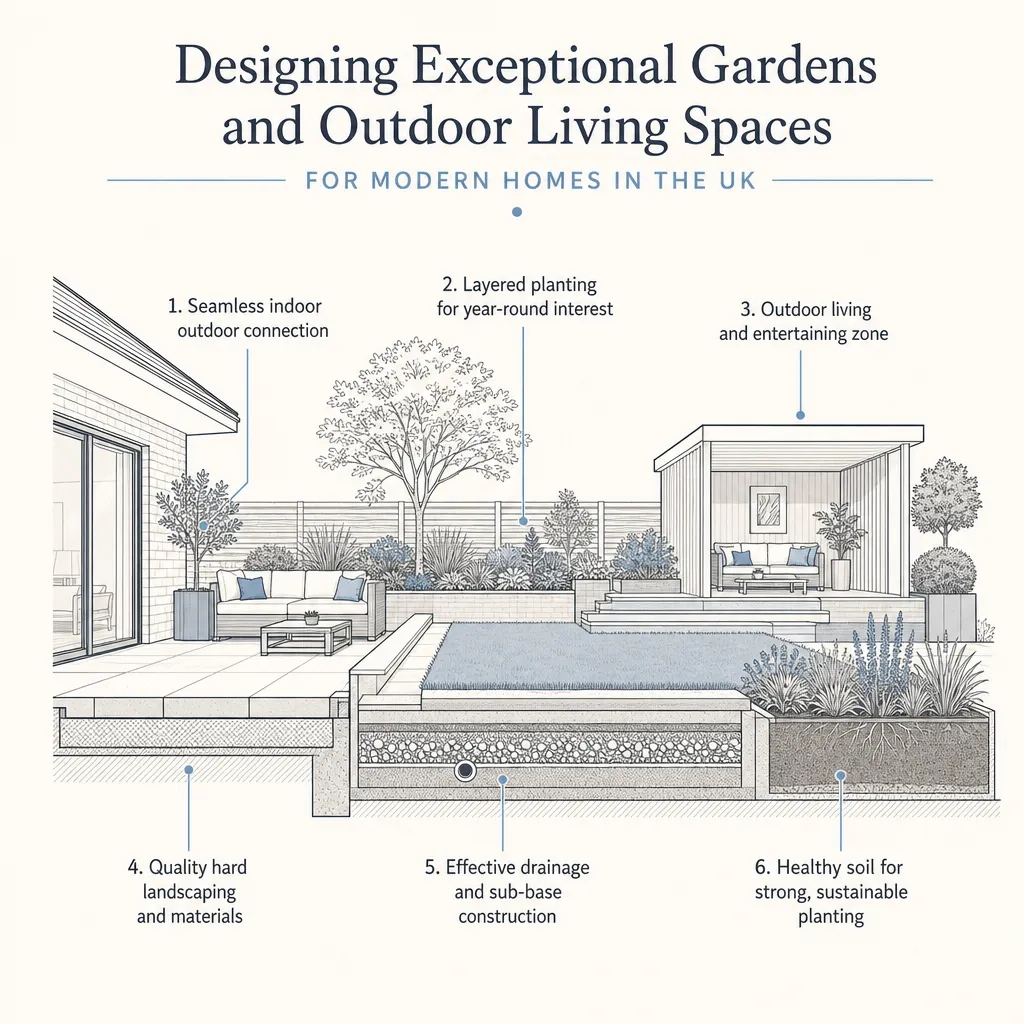
Designing Exceptional Gardens and Outdoor Living Spaces for Modern Homes
A well-designed garden blends practical zones — seating, lawn, planting, and hard landscaping — with your household's needs.
 Improvement & Build
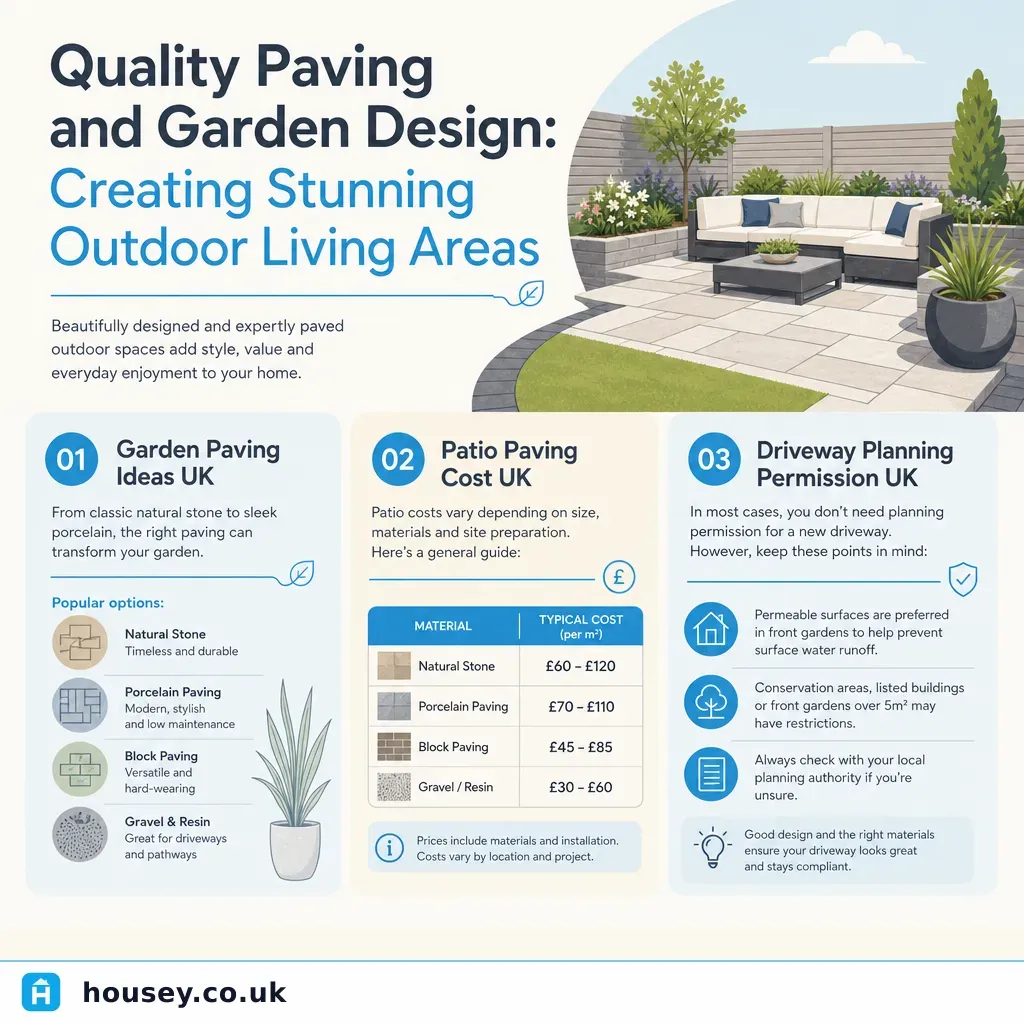
Quality Paving and Garden Design: Creating Stunning Outdoor Living Areas
Paving a front garden driveway over 5 square metres in England requires planning permission unless a permeable material is used and drainage is managed on site.
 Improvement & Build
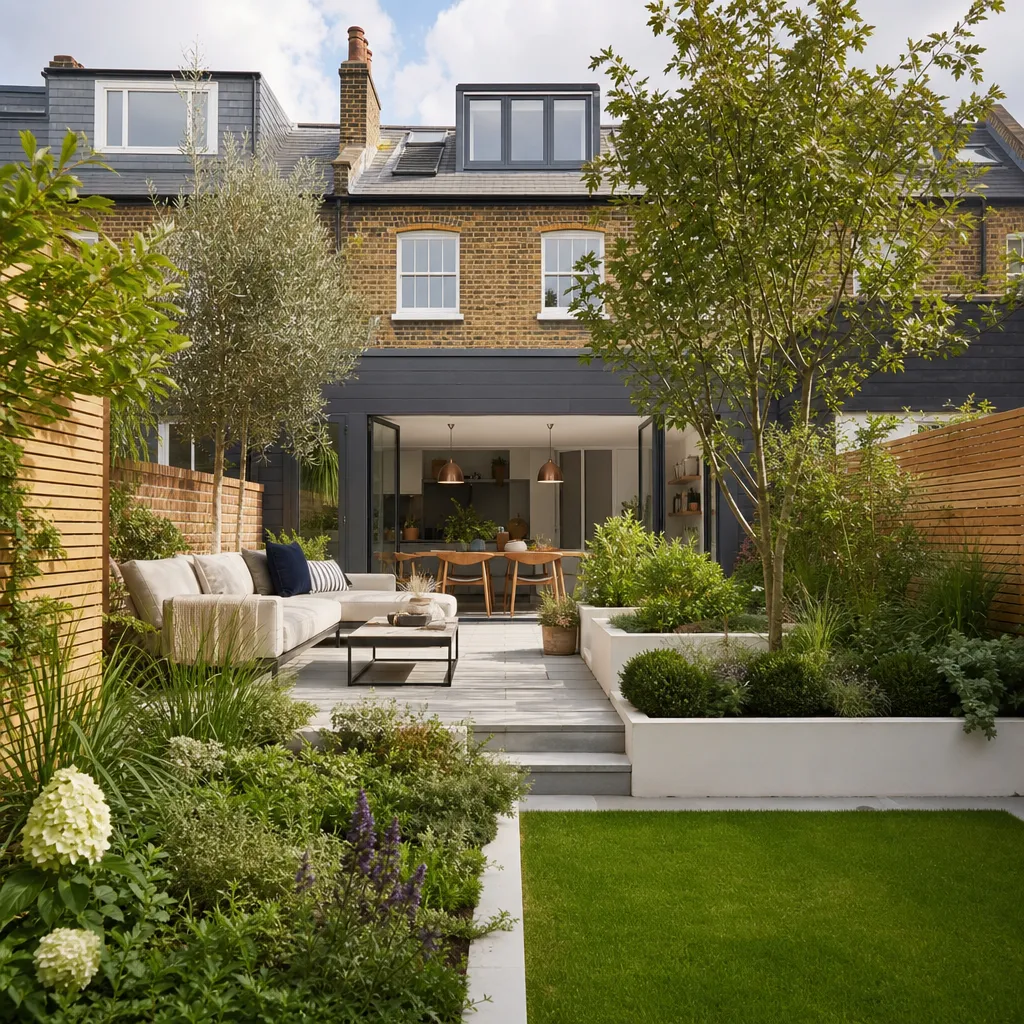
Seasonal Garden Transformations and Outdoor Design Ideas
A successful garden transformation in the UK works with the seasons rather than against them — establishing structure and hard landscaping in autumn or winter, planting in spring, and enjoying the results through summer.