Designing and Installing a Television-Inspired Kitchen
By Housey · Last reviewed 5th of May 2026
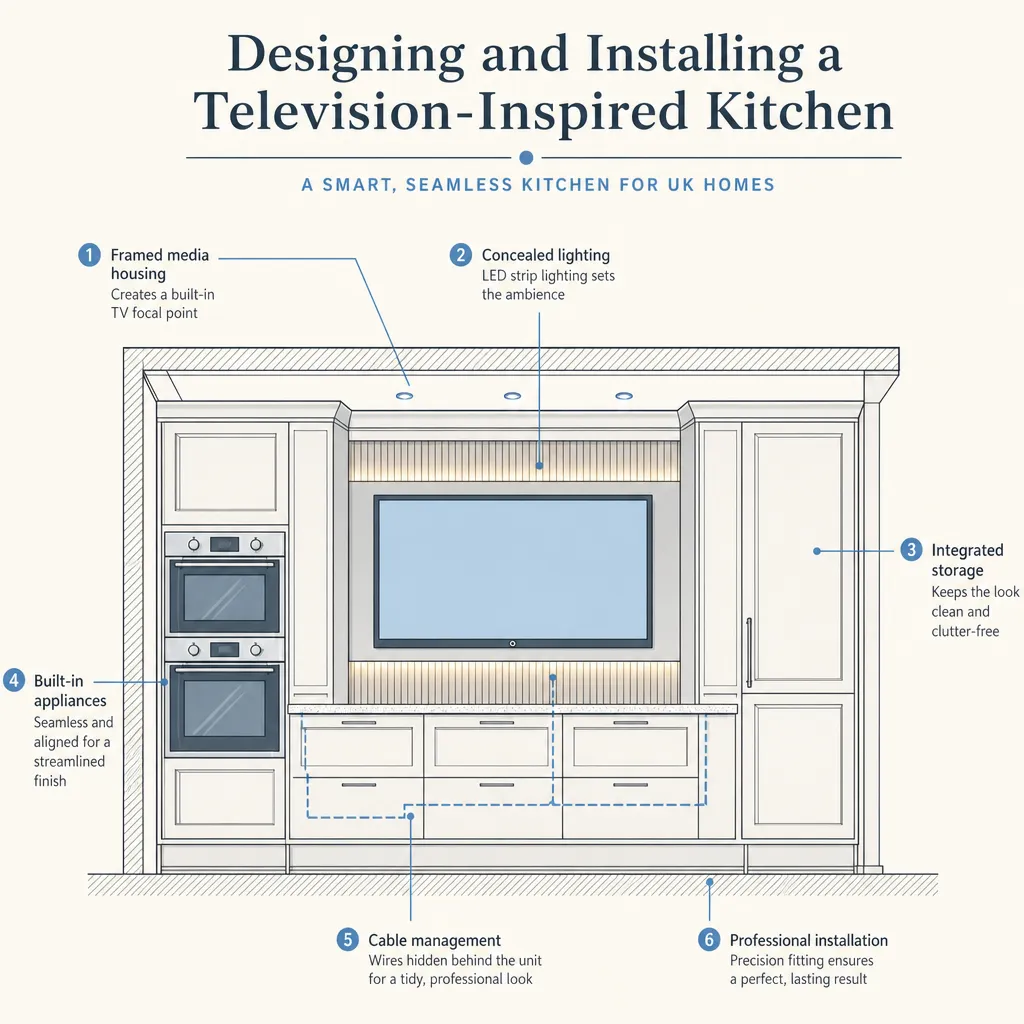
Designing and Installing a Television-Inspired Kitchen
Television cooking shows and renovation programmes on British broadcasters have redefined the visual benchmark for domestic kitchens over the past two decades. Whether you are drawn to the clean-lined professional aesthetic of a competitive cooking series or the bold, expressive style of an interior design programme, translating that look into a working UK home involves more than choosing the right cabinet colour. This article is for homeowners who want to understand how a television-quality kitchen is designed, specified, and installed — and which professionals to involve at each stage.
Key points
- A television-inspired kitchen typically combines a clear functional layout, professional-grade appliances, statement cabinetry, quality worktops, and effective extraction — elements rarely delivered by a budget flat-pack fit.
- Gas connections for cookers and hobs must be made by a Gas Safe registered engineer; this is a legal requirement under the Gas Safety (Installation and Use) Regulations 1998, not an optional extra.
- New dedicated electrical circuits for an oven, hob, or extractor in a kitchen must comply with Part P of the Building Regulations and be installed by a qualified electrician.
- Internal kitchen redesigns — including full layout changes — do not normally require planning permission, but structural alterations, new external openings, or works in a listed building may involve planning or building control.
- Indicative UK costs for a semi-bespoke mid-range kitchen installation range from £10,000–£25,000 fitted; fully bespoke studio kitchens commonly exceed £50,000. (Indicative UK costs, last reviewed 2026-05-05; obtain quotes for your specific project.)
What makes a television-inspired kitchen?
Kitchen design on television — from MasterChef and The Great British Bake Off to home renovation series on Channel 4 and BBC Two — shares consistent visual and functional characteristics. Understanding these elements helps you specify what you actually want before approaching a designer or fitter.
- Open, uncluttered layouts: TV kitchens have generous worktop runs with clear zones for prep, cooking, and serving, and typically minimal upper cabinetry beyond a certain height.
- Statement cabinetry: Bold or on-trend colours, handleless fronts, or mixed-material combinations — painted shaker with open oak shelving, for example — are consistently used because they read well on screen and hold up just as well in person.
- Professional-grade appliances: Range cookers, double ovens, wide induction hobs, integrated dishwashers, and wine coolers are common. American-style fridge-freezers appear frequently but suit kitchens with adequate floor space.
- Quality worktops: Quartz, granite, sintered stone, or solid timber are standard. These materials handle constant use, look striking, and justify their higher cost in a quality installation.
- Visible extraction: A striking extractor hood — ceiling-mounted, island-mounted, or as a dramatic flue above a range — is almost always a design centrepiece. Correctly sized extraction is also a practical necessity.
- Considered lighting: Layered lighting — undercabinet LEDs, pendants over an island, recessed ceiling fittings — is a consistent finishing element that lifts the overall quality of the space.
Choosing your kitchen style
Before instructing a designer or fitter, it is worth identifying which television aesthetic you are drawn to. These are the most common categories:
Style | Typical features | Best suited to |
|---|---|---|
Professional / chef's kitchen | Stainless steel or concrete surfaces, commercial-style range, open shelving, minimal colour | Larger open-plan kitchens with utility or pantry space nearby |
Modern handleless | Gloss or matt fronts, fully integrated appliances, island unit, quartz worktops | Contemporary homes, new builds, and open-plan extensions |
Shaker or country show kitchen | Painted in-frame cabinets, butler sink, larder units, stone or wood worktops | Victorian terraces, Edwardian semis, and farmhouse-style properties |
Maximalist or colour-led | Bold cabinet colours, patterned splashback tiles, statement pendant lighting | Homeowners who want the kitchen to function as an expressive design statement |
Open-shelf or minimal | Floating shelves replacing upper units, simple base run, undercabinet lighting | Smaller kitchens where visual lightness is a priority |
Planning the layout
Good kitchen design resolves the layout before a single unit is ordered. The work triangle — keeping the hob, sink, and fridge within an efficient triangle — remains the standard planning principle. For larger kitchens with islands, this extends to distinct work zones.
Practical layout considerations for a UK home:
- Room dimensions: A kitchen island typically requires at least 1 metre of clear circulation on every accessible side. In rooms narrower than 3.5 metres, a peninsula often achieves the same effect with less floor-space demand.
- Fixed openings: Windows and external doors constrain where the sink and natural light zone can sit. Changing these may involve structural advice and potentially planning permission.
- Ceiling height: Tall units read well visually in rooms with ceilings of 2.4 metres or above. Below that threshold, they can feel oppressive in everyday use.
- Extraction route: An extractor must vent externally through an exterior wall or roof, or recirculate via carbon filters. External venting is more effective; creating a new penetration in the building envelope may require building control notification.
Which professional do you need?
Requirement | Professional to instruct |
|---|---|
Full kitchen design, specification, and supply | Kitchen designer (studio-based or retailer) or design-and-install company |
Installation of cabinets, worktops, and appliances | Kitchen fitter (not a regulated trade; seek KBSA-affiliated fitters or those with strong references) |
Gas cooker or hob connection | Gas Safe registered engineer — legally required |
New electrical circuits (oven, hob, extractor) | Part P-qualified electrician |
Structural wall removal for open-plan remodel | Structural engineer to provide calculations; builder to carry out works; building regulations approval required |
Plumbing (sink, dishwasher, boiling water tap) | Plumber |
Budgeting and getting quotes
Getting at least three quotes for any kitchen project is strongly advisable. Television-quality kitchens often run over budget when scope expands mid-project, appliance lead times create scheduling gaps, or the strip-out reveals unexpected issues — such as asbestos-containing materials in pre-1985 artex or floor tiles, or undersized electrical circuits that need upgrading before new appliances can be fitted.
What to ask before accepting a quote
- What is included: design, supply, installation, worktop templating and fabrication, and appliance fitting?
- Who carries out the installation — in-house fitters or subcontractors? What references or past projects can you provide?
- Is worktop fabrication and templating included, or quoted separately?
- What happens to the timeline if one component is delayed?
- Is VAT included in the quoted price?
- What are the payment terms — deposit percentage, stage payments, and final payment?
- What guarantee is offered on installation workmanship?
- Will I need to separately instruct a Gas Safe engineer or electrician, or is that included?
When to get professional help
A kitchen refurbishment is low regulatory risk when it is a like-for-like replacement in the same configuration. However, qualified professionals are essential when:
- You are removing any wall, including stud walls through which services may run
- You are creating or moving a gas connection or supply pipe
- New dedicated electrical circuits are needed for an oven, hob, or extractor
- You are venting an extractor through an external wall or roof for the first time
- Drainage needs to be repositioned to accommodate a moved sink
- Pre-1985 materials — artex, vinyl floor tiles, or pipe insulation — may contain asbestos; do not disturb them until a qualified asbestos surveyor has assessed the property
How Housey can help
Housey helps UK homeowners find and compare quotes from vetted tradespeople and professionals for home improvement and building projects. If your television-inspired kitchen project extends into structural alterations, open-plan remodelling, or significant building work, Housey can help you connect with the right specialists to plan and price the work properly.
Frequently asked questions
Do I need planning permission to redesign my kitchen?
Internal kitchen redesigns — including major layout changes, new appliances, and bespoke cabinetry — do not normally require planning permission. Planning permission may be needed if you want to create new external openings such as windows or a door, or extend the kitchen outward. Any internal alteration to a listed building requires listed building consent; always check with your local planning authority before proceeding.
How long does a kitchen installation take?
A like-for-like replacement in a similar layout typically takes 3–7 working days for a straightforward fit. More complex projects involving structural work, new plumbing runs, or bespoke cabinetry with long manufacturing lead times can take 10–20 working days spread across multiple trades over several weeks. Your fitter or project manager should provide a programme before work starts.
Can I use a kitchen fitter instead of a designer?
Yes — many homeowners source their kitchen directly from a manufacturer or retailer and instruct a kitchen fitter separately for installation. A fitter can advise on practical fitting issues but will not usually provide the same layout optimisation, material specification, or project coordination service as a dedicated kitchen designer.
What does KBSA membership mean for a kitchen fitter?
The Kitchen, Bedroom, and Bathroom Specialists Association (KBSA) is a UK trade association for specialist retailers and fitting companies. Members adhere to a code of practice and may offer enhanced consumer protection mechanisms. KBSA affiliation is not a mandatory qualification but is a useful indicator of a company's commitment to professional standards when you are comparing fitters.
What deposit is normal for a kitchen project?
Most kitchen companies and fitters charge a deposit of 25–50% of the total project value at order, with a further stage payment before installation begins and a final payment on completion. Be cautious of any company asking for more than 50% upfront before manufacturing of your cabinets is confirmed.
Sources and further reading
- Kitchen, Bedroom, and Bathroom Specialists Association (KBSA) — trade standards and consumer guidance for kitchen specialists
- Gas Safe Register — official register of legally qualified gas engineers; always verify your engineer before instructing
- GOV.UK: Building regulations approval — when building control approval is required for home alterations
- GOV.UK: Planning permission — when planning permission applies to works on a home
- Approved Document P: Electrical safety in dwellings — Building Regulations requirements for electrical work in kitchens
Useful next reads
 Improvement & Build
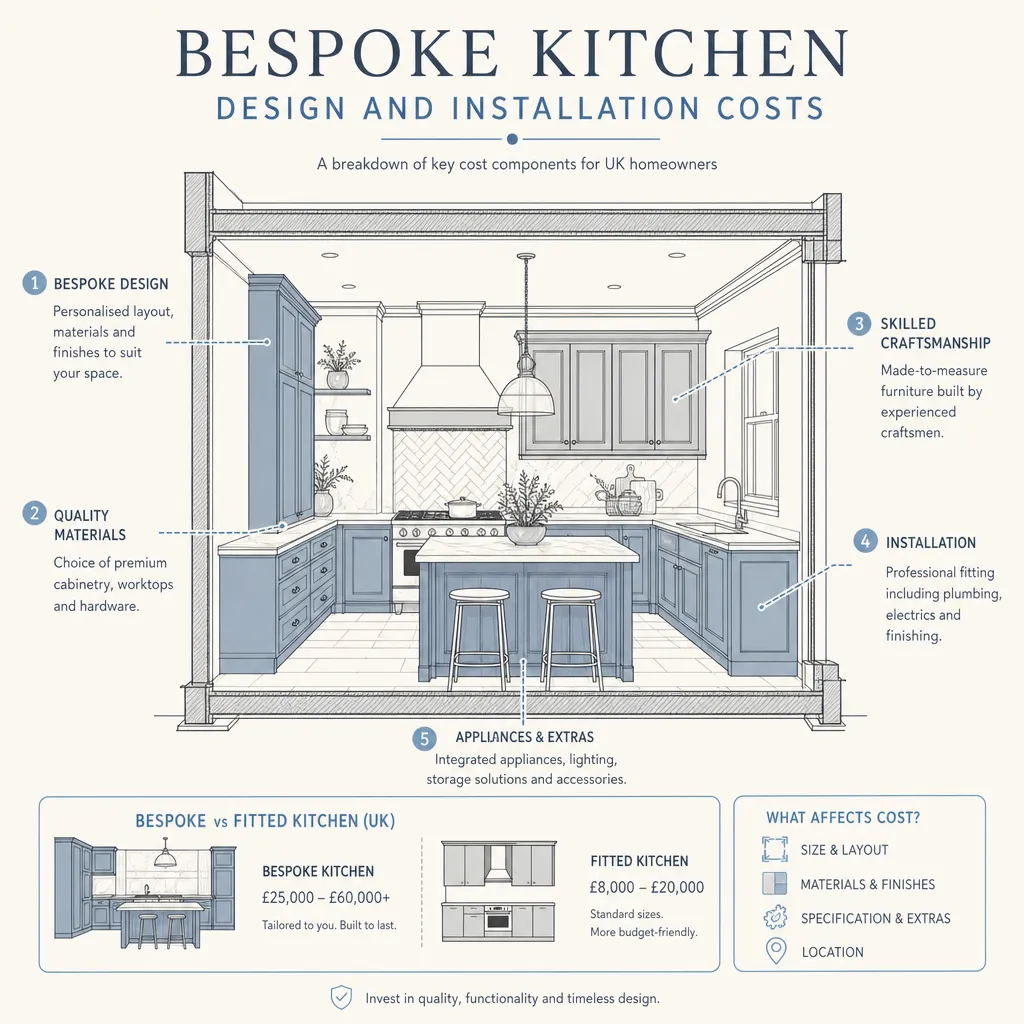
Bespoke Kitchen Design and Installation Costs
Bespoke kitchens in the UK typically cost £15,000–£60,000+ for design, cabinetry, worktops, and installation combined, with high-end commissions reaching £100,000 or more.
 Improvement & Build
Small kitchen renovation: budgeting for costs and planning your project
A small kitchen renovation in the UK typically costs £5,000–£15,000 for a full refresh including new units, worktops, tiling, and appliances, though costs vary widely by specification, region, and whether structural changes or rewiring are involved.
 Improvement & Build
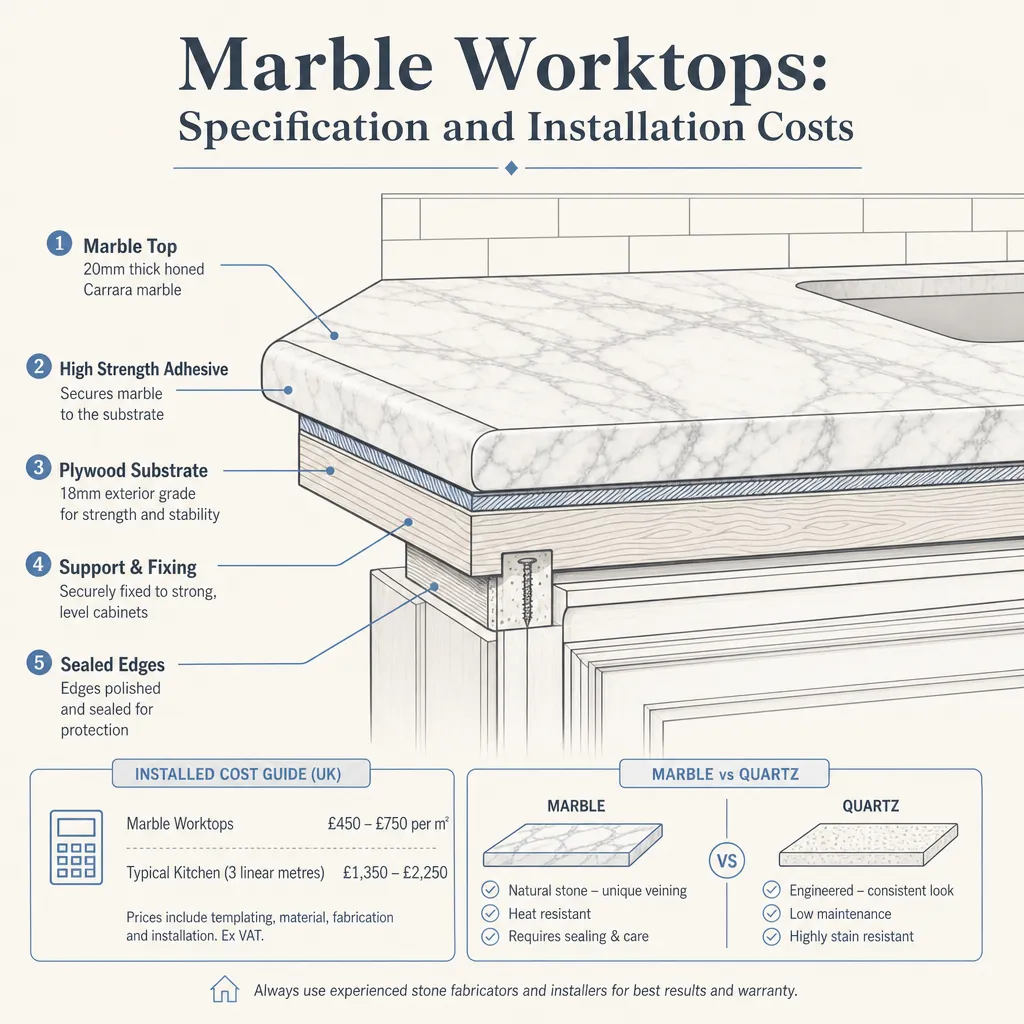
Marble Worktops: Specification and Installation Costs
Marble worktops in the UK typically cost £300–£800 per linear metre installed, depending on marble grade, slab thickness, finish, and edge profile.
 Improvement & Build
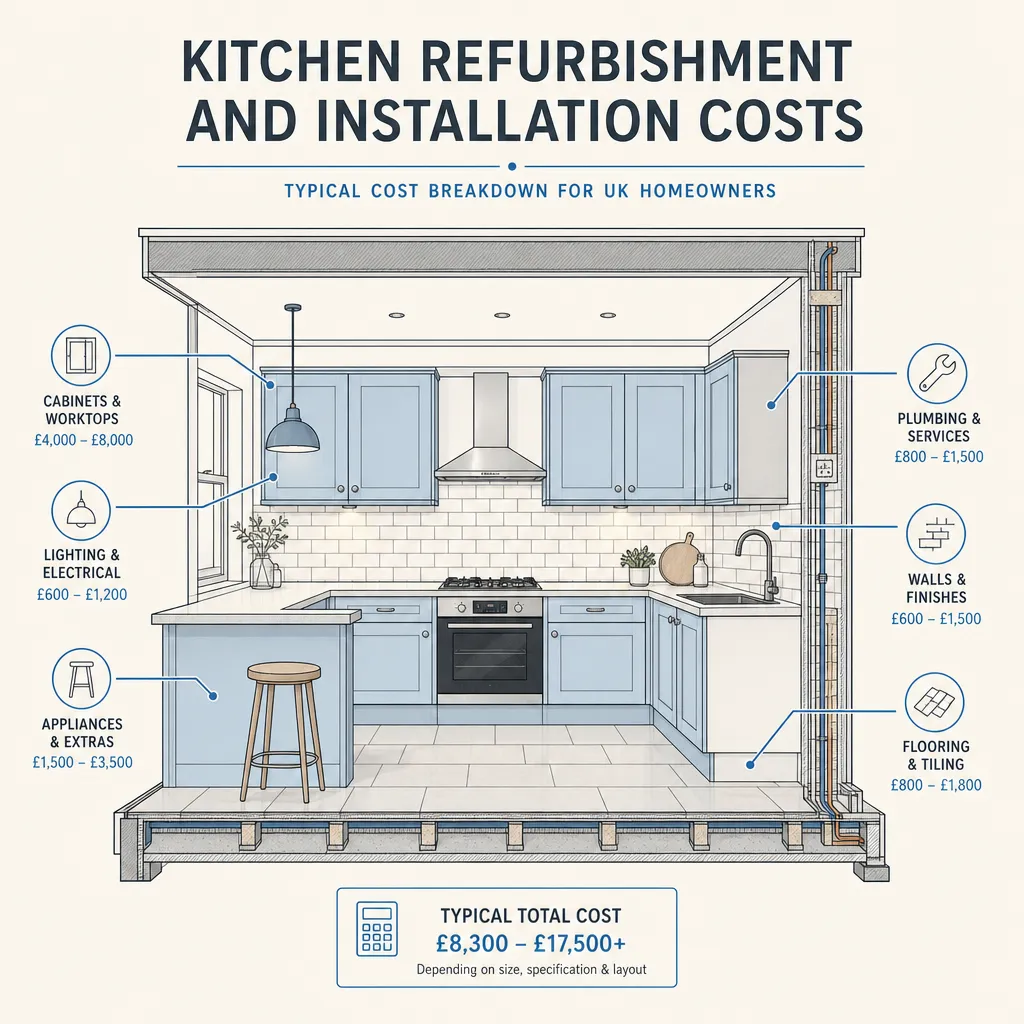
Kitchen Refurbishment and Installation Costs
A kitchen refurbishment in the UK typically costs between £3,000 and £40,000 or more, depending on whether you are replacing units only or carrying out a full design-and-build project.
 Improvement & Build
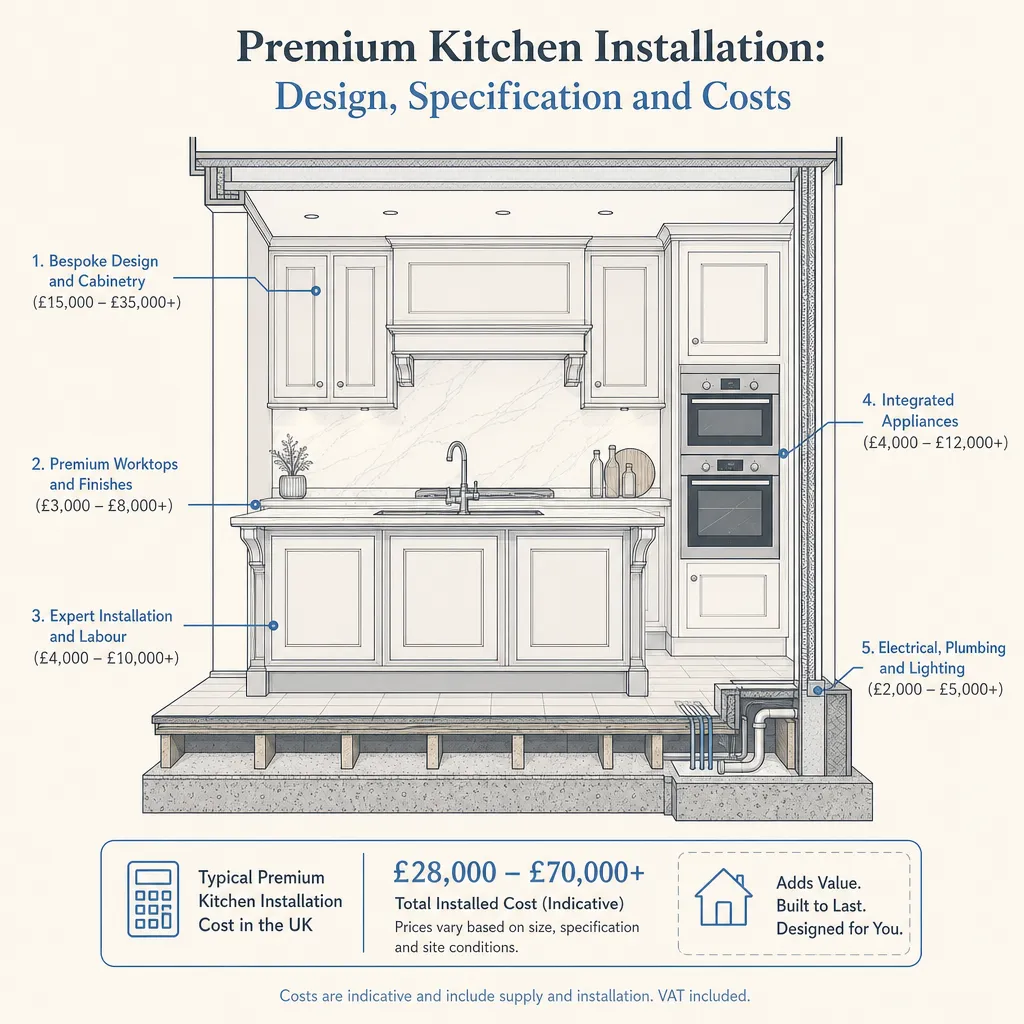
Premium Kitchen Installation: Design, Specification and Costs
A premium kitchen in the UK typically costs £20,000–£80,000 or more installed, depending on cabinetry specification, worktop material, appliance brands, and whether structural changes are needed.