Professional Garden Lighting Design and Installation Services
By Housey · Last reviewed 1st of June 2026
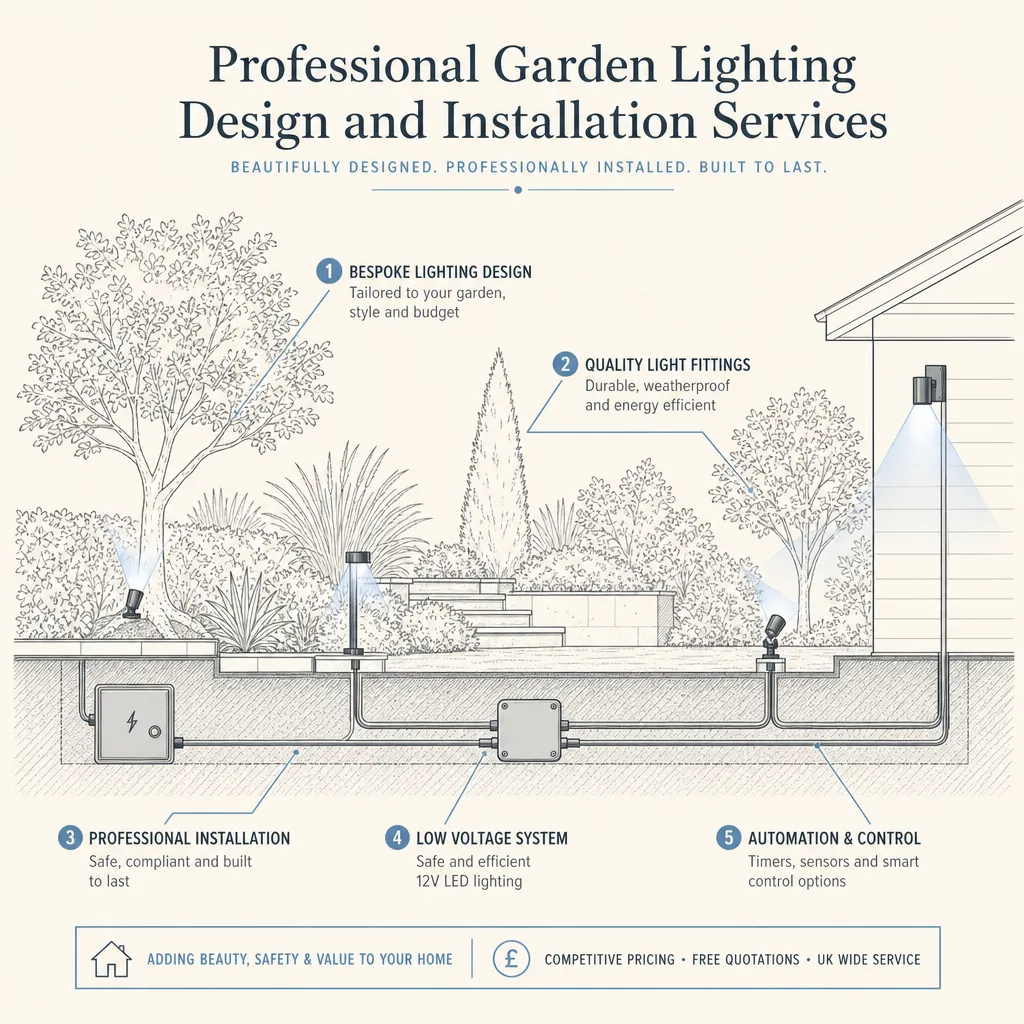
Professional Garden Lighting Design and Installation Services
Garden lighting transforms how a space looks and functions after dark, extending the usable season of an outdoor area through the UK's variable climate. Whether you are planning a full landscaping project or retrofitting lights into an established garden, understanding how professional design and installation works helps you achieve the right result, comply with electrical regulations, and avoid costly rework.
Key points
- Mains-voltage garden lighting (230V) must be installed by an electrician registered under Part P of the Building Regulations in England and Wales; self-certification is required unless local authority building control is separately notified.
- Low-voltage systems (typically 12V LED) supplied via a transformer do not require Part P registration for the low-voltage cabling itself, but the transformer must still be connected to the mains by a qualified electrician.
- Outdoor electrical fittings must carry an IP (Ingress Protection) rating appropriate for their location: IP44 minimum for general outdoor use, IP65 or above for fittings near water features or directly exposed to driven rain.
- A professional garden lighting designer will typically produce a scaled plan showing light positions, zones, cable routes, and control points before any installation begins.
- Solar-powered garden lighting requires no electrical installation but performs poorly in the UK between October and March; it suits low-intensity accent lighting rather than task or security lighting.
Types of garden lighting and what they are used for
Light type | Typical use | Best for | Limitation |
|---|---|---|---|
Path and step lights | Marking routes and level changes | Safety and navigation | Limited spread; low dramatic impact |
Uplights | Feature trees, shrubs, structures | Dramatic focal points | Can cause light pollution if poorly aimed |
Overhead downlights | Pergolas, gazebos, overhangs | Ambience and task lighting | Requires overhead structure or mast |
Spotlights | Sculptures, water features, key planting | Targeted accent lighting | Visible fittings if not recessed |
String and festoon lights | Entertaining areas, pergolas | Social and atmospheric lighting | Requires robust IP rating for year-round UK use |
Wall lights | Boundaries, outbuildings, house walls | Security and structure lighting | May require consent on listed buildings |
Recessed deck and step lights | Raised decks, terraces, steps | Discreet safety lighting | Requires structural access during installation |
What does a garden lighting designer do?
A professional garden lighting designer — often working alongside a garden designer or landscaper — will:
- Survey the space — note key features, existing structures, planting, boundary walls, and available connection points.
- Discuss the brief — understand how you use the garden, what atmosphere you want, whether security or safety lighting is a priority, and any budget constraints.
- Produce a lighting plan — a scaled drawing showing fixture positions, zones, cable runs, and control options (timer, dusk-to-dawn sensor, smart home integration).
- Specify fittings — recommend weatherproof, appropriately IP-rated fittings consistent with the garden's design character.
- Coordinate installation — work with a Part P-registered electrician for mains wiring, or install low-voltage systems directly if qualified to do so.
- Commission the system — set up timers, dimmers, and smart controls; adjust beam angles and focus at dusk.
Standalone lighting designers charge per project or as part of a wider landscaping brief. Many larger landscaping firms include lighting design within their full-service offering.
Planning and installation: the process
A typical garden lighting project follows these stages:
- Initial consultation and survey (1–2 hours on site): the designer or contractor assesses the garden, discusses your wishes, and identifies power supply options.
- Design and specification (2–7 days depending on project scale): scaled plan produced, fittings specified, quote prepared.
- Groundworks if required: cable routes are dug and armoured cable laid by a groundworker or the lighting contractor. Armoured cable for outdoor use must be buried at a minimum depth of 500 mm under lawns and paths, or 600 mm under areas subject to vehicle traffic, in line with BS 7671 wiring regulations.
- Electrical installation: a Part P-registered electrician connects fittings to the supply, installs a dedicated outdoor circuit, and issues a Minor Electrical Installation Works Certificate or Electrical Installation Certificate as appropriate.
- Commissioning and adjustment: fittings positioned and aimed, smart controls configured, timing schedules set.
What to ask before accepting a quote
- What is included and excluded? (Design plan, groundworks, trenching, fittings supply, installation, commissioning, aftercare)
- Is the electrician carrying out mains work Part P registered, and will they provide a certificate?
- What IP rating are the specified fittings, and are they rated for submerged use if near a water feature?
- What happens if cable routes encounter obstructions such as tree roots, existing drainage, or foundations?
- Is VAT included in the quoted price?
- What warranty is provided on fittings and on the installation work?
- Can the scheme be expanded later, and is conduit included for future cable routes?
Costs: what to expect
Indicative UK costs, last reviewed 2026-06-01. Quotes vary by region, project complexity, and fitting specification.
- Basic solar accent lighting scheme (self-installed): £100–£400 for fittings only; no installation cost, but limited winter performance.
- Low-voltage professional scheme (12V transformer, 6–12 fittings, professional installation): approximately £800–£2,000 including design, trenching, and fitting.
- Mains-powered scheme with dedicated circuit (8–20 fittings, Part P-registered installation): approximately £1,500–£5,000 depending on the number of circuits, fittings specified, and groundwork extent.
- Full designer-led scheme on a larger garden (multiple zones, smart controls, high-specification fittings): £5,000–£15,000+.
Cost drivers include: length of cable runs, number of circuits and zones, fitting quality, the need for new groundworks, and whether smart home integration is required.
Homeowner checklist: before the installation begins
When to get professional help
All mains-voltage outdoor electrical work must be carried out by a Part P-registered electrician — this is a legal requirement under the Building Regulations, not merely a recommendation. Beyond that, a professional designer adds value when:
- The garden is large, has multiple zones, or includes a water feature.
- You want a coherent visual result rather than ad hoc fittings added over time.
- Smart home or timer integration is part of the brief.
- Significant groundworks are needed and cable routes must avoid buried services.
Do not attempt DIY trenching near known buried cables, pipes, or tree roots without professional assessment.
How Housey can help
Housey connects homeowners with qualified garden designers and landscapers who can design and oversee a garden lighting scheme from concept through to commissioning. If your project requires cable trench excavation, Housey also connects you with vetted groundworkers.
Frequently asked questions
Do I need planning permission for garden lighting in the UK?
In most cases, no. External lighting for domestic use is generally permitted development in England under the Town and Country Planning (General Permitted Development) (England) Order 2015. Planning permission may be required if the property is listed or in a conservation area, or if the lighting is considered to cause light pollution or nuisance to neighbours. Check with your local planning authority if in doubt, particularly for floodlights or high-intensity security lights.
Can I install garden lights myself?
Low-voltage systems operating at 12V via a transformer can often be installed by a competent homeowner — the low-voltage cabling does not fall under Part P. However, the transformer must be connected to the mains by a Part P-registered electrician. Any mains-voltage outdoor socket, circuit, or fitting must be installed by a registered electrician who can self-certify the work under Building Regulations.
How do I choose between solar and mains-powered garden lights?
Solar lights are easy to install and have no running cost, but UK performance is significantly reduced between October and March when daylight hours are too short to fully charge the batteries. They suit low-intensity accent lighting in south-facing positions. Mains or low-voltage transformer-powered lights provide consistent year-round performance and are better suited to safety, security, or feature lighting applications.
What IP rating do I need for outdoor garden lights?
IP44 is the minimum for general outdoor use, providing protection against splashing water from any direction. IP65 is recommended for exposed positions and fittings near water features. IP68 is required for fully submersible fittings in ponds or water features. These ratings are defined under IEC 60529 and should appear on the fitting's specification sheet.
Sources and further reading
Useful next reads
 Improvement & Build
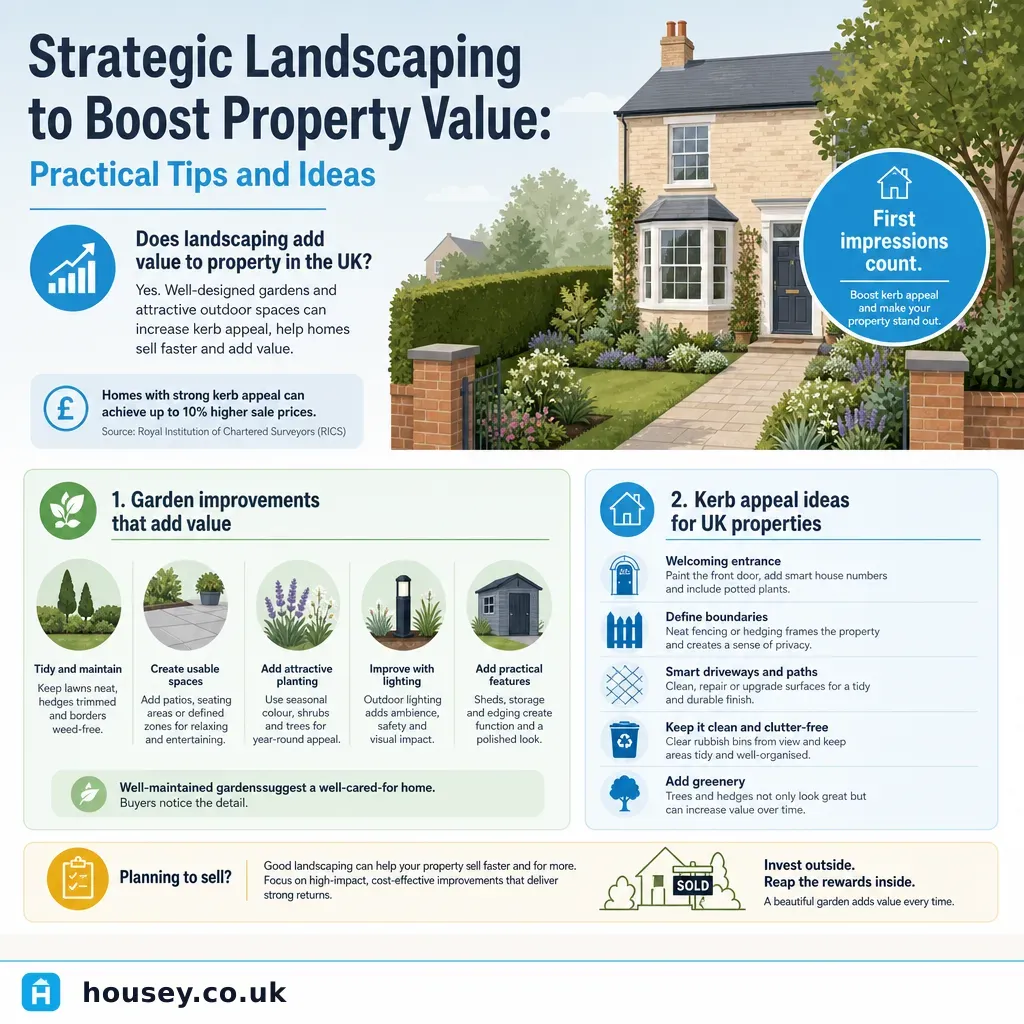
Strategic Landscaping to Boost Property Value: Practical Tips and Ideas
Landscaping can add 5–15% to a UK property's perceived value, though the return varies by improvement type.
 Improvement & Build
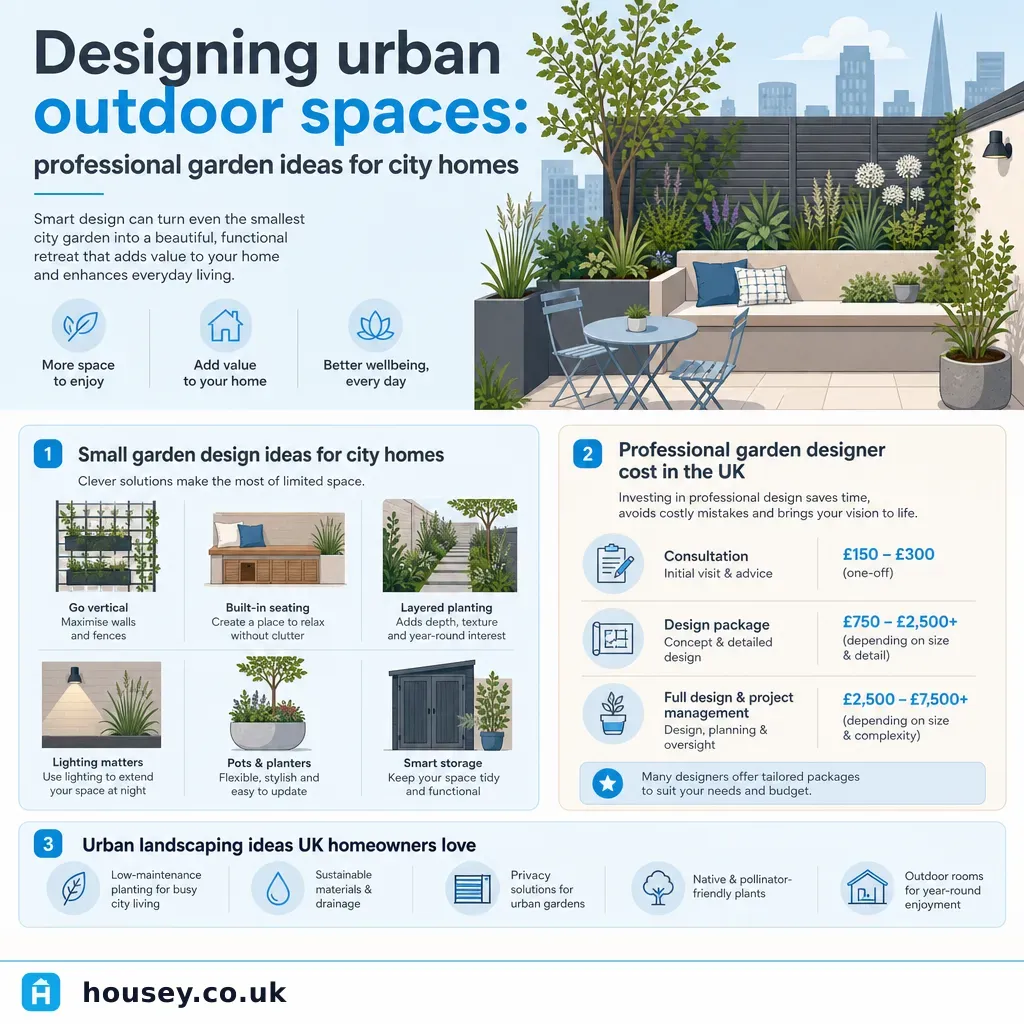
Designing urban outdoor spaces: professional garden ideas for city homes
Most urban garden redesigns don't need planning permission, but paving a front garden with impermeable materials over 5m² does.
 Improvement & Build
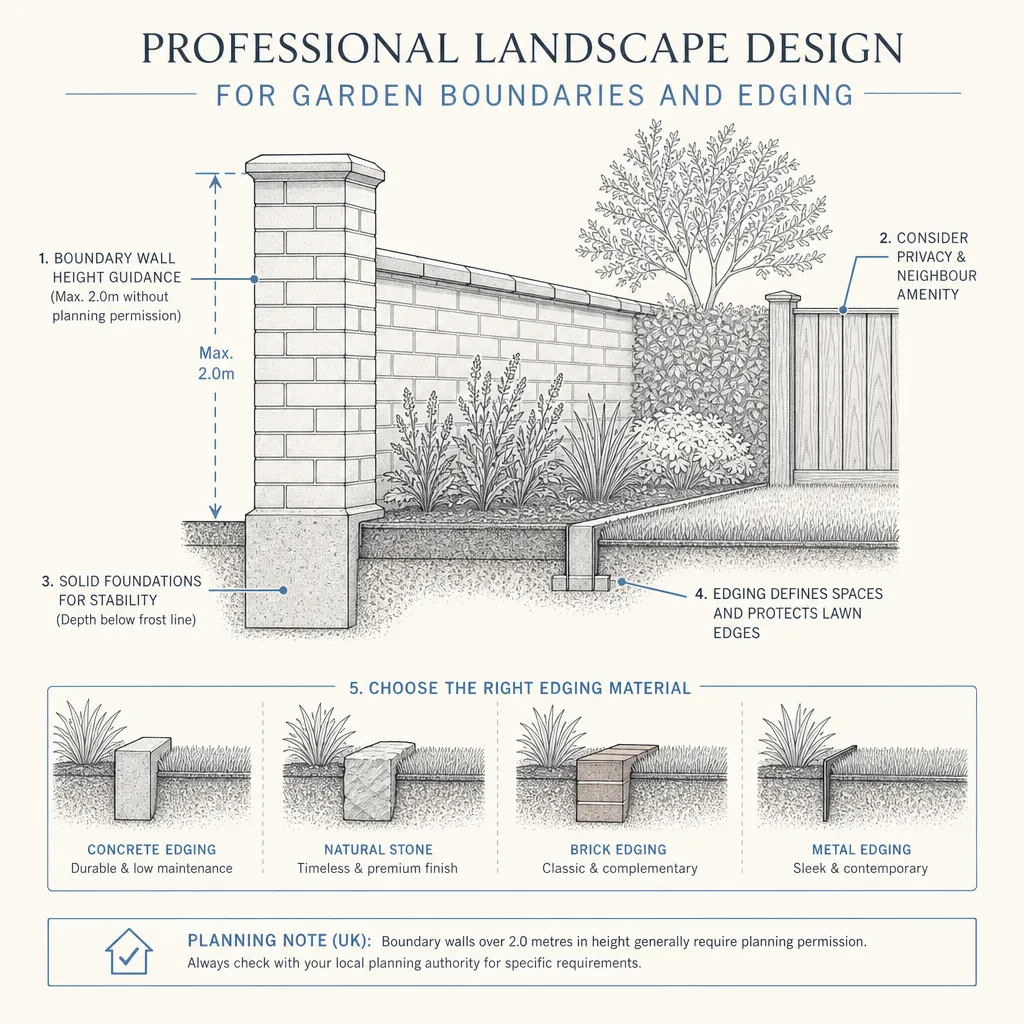
Professional Landscape Design for Garden Boundaries and Edging
Garden boundaries and edging define structure, manage drainage, and mark the legal interface between properties.
 Improvement & Build
Seasonal Garden Transformations and Outdoor Design Ideas
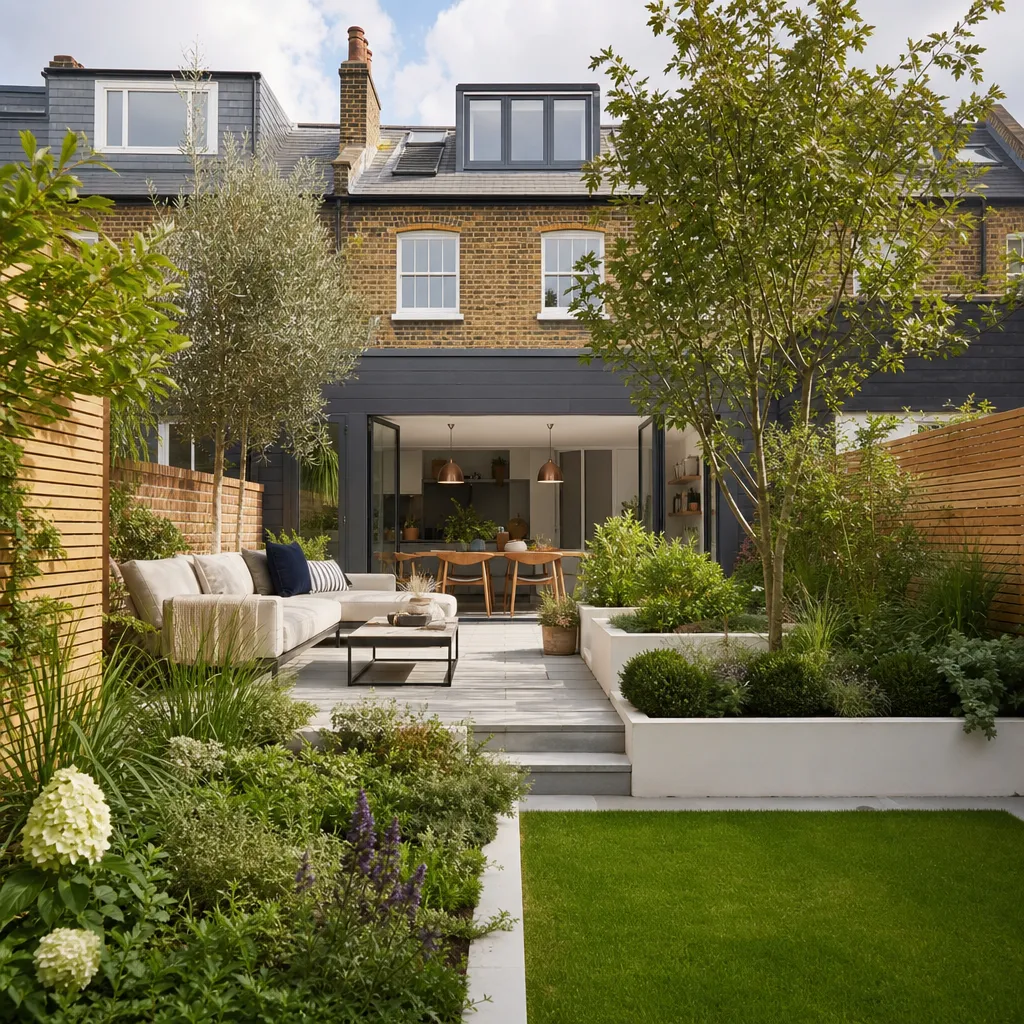
A successful garden transformation in the UK works with the seasons rather than against them — establishing structure and hard landscaping in autumn or winter, planting in spring, and enjoying the results through summer.
 Improvement & Build
Designing an outdoor kitchen for entertaining and garden living
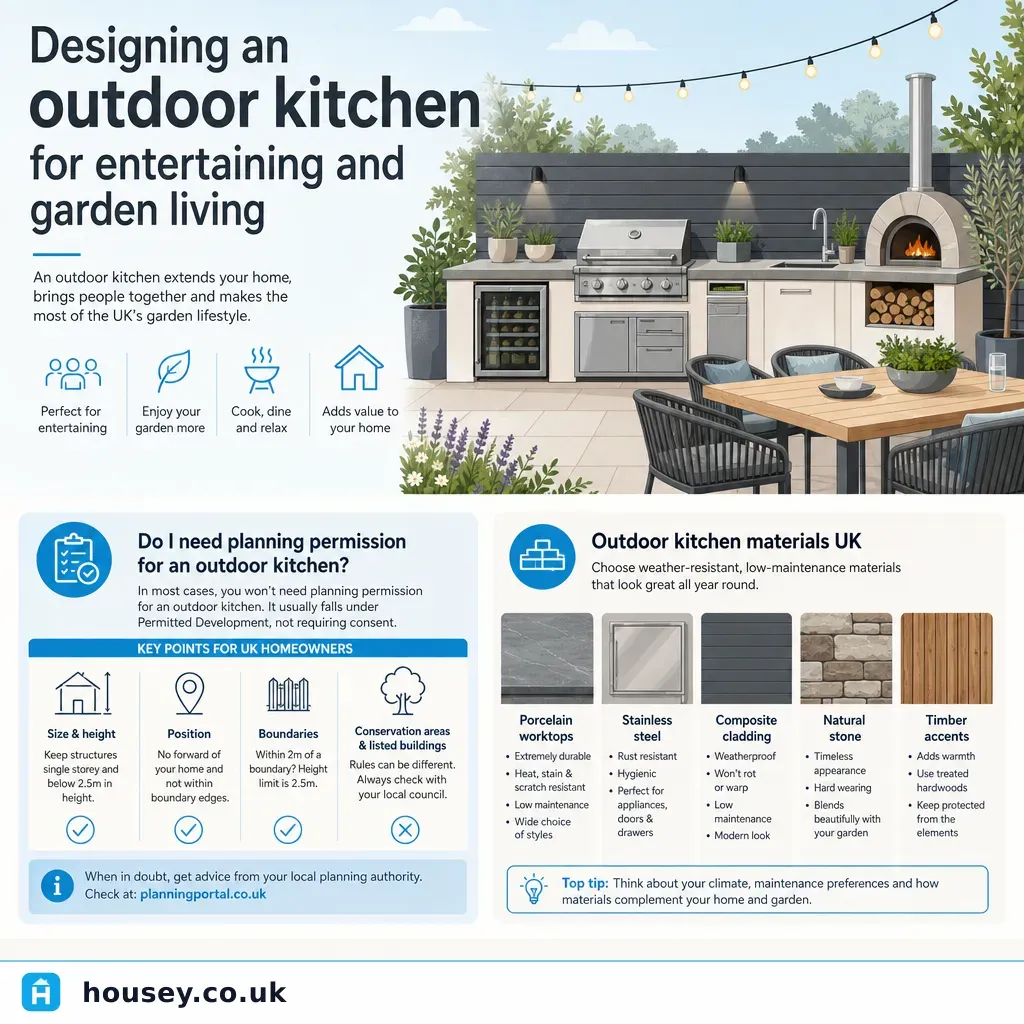
An outdoor kitchen in a UK garden needs a stable, level base — typically a concrete slab or quality paving — with weather-rated materials such as stainless steel grade 316 or frost-rated porcelain.