Determining Your Property's Market Value: Valuation Guide for Sellers
By Housey · Last reviewed 30th of May 2026
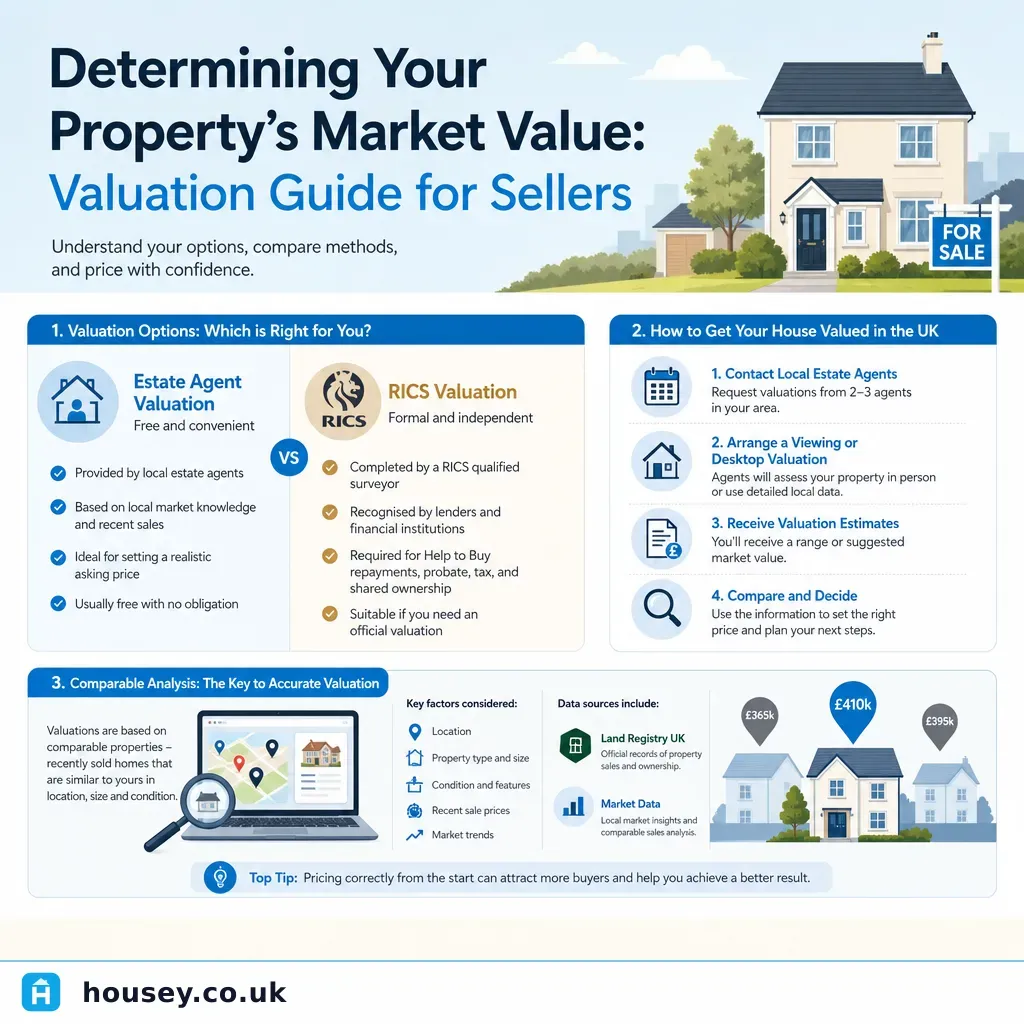
Determining Your Property's Market Value: Valuation Guide for Sellers
Pricing your property accurately before putting it on the market is one of the most consequential decisions in the selling process. Most UK sellers receive free market appraisals from estate agents, but these vary considerably in rigour and objectivity — agents have a commercial incentive to win your instruction, which can inflate their suggested asking price. Understanding what a market appraisal is, how it compares to a formal valuation, and how to verify figures yourself puts you in a much stronger position before you agree a price and sign an agency agreement.
Key points
- Estate agent market appraisals are free marketing opinions, not regulated professional services; agents carry no liability for an inaccurate suggested price.
- A RICS-regulated valuation under RICS Valuation — Global Standards (the "Red Book") is a formally indemnified professional assessment required for probate, divorce, Help to Buy redemption, and many legal or financial proceedings.
- HM Land Registry sold prices are the most reliable comparable data available to sellers in England and Wales and are freely accessible at any time.
- Overpricing by more than 5–10% above local comparables typically results in a longer time on market, accumulating "days on market" visible to later buyers and often triggering further price reductions.
- A lender's mortgage valuation is commissioned and owned by the lender — it is not shared with the seller and cannot substitute for an independent valuation.
What "market value" means in the UK
Market value is the price at which a property would change hands between a willing buyer and a willing seller, neither acting under compulsion, with full knowledge of the market. This definition underpins formal RICS valuations and is used by HMRC for Capital Gains Tax and inheritance tax assessments, and by courts in legal proceedings.
For open-market sales, sellers typically work with estate agent market appraisals — informal estimates of likely sale price. The term "valuation" is used loosely in everyday conversation; when precision matters legally or financially, always clarify whether a RICS Red Book valuation is required. Circumstances where a formal valuation is usually needed include shared ownership or Help to Buy redemption, probate, divorce, and portfolio refinancing.
Comparing the main valuation methods
Method | What it provides | Reliability | Cost | When to use |
|---|---|---|---|---|
Estate agent market appraisal | Suggested asking price range | Variable; agent-dependent | Free | Initial pricing for open-market sale |
Online automated valuation (AVM) | Algorithmic estimate from transaction data | Low–moderate; ±15–25% not uncommon | Free | Broad orientation only |
HM Land Registry comparables | Actual sold prices for nearby similar properties | High for individual transactions | Free | Verifying agent appraisals |
RICS Red Book valuation | Formally indemnified market value opinion | Highest | £200–£600+ typically | Probate, divorce, shared ownership, dispute |
RICS Level 2 or Level 3 survey with valuation | Structural condition and market value | High | £400–£1,000+ | Pre-sale or buyer's due diligence |
Indicative UK costs, last reviewed 2026-05-30. Fees vary by region, property size, and complexity.
Using Land Registry sold prices as comparables
The most grounded approach to establishing your price anchor is to analyse recently sold prices — not asking prices — for comparable properties nearby.
How to run a comparable analysis
- Visit HM Land Registry's price paid tool and search for sales within 0.5 miles of your property over the past 6–12 months.
- Filter by property type: terraced, semi-detached, detached, or flat.
- Adjust for material differences — bedrooms, condition, garden, parking, and any extensions.
- Identify the sold price range and consider where your property sits within it.
- Cross-reference with current active listings on Rightmove to understand the asking-price environment.
Worked example: 1930s semi in a South East commuter town
A seller has a three-bedroom, 1930s semi-detached house in a commuter-belt town in the South East. Land Registry data shows comparable three-bedroom semis in the same postcode sold for £380,000–£415,000 over the previous nine months. One agent suggests asking £440,000; a second suggests £405,000. The seller uses the Land Registry data to challenge the higher figure — the agent acknowledges it reflects an optimistic opening position rather than a realistic sale price. The seller lists at £415,000 and achieves a sale at £410,000 within six weeks.
What to ask estate agents — and what to watch for
Requesting two or three agent appraisals is standard UK practice. Use each visit to test local market knowledge as much as to gather a price suggestion.
What to ask each agent
- What specific recently sold properties are you using as comparables, and can I verify them on Land Registry?
- What is your suggested asking price, and at what price do you realistically expect the property to sell?
- What percentage of asking price are your current vendors achieving, and how long are listings taking to sell?
- What portals will you use, and will you include a floorplan and professional photography?
- What is your fee structure, the length of the agency agreement, and is there a break clause?
Red flags in estate agent appraisals
- Suggested asking price significantly above any comparable sold price you can find on Land Registry
- Agent unable to name specific comparable properties when asked to justify their figure
- Pressure to sign the agency agreement at the same meeting as the appraisal visit
- Long tie-in periods (more than 12 weeks) with no break clause
- Insistence on sole agency before you have compared multiple agents
Important limitations
This guide provides general educational information for UK homeowners and sellers. Property market values vary significantly by location, condition, economic conditions, and local market dynamics at the time of sale. No cost range or price guidance in this article should be treated as a valuation of your specific property. Estate agent market appraisals are not regulated professional services. For probate, divorce, shared ownership redemption, Capital Gains Tax assessments, or any legal or financial purpose where a professionally indemnified figure is required, a formal RICS Red Book valuation from a qualified chartered surveyor is necessary. Rules and requirements vary; verify with the relevant professional or authority for your specific circumstances.
When this becomes urgent
- Your buyer's lender has down-valued the property significantly below the agreed sale price, potentially jeopardising the transaction.
- You are dealing with probate, a divorce settlement, Help to Buy redemption, or another process requiring a formally indemnified market value figure.
- The property is unusual, non-standard in construction, or significantly defective — automated valuations and agent appraisals handle these particularly poorly.
- You suspect an agent's appraisal is materially incorrect and wish to challenge it with a professionally supported opinion.
What to ask a qualified professional
Before commissioning a formal valuation survey, ask the surveyor:
- Are you RICS-regulated and does this valuation comply with RICS Valuation — Global Standards (Red Book)?
- For what purpose is the valuation being prepared, and will it be accepted by the relevant third party (lender, solicitor, probate registry, or court)?
- What comparable evidence will you use, and from what source?
- What qualifications do you hold, and how regularly do you value similar properties in this area?
- What professional indemnity cover does your firm carry, and what is the turnaround time?
When to get professional help
For a straightforward open-market sale, estate agent appraisals combined with your own Land Registry research are usually sufficient. Seek a formal RICS-regulated valuation survey if the sale involves a legal process (probate, divorce, court order, or lease extension), you are redeeming Help to Buy or shared ownership equity, a lender has down-valued the property, or the property is complex with few direct comparables.
How Housey can help
Housey connects you with qualified local chartered surveyors. Whether you need a formal Red Book report or want to understand your options before listing, you can request quotes for a formal valuation survey through the platform and compare fees, turnaround times, and accreditations from surveyors in your area.
Frequently asked questions
Is a free estate agent valuation the same as a RICS valuation?
No. An estate agent market appraisal is an informal opinion of likely sale price used to win your instruction. It carries no professional liability. A RICS valuation is prepared by a chartered surveyor under RICS Valuation — Global Standards, is professionally indemnified, and produces a formal written report suitable for legal, financial, and regulatory purposes.
How many estate agents should I invite to value my property?
Two or three appraisals is standard UK practice. This gives enough data points to identify outliers and ask informed questions about methodology. More than three rarely provides additional useful information and can signal indecision to agents, potentially reducing the quality of their engagement.
Can I challenge a mortgage lender's down-valuation?
Yes. If your buyer's lender values the property below the agreed sale price, you or your buyer can ask for a review with additional comparable evidence. Your estate agent can assist with recent sold data, or you can commission an independent RICS valuation. Lenders are not obliged to revise their figure but should consider properly evidenced appeals.
Does Land Registry record all property sales in England and Wales?
HM Land Registry records the vast majority of registered freehold and leasehold sales. Data is typically published within two to three months of completion, so very recent sales may not yet appear. Scotland uses the Registers of Scotland, and Northern Ireland uses Land and Property Services NI — each maintains its own equivalent price paid data.
Sources and further reading
- HM Land Registry price paid data — HM Land Registry
- RICS Valuation — Global Standards (Red Book) — RICS
- GOV.UK guidance: selling your home — GOV.UK
- Citizens Advice: selling your home — Citizens Advice
- Propertymark guide for home sellers — Propertymark
Useful next reads
 Buying & Moving
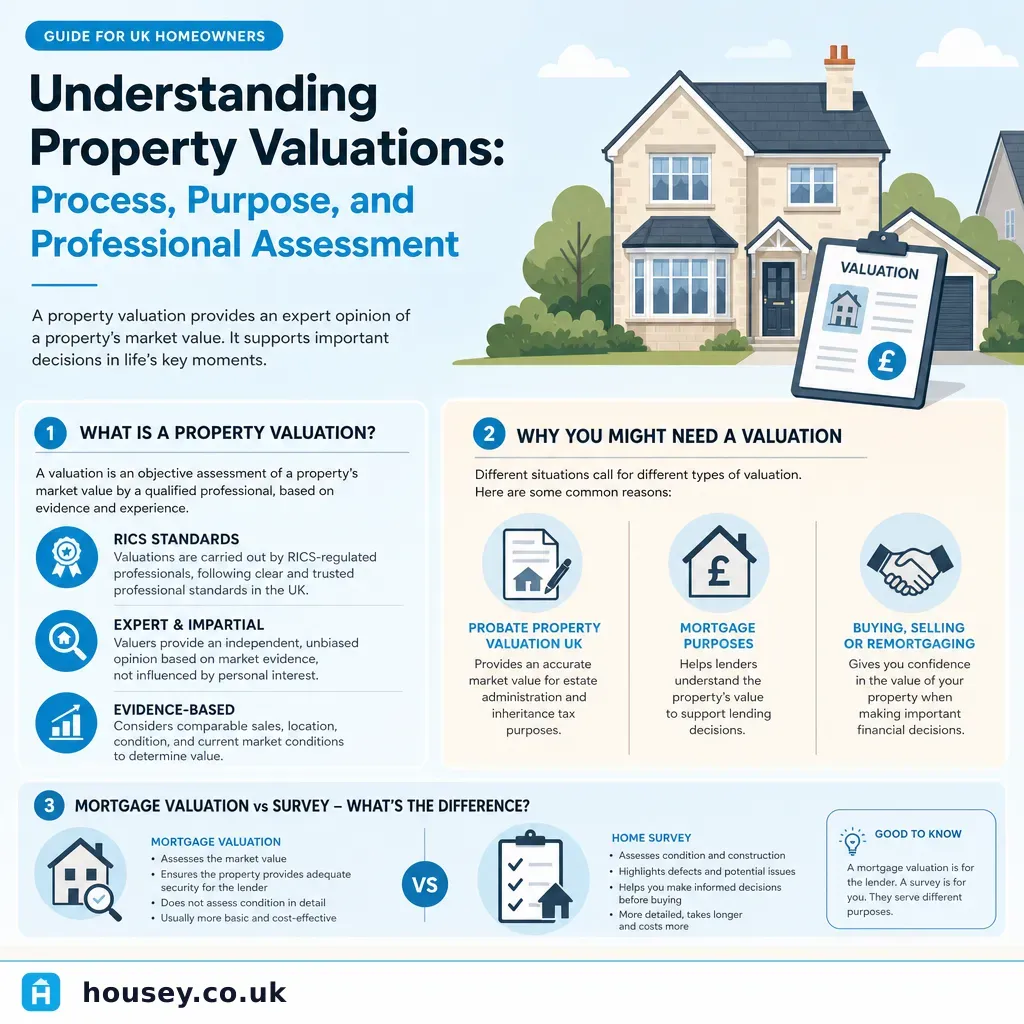
Understanding Property Valuations: Process, Purpose, and Professional Assessment
A property valuation is a professional opinion of a property's market value, carried out by a RICS Registered Valuer after a physical inspection and comparable sales analysis.
 Buying & Moving
Valuing Your Property for Rapid Sale: Strategic Pricing Guidance
Pricing a UK home for a quick sale means setting an asking price supported by recent comparable sales evidence — not significantly above it.
 Buying & Moving
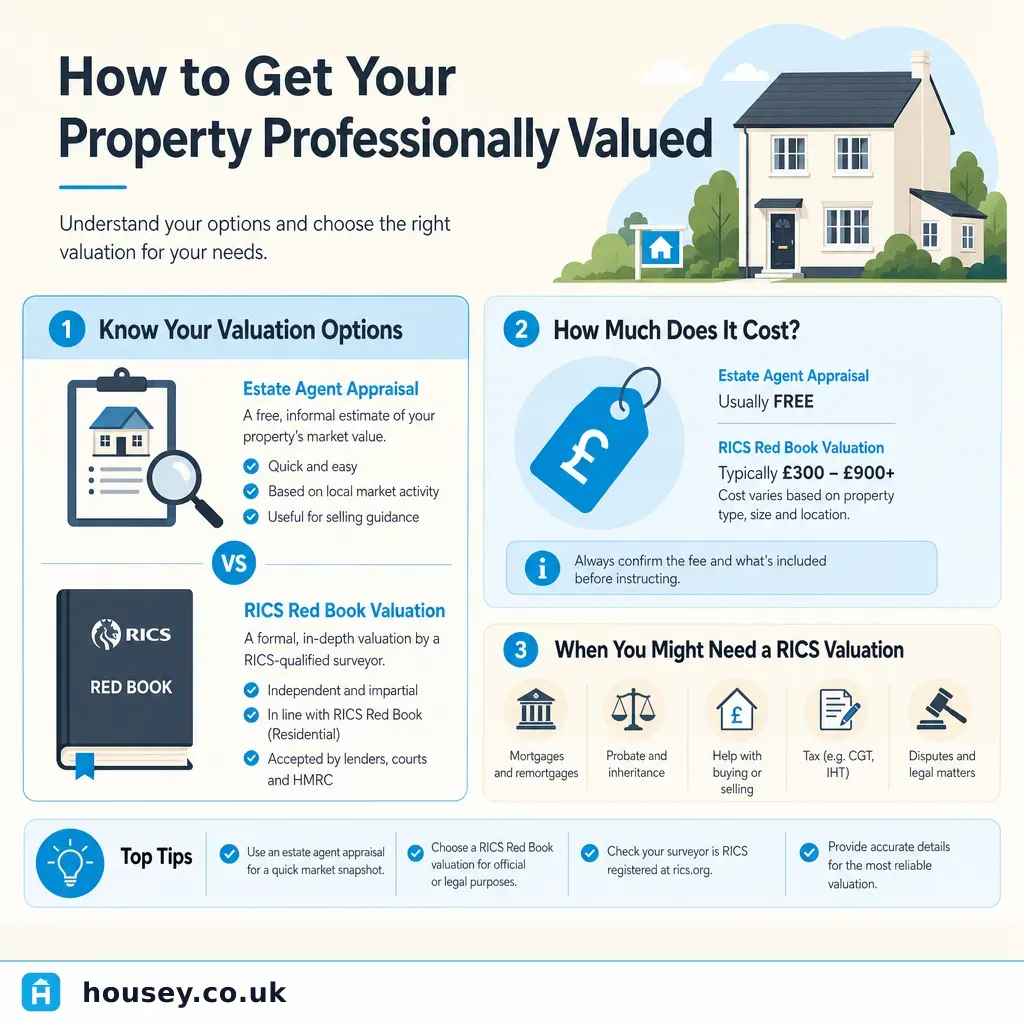
How to Get Your Property Professionally Valued
To get a professional property valuation in the UK, instruct a RICS Registered Valuer for any formal purpose — mortgage, probate, Help to Buy, or legal proceedings.
 Buying & Moving
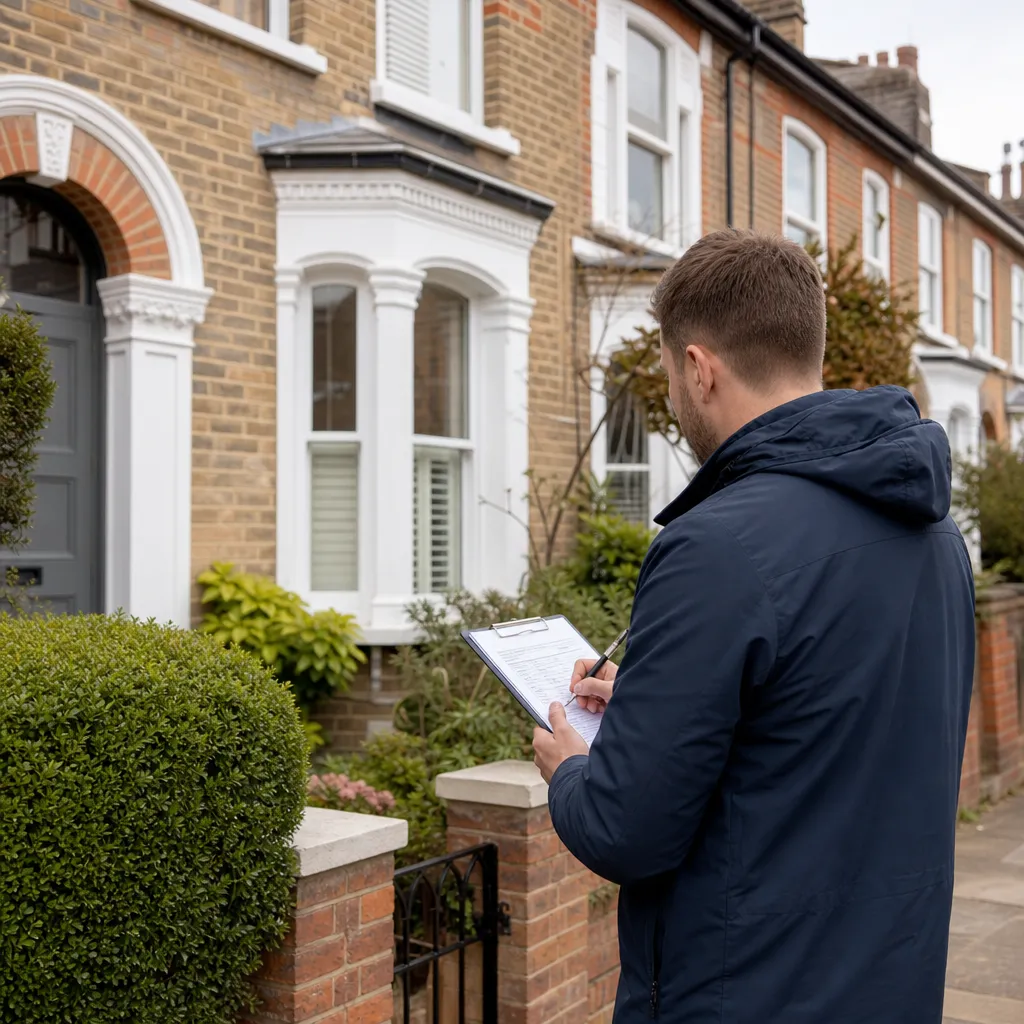
Factors That Influence Property Valuation and Market Value
Property market value in the UK is shaped by location, floor area, structural condition, EPC rating, tenure, and recent comparable sold prices in the local area.
 Buying & Moving
Which Home Improvements Add Real Value to Your Property?
In the UK, loft conversions, single and double-storey extensions, and energy-efficiency upgrades are most reliably linked to added property value.