Troubleshooting EV Charger Power Issues and Shutdowns
By Housey · Last reviewed 11th of May 2026
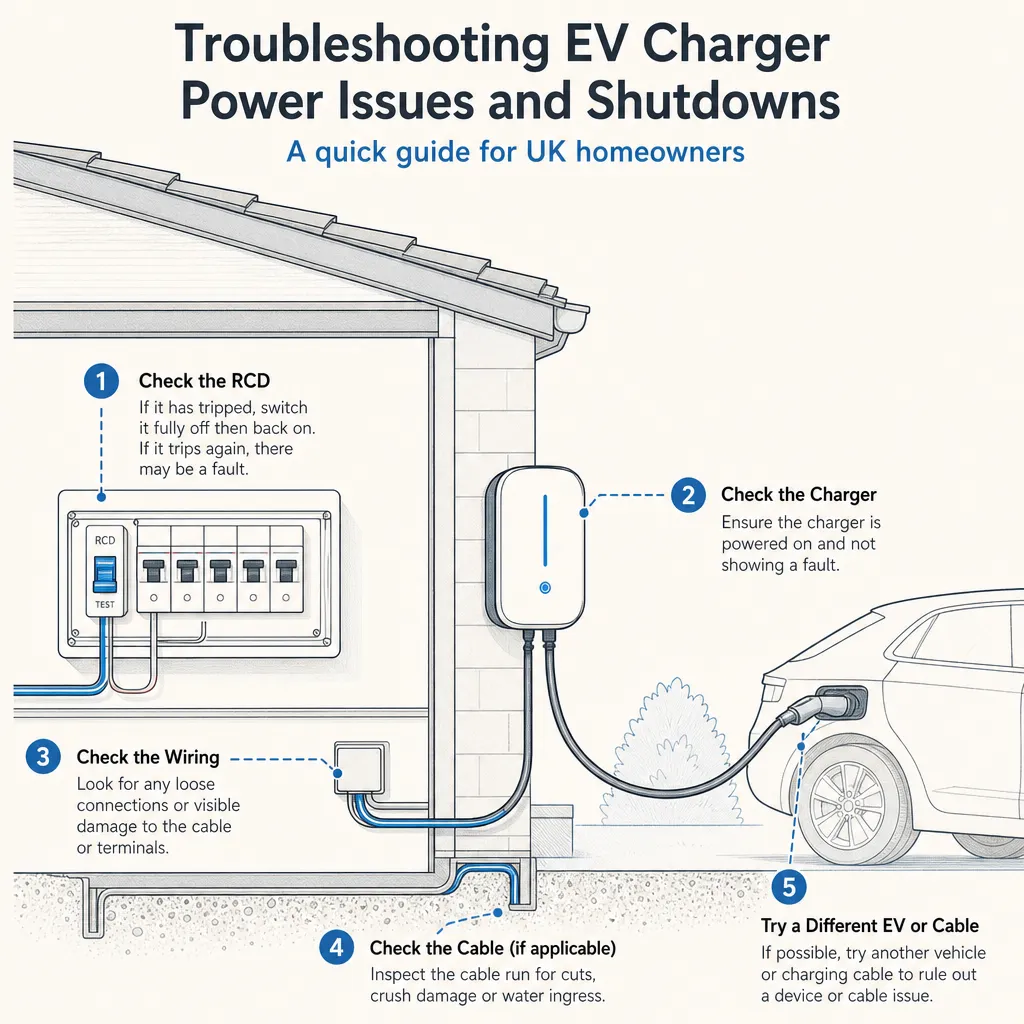
Troubleshooting EV Charger Power Issues and Shutdowns
A home EV charger that trips, fails to start, or cuts out mid-session is frustrating — but in most cases the cause is identifiable and, for some categories of fault, correctable without a specialist call-out. The challenge is distinguishing between a charger-side or app-configuration issue you can safely address yourself, a circuit or consumer-unit problem that needs a registered electrician, and a sign of a more serious underlying electrical fault. Acting on the wrong diagnosis wastes time at best and, in some cases, introduces a new safety risk.
Key points
- Most nuisance shutdowns stem from one of four root causes: thermal protection activation, earth leakage (RCD trip), a communication error between the charger and vehicle, or a firmware bug on a smart charger.
- A Type B RCD or RCBO is required on EV charger circuits under BS 7671:2018 Regulation 722 — if a Type A device was fitted, it may trip unpredictably on DC fault current that a Type B would handle correctly.
- Smart charger firmware faults can cause spurious shutdowns — check the manufacturer's app for fault codes and available updates before calling an electrician.
- Persistent RCD tripping (more than once in the same session, or on consecutive days) is a protection device indicating a real fault and must be investigated by a registered electrician.
- If no Electrical Installation Certificate (EIC) was provided when the charger was originally installed, you have no assurance the circuit was correctly designed or notified under Part P of the Building Regulations.
Common causes of EV charger power issues
The charger will not power on at all
If pressing the button, plugging in the vehicle, or opening the app produces no response:
- Check whether the MCB (the breaker in your consumer unit assigned to the charger circuit) has tripped. Reset it once. If it trips again immediately, stop — this suggests a short circuit or earth fault and requires a registered electrician.
- Confirm the charger is receiving supply. Most units have an LED status indicator; a completely dark unit despite the MCB being on may indicate a wiring fault between the consumer unit and the charger.
- Check whether there is a partial supply issue — do other circuits in the property work normally?
The charger starts but shuts down mid-charge
Possible cause | How to identify it | Likely action |
|---|---|---|
Thermal overload | Charger body hot to touch; shutdown in hot weather or enclosed location | Improve ventilation; check cable is not tightly coiled |
Ground fault / earth leakage | RCD or RCBO tripped in consumer unit | Reset once only; if it recurs, call a registered electrician |
Vehicle communication error | App shows a communication fault code specific to one vehicle | Try a different vehicle if possible; check vehicle software update |
Smart-charge schedule conflict | App shows charging stopped by a schedule or tariff rule | Review app schedules; check smart-tariff integration settings |
Network or cloud outage | Charger offline in app but physical LED is normal | Restart home router; check manufacturer's status page |
Firmware bug | Error code matches a known issue in manufacturer's release notes | Check app for available firmware update |
Undersized or degraded cable | Cable warm during charging | Cable must be assessed by a registered electrician |
The RCD keeps tripping
An RCD tripping means the protection device has detected a fault current above its threshold (typically 30 mA). The most common reasons on an EV charger circuit:
- Wrong RCD type fitted — a Type A device may be blinded by DC fault current from the charger and trip unpredictably. It must be replaced with a Type B RCD or RCBO by a registered electrician.
- Earth fault within the charger unit — the unit itself may have an internal fault. Switch off at the consumer unit and contact the manufacturer's support line before proceeding.
- Moisture ingress — if the charger or any outdoor connection box has been exposed to driving rain, moisture can cause leakage currents. Inspect enclosures for signs of water entry.
- Fault on another circuit sharing the same RCD — the source of the trip may not be the EV charger at all. A registered electrician can isolate and identify the fault.
Red flags — stop using the charger and contact a registered electrician if:
- The RCD trips more than once in a charging session, or on consecutive days.
- You notice a burning smell, scorch marks, or discolouration around the charger unit, consumer unit, or cable.
- The MCB for the charger circuit or the consumer unit enclosure feels warm to touch.
- You see visible damage to the charging cable, connector, or wall socket.
- The vehicle reports a charging fault that other public or workplace chargers do not replicate — this isolates the fault to your home installation.
- The charger unit produces unusual sounds, rattles, or shows signs of physical damage.
Decision tree: what to do first
- MCB tripped once, resets successfully, no recurrence → monitor; consider whether the circuit load has increased (for example, charging in high ambient temperatures can reduce thermal headroom).
- MCB trips again after reset → do not reset a third time; call a registered electrician — possible short circuit or earth fault.
- RCD/RCBO tripped once → check whether the device is a Type B (it should be); reset once; if it trips again, call a registered electrician.
- Charger displays a fault code → look it up in the manufacturer's documentation or app; many codes resolve via firmware update or a settings change.
- Charger shows no power and MCB is on → wiring fault between consumer unit and charger; call a registered electrician.
- Burning smell or scorch marks anywhere in the installation → switch off the MCB immediately; do not reset; contact a registered electrician. If you have any doubt about immediate safety, treat it as an emergency.
What not to assume
Several misunderstandings commonly delay resolution or make problems worse:
- Do not assume the vehicle is at fault before checking the installation. A Type A RCD fitted on the charger circuit is a well-documented cause of unexplained trips that drivers often attribute incorrectly to the car.
- Do not bypass or uprate the RCD by fitting a device with a higher trip threshold. The RCD protects against electric shock; circumventing it is dangerous and, on a notifiable installation, unlawful.
- Do not assume a single successful reset means the problem is resolved. Recurring trips indicate an ongoing fault, not a one-off anomaly.
- Do not assume the original installation was compliant. If no EIC was provided at the time, the work may not have been notified to building control or independently inspected.
- Do not assume a smart charger fault is an electrical fault. Many apparent power issues on networked chargers are schedule conflicts, tariff-integration pauses, or firmware bugs resolvable through the app.
Smart charger app and firmware issues
Smart chargers — units that connect to your home Wi-Fi and offer scheduled charging, energy monitoring, and tariff integration — introduce a software layer that can itself cause apparent power problems:
- Scheduled charging: many owners inadvertently activate a charge schedule that prevents immediate charging. Check the app for active time-of-use schedules, especially if your energy tariff or smart meter settings have recently changed.
- Smart-tariff pauses: chargers integrated with smart energy tariffs (such as Octopus Intelligent or compatible OVO plans) may pause charging autonomously based on grid signals. Verify whether a grid-initiated pause is responsible before assuming a fault.
- Firmware updates: check for available updates through the manufacturer's app. Early firmware versions on several popular UK charger models had known bugs causing spurious disconnections; updates typically resolve these.
Important limitations
This guide covers common causes of home EV charger faults and is general information only, reviewed May 2026. Every installation is different, and the root cause of a persistent fault can only be reliably identified by a qualified, registered electrician using appropriate test equipment. Do not work on the consumer unit, fixed wiring, or the internal components of the charger unit. If you have any concern about safety, isolate the circuit at the consumer unit and do not use the charger until it has been professionally inspected.
When this becomes urgent
- Any sign of burning smell, visible scorching, or damaged cable — switch off at the consumer unit immediately and do not re-energise.
- Repeated RCD tripping — this is an active protection system responding to a real fault, not a nuisance event.
- Any situation where the temptation is to bypass a protection device to restore charging.
- An existing installation with no Electrical Installation Certificate — you have no assurance it was correctly installed or inspected.
What to ask a qualified professional
When calling out a registered electrician to diagnose an EV charger fault:
- What type of RCD or RCBO is fitted, and is it appropriate for this installation (it should be Type B)?
- Can you verify the circuit cable size and condition, and confirm it is suitable for a continuous 32 A load?
- Can you carry out an insulation resistance test and RCD test to check for earth leakage?
- Is there an Electrical Installation Certificate for this circuit, and if not, can one be issued following inspection?
- If the charger unit has an internal fault, will you liaise with the manufacturer regarding warranty replacement?
- What is your Part P competent-person scheme registration, and will you notify building control of any remedial notifiable work?
When to get professional help
Any electrical fault that persists after a single reset, or that involves the RCD, MCB, or consumer unit, must be investigated by a registered electrician. Contact a qualified EV charger installer for charger-specific diagnosis and repair. If the fault points to wider wiring concerns, arrange an Electrical Installation Condition Report (EICR) to assess the full installation.
How Housey can help
Housey connects you with registered EV charger installers who can diagnose and repair faults in home charging installations. Where a fault points to broader wiring concerns, our network of EICR specialists can carry out a full installation condition report, identify underlying problems, and issue the certificates you need.
Frequently asked questions
Why does my EV charger trip the RCD only in warm weather?
Heat increases leakage current through cable insulation, which may push a marginal installation over the RCD's 30 mA trip threshold. This often points to degraded cable insulation, an overheating component, or a coiled cable restricting heat dissipation. A registered electrician should inspect the circuit, cable condition, and charger unit.
My charger shows a fault code — what should I do?
Log the code and check the manufacturer's documentation or app. Many codes correspond to communication errors, firmware issues, or self-resolvable sensor faults. If the code persists after a full restart — power off at the consumer unit for 30 seconds, then back on — contact the manufacturer's support line and, if they advise a hardware fault, call a registered electrician.
Can I claim on my home insurance for an EV charger fault?
This depends on your policy. Cover for fixed electrical installations varies widely. Check whether your policy includes electrical installation damage or breakdown cover, and whether the charger was installed by a registered electrician with an Electrical Installation Certificate — insurers may ask for evidence of a compliant installation.
How do I know if my original EV charger installation was compliant?
You should have received an Electrical Installation Certificate (EIC) at the time of installation. If not, ask the installer to provide one. If they cannot, commission an EICR from an independent registered electrician to assess the condition and compliance of the circuit.
Sources and further reading
- IET Wiring Regulations BS 7671:2018 (Amendment 2, 2022) — IET
- Approved Document P: electrical safety in dwellings — GOV.UK
- Electrical Safety First: EV home charging safety — Electrical Safety First
- NICEIC: find a registered electrician — NICEIC
- NAPIT: find a registered member — NAPIT
Useful next reads
 Energy & Retrofit
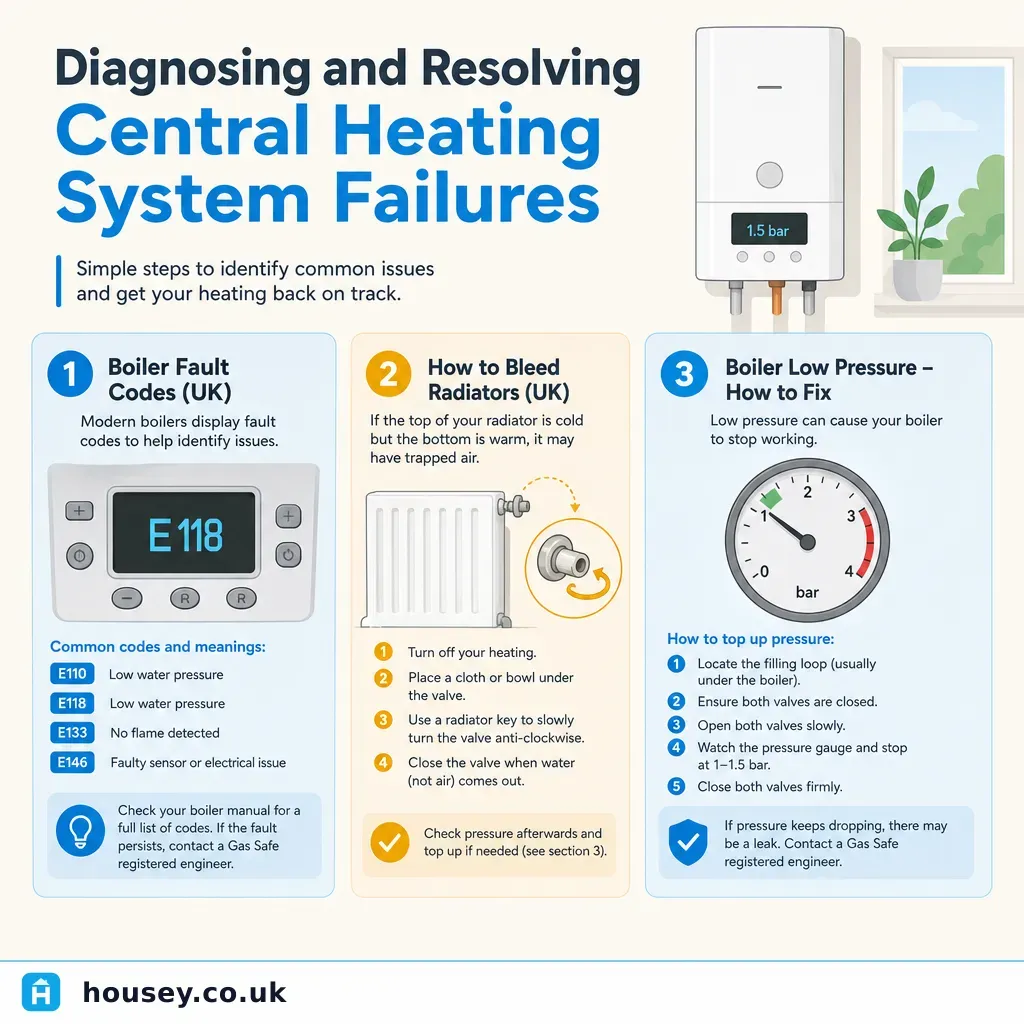
Diagnosing and Resolving Central Heating System Failures
Many central heating failures have simple causes — low boiler pressure, trapped air in radiators, or incorrect programmer settings.
 Energy & Retrofit
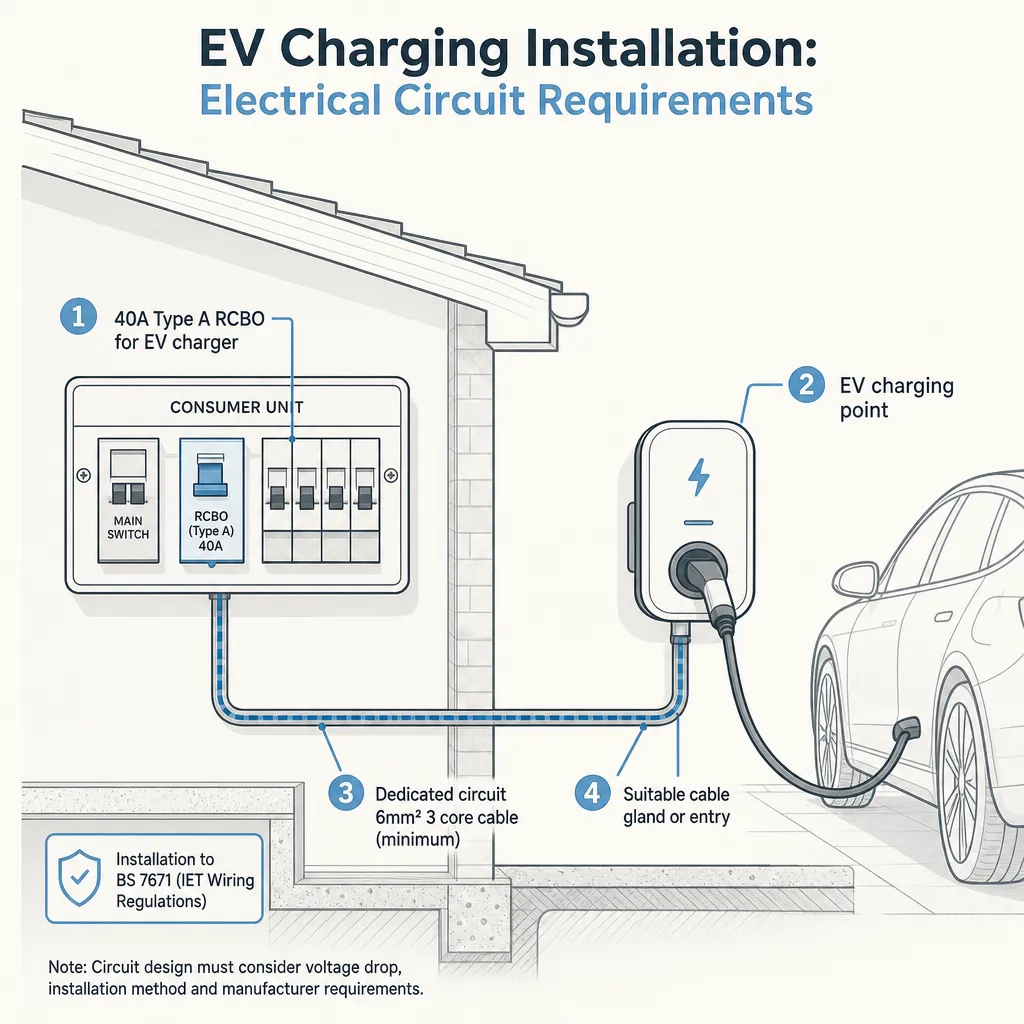
EV Charging Installation: Electrical Circuit Requirements
A home EV charger (7 kW) requires a dedicated single-phase 32 A circuit run directly from the consumer unit, installed by a registered electrician.
 Energy & Retrofit
Gas Boiler Ignition and Startup Failures: Diagnosis
When a gas boiler fails to ignite or start, common causes include a loss of gas supply, low system pressure, a faulty ignition electrode or lead, a blocked condensate pipe (in cold weather), or a safety lockout triggered by the control board.
 Energy & Retrofit
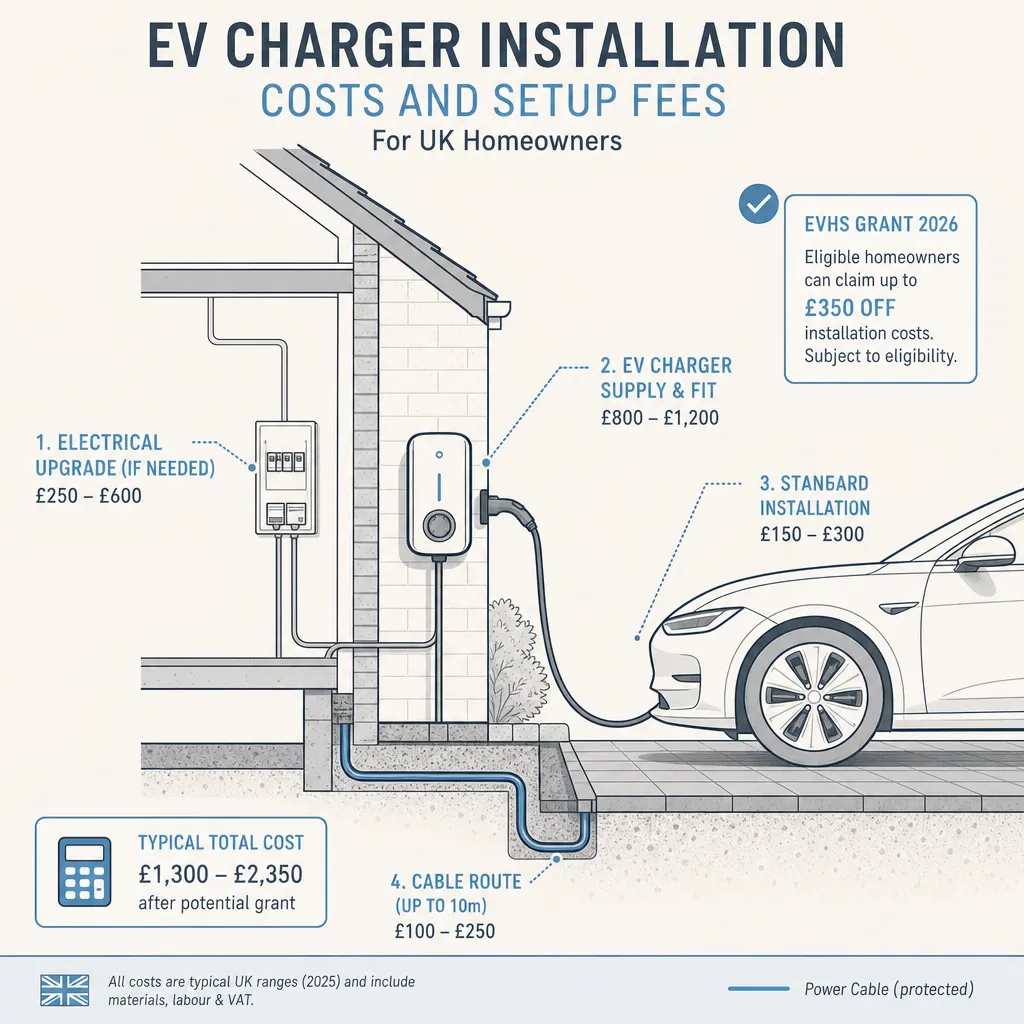
EV Charger Installation Costs and Setup Fees
A home EV charger typically costs £700–£1,200 installed in the UK, including unit and labour.
 Energy & Retrofit
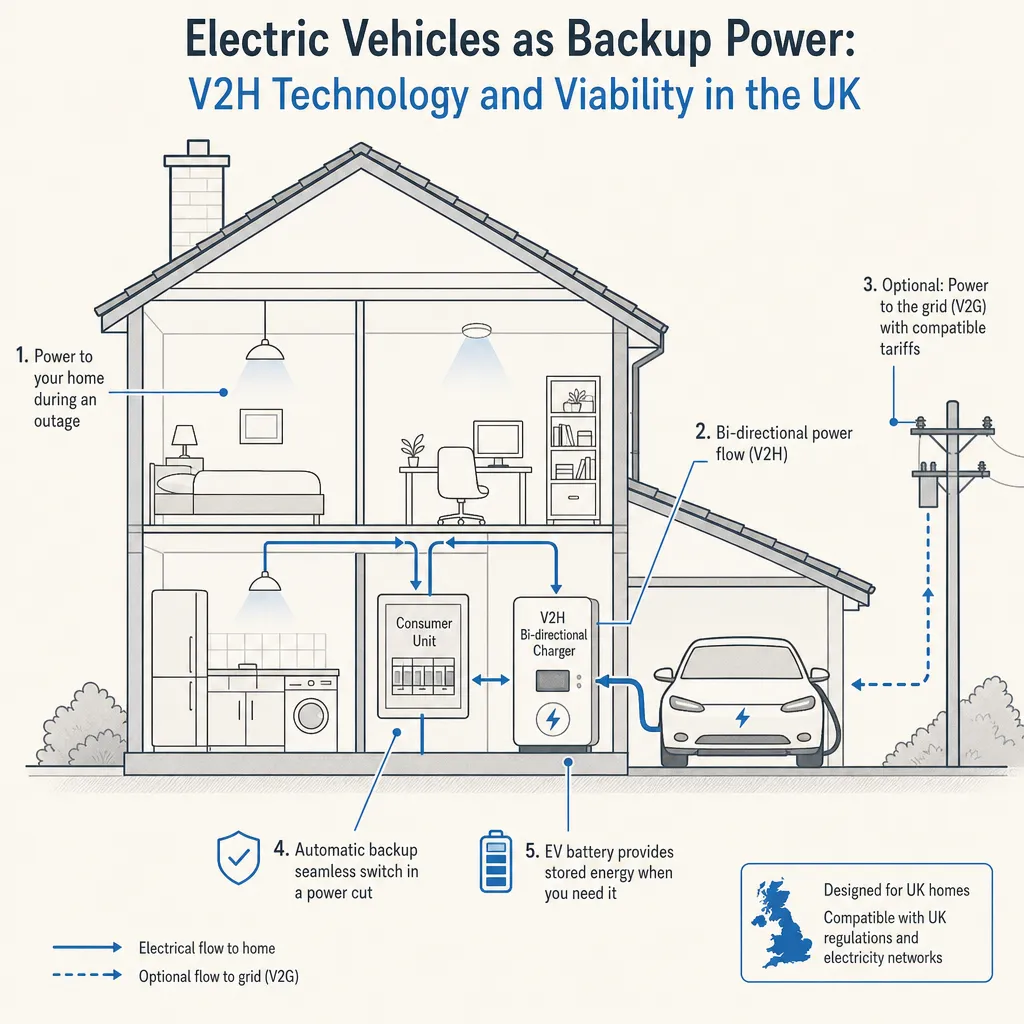
Electric Vehicles as Backup Power: V2H Technology and Viability in the UK
Vehicle-to-Home (V2H) technology uses your electric vehicle's battery to supply electricity to your home, either as backup power during grid outages or to shift cheap overnight charging into daytime use.