Gas Boiler Ignition and Startup Failures: Diagnosis
By Housey · Last reviewed 11th of May 2026
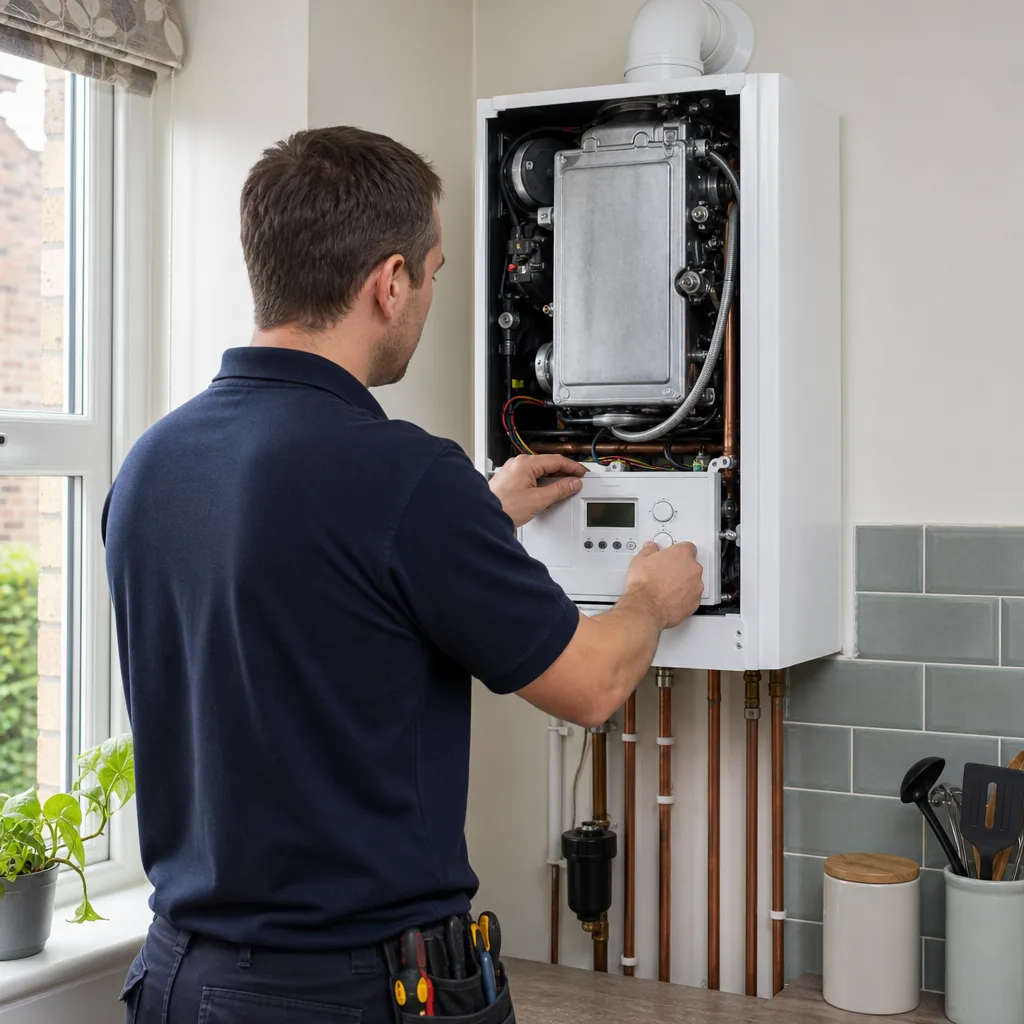
Gas Boiler Ignition and Startup Failures: Diagnosis
A boiler that will not ignite or start is one of the most disruptive heating failures a UK homeowner can face — particularly in winter when demand is highest. Pinpointing the likely cause before calling an engineer can save time, reduce call-out costs, and make the conversation with the professional more productive. However, the boundary between what a homeowner can safely check and what only a Gas Safe registered engineer may legally touch is firm, and understanding that boundary is essential before you touch anything.
Key points
- It is illegal for an unregistered person to carry out work on a gas appliance in the UK — all internal boiler repair must be performed by a Gas Safe registered engineer, verifiable at the Gas Safe Register website.
- The most common homeowner-resolvable causes of ignition failure are low boiler pressure (the gauge should typically read 1–1.5 bar cold), a frozen condensate pipe, and loss of gas supply to the property.
- A boiler lockout — usually indicated by a fault code or flashing light — is a safety shutdown requiring a manual reset, but repeated lockouts indicate an underlying fault needing professional diagnosis.
- Fault codes are manufacturer-specific; the boiler's manual or the manufacturer's website is the most reliable source for decoding them — do not rely on generic lists.
- Condensing boilers have been standard on new installations in the UK since 2005 under Building Regulations Part L and are more susceptible to frozen condensate pipes than older non-condensing models.
Why does a gas boiler fail to ignite?
Modern gas boilers fire through an ignition sequence: the gas valve opens, an ignition electrode generates a spark, and a flame sensor (thermocouple or ionisation probe) confirms that combustion has started. If any part of this chain fails, the boiler's safety controls halt the sequence and typically put the unit into lockout.
Common failure points include:
- No gas supply — interrupted supply from a prepayment meter running out, an emergency control valve being closed, or a supplier outage.
- Low system pressure — most combi and system boilers require a minimum operating pressure (typically 0.8–1.5 bar when cold); below this, the boiler may refuse to light.
- Ignition electrode or lead fault — the spark electrode can crack, become fouled with carbon deposits, or degrade, preventing ignition even when gas is present.
- Flame sensor failure — if the thermocouple or ionisation probe cannot detect the flame, the gas valve closes as a safety measure.
- Printed circuit board (PCB) fault — the control board manages the entire ignition sequence; a failed component can prevent the sequence from starting at all.
- Gas valve fault — if the gas valve sticks or fails to open, no gas reaches the burner.
- Condensate pipe blockage or freeze — a blocked condensate outlet causes a lockout on condensing boilers.
- Blocked or obstructed flue — if the flue termination is blocked by a bird nest, debris, or ice, the boiler will not light as a safety precaution.
What you can safely check before calling an engineer
The following checks do not involve opening the boiler casing or touching gas components and are safe for homeowners to carry out.
Decision tree: where to start your diagnosis
- Check other gas appliances first (hob, gas fire). If nothing works, you may have a supply interruption — check your meter or prepayment card and contact your gas supplier.
- Check the boiler pressure gauge. A reading below 0.8 bar or above 3 bar indicates a pressure issue. Repressurising through the filling loop is described in most boiler manuals; if you are unsure, consult the manufacturer's instructions or call an engineer.
- Check for a fault code or error light. Note the code and look it up in the boiler manual or on the manufacturer's website. This information will help any engineer you call.
- Check the condensate pipe — typically a white or grey plastic pipe running externally from the boiler. Is it frozen or visibly blocked? Thaw with warm (not boiling) water in cold weather.
- Press the reset button (hold for 3–5 seconds on most models). If the boiler fires and then locks out again within a short period, stop resetting and call a Gas Safe engineer — repeated lockouts mean there is an underlying fault.
- Check your thermostat and programmer. Confirm the thermostat is set above the current room temperature and the heating schedule is active. This is a more common cause of apparent boiler failure than many homeowners expect.
Fault codes: what they typically indicate
Fault codes are manufacturer-specific, but broad categories appear across most UK boilers. The table below gives examples only — always check your boiler's manual for the definitive meaning.
Fault code category | Typical cause | Homeowner action possible? |
|---|---|---|
Ignition failure (e.g. Vaillant F.28, Worcester Bosch EA) | Failed spark, gas valve, or low gas pressure | Check gas supply; then Gas Safe engineer |
Low pressure (e.g. Baxi E119, Ideal F1) | Pressure loss or system leak | Repressurise via filling loop; check for visible leaks |
Condensate blockage (e.g. Ideal F4, Worcester Bosch EA 338) | Frozen or blocked condensate pipe | Thaw pipe; restart boiler |
Flame loss (e.g. Vaillant F.62, Baxi E160) | Gas supply fault, flame sensor, or gas valve | Check gas supply; Gas Safe engineer for sensor or valve |
Flue or fan fault (e.g. Worcester Bosch E9, Ideal F3) | Flue obstruction or fan failure | Gas Safe engineer |
PCB or sensor fault | Electronics failure | Gas Safe engineer |
Codes vary between boiler manufacturers and models. Always check your specific boiler's manual for the definitive interpretation.
Red flags: when to stop and call a Gas Safe engineer immediately
Do not attempt further checks if any of the following apply — call a Gas Safe registered engineer or the emergency services:
- You smell gas at any point. Leave the building, do not operate light switches or electrical appliances, and call the National Gas Emergency Service on 0800 111 999 (free, 24/7).
- The boiler has locked out three or more times in quick succession.
- There are visible scorch marks, corrosion damage, or evidence of overheating on the boiler casing.
- The flue termination is blocked, damaged, or appears to have been incorrectly fitted.
- Boiler pressure drops repeatedly despite repressurising — this indicates a system leak requiring investigation.
- A carbon monoxide alarm has sounded — treat this as an emergency.
- The boiler is over 15 years old and faults are becoming frequent — a replacement assessment may be more cost-effective than further repairs.
Important limitations
This article provides general information about common causes of gas boiler ignition and startup failures. It is not a substitute for a professional assessment. Gas appliances involve combustion and the risk of carbon monoxide — a colourless, odourless gas that can be fatal. Only a Gas Safe registered engineer is legally authorised to carry out gas appliance work in the UK. Nothing in this article should be interpreted as encouragement or instruction to carry out any work on gas fittings or to open a boiler casing yourself.
What to ask a qualified professional
When contacting a Gas Safe registered engineer, provide as much of the following as possible:
- The boiler make, model, and approximate age.
- Any fault code or error light displayed.
- How many times you have reset the boiler and what happened after each reset.
- Whether pressure dropped, and whether you have already repressurised.
- Whether the condensate pipe was frozen and whether thawing resolved the fault.
- Whether any other gas appliances are affected.
Before work begins, ask the engineer:
- Are you Gas Safe registered, and may I see your Gas Safe card? (Registration can be verified at gassaferegister.co.uk.)
- What is the call-out fee, and is it included in or separate from the repair estimate?
- Will I receive a written quote before you authorise repair work?
- What is included — parts and labour?
- If the boiler cannot be repaired economically, what are my replacement options?
When to get professional help
Any internal boiler fault — ignition electrode, flame sensor, PCB, gas valve, or heat exchanger — requires a Gas Safe registered engineer. Beyond specific component failures, seek professional advice if:
- The boiler is 12–15 years old and experiencing multiple faults in a single season.
- You have not had an annual boiler service — a Gas Safe service includes a safety inspection that often identifies developing faults before they cause a breakdown.
- The property is rented — landlords have a legal obligation under the Gas Safety (Installation and Use) Regulations 1998 to arrange an annual gas safety check by a Gas Safe registered engineer and to provide tenants with a copy of the certificate.
How Housey can help
Housey connects you with Gas Safe registered engineers who can diagnose ignition faults, carry out annual boiler services, and issue gas safety certificates for landlords and property sales. If your boiler is ageing and you are considering alternatives, you can also compare quotes from heat pump survey specialists to explore low-carbon heating options for your property.
Frequently asked questions
Can I fix a boiler ignition problem myself?
You can safely check the gas supply to other appliances, the boiler pressure gauge, and whether the condensate pipe is frozen. All internal boiler work — including replacing ignition electrodes, leads, PCBs, or gas valves — must be carried out by a Gas Safe registered engineer. It is a criminal offence for an unregistered person to work on gas appliances in the UK.
How much does it cost to repair a boiler ignition fault?
Indicative UK repair costs (last reviewed 2026-05-11): a Gas Safe engineer call-out typically costs £60–£150, with parts and labour for common ignition repairs adding £100–£400 depending on the fault and boiler model. Boiler cover plans may include call-outs and parts. Always obtain a written quote before authorising work.
What does a boiler lockout mean?
A lockout is a safety shutdown triggered by the boiler's control board when it detects a fault — such as repeated failed ignition, low gas pressure, or an out-of-range sensor reading. Most lockouts require a manual reset by pressing and holding the reset button for 3–5 seconds. If the boiler locks out repeatedly, call a Gas Safe engineer rather than continuing to reset.
Could a frozen condensate pipe stop my boiler firing?
Yes. Condensing boilers — standard in UK new installations since 2005 under Building Regulations Part L — produce condensate water that drains through a pipe, often running externally. In cold weather this pipe can freeze and trigger a lockout. Thawing it with warm (not boiling) water is a safe homeowner action. If the boiler still fails to restart, ask a Gas Safe engineer to assess the pipe routing.
Sources and further reading
- Check if an engineer is Gas Safe registered — Gas Safe Register
- Gas Safety (Installation and Use) Regulations 1998 — legislation.gov.uk
- Gas safety in the home — Health and Safety Executive
- Boiler Plus requirements — GOV.UK
Useful next reads
 Energy & Retrofit
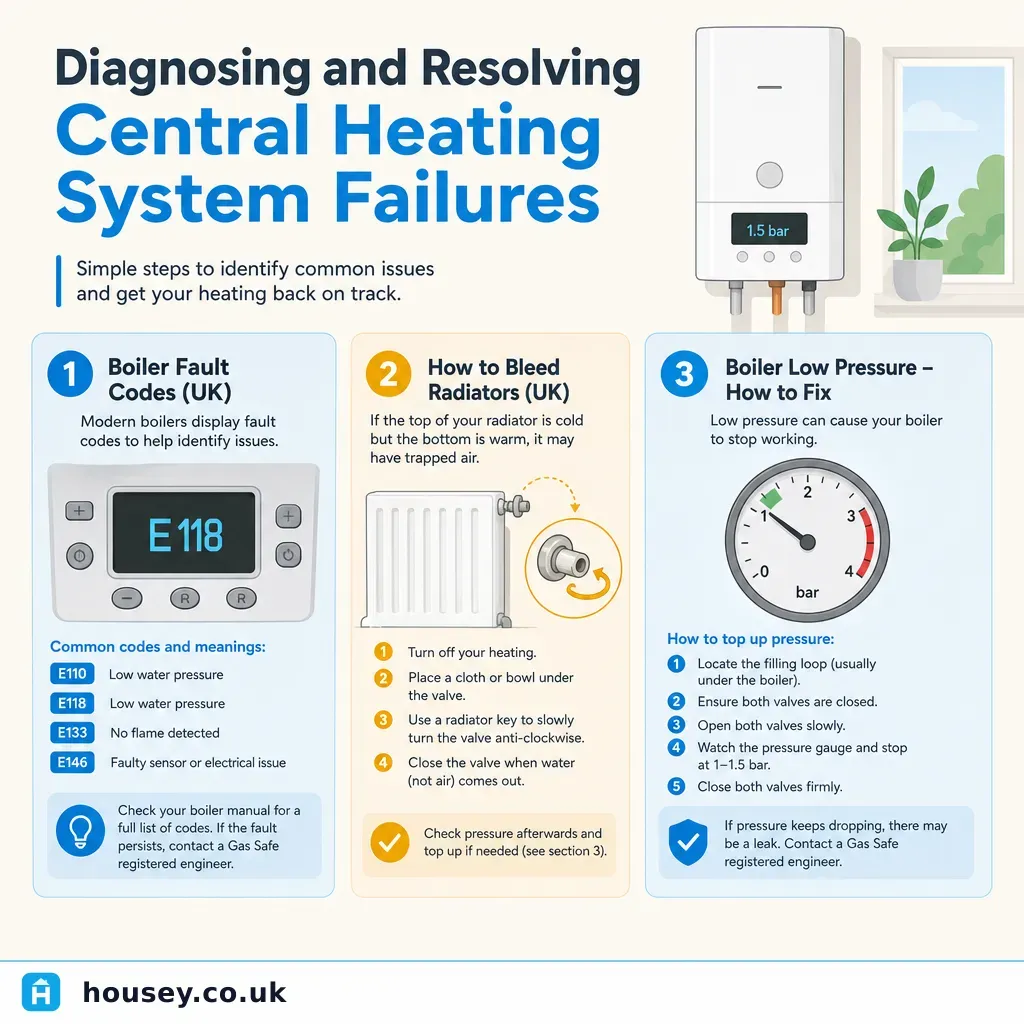
Diagnosing and Resolving Central Heating System Failures
Many central heating failures have simple causes — low boiler pressure, trapped air in radiators, or incorrect programmer settings.
 Energy & Retrofit
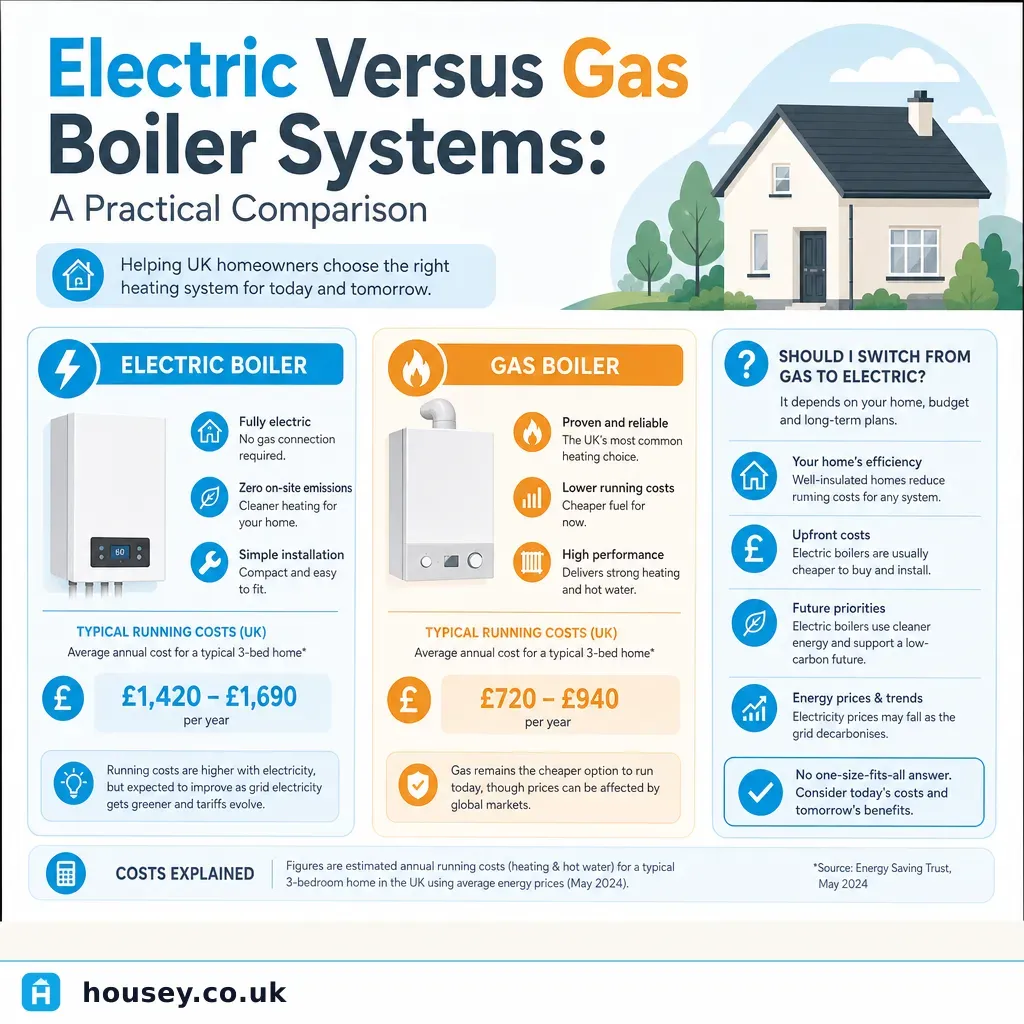
Electric Versus Gas Boiler Systems: A Practical Comparison
Electric boilers convert nearly all electricity into heat (98–99% efficiency) but electricity costs roughly 3–4 times more per kWh than gas, making running costs higher in most UK homes.
 Energy & Retrofit
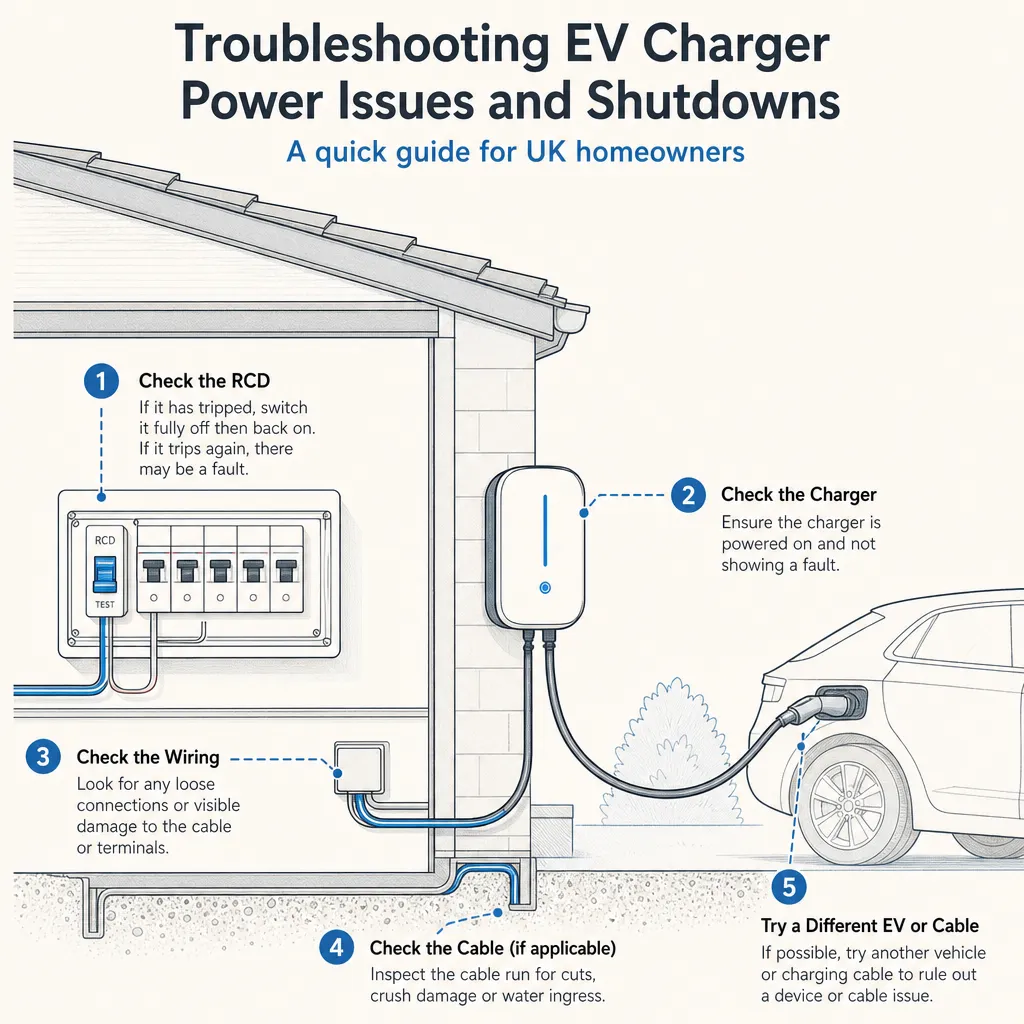
Troubleshooting EV Charger Power Issues and Shutdowns
Most home EV charger shutdowns are caused by a tripped RCD or MCB, a firmware issue, or a communication error with the vehicle.
 Energy & Retrofit
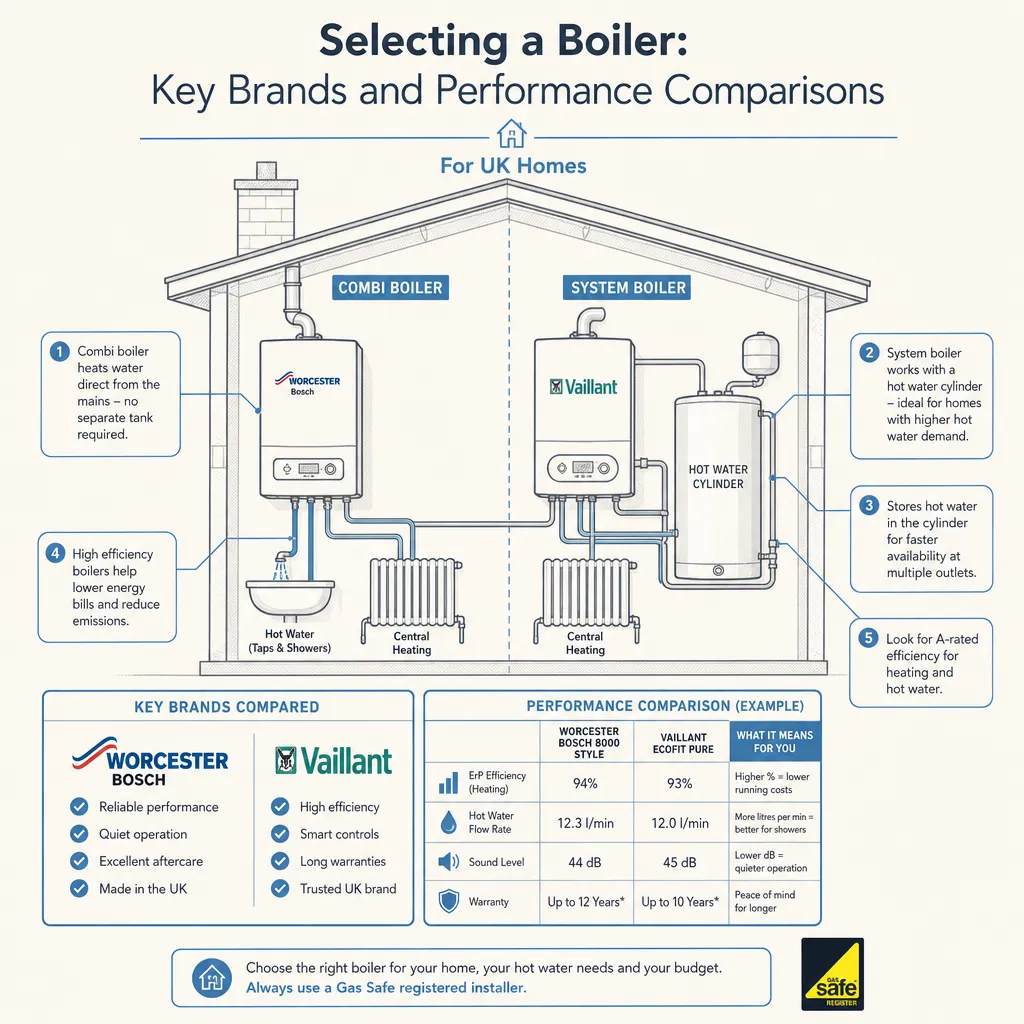
Selecting a Boiler: Key Brands and Performance Comparisons
Most UK homes are heated by a combi, system, or heat-only boiler.
 Energy & Retrofit
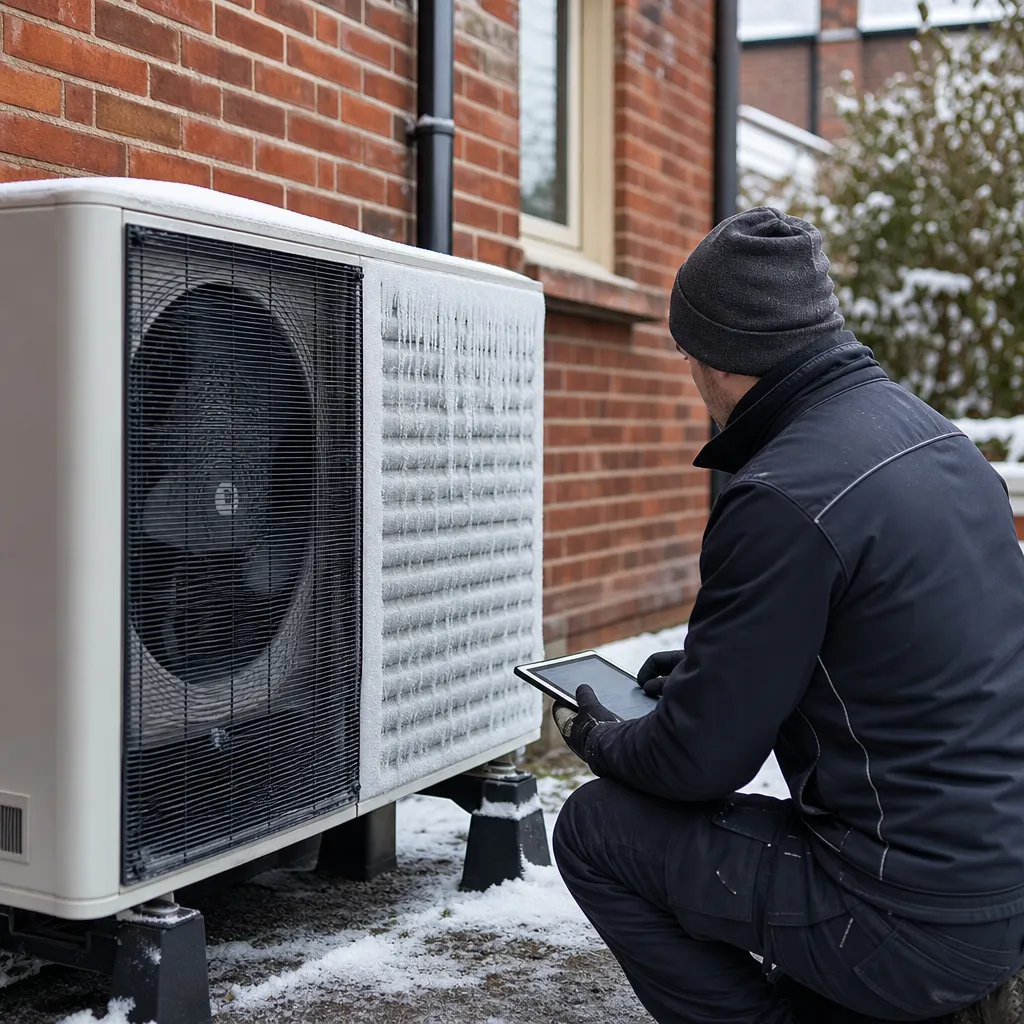
Heat Pump Coil Freezing: Causes and Troubleshooting Steps
Light frost on an air source heat pump's outdoor coil is normal in cold UK winters and clears automatically during a defrost cycle.