Diagnosing and Fixing Temperature Imbalances in Your Home
By Housey · Last reviewed 19th of May 2026
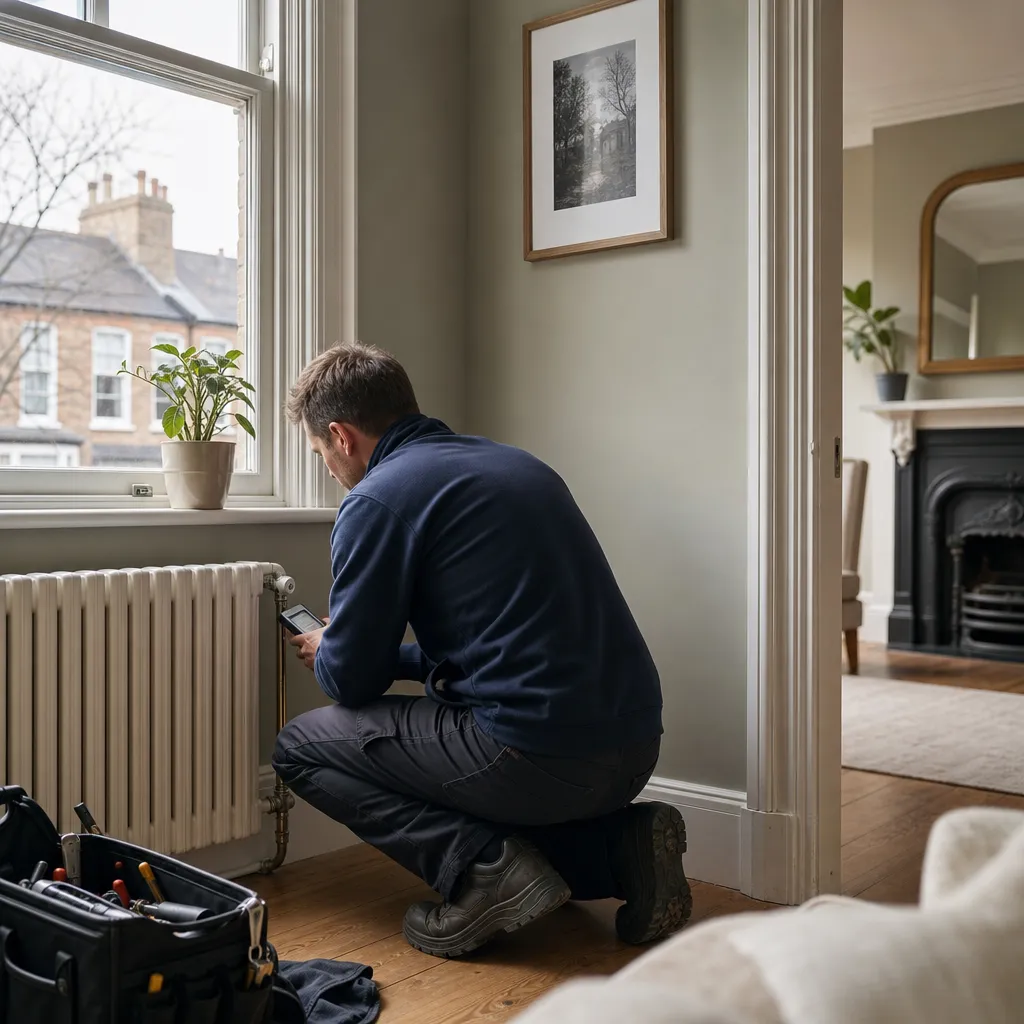
Diagnosing and Fixing Temperature Imbalances in Your Home
Temperature complaints are among the most frequent calls heating engineers and energy assessors receive from UK homeowners, typically rising in autumn when systems restart after a long summer and again during extended cold spells. Whether a single room consistently underperforms, the ground floor lags noticeably behind the first, or one end of a Victorian terrace never reaches the thermostat's setpoint, the causes often overlap and interact with one another. Identifying the correct root cause before commissioning any work saves money, avoids unnecessary disruption, and ensures the right professional is instructed.
Key points
- Hydraulic imbalance in wet central heating systems — where some radiators receive more hot water flow than others — is one of the most common and most correctable causes of uneven room temperatures; a heating engineer adjusts the lockshield valves on each radiator to calibrate the circuit.
- Building Regulations Approved Document L sets minimum fabric efficiency standards for new dwellings, but many UK homes built before 1960 — particularly solid-wall terraces and semis — have external wall U-values above 1.5 W/m²K, compared with a modern target of around 0.18 W/m²K.
- Thermostatic radiator valves (TRVs) should never be fitted in the same room as the main room thermostat — this creates a control conflict that can prevent the boiler from running long enough to heat the rest of the property.
- Air stratification in rooms with tall ceilings (common in Victorian properties with 2.7–3.0 m floor-to-ceiling height) can produce a 3–5°C temperature difference between floor and ceiling level, making the room feel cold underfoot even when the thermostat reads a satisfactory temperature.
- The Energy Saving Trust estimates that draught-proofing gaps at skirting boards, loft hatches, and window frames can save £45–£65 per year on heating bills and is among the lowest-cost fabric interventions available to UK homeowners.
Why rooms heat unevenly: the main causes
Temperature imbalance in UK homes typically has one or more of three roots: heating system hydraulics, building fabric performance, or ventilation and air movement. Identifying which is driving the problem determines whether you need a heating engineer, an insulation contractor, or a ventilation specialist.
Hydraulic imbalance in wet central heating
In a wet central heating system, hot water circulates from the boiler or heat pump to every radiator in the circuit. If the system is not balanced — meaning the flow rate to each radiator has not been calibrated to the room's heat load — radiators near the boiler receive too much hot water and get very hot quickly, while those at the far end of the circuit receive too little and remain lukewarm or cool.
Typical signs include:
- Radiators nearest the boiler or pump get very hot within minutes; those at the far end of the circuit stay cool even after half an hour.
- The bottom of a radiator is warm but the top is cold, or there is a cool stripe across the middle — suggesting restricted flow, sludge, or a trapped air pocket.
- One side or storey of the property heats normally while the other lags behind.
A heating engineer can balance the system by adjusting each radiator's lockshield valve. Power flushing may also be needed if iron oxide sludge has accumulated — common in systems older than 10–15 years that have not been dosed regularly with chemical inhibitor.
Cold bridging and under-insulated fabric
Cold bridging occurs where materials with high thermal conductivity — steel lintels, concrete floor edges, uninsulated wall ties — bypass the insulated layer and create a localised cold surface. In older solid-wall properties, the entire external wall surface has a high U-value and the cold surface causes the air nearby to cool and drop, creating a convective draught even in a sealed room. In corners and wall-floor junctions, the geometry worsens the effect because solar and internal heat gain is lower.
Remedies range from whole-wall internal wall insulation (IWI) or external wall insulation (EWI) to targeted cold bridge treatment at reveals, lintels, and floor-wall junctions. A retrofit coordinator working to PAS 2035 can specify the appropriate approach without introducing moisture or ventilation problems.
Air stratification and poor circulation
In rooms with tall ceilings — Victorian properties often have 2.7–3.0 m heights — warm air rises and collects near the ceiling while cooler air pools at floor level. This stratification can produce a 3–5°C difference that feels uncomfortable even when the thermostat indicates the room has reached its setpoint. Underfloor heating or skirting-board heating at low level typically addresses this more effectively than raising the ceiling heating capacity.
Air infiltration and draughts
Gaps around skirting boards, loft hatches, unused chimneys, recessed downlighters, and pipe penetrations allow cold outside air to enter directly. This is distinct from poor insulation: even a well-insulated room with a draughty loft hatch will feel cold because cold air is physically displacing warm air at floor level. A smoke pencil or incense stick held near likely infiltration points will reveal moving air on a still, cold day.
Decision tree: diagnosing your temperature imbalance
- Choose hydraulic balancing if far radiators are consistently cooler than near ones, even after bleeding.
- Choose draught-proofing first if you can feel moving cool air near skirting boards, loft hatches, or window frames.
- Ask a heating engineer if a single radiator remains cold after bleeding and TRV checks, or if the whole system produces insufficient heat across multiple rooms.
- Ask an energy assessor or retrofit coordinator if cold spots appear at walls or floor-wall junctions regardless of how the heating performs — fabric, not hydraulics, is likely the issue.
- Ask for a heat pump survey if a recently installed heat pump produces uneven heat or runs for unusually long periods — flow temperature, emitter sizing, or system design may be at fault.
- Check thermostat placement if upstairs is consistently warmer than downstairs, and confirm no TRV is fitted in the same room as the thermostat.
Comparison: causes, diagnostic checks, and fixes
Cause | Typical signs | Quick check | Professional fix |
|---|---|---|---|
Hydraulic imbalance | Far radiators lukewarm; near ones very hot | Feel each radiator after 30 min on full heat | Heating engineer balances lockshield valves; power flush if sludged |
Cold bridging / poor fabric | Cold walls or floors; condensation in corners | Probe thermometer at wall surface vs. room centre | Internal or external wall insulation; cold bridge treatment |
Air stratification | Warm near ceiling, cold at floor level | Temperature measured at 0.1 m vs. 1.7 m height | Underfloor heating; skirting radiators; ceiling fan on reverse (winter) mode |
Draughts / infiltration | Felt draught near skirting, loft hatch, or window | Incense stick or draught detector near likely gaps | Draught-proofing strips; loft hatch insulation and seal |
TRV and thermostat conflict | One room overheats; others do not reach setpoint | Check if TRV and thermostat share the same room | Remove TRV from thermostat room; relocate or upgrade thermostat |
Heat pump design fault | Whole house underheated; long heating cycles | Check flow temperature setting on heat pump controller | Heat pump survey; system redesign by MCS-accredited engineer |
Red flags: when to call a professional promptly
- A radiator stays cold after bleeding and TRV checks — may indicate a blocked circuit, pump failure, or closed isolating valve.
- Condensation running down internal walls in winter — a sign of severe cold bridging or inadequate ventilation that can progress to mould growth and structural damp.
- A newly installed heat pump producing uneven or inadequate heat — sizing, flow temperature, or emitter compatibility may require professional review rather than system adjustment.
- Persistent cold rooms despite radiators functioning and draught-proofing carried out — may indicate a fundamental system design problem requiring a full heat loss calculation to BS EN 12831.
- Any smell of gas combined with heating symptoms — leave the property immediately, do not operate electrical switches, and call the Gas Safe Register emergency line on 0800 111 999.
When to get professional help
If basic checks — bleeding radiators, verifying TRV settings, and sealing obvious draughts — do not resolve the imbalance within a heating season, a professional assessment is the appropriate next step. A Gas Safe registered heating engineer can carry out hydraulic balancing, identify pump or valve faults, and measure flow temperatures against design values. For fabric-related cold spots, a retrofit coordinator or energy assessor working to PAS 2035 can use thermal imaging and air permeability testing to pinpoint where heat is escaping and what the priority interventions should be.
How Housey can help
Housey connects you with qualified professionals across the UK. Whether you need a ventilation and condensation assessment to identify infiltration paths and air movement issues, or an energy-efficiency consultant to review heating system design and building fabric performance, you can request quotes from vetted local specialists through the platform.
Frequently asked questions
Why is my upstairs hotter than downstairs?
Heat rises naturally, so without zoned controls, upper floors often reach thermostat setpoint before ground-floor rooms do. If the main thermostat is positioned upstairs, the boiler may cut off before downstairs rooms reach a comfortable temperature. Repositioning the thermostat or adding zone valves and a programmable thermostat for the ground floor usually resolves this.
Why is one radiator always cold even when the heating is on?
A single cold radiator usually has one of three causes: trapped air (bleed it with a radiator key), a stuck or closed thermostatic radiator valve (try turning it up or manually opening the valve), or hydraulic imbalance in the circuit. If bleeding and valve checks do not help, ask a heating engineer to check the lockshield valve setting and carry out system balancing.
Can a draughty house cause temperature imbalances?
Yes. Air infiltration introduces cold external air directly into the living space, making rooms feel cold even when radiators are working correctly. Common infiltration points include loft hatches, gaps behind skirting boards, recessed downlighters, and poorly sealed windows. Draught-proofing these areas is typically inexpensive and one of the most effective first steps a UK homeowner can take.
Do I need a professional to diagnose uneven heating?
For straightforward cases — a cold radiator or a single draughty room — basic checks and DIY draught-proofing are a reasonable starting point. If the problem persists, is widespread, or involves a recently installed heat pump or a heavily modified property, a qualified heating engineer or PAS 2035 energy assessor will diagnose the root cause more reliably and safely.
Sources and further reading
- Energy Saving Trust — Draught-proofing — Energy Saving Trust
- Building Regulations Approved Document L — Conservation of fuel and power — GOV.UK
- Gas Safe Register — Find a registered engineer — Gas Safe Register
- PAS 2035:2023 — Retrofitting dwellings for improved energy efficiency — BSI
Useful next reads
 Energy & Retrofit
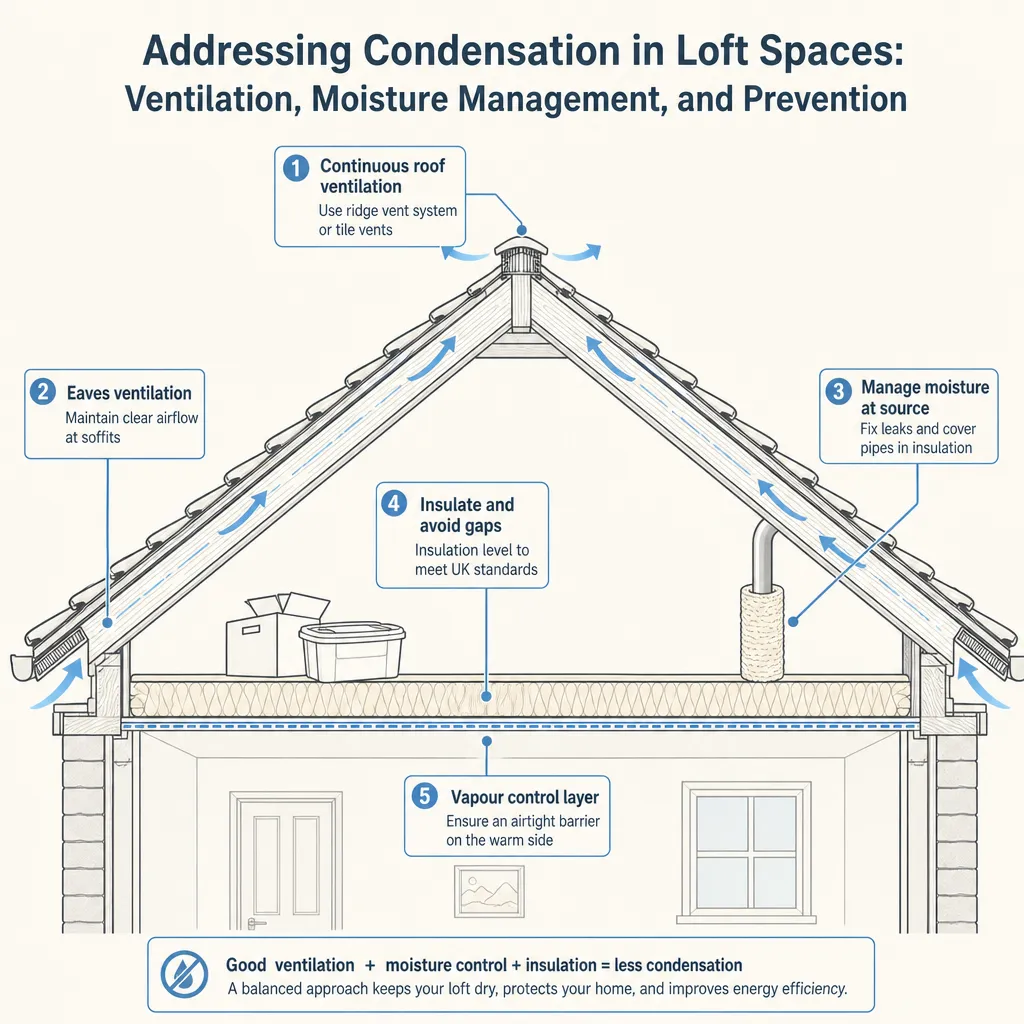
Addressing Condensation in Loft Spaces: Ventilation, Moisture Management, and Prevention
Loft condensation forms when warm, moist air from living spaces passes through ceiling gaps and deposits moisture on cold roof timbers or underfelt.
 Energy & Retrofit
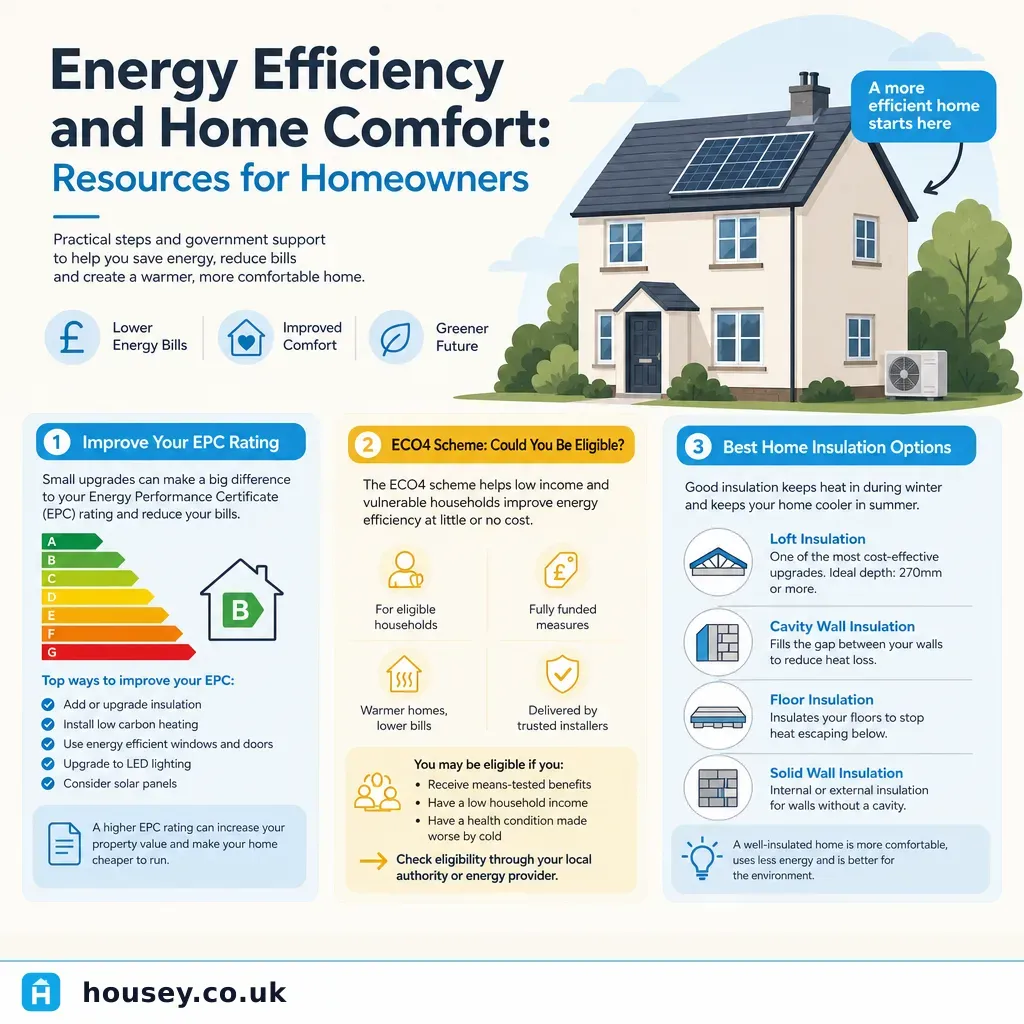
Energy Efficiency and Home Comfort: Resources for Homeowners
Start with your Energy Performance Certificate to understand where your home loses heat, then prioritise improvements by property type.
 Energy & Retrofit
Common Home Heating Mistakes: Efficiency and Safety
The most common heating mistakes UK homeowners make include setting the boiler flow temperature too high, assuming constant low heat is cheaper than a timed programme, and neglecting annual Gas Safe servicing.
 Energy & Retrofit
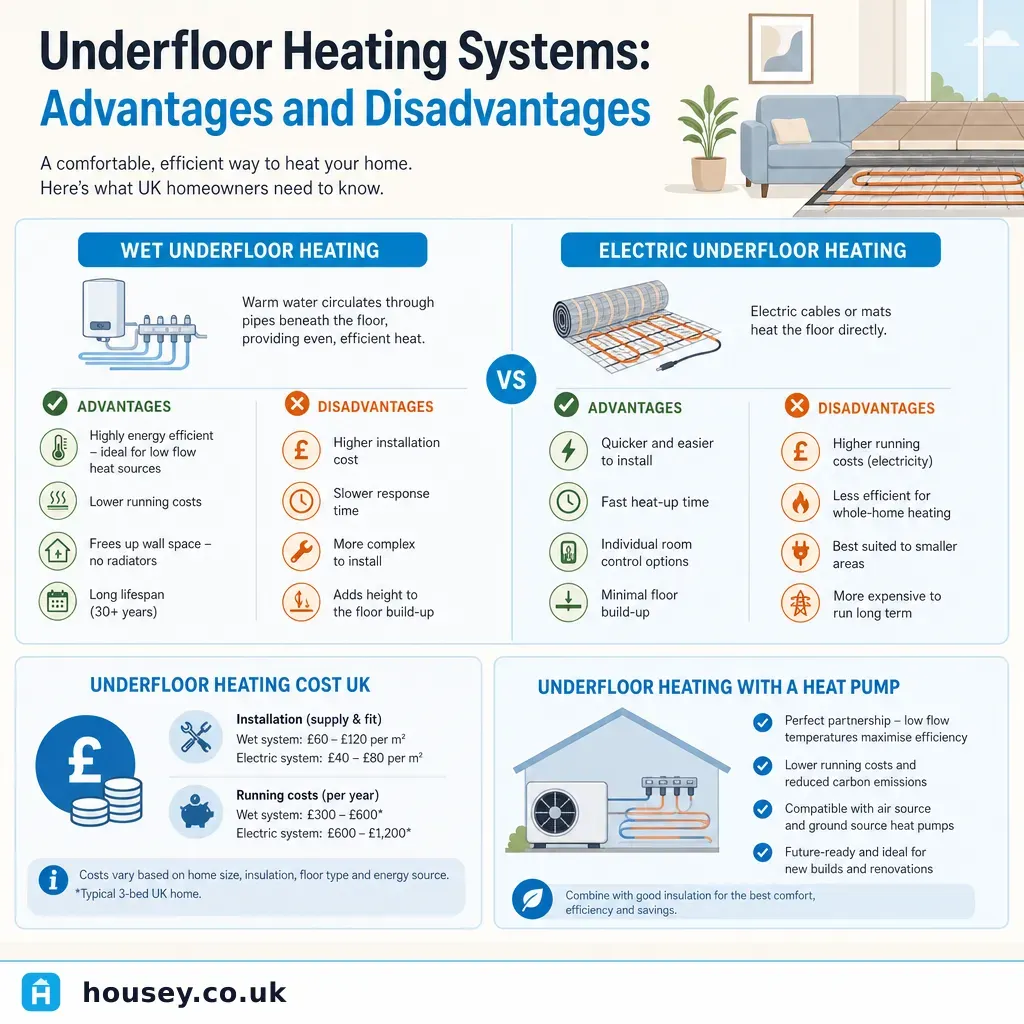
Underfloor Heating Systems: Advantages and Disadvantages
Wet underfloor heating distributes warmth evenly at lower surface temperatures than radiators, making it well-suited to heat pumps.
 Energy & Retrofit
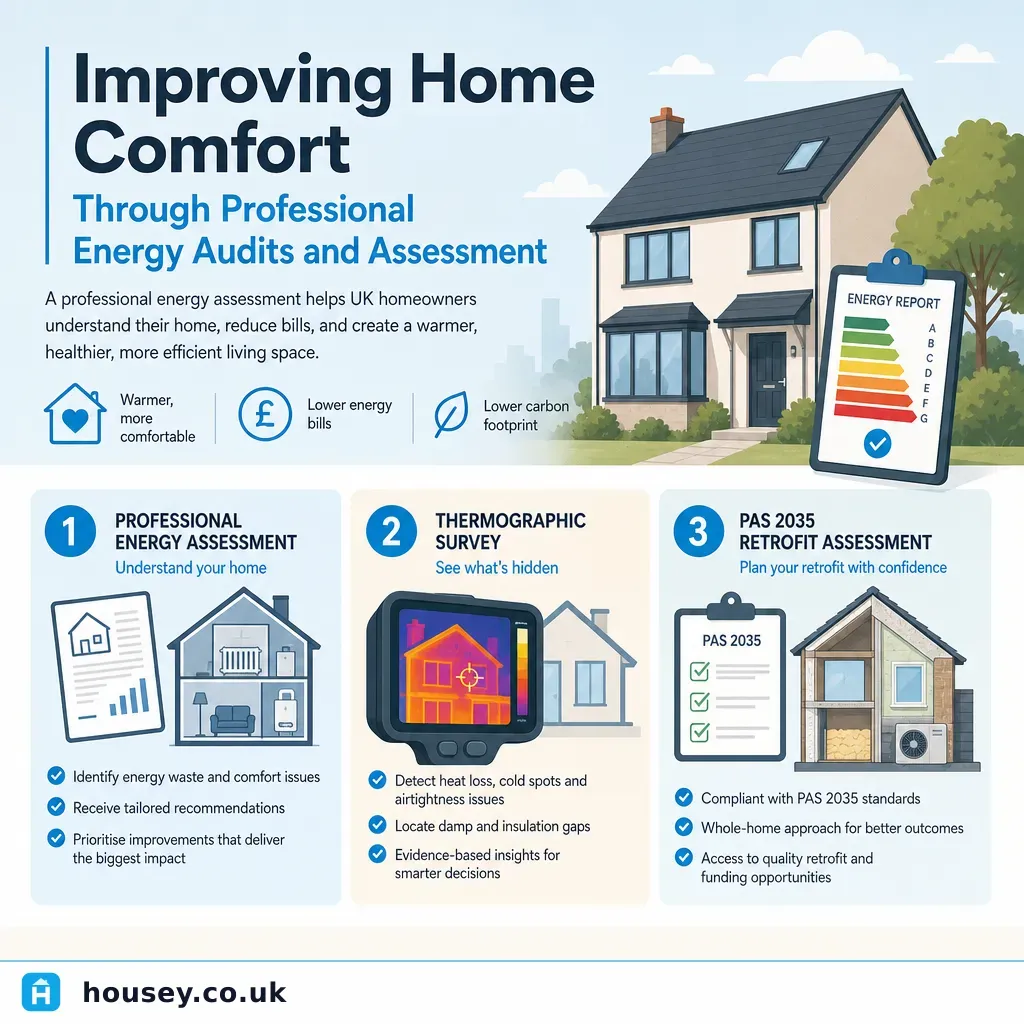
Improving Home Comfort Through Professional Energy Audits and Assessment
A professional home energy audit assesses your property's actual thermal performance — insulation, heating, ventilation, air leakage, and moisture — and produces a prioritised action plan.