Addressing Condensation in Loft Spaces: Ventilation, Moisture Management, and Prevention
By Housey · Last reviewed 18th of May 2026
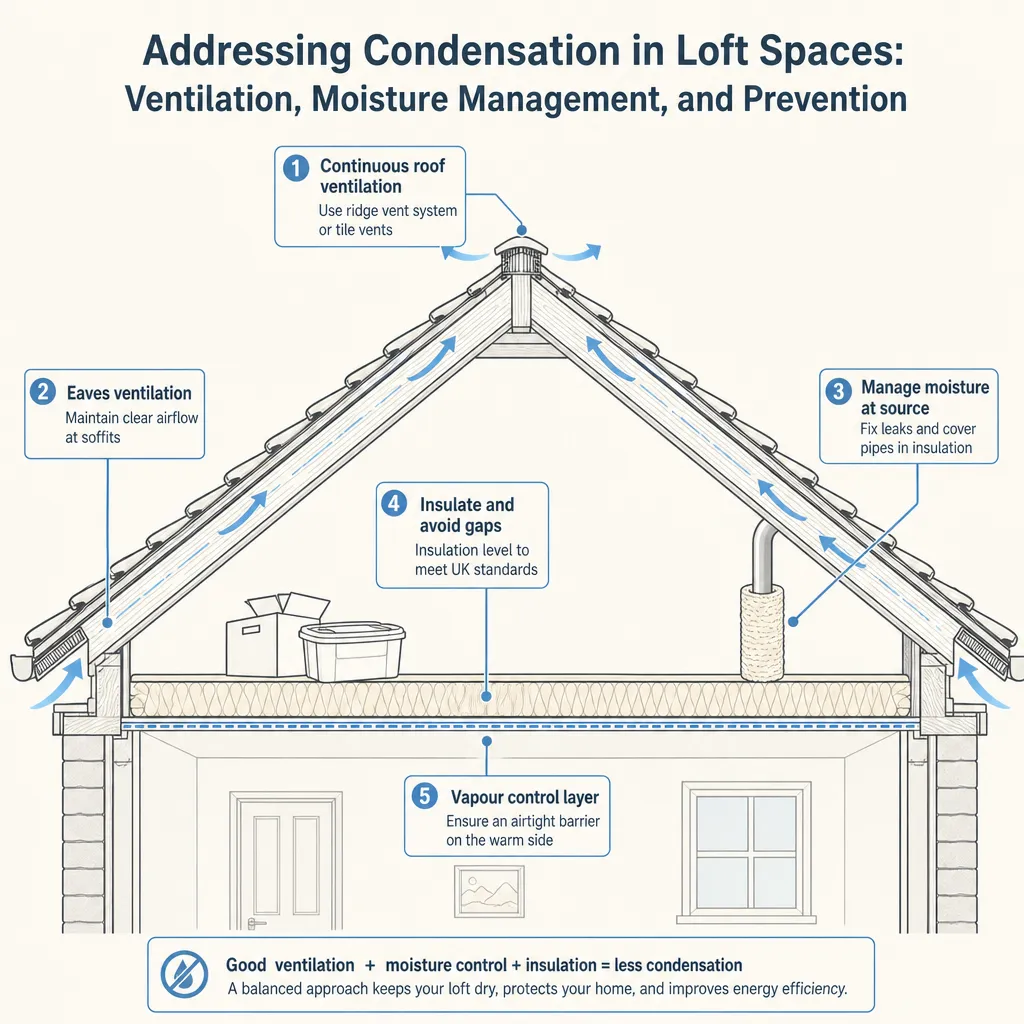
Addressing Condensation in Loft Spaces: Ventilation, Moisture Management, and Prevention
Loft condensation is one of the more common problems uncovered during property inspections, energy assessments, and post-insulation surveys across the UK. It tends to attract attention only when blackened timber, visible mould, or dripping insulation become impossible to ignore — by which point some damage may already have occurred. Understanding how moisture migrates into roof spaces, and what combination of ventilation, vapour control, and insulation strategy is most appropriate for your property, is essential before any retrofit work begins.
Key points
- Warm, humid air from living spaces rises and passes through unsealed ceiling gaps into a cold loft, reaching its dew point on cold roof timbers, sarking boards, or underfelts — a process governed by BS 5250:2021, the British Standard for moisture management in buildings.
- Building Regulations Approved Document C requires that roofs are designed to avoid interstitial condensation; installers must assess ventilation before fitting new or top-up insulation.
- Cold roofs (insulation laid at ceiling joist level) require cross-ventilation of at least 25 mm clear at eaves level and a 5 mm equivalent ventilation area at ridge, per BS 5250 and NHBC guidance.
- Warm roofs (insulation at rafter level) rely on continuous insulation above or between rafters and typically do not require ventilation paths, but incorrect installation can trigger condensation at the insulation boundary.
- PAS 2030/PAS 2035 — the framework governing publicly funded retrofit in England and Wales — requires a retrofit assessor to identify moisture risks before insulation is installed; failure to do so can void guarantees and create structural damage.
Why condensation forms in lofts
Condensation is not simply about cold weather. It is about the relationship between air temperature and relative humidity. As warm, moist air from bathrooms, kitchens, and living spaces rises — driven by the stack effect — it passes through gaps in ceilings, around light fittings, loft hatches, and pipe penetrations. When that air contacts a surface colder than its dew point, moisture deposits on the material.
In a UK Victorian terrace or 1930s semi with original ceiling construction, there may be dozens of unintentional air pathways into the loft. Modern building practice and the PAS 2035 retrofit standard both require that air leakage is addressed before or alongside insulation upgrades, precisely because insulation changes the temperature profile of the roof space and can worsen existing moisture problems.
Why added insulation sometimes makes things worse
A well-intended top-up of mineral wool insulation at joist level can lower the loft temperature further, increasing the likelihood that any moisture entering will condense on cold surfaces. If existing eaves ventilation was already marginal, additional insulation can also obstruct airflow through the eaves, making cross-ventilation ineffective. This is a recognised failure mode documented in BRE research on loft insulation retrofit.
Types of loft construction and their moisture implications
Loft type | How condensation typically forms | Key requirement |
|---|---|---|
Cold roof (insulation at ceiling joist level) | Moist air enters through ceiling gaps; condenses on cold rafters and underfelt | Cross-ventilation at eaves and ridge; air-sealing of ceiling plane |
Warm roof (insulation between/above rafters) | Interstitial condensation at insulation boundary if vapour control is absent | Continuous insulation layer; vapour control layer on warm side |
Flat or warm flat roof | Moisture trapped in roof build-up if vapour barrier fails or is breached | Professional assessment of vapour resistance; specialist detailing usually needed |
Room-in-roof conversion | Complex geometry creates thermal bridges and cold spots | Thermal bridging analysis; airtightness at all junctions |
Most UK houses built before 1980 use cold roof construction. If your property has had a loft insulation upgrade under ECO, ECO4, or the Great British Insulation Scheme (GBIS), the installer was required under PAS 2030 to confirm adequate ventilation before laying insulation. If that check was not carried out or documented, a professional assessment is advisable.
Identifying the signs of a problem
Visual red flags
- Black or grey staining on roof timbers, especially at the eaves
- White or chalky deposits on timber (salt crystallisation from earlier damp cycles)
- Damp patches on ceiling plasterboard, particularly after cold spells
- Mould around the loft hatch or on the underside of the roof deck
- Compressed, wet, or discoloured insulation batts
- Rust staining around nail heads in sarking boards or tile battens
When signs suggest a more serious problem
Ongoing wetting of structural timbers can lead to fungal decay. If timbers feel soft, spongy, or show cracking perpendicular to the grain, this may indicate active wet rot. Dry rot (Serpula lacrymans) is more serious still and can spread beyond visible damage. A RICS Level 3 Building Survey or a specialist damp and timber survey should be commissioned if you observe these signs.
Homeowner checklist: assessing your loft's moisture risk
Before instructing any professional or authorising remediation work, work through the following:
Solutions and their appropriate contexts
Air-sealing the ceiling plane is nearly always the first priority. Foam, acoustic sealant, or proprietary air-barrier products applied around light fittings, pipe penetrations, and the loft hatch perimeter can significantly reduce moisture entry. This is also the least expensive intervention.
Increasing eaves and ridge ventilation is the standard remedy for under-ventilated cold roofs. This may involve fitting proprietary eaves ventilation trays to hold insulation back from the eaves gap, and adding a continuous ridge vent or intermittent tile vents. The 25 mm minimum clear ventilation path at eaves should be maintained along the full perimeter of the roof.
Installing a vapour control layer (VCL) between the living space and the insulation reduces the moisture load entering the loft. A VCL is most appropriate in new-build or major retrofit projects where the ceiling is being replaced; retro-fitting one is difficult and requires specialist knowledge to avoid creating a new moisture trap.
Mechanical ventilation in the loft space is occasionally used where natural ventilation is structurally limited — for example, mid-terrace properties where the party wall does not allow full cross-ventilation. This requires professional design to avoid over-drying or creating negative pressure problems elsewhere in the building.
Important limitations
This article provides general information about loft condensation management based on current UK standards and guidance. Moisture behaviour in roof spaces is affected by many property-specific factors including construction type, insulation specification, local climate, occupant lifestyle, and the condition of existing membranes and timbers. The remedies described here may not be appropriate for listed buildings, unusual roof constructions, or properties where structural damage has already occurred. This guidance cannot replace an on-site assessment by a qualified professional. Rules and standards may vary between England, Wales, Scotland, and Northern Ireland.
When this becomes urgent
Seek professional assessment promptly if you observe:
- Visible wet rot or soft, spongy timber in the roof structure
- White mycelial growth or fruiting bodies on timbers, which may indicate dry rot
- Insulation that is sodden or heavily compressed by water
- Water staining or mould on ceiling plasterboard inside the property
- Any condensation problem that persists through summer, not only in winter
What to ask a qualified professional
Before instructing a ventilation assessor, insulation contractor, or surveyor, ask:
- Are you accredited under PAS 2030 or PAS 2035 for retrofit work?
- Will you assess the current ventilation provision before recommending any insulation changes?
- Can you provide a written moisture risk assessment?
- What type of underfelt is present, and does it need replacing before insulation is added?
- Will you inspect the timber for existing decay before starting any work?
- What guarantee or certificate will be provided on completion, and is it backed by a recognised warranty scheme such as CIGA or TrustMark?
When to get professional help
A ventilation and condensation assessment is advisable if you notice any of the visual red flags listed above, if you have recently had loft insulation installed without a documented ventilation check, or if your loft is part of a room-in-roof conversion where moisture risks are more complex. A structural timber assessment should be commissioned separately if decay is suspected.
How Housey can help
If you are concerned about condensation in your loft, Housey connects you with accredited professionals who can carry out a ventilation and condensation assessment and confirm whether your existing ventilation provision is adequate. If insulation is missing, incorrectly installed, or needs to be upgraded, you can also find vetted insulation installers who work to PAS 2030 standards and carry out a ventilation check before any installation begins.
Frequently asked questions
Why does my loft get condensation even in summer?
Summer condensation is less common but can occur when warm, humid outdoor air enters a relatively cool loft and deposits moisture on surfaces. It may also indicate that a mechanical extract fan elsewhere in the property is pushing moist air into the roof space. Persistent summer condensation warrants a professional assessment, as it suggests a moisture source beyond the usual winter dew-point problem.
How much does it cost to fix loft condensation in the UK?
Costs vary widely. Air-sealing ceiling penetrations is typically a low-cost task. Fitting eaves ventilation trays costs around £200–£600 for a typical semi-detached house, depending on access and whether insulation needs to be moved. A full ventilation and condensation assessment from a qualified specialist typically costs £150–£400. Timber repairs or decay treatment add significantly to overall costs. Indicative UK costs, last reviewed 2026-05-18; obtain quotes for your specific property.
Does my loft need a vapour control layer?
Not always. Cold roofs rely primarily on cross-ventilation rather than a vapour control layer, though sealing air leakage pathways through the ceiling is always beneficial. Warm roofs — insulation at rafter level — almost always require a properly detailed vapour control layer on the warm side of the insulation. Whether your construction would benefit depends on insulation type, existing underfelt permeability, and occupant moisture levels; a retrofit assessor can advise.
Can loft condensation damage my roof structure?
Yes. Prolonged wetting of roof timbers can lead to wet rot or, in severe cases, dry rot, both of which can compromise structural integrity. Nail corrosion, tile batten failure, and sarking board deterioration are also associated with long-term moisture exposure in roof spaces. Prompt identification and treatment significantly reduces the risk of costly structural remediation work.
Sources and further reading
- BS 5250:2021 — Management of moisture in buildings — BSI
- Approved Document C — Site preparation and resistance to contaminants and moisture — GOV.UK
- PAS 2035:2023 — Retrofitting dwellings for improved energy efficiency — BSI / TrustMark
- NHBC Standards — Roofs — NHBC
- BRE Good Building Guide — Loft insulation and moisture risk — BRE Group
Useful next reads
 Energy & Retrofit
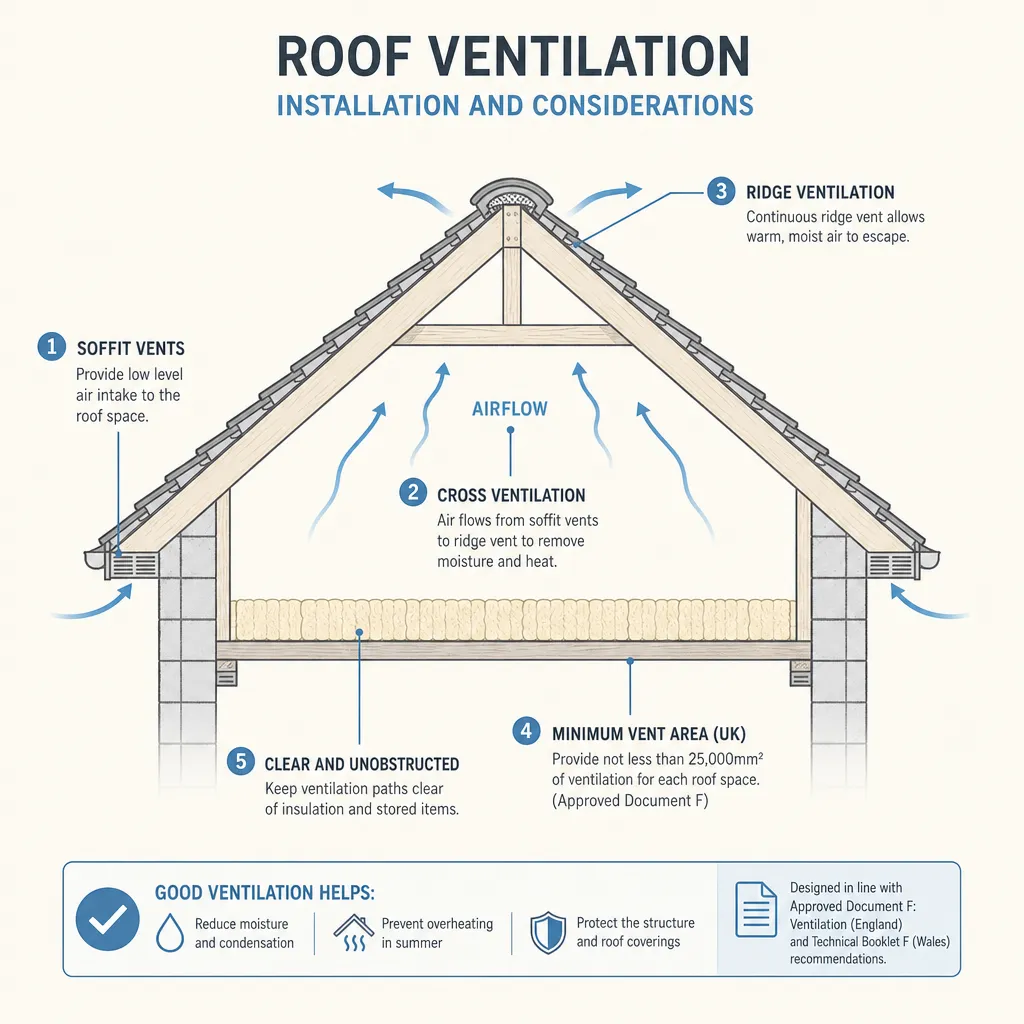
Roof Ventilation Installation and Considerations
Roof ventilation prevents condensation, rot, and structural damage in UK roof spaces by maintaining airflow above insulation.
 Energy & Retrofit
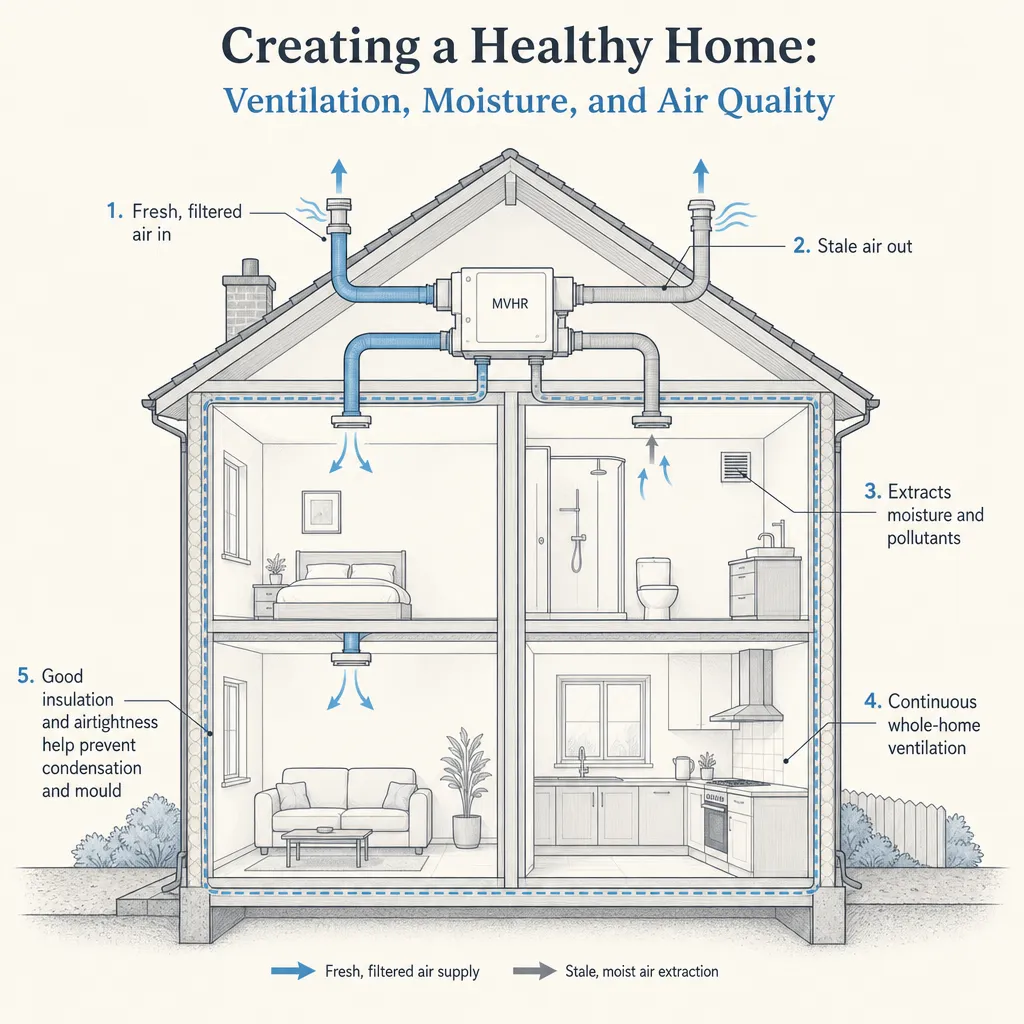
Creating a Healthy Home: Ventilation, Moisture, and Air Quality
Healthy indoor air quality depends on balancing airtightness with adequate ventilation, managing moisture from everyday activities, and removing pollutants at source.
 Energy & Retrofit
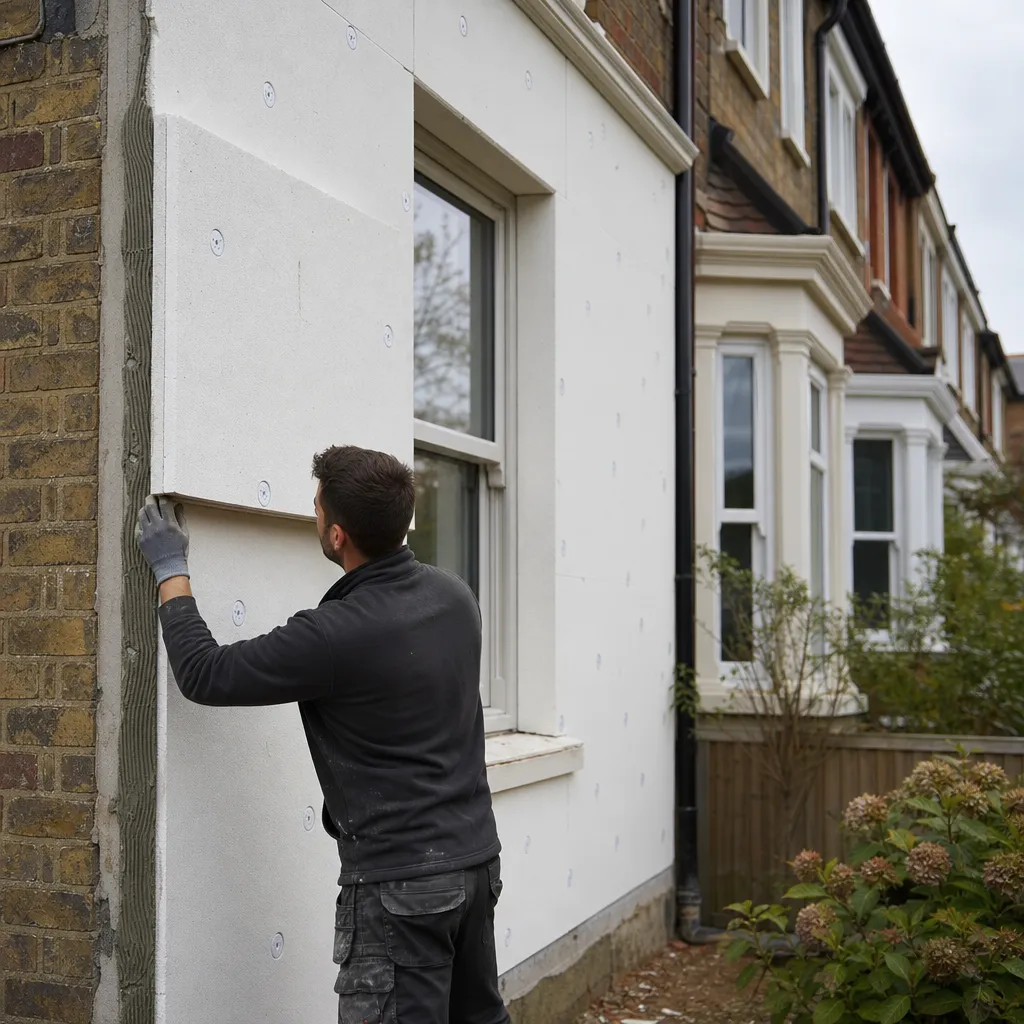
High-Performance Wall Insulation Systems for UK Homes
UK homes use three main wall insulation systems: external wall insulation (EWI), internal wall insulation (IWI), and cavity wall insulation (CWI).
 Energy & Retrofit
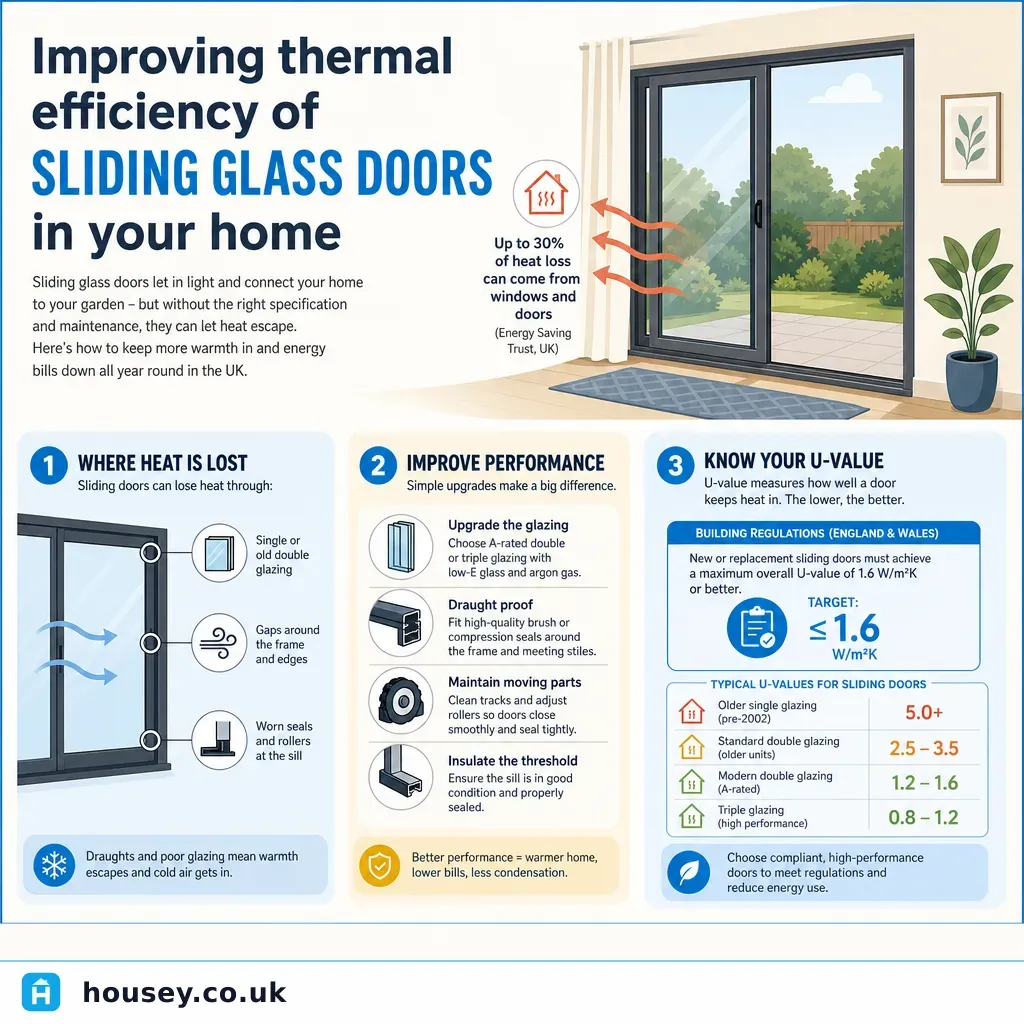
Improving thermal efficiency of sliding glass doors in your home
Sliding glass doors lose heat through the glazing unit, the frame, and air gaps in worn seals.
 Energy & Retrofit
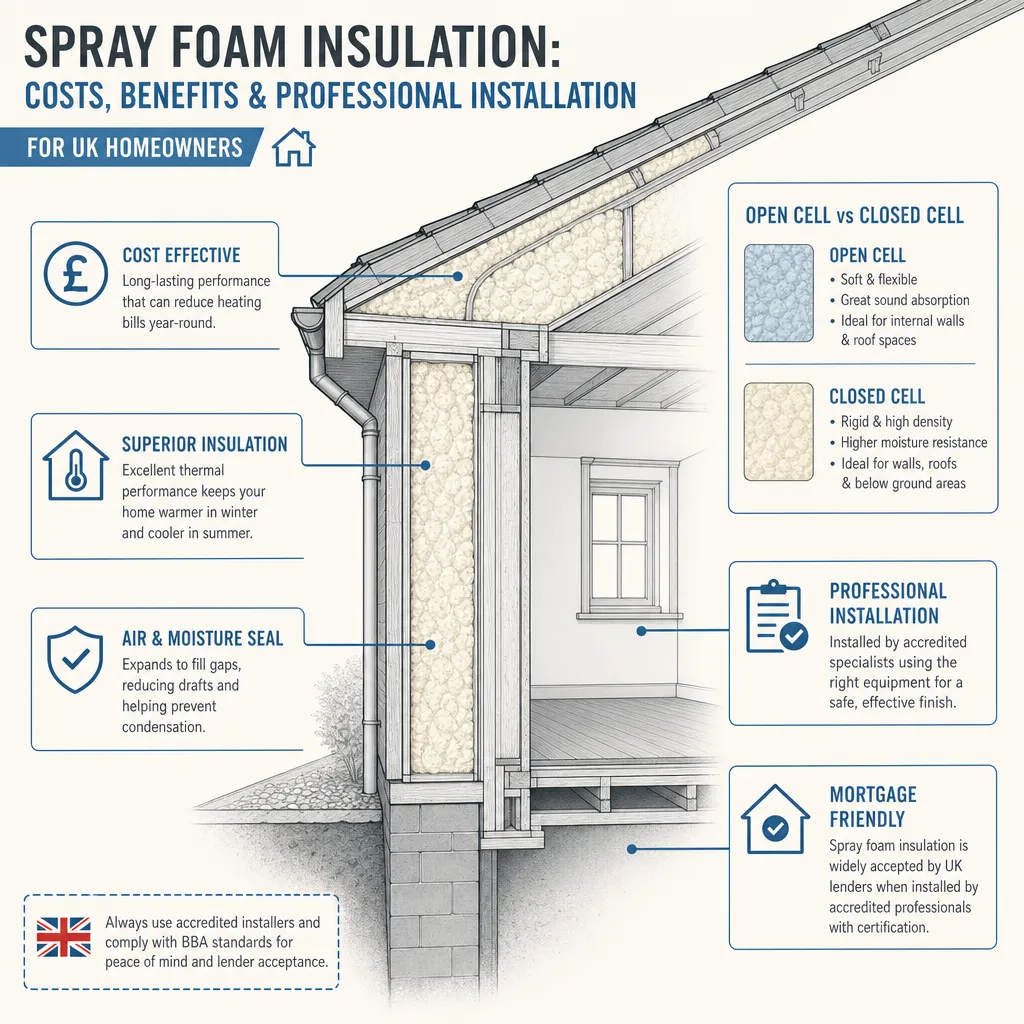
Spray foam insulation: costs, benefits and professional installation
Spray foam insulation costs between £15 and £60 per square metre installed in the UK, depending on whether open-cell or closed-cell foam is used.