Improving Home Comfort Through Professional Energy Audits and Assessment
By Housey · Last reviewed 1st of June 2026
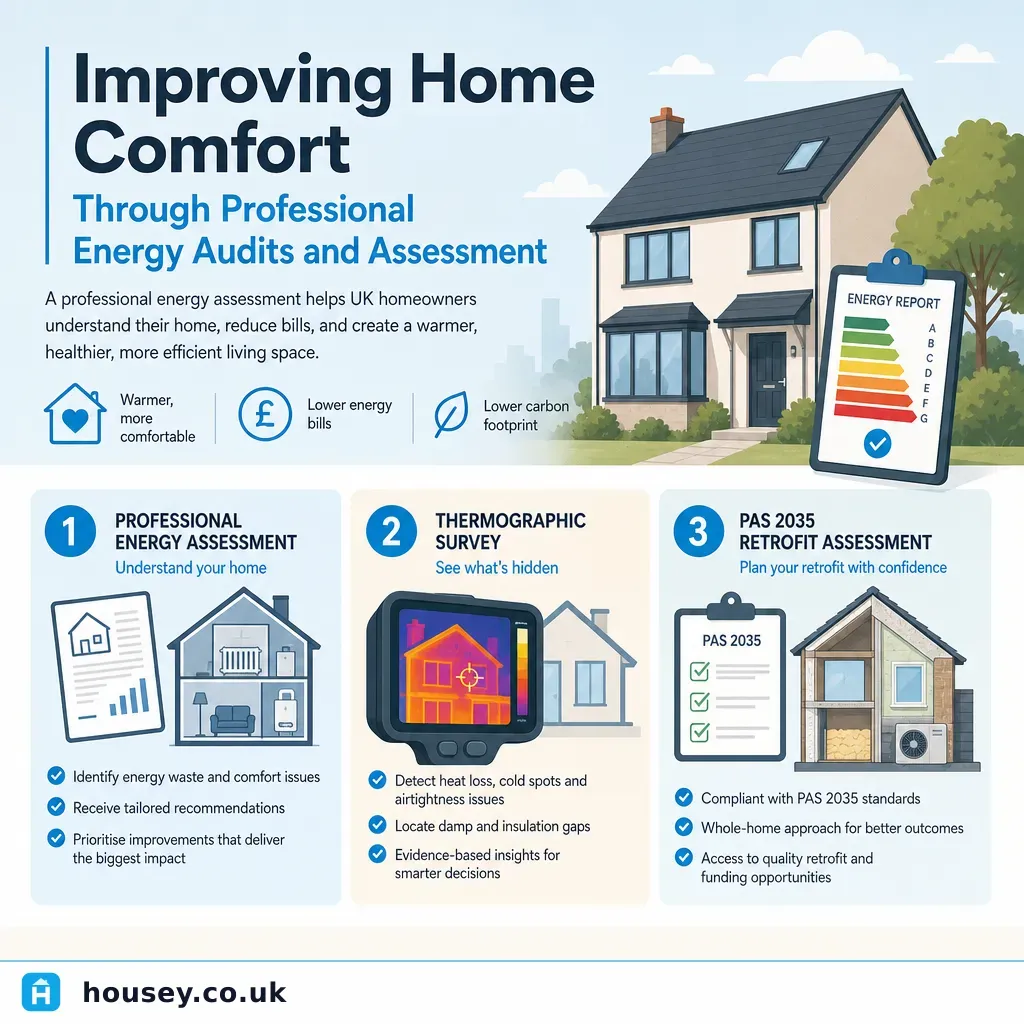
Improving Home Comfort Through Professional Energy Audits and Assessment
Cold spots in winter, stuffy rooms in summer, and heating bills that seem disproportionate to the warmth actually felt — these are signs that a home may have underlying energy performance issues. An Energy Performance Certificate (EPC) provides a calculated A–G rating, but it was never designed to diagnose the causes of discomfort or guide specific improvement decisions. Understanding which professional assessment to commission, and what to expect from it, makes a real difference to how effectively improvement works are targeted.
Key points
- A domestic EPC rates a property A–G using calculated assumptions about its features; it is a regulatory document required for sales and lettings, not a diagnostic tool for comfort issues.
- A professional energy audit or retrofit assessment surveys actual thermal performance, heating efficiency, ventilation, air leakage, and moisture risk, producing a prioritised improvement plan.
- Under PAS 2035:2023, homes receiving publicly funded retrofit measures — including ECO4 and the Great British Insulation Scheme — must have a Retrofit Assessment by a registered Retrofit Assessor overseen by a Retrofit Coordinator.
- Thermographic surveys use infrared cameras to visualise heat loss through walls, roofs, floors, and junctions; most effective when the inside-outside temperature difference is at least 10 °C, typically November to February.
- Indicative UK costs for a professional energy audit range from approximately £200 to £600 depending on property size, scope, and whether thermal imaging is included (Indicative UK costs, last reviewed 2026-06-01; costs vary — obtain at least three quotes).
EPC, energy audit, or thermographic survey — which do you need?
These assessments are frequently confused. Here is how they compare:
Assessment | What it measures | Who carries it out | When you need it | Typical output |
|---|---|---|---|---|
EPC | Calculated energy rating (A–G) | Registered Domestic Energy Assessor (DEA) | Sale, letting, grant eligibility | EPC certificate with generic recommendations |
Energy audit / retrofit assessment | Actual thermal performance, heating, ventilation, moisture | Retrofit Assessor (PAS 2035) or energy consultant | Before retrofit works, comfort complaints, high bills | Written report with prioritised recommendations |
Thermographic survey | Visible heat loss through fabric and junctions | Thermographer (BINDT or ITC certified) | Suspected insulation gaps, cold bridges, warranty disputes | Annotated infrared images and written findings |
Air pressure test | Air leakage rate (m³/h·m² at 50 Pa) | ATTMA-accredited tester | New builds (Part L) or deep retrofits | Numerical result, pass/fail, leakage locations |
What a professional energy audit covers
A thorough audit assesses your home element by element. A competent assessor will review:
- Insulation: loft, cavity wall, solid wall, and floor — type, depth, continuity, and degraded or missing areas
- Heating system: boiler age and efficiency, controls, radiator sizing, pipe insulation, hot water cylinder losses
- Glazing: U-values, frame condition, gap sealing, draught vulnerability
- Ventilation: whether adequate air change is achieved without uncontrolled draughts — critical for moisture control and indoor air quality
- Air leakage: gaps around service penetrations, loft hatches, letter boxes, suspended timber floors
- Moisture and damp: condensation risk, interstitial moisture, and whether proposed measures could worsen existing problems
The PAS 2035 Retrofit Assessment specifically requires evaluation of moisture and ventilation risks before any measure is recommended. Adding airtightness without adequate ventilation can cause condensation, mould, and structural damage.
Which assessment do I need?
- Choose an EPC if you are selling or letting, or if a grant scheme requires a current EPC rating as an eligibility criterion.
- Choose a professional energy audit or retrofit assessment if you want to understand actual performance, are planning fabric or heating improvements, or are applying under ECO4 or the Great British Insulation Scheme.
- Add a thermographic survey if you want visual evidence of heat loss — useful for cold bridges, checking whether past cavity wall insulation was installed correctly, or supporting a warranty claim.
- Commission an air pressure test if you need Part L compliance evidence for a new build or deep retrofit, or if draught complaints suggest significant uncontrolled air leakage.
- Consult an energy-efficiency consultant if you are combining solar PV, battery storage, a heat pump, and fabric improvements — whole-system modelling before committing to individual technologies is valuable.
How to choose an energy assessor
For an EPC: the assessor must be a registered Domestic Energy Assessor (DEA) on an accredited scheme register such as Elmhurst Energy or Stroma Certification.
For a PAS 2035 Retrofit Assessment: the assessor must hold a Retrofit Assessor qualification and be registered with a TrustMark-registered organisation. Verify on the TrustMark register.
For a thermographic survey: look for a thermographer accredited by the British Institute of Non-Destructive Testing (BINDT) or holding an Infrared Training Centre (ITC) qualification at Level 1 or above.
What to ask before accepting a quote
- What qualifications and scheme registrations do you hold, and on which register are you listed?
- Will the assessment cover heating, ventilation, and moisture risk — not just insulation?
- Will thermal imaging be included, and if so, under what conditions?
- Will the report prioritise recommendations with indicative costs?
- Are you independent of any installer or product supplier?
- Is VAT included in the quoted fee?
- When will I receive the written report?
Before the assessor visits — a preparation checklist
What a good audit report should tell you
A quality report prioritises measures in a logical sequence: fabric first (insulation, draught-proofing, windows), then heating system, then renewables and low-carbon technologies. Recommending a heat pump before the fabric is adequately prepared is a red flag — heat pumps perform most efficiently in well-insulated, low-heat-loss properties.
Expect the report to include:
- Current performance summary with measured or estimated data
- Identified heat loss areas, with infrared images if thermographic imaging was used
- Prioritised measures with indicative costs, expected savings, and payback periods
- Notes on moisture, ventilation, and sequencing risks for each measure
- Confirmation of potential grant eligibility under ECO4, the Great British Insulation Scheme, or the Boiler Upgrade Scheme
Be cautious if a report recommends cavity wall injection, external wall insulation, or a heat pump without addressing ventilation, moisture risk, or the order in which works should proceed.
When to get professional help
A professional energy audit is itself the primary expert resource. If the audit identifies any of the following, additional specialist input is needed before works begin:
- Evidence of penetrating or rising damp — a damp specialist or chartered building surveyor should assess this before any insulation is added
- Suspected asbestos in insulation materials (common in pre-1980s properties) — do not disturb; instruct a licensed asbestos surveyor
- Significant structural movement affecting the building fabric
- Heating or electrical systems that are unsafe or beyond economic repair
How Housey can help
Housey connects homeowners with qualified energy professionals across the UK. Find energy-efficiency consultants to carry out whole-house audits and PAS 2035 retrofit assessments, or commission thermographic surveys to pinpoint exactly where your property is losing heat before you invest in improvements.
Frequently asked questions
Is a professional energy audit the same as an EPC?
No. An EPC is a standardised regulatory document assigning an A–G rating based on calculated property characteristics — required for sales and lettings but not designed to diagnose comfort problems or guide retrofit decisions. A professional energy audit or PAS 2035 retrofit assessment surveys actual performance and produces actionable, prioritised improvement recommendations.
Do I need a PAS 2035 retrofit assessment to access ECO4 funding?
Yes. For ECO4 and the Great British Insulation Scheme, a PAS 2035 Retrofit Assessment by a registered Retrofit Assessor is a legal requirement. Scheme rules are set by Ofgem and administered by energy suppliers. Eligibility criteria change — always check current guidance on GOV.UK and the Ofgem scheme pages before applying.
When is the best time of year for a thermographic survey?
Thermographic surveys require a temperature difference of at least 10 °C between inside and outside to produce useful contrast. This typically means winter months — November to February in most of the UK. Surveys in mild conditions produce less visible contrast and may miss defects that would show clearly in cold weather.
How long does a professional energy audit take?
For a typical three-bedroom semi-detached home, expect an on-site visit of two to four hours depending on scope and whether thermal imaging is included. The written report usually follows within five to ten working days. Larger or more complex properties take longer.
Sources and further reading
- PAS 2035: Retrofitting dwellings for improved energy efficiency — BSI Group
- TrustMark: Find a registered retrofit professional — TrustMark
- ECO4 scheme guidance — Ofgem
- Energy Performance Certificates — GOV.UK
- Home energy efficiency guidance — Energy Saving Trust
Useful next reads
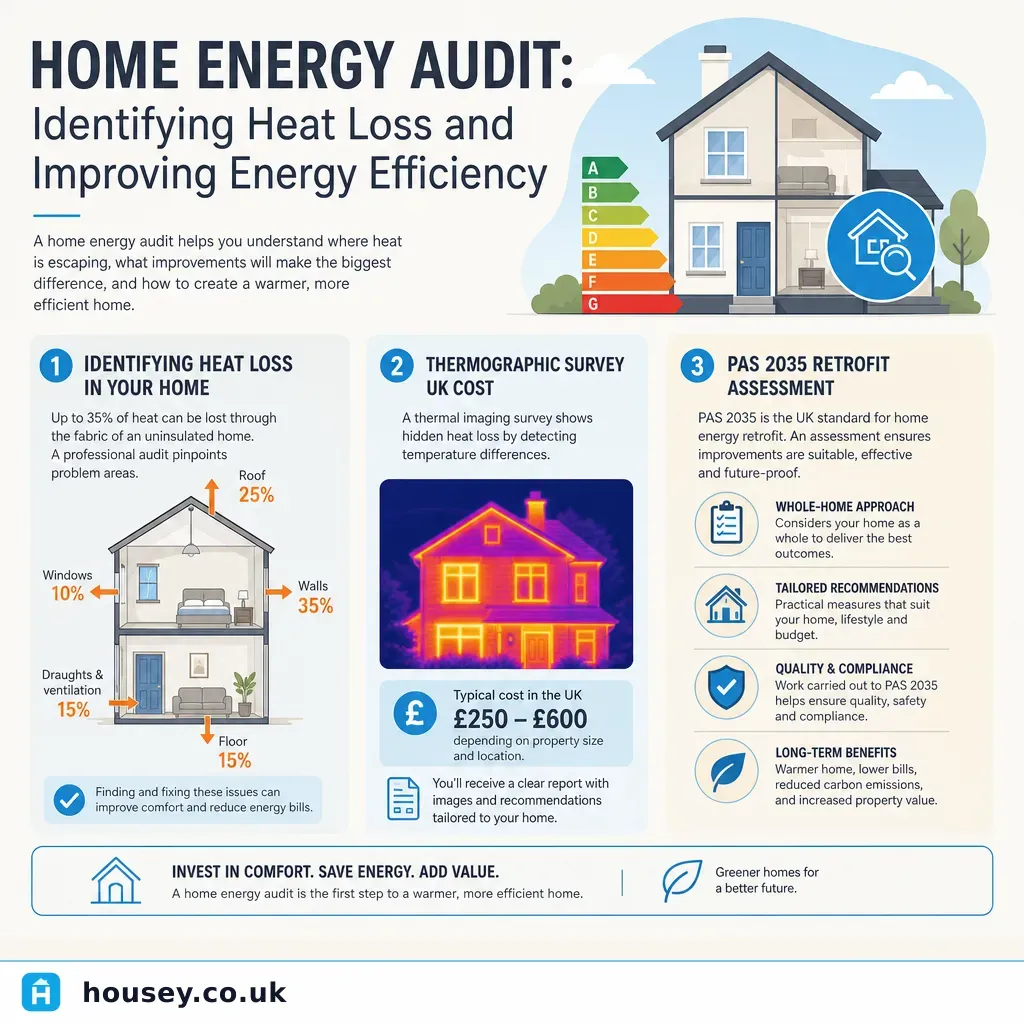 Energy & Retrofit
Home Energy Audit: Identifying Heat Loss and Improving Energy Efficiency
A home energy audit is a structured assessment of where your property loses heat and how efficiently it uses energy.
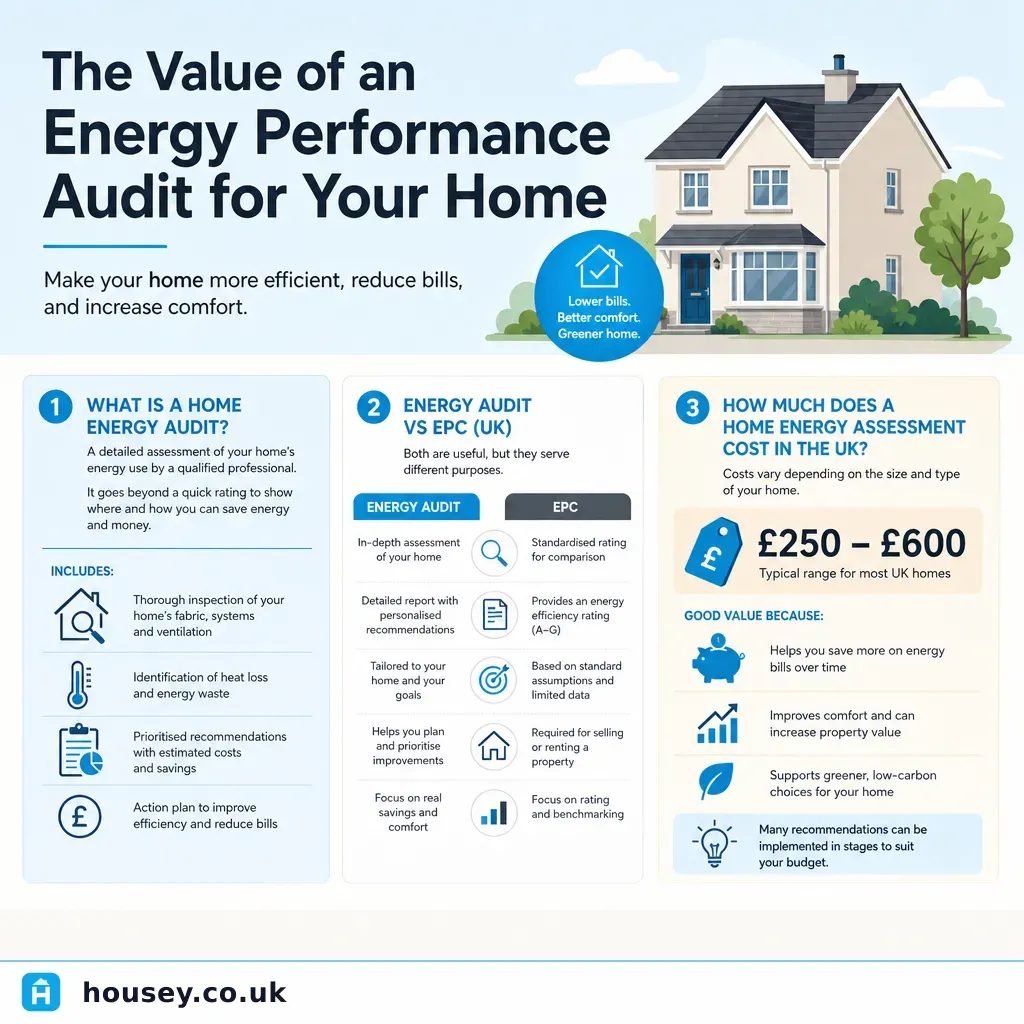 Energy & Retrofit
The Value of an Energy Performance Audit for Your Home
A home energy performance audit is a detailed, site-specific assessment of a property's fabric, heating, ventilation, and controls.
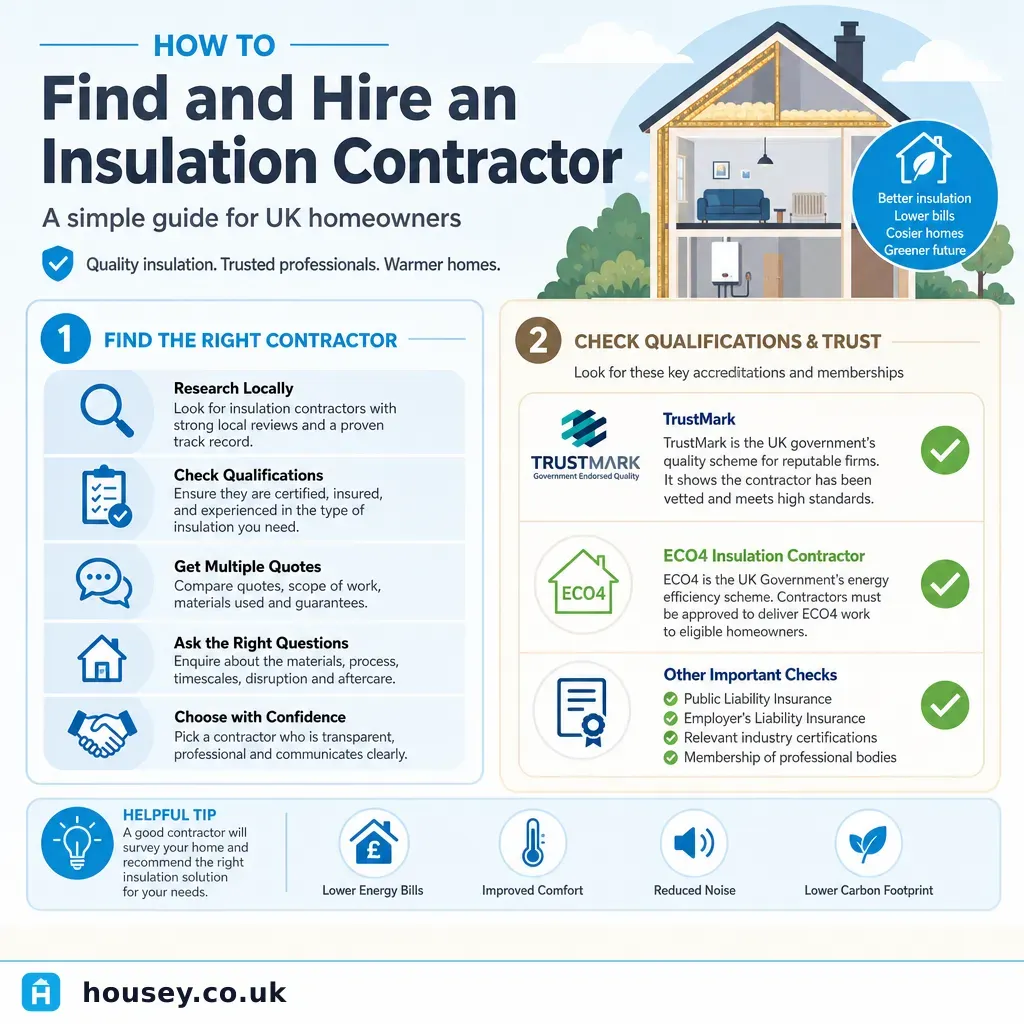 Energy & Retrofit
How to Find and Hire an Insulation Contractor
Look for contractors registered with TrustMark, the government-endorsed quality scheme for energy efficiency retrofit work.
 Energy & Retrofit
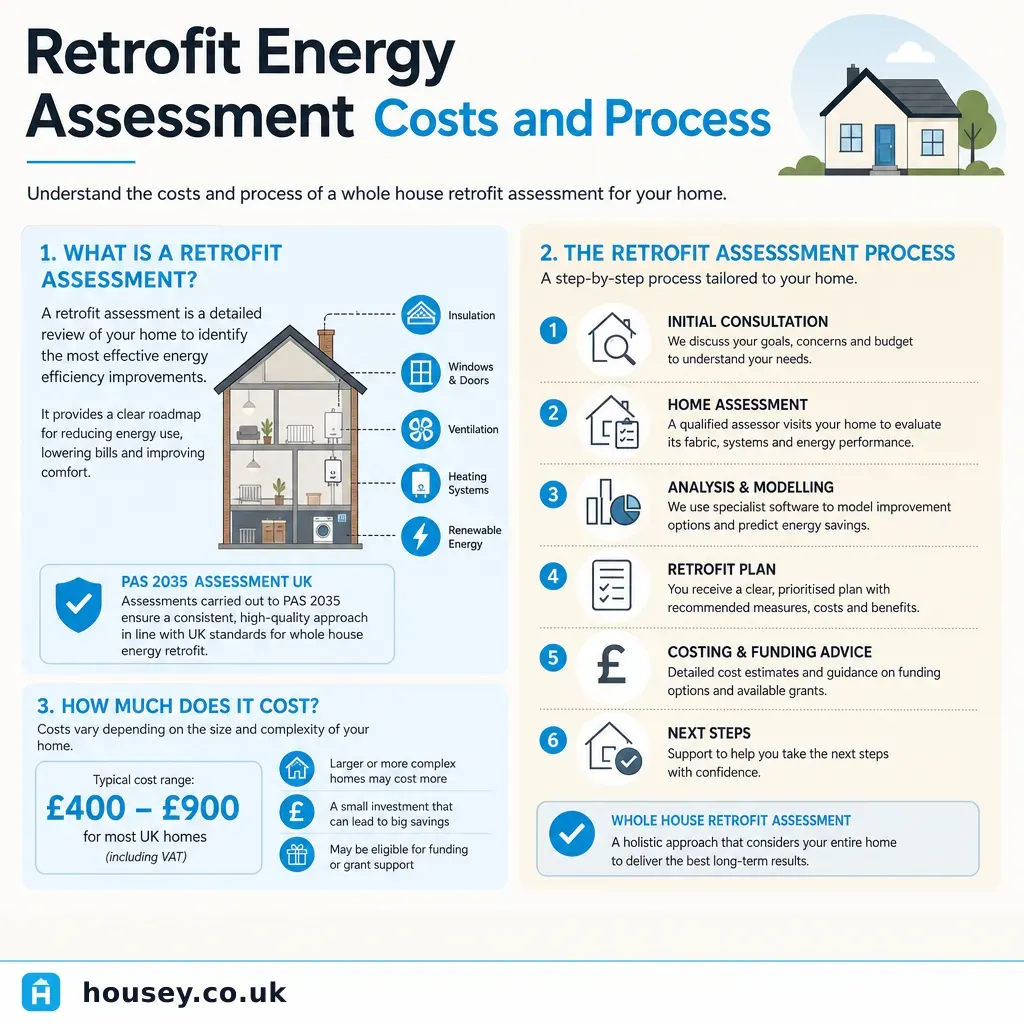
Retrofit Energy Assessment Costs and Process
A retrofit energy assessment is a formal inspection of your home's fabric, heating, ventilation, and moisture risk, carried out by a TrustMark-registered assessor.
 Energy & Retrofit
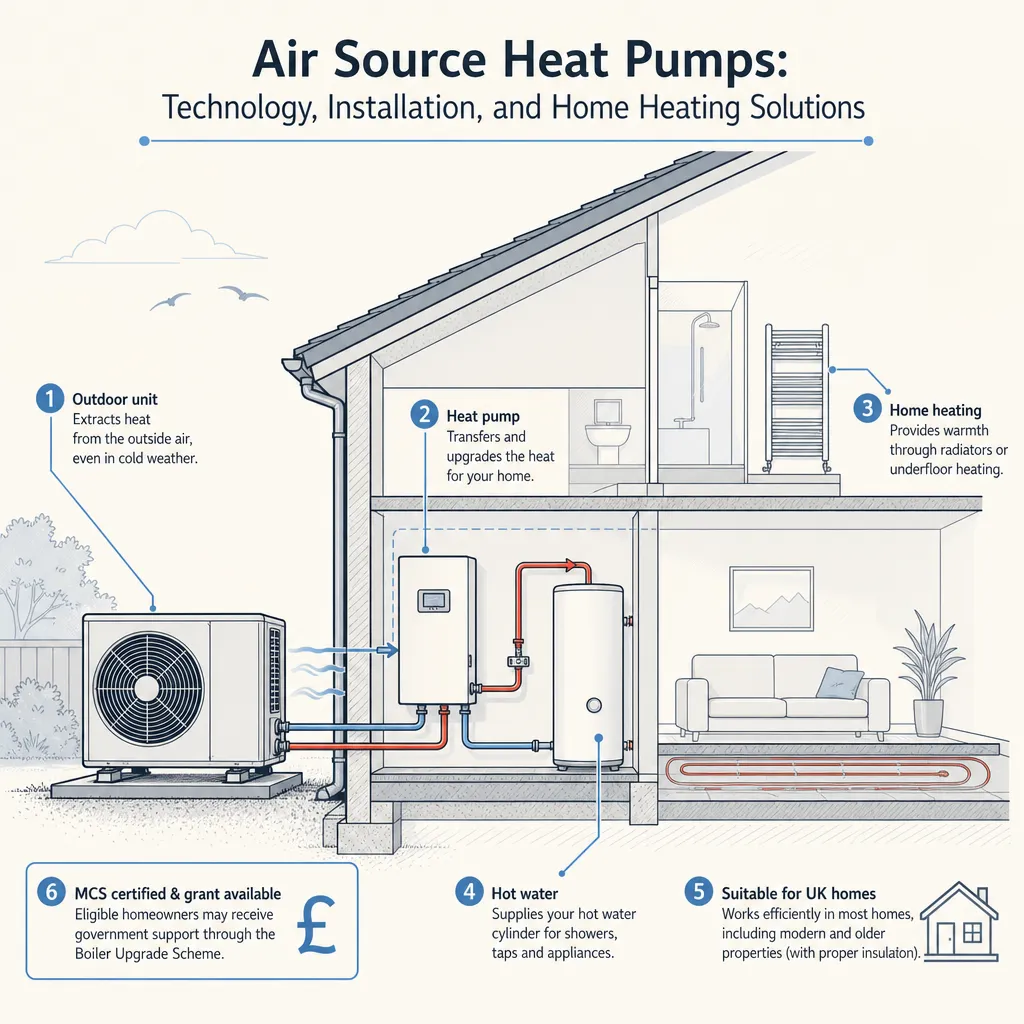
Air Source Heat Pumps: Technology, Installation, and Home Heating Solutions
An air source heat pump extracts heat from outdoor air and transfers it indoors via a refrigerant cycle, typically delivering 2.