Diagnosing Heat Pump Performance Issues: Why Cooling Fails
By Housey · Last reviewed 11th of May 2026
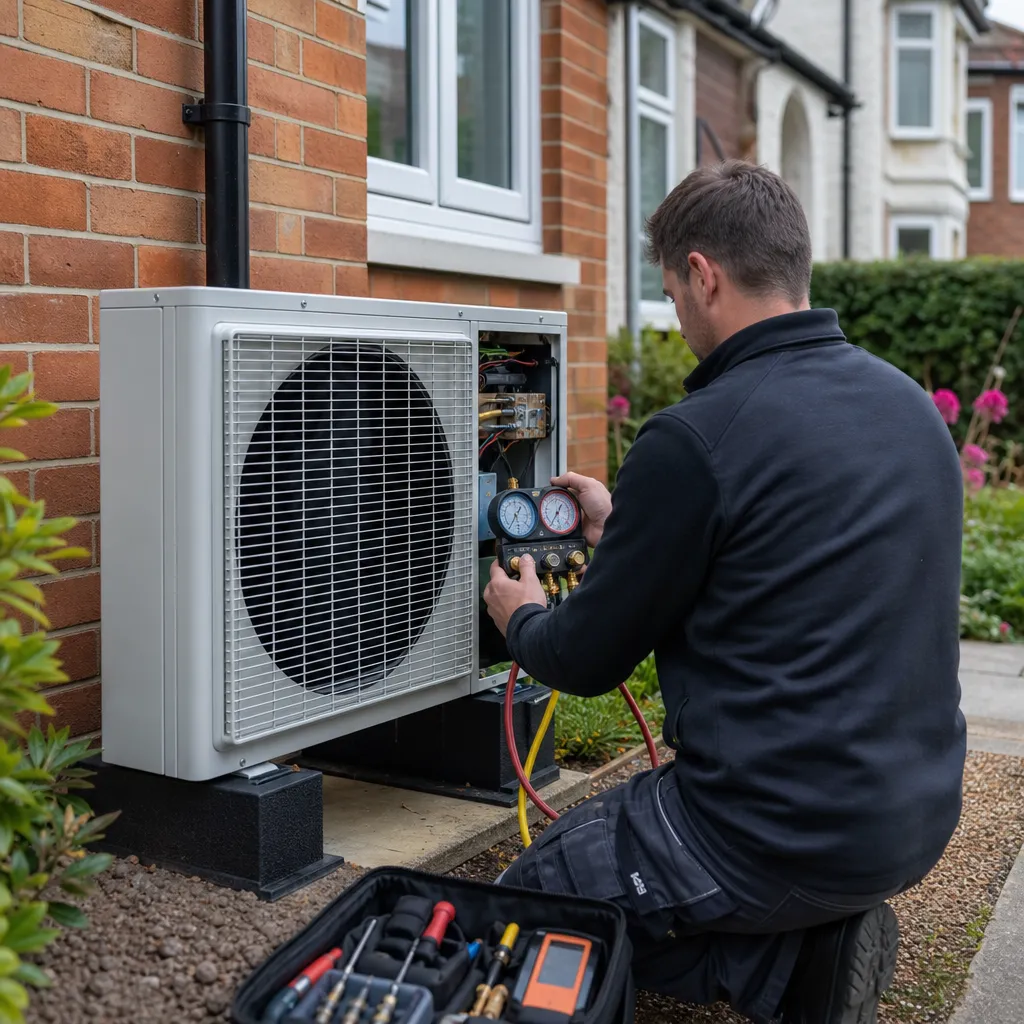
Diagnosing Heat Pump Performance Issues: Why Cooling Fails
Heat pumps are increasingly common in UK homes following the Boiler Upgrade Scheme and energy retrofit programmes — but when a system fails to cool adequately, homeowners often find it difficult to know whether the fault is minor or a sign of a more serious underlying problem. Cooling performance issues can arise at any stage: from a newly installed unit that never performs as expected, to an established system that has gradually lost efficiency over successive hot summers.
Key points
- Refrigerant loss is one of the most common causes of cooling failure and must be investigated by an F-Gas registered engineer under UK F-Gas regulations (retained EU Regulation 517/2014).
- A dirty or blocked air filter can noticeably reduce cooling output; most manufacturers recommend cleaning the filter every four to eight weeks during periods of heavy use.
- Undersized systems — often the result of inadequate heat gain calculations at installation — will struggle to cool a property even when the equipment is functioning correctly.
- PAS 2035:2023 requires a retrofit assessment before specifying heat pump capacity; omitting this step is a documented cause of chronic underperformance in UK retrofit projects.
- MCS Installation Standard MCS 020 sets minimum commissioning requirements for heat pump installations in the UK; homeowners should hold a copy of their MCS commissioning certificate.
How heat pumps provide cooling
Air-source and ground-source heat pumps can operate in reverse-cycle mode: the refrigerant loop runs in the opposite direction to heating, extracting heat from the indoor space and discharging it outside. Not all UK heat pump installations are configured for active cooling — some systems are heating-only, and the indoor unit (fan coil, ceiling cassette, or underfloor manifold) may not support reverse-cycle operation. Before diagnosing a cooling fault, confirm that your system was specified and commissioned for cooling in the original design.
When cooling is enabled, performance depends on refrigerant circuit integrity, clean heat exchangers, unobstructed airflow at indoor and outdoor units, accurate controller settings, and a system correctly sized for the space's peak heat gain.
Common causes of heat pump cooling failure
Refrigerant loss
Refrigerant loss reduces the system's ability to transfer heat. Signs include the outdoor unit running continuously without cooling the space, ice forming on the indoor unit or pipework, hissing or bubbling sounds near the system, or a gradual decline in output over time. Under UK F-Gas regulations, only F-Gas registered engineers may handle, recharge, or recover refrigerants. Do not attempt to top up refrigerant yourself.
Dirty filter or blocked evaporator coil
The indoor unit draws room air across an evaporator coil. Dust, pet hair, and debris accumulate on the washable filter and, over time, on the coil surface itself. Even partial blockage restricts airflow and forces the system to work harder for reduced output. Cleaning the washable filter is typically a homeowner task described in the system manual — but do not apply water or cleaning agents to electrical components without specific manufacturer guidance.
Blocked or restricted outdoor unit
The outdoor unit must discharge heat freely to the outside air. Vegetation, garden furniture, fencing, or debris within approximately 300–500 mm of the unit can impair airflow. In hot weather, units installed in enclosed south-facing positions may struggle to reject heat efficiently.
Incorrect controller or thermostat settings
UK heat pump controllers vary significantly by manufacturer and generation. Cooling mode may require a specific mode switch separate from heating mode, which is not always intuitive. If the system has been recently serviced or the controller replaced, settings may have been reset to default. Check the manufacturer's manual for your specific model.
Undersized system
A system specified without an accurate heat gain calculation — accounting for solar gain, occupancy, glazing area, and internal equipment loads — will not cool adequately even when functioning perfectly. This is a design issue rather than a fault, and requires reassessment by a qualified heat pump engineer rather than a routine maintenance visit.
Compressor or refrigerant circuit component fault
Component failures within the refrigerant circuit — including compressor degradation, a faulty expansion valve, or a failed temperature or pressure sensor — will reduce cooling performance. These faults typically produce error codes on the controller display and require a manufacturer-trained or F-Gas registered engineer with specialist diagnostic equipment.
Which cause is most likely? A decision tree
- System never cooled well since installation → likely an undersizing or commissioning issue. Request MCS commissioning documentation and compare the design cooling load with measured output.
- Cooling worked previously but performance has gradually declined → check and clean the filter; if clean, check outdoor unit clearance; if both are satisfactory, suspect refrigerant loss — call an F-Gas registered engineer.
- System blows air but no meaningful temperature drop → likely refrigerant loss or compressor fault; call an F-Gas registered engineer.
- System cannot reach set temperature on the hottest days only → may be undersized for peak cooling load, or outdoor unit airflow is restricted; check clearances and consult an engineer.
- Controller displays an error code → do not ignore; log the code and contact the installer or manufacturer — codes are model-specific and often indicate refrigerant or sensor faults.
- Unusual noises (hissing, gurgling, grinding) from any part of the system → switch off and call a qualified engineer; these may indicate refrigerant leak or mechanical failure.
Red flags: stop and call a professional
- Ice forming on the indoor unit, refrigerant pipework, or outdoor unit during cooling mode.
- Hissing, gurgling, or burning smells from any part of the system.
- The outdoor unit is completely silent when cooling should be active.
- Persistent error codes that do not clear after a full power cycle.
- The system has not received annual maintenance as required by most manufacturer warranties.
- Cooling performance has declined sharply and suddenly rather than gradually.
Important limitations
This article provides general diagnostic guidance only. Heat pump systems differ significantly by manufacturer, model, refrigerant type (R32, R410A, R290), and installation configuration. No two properties have identical heat gain profiles or system specifications. This information is not a substitute for a qualified assessment by an MCS-accredited installer or F-Gas registered engineer. Cooling performance issues involving the refrigerant circuit, electrical components, or system sizing must be assessed by a competent professional.
What to ask a qualified professional
- Is my system specified and commissioned to provide active cooling, or is it heating only?
- Can you provide the MCS commissioning certificate and the original design heat loss and heat gain calculations?
- What is the system's rated cooling capacity in kW, and how does that compare to the calculated peak heat gain for my property?
- Is there evidence of refrigerant loss, and if so, where is the leak located?
- What maintenance records exist for this system, and what does the service history show?
- Would a system upgrade, additional shading measures, or improved ventilation be more cost-effective than replacing the outdoor unit?
When to get professional help
Seek a qualified engineer if the system displays persistent error codes, if you suspect refrigerant loss, if the compressor is making unusual noises, or if the system has not been maintained for more than 12 months. For newly installed systems performing poorly, request the MCS commissioning documentation and ask the original installer to attend under any workmanship warranty. If the installer is unresponsive, the MCS complaints process at mcscertified.com is the appropriate route.
How Housey can help
If you are unsure whether your heat pump is correctly specified or performing as it should, a professional heat pump survey can assess the system against your property's thermal characteristics, identify faults, and recommend corrective action — whether a maintenance visit, a refrigerant recharge by an F-Gas engineer, or a full resizing exercise carried out to MCS 020 requirements.
Frequently asked questions
Can I top up heat pump refrigerant myself?
No. Under UK F-Gas regulations (retained EU Regulation 517/2014), only F-Gas registered engineers are permitted to handle, recharge, or recover refrigerants. Doing so without registration is illegal and potentially dangerous.
How often should a heat pump be serviced to maintain cooling performance?
Most manufacturers recommend an annual service by a qualified engineer, alongside monthly or seasonal filter cleaning by the homeowner. Skipping annual maintenance can void manufacturer warranties and allow small faults to develop into costly failures.
My heat pump heats fine but will not cool — is that a fault?
Not necessarily. Some UK heat pump installations are configured for heating only and are not set up to provide active cooling. Check your original system specification, MCS commissioning certificate, and controller manual. If cooling was part of the original design, a commissioning or component fault is likely and warrants an engineer visit.
What does MCS 020 require for heat pump installations?
MCS 020 is the Microgeneration Certification Scheme installation standard for heat pumps. It requires the system to be sized using accurate heat loss and heat gain calculations, correctly commissioned, and that a commissioning checklist is completed and provided to the homeowner at handover.
Sources and further reading
- F-Gas regulations guidance — GOV.UK
- MCS heat pump installation standards — Microgeneration Certification Scheme
- PAS 2035:2023 retrofitting dwellings for energy efficiency — BSI
- Heat pumps explained — Energy Saving Trust
Useful next reads
 Energy & Retrofit
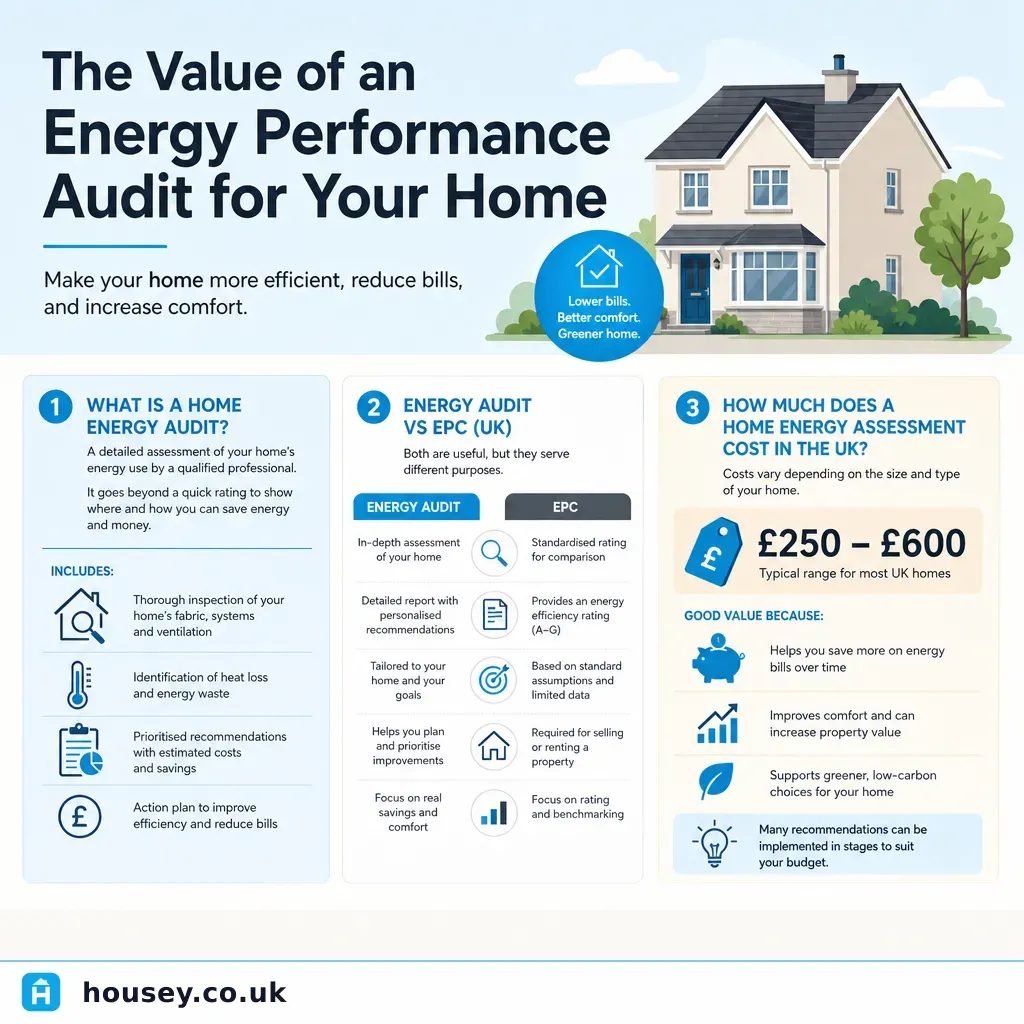
The Value of an Energy Performance Audit for Your Home
A home energy performance audit is a detailed, site-specific assessment of a property's fabric, heating, ventilation, and controls.
 Energy & Retrofit
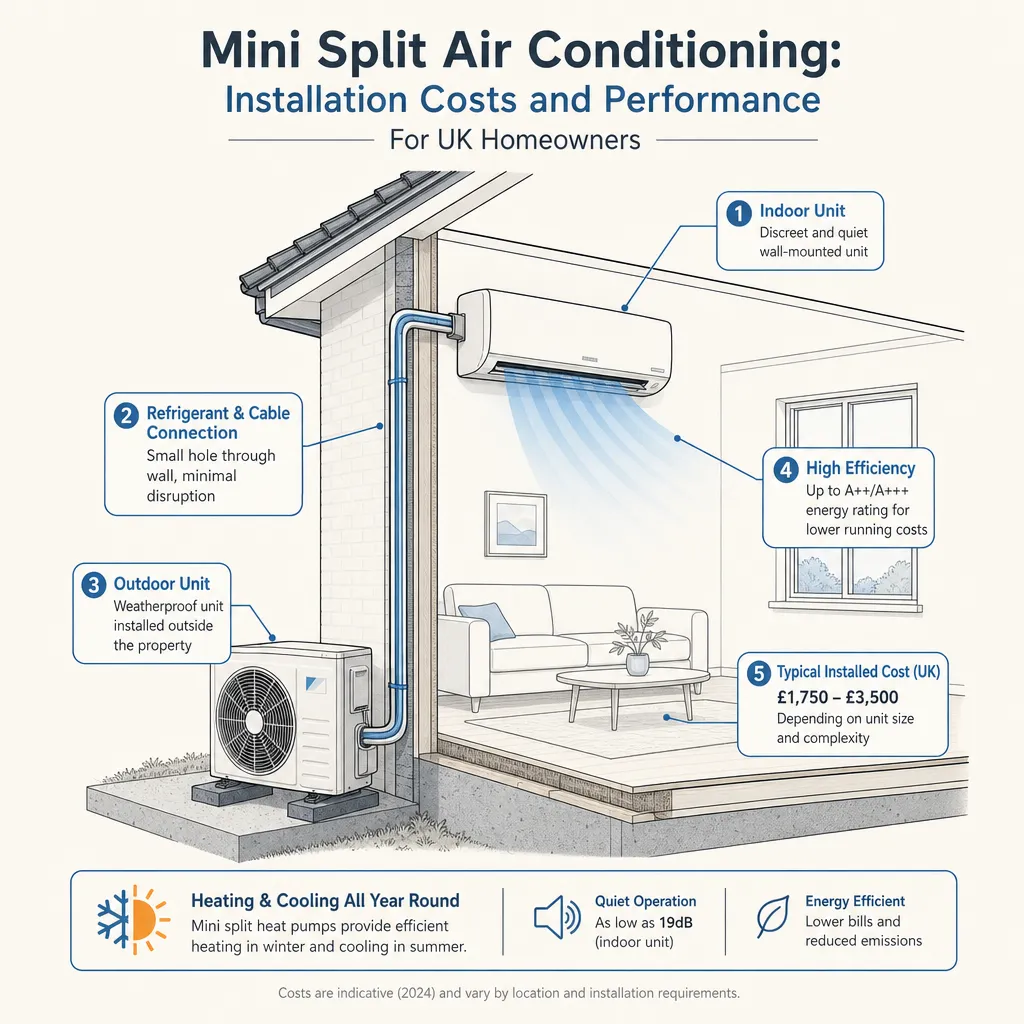
Mini Split Air Conditioning: Installation Costs and Performance
A mini-split (ductless) air conditioning unit costs roughly £1,500–£4,000 installed for a single room in the UK.
 Energy & Retrofit
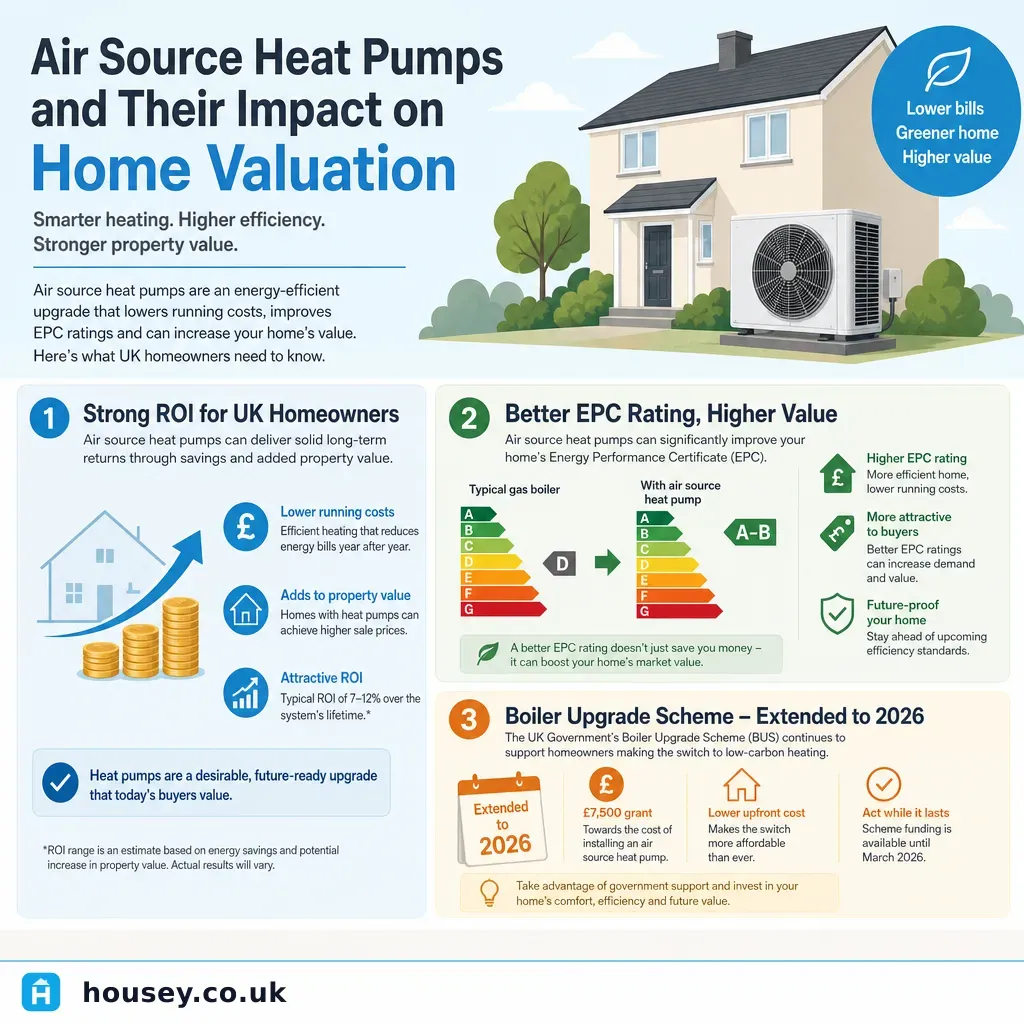
Air Source Heat Pumps and Their Impact on Home Valuation
An air source heat pump can improve your home's EPC rating, which may positively influence its market value — particularly as mortgage lenders and buyers increasingly factor in energy performance.
 Energy & Retrofit
Professional solar panel inspection: what to expect and why it matters
A professional solar panel inspection typically takes 1–3 hours and covers visual panel condition, mounting hardware, inverter performance, wiring integrity, and often thermal imaging to detect hidden faults.
 Energy & Retrofit
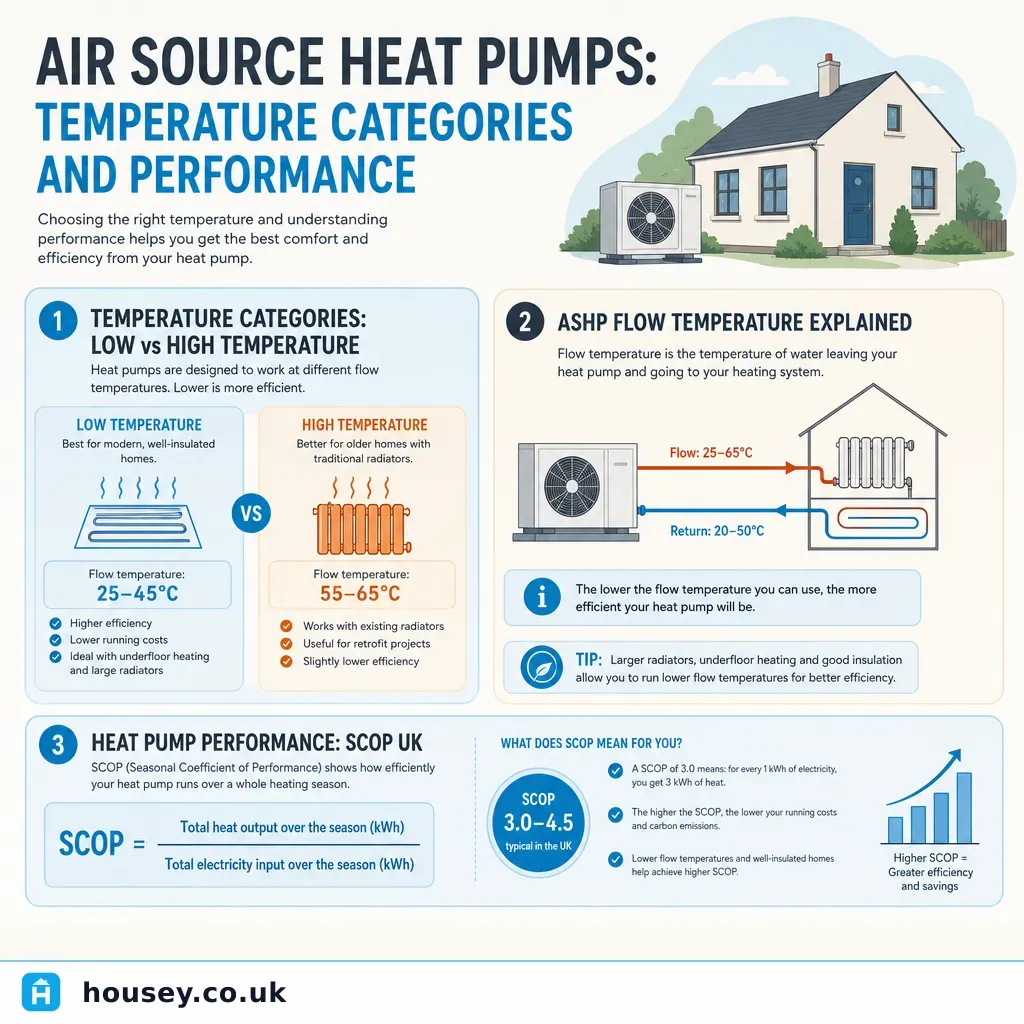
Air Source Heat Pumps: Temperature Categories and Performance
Air source heat pumps are typically classified as low temperature (flow temperatures of 35–55°C) or high temperature (up to 65–80°C).