The Value of an Energy Performance Audit for Your Home
By Housey · Last reviewed 11th of May 2026
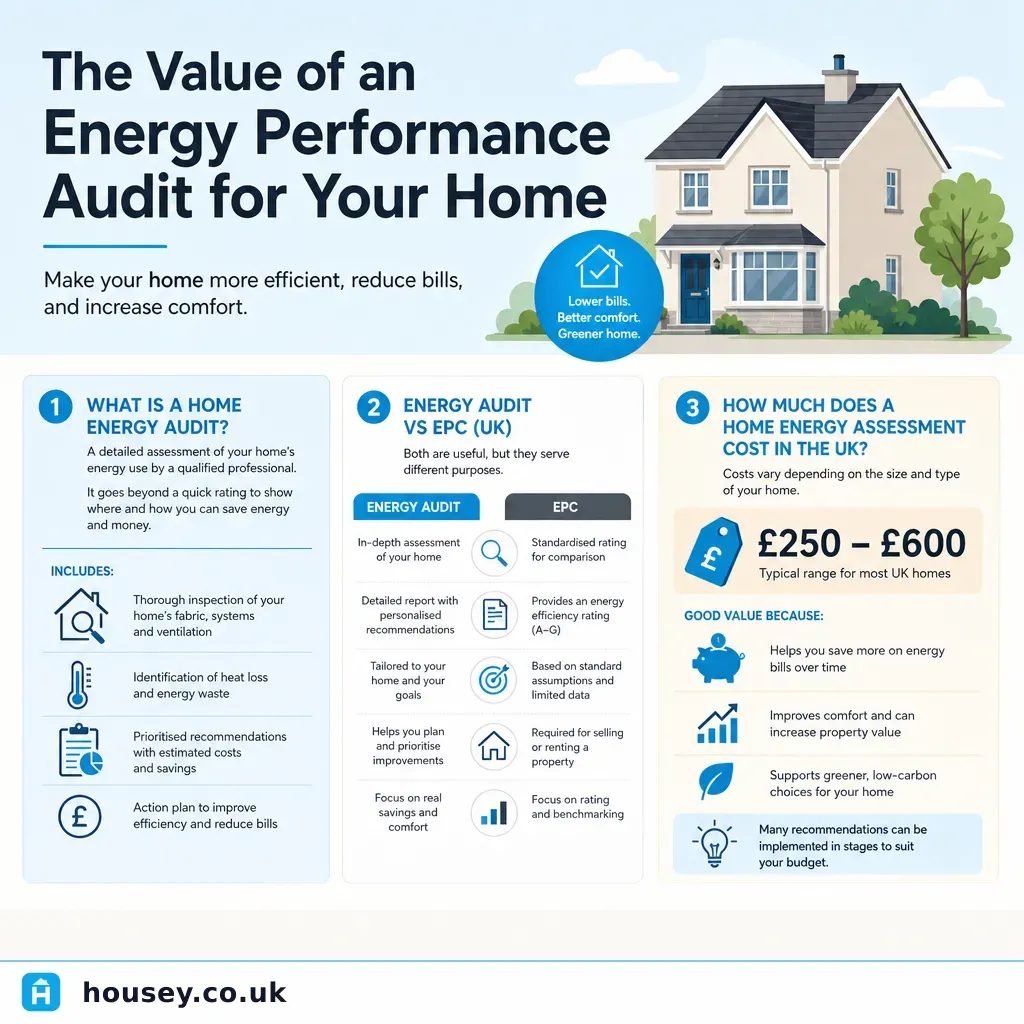
The Value of an Energy Performance Audit for Your Home
Heating and cooling bills are the single largest running cost for most UK households, yet the fabric and systems of a home are rarely assessed as a whole. Whether you are preparing for a major retrofit, trying to reduce fuel bills in an older property, or planning to meet incoming minimum energy efficiency standards as a landlord, a home energy performance audit gives you an independent, evidence-based starting point.
Key points
- A home energy performance audit is a detailed, site-based assessment of a property's fabric, heating system, ventilation, and controls — distinct from an Energy Performance Certificate (EPC), which is a standardised desk-based rating.
- PAS 2035:2019 (the British Standard governing domestic retrofit) requires a Retrofit Assessment carried out by a qualified Retrofit Assessor before any funded energy improvement works begin under schemes such as ECO4 or the Great British Insulation Scheme.
- U-values — the measure of how quickly heat passes through a building element — are a key output: solid brick walls typically measure around 2.1 W/m²K, against a current Part L target of 0.28 W/m²K for new walls.
- An audit can identify moisture and ventilation interactions that an EPC score does not capture, helping to prevent damp or condensation problems after insulation is installed.
- Landlords in England must achieve EPC Band E as a legal minimum for new tenancies; proposed regulations (subject to parliamentary approval) would raise this to Band C for new tenancies from 2028.
What a home energy audit covers — and how it differs from an EPC
An Energy Performance Certificate (EPC) is a standardised rating produced using the Reduced Data Standard Assessment Procedure (RdSAP), based largely on visible inspection and default assumptions. It is required by law when selling or letting a property, and takes roughly 30–60 minutes to produce.
A full home energy performance audit goes considerably further. A qualified assessor visits the property, inspects construction details, takes measurements, reviews heating and controls, checks ventilation paths, and may use thermal imaging or blower-door air-pressure tests to quantify heat loss and draughts. The output is a bespoke report with prioritised recommendations, indicative savings, and in many cases a suggested improvement sequence designed to avoid moisture or structural problems.
Feature | EPC | Full energy audit |
|---|---|---|
Legal requirement when selling/letting | Yes | No (except for PAS 2035 funded works) |
Site-specific measurements | Partial | Yes |
Fabric U-value assessment | Estimated from defaults | Measured or calculated |
Ventilation and moisture review | Rarely | Usually included |
Prioritised improvement plan | Indicative only | Detailed, sequenced |
Typical duration | 30–60 min | 2–4 hours |
Typical cost (indicative, 2026) | £60–£120 | £300–£600+ |
Indicative UK costs, last reviewed 2026-05-11. Actual fees vary by property size, assessor, and region — always request itemised quotes.
When an energy audit is most useful
A home energy performance audit tends to add the most value at specific decision points:
- Before a major retrofit — an audit carried out under PAS 2035 by a qualified Retrofit Assessor is a mandatory first step for any works funded through ECO4 or the Great British Insulation Scheme (GBIS).
- When bills are high relative to similar homes — an audit can diagnose whether the cause is fabric heat loss, inefficient heating, poor controls, or occupant behaviour, and direct spending accordingly.
- Before switching to a heat pump — a Microgeneration Certification Scheme (MCS) compliant heat loss calculation is required before sizing a heat pump, and an audit provides the underlying data.
- When planning an extension or loft conversion — understanding the existing thermal envelope helps the design team propose improvements that comply with Building Regulations Part L.
- For landlords approaching the EPC Band C threshold — an audit helps identify the most cost-effective route to compliance before mandatory minimum standards apply.
Which professional should carry out the audit?
The right professional depends on the purpose of the audit and whether public funding is involved.
- Retrofit Assessor (PAS 2035) — required for any works funded under ECO4, GBIS, or the Warm Homes: Local Grant. Must be registered with a TrustMark-approved scheme operator.
- Domestic Energy Assessor (DEA) — qualified to produce EPCs and can carry out energy assessments, but not automatically qualified to the PAS 2035 standard without additional accreditation.
- CIBSE-accredited energy assessor — relevant for larger or complex domestic properties, particularly if the assessment also covers commercial space or mixed-use premises.
- Retrofit Coordinator (PAS 2035) — oversees the whole retrofit project rather than just the assessment stage; required for medium-complexity and high-complexity retrofit projects under the standard.
Always check that the professional holds current accreditation and that their scheme operator is listed on the TrustMark website.
What to ask before accepting a quote
- What standard or methodology will the assessment follow (RdSAP, PAS 2035, bespoke)?
- Is the assessor registered with a TrustMark scheme operator?
- Will the report include a sequenced improvement plan, or just a list of measures?
- Does the fee include thermal imaging or air-tightness testing, or are these extras?
- What assumptions will be made where access is limited (e.g., uninsulated floor voids)?
- Will the report be in a format accepted by your grant scheme or mortgage lender?
- Is VAT included?
Common misunderstandings about energy audits
An EPC Band C does not mean a house is comfortable or cheap to heat — EPCs use standardised occupancy assumptions and can mask significant problems with draughts, cold bridges, or damp.
A high EPC rating does not mean a heat pump will work efficiently — heat pump sizing must be based on a measured heat loss calculation, not an EPC score.
Insulating first is not always the right approach — adding insulation to a home with existing damp, inadequate ventilation, or structural issues can worsen moisture problems. An audit should identify these interactions before work begins.
Funded retrofit does not mean free retrofit — ECO4 and GBIS schemes have eligibility criteria based on income, benefits, and EPC rating. Not all households qualify for full funding.
When to get professional help
An energy audit is itself a professional service, but there are situations where additional specialist input is needed alongside or after the assessment:
- If the audit identifies significant moisture or damp — a surveyor or damp specialist should investigate before insulation is installed.
- If the heating system is gas-fuelled and showing signs of inefficiency or age — a Gas Safe registered engineer should carry out a service before the audit report's recommendations are acted on.
- If the property is listed or in a conservation area — some insulation and glazing improvements require Listed Building Consent or planning permission; check with your local planning authority.
- If thermal bridging, cold bridges, or structural junctions are flagged — a building physics specialist may be needed to model the risk.
How Housey can help
Housey connects UK homeowners with accredited energy-efficiency consultants who can carry out a full home energy performance audit, as well as specialists in insulation assessments and retrofit assessments under PAS 2035. Describe your property and goals, and we will match you with qualified local professionals who can provide comparable, itemised quotes.
Frequently asked questions
How does a home energy audit differ from an EPC?
An EPC uses standardised assumptions and takes around 30–60 minutes to produce a regulated rating used for legal compliance when selling or renting. A full energy audit involves site measurements, fabric inspection, heating and ventilation review, and a bespoke, prioritised improvement plan. For funded retrofit works under PAS 2035, an EPC alone is not sufficient.
Do I need a PAS 2035 retrofit assessment to get ECO4 funding?
Yes. Works funded under ECO4 or the Great British Insulation Scheme must follow PAS 2035, which requires a Retrofit Assessment by a TrustMark-registered Retrofit Assessor before measures are installed. Skipping this step means the works may not be compliant or eligible for funding.
How much does a home energy audit cost in the UK?
Indicative costs range from around £300 to £600 or more for a full audit, depending on property size, assessor, and region. A basic EPC costs £60–£120. For PAS 2035-compliant retrofit assessments, some scheme operators may include the assessment cost within the overall funded package — check with your provider. Indicative UK costs, last reviewed 2026-05-11.
Can a home energy audit help me qualify for a green mortgage?
Some mortgage lenders offer preferential rates for properties at EPC Band C or above. An audit can identify the most cost-effective improvements to reach that threshold, but the lender will usually require an updated EPC — not just an audit report — to confirm compliance.
Sources and further reading
- PAS 2035:2019 — Retrofitting Dwellings for Improved Energy Efficiency — BSI Group
- ECO4 scheme guidance — GOV.UK
- Great British Insulation Scheme — GOV.UK
- TrustMark — find a registered retrofit professional — TrustMark
- Energy Performance Certificates: guidance for homeowners — GOV.UK
- Minimum energy efficiency standards for private rented homes — GOV.UK
Useful next reads
 Energy & Retrofit
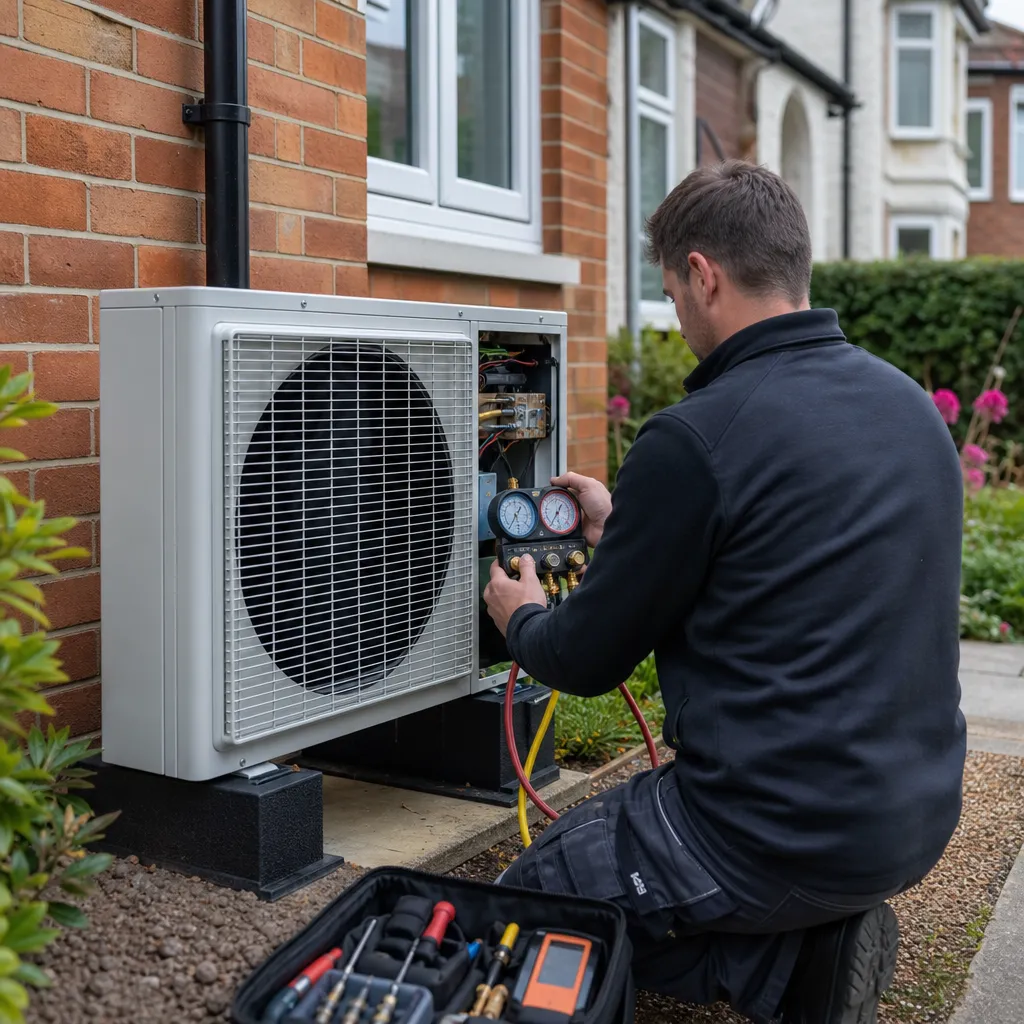
Diagnosing Heat Pump Performance Issues: Why Cooling Fails
Heat pump cooling failure is usually caused by refrigerant loss, a dirty air filter, a blocked outdoor unit, incorrect controller settings, or an undersized system.
 Energy & Retrofit
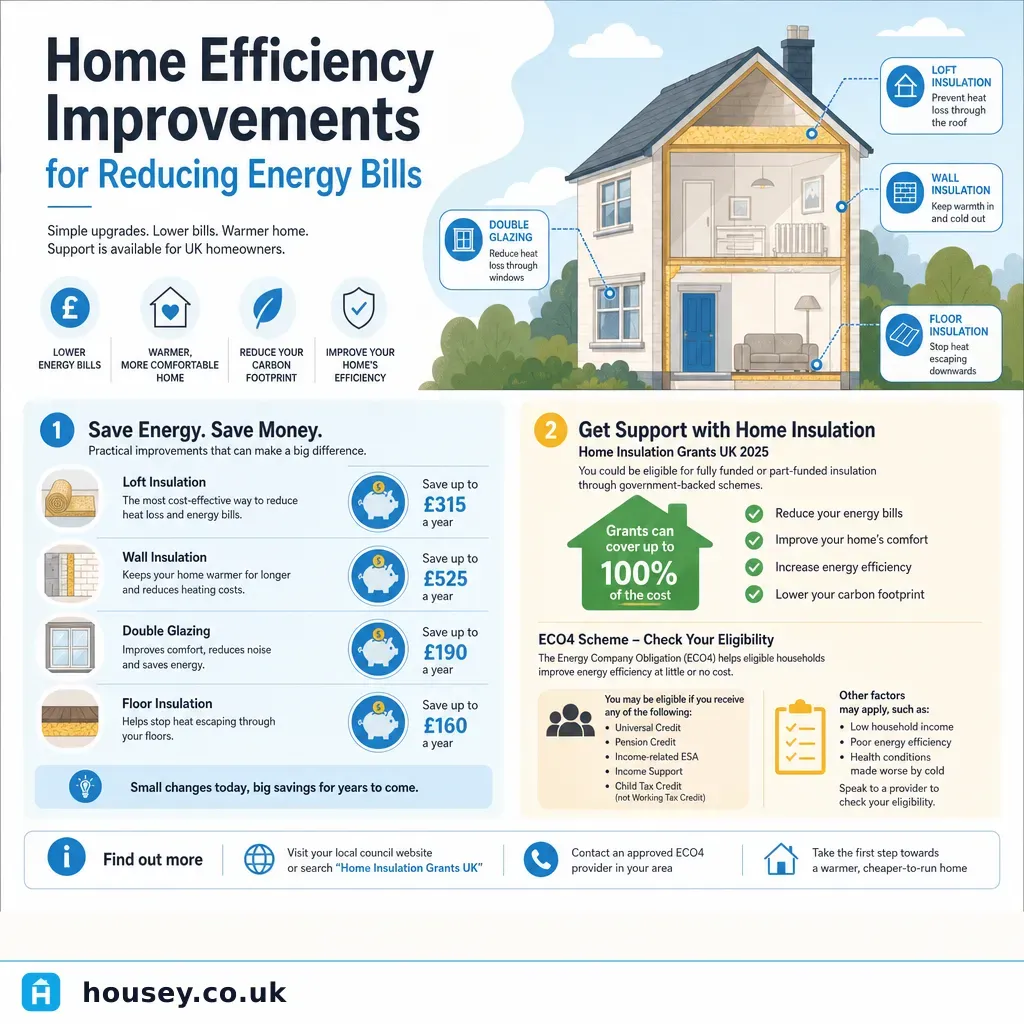
Home Efficiency Improvements for Reducing Energy Bills
The most cost-effective UK home efficiency improvements are usually loft insulation, cavity wall insulation, draught-proofing, and upgrading heating controls.
 Energy & Retrofit
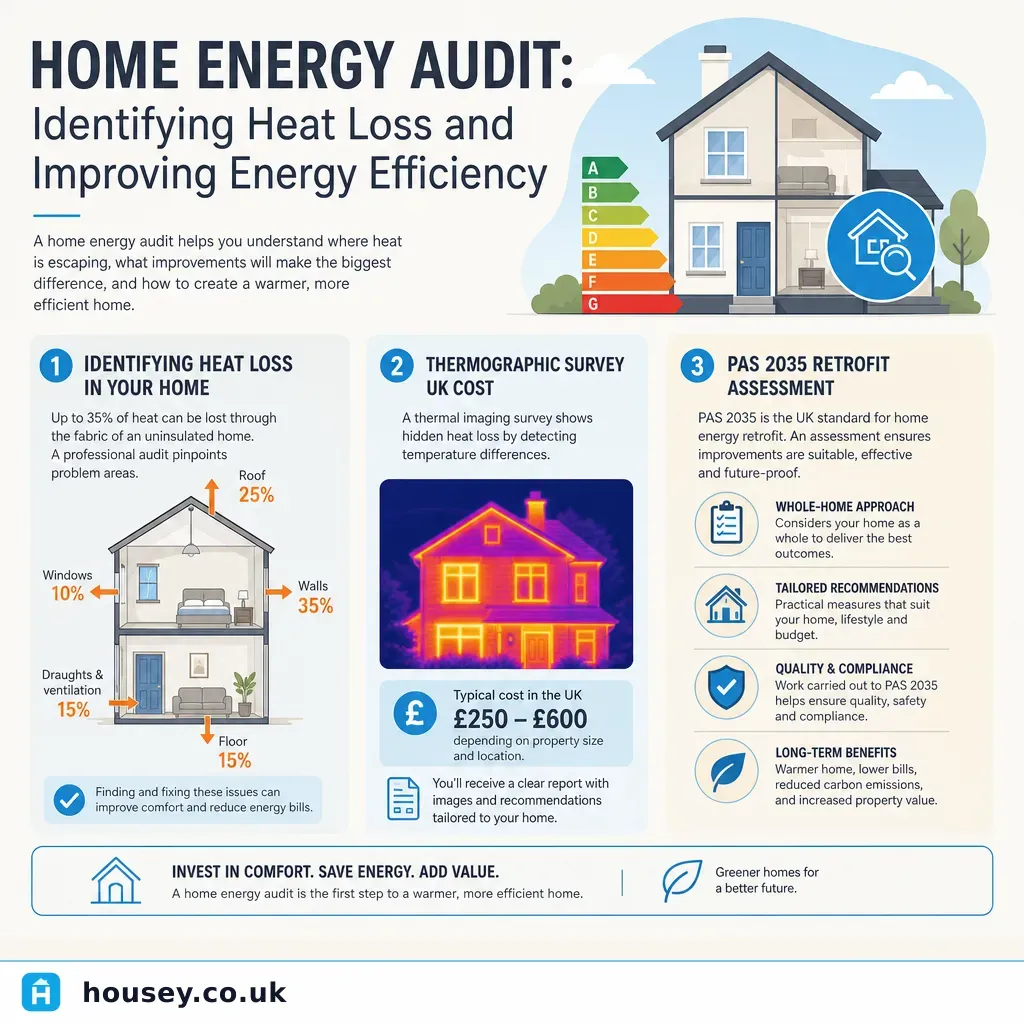
Home Energy Audit: Identifying Heat Loss and Improving Energy Efficiency
A home energy audit is a structured assessment of where your property loses heat and how efficiently it uses energy.
 Energy & Retrofit
Choosing Between Oil and Gas Heating Systems for Your Home
Oil central heating suits rural UK properties without mains gas access, while gas remains the default for connected homes.
 Energy & Retrofit
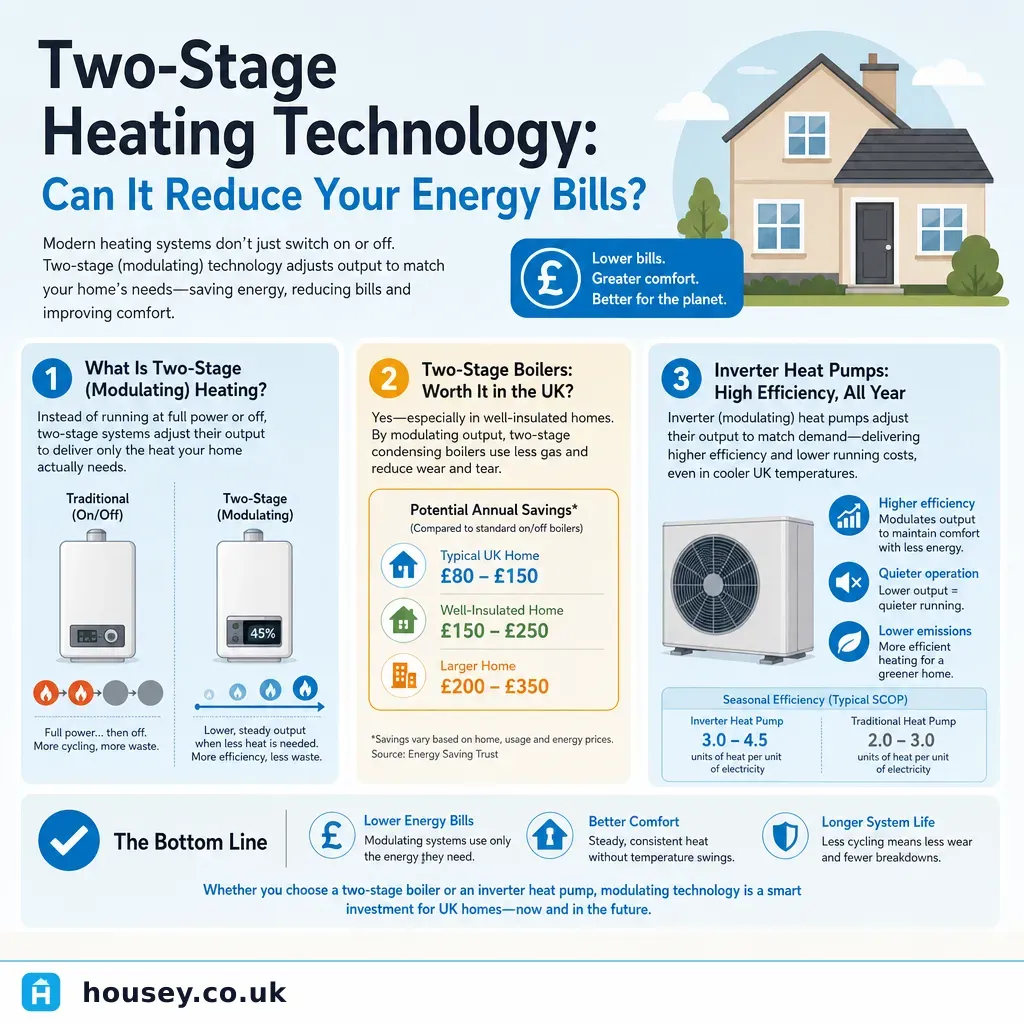
Two-Stage Heating Technology: Can It Reduce Your Energy Bills?
In UK homes, two-stage or modulating heating technology refers to modulating condensing gas boilers and inverter-driven heat pumps, not the forced-air furnaces common in North America.