Diseased Tree Assessment And Removal
By Housey · Last reviewed 11th of May 2026
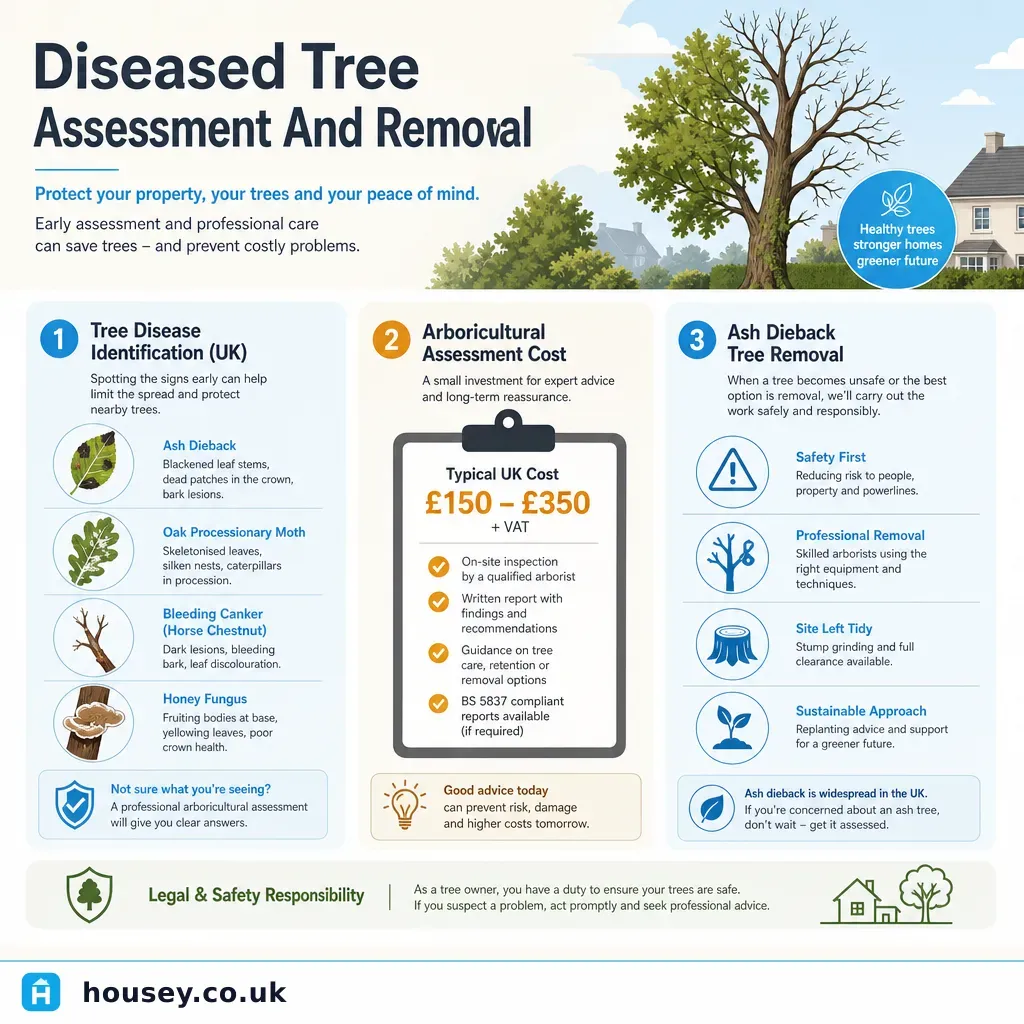
Diseased Tree Assessment And Removal
A tree that appears unwell — showing dead wood, unusual growth patterns, fungal bodies at the base, or sudden leaf loss — raises questions that are harder to answer than they might first appear. Some conditions are treatable; others indicate a tree that has become structurally compromised and poses a genuine risk to people or property nearby. Knowing when to commission a professional assessment, and what that process involves, is the starting point for making a safe and well-informed decision.
Key points
- Arboricultural Association registered consultants and approved contractors are the recognised professional standard for tree health assessments and removal works in the UK.
- Tree Preservation Orders (TPOs) and conservation area regulations apply even to diseased or dying trees — felling without consent where a TPO exists can result in an unlimited fine under the Town and Country Planning Act 1990.
- Ash dieback (Hymenoscyphus fraxineus) is now present across most of the UK; infected trees become structurally unsafe as dead wood accumulates, and removal may be required on safety grounds.
- Honey fungus (Armillaria species) is one of the most destructive garden pathogens in the UK — it persists in root systems for years after a host tree is felled, and the root mass must be excavated and disposed of correctly.
- An arboricultural report produced under BS 5837:2012 (Trees in relation to design, demolition and construction) is the formal standard for assessments linked to planning applications or development.
Signs a tree may be diseased or structurally at risk
Not every imperfection in a tree signals serious disease. Understanding what to look for helps you decide whether to commission an assessment or simply monitor the situation.
Symptom | Possible cause | Recommended action |
|---|---|---|
Dead branches in the upper canopy | Storm damage, disease, or natural senescence | Monitor; consult an arborist if spreading |
Bracket fungi or mushrooms at the base or on the trunk | Decay fungi such as Ganoderma or Meripilus — often indicates internal decay | Commission an arboricultural assessment promptly |
White or orange growth on bark or roots | Honey fungus (Armillaria spp.) | Arborist assessment and soil investigation |
Yellowing, sparse, or early leaf drop | Stress from drought, waterlogging, root damage, or disease | Monitor; check soil drainage and recent ground works nearby |
Splitting or cracking bark, unusual swelling | Canker, bacterial infection, or physical damage | Assessment recommended |
Sudden whole-tree wilting or crown dieback | Phytophthora root rot, Verticillium wilt, or root severance | Urgent arborist assessment |
White diamond-shaped lesions on ash bark | Ash dieback (Hymenoscyphus fraxineus) | Assessment for structural safety implications |
What an arboricultural assessment involves
A professional tree health assessment typically includes:
- Visual tree inspection (VTI) — the arborist examines the crown, trunk, root flare, and surrounding ground for signs of disease, structural weakness, and decay.
- Detailed investigation if needed — for suspected internal decay or structural failure, additional techniques may be used: resistance drilling, sonic tomography (Picus), or laboratory fungal identification.
- Risk rating and written report — the arborist produces a written report stating the tree's condition, a risk rating, and recommended action: monitoring, pruning, treatment, or removal.
- Regulatory check — the report should confirm whether a TPO applies, whether consent is required for proposed works, and whether the tree is in a conservation area.
Always confirm that an arborist assessing trees for structural risk holds appropriate Professional Indemnity insurance before instructing them.
Common tree diseases in the UK
Ash dieback (Chalara): Now widespread across England, Wales, and Scotland. Causes crown dieback, bark lesions, and structural failure as dead wood accumulates. No cure exists; management focuses on safe removal before deadwood creates hazard. The Forestry Commission provides identification guidance and advice on management obligations.
Honey fungus (Armillaria): Spreads via underground rhizomorphs to attack the roots of a wide range of trees and shrubs. Signs include white mycelium under bark at the root collar, dark bootlace-like threads in soil, and honey-coloured fruiting bodies in autumn. Affected root material must be removed — leaving infected roots in the ground allows ongoing spread to neighbouring plants.
Phytophthora root rot: A water mould affecting root systems of beech, larch, alder, and many other species. Associated with poor drainage and soil compaction. Often presents as progressive crown dieback with no obvious above-ground cause.
Oak processionary moth (OPM): An invasive pest established in parts of south-east England. Statutory control measures apply within designated buffer zones — the Forestry Commission administers the control programme and should be contacted if OPM is suspected.
Which professional do you need?
Professional | When to instruct | Typical credentials |
|---|---|---|
Arboricultural consultant | Formal written reports, TPO consent applications, planning-linked assessments, expert witness work | Arboricultural Association registered consultant |
Approved arborist contractor | Felling, pruning, crown reduction, and on-site removal once risk has been assessed | Arboricultural Association approved contractor |
Local authority tree officer / Forestry Commission | TPO consent queries, OPM management, ash dieback on adjoining land | Government or local authority role |
Structural engineer | If a diseased or fallen tree has damaged a building, foundation, or retaining wall | Chartered member of IStructE or ICE |
What to ask before hiring an arborist
- Are you a member of the Arboricultural Association, and are you on the Approved Contractor or Consultant register?
- Do you carry Public Liability and Professional Indemnity insurance? (Ask to see the certificate.)
- Will the assessment include a check for TPOs and conservation area designations?
- What will the report cover, and in what format will I receive it?
- If removal is recommended, will you handle the TPO consent application if one is required?
- How will the timber and green waste be disposed of, and do you hold a waste carrier licence?
- If honey fungus is suspected, will you investigate and treat the root system and surrounding soil?
When to get professional help
Commission a professional arboricultural assessment without delay when:
- Any bracket or shelf fungus appears at the base or on the trunk of a tree, particularly near a building, path, or boundary.
- Dead branches are visible in the upper canopy and the tree is near a footpath, play area, building, or highway.
- A tree leans noticeably and that lean appears to have increased recently.
- Soil or ground surfaces around the base of a tree have heaved, cracked, or lifted.
- You suspect ash dieback on a tree overhanging a structure or public area.
- A tree has partly uprooted or structural roots have been severed during nearby construction or excavation.
- You are planning building works close to existing trees — BS 5837:2012 assessments are normally required by local planning authorities as part of a planning application.
Do not attempt to fell or significantly prune diseased trees yourself if they are near overhead cables, structures, or where a TPO may apply.
How Housey can help
Local tree surgeons listed on Housey can carry out site visits and provide removal quotations for diseased or hazardous trees. For formal written assessments, planning-linked reports, or cases where TPO consent may be required, arboricultural survey specialists can commission the assessments you need before any works proceed.
Frequently asked questions
Can I remove a diseased tree without planning permission?
Not necessarily. If the tree is subject to a Tree Preservation Order or is in a conservation area, you must apply for consent from your local planning authority before removing it, even if it is diseased or poses a safety risk. Emergency works on an immediately dangerous tree may proceed without prior consent, but you must notify the council promptly and be able to demonstrate the emergency.
How much does an arboricultural assessment cost?
Indicative UK costs, last reviewed 2026-05-11. A standard visual tree inspection and written report typically costs £150–£400 depending on the number of trees and complexity. A full BS 5837:2012 report or investigations using specialist equipment such as sonic tomography may cost more. Removal costs vary significantly by tree size, access, and proximity to structures.
What happens to a stump after felling a diseased tree?
Stumps are usually ground down with a stump grinder, reducing them below ground level and leaving wood chip. Where honey fungus is involved, as much stump and root material as possible should be excavated — leaving infected root material in the ground allows the fungus to persist and spread to nearby plants and shrubs.
Could I be liable if a diseased tree falls on a neighbour's property?
Possibly, if you knew or should reasonably have known about the risk and failed to act. An arboricultural assessment report documents the tree's condition and the steps you took in response. If a tree officer or arborist has identified a risk and recommended action, acting promptly is important from both a safety and liability perspective.
Sources and further reading
- Tree Preservation Orders and trees in conservation areas — GOV.UK
- Ash dieback: identification and management — Forest Research / Forestry Commission
- Honey fungus — Royal Horticultural Society
- Find an arborist — Arboricultural Association
- BS 5837:2012 Trees in relation to design, demolition and construction — BSI Group
Useful next reads
 Improvement & Build
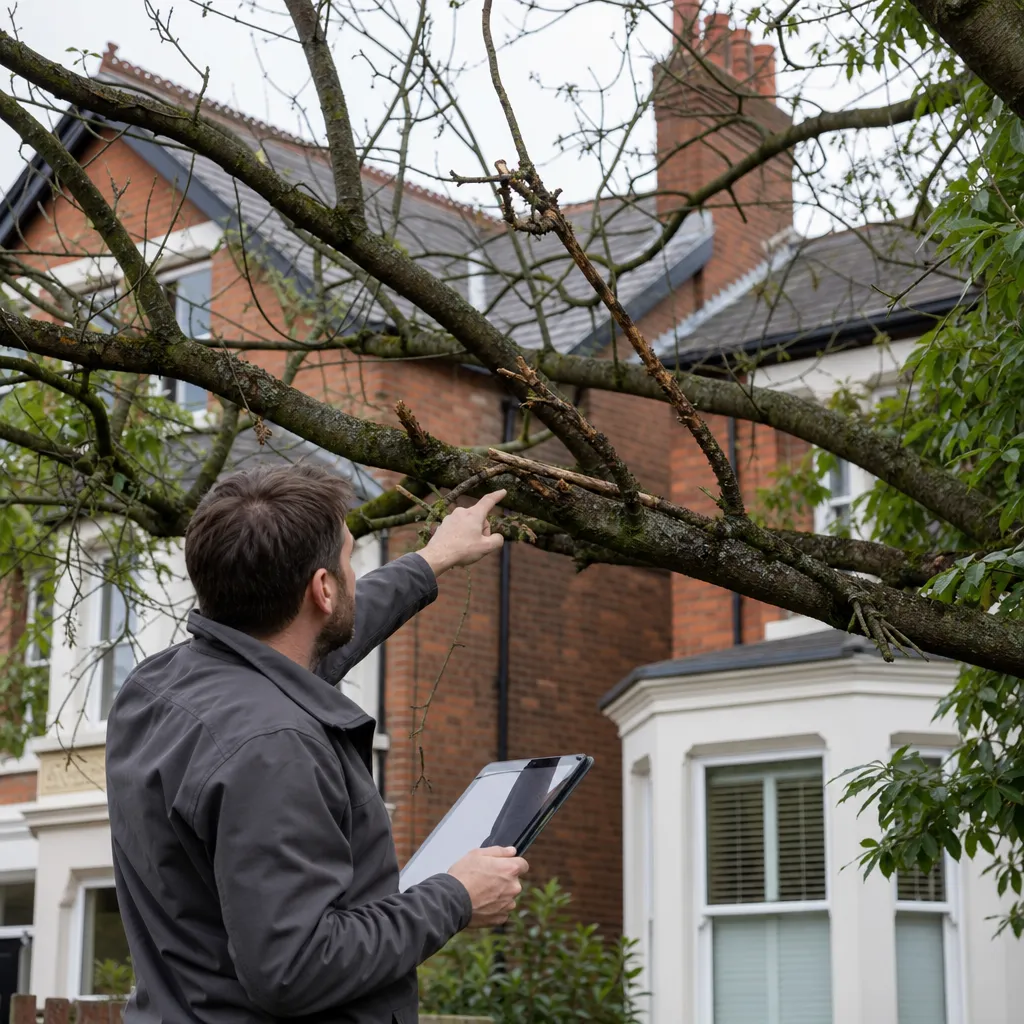
Identifying and Addressing Dying Tree Branches: Common Causes
Dying branches on UK garden trees can result from fungal diseases such as ash dieback or honey fungus, pest damage, drought stress, physical injury, or root problems.
 Improvement & Build
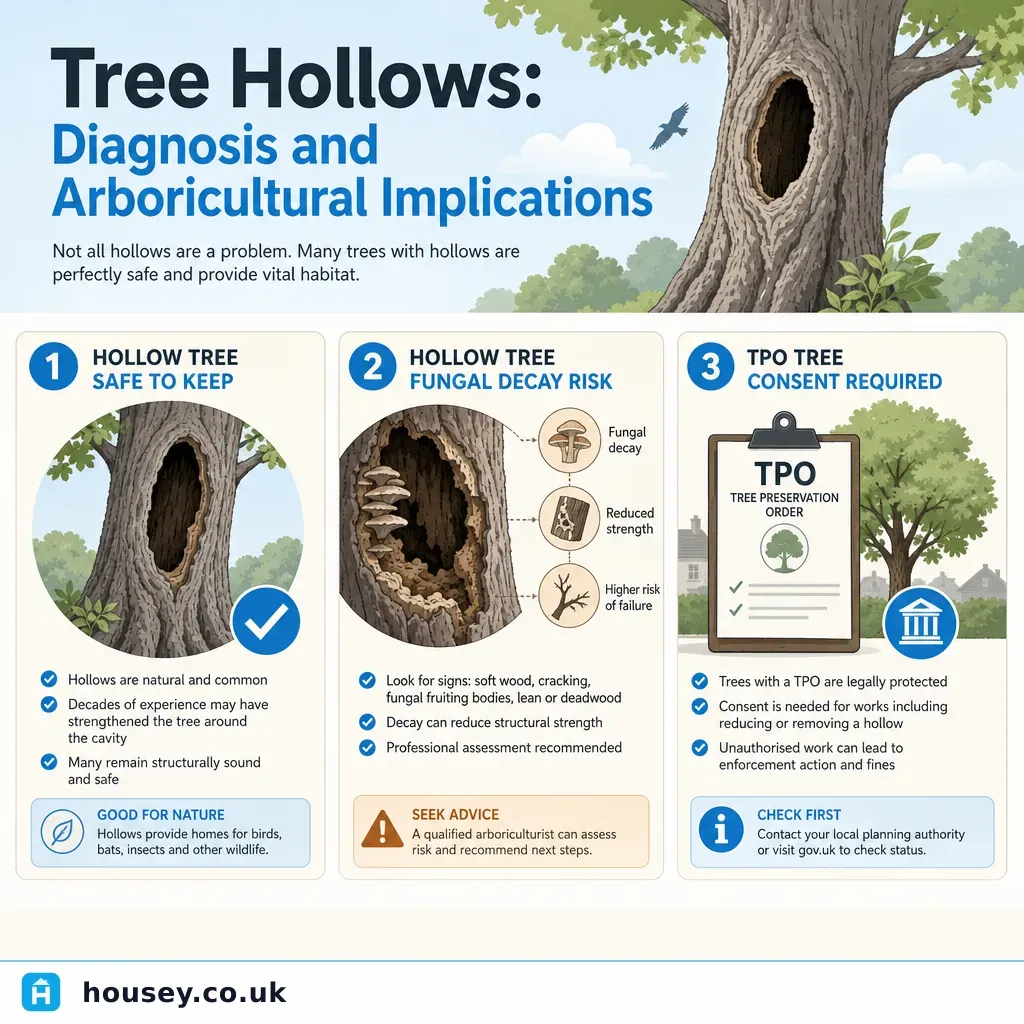
Tree Hollows: Diagnosis and Arboricultural Implications
A hollow in a tree trunk usually indicates internal fungal decay or bacterial wetwood, but does not automatically mean the tree is dangerous or should be felled.
 Improvement & Build
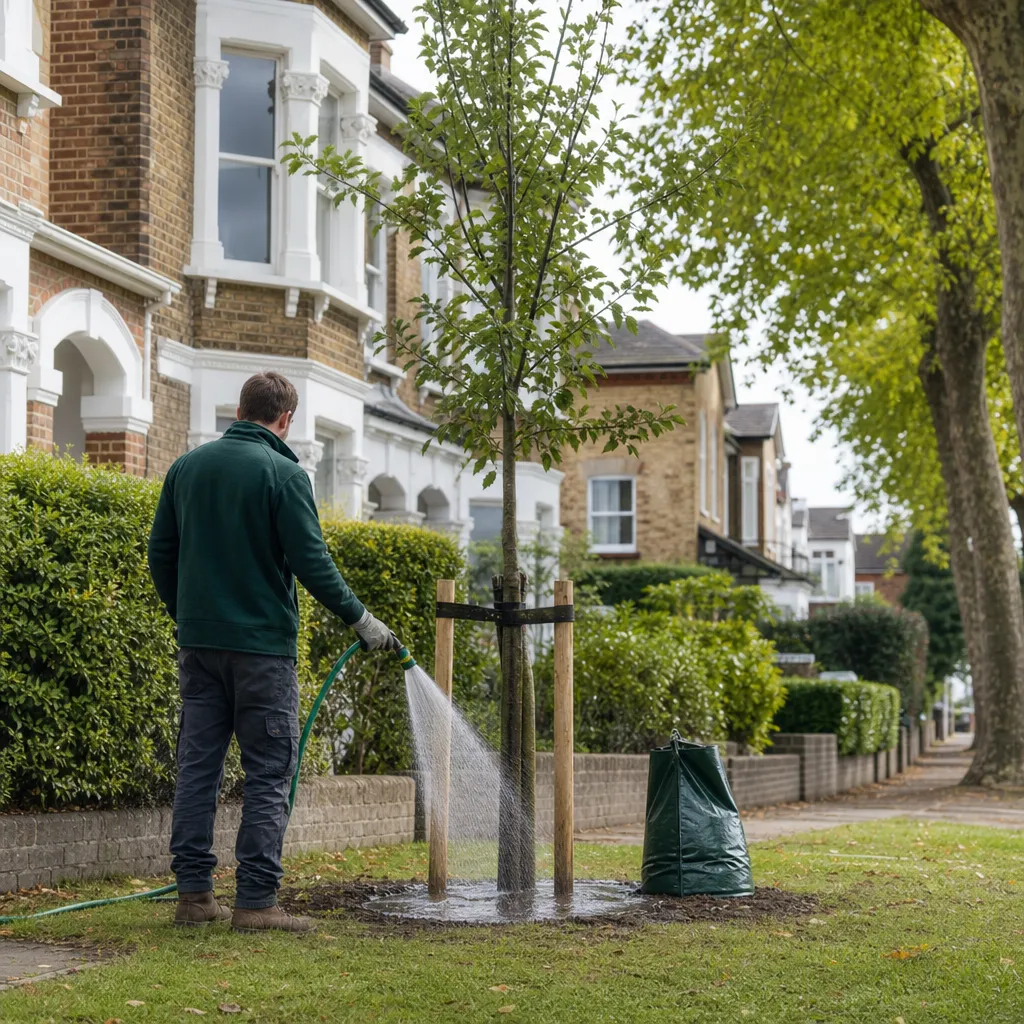
Watering Large Trees: Techniques and Frequency for Establishment
Newly planted large trees typically need 50–90 litres of water per week during the growing season for the first two to three years.
 Improvement & Build
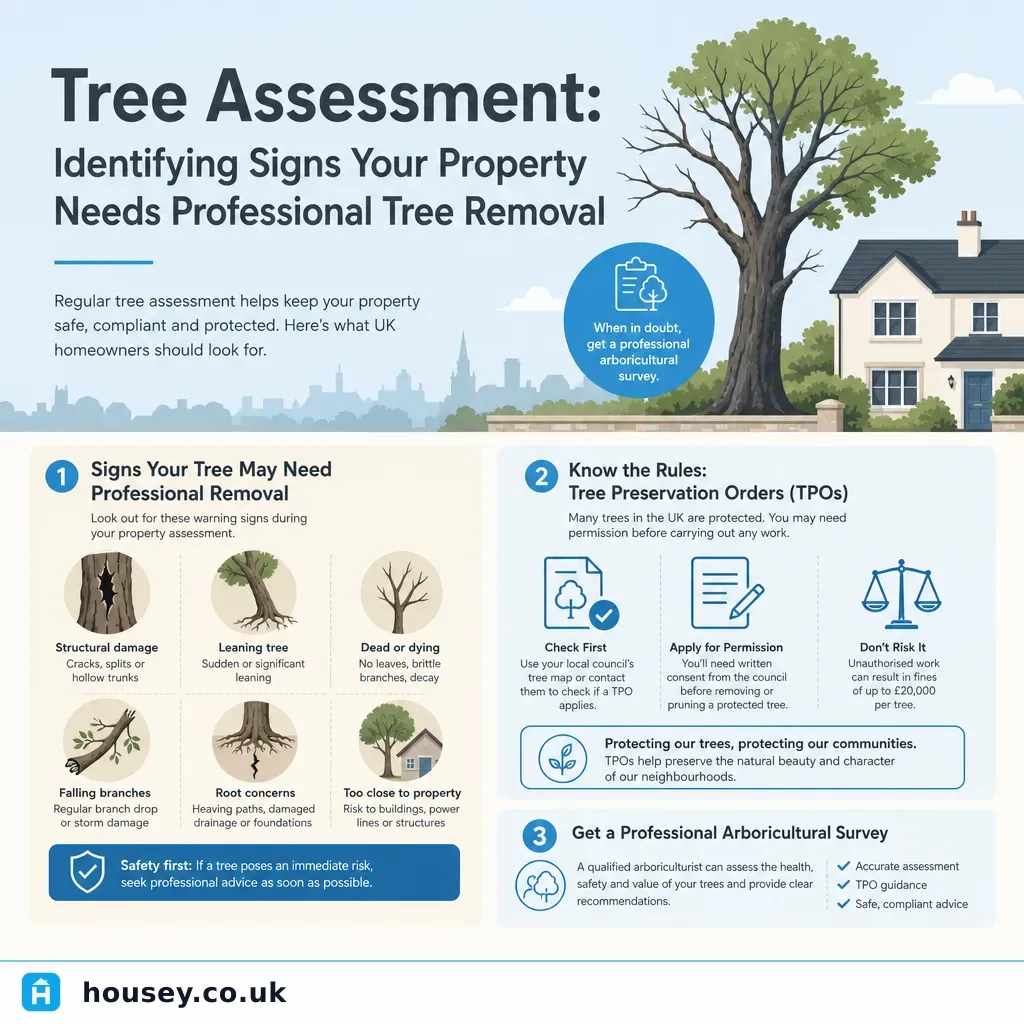
Tree Assessment: Identifying Signs Your Property Needs Professional Tree Removal
Key signs a tree may need professional removal include fungal brackets on the trunk, a sudden change in lean, dead or hanging branches, root heave, and visible cavities or decay.
 Improvement & Build
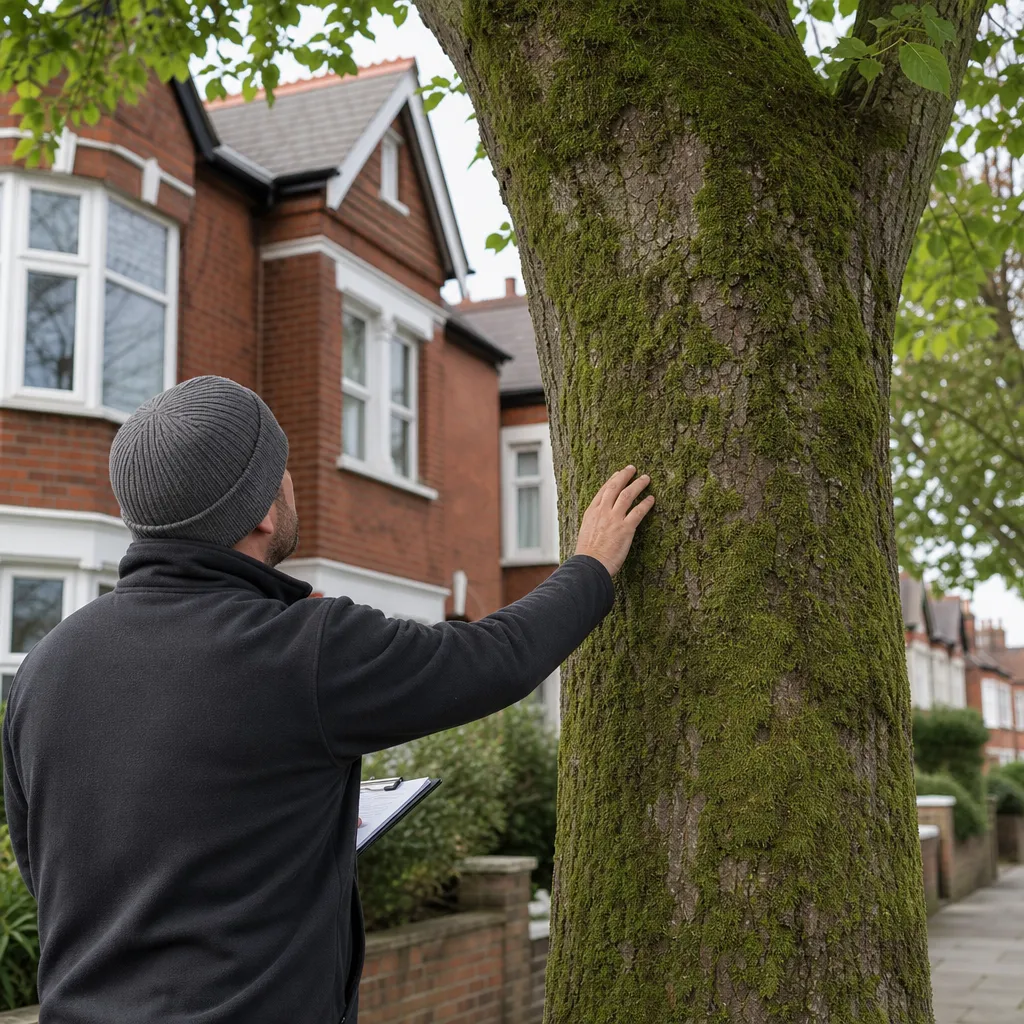
Moss on Trees: Causes, Identification, and Management
Moss growing on trees is usually harmless — it does not parasitise or feed on the tree.