Dishwasher Installation Costs and Connection Fees
By Housey · Last reviewed 6th of May 2026
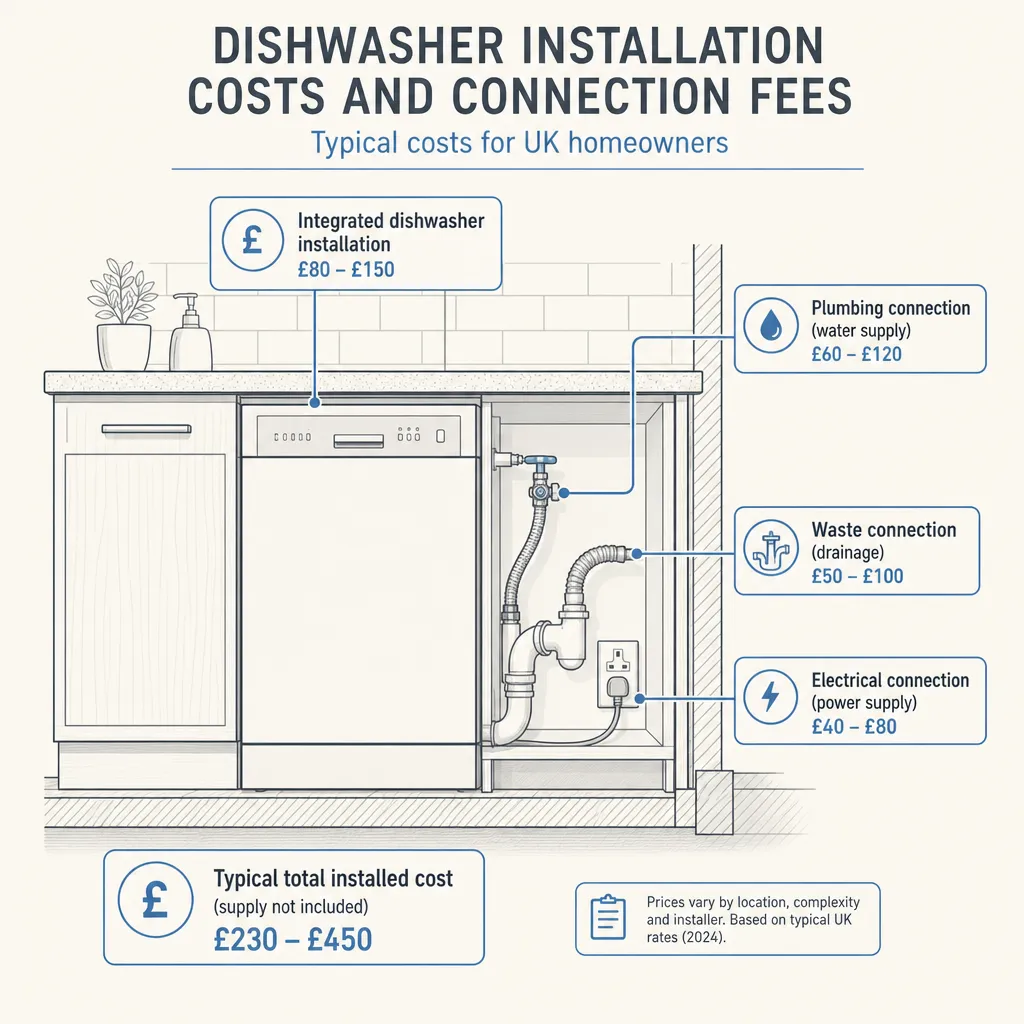
Dishwasher Installation Costs and Connection Fees
Fitting a dishwasher can be a straightforward job or a more involved task requiring both a plumber and a registered electrician — the difference usually comes down to what connections are already in place and where the appliance is going. Whether you are swapping an old freestanding model, fitting an integrated dishwasher into new cabinetry, or having your first dishwasher installed in a kitchen that has never had one, the total cost depends heavily on your plumbing layout, the type of appliance, and whether any electrical work is needed. Getting a clear picture of what drives the final price helps you budget accurately and compare quotes on a level playing field.
Key points
- Freestanding dishwasher installation near existing plumbing typically costs £80–£150 in labour; integrated dishwasher fitting commonly costs £150–£300, depending on cabinetry and connection complexity.
- New pipework runs — where the nearest water supply or waste outlet is not immediately adjacent to the appliance — can add £100–£400 or more to the total cost.
- Dishwashers require a switched fused spur (13A); where none exists nearby, a Part P registered electrician may charge £80–£200 to install one, with price varying by location and accessibility.
- Under the Consumer Rights Act 2015, tradespeople must carry out work with reasonable care and skill; always obtain written confirmation of scope and price before work begins.
- Many appliance retailers offer paid installation at the point of purchase; these services can be cost-effective for simple swaps but commonly exclude non-standard pipework, electrical work, and cabinet adjustment for integrated models.
What affects dishwasher installation costs?
Several factors determine the final quote, and understanding them helps you identify a fair price and anticipate what might change it on the day.
Type of dishwasher
Freestanding dishwashers connect to an existing under-sink supply and waste outlet, making them the simplest and least expensive to install. Integrated (built-in) models are fitted inside a kitchen cabinet unit and the outer door panel must be fixed to match the surrounding cabinetry — this adds labour for alignment and attachment. Semi-integrated models, which have a visible control strip at the top of the door, sit between the two in terms of complexity.
Location of existing plumbing
Most kitchen plumbing runs beneath the sink. If your dishwasher is positioned next to the sink unit, connection is usually straightforward. Moving it further along the worktop — or installing one in a kitchen island — requires extending the water supply inlet and waste outlet hoses, or running new pipework, which adds both material and labour costs.
Electrical connection requirements
Dishwashers need a switched fused spur or a suitably rated nearby socket. If one already exists in the correct location, connecting the appliance is a minor part of the job. If an electrician must install a new fused spur, expect to add £80–£200 to the total. Under Part P of the Building Regulations (England and Wales), this electrical work is notifiable and must be carried out by a competent registered person (such as an NICEIC or NAPIT registered electrician) or notified to the local building control body.
Removal of an old appliance
Many installers charge £25–£75 to disconnect and remove an old dishwasher. Confirm whether this is included upfront; some retailer installation services include it, others do not. Under the Waste Electrical and Electronic Equipment (WEEE) regulations, retailers selling a new appliance are generally required to take back an equivalent old appliance for recycling.
First-time installation versus like-for-like replacement
Replacing a dishwasher in the same position with existing connections in good condition is the least costly scenario. A first-time installation — where no dishwasher has previously been fitted — almost always requires new plumbing and often needs electrical work, meaning both a plumber and a registered electrician may be needed.
Indicative UK dishwasher installation costs
Indicative UK costs, last reviewed 2026-05-06. Prices vary by region, property, and contractor. Obtain at least two or three written quotes before proceeding.
Scenario | Indicative cost range | Notes |
|---|---|---|
Freestanding dishwasher, existing connections | £80–£150 | Labour only; straightforward swap or first fit next to sink |
Integrated dishwasher, existing connections | £150–£300 | Includes door panel alignment and cabinet fitting |
New pipework run (up to 2 m extension) | +£100–£250 | Plumber; materials charged separately |
New fused spur installation | +£80–£200 | Part P registered electrician; price varies by access |
Old appliance removal and disposal | +£25–£75 | Confirm inclusion in quote; ask about WEEE recycling |
Full first-time installation (no existing connections) | £300–£700+ | Plumber and electrician; materials typically included |
Who installs dishwashers?
For most standard installations, a qualified plumber or experienced handyperson with plumbing competence can connect a freestanding dishwasher. Integrated models often involve cabinet adjustment that some plumbers carry out and others do not — confirm before booking.
Electrical work is the key dividing line: where a new electrical connection is required, a Part P registered electrician must carry it out.
Job element | Recommended trade | Why |
|---|---|---|
Water supply and waste connection | Plumber or competent handyperson | Standard plumbing; not notifiable under Part P |
New fused spur or socket installation | Part P registered electrician (NICEIC or NAPIT) | Notifiable electrical work under Building Regulations |
Cabinet adjustment for integrated model | Joiner, kitchen fitter, or experienced installer | Precision required for door alignment and panel fitting |
Old appliance disconnection and disposal | Installer or appliance removal service | Confirm inclusion in quote; ask about WEEE recycling |
Homeowner checklist: before the installer arrives
Retailer installation versus independent tradesperson
Major appliance retailers commonly offer dishwasher installation as an add-on at the point of purchase, often priced at £50–£120. The scope varies considerably between providers.
Retailer installation works well for a straightforward freestanding swap where existing connections are in good condition and accessible. Common exclusions include extended pipework runs, electrical work, cabinetry adjustment for integrated models, and appliance disposal beyond a basic service. Always read the terms before accepting.
Independent plumber or kitchen fitter offers more flexibility for non-standard situations and allows you to negotiate scope directly. Get a written quote specifying inclusions and exclusions clearly.
Decision guide:
- Choose retailer installation if: you are replacing a freestanding dishwasher in the same location, connections are in good condition, and you want a simple single-booking solution.
- Choose an independent tradesperson if: it is a first-time installation, pipework needs extending, an integrated model requires cabinet work, or electrical work is also needed.
- Ask both electrician and plumber to confirm their scope in writing before any work begins, regardless of which route you choose.
When to get professional help
Instruct a qualified tradesperson rather than attempting the connection yourself if:
- New pipework is required beyond connecting the supplied hoses to existing, accessible valves.
- There is no suitable electrical connection nearby, or the existing socket appears damaged or inadequate.
- The dishwasher is an integrated model and you are not confident about door panel alignment or cabinet adjustment.
- You are a tenant: any permanent plumbing change may require landlord consent and building regulation compliance.
- The under-sink pipework looks corroded, leaking, or poorly supported — address existing issues before fitting a new appliance.
How Housey can help
Housey helps UK homeowners compare quotes from vetted local tradespeople across a wide range of home improvement and installation projects. If you are planning a dishwasher installation alongside a wider kitchen renovation or other works, use Housey to request quotes from relevant contractors in your area and compare their scope, credentials, and pricing in one place.
Frequently asked questions
Can I install a dishwasher myself?
A competent DIYer can connect a freestanding dishwasher to existing, accessible supply and waste connections using the supplied hoses. However, any new electrical connection — including fitting a fused spur — must be carried out by a registered electrician under Part P of the Building Regulations. For integrated models, door panel alignment and cabinet fitting usually make professional installation the more practical and reliable choice.
Do I need a plumber to install a dishwasher?
For a freestanding dishwasher with existing accessible connections, a competent handyperson is often adequate. For new pipework runs, first-time installations, or work involving cutting into supply pipes, use a qualified plumber. If electrical work is also required — such as a new fused spur — instruct a Part P registered electrician. Both trades can often be arranged through a single installer or kitchen fitting firm.
How long does dishwasher installation take?
A straightforward freestanding swap with existing connections typically takes 30–60 minutes. An integrated dishwasher installation or first-time fit requiring new pipework usually takes 2–4 hours. If an electrician is also needed for a new fused spur, allow for an additional visit or confirm both trades can attend on the same day to avoid a second call-out charge.
Does dishwasher installation require building regulations approval?
The plumbing connection itself is not notifiable under Building Regulations. However, any new electrical work — such as installing a fused spur — is notifiable under Part P of the Building Regulations in England and Wales and must be carried out by a registered electrician or notified to your local building control body. Failure to comply can cause complications when selling the property.
What should I check when comparing installation quotes?
Confirm whether each quote includes: all labour and materials, connection to existing or new pipework, removal and disposal of any old appliance, door panel fitting for integrated models, and any electrical work required. A low quote may exclude items a higher one bundles in. Ask each trader to itemise inclusions and exclusions clearly so you can compare like for like.
Sources and further reading
- Approved Document P: Electrical safety in dwellings — GOV.UK
- NICEIC: Find a registered electrician — NICEIC
- Consumer Rights Act 2015 — services — legislation.gov.uk
- Citizens Advice: Problems with tradespeople — Citizens Advice
Useful next reads
 Improvement & Build
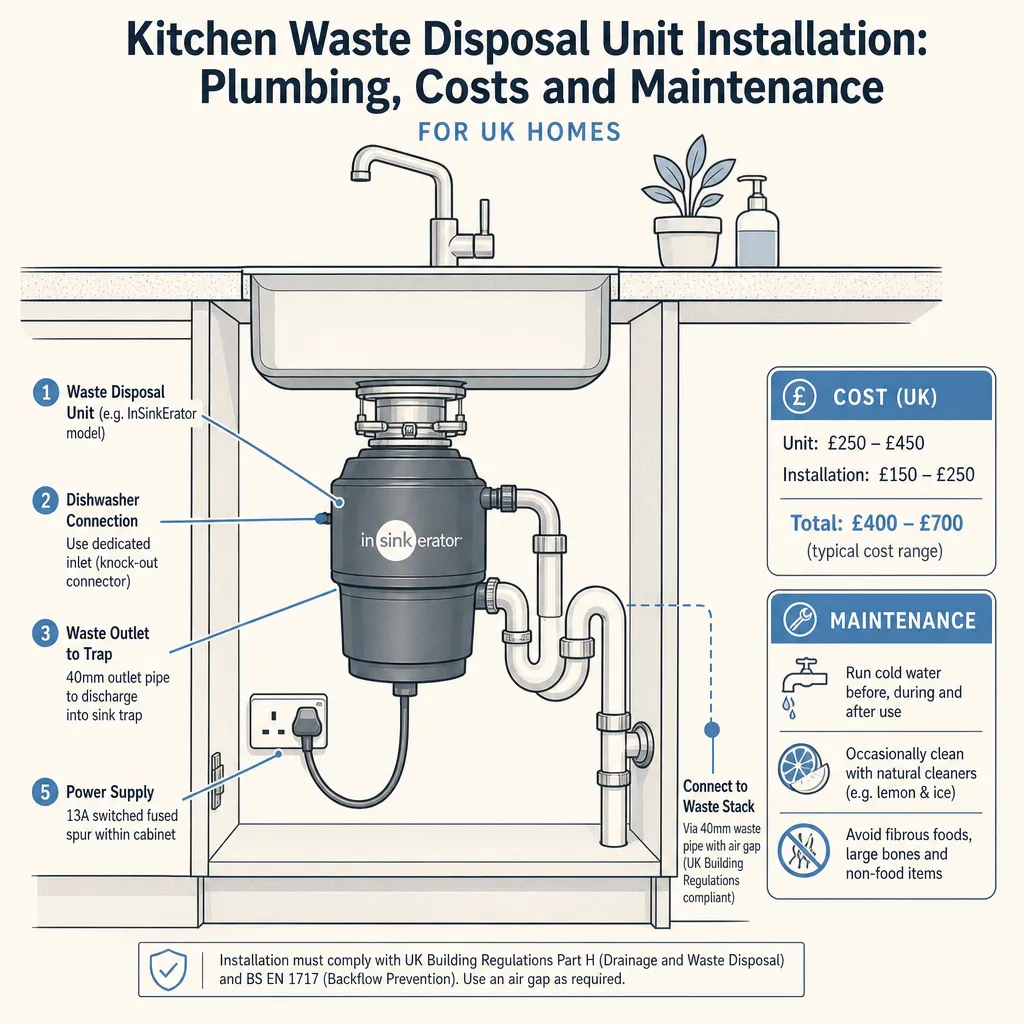
Kitchen Waste Disposal Unit Installation: Plumbing, Costs and Maintenance
Food waste disposal units are legal in the UK but must comply with the Water Supply (Water Fittings) Regulations 1999.
 Improvement & Build
Liniar uPVC Windows: Performance, Durability, and Quality Assessment
Liniar uPVC window profiles are manufactured in the UK using multi-chambered, foamed frames.
 Improvement & Build
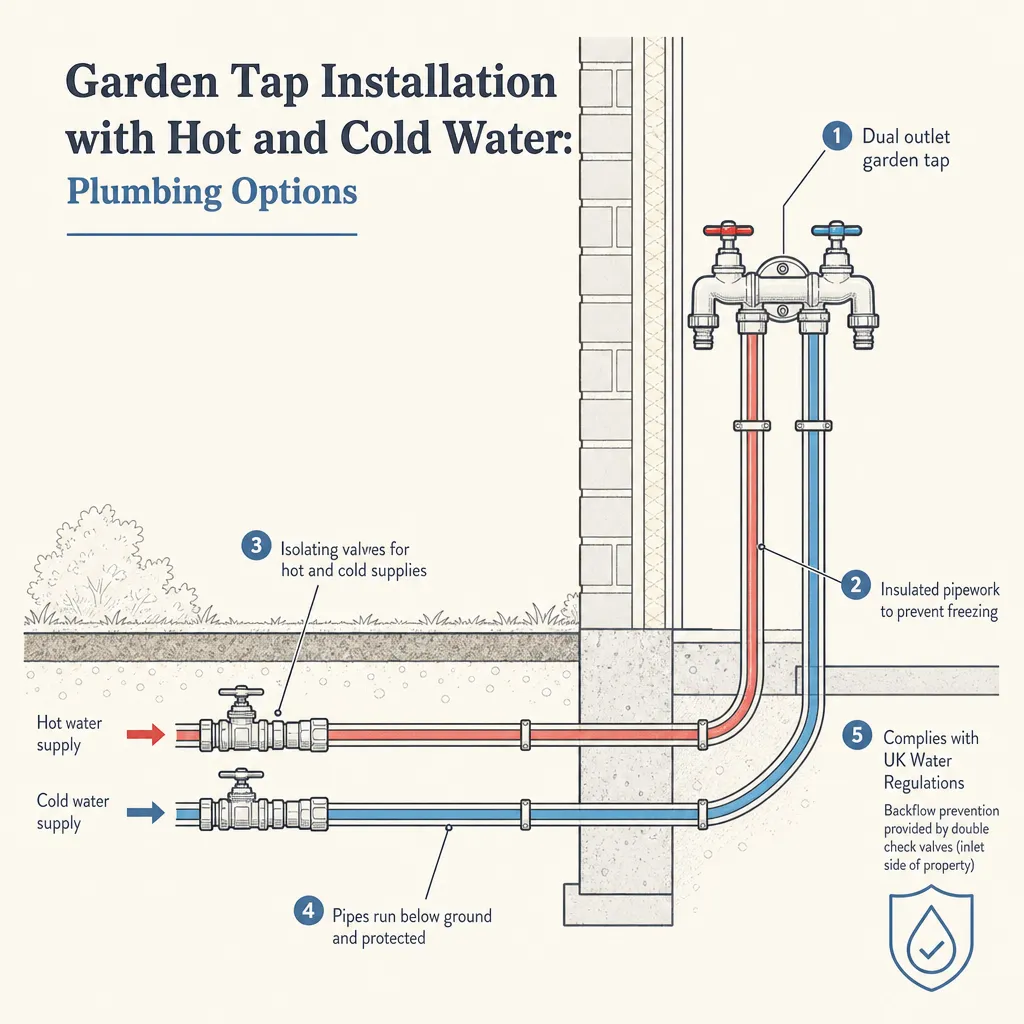
Garden Tap Installation with Hot and Cold Water: Plumbing Options
Adding a cold garden tap is a common DIY project, but routing hot water outdoors requires a plumber to connect to your domestic hot water system and comply with the Water Supply (Water Fittings) Regulations 1999.
 Improvement & Build
Sealing and Maintaining Historic Leaded Glass Windows: Preservation and Performance
Leaded glass windows are maintained using traditional linseed oil cement — not silicone or modern sealants, which prevent natural movement in the lead came.
 Improvement & Build
Greenhouse Construction: Glass Versus Polycarbonate Materials
Glass transmits around 90% of available light and lasts indefinitely if unbroken, but insulates poorly and shatters into sharp fragments.