Kitchen Waste Disposal Unit Installation: Plumbing, Costs and Maintenance
By Housey · Last reviewed 1st of June 2026
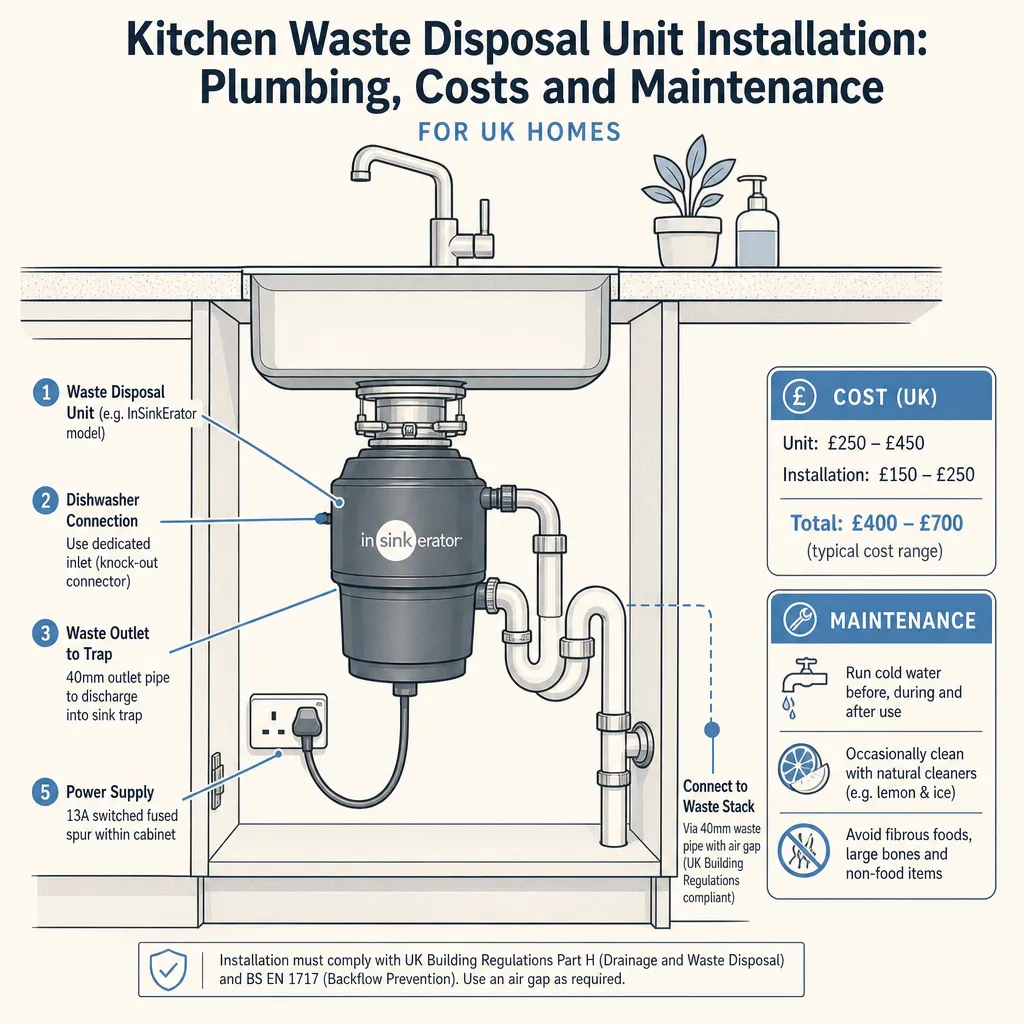
Kitchen Waste Disposal Unit Installation: Plumbing, Costs and Maintenance
Food waste disposal units have become a popular kitchen upgrade in UK homes, offering a practical way to reduce organic waste going to landfill. Whether you are fitting out a new kitchen or replacing an older unit beneath the sink, understanding the plumbing requirements, water company obligations, and long-term maintenance is essential before you commit to a purchase.
Key points
- Food waste disposal units must comply with the Water Supply (Water Fittings) Regulations 1999; some water companies require written notification before installation.
- A WRAS (Water Regulations Advisory Scheme) approved unit is strongly recommended to confirm the appliance meets UK water fittings standards.
- Professional installation requires a qualified plumber; the electrical supply — typically a switched fused connection unit (FCU) — must also comply with Part P of the Building Regulations.
- Indicative UK supply-and-install costs range from £200 to £620+, depending on unit specification and existing pipework. (Indicative UK costs, last reviewed 2026-06-01.)
- Cooking oil, fibrous vegetables, large bones, and starchy foods should never enter a disposal unit and can cause drain blockages or mechanical failure.
Do you need permission to install a food waste disposal unit in the UK?
Food waste disposal units are less common in the UK than in the United States, partly due to water company policies and the capacity of older drainage infrastructure. Under the Water Supply (Water Fittings) Regulations 1999, any appliance connected to the water supply or drainage must not impair water quality or the drainage system's capacity.
Many water companies ask customers to notify them before installing a unit. A small number have issued guidance discouraging use where local wastewater infrastructure cannot handle the additional organic load. Contact your water company directly or check their website before purchasing. Thames Water, Severn Trent, Yorkshire Water, and others publish this guidance online.
Choosing a food waste disposal unit
Type | How it works | Best for | Noise level | Unit price range |
|---|---|---|---|---|
Continuous feed | Runs while switched on; waste added continuously | High-use kitchens, larger households | Moderate | £80–£250 |
Batch feed | Activated by a stopper cap; processes one load at a time | Smaller households; safety-conscious users | Slightly lower | £100–£350 |
Septic-safe variants | Enzyme-treated to support bacterial breakdown in tank | Rural properties on septic systems | Varies | £150–£400 |
Unit-only prices are indicative based on available retail data, last reviewed 2026-06-01.
- Choose a continuous feed unit if your household generates significant food waste daily and you want fast, convenient processing.
- Choose a batch feed unit if you have young children, prefer an additional safety interlock, or your household waste volumes are moderate.
- Ask a drainage specialist if your property is served by a septic tank or cesspit — not all units are suitable, and an incompatible model could disrupt bacterial treatment.
What plumbing work is involved?
A food waste disposal unit fits beneath the kitchen sink, replacing or integrating with the existing drain outlet. The plumbing work typically includes:
- Removing and replacing the sink drain basket with a disposal-specific sink flange
- Connecting the unit's outlet to the sink trap (P-trap or S-trap) and waste pipe
- Ensuring the waste pipe diameter and gradient meet Building Regulations Approved Document H requirements for drainage
- Fitting a dishwasher inlet connection if the unit includes a dishwasher knock-out port
- Checking that existing waste pipes are clear of partial blockages before the unit is connected
A WaterSafe-approved or CIPHE-registered plumber should carry out this work. If your property has older cast iron drainage or complex pipework beneath the floor, drainage contractors on Housey can assess compatibility before your plumber begins installation.
Electrical requirements
Most food waste disposal units in the UK connect to a dedicated switched fused connection unit (FCU), typically rated 3A or 5A, located beneath the sink rather than a standard plug socket. Key requirements:
- The FCU must be switched and accessible — not concealed behind a locked or fixed panel
- All electrical work must comply with Part P of the Building Regulations; this means either a registered Part P electrician or self-certification by a registered competent person
- If no suitable connection currently exists beneath the sink, budget for additional electrician time to install one
Adding a new fused spur typically costs £80–£200 in additional labour.
Indicative installation costs
Cost element | Indicative range |
|---|---|
Unit (mid-range, continuous feed) | £100–£200 |
Plumber's labour (1–2 hours) | £80–£160 |
Electrician's labour (if needed) | £80–£200 |
Replacement fittings or pipework (if required) | £20–£60 |
Total (estimated) | £200–£620+ |
Indicative UK costs, last reviewed 2026-06-01. Costs vary significantly by region and property. Obtain at least two itemised quotes.
Maintenance checklist for food waste disposal units
A well-maintained unit should last 8–12 years. Use this checklist to keep yours in good condition:
What to ask before hiring a plumber
Before accepting a quote for installation:
- Are you registered with WaterSafe or the Chartered Institute of Plumbing and Heating Engineering (CIPHE)?
- Have you installed food waste disposal units before and are you familiar with WRAS product approval requirements?
- Will you check whether my water company requires advance notification before installation?
- Does the quote include all fittings, waste pipe modifications, and disposal of removed components?
- What happens if deteriorated waste pipes or a blocked drain are found once work starts — and will there be an additional charge?
- Is VAT included?
- Will you provide written confirmation that the installation complies with the Water Fittings Regulations?
When to get professional help
A food waste disposal unit is a routine installation for a qualified plumber, but seek professional advice before proceeding if:
- Your property has a septic tank or cesspit — a drainage specialist should confirm compatibility before you purchase a unit
- You notice slow drainage across multiple sinks or hear gurgling sounds — this suggests a partial blockage or ventilation issue that should be resolved before adding load to the system
- Your property was built before the 1970s and may have original cast iron drainage — condition should be confirmed before any modification
- Your water company has explicitly prohibited food waste disposal units on your supply network
How Housey can help
If your existing waste pipes need inspecting or extending before a disposal unit can be fitted, drainage contractors on Housey can assess your drainage layout and confirm compatibility — saving you from discovering problems mid-installation.
Frequently asked questions
Are food waste disposal units legal in the UK?
Yes. Food waste disposal units are legal in the UK, subject to compliance with the Water Supply (Water Fittings) Regulations 1999. However, some water companies ask customers to notify them before installation, and a small number discourage use in specific supply areas. Always check your water company's published guidance before purchasing a unit.
Can I install a food waste disposal unit myself?
The mechanical fitting may be within a competent DIYer's ability, but the electrical connection — a switched fused spur — must comply with Part P of the Building Regulations. If you are not a registered competent person, a qualified electrician is required. Professional plumber installation is strongly recommended to ensure drain connections meet Approved Document H requirements.
Do food waste disposal units smell?
Odour usually results from food debris in the grinding chamber. Running cold water before and after each use, grinding ice cubes monthly, and occasionally processing citrus peel substantially reduces smell. Persistent odour despite regular maintenance may indicate a blockage or deteriorating seal — inspect the unit or call a plumber.
Are food waste disposal units suitable for properties with septic tanks?
Some manufacturers produce septic-safe variants with enzyme treatments to assist bacterial breakdown. Conventional units can disrupt the bacterial balance in a septic system. Consult your septic tank maintenance provider or a drainage specialist before installing any disposal unit where the property relies on a septic tank or cesspit.
Sources and further reading
- Water Supply (Water Fittings) Regulations 1999 — legislation.gov.uk
- WRAS Approved Products List — Water Regulations Advisory Scheme (WRAS)
- Approved Document H: Drainage and Waste Disposal — GOV.UK
- WaterSafe: Find an Approved Plumber — WaterSafe
Useful next reads
 Improvement & Build
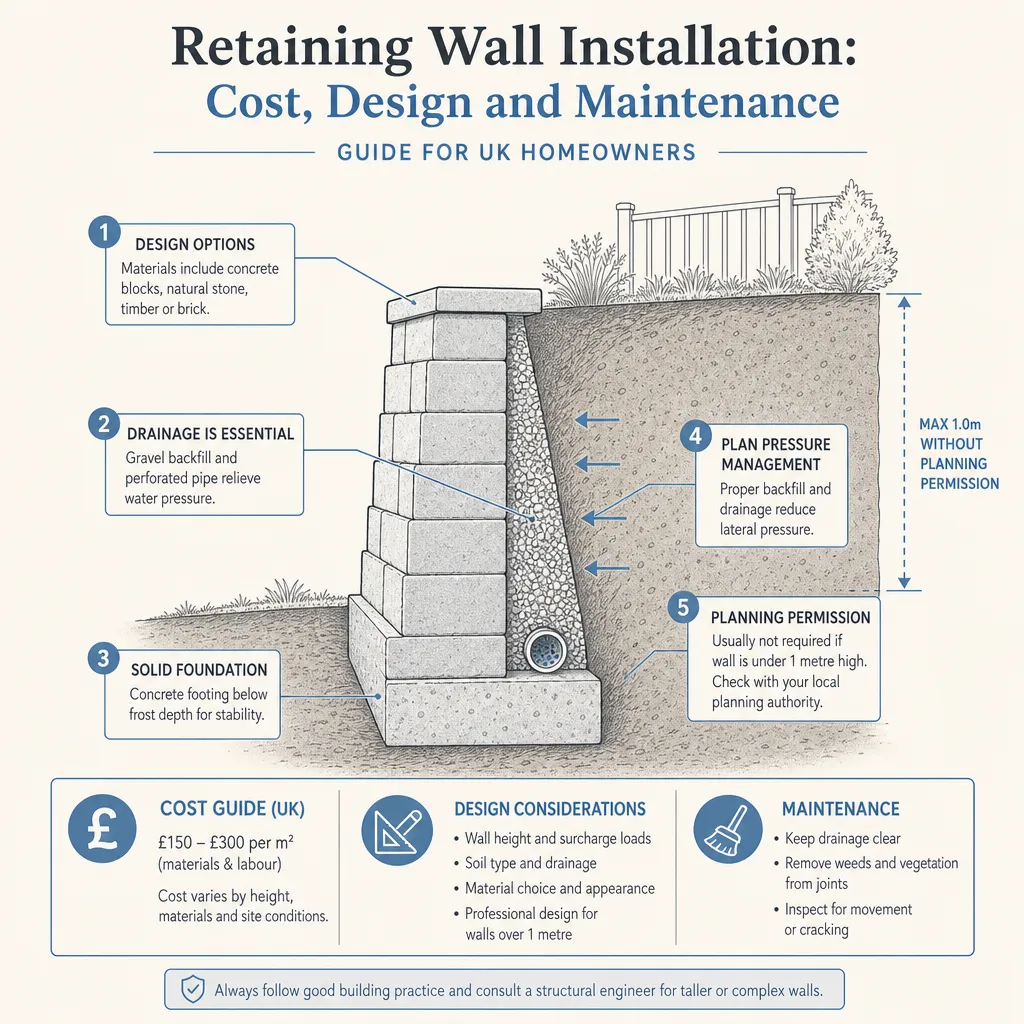
Retaining Wall Installation: Cost, Design and Maintenance
A retaining wall holds back soil on a sloped or banked site.
 Improvement & Build
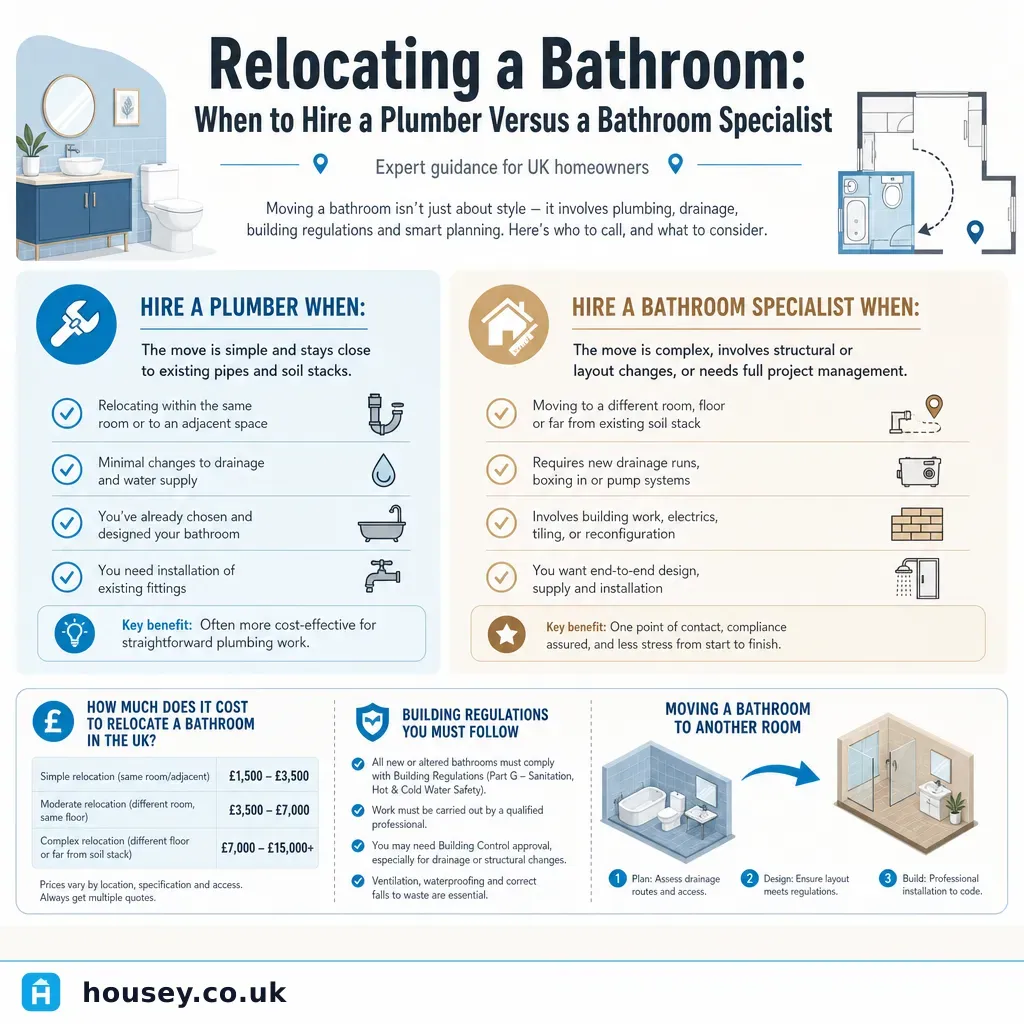
Relocating a Bathroom: When to Hire a Plumber Versus a Bathroom Specialist
Relocating a bathroom usually requires both a qualified plumber for pipework and drainage and other specialist trades for electrics, tiling, and finishes.
 Improvement & Build
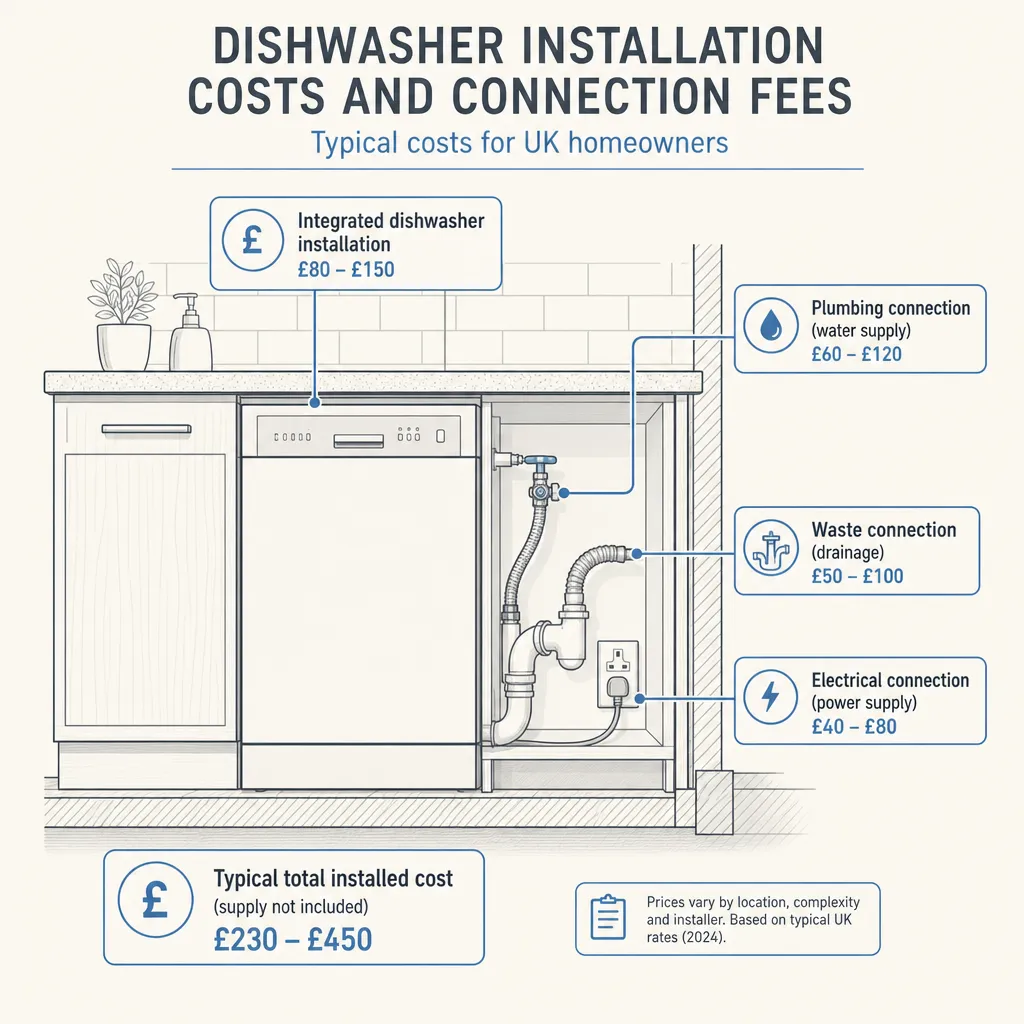
Dishwasher Installation Costs and Connection Fees
Dishwasher installation in the UK typically costs £80–£150 for a freestanding model near existing connections, rising to £150–£300 or more for integrated dishwashers.
 Improvement & Build
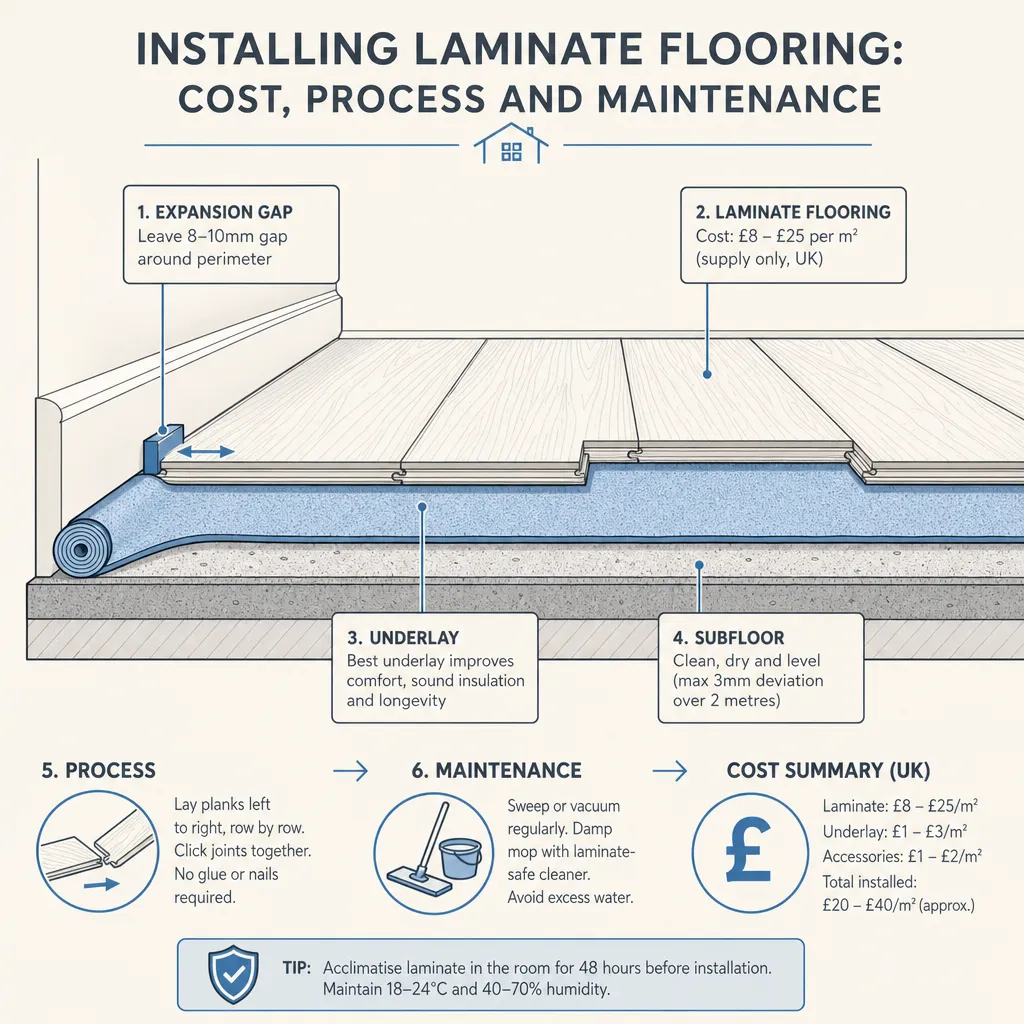
Installing Laminate Flooring: Cost, Process and Maintenance
Laminate flooring in the UK typically costs £15–40 per square metre for materials, plus £8–15 per square metre for professional fitting.
 Improvement & Build
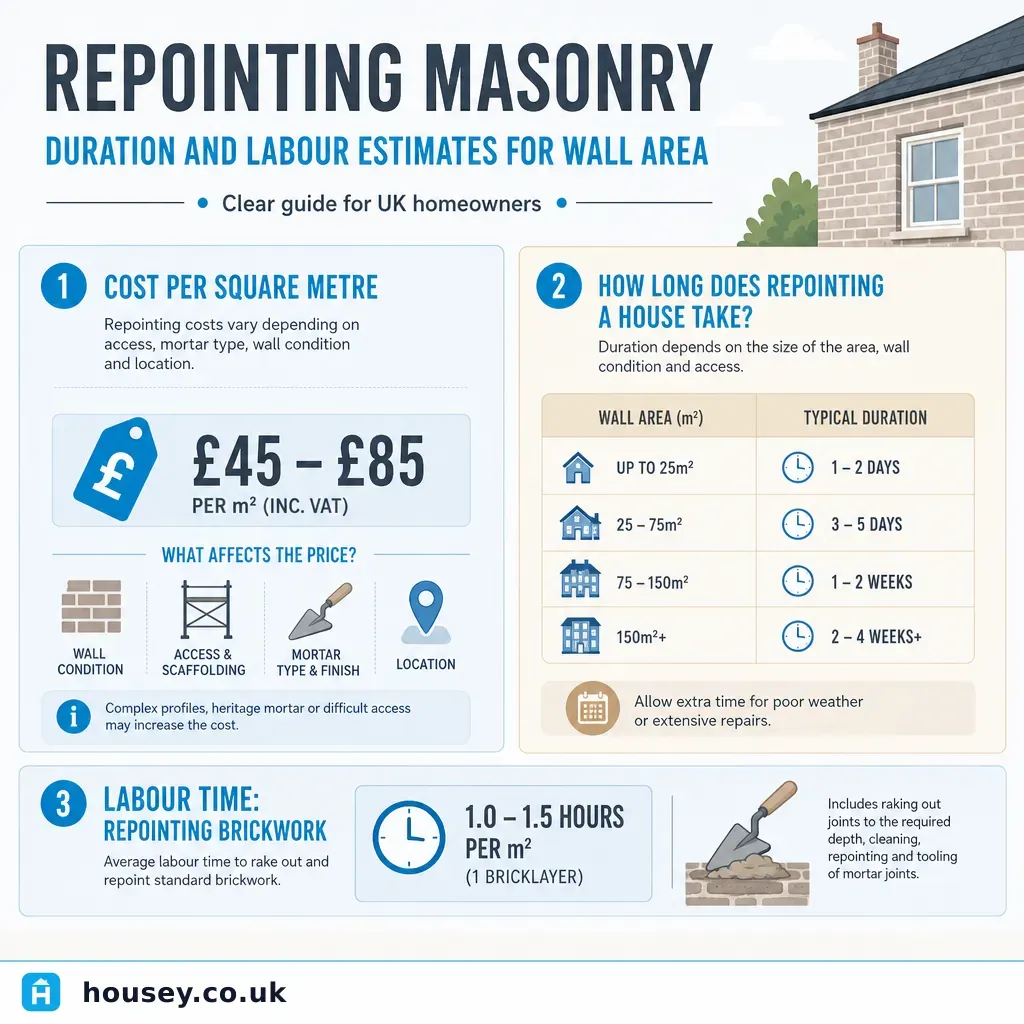
Repointing Masonry: Duration and Labour Estimates for Wall Area
A skilled bricklayer typically repoints 3–5 m² per hour when raking out and refilling joints by hand.