Disposing of Construction Waste from Home Renovations Responsibly
By Housey · Last reviewed 8th of May 2026
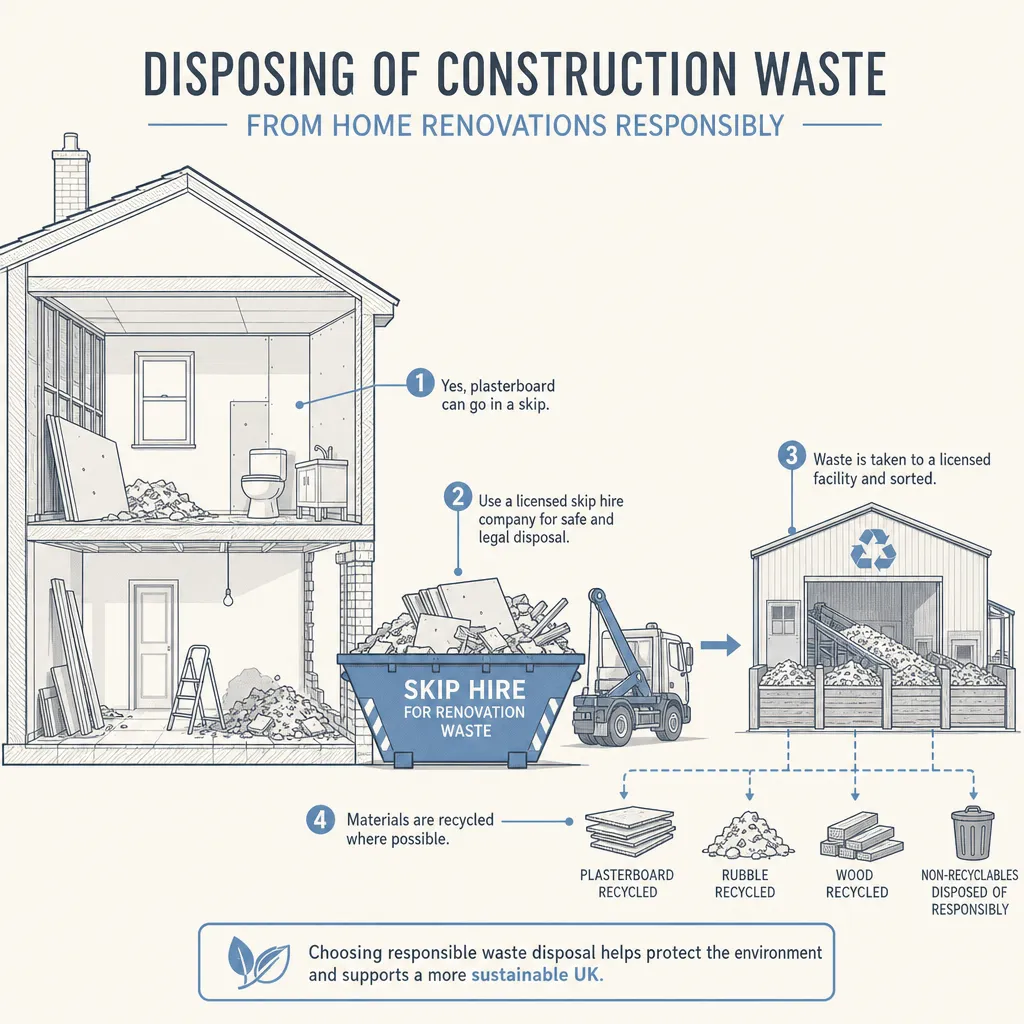
Disposing of Construction Waste from Home Renovations Responsibly
Renovation projects generate surprisingly large volumes of waste — a single bathroom strip-out can produce half a tonne of rubble, old fixtures, and packaging. UK law places clear duties on homeowners and contractors to handle that waste legally, and the consequences of getting it wrong range from council fines to Environment Agency prosecution. Understanding your obligations before a skip arrives on the drive is far simpler than resolving a legal issue afterwards.
Key points
- Under the Environmental Protection Act 1990, everyone who produces, carries, or disposes of waste has a duty of care to ensure it is handled legally — this applies to homeowners, not just trade contractors.
- Waste carriers — including skip companies and man-and-van clearance services — must be registered with the Environment Agency (England), Natural Resources Wales, or SEPA (Scotland); you can verify registration on each body's public register.
- Plasterboard must be kept separate from other construction waste at licensed facilities; the Landfill (Interim Measures) Regulations 2009 prohibit plasterboard going to landfill mixed with biodegradable waste because gypsum reacts to produce hydrogen sulphide gas.
- Fly-tipping construction waste is a criminal offence; on summary conviction, fines can reach £50,000 and custodial sentences are possible under the Environmental Protection Act 1990.
- Hazardous materials including asbestos-containing materials (ACMs), chemical containers, and fluorescent tubes must go to a licensed hazardous waste facility and cannot go in a standard skip.
Your legal duties when disposing of construction waste
UK waste law applies to homeowners as well as contractors. If you pay a builder to remove waste and they dump it illegally, you may share legal responsibility if you did not check their carrier registration.
Check waste carrier registration. The Environment Agency maintains a public register of all registered waste carriers in England. Legitimate skip hire companies and clearance firms will provide their registration number on request. Equivalent registers are maintained by Natural Resources Wales and SEPA.
Issue a waste transfer note. For most non-hazardous construction waste, a written waste transfer note is required under the Controlled Waste (England and Wales) Regulations 2012 when waste passes from one party to another. Keep it for two years. Skip hire firms typically issue one automatically, but ask if using a one-off clearance service.
Hazardous waste consignment notes. If any hazardous waste is removed — asbestos, chemical containers, or fluorescent lighting — a hazardous waste consignment note is legally required under the Hazardous Waste (England and Wales) Regulations 2005. Keep this for three years.
Choosing the right waste removal method
The best option depends on the volume of waste, access to your property, and whether hazardous materials are present.
Method | Best for | Limitations | Indicative cost (2026) |
|---|---|---|---|
Skip hire (on-drive) | Large renovations; mixed construction and demolition waste | Needs adequate drive space; check weight limits | £180–£400 depending on size and region |
Skip hire (road permit) | Terraced streets with no off-road parking | Council permit required; permit fees vary | £200–£500 plus permit fee (£30–£75) |
Grab lorry | Bulk rubble, soil, concrete | Requires access for a large vehicle; 8–14 tonne typical load | £250–£600 per load |
Man-and-van clearance | Smaller loads; mixed waste | Verify waste carrier registration carefully | £80–£250 per load |
Household waste recycling centre (HWRC) | Small quantities; self-loaded | Councils may restrict volume; trade waste often prohibited | Usually free for residents with ID |
Builder's own disposal | Contractor managing full project | Request waste transfer note; check carrier registration | Included or itemised in contract |
Indicative UK costs, last reviewed 2026-05-08. Prices vary by region, material type, and supplier.
Skip permits on the public highway. If a skip must be placed on a public road, the skip hire company requires a licence from the local highway authority under the Highways Act 1980. In most areas the company arranges this, but confirm it is in place before the skip arrives. Permits typically cost £30–£75 and take 24–72 hours to process.
Which materials can be recycled or reused?
Many construction materials can be diverted from landfill. Some licensed recycling centres separate your load on arrival; others require pre-sorted loads to process recyclable materials efficiently.
Commonly recyclable materials from domestic renovation:
- Hardcore and rubble (brick, concrete, stone): can be crushed and reused as aggregate
- Timber (uncontaminated): suitable for wood recycling or biomass processing
- Metal (copper pipe, steel, radiators): high recycling value; many skip companies separate metal automatically
- Plasterboard: must go to a dedicated plasterboard recycler — ask your skip company for their facility's accreditation
- Old kitchen units: consider selling on online marketplaces or donating to Habitat for Humanity ReStores before demolition begins
- Sanitaryware: bathtubs, basins, and tiles can sometimes be donated to architectural reclamation yards
Plasterboard is a special case. Always tell your skip hire company if plasterboard is included — some charge a premium or will not accept it without prior notice. Several manufacturers including British Gypsum operate take-back and recycling schemes that accept plasterboard offcuts and whole boards.
What must not go in a standard skip
Certain materials are prohibited from standard skips and general waste streams.
Never put in a standard skip:
- Asbestos-containing materials of any form — textured coatings (Artex), pipe lagging, old floor tiles, corrugated roof sheets
- Batteries, paint tins, solvents, and adhesives (beyond small household quantities)
- Fluorescent lighting tubes and other Waste Electrical and Electronic Equipment (WEEE)
- Soil from a site with known contamination
- Gas cylinders and aerosols
If you discover textured Artex ceilings, old floor tiles, or lagging on pipes during a renovation, stop work on that area and arrange a survey by a UKATA- or BOHS P402-qualified asbestos surveyor before disposing of the material. HSE provides detailed guidance on asbestos in homes and the legal duties that apply.
Red flags: signs your waste disposal may not be legal
- The skip hire company or clearance firm cannot provide their Environment Agency carrier registration number
- You received a quote significantly lower than others, with minimal paperwork or explanation
- The clearance vehicle has no company markings and the driver offers to "take it away for cash"
- You received no waste transfer note at the point of collection
- A contractor says they will "take it to the tip" but cannot name a specific licensed facility
Any of these signs suggest the waste may be fly-tipped. You could be investigated as the waste producer even if you did not tip it yourself — which is why checking carrier registration before booking matters.
Homeowner checklist: before waste leaves your site
When to get professional help
For most general renovation waste, a registered skip hire company or waste carrier is sufficient. Consider bringing in a specialist if:
- You suspect any materials may contain asbestos — do not disturb, move, or bag them yourself
- You are dealing with a full demolition where soil, concrete, and mixed hazardous materials need careful segregation
- The project scale exceeds domestic skip capacity or involves commercial quantities of waste
- You are unsure whether any materials in the property are hazardous
Demolition contractors handling full strip-outs typically include waste management plans in their service, arranging licensed disposal, material segregation, and recycling documentation as part of the contract.
How Housey can help
If your renovation involves substantial demolition or strip-out work, a professional can manage waste disposal legally as part of the project. Housey lets you request quotes from vetted demolition contractors who understand UK waste legislation and can provide the correct waste transfer notes and consignment documentation.
Frequently asked questions
Can I put rubble in a standard skip?
Yes, rubble such as broken brick, concrete, and hardcore can go in a standard skip, but check the weight limits — a standard 6-yard skip typically holds around 6–8 tonnes maximum. Rubble is dense and easy to over-fill. Some skip companies offer dedicated heavy-waste skips for rubble-only loads at a lower cost per tonne.
Do I need a permit to hire a skip?
If the skip is placed on private land — your driveway or garden — no permit is needed. If it must go on the public highway, the skip company needs a licence from the local highway authority under the Highways Act 1980. This is usually arranged by the skip company, but confirm before booking. Permit fees typically range from £30 to £75.
Is it free to take building waste to a household waste recycling centre?
HWRCs are generally free for residents with valid ID, but many councils limit the volume of builder's rubble per visit. Some councils charge for van loads or prohibit trade waste entirely. Check your local council's HWRC page before making the trip, as rules vary significantly between authorities.
What happens if my builder fly-tips my waste?
If you arranged for the builder to remove waste and they disposed of it illegally, the Environment Agency may investigate both the builder and you as the waste producer. Keeping a copy of the waste transfer note and checking the carrier's registration beforehand provides important evidence that you took reasonable steps to comply with your duty of care.
Can I recycle an old kitchen or bathroom?
Yes. Intact kitchen units, sanitaryware, and working appliances can often be sold via online marketplaces, donated to reclamation yards, or collected by charities such as Habitat for Humanity ReStores. This keeps materials in use, reduces your skip volume, and may reduce disposal costs. Let your contractor know before demolition if you want to salvage items.
Sources and further reading
- Waste duty of care: code of practice — GOV.UK / Environment Agency
- Register of waste carriers, brokers and dealers — Environment Agency
- Asbestos: the survey guide (HSG264) — HSE
- Fly-tipping statistics and enforcement — GOV.UK / Defra
- Hazardous Waste (England and Wales) Regulations 2005 — legislation.gov.uk
Useful next reads
 Improvement & Build
Disposing of Tree Waste from Felled Timber: Options and Removal Services
Tree waste from felled timber can be disposed of in several ways: a tree surgeon can chip or remove it as part of the job, you can hire a skip, take it to a household waste recycling centre, have logs split for firewood, or arrange a wood-chip delivery to a local composting site.
 Improvement & Build
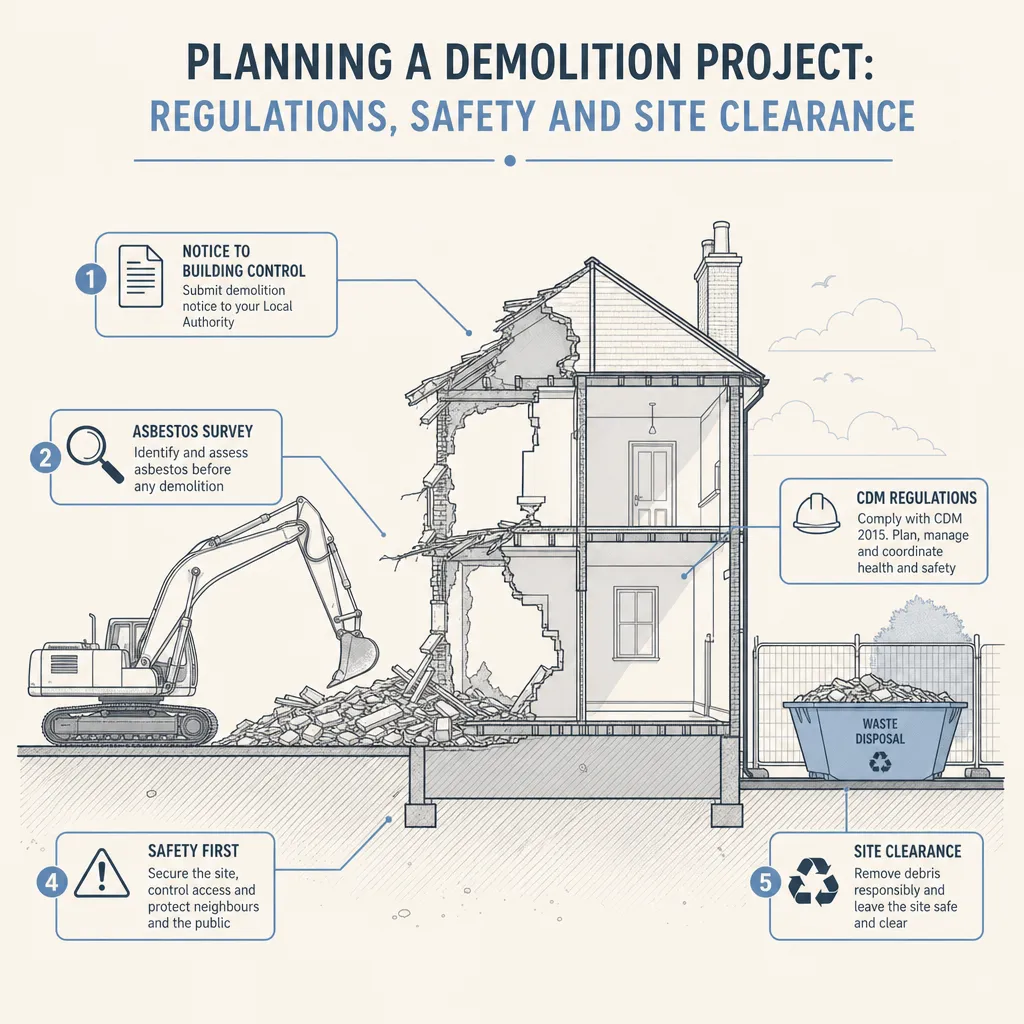
Planning a Demolition Project: Regulations, Safety and Site Clearance
Demolishing a building in England requires a Section 80 building control notice served at least six weeks before work starts, a Refurbishment and Demolition asbestos survey before any demolition begins, and compliance with CDM 2015.
 Improvement & Build
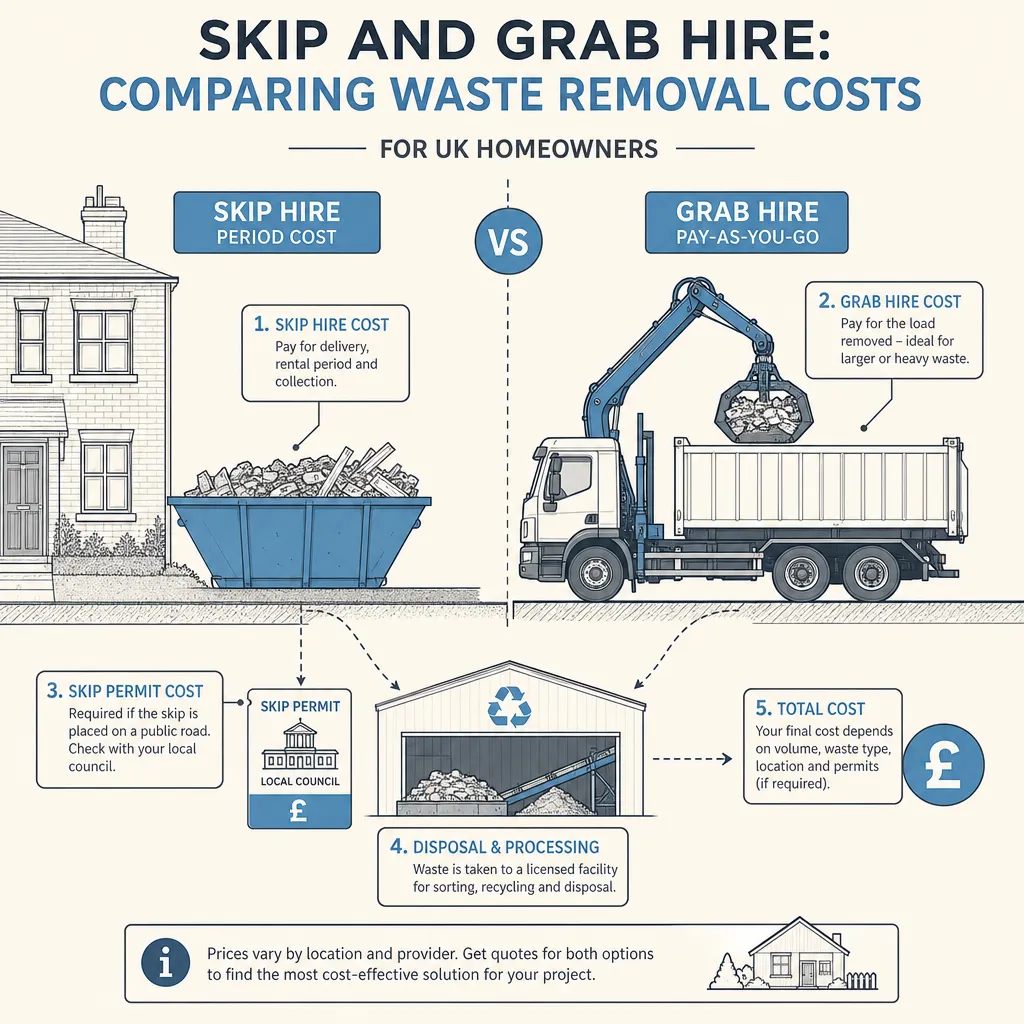
Skip and Grab Hire: Comparing Waste Removal Costs
Skip hire suits projects where waste builds up over several days — mixed rubble, timber, and general clearance.
 Improvement & Build
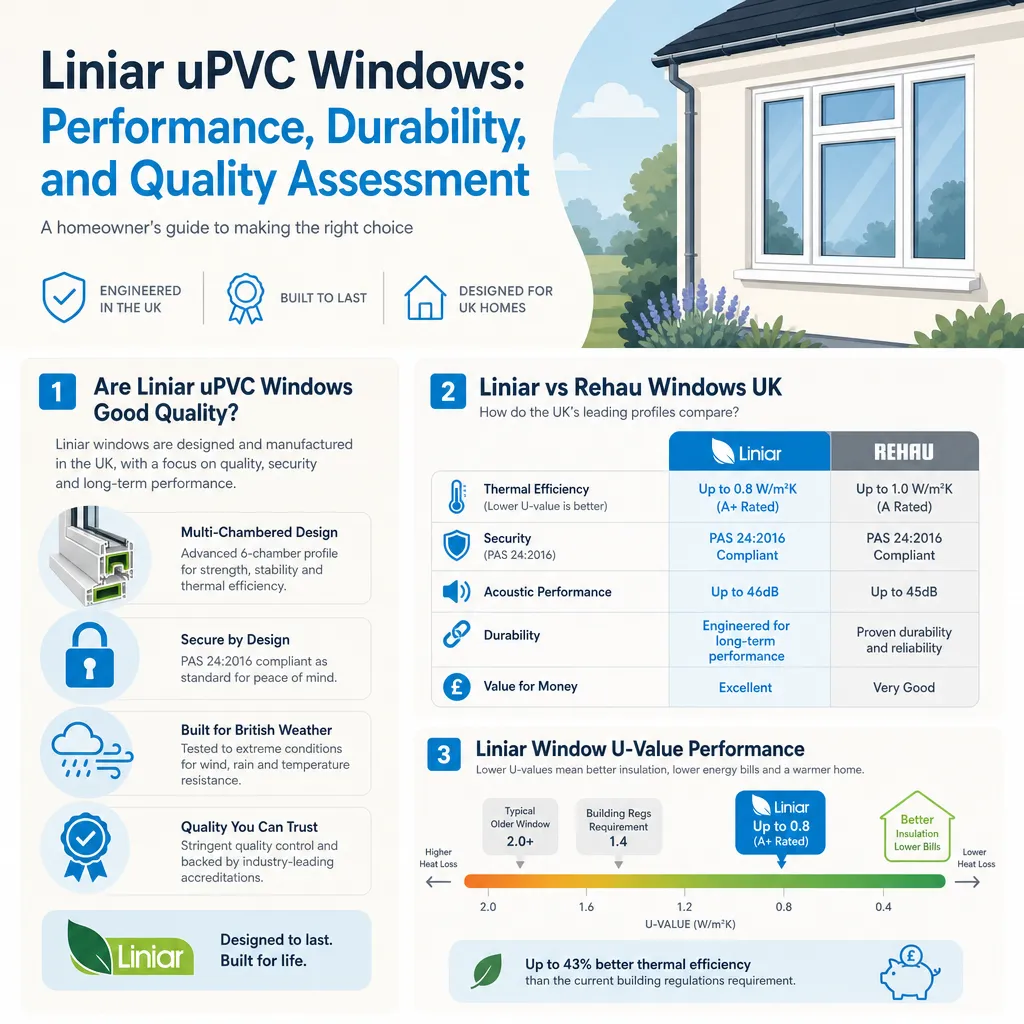
Liniar uPVC Windows: Performance, Durability, and Quality Assessment
Liniar uPVC window profiles are manufactured in the UK using multi-chambered, foamed frames.
 Improvement & Build
Garden Tap Installation with Hot and Cold Water: Plumbing Options
Adding a cold garden tap is a common DIY project, but routing hot water outdoors requires a plumber to connect to your domestic hot water system and comply with the Water Supply (Water Fittings) Regulations 1999.