Disposing of Tree Waste from Felled Timber: Options and Removal Services
By Housey · Last reviewed 11th of May 2026
Disposing of Tree Waste from Felled Timber: Options and Removal Services
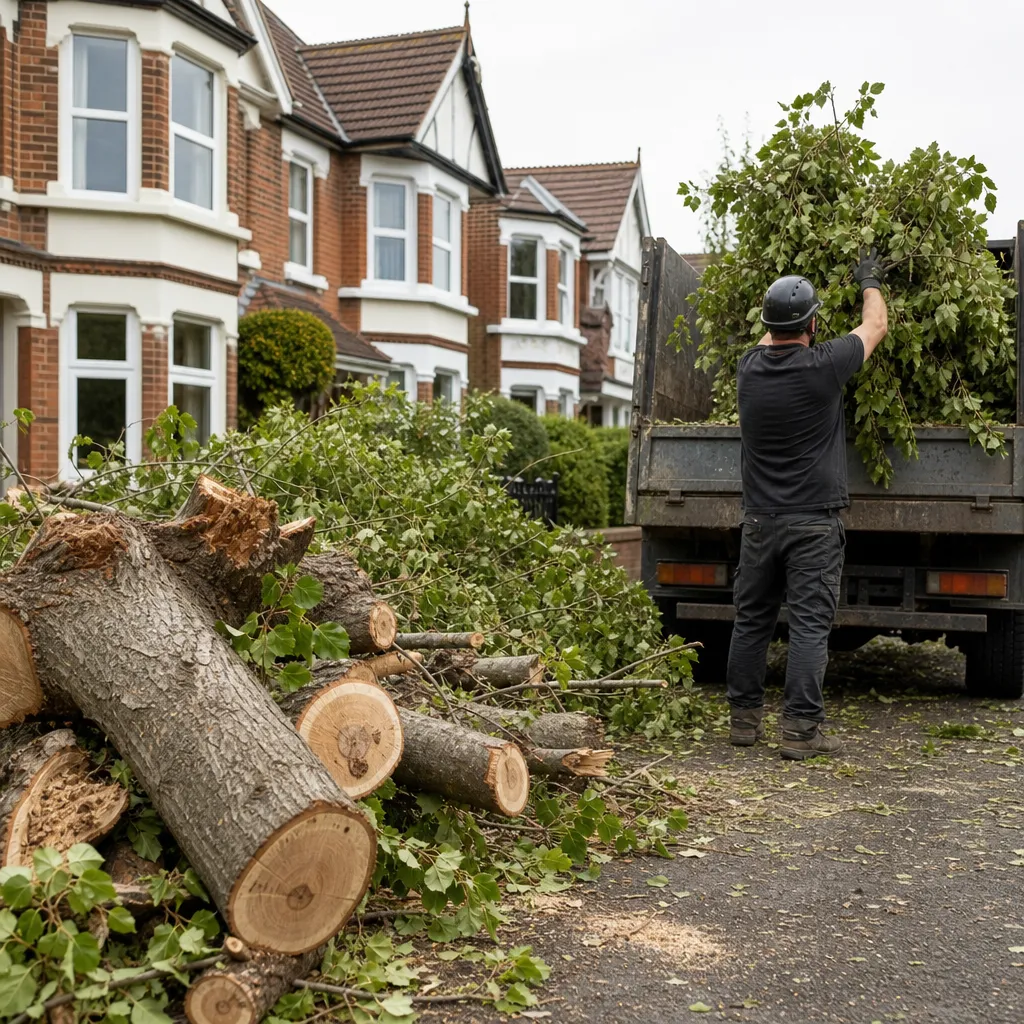
Having a tree felled or pruned can generate a surprising quantity of material — branches, logs, bark, and root sections — that needs dealing with quickly before it blocks access or attracts pests. Whether you've hired a tree surgeon or managed smaller garden work yourself, understanding your disposal options before the job begins means material can be sorted, retained, or removed without unnecessary delay or added cost.
Key points
- Under the Environmental Protection Act 1990, domestic tree waste becomes controlled waste once it leaves your property, so any contractor removing it off-site must hold a Waste Carrier Licence registered with the Environment Agency.
- Domestic bonfires are not prohibited in England and Wales, but smoke causing a statutory nuisance can trigger a council abatement notice — and burning in a designated Smoke Control Area may breach the Clean Air Act 1993.
- Many tree surgeons include chipping and removal in their quote; confirm this before work starts, as separate removal fees can add £100–£300 or more to the job. (Indicative UK costs, last reviewed 2026-05-11.)
- Household Waste Recycling Centres (HWRCs) accept green waste and timber in most English local authorities, but some charge for larger volumes or refuse commercial-scale loads.
- Hardwood logs such as oak, ash, or beech can be split and seasoned for use as firewood; freshly felled wood typically needs 12–24 months to season before it burns efficiently.
What counts as tree waste?
Tree waste — sometimes called arboricultural waste — covers all material arising from tree surgery or felling: large logs, branches, twigs, leaves, bark, and root ball material. Sorting by type before disposal opens up reuse options and can reduce skip costs:
- Logs (trunk sections and large branches): suitable for firewood, sale to a log merchant, skip disposal, or HWRC.
- Chippable material (branches up to roughly 15 cm diameter): a chipper converts this to useful wood chip mulch.
- Brash (fine twigs and leaves): composts well; also accepted at most HWRC green waste bays.
- Root ball material: bulky and heavy; typically requires a skip or specialist removal.
Disposal options compared
Option | Best for | Typical cost | Key limitation |
|---|---|---|---|
Tree surgeon removes on the day | All material, any volume | Often included in quote; ask upfront | Confirm carrier licence if removing off-site |
Hire a skip | Large or mixed volumes | £150–£400 depending on size and area (Indicative, last reviewed 2026-05-11) | Road permit needed if placed on a public highway |
Household Waste Recycling Centre | Domestic-scale loads | Free or small charge; varies by council | Volume limits; must be delivered by the householder |
Wood chip left on site | When a chipper is in use on the job | Often free from tree surgeons seeking to offload | Requires space; fresh chip not suitable for digging into beds |
Firewood seasoning and use | Hardwood logs in useful quantity | No disposal cost | 12–24 months seasoning; need covered storage |
Compost heap | Small quantities of leaves and fine twigs | No cost | Slow; unsuitable for larger woody material |
Can you burn tree waste in your garden?
Garden bonfires are not prohibited in England and Wales, but there is no automatic right to burn. The key considerations are:
- Statutory nuisance: Smoke, ash, or smell that causes a nuisance to neighbours can trigger a council abatement notice under the Environmental Protection Act 1990. Repeated or deliberate nuisance may result in a fine.
- Smoke Control Areas: In designated Smoke Control Areas — common in urban and suburban areas — burning wood on an open bonfire is regulated under the Clean Air Act 1993. Check your postcode using the GOV.UK Smoke Control Area checker.
- Local restrictions: Some councils publish additional bonfire guidance. Check your council's website before lighting.
- Practical timing: Burning in dry conditions with a breeze carrying smoke away from neighbouring properties and roads is preferable; damp, still conditions create dense, problematic smoke.
For large volumes, a bonfire is rarely practical or neighbourly. Alternative disposal is usually faster and causes less friction.
Does a tree surgeon take the waste away?
Many tree surgeons include chipping and removal of arisings as part of their quoted price, but this is not universal. Some treat it as a separate charge; others leave chipped material on site for you to use as mulch.
Before booking:
- Ask explicitly whether removal is included in the quote, and what is covered — logs, chip, brash, and root ball may be priced separately.
- Confirm that any contractor removing waste off-site holds a valid Waste Carrier Licence from the Environment Agency. Check the public register on GOV.UK. Using an unlicensed carrier can result in a £300 fixed penalty notice for the waste producer.
- Agree in advance where chipped material will be left if you want to retain it for garden use.
Using wood chip and logs
Chipped material and logs are genuinely useful if you have space:
- Wood chip mulch: Spread 5–10 cm deep around trees, shrubs, and borders to suppress weeds and retain moisture. Avoid contact with plant stems. Fresh chip is high in carbon — useful on paths and borders, but mix with other organic matter before applying in vegetable beds.
- Firewood: Hardwoods — oak, ash, beech, cherry, apple — are worth retaining for log burners and open fires. Softwoods such as conifers and willow burn faster, produce more tar residue in flues, and are less suited to solid-fuel appliances.
- Log piles for wildlife: Stacked and undisturbed log piles provide habitat for stag beetles, hedgehogs, and invertebrates — particularly valuable when the timber is native species.
Checklist before felling or pruning
When to get professional help
A qualified tree surgeon (arborist) is always advisable for felling work involving trees of significant size or height, or trees close to buildings, power lines, or neighbouring properties. For disposal specifically, seek professional assistance if:
- The volume of material exceeds what you can safely manage or load yourself.
- Root ball removal requires machinery or ground excavation.
- The tree showed signs of disease — such as ash dieback or Phytophthora — as infected material may need specialist disposal rather than chipping or composting on site.
- You are uncertain whether any associated garden structures contain asbestos cement; do not chip or burn material near such structures until it has been assessed by a competent asbestos professional.
How Housey can help
If you need a qualified arborist to fell a tree and manage the resulting waste, or a landscaper to clear a site after felling, Housey can connect you with vetted local tree surgeons and landscapers who can provide itemised quotes covering removal and disposal. Getting two or three quotes before committing to larger work is always sensible.
Frequently asked questions
Is tree waste classed as garden waste or controlled waste in the UK?
Tree waste from a domestic garden is classed as green waste — a form of controlled waste — under the Environmental Protection Act 1990. Your local Household Waste Recycling Centre should accept it. If a contractor removes it for you, they must hold a valid Waste Carrier Licence, as the material becomes controlled waste once it leaves your property.
Can I take tree logs to the tip myself?
Most Household Waste Recycling Centres in England accept timber and logs at the green waste or timber bays, but some councils apply a charge for loads above a certain volume or refuse commercial-scale deliveries. Check your local authority's HWRC guidance before loading the vehicle.
How long does firewood from a felled tree take to season?
Hardwood logs typically need 12–24 months of seasoning — stored under cover with good air circulation — before they burn efficiently. Ash is an exception and may be usable within 6–12 months when freshly felled. Softwood seasons more quickly but produces less heat and more tar residue, making it less suitable for log burners and solid-fuel stoves.
Can a tree surgeon legally take my tree waste away?
Yes, provided they hold a valid Upper Tier or Lower Tier Waste Carrier Licence from the Environment Agency. You can verify any carrier on the Public Register of Waste Carriers, Brokers, and Dealers on GOV.UK. Using an unlicensed carrier is illegal and could expose you as the waste producer to a fixed penalty notice.
Sources and further reading
Useful next reads
 Improvement & Build
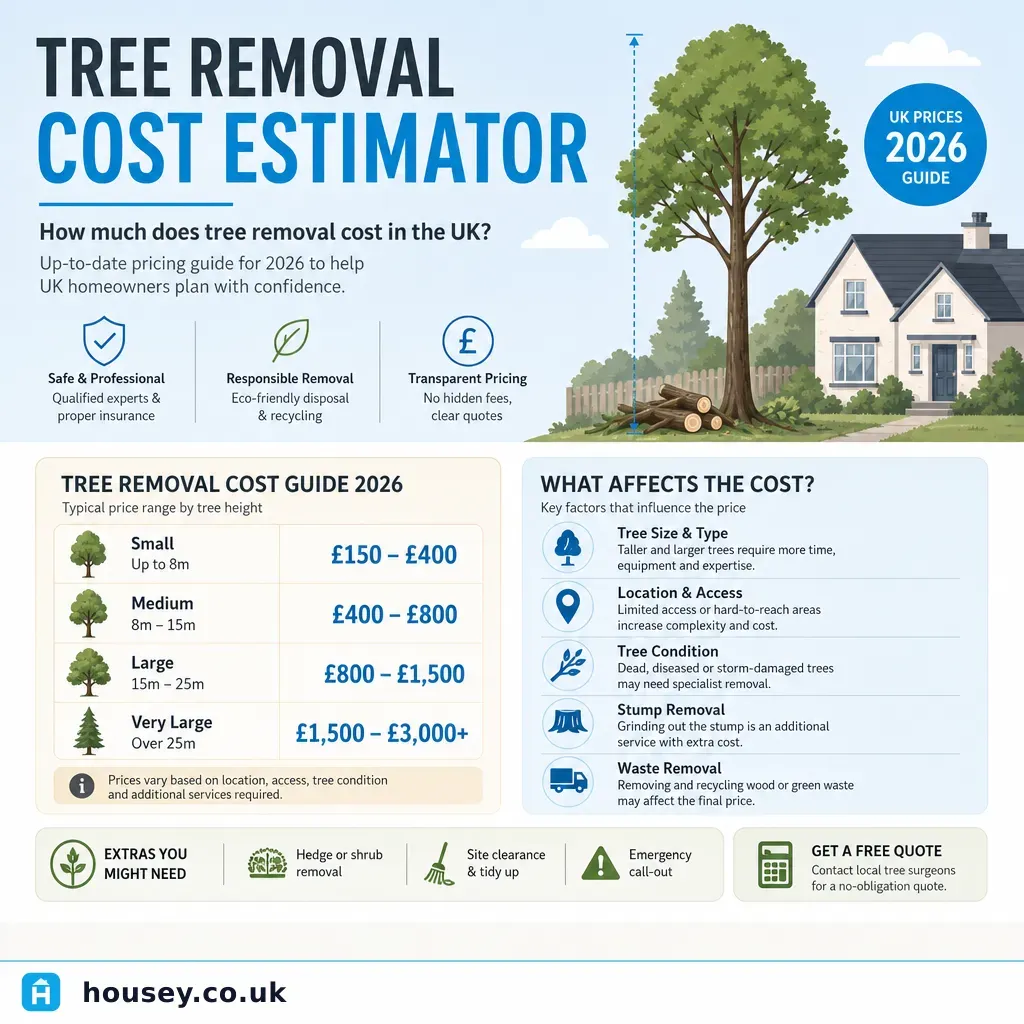
Tree Removal Cost Estimator
Tree removal in the UK costs roughly £150 to £5,000 or more, depending on the tree's height, species, access conditions, and whether stump removal is needed.
 Improvement & Build
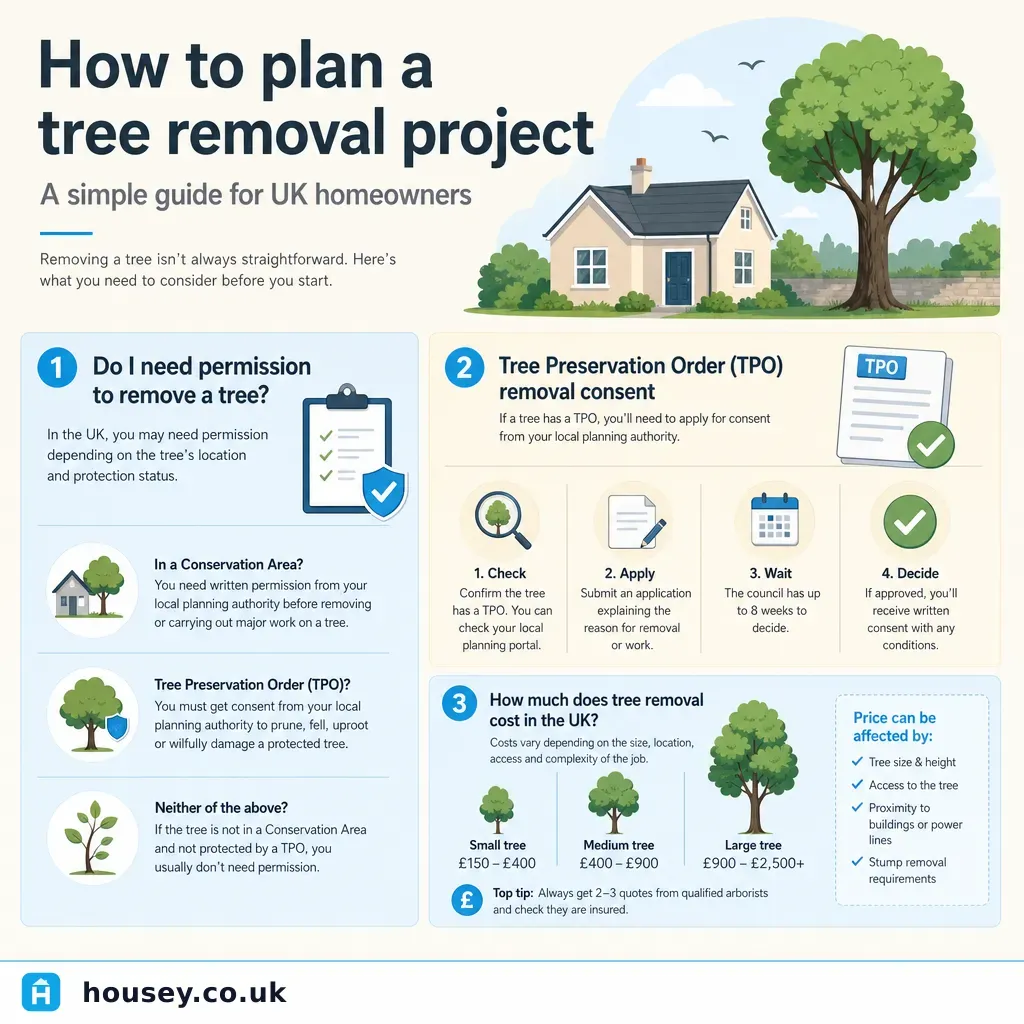
How to plan a tree removal project
Planning a tree removal project starts with checking whether the tree is protected by a Tree Preservation Order or sits in a conservation area, as both require council consent before any work begins.
 Improvement & Build
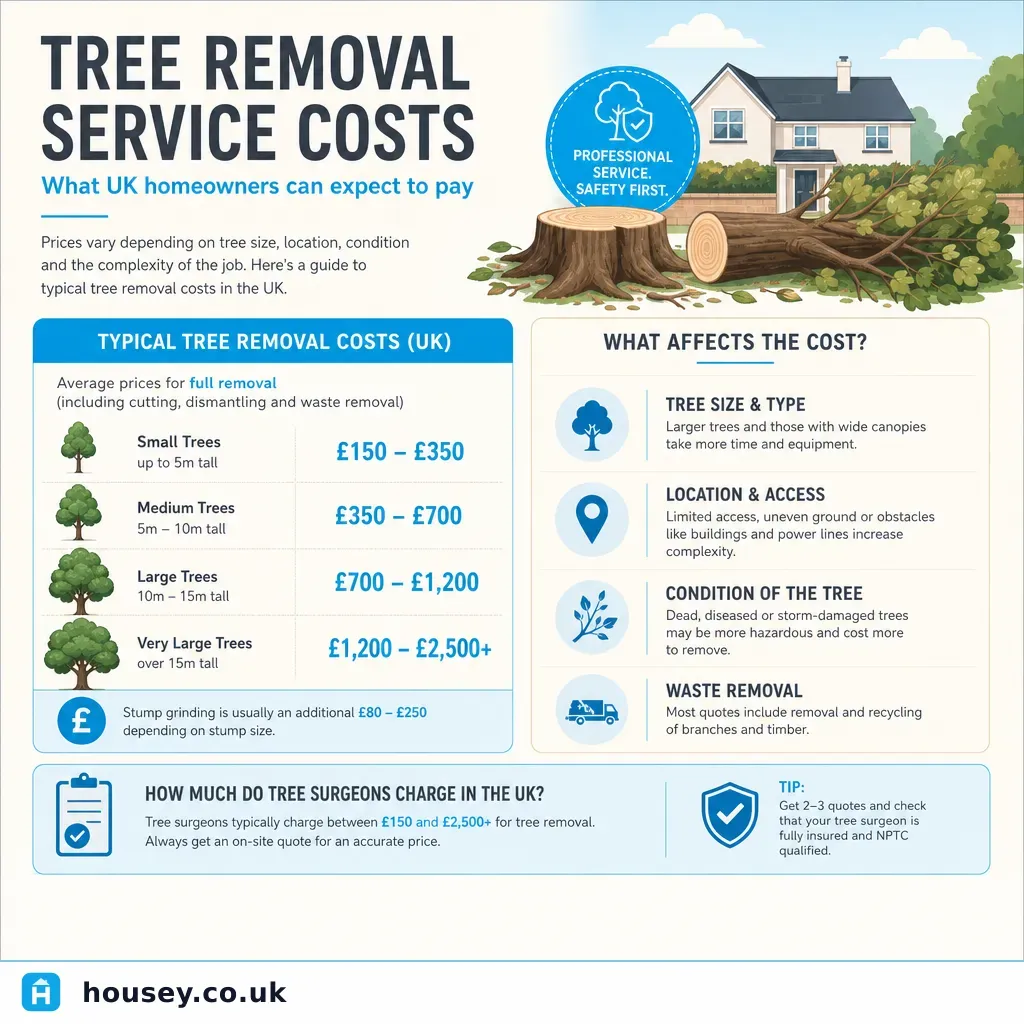
Tree Removal Service Costs
Professional tree removal costs in the UK depend on tree height, access, species, and the scope of work included.
 Improvement & Build
Tree Removal and Sustainable Uses for Timber
When a tree is felled, the timber can be reused as firewood (after 12–24 months' seasoning), woodchip mulch, or sawn planks.
 Improvement & Build
Specialist Tree Removal and Extraction Costs
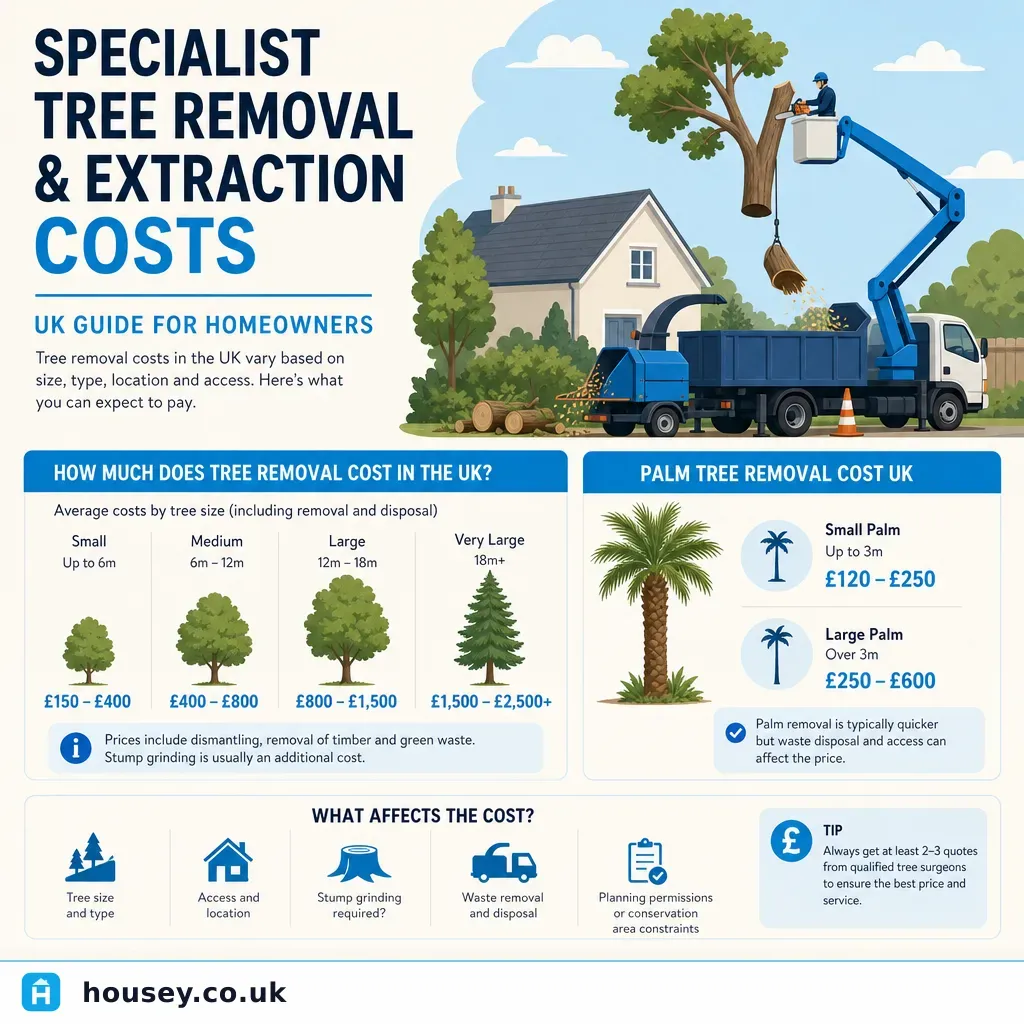
Specialist tree removal costs in the UK range from around £150 for small trees to £3,000 or more for large mature specimens, with palm trees typically costing more due to specialist technique.