DIY Hazards: Work You Should Leave to Professionals
By Housey · Last reviewed 11th of May 2026
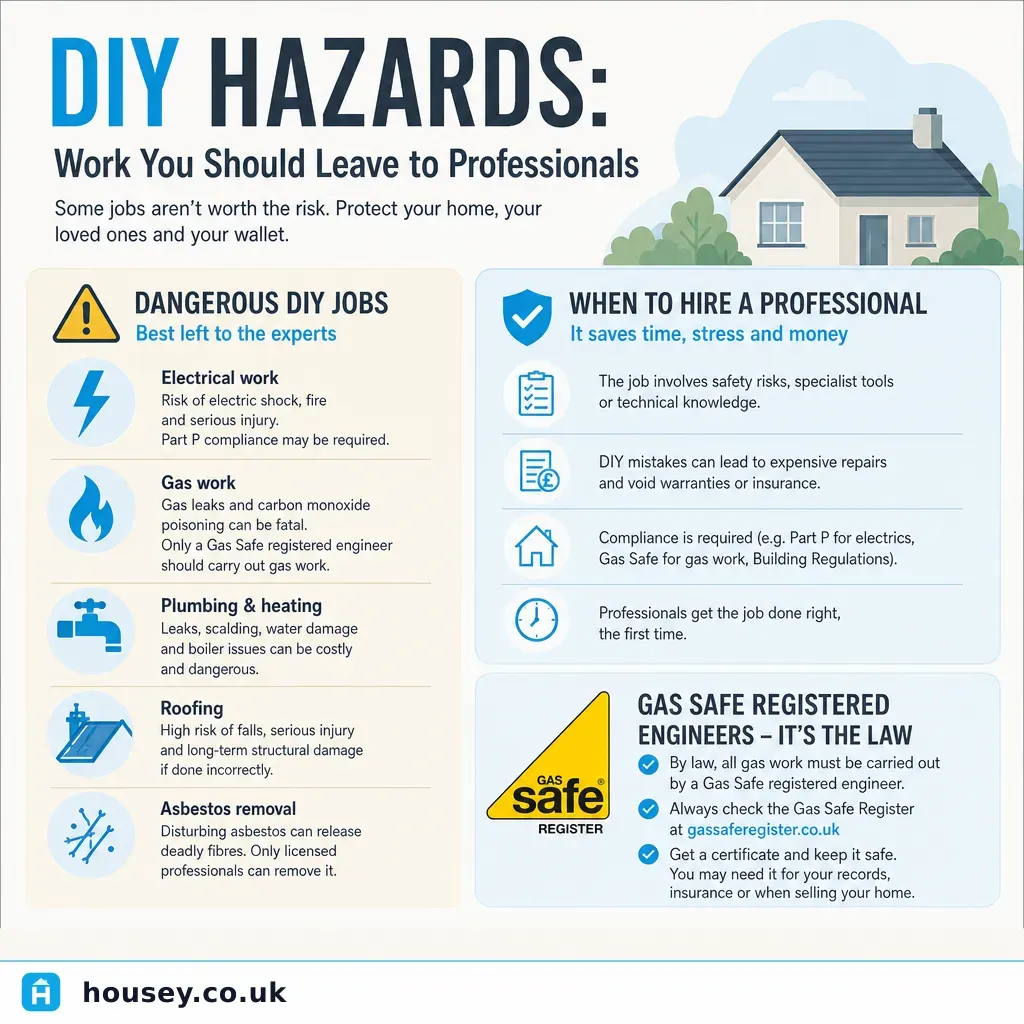
DIY Hazards: Work You Should Leave to Professionals
Many UK homeowners approach renovation and maintenance with a practical, self-sufficient attitude — and for a wide range of decorating, garden work, and general upkeep, that serves them well. But certain jobs carry risks that no online tutorial can adequately prepare you for. Getting them wrong can mean serious injury, structural failure, prosecution under UK law, a voided insurance policy, or a property that is difficult to sell.
Key points
- Gas installation and repair must be carried out only by a Gas Safe registered engineer under the Gas Safety (Installation and Use) Regulations 1998; carrying out this work without registration is a criminal offence.
- Electrical work affecting the consumer unit or in special locations (bathrooms, outdoors, swimming pools) must be notified under Part P of the Building Regulations and carried out or certified by a registered competent person — NICEIC, NAPIT, ELECSA, or equivalent.
- Asbestos-containing materials (ACMs) were used in UK construction until the 1999 ban; disturbing ACMs without appropriate controls violates the Control of Asbestos Regulations 2012 and can cause serious long-term harm.
- Structural alterations — removing load-bearing walls, installing steel beams, underpinning foundations — require structural engineer input and building control approval; without these, structural integrity is unverified and potentially uninsured.
- Work at height above 2 m accounts for a significant proportion of serious DIY injuries in the UK; roof repairs, chimney repointing, and upper-storey gutter work should be left to professionals with appropriate access equipment.
Why some DIY work carries legal, as well as physical, risk
Most home improvement work is not prohibited for a UK homeowner to attempt. The risk extends beyond the physical: certain categories of work are specifically regulated, and carrying them out without the right qualifications or notifications creates lasting legal liability. Home insurance policies routinely exclude damage arising from uncertified work. During a property sale, a solicitor's pre-contract enquiries will ask whether notifiable work was completed under a competent person scheme or with building control sign-off. If you cannot produce a certificate, you may face delays, price reductions, or the cost of retrospective approval.
The highest-risk categories
Gas work
Under the Gas Safety (Installation and Use) Regulations 1998, it is illegal for anyone who is not Gas Safe registered to carry out work on gas fittings in domestic premises. This covers fitting or moving a gas hob, boiler, or fire; extending gas pipework; and connecting any gas appliance. Always check an engineer's Gas Safe ID card and verify their registration at gassaferegister.co.uk.
Carbon monoxide poisoning from poorly fitted appliances is a leading cause of accidental death in UK homes. There is no safe DIY option for gas work.
Electrical work
Not all electrical work requires a registered electrician, but work in special locations (bathrooms, outdoors, swimming pools) and any work on the consumer unit is notifiable under Part P of the Building Regulations. Like-for-like replacements of switches, sockets, and light fittings on existing circuits in non-special locations are generally within a careful homeowner's reach — but the moment work moves to the consumer unit, new circuits, or a special location, a registered competent person must carry it out or certify it.
Without a valid Electrical Installation Certificate (EIC), solicitors and insurers will typically require an Electrical Installation Condition Report (EICR) before a property sale can proceed.
Asbestos
Asbestos was used extensively in UK buildings until it was banned in 1999. Properties built or significantly refurbished before that date may contain asbestos in roof tiles, floor tiles, artex ceilings, pipe lagging, boiler flue liners, and partition boards. The Control of Asbestos Regulations 2012 requires that work likely to disturb asbestos be carried out by licensed contractors for higher-risk materials, with appropriate controls and, in some cases, notification to the HSE. If you are unsure whether a material contains asbestos, treat it as though it does and arrange a UKAS-accredited survey before disturbing anything. The HSE asbestos guidance explains risk categories and legal requirements in full.
Structural alterations
Removing or altering a load-bearing wall, installing a steel beam (RSJ), underpinning foundations, altering a chimney breast, or excavating near existing foundations all require structural engineering input and building control approval. A building control application ensures an independent check that the work complies with Building Regulations. Without it, the structural integrity of your home is unverified — and a future buyer's surveyor will find the gap in the certification trail. Permitted development rights do not exempt structural work from building control requirements.
Work at height
The Work at Height Regulations 2005 apply primarily to workplaces, but the injury statistics are equally relevant to homeowners. Falls from height are among the most common causes of serious DIY accidents in the UK. The HSE advises that work above 2 m — including roof repairs, chimney repointing, and gutter work on two-storey properties — should be carried out by professionals with appropriate access equipment, training, and insurance.
Which work is safe to attempt vs. which needs a professional
Task | Homeowner can attempt | Professional required | Notes |
|---|---|---|---|
Interior decorating and painting | Yes | No | Low risk; no regulatory requirement |
Like-for-like light fitting (non-special location) | With care | Recommended | Must fully isolate circuit first |
Consumer unit (fuse board) replacement | No | Yes — NICEIC/NAPIT | Notifiable under Part P |
Kitchen unit installation | Yes (joinery) | Yes (gas and electrical connections) | Services connections remain regulated |
Removing an internal wall | Check first | Structural engineer and building control | May be load-bearing |
Repointing at ground level | Yes | No | Match mortar specification; take care with older homes |
Roof repairs above 2 m | No | Yes | Fall risk; specialist access equipment needed |
Any asbestos removal | No | Yes — licensed contractor | Control of Asbestos Regulations 2012 |
Gas appliance installation or repair | No | Yes — Gas Safe registered | Criminal offence if unregistered |
Electrical testing and inspection (EICR) | No | Yes — registered electrician | Specialist equipment and qualification required |
Party wall works on a shared boundary | Notice required | Surveyor if neighbour dissents | Party Wall etc. Act 1996 obligations apply |
When this becomes urgent
Stop work immediately and seek professional help if any of the following occur:
- You discover grey or white fibrous material, corrugated sheets, or textured coatings (artex) in a property built before 2000 — treat as suspected asbestos: do not disturb the area, seal it off, and arrange a UKAS-accredited survey before proceeding.
- You smell gas near pipework or appliances: evacuate the property, call the National Gas Emergency line on 0800 111 999, and do not operate any electrical switches.
- A wall you have started to remove causes adjacent walls to crack, ceilings to drop, or doors to jam: stop immediately, support the structure with acrow props, and call a structural engineer.
- A circuit breaker trips repeatedly during electrical work: isolate the supply at the consumer unit if it is safe to do so, and call a registered electrician.
- You notice stepped cracking through brickwork mortar joints, widening gaps, or bulging masonry anywhere in the building: stop work and arrange an inspection by a chartered surveyor or structural engineer.
Important limitations
This article provides general information about categories of home improvement work that typically require professional involvement in UK residential properties. It is not a substitute for professional advice, a site survey, or a legal opinion. Applicable regulations, risk levels, and local authority requirements vary depending on the nature and scope of the work, the property's construction and history, and whether it is in England, Scotland, Wales, or Northern Ireland, where regulatory regimes differ in some areas. Always confirm requirements with a qualified professional or the relevant authority before starting work.
What to ask a qualified professional
Before instructing any contractor for regulated or higher-risk work, ask:
- Are you registered with the relevant competent person scheme — Gas Safe, NICEIC, NAPIT, or equivalent — and can I verify your registration number?
- Will you notify building control, or does the homeowner need to do that separately?
- What certificate, sign-off, or documentation will I receive on completion of the work?
- Is asbestos a risk on this property and, if so, has a UKAS-accredited survey been carried out?
- What structural loading assumptions underpin this work, and is a named structural engineer involved?
- Is this work fully covered by your public liability and employers' liability insurance, and what are the policy limits?
- What happens if unexpected issues — concealed services, suspected asbestos, or deteriorating structure — are discovered once work has begun?
When to get professional help
For any work that touches the structure, regulated services, or fire safety of your home, get professional input before starting — not after a problem appears. Building control consultants can advise on whether formal approval is needed and help connect you with the right registered professional for your project.
How Housey can help
If you are planning work and are unsure whether it requires formal building control approval or a registered tradesperson, building control consultants available through Housey can review your proposals, clarify your regulatory obligations, and put you in touch with the right qualified professionals before any work begins.
Frequently asked questions
Can a homeowner carry out their own electrical work in England?
Homeowners may carry out limited like-for-like electrical work on existing circuits — replacing sockets, switches, or light fittings in non-special locations. However, notifiable work, including consumer unit changes, new circuits, or any electrical work in bathrooms or outdoors, must be carried out or certified by a registered competent person under a scheme such as NICEIC or NAPIT. See Approved Document P for full detail.
How do I know if a wall is load-bearing?
Walls running perpendicular to floor joists, party walls, walls directly above foundations, and any wall carrying the weight of the structure above are potentially load-bearing. Visual inspection alone is not reliable — the only definitive way to establish whether a wall is load-bearing is to have it assessed by a structural engineer or a suitably qualified building professional before any work begins.
What is the penalty for carrying out gas work without being Gas Safe registered?
Under the Gas Safety (Installation and Use) Regulations 1998, carrying out gas work in domestic premises without Gas Safe registration is a criminal offence. Penalties can include prosecution, fines, and imprisonment. Unregistered gas work also risks invalidating your home insurance and creates an immediate risk of gas leak, explosion, or carbon monoxide poisoning.
Do I need planning permission to remove an internal wall?
Internal wall removal generally does not require planning permission, but building control approval may be needed if the wall is load-bearing or if the work affects fire safety — for example in an HMO, a flat, or a listed building. Always check with your local building control authority before removing any internal wall, and confirm with a professional whether the wall is structural.
Sources and further reading
- Gas Safety (Installation and Use) Regulations 1998 — legislation.gov.uk
- Gas Safe Register: check an engineer — Gas Safe Register
- Control of Asbestos Regulations 2012 — legislation.gov.uk
- HSE: Asbestos — the basics — Health and Safety Executive
- Approved Document P: Electrical Safety in Dwellings — GOV.UK
- Work at Height Regulations 2005 — legislation.gov.uk
- HSE: Working at height — Health and Safety Executive
Useful next reads
 Planning & Pre-Build
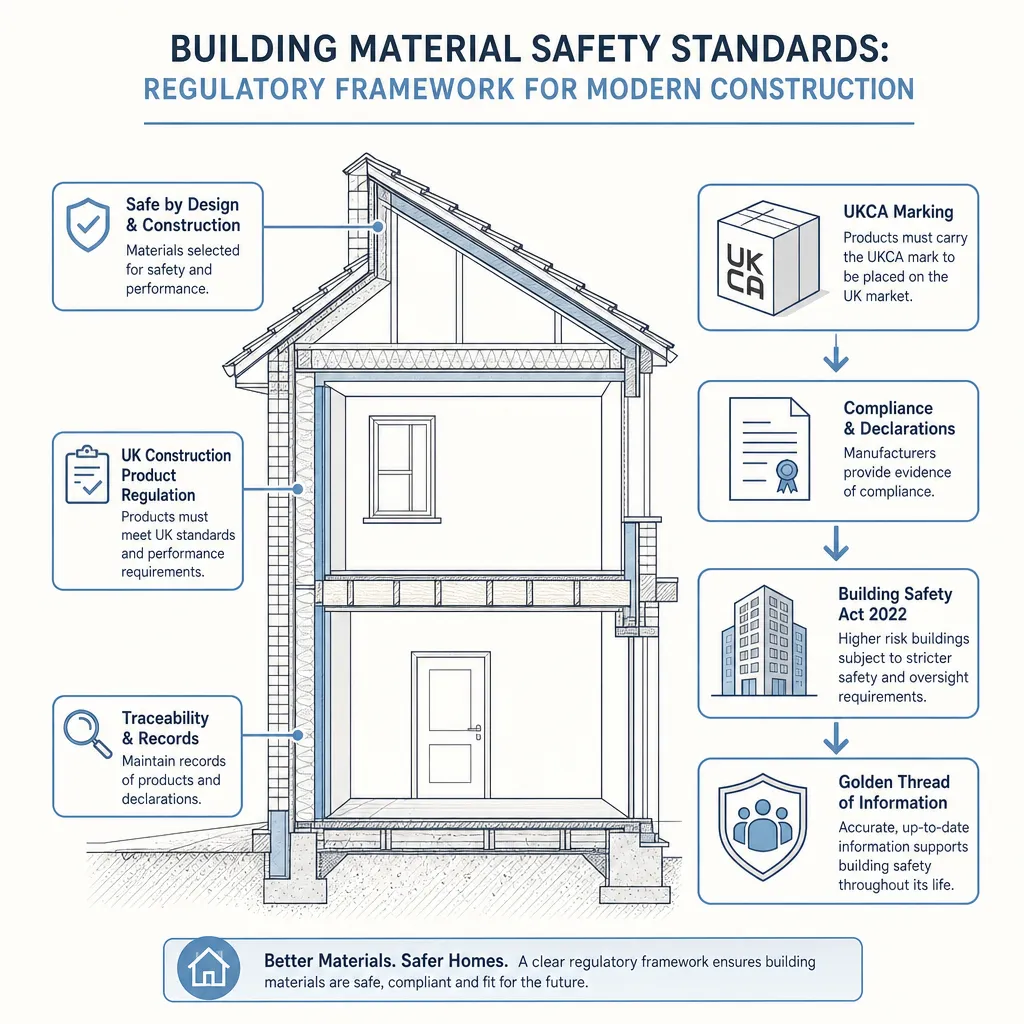
Building Material Safety Standards: Regulatory Framework for Modern Construction
UK building material safety standards are set through the Building Regulations 2010 and associated Approved Documents covering structure, fire, damp, energy, and ventilation.
 Planning & Pre-Build
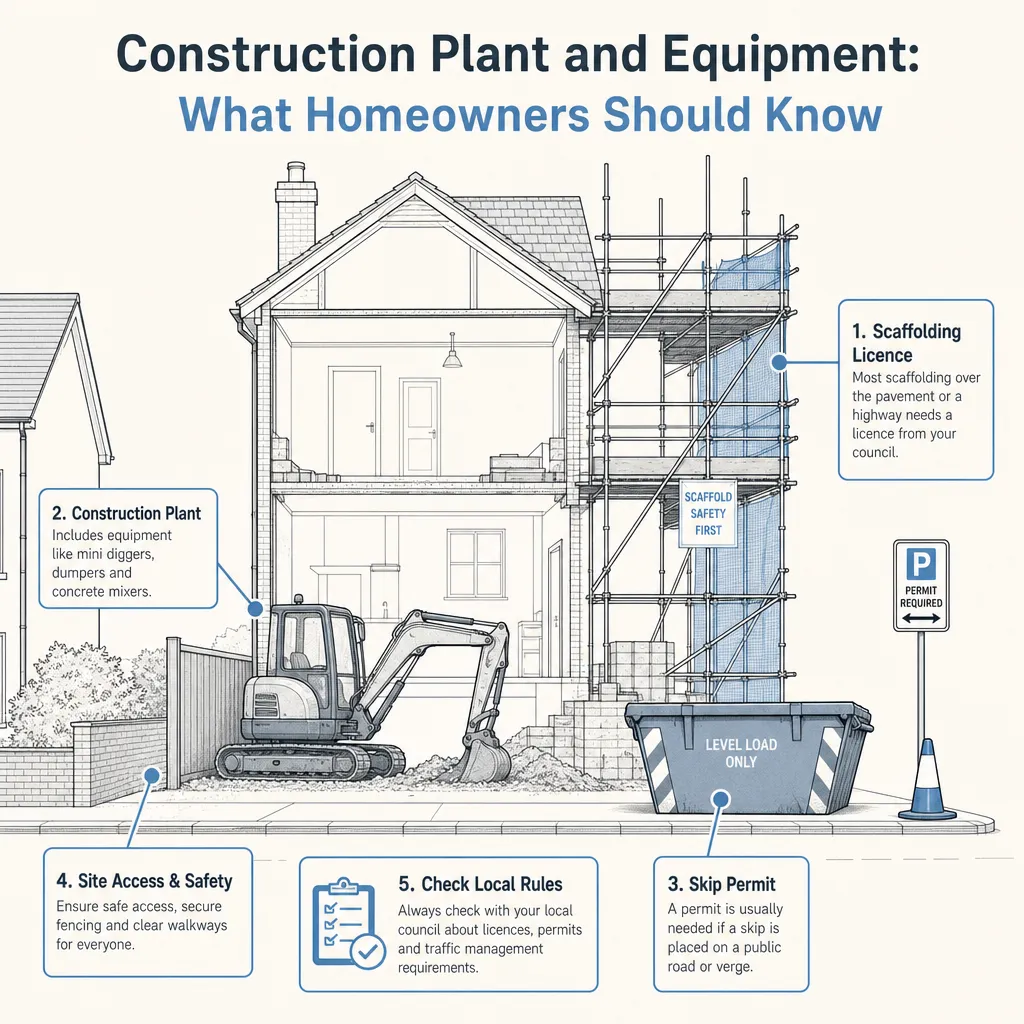
Construction Plant and Equipment: What Homeowners Should Know
Construction plant covers scaffolding, skips, excavators, cranes, and other site machinery.
 Planning & Pre-Build
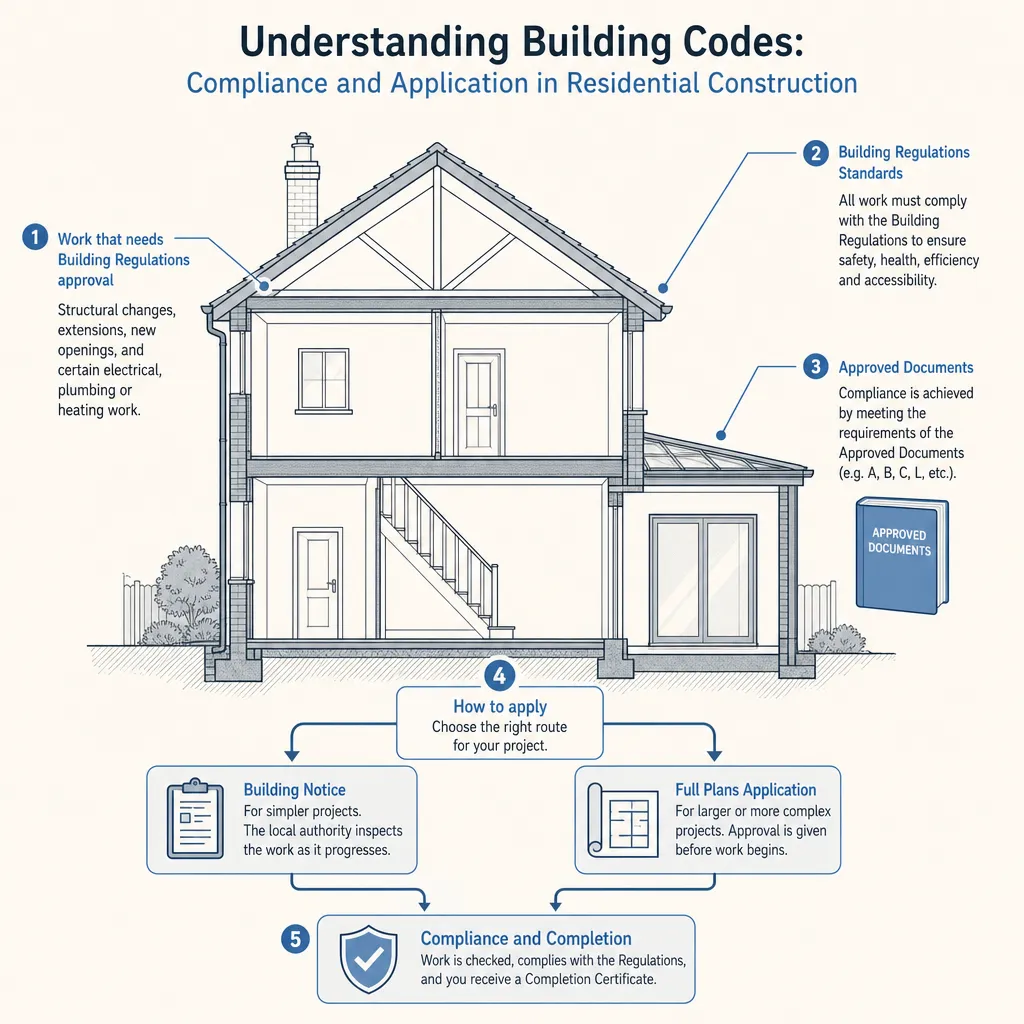
Understanding Building Codes: Compliance and Application in Residential Construction
Building Regulations in England and Wales set minimum technical standards for construction, covering structural stability, fire safety, ventilation, insulation, drainage, and electrical safety.
 Planning & Pre-Build
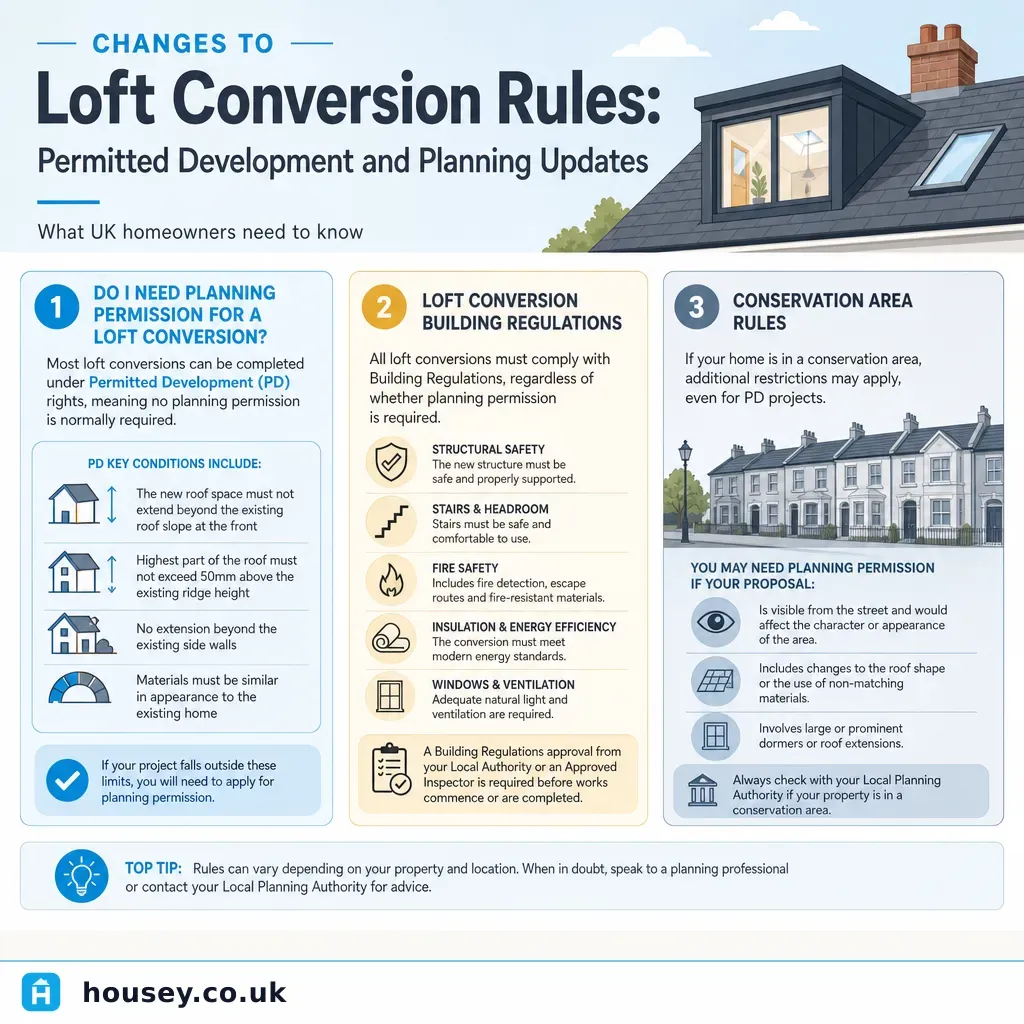
Changes to Loft Conversion Rules: Permitted Development and Planning Updates
In England, most loft conversions on standard houses qualify as Permitted Development under Class B of the GPDO 2015, allowing up to 40 cubic metres (terraced) or 50 cubic metres (detached or semi-detached) without a planning application — if conditions are met.
 Planning & Pre-Build
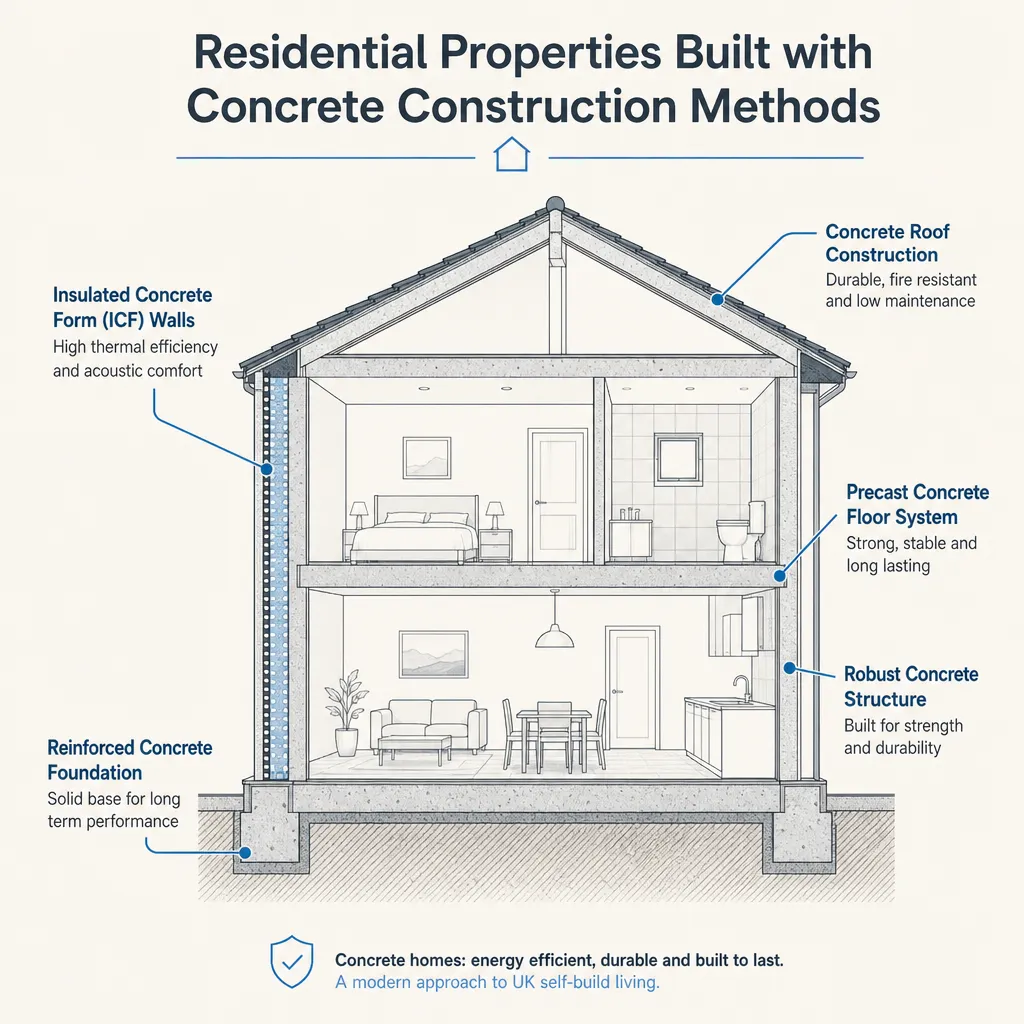
Residential Properties Built with Concrete Construction Methods
UK homes are built using several concrete methods: in-situ cast concrete, precast panel systems, insulating concrete formwork (ICF), and older non-traditional types such as Wimpey No-Fines and Laing Easiform.