DIY Home Improvement Guide: Projects and Techniques for UK Homeowners
By Housey · Last reviewed 9th of May 2026
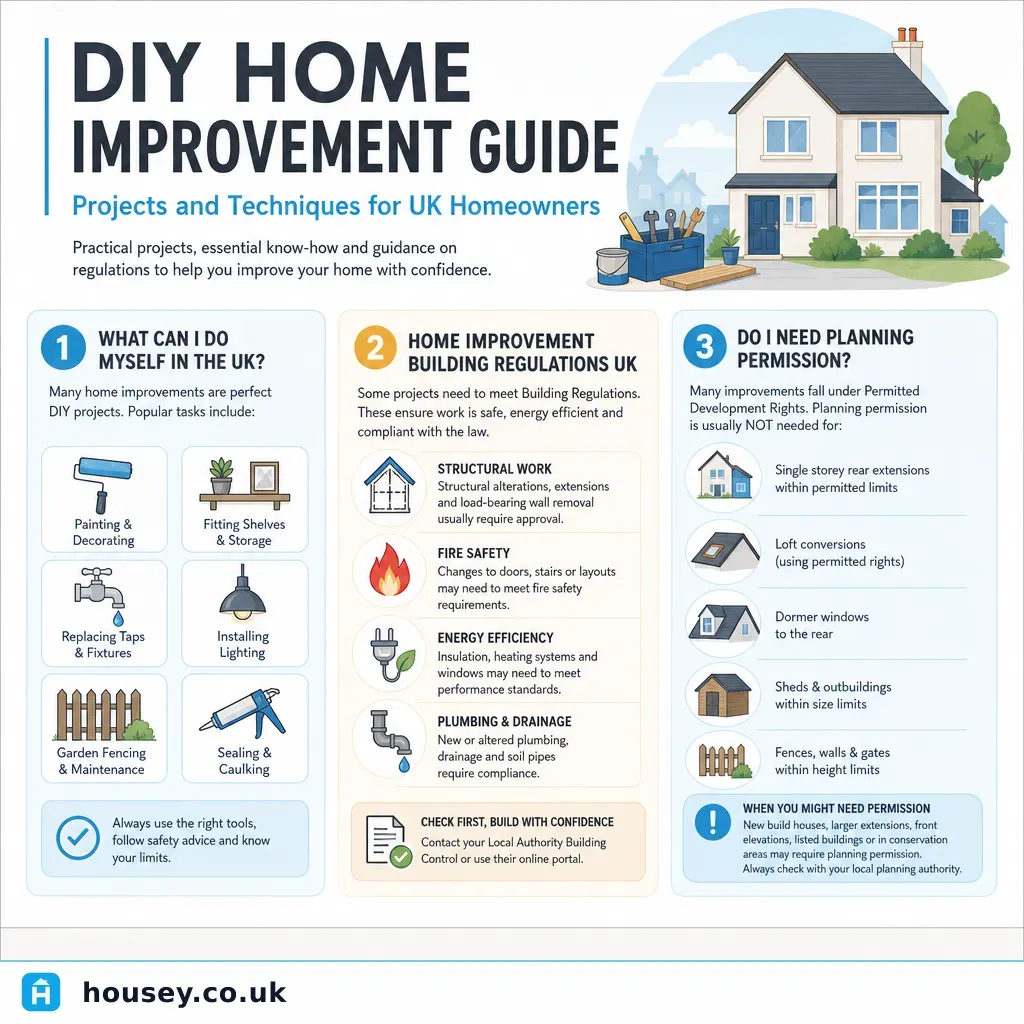
DIY Home Improvement Guide: Projects and Techniques for UK Homeowners
Most UK homeowners take on some level of DIY — from repainting rooms to laying new flooring — and getting the approach right can save money, improve comfort, and protect your home's condition. Knowing which projects you can safely tackle yourself, and which require a registered professional, is one of the most practical things a homeowner can understand. The rules in England, Wales, Scotland, and Northern Ireland vary slightly, and some work that looks straightforward carries regulatory obligations you might not expect.
Key points
- Building Regulations Part P requires that notifiable electrical work — such as a new consumer unit or a new circuit — is either carried out by a registered electrician or notified to your local building control authority.
- Any work on gas appliances, including boiler repairs, fitting new gas pipes, and installing cookers on existing supplies, must be carried out by a Gas Safe registered engineer; doing this work without registration is a criminal offence.
- Permitted development rights mean most internal alterations and many external works (such as single-storey rear extensions under 4m on detached houses) do not need planning permission, but rules vary in conservation areas and for listed buildings.
- The FENSA scheme provides a competent person certificate for replacement windows and doors; without it, separate building control approval is needed and its absence can delay a property sale.
- The Party Wall etc. Act 1996 requires written notice to adjoining owners before certain work near shared walls, including loft conversions and rear extensions that cut into party walls.
What can you realistically DIY?
Most decorative and maintenance tasks sit well within DIY territory for a competent homeowner. Painting and wallpapering, tiling a bathroom backsplash, fitting flat-pack furniture, laying laminate flooring, and basic landscaping all require skill and patience rather than regulatory compliance.
More involved projects — replacing a bathroom suite, fitting kitchen units, building a garden wall, or laying a new driveway — sit in a middle ground. They are not regulated in the same way as electrical or gas work, but they require attention to drainage, structural loads, and material quality. Done poorly, they can cause damp, subsidence, or drainage problems that cost more to fix than hiring a professional in the first place.
DIY vs professional: a practical comparison
Task | Can you DIY? | Regulatory requirement | Risk if done poorly |
|---|---|---|---|
Interior painting and decorating | Yes | None | Cosmetic only |
Laying laminate or engineered flooring | Yes | None | Noise, gaps if not acclimatised |
Fitting a like-for-like light fitting | Yes, if circuit is isolated first | Part P applies to new circuits | Shock risk if not isolated properly |
New electrical circuit or consumer unit | No — registered electrician required | Part P notifiable work | Fire, shock, insurance void |
Replacing a gas appliance | No — Gas Safe engineer required | Gas Safe Register mandatory | Carbon monoxide, explosion |
Replacing windows or doors | Yes if competent, or use a FENSA installer | FENSA or building control approval | Draught, damp, legal issue on sale |
Building a garden wall under 1m | Usually yes | None in most cases | Stability, drainage impact |
Rear extension (even under permitted development) | Professional strongly recommended | Building regulations approval required | Structural, damp, fire safety |
Loft conversion | Professional required | Building regulations approval required | Structural, fire egress, insulation |
Pre-project checklist
Before starting any home improvement project, work through this list:
What not to assume
A common source of problems in UK home improvement is assuming that regulatory requirements only apply to large-scale projects. These are the most frequent misunderstandings.
"It's inside the house, so no planning permission is needed." This is usually true for internal work, but loft conversions that alter the roofline, dormer windows, and rear extensions that exceed permitted development limits all require planning permission — even if part of the work is internal.
"The previous owner did it, so it must be fine." Unauthorised work carried out without building regulations approval may need retrospective certification when you come to sell. A missing FENSA certificate, uncertified electrical work, or an extension without a completion certificate can hold up conveyancing.
"Permitted development means no rules apply." Permitted development removes the need for a planning application, but building regulations still apply. An extension built under permitted development still needs building regulations approval for structural calculations, insulation, drainage, and fire safety.
"I can always claim on insurance if something goes wrong." Home insurance policies typically exclude damage caused by poor workmanship or unapproved alterations. Check your policy schedule carefully before attempting significant work.
Common red flags that suggest DIY has gone wrong
Watch out for these signs that a previous DIY project has caused a problem:
- Damp patches appearing at wall-floor junctions after a new floor was laid — likely a bridged damp-proof course.
- Cracking at corners of window openings after replacement without proper lintel support.
- Circuit breakers tripping repeatedly after DIY electrical work.
- A new extension showing condensation on walls or ceiling — likely inadequate insulation or ventilation.
- A gas appliance producing yellow or orange flames rather than blue — a potential carbon monoxide risk; call Gas Safe Register immediately.
When to get professional help
Some projects should never be tackled as DIY, regardless of skill level. Call a qualified professional if:
- Any work involves gas supply, gas appliances, or flues — Gas Safe registration is a legal requirement.
- The job requires a new electrical circuit, consumer unit replacement, or electrical work in a bathroom zone.
- You are working at height above 2m, particularly on roofs or gutters.
- Structural elements are involved: removing walls, underpinning, or modifying roof trusses.
- You encounter any material you suspect contains asbestos — common in homes built before 2000. Do not disturb it; arrange an asbestos survey first.
- The project falls within the scope of the Party Wall etc. Act 1996.
- Your property is listed or in a conservation area and external changes are involved.
How Housey can help
If your project has grown beyond what you want to DIY, or if you need a registered professional for regulated work, Housey can help you request quotes from qualified UK tradespeople. Whether you need extension builders for a structural addition, roofers for roof repairs or replacements, or landscapers to transform your outdoor space, Housey connects you with vetted local providers.
Frequently asked questions
Do I need building regulations approval for a new bathroom?
Planning permission is not usually required for a bathroom refit, but building regulations apply if you move drainage or add an electrical circuit. Notifiable electrical work in Zones 1 and 2 around the bath or shower must be carried out by a registered electrician or notified to building control. Always check before starting work.
Can I build a garden wall without planning permission?
Most garden walls up to 1m high adjoining a highway, or 2m elsewhere on your boundary, do not need planning permission. Rules are stricter in conservation areas and for listed properties. Building regulations generally do not apply to a simple garden wall, but check drainage and structural stability before you start.
What is a competent person scheme?
Competent person schemes — such as FENSA for windows, Gas Safe for gas work, and NICEIC or NAPIT for electrical work — allow registered contractors to self-certify that their work complies with building regulations without the homeowner needing a separate building control approval. Always ask for the completion certificate.
Do I need to tell my insurer about home improvements?
Yes — significant alterations, extensions, or structural work should be notified to your insurer. Some policies are voided if major work is carried out without disclosure. Check whether your buildings insurance remains valid during and after the project, especially if scaffolding is required or the property will be unoccupied.
Does a conservatory need planning permission?
Most conservatories fall within permitted development for houses — not flats — provided they are below 30 square metres, not used as sleeping accommodation, and meet thermal separation requirements. Building regulations may still apply to glazing and heating. Check the GOV.UK Planning Portal before starting, especially in conservation areas.
Sources and further reading
- Planning Portal: Do you need permission? — Planning Portal
- Building regulations: overview — GOV.UK
- Gas Safe Register: find a registered engineer — Gas Safe Register
- FENSA: replacement windows and doors — FENSA
- The Party Wall etc. Act 1996: explanatory booklet — GOV.UK
- DIY electrical safety — Electrical Safety First
Useful next reads
 Improvement & Build
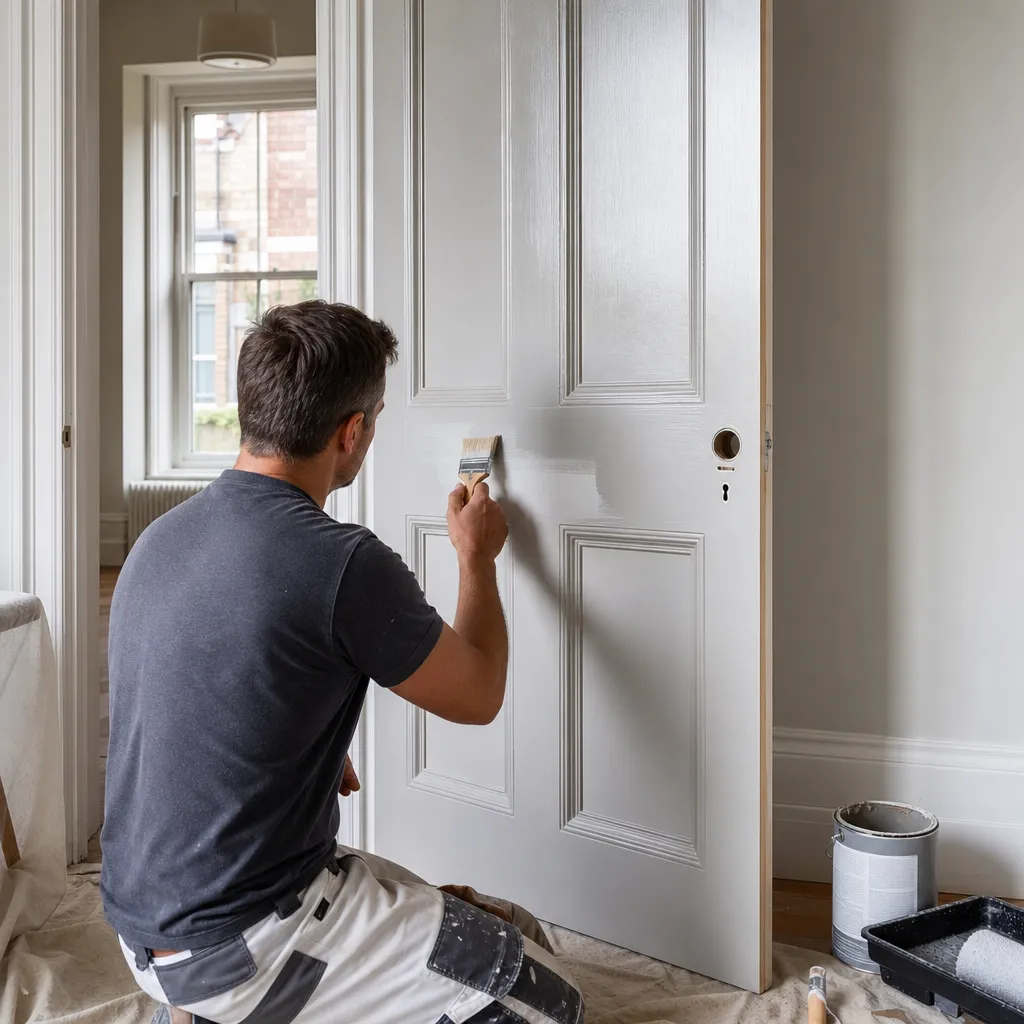
Painting Interior Doors: Preparation and Technique
Painting interior doors well depends on preparation rather than paint choice.
 Improvement & Build
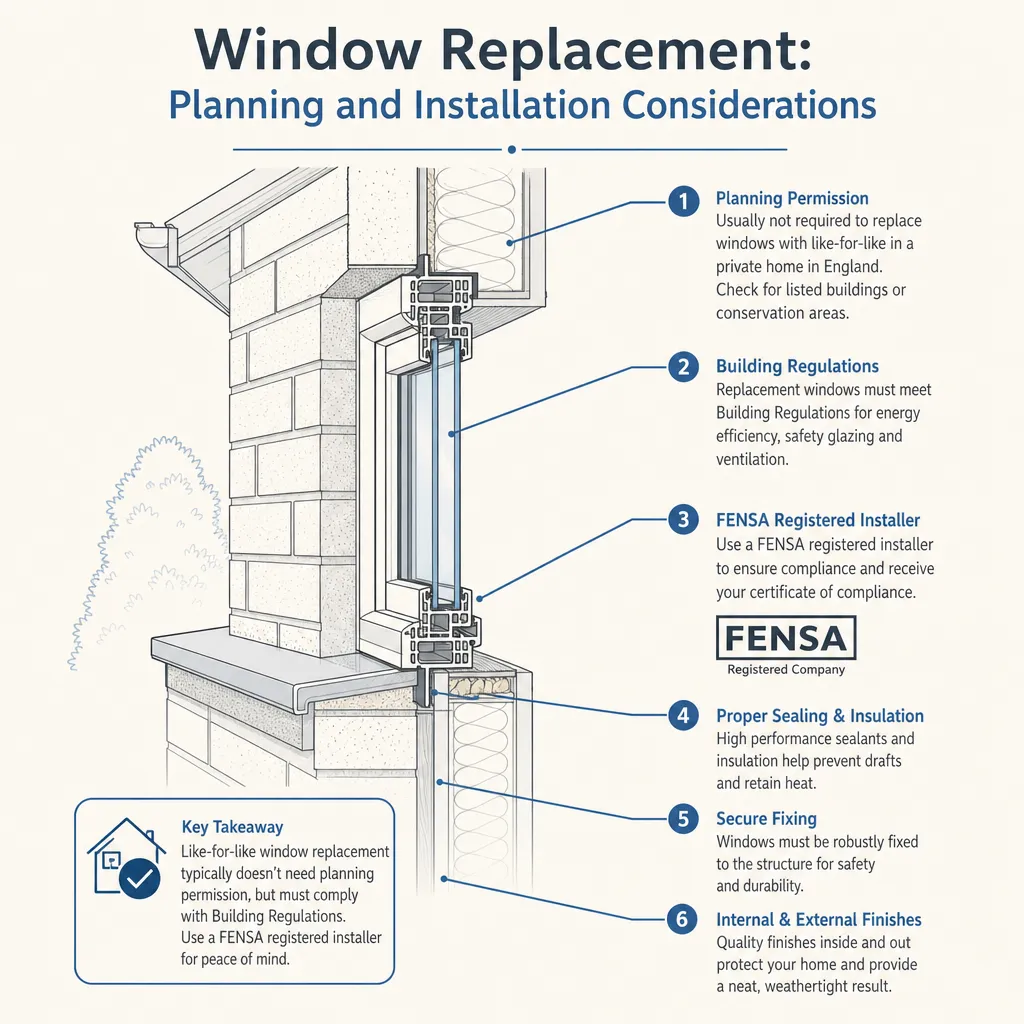
Window Replacement: Planning and Installation Considerations
Most window replacements in England fall under permitted development and do not need planning permission, though listed buildings, flats, and conservation areas are exceptions.
 Improvement & Build
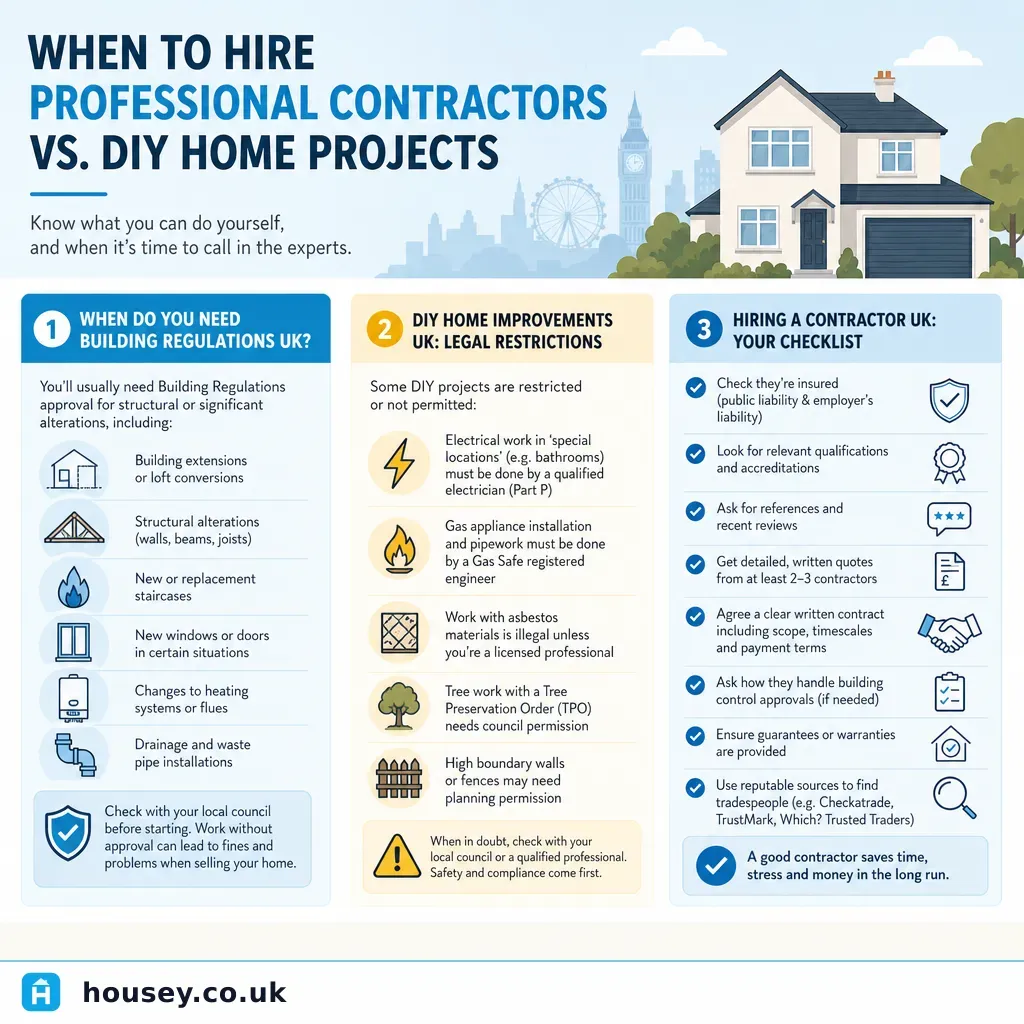
When to Hire Professional Contractors vs. DIY Home Projects
Some home improvement work — including gas fitting, consumer-unit electrical work, structural alterations, and asbestos removal — is legally restricted to qualified professionals in the UK.
 Improvement & Build
Installing Replacement Windows in Your Home
Replacing windows in the UK requires compliance with Building Regulations Part L — a minimum centre-pane U-value of 1.
 Improvement & Build
Small kitchen renovation: budgeting for costs and planning your project
A small kitchen renovation in the UK typically costs £5,000–£15,000 for a full refresh including new units, worktops, tiling, and appliances, though costs vary widely by specification, region, and whether structural changes or rewiring are involved.