DIY Home Projects: Planning, Safety and Execution
By Housey · Last reviewed 1st of June 2026

DIY Home Projects: Planning, Safety and Execution
Most home improvement questions arise at a very specific moment: you have spotted a problem, received a quote from a tradesperson, and wondered whether you could handle it yourself. For UK homeowners that calculation involves more than skill — it touches building regulations, planning rules, home insurance, safety legislation, and the real risk of making a defect worse or creating a legal liability.
Key points
- Building Regulations approval is required for many home improvement works regardless of whether you use a professional or do the work yourself — the obligation follows the project, not the person.
- Part P of the Building Regulations requires that most fixed electrical installation work in dwellings be carried out by a registered competent person (NICEIC, NAPIT, or equivalent) or notified to your local building control authority.
- Gas work must be carried out by a Gas Safe registered engineer — undertaking gas work without registration is a criminal offence in the UK.
- Removing or significantly altering a load-bearing wall requires a structural engineer's calculations and building control sign-off before and after the work.
- Properties built before 2000 may contain asbestos in artex ceilings, floor tiles, or pipe lagging; disturbing asbestos without professional assessment is a serious health risk.
What counts as DIY — and what doesn't
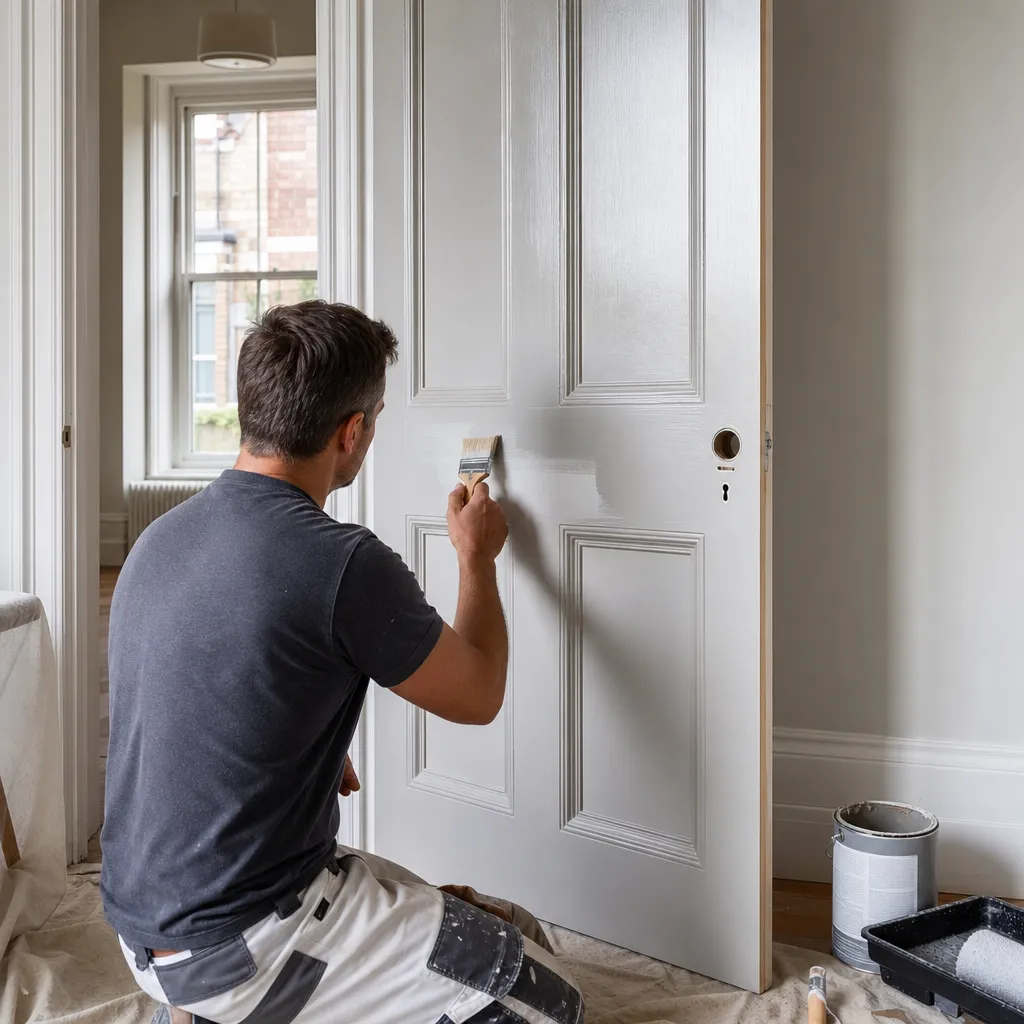
Not all home improvement work sits in the same risk category. Some projects are genuinely low-risk: painting a room, fitting flat-pack furniture, replacing like-for-like kitchen units on existing fixings. Others carry legal requirements that apply regardless of your skill level.
- Cosmetic work (decorating, flooring, garden landscaping) — generally unregulated.
- Minor repairs (fixing a dripping tap, replacing a cracked tile, patching plaster) — usually DIY-friendly provided no structural element is involved.
- Notifiable work (new electrical circuits, structural alterations, extensions, new drainage) — requires building regulations notification regardless of who carries it out.
- Regulated work (gas installations, certain plumbing on sealed heating systems) — must be done by a registered competent person.
When in doubt, the GOV.UK building regulations guidance is the starting point, and your local building control authority can confirm whether notification is needed.
Which DIY projects are safe to tackle?
Decision tree: choosing the right approach
- Choose DIY if the work is cosmetic, involves no structural elements, requires no notifiable electrical, gas, or plumbing work, and you have the tools and physical capability to complete it safely.
- Choose DIY with building control notification if the project is structural but you are a competent builder willing to submit a building notice and accept formal inspections.
- Hire a registered competent person if the work involves fixed electrical installation, gas appliances, or oil-burning equipment — relevant bodies include NICEIC and NAPIT (electrical) and Gas Safe (gas).
- Hire a structural engineer and contractor if the project involves removing or altering load-bearing walls, foundations, or any significant structural element.
- Check with your local planning authority if your home is listed, in a conservation area, or if prior extensions may have already used your permitted development allowance.
Planning your project properly
Rushing into a project without adequate preparation is the most common cause of expensive mistakes. Before buying materials or picking up a tool, work through this checklist.
Homeowner pre-project checklist
Safety rules that always apply
Regardless of the scale of your project, these principles apply at every stage.
- Asbestos: Do not disturb any material you suspect may contain asbestos. Have it tested by a UKAS-accredited laboratory before proceeding. Guidance is available on the HSE asbestos pages.
- Electrics: Switch off the relevant circuit at the consumer unit before working near cables. Do not open the consumer unit itself — this is notifiable work under Part P and must be done by a registered electrician.
- Gas: Do not touch gas pipework, boilers, or appliances under any circumstances. All gas work must be carried out by a Gas Safe registered engineer.
- Working at height: Use a properly rated stepladder for low-level access. Hire scaffolding or a tower for anything above 2 m. Never access a roof without proper fall protection.
- Structural: Do not remove or significantly alter any wall until you know definitively whether it is load-bearing. A structural engineer's assessment costs far less than undoing a structural mistake.
What not to assume
- Do not assume that because a neighbour carried out similar work, it was legal — it may have been done without approval and simply not yet challenged.
- Do not assume permitted development covers all extensions or outbuildings — there are size, height, and proximity limits, and some local authorities have Article 4 Directions that remove standard permitted development rights.
- Do not assume building control sign-off is optional — without it, you may be unable to sell your home, and mortgage lenders often require evidence of compliance for notifiable works.
- Do not assume your home insurance covers DIY-related damage — read your policy wording before starting significant work.
- Do not assume asbestos is only found in industrial buildings — it was routinely used in domestic construction up to the mid-1980s and has been found in homes built as late as 1999.
Red flags: when to stop and call a professional
Stop work and contact a qualified professional if:
- You find unexpected pipework, cables, or structural timbers inside a wall you are opening.
- You smell gas at any point during or after the works.
- You encounter crumbling, fibrous, or unusual insulation material that could be asbestos.
- A wall you planned to remove shows movement cracks or is visibly carrying loads from above.
- Damp or mould appears in a wall cavity or floor void you have disturbed.
- Any electrical installation sparks, trips unexpectedly, or behaves unusually after you have worked near it.
When to get professional help
Most home improvement projects benefit from at least a brief professional check — even if you plan to carry out the bulk of the work yourself. A structural engineer, RICS surveyor, or building control officer can confirm your plan is sound before you begin.
Contact a qualified professional when:
- The work involves any regulated trade (gas, notifiable electrical work, oil heating).
- You are uncertain whether a wall is load-bearing.
- The project requires building regulations notification and you are unfamiliar with the process.
- Your home is listed or in a conservation area.
- The work could affect a shared wall, a boundary structure, or your neighbour's property.
How Housey can help
Housey connects UK homeowners with vetted local tradespeople across a wide range of property services. Whether you need an electrician to handle the notifiable elements of your project, a structural engineer's assessment before opening a wall, or a builder to take on the work professionally, Housey's quote-comparison platform makes it straightforward to find the right professional and compare costs in one place.
Frequently asked questions
Do I need building regulations approval for DIY work?
Yes, in many cases. Building regulations approval is linked to the type of work, not who carries it out. Notifiable projects — including structural alterations, new electrical circuits, extensions, and new drainage — require either a building notice to your local authority or use of a registered competent-person scheme. Failing to obtain approval can cause problems when selling your property.
Can I do my own electrical work at home in the UK?
Minor electrical tasks such as replacing a like-for-like socket or light fitting on an existing circuit are generally permissible. However, most new circuit installation, work in bathrooms, and consumer unit changes are notifiable under Part P of the Building Regulations and must be carried out by a registered electrician (NICEIC, NAPIT, or similar) or notified to building control.
What home improvements require planning permission?
Most internal alterations and many extensions fall within permitted development and do not require an application. However, listed buildings, conservation areas, flats, and properties where an Article 4 Direction applies may need consent for work that would otherwise be permitted. Always check with your local planning authority before starting work on or in a designated area.
How do I check whether a wall is load-bearing?
A structural engineer can assess this definitively. Walls running perpendicular to floor joists and walls sitting directly above walls on lower floors are more likely to be load-bearing. Visual inspection alone is unreliable — always get a professional assessment before removing or significantly altering any internal wall.
Sources and further reading
- Building Regulations guidance — GOV.UK
- When is planning permission required? — GOV.UK
- Approved Document P: electrical safety in dwellings — GOV.UK / MHCLG
- Why use a Gas Safe registered engineer? — Gas Safe Register
- Asbestos: the basics — HSE
- Party Wall etc. Act 1996 — legislation.gov.uk
Useful next reads
 Improvement & Build
Transforming an Unattractive Property: Renovation and Improvement Guide
Transforming an unattractive UK property usually starts with surface-level improvements — render, windows, doors, and front landscaping — before tackling structural changes like extensions.
 Improvement & Build
Strategic Home Improvements That Enhance Property Value
The home improvements most likely to add value in the UK are loft conversions (typically 10–20%), rear extensions (5–15%), and updated kitchens and bathrooms.
 Improvement & Build
Small kitchen renovation: budgeting for costs and planning your project
A small kitchen renovation in the UK typically costs £5,000–£15,000 for a full refresh including new units, worktops, tiling, and appliances, though costs vary widely by specification, region, and whether structural changes or rewiring are involved.
 Improvement & Build
Conservatories and Garden Extensions: Design and Building Guide
Most conservatories qualify as permitted development in England if they are single-storey, within 50% of original curtilage, and meet dimensional limits.
 Improvement & Build
Painting Interior Doors: Preparation and Technique
Painting interior doors well depends on preparation rather than paint choice.