Strategic Home Improvements That Enhance Property Value
By Housey · Last reviewed 30th of May 2026
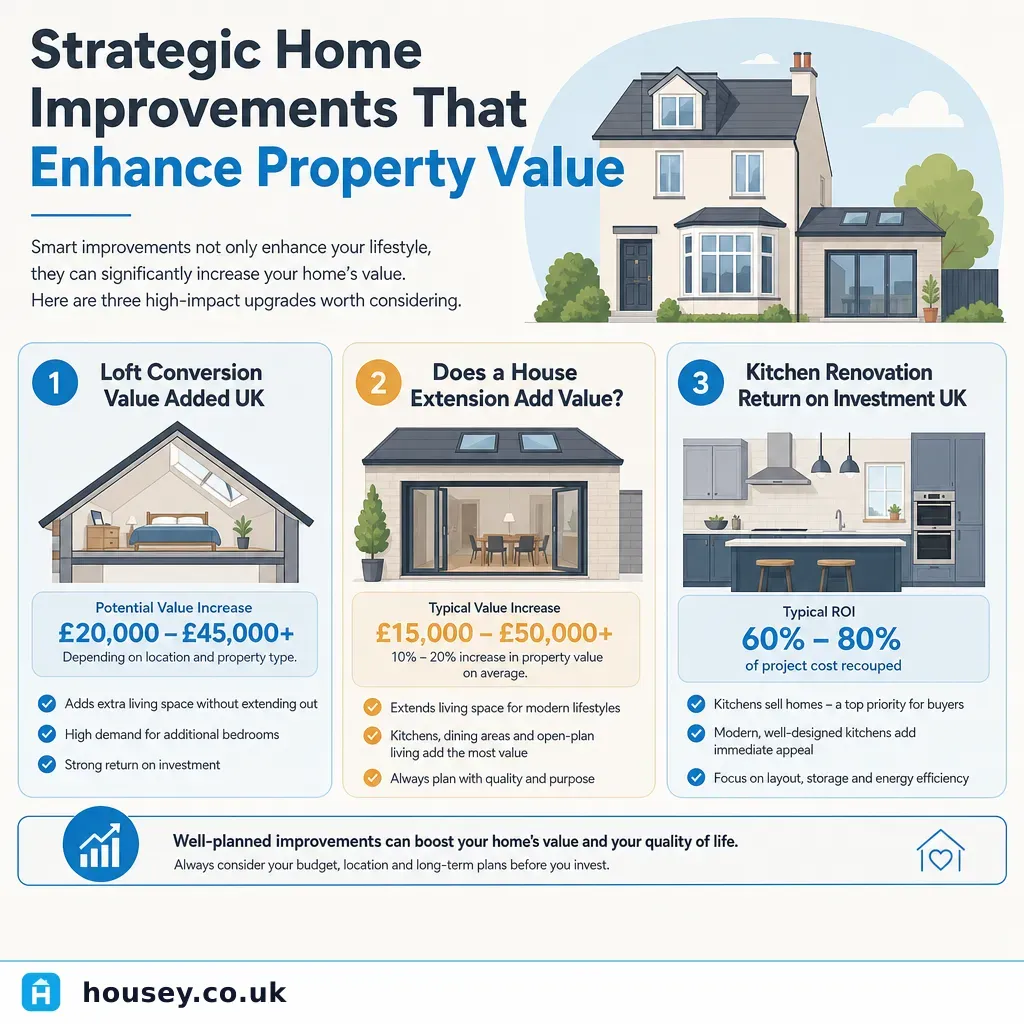
Strategic Home Improvements That Enhance Property Value
Planning building works or a significant renovation naturally raises the question of which projects translate into measurable added value at resale or remortgage. The answer depends on your property's type, age, and local market — but certain improvements consistently deliver returns above their cost across the UK. Knowing which projects require planning permission, which fall within permitted development, and which demand Building Regulations sign-off helps you avoid compliance problems that can derail future sales.
Key points
- Loft conversions typically add 10–20% to a UK property's value, depending on roof pitch, head height, and local market conditions (Nationwide Building Society, 2024).
- Single-storey rear extensions often fall within permitted development — up to 4 m for detached homes and 3 m for semi-detached or terraced properties — without needing a planning application.
- Replacement windows and doors must carry a FENSA or CERTASS compliance certificate (or a local authority Building Regulations notice) for the installation to satisfy mortgage lenders and solicitors at resale.
- New driveways in England that drain surface water to a public road require planning permission; permeable surfaces are generally exempt under Sustainable Drainage Systems (SuDS) rules.
- Kitchen and bathroom refurbishments deliver some of the strongest internal returns, though over-investing above the local price ceiling limits recovery.
Which improvements add the most value?
Improvement | Typical value uplift* | Planning required? | Key compliance | Best suited to |
|---|---|---|---|---|
Loft conversion | 10–20% | Often permitted development; check with LPA | Building Regulations; party wall if applicable | Semi-detached and terraced homes with adequate roof pitch |
Single-storey rear extension | 5–15% | Often PD within limits | Building Regulations | Most property types |
Kitchen refurbishment | 4–8% | No (cosmetic works) | Part P if electrical works included | Properties with a notably dated fitted kitchen |
Bathroom refurbishment | 3–6% | No | Part P for electrical; Part G for water fittings | All property types |
New driveway | 2–5% | May apply if draining to road | SuDS drainage rules | Properties lacking off-street parking |
Replacement windows and doors | 2–4% | Usually no | FENSA or CERTASS certificate | Pre-2000 homes with single glazing |
Garden landscaping | 2–5% | Generally no | N/A | Properties with neglected outdoor space |
*Indicative UK ranges, last reviewed 2026-05-30. Returns depend on local market, property type, and quality of works. Sources: Nationwide Building Society, Halifax.
Loft conversions and extensions: structural projects with the strongest returns
A loft conversion consistently ranks as one of the highest-return improvements for UK homes, particularly in semi-detached and terraced properties where horizontal expansion is limited. A basic dormer loft conversion can add a usable bedroom and bathroom without requiring planning permission in many cases — subject to the property not being in a conservation area, an Article 4 direction zone, or a flat. Head height is the usual limiting factor: the measurement from existing floor joists to the ridge should generally be at least 2.3 m to achieve a comfortable conversion.
For extensions, the prior approval scheme for larger home extensions allows detached homes to extend up to 8 m and semi-detached or terraced homes up to 6 m beyond the original rear wall, provided neighbours are notified and raise no objections within the consultation period. All structural extensions require Building Regulations approval regardless of whether planning permission is needed.
A party wall agreement under the Party Wall etc. Act 1996 is required when building work affects a shared wall or is within 3–6 m of a neighbouring property and involves foundation excavation. Failure to serve the correct notices can result in an injunction halting works.
Kitchen and bathroom upgrades: internal improvements with reliable returns
A well-planned kitchen refurbishment typically delivers a return of 4–8% in the UK, though the upper end is more achievable on properties with notably dated kitchens relative to the local market. The principle of proportionality applies: a £25,000 kitchen renovation on a £180,000 property is unlikely to recover its full cost at sale, whereas the same spend on a £550,000 property may do so more readily.
Adding an en-suite bathroom to a family home that currently lacks one is a particularly effective improvement in the mid-market. Any electrical work within a bathroom zone must comply with Part P of the Building Regulations and be carried out by a Part P-registered electrician or notified to the local authority.
Kerb appeal: lower cost, outsized first impressions
Buyers form an opinion before they reach the front door. A new driveway, refreshed front garden, repainted front door, and renewed external lighting can improve presentation significantly relative to their cost. A resin-bonded or block-paved driveway typically costs £3,000–£10,000 depending on size and material (indicative, last reviewed 2026-05-30; quotes vary by location and ground conditions).
Permeable surfaces — gravel, permeable block paving, and resin-bonded aggregate — do not generally require planning permission under SuDS rules in England, even if they drain to the public highway.
Which improvement should you prioritise?
- Choose a loft conversion if your roof pitch allows it (typically at least 2.3 m from joists to ridge), you need an additional bedroom, and comparable properties in your area typically have more bedrooms than yours.
- Choose a rear extension if ground-floor living space is the priority, the plot allows it, and your permitted development allowances have not been previously used.
- Choose a kitchen or bathroom refurbishment if your property would currently compare poorly with similar homes in the same postcode at a sale viewing.
- Choose kerb appeal works if you are preparing to sell within six to twelve months and need relatively quick, lower-cost improvements.
- Check with your local planning authority before starting any work if your property is listed, in a conservation area, a flat, or if prior extensions have already used your permitted development allowances.
- Seek independent advice from a RICS-registered valuer if you are unsure whether a specific project will add value in your local market before committing to significant expenditure.
Pre-project checklist for homeowners
Before instructing any contractor, work through the following:
When to get professional help
Most projects involving structural work, drainage, or electrical systems require professional involvement as a legal requirement under Building Regulations, not merely a practical preference. You should involve a qualified professional before proceeding if:
- You are uncertain whether planning permission or prior approval is required.
- The project involves removing or altering a load-bearing wall, modifying the roof structure, or connecting to existing drains.
- A party wall dispute is likely or a neighbour has already raised concerns.
- You suspect asbestos-containing materials may be present — common in homes built before 2000 in flat roofs, textured coatings, floor tiles, and pipe insulation. Do not disturb any suspect material before a formal asbestos survey is carried out.
How Housey can help
Housey connects you with vetted local professionals for every stage of your project. If you are planning a loft conversion, compare quotes from loft conversion companies in your area. For a home extension, extension builders can provide detailed costings and handle Building Regulations applications. To improve kerb appeal, driveway installers and landscapers can help transform your home's exterior.
Frequently asked questions
Do loft conversions always add value to a UK home?
In most cases, yes. Adding a usable bedroom and bathroom in the loft is consistently one of the highest-return improvements available, particularly for semi-detached and terraced properties. Returns are strongest where the new room addresses a genuine need in the local buyer market. Over-improving beyond the local price ceiling limits recovery.
Does a new kitchen increase house value?
A new kitchen can add value, particularly if the existing one is notably dated compared with similar properties locally. Recovery depends on the cost of the refurbishment, the local market ceiling, and what buyers expect at that price point. A kitchen in serviceable condition may not justify full replacement before a sale.
Do I need planning permission for a new driveway?
In England, you generally need planning permission only if the new surface will drain rainwater directly to the public highway and is not permeable. Permeable surfaces such as gravel, permeable block paving, and resin-bonded aggregate are typically exempt. GOV.UK and the Planning Portal provide detailed guidance on driveway planning rules.
What documentation do I need to keep after home improvements?
Keep all planning consents, building control completion certificates, FENSA or CERTASS certificates for windows and doors, and any warranty documentation from contractors. Your solicitor will request these when you come to sell, and missing documents can delay or complicate the conveyancing process.
Sources and further reading
- GOV.UK: Permitted development rights for householders — official guidance on extensions, loft conversions, and other works
- Planning Portal: Do I need permission? — interactive tool for planning permission queries
- Nationwide Building Society: House Price Index — research on value uplift by improvement type
- HSE: Asbestos information for homeowners — guidance on asbestos risks in domestic properties
- FENSA: Compliance for replacement windows and doors — information on compliance certificates
Useful next reads
 Improvement & Build
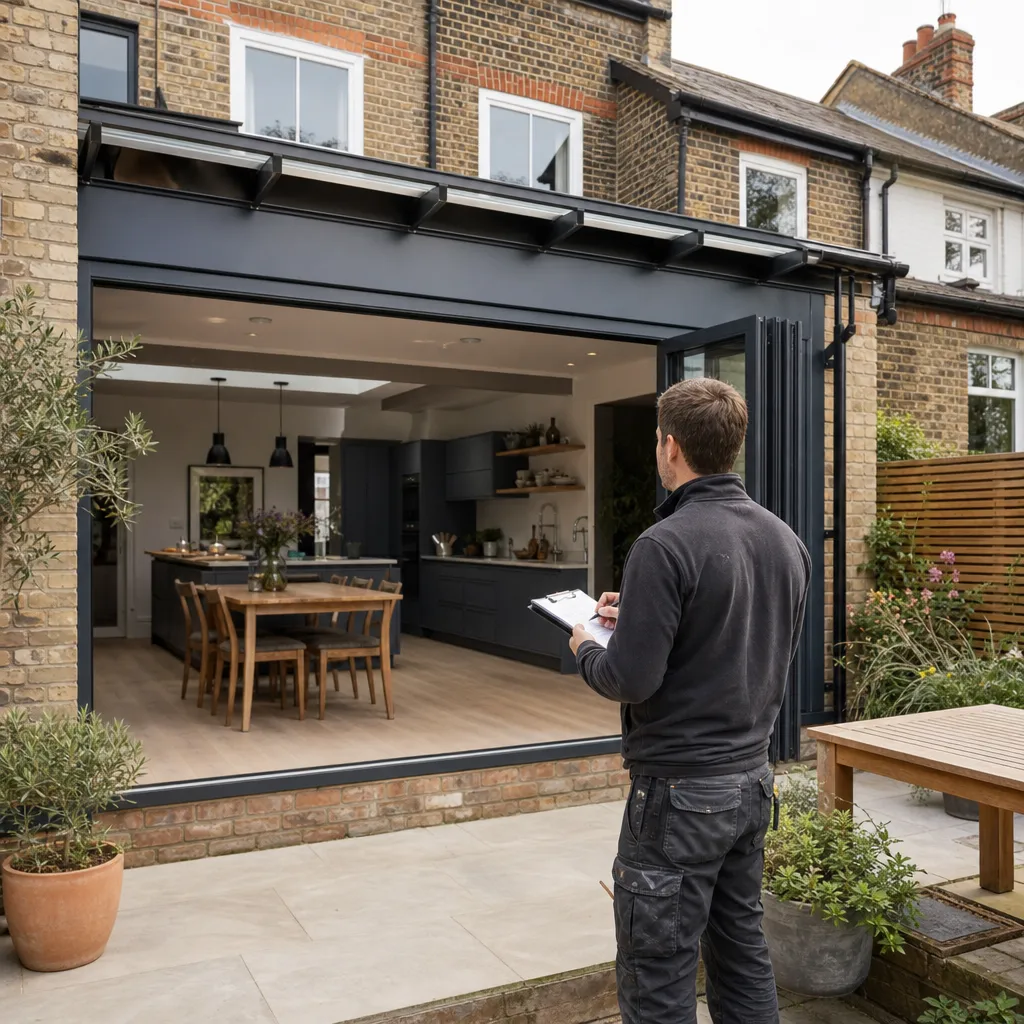
Maximising Value Through Strategic Home Improvement Projects
In the UK, loft conversions and kitchen extensions tend to deliver the strongest return on investment, with loft conversions potentially adding around 20% to property value according to Nationwide data.
 Improvement & Build
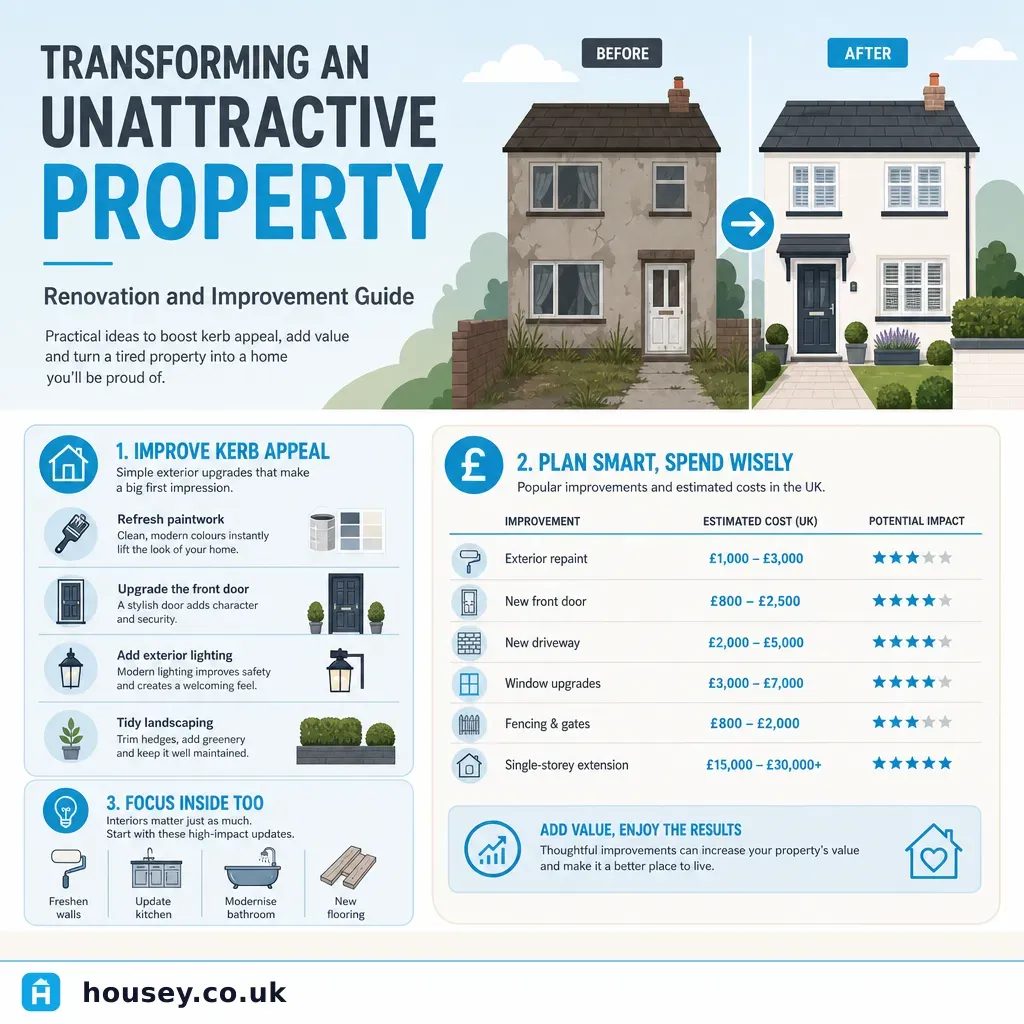
Transforming an Unattractive Property: Renovation and Improvement Guide
Transforming an unattractive UK property usually starts with surface-level improvements — render, windows, doors, and front landscaping — before tackling structural changes like extensions.
 Improvement & Build
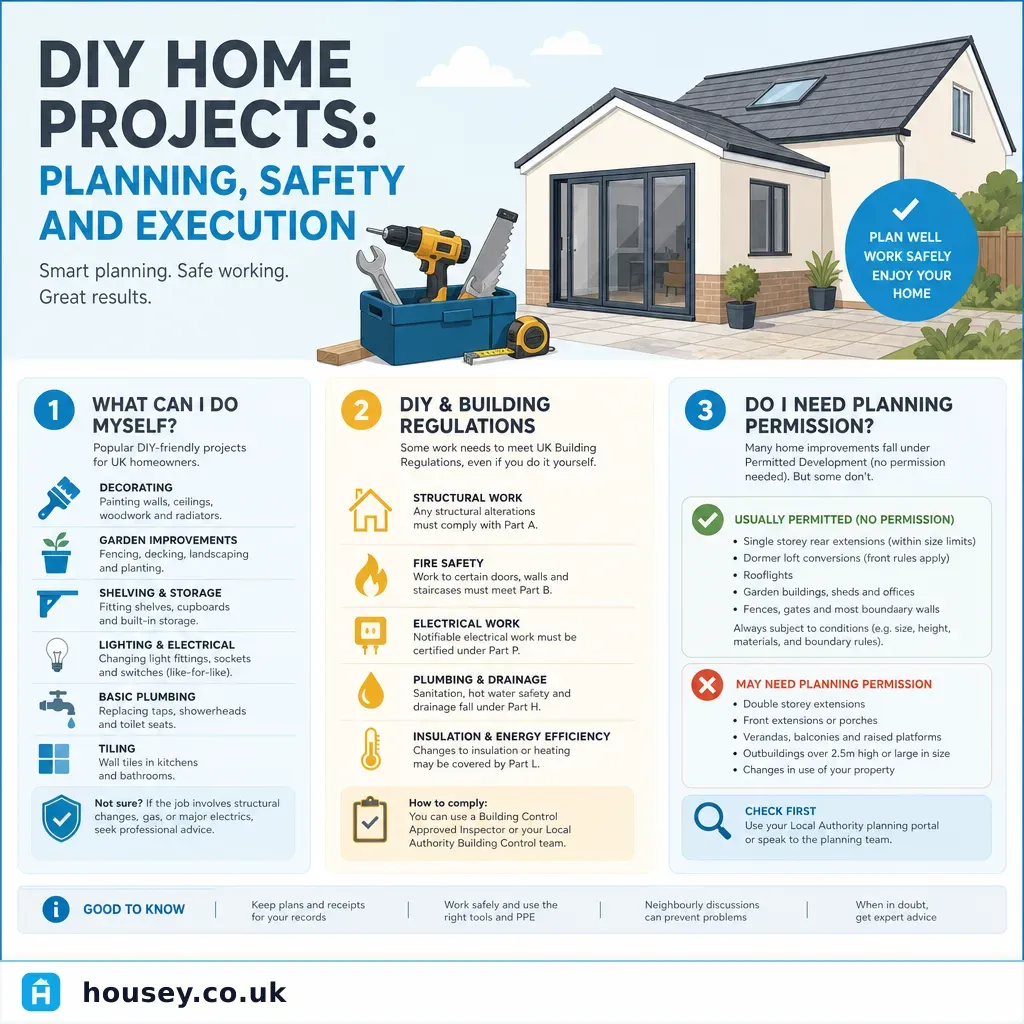
DIY Home Projects: Planning, Safety and Execution
Most decorating, minor repairs, and cosmetic work can be tackled as DIY in the UK.
 Improvement & Build
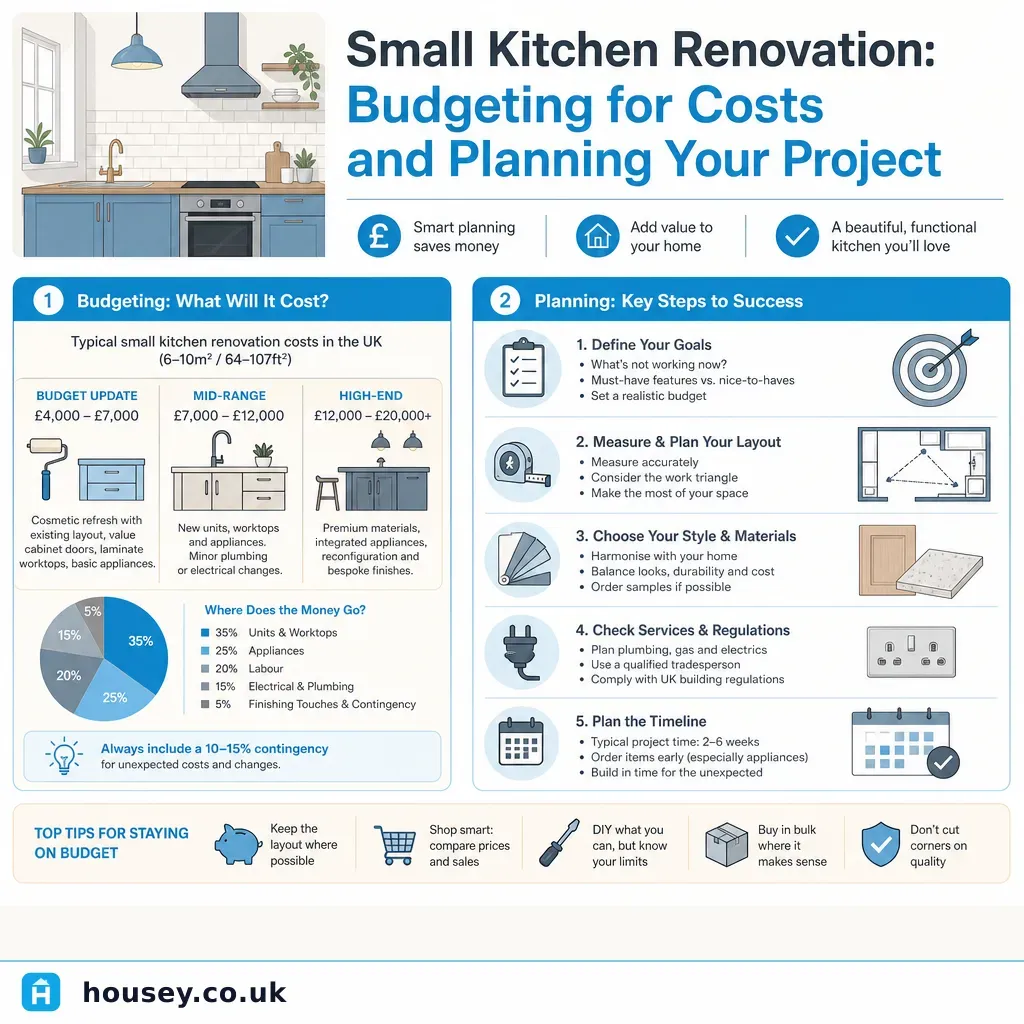
Small kitchen renovation: budgeting for costs and planning your project
A small kitchen renovation in the UK typically costs £5,000–£15,000 for a full refresh including new units, worktops, tiling, and appliances, though costs vary widely by specification, region, and whether structural changes or rewiring are involved.
 Improvement & Build
Conservatories and Garden Extensions: Design and Building Guide
Most conservatories qualify as permitted development in England if they are single-storey, within 50% of original curtilage, and meet dimensional limits.