Solar Battery Systems: Costs, Installation and Storage Solutions
By Housey · Last reviewed 31st of May 2026
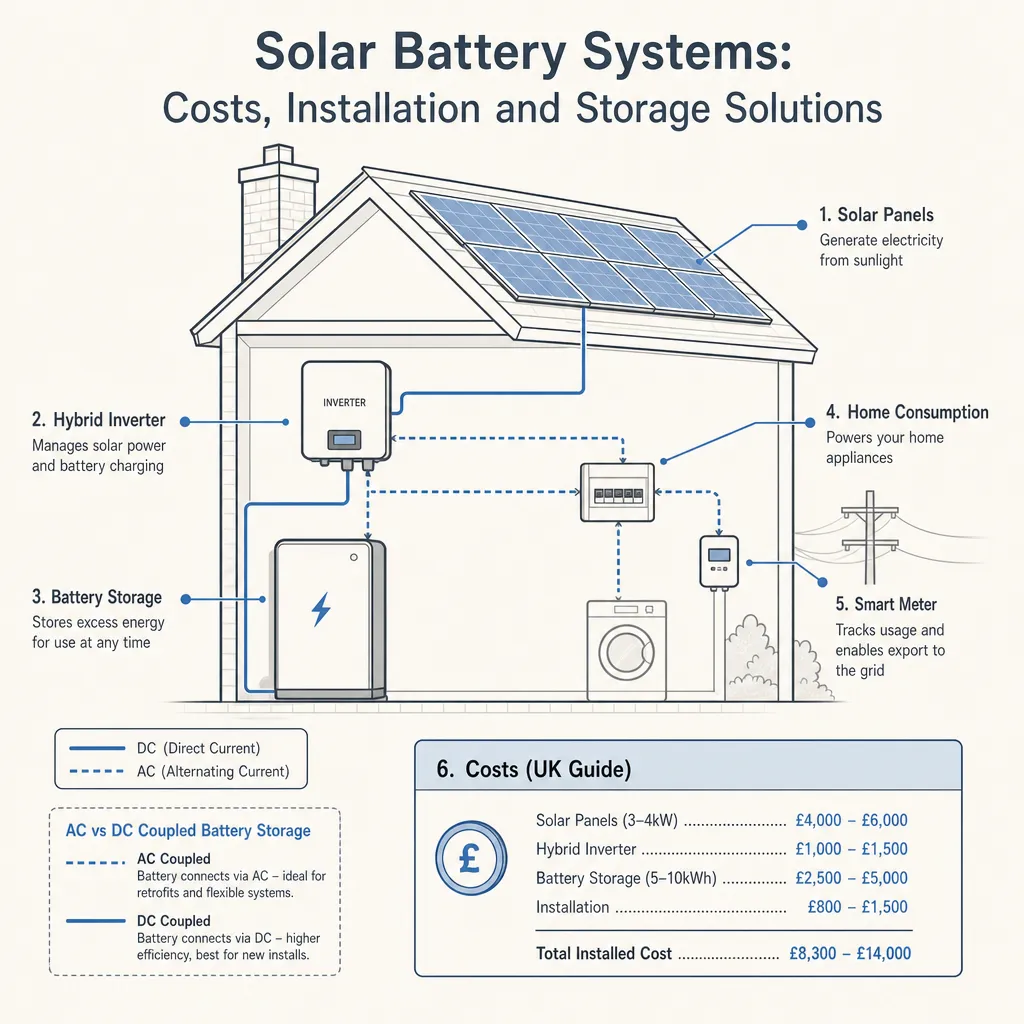
Solar Battery Systems: Costs, Installation and Storage Solutions
Energy storage has shifted from a niche addition to a mainstream consideration for UK homeowners with solar PV — and increasingly for those without panels at all. The commercial landscape has changed considerably since 2022: costs have fallen, product choice has broadened, and the 0% VAT rate now applies to battery storage as a standalone retrofit. Understanding what a system should cost, how installation works, and what to examine in a quote requires working through technology choices, coupling methods, and the qualifications you should expect from an installer.
Key points
- Home battery storage systems range from around 5 kWh (entry-level, suitable for smaller homes) to 15 kWh+ (larger homes or those wanting outage protection), with usable capacity often slightly below the headline figure quoted by manufacturers
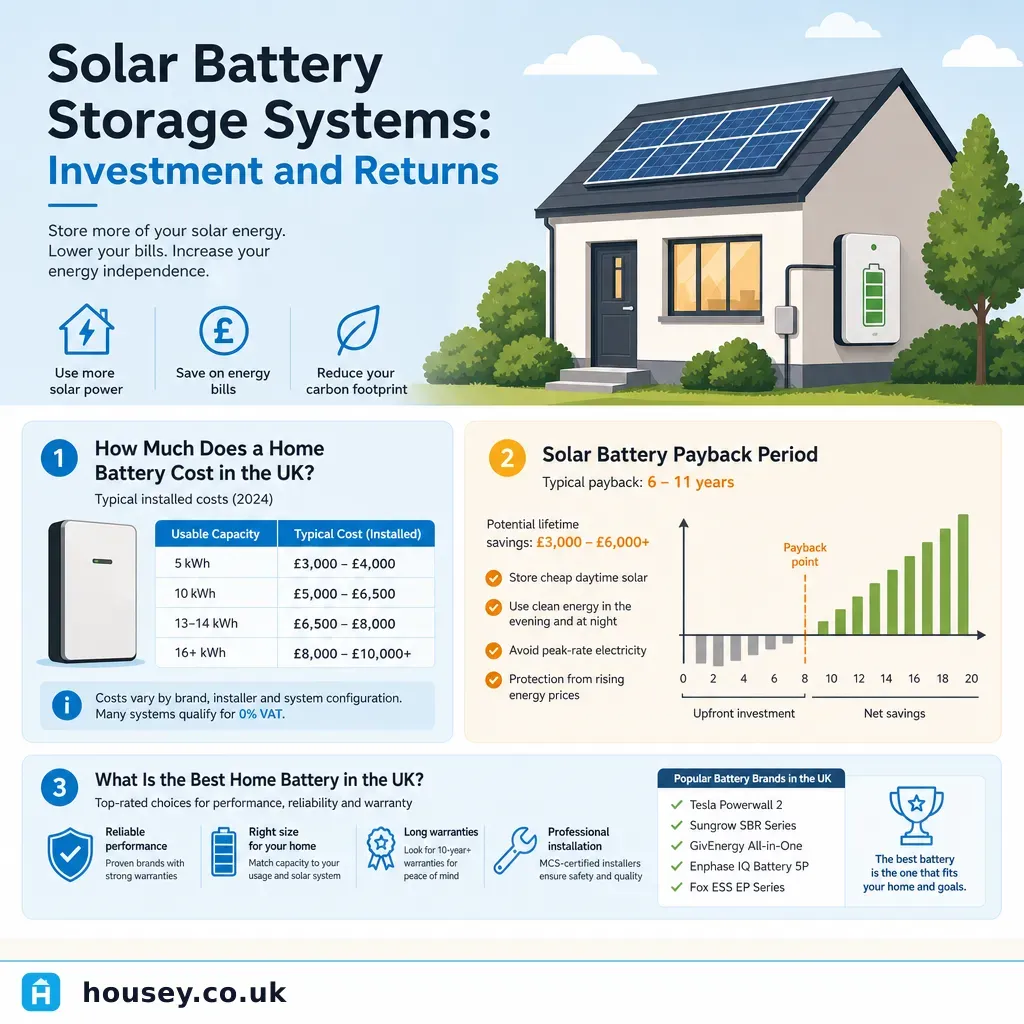
- Indicative installed costs: approximately £3,000–£5,000 for a 5 kWh system; £5,500–£8,000 for a 10 kWh system; £8,000–£12,000+ for 15 kWh+ (Indicative UK costs, last reviewed 2026-05-31)
- Battery storage installed by a VAT-registered installer in Great Britain qualifies for 0% VAT under the Energy-Saving Materials relief — this applies as a standalone retrofit, not only when installed alongside solar panels
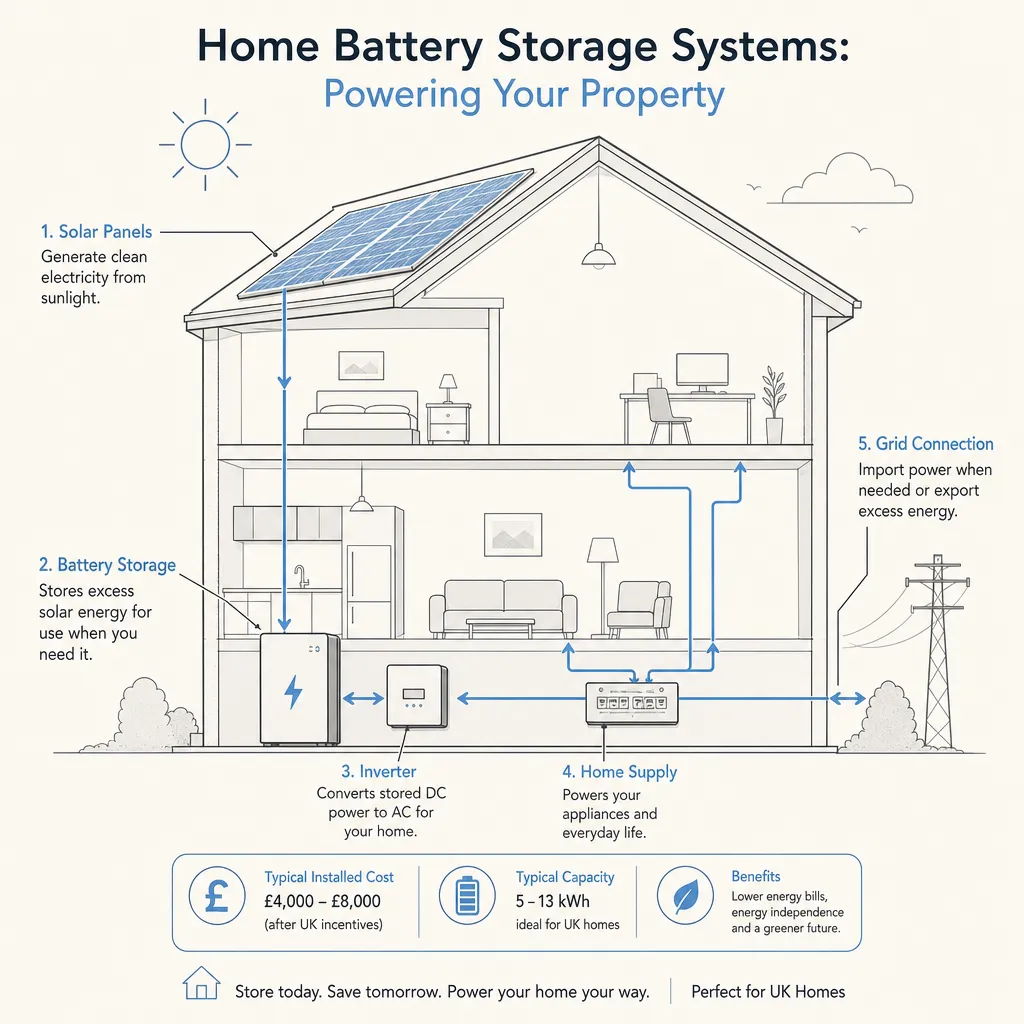
- AC-coupled systems work with most existing solar inverters; DC-coupled systems are more efficient but require a compatible hybrid inverter — the right choice depends on what is already installed at your property
- Lithium iron phosphate (LFP) chemistry is now the most common in home storage, offering better thermal stability and longer cycle life than earlier lithium nickel manganese cobalt oxide (NMC) cells
What does solar battery storage cost?
Indicative UK costs, last reviewed 2026-05-31:
System size | Typical use case | Approximate installed cost |
|---|---|---|
5 kWh | 1–2 bedroom home or small semi; covers typical evening demand after a sunny day | £3,000–£5,000 |
10 kWh | 3–4 bedroom house; family daily consumption with some outage buffer | £5,500–£8,000 |
15 kWh+ | Larger homes, EV charging integration, or extended outage protection | £8,000–£12,000+ |
Prices include supply and installation; VAT at 0% applies when correctly invoiced by a registered installer. Scaffolding, consumer unit upgrades, or additional cable runs are usually charged separately.
Key cost drivers include battery chemistry and brand (GivEnergy, Sungrow, BYD, Tesla Powerwall, SolarEdge Energy Bank, and others), coupling method, your property's electrical infrastructure age and capacity, and regional installer rates.
AC-coupled vs DC-coupled storage
Understanding the coupling method matters because it affects which installers can quote competitively and what additional equipment may be required.
| AC-coupled | DC-coupled |
|---|---|---|
How it connects | Battery has its own inverter; joins the AC wiring in your home | Battery connects directly to the DC output of the solar panels |
Compatible with | Most existing solar systems with any inverter brand | Requires a hybrid inverter — new, or replacing your current unit |
Efficiency | Slightly lower: two inverter conversions are involved | Slightly higher: one fewer conversion step |
Retrofit complexity | Low — straightforward addition to most existing setups | Higher — may require inverter replacement, adding to total cost |
Best for | Adding storage to an existing solar PV system | New solar-plus-storage installations or those also replacing an inverter |
How installation works
A typical battery storage installation follows these stages:
- Site assessment: the installer reviews your property, existing solar system or connection point, consumer unit age and capacity, and proposed battery location
- System design: battery placement (garage, utility room, or external cabinet), inverter compatibility, and cable routing are agreed before work starts
- Fitting: the battery unit is mounted and wired; a straightforward retrofit usually takes 4–8 hours on site
- Commissioning: the installer programmes charge and discharge preferences, sets any time-of-use tariff schedules (such as Octopus Agile or Economy 7), and tests the system under load
- Documentation: you should receive an electrical installation certificate or Minor Works notice (depending on scope) and full product warranty paperwork
If backup power during grid outages is a requirement, this must be agreed and configured at commissioning stage — it cannot always be added retrospectively without additional equipment or an inverter change.
What to ask before accepting a quote
Before signing a contract with a battery storage installer, confirm the following:
- What is the usable (not headline) capacity of the battery being supplied?
- Is this an AC-coupled or DC-coupled system, and why is this method recommended for my property?
- What battery chemistry and cell manufacturer is being used?
- What warranty covers the battery, and what degradation is guaranteed at 10 years — for example, 70% of original capacity?
- Will the system provide backup power during a grid outage, and which circuits will it cover?
- Is VAT at 0% applied, and will I receive a compliant VAT invoice?
- What smart tariff integration is supported — for example, Octopus Agile or Economy 7?
- Who carries out the installation — in-house electricians or subcontractors — and what scheme membership do they hold (NICEIC or NAPIT)?
- What is the estimated payback period based on my actual usage data, and what assumptions underpin that figure?
- What could change the price or timeline once work begins?
When to get professional help
Battery storage installation involves electrical work at or near the consumer unit and may include inverter configuration or replacement. This must be carried out by a qualified, registered electrician — do not attempt to connect battery storage to household wiring yourself. PV panel DC voltages and live AC conductors are both present on site during installation.
Also seek professional advice if:
- You want backup power during grid outages — inverter configuration for this function must be done correctly for safety, and is not standard across all installations
- You are considering a time-of-use tariff to improve payback — the interaction between tariff structure and inverter charge scheduling is a technical optimisation
- Your consumer unit is old or at capacity and may need upgrading before a battery can be safely connected
How Housey can help
Finding a qualified, trustworthy installer is often the most challenging part of a battery storage project. Housey connects you with accredited battery storage installers who can assess your property, recommend the most suitable system for your usage pattern, and provide a detailed, itemised quote. If you are still deciding whether your solar generation profile justifies adding storage, a solar survey will give you the output data and self-consumption modelling you need to compare options with confidence.
Frequently asked questions
Can I get a solar battery without solar panels?
Yes. Standalone battery storage that charges from the grid overnight on a cheap-rate tariff can still reduce your bills and qualifies for 0% VAT. Without self-generated solar electricity, the financial case depends on the spread between your cheap and peak import tariff rates — review your current tariff carefully before committing to this approach.
How long does a home battery last?
Most modern LFP home batteries carry a 10-year manufacturer warranty, with many guaranteeing at least 70% of original capacity at that point. Actual lifespan can extend beyond 15 years in normal use. Cycle life is typically stated at 3,000–6,000 full charge-discharge cycles, equating to roughly 8–16 years of daily cycling.
Is planning permission needed for battery storage?
Battery storage installed inside the property or in an outbuilding generally does not require planning permission under permitted development rights for dwellings. Listed buildings and conservation areas may be exceptions. Always check with your local planning authority before any external installation — rules can vary by property type and location.
How much could a battery save on electricity bills?
Savings vary considerably by household. A 10 kWh battery in a home with a meaningful solar surplus might save approximately £200–£500 per year at typical 2025–2026 tariff levels (Indicative, last reviewed 2026-05-31; depends on usage pattern and tariff). Ask your installer to model this using your actual meter data rather than generic assumptions.
Sources and further reading
- VAT Notice 708-6: Energy-Saving Materials — HMRC
- Battery storage for households — Energy Saving Trust
- Smart Export Guarantee guidance — Ofgem
- MCS: find certified battery storage installers — Microgeneration Certification Scheme
Useful next reads
 Energy & Retrofit
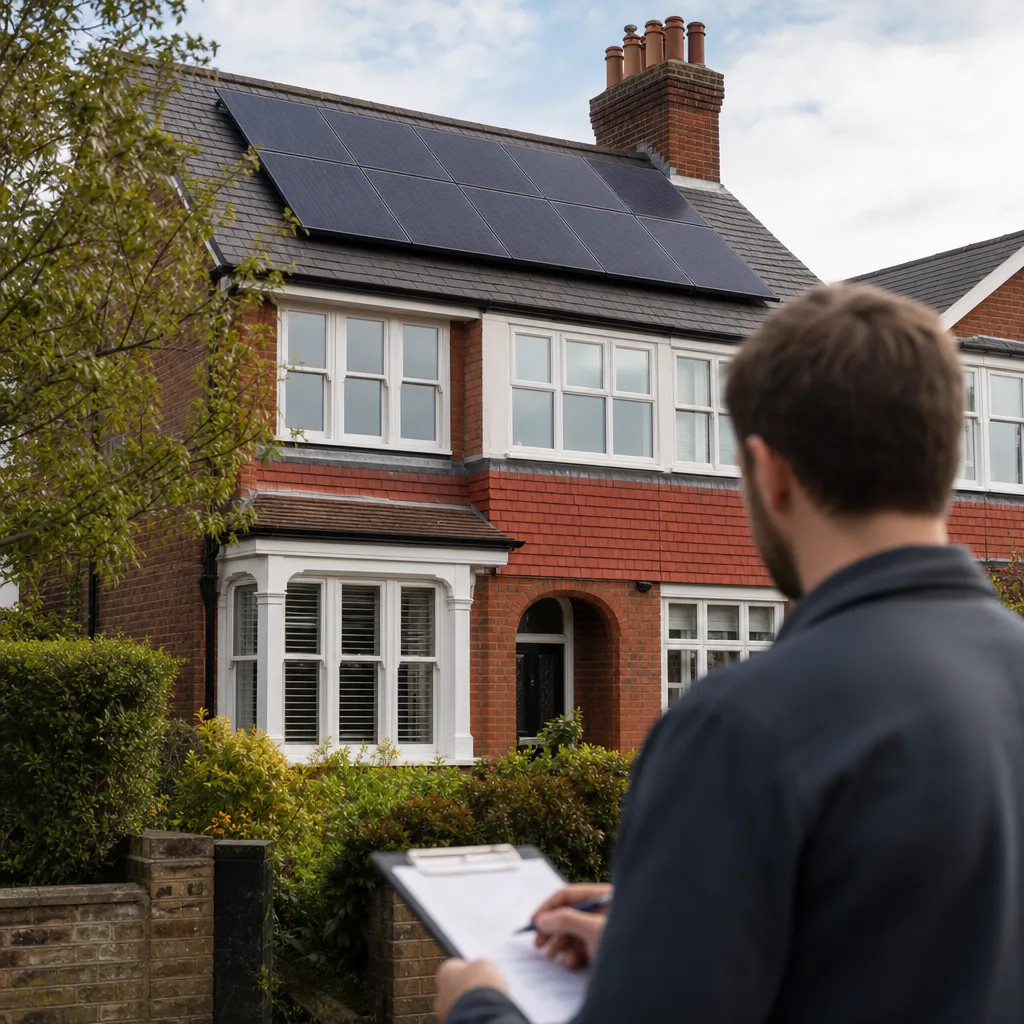
Do Solar Panels Increase Property Value?
Solar panels generally add value to UK properties, with research suggesting an uplift of 0.
 Energy & Retrofit
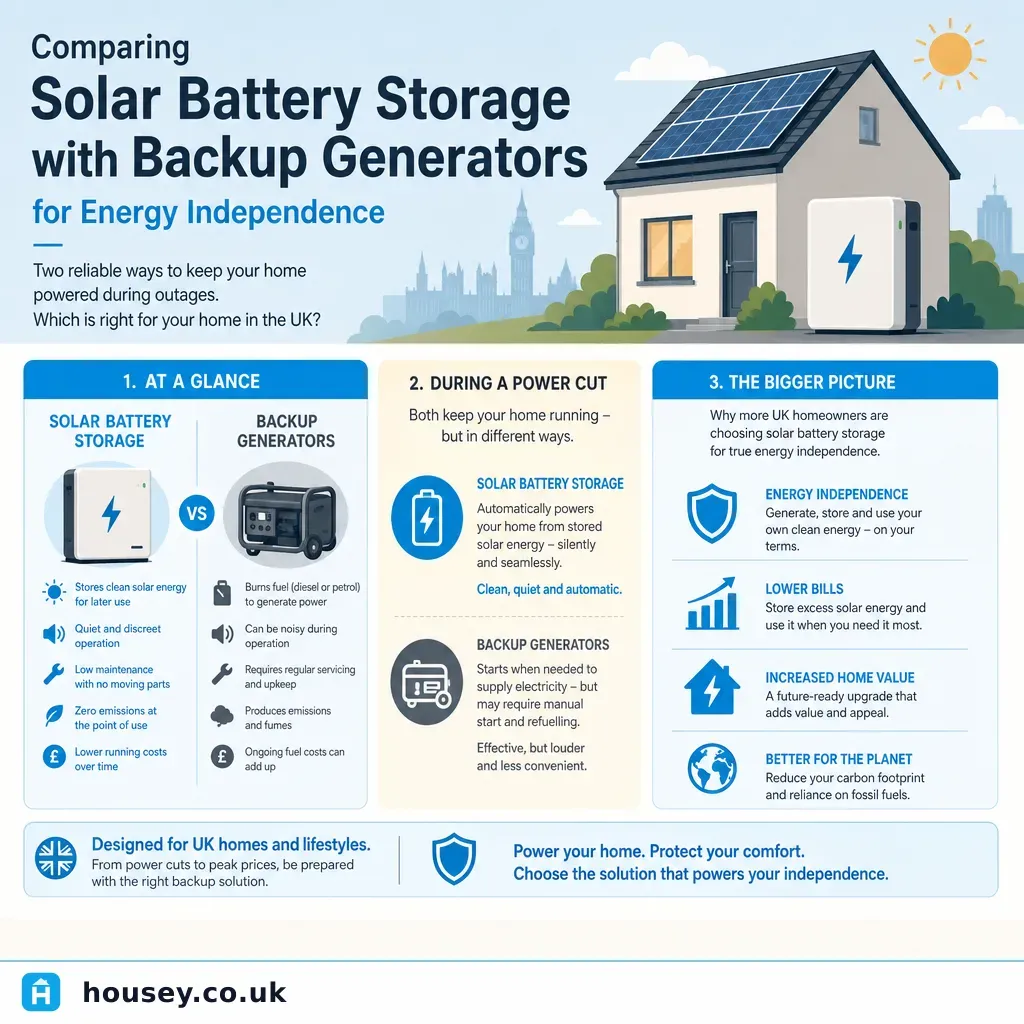
Comparing Solar Battery Storage with Backup Generators for Energy Independence
Solar battery storage and backup generators both offer energy resilience but work very differently.
 Energy & Retrofit
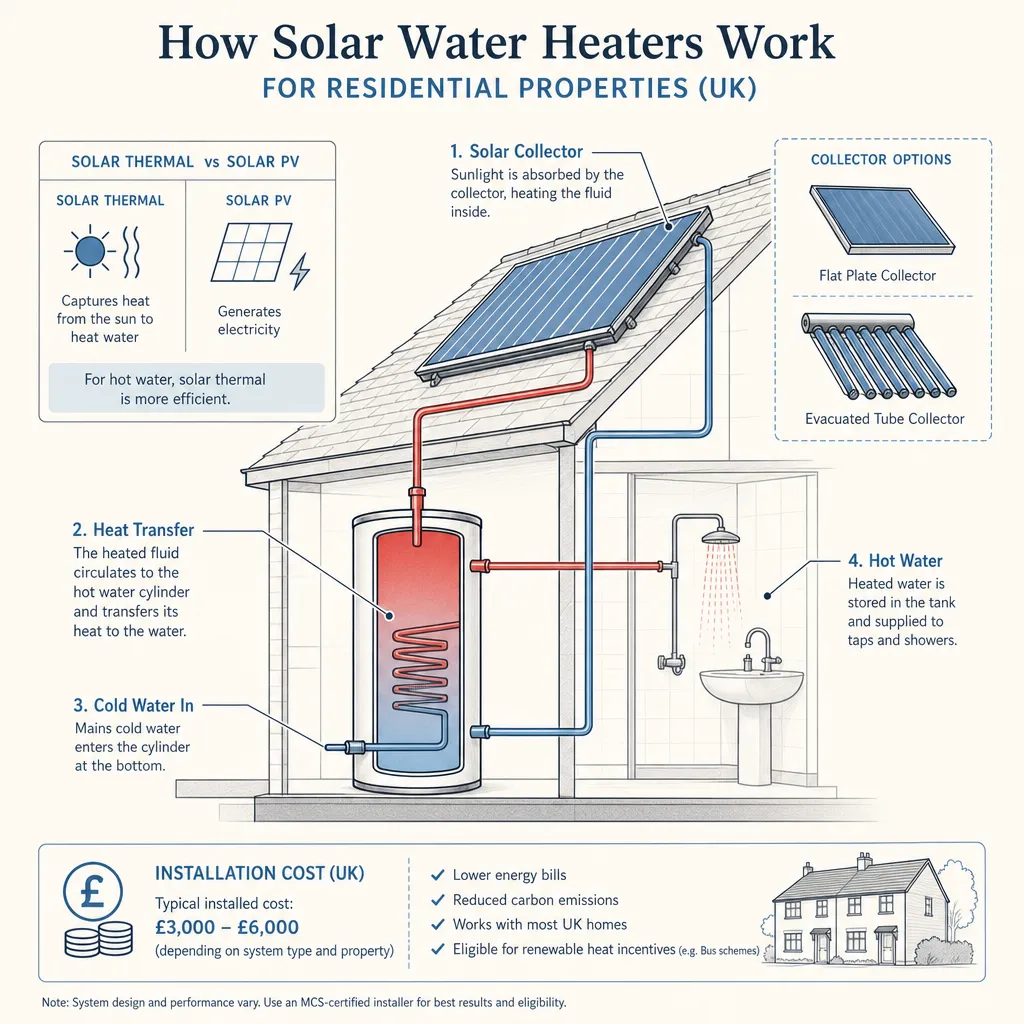
How Solar Water Heaters Work for Residential Properties
Solar water heaters use roof-mounted collectors to capture heat from sunlight and transfer it to a hot water cylinder via a fluid circuit.
 Energy & Retrofit
Solar Battery Storage Systems: Investment and Returns
A home battery storage system stores surplus solar energy for use in the evening, reducing grid electricity imports.
 Energy & Retrofit
Home Battery Storage Systems: Powering Your Property
Home battery storage systems store electricity from solar panels or the grid — typically 5 to 15 kWh capacity — for use when generation is low or tariffs are high.