Does building an annexe add value to your property?
By Housey · Last reviewed 11th of May 2026
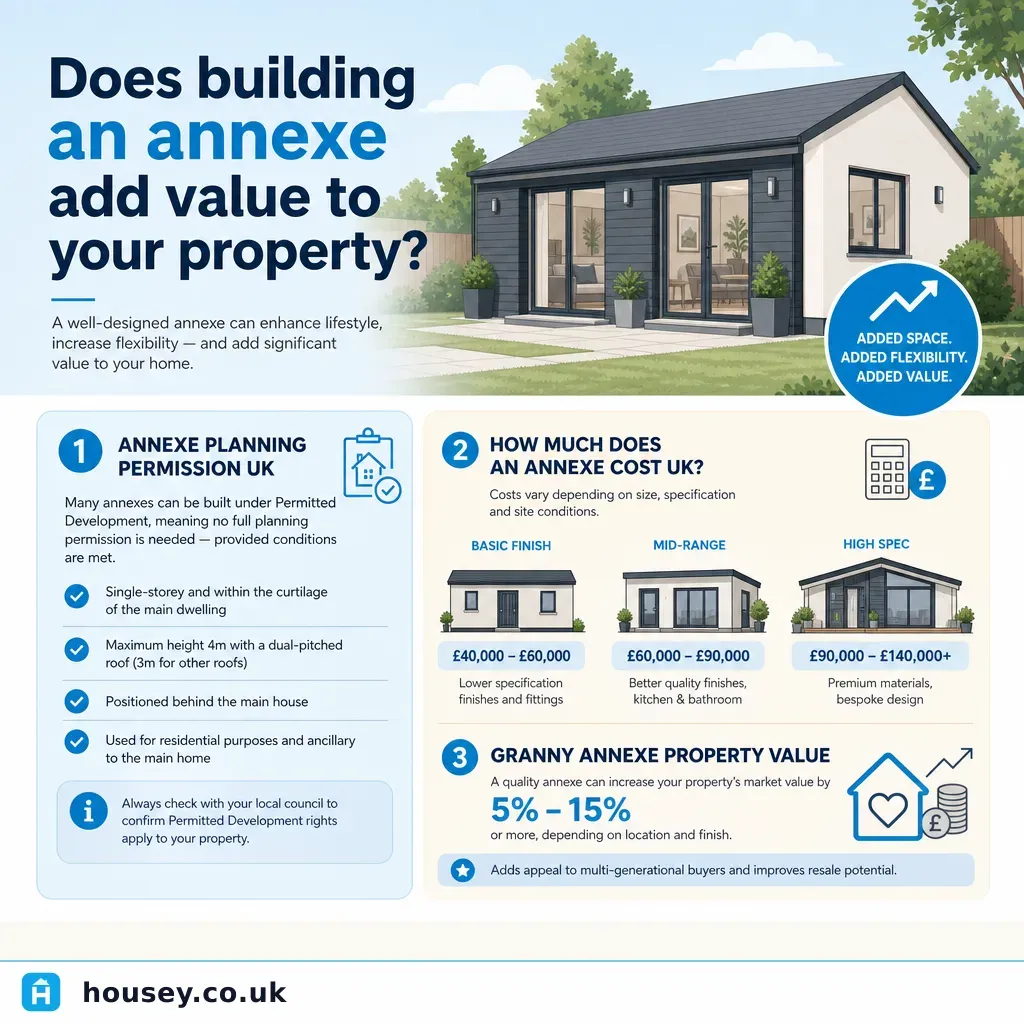
Does building an annexe add value to your property?
Interest in annexes has grown steadily as multi-generational living becomes more common across the UK, and as homeowners seek ways to generate rental income without leaving their property. The question of added value is most pressing when a homeowner is weighing the cost of building against the likely return — either at resale or through rental yield. Getting a realistic answer requires more than a single percentage figure: planning status, build quality, self-containment, and local demand all shape what an annexe is actually worth.
Key points
- A well-specified, self-contained annexe may add 10–20% to a UK property's value, though this varies significantly by location and local market demand.
- Building Regulations approval is legally required for all annexe construction regardless of whether planning permission is needed — always obtain a Completion Certificate.
- Permitted development rights for annexes are more restricted than many homeowners expect; a Certificate of Lawful Development is strongly advisable even where permitted development appears to apply.
- Indicative UK annexe build costs range from £30,000–£80,000 for a garage or outbuilding conversion and £80,000–£150,000+ for a new-build detached structure (Indicative UK costs, last reviewed 2026-05-11).
- A self-contained annexe occupied by someone other than a close dependent relative may attract a separate Council Tax band — check with your local authority.
How much value can an annexe add?
A property with a well-designed, lawfully built annexe can command a 10–20% premium over comparable homes without one. The actual figure depends on several factors:
- Location: In high-land-value areas — parts of London, the South East, and commuter belt towns — a separate annexe attracts buyers seeking rental income or accommodation for elderly relatives. In lower-demand areas, some buyers may view it as surplus space or an ongoing maintenance cost.
- Self-containment: A fully self-contained unit with its own front door, kitchen, bathroom, and utility connections adds more than an internal suite or garage conversion without cooking facilities.
- Legal status: If the annexe was built without required planning permission or building control sign-off, a buyer's solicitor will identify this. It may delay a sale, reduce an offer, or require an indemnity insurance policy.
- Build quality: Poor insulation, inadequate ventilation, or substandard electrics will be flagged on a survey and reduce both valuation and rental appeal.
Worked UK property scenario
A homeowner in a 4-bedroom 1970s detached house in Oxfordshire converts a double garage into a one-bedroom annexe with separate external access, kitchenette, shower room, and its own utility connections. Build cost: approximately £55,000 including planning drawings and building control sign-off.
The main house was valued at £600,000 before works. After completion, an estate agent estimates the annexe adds £70,000–£90,000 to market value — an uplift of around 12–15%. The owner also achieves £700 per month in rental income by letting to a professional tenant. When the property is eventually marketed, the agent presents it to buyers seeking multi-generational accommodation, attracting several offers above guide price.
Key lesson: Planning approval and a Building Regulations Completion Certificate were obtained upfront. Without them, the buyer's conveyancer would have required an indemnity policy, likely depressing the offer.
Planning permission and Building Regulations
Route | When it applies | Key documents |
|---|---|---|
Permitted development (Class A, B, or E) | Annexe within the curtilage of a house, within size and height limits, not in a restricted area | Prior Approval (sometimes required), Certificate of Lawful Development (strongly recommended) |
Full planning permission | Exceeds PD limits, listed building, conservation area, Article 4 direction area, or flat | Full planning application, design and access statement, heritage statement if required |
Building Regulations (all routes) | All structural work regardless of planning status | Initial notice or full plans to building control, Completion Certificate on sign-off |
Always obtain a Completion Certificate from building control. Without it, solicitors cannot confirm the building was inspected and signed off, which complicates future sales and mortgage applications.
Permitted development rights for annexes depend on multiple factors including the property's curtilage, height, footprint, and any prior extensions already carried out. The rules differ across England, Wales, Scotland, and Northern Ireland. Even when permitted development appears to apply, applying for a Certificate of Lawful Development from your local planning authority provides documented confirmation and protects the position at resale.
Council Tax and rental income considerations
A self-contained annexe may attract a separate Council Tax band if it has its own front door, cooking facilities, and bathroom, and is occupied by someone other than a close dependent relative. Some councils offer a 50% Council Tax discount for annexes occupied by a dependent relative — check with your local authority directly.
If you let the annexe commercially, rental income is taxable. Rules differ depending on whether the annexe is genuinely separate from the main dwelling. A qualified tax adviser should be consulted before taking on tenants.
Homeowner checklist before starting an annexe build
Important limitations
This article provides general guidance only. Planning rules for annexes vary significantly by property type, site constraints, local planning policies, and protected area designations. Value uplifts are indicative only and are not guaranteed. A qualified surveyor or estate agent familiar with your local market should be consulted for a realistic valuation. Tax advice specific to your circumstances should come from a qualified tax adviser, and planning advice from your local planning authority or a chartered planning consultant.
When this becomes urgent
Seek professional advice promptly if:
- A buyer's solicitor has flagged a missing Completion Certificate or absence of planning approval during a sale.
- Your local planning authority has issued an enforcement notice or pre-enforcement letter.
- You have discovered that an existing annexe was built without planning permission or building control sign-off.
- A neighbour has submitted a formal planning objection or complaint.
- A mortgage lender has raised queries about the annexe as part of a valuation survey.
What to ask a qualified professional
- Does my proposed annexe fall within permitted development, or does it require full planning permission?
- Should I apply for a Certificate of Lawful Development even if permitted development appears to apply?
- What Building Regulations applications are required, and who will manage inspections?
- Can you provide a realistic estimate of value uplift based on comparable local sales?
- Are there mortgage, insurance, or leasehold restrictions I should be aware of?
- How should I structure any letting arrangement to manage Council Tax and income tax liability?
How Housey can help
Housey connects you with experienced extension builders and design-and-build firms who can manage your annexe project from planning through to Building Regulations sign-off. Submit a quote request to compare proposals from vetted contractors in your area.
Frequently asked questions
Do I need planning permission to build an annexe?
Not necessarily. Some annexes fall within permitted development rights, subject to size, height, and proximity restrictions, but others require full planning permission. Rules depend on your property type, location, and any local restrictions in force. Even where permitted development appears to apply, applying for a Certificate of Lawful Development is strongly advisable to protect against complications at resale.
How long does it take to build an annexe?
A garage or outbuilding conversion typically takes 3–6 months from planning to completion. A new-build detached annexe may take 6–12 months including planning approval and Building Regulations sign-off. Timescales vary depending on contractor availability, the complexity of the project, and how quickly building control inspections are scheduled throughout the build.
Can I let an annexe to a tenant or on Airbnb?
You can often let an annexe commercially, but you must first check your planning permission conditions, mortgage terms, insurance policy, and Council Tax position. Short-term holiday letting in some areas triggers a change of use under planning regulations. Seek advice from your local planning authority and a qualified tax adviser before taking on paying guests or tenants.
Will an annexe always increase my property's value?
Not necessarily. In some markets, buyers may prefer not to maintain a second structure, or local demand for multi-generational accommodation may be limited. The strongest value uplifts come from well-specified, lawfully built, self-contained annexes in areas with genuine demand. An estate agent familiar with your local market can provide a more realistic indication.
Sources and further reading
- Planning Portal: outbuildings and annexes — Planning Portal
- Building regulations approval — GOV.UK
- Council Tax on annexes — GOV.UK
- Rent a Room Scheme — GOV.UK
- Advice on extending a listed building — Historic England
Useful next reads
 Improvement & Build
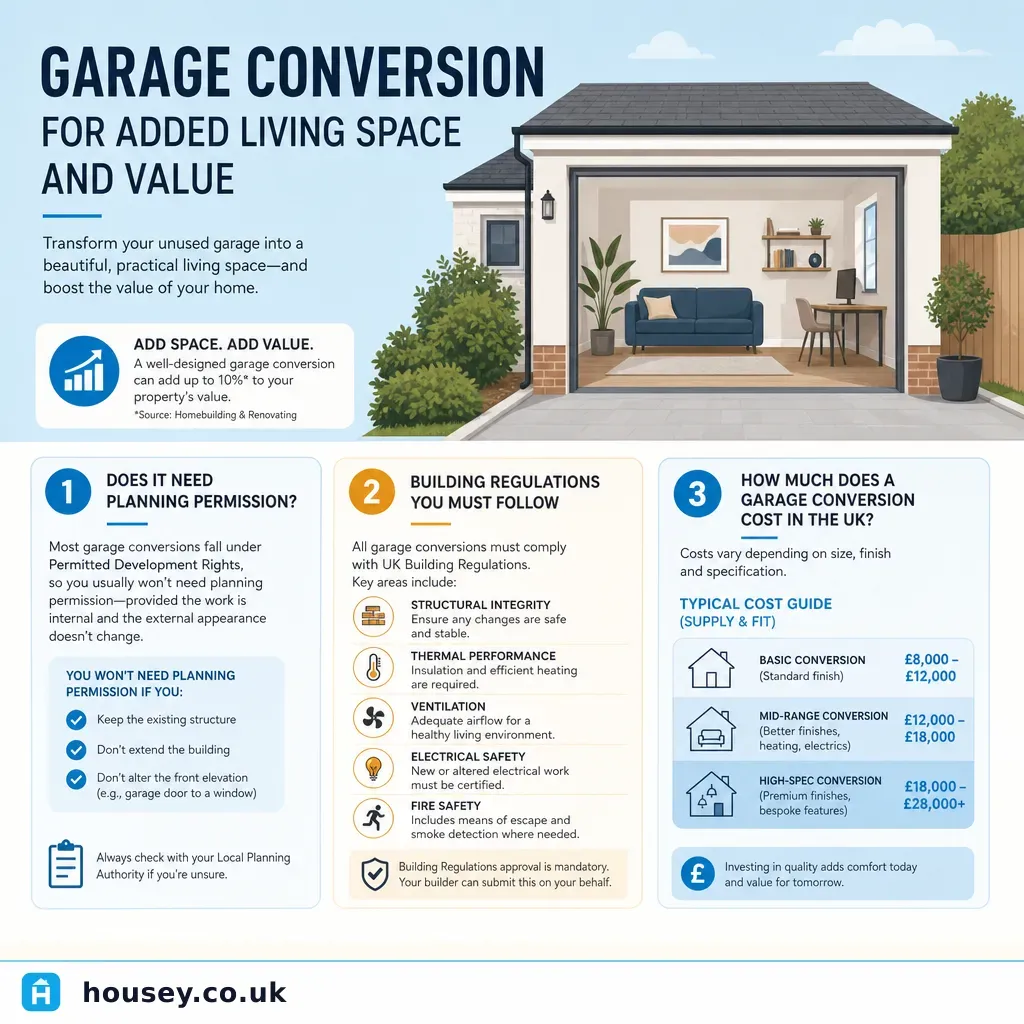
Garage Conversion for Added Living Space and Value
A garage conversion in England typically falls within permitted development and does not need a planning application, provided the property is a standard dwellinghouse with no restricting planning conditions.
 Improvement & Build
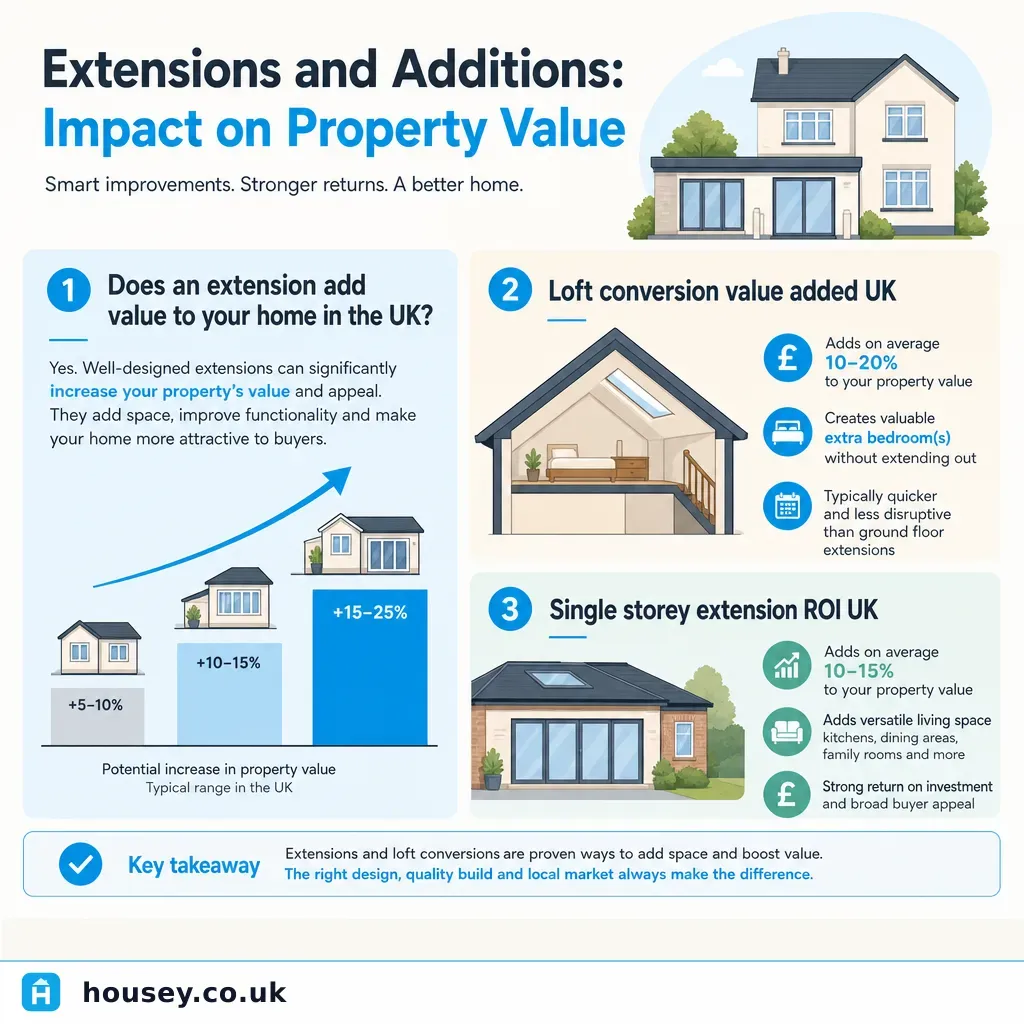
Extensions and Additions: Impact on Property Value
Extensions typically add 5–20% to UK property values depending on type, quality, and local market conditions.
 Improvement & Build
Home Improvement Projects That Add Value to Your Property
Loft conversions, rear extensions, and kitchen refurbishments typically offer the strongest return on investment for UK homeowners.
 Improvement & Build
Maximising Value Through Strategic Home Improvement Projects
In the UK, loft conversions and kitchen extensions tend to deliver the strongest return on investment, with loft conversions potentially adding around 20% to property value according to Nationwide data.
 Improvement & Build
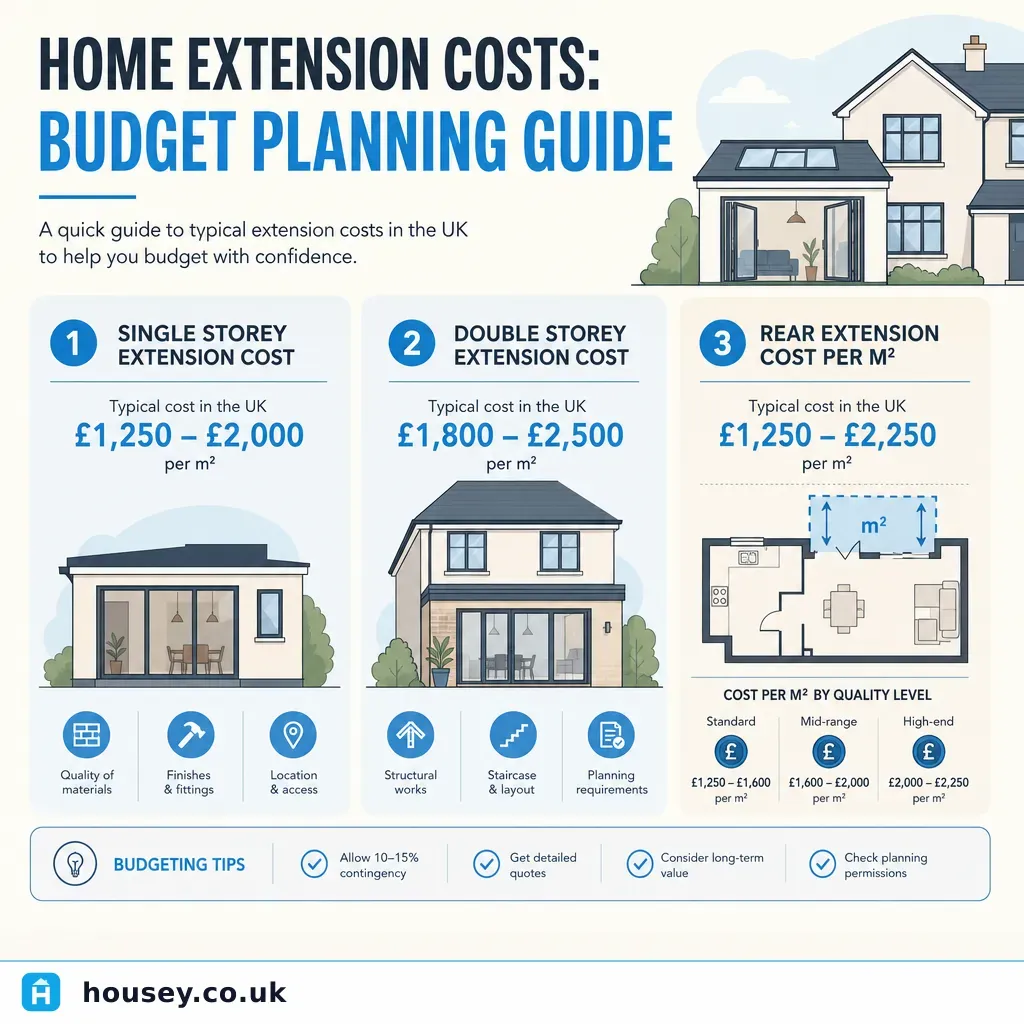
Home Extension Costs: Budget Planning Guide
A single-storey rear extension in the UK typically costs £1,500–£2,500 per square metre to build.