What to expect when rendering exterior walls with monocouche finish
By Housey · Last reviewed 8th of May 2026
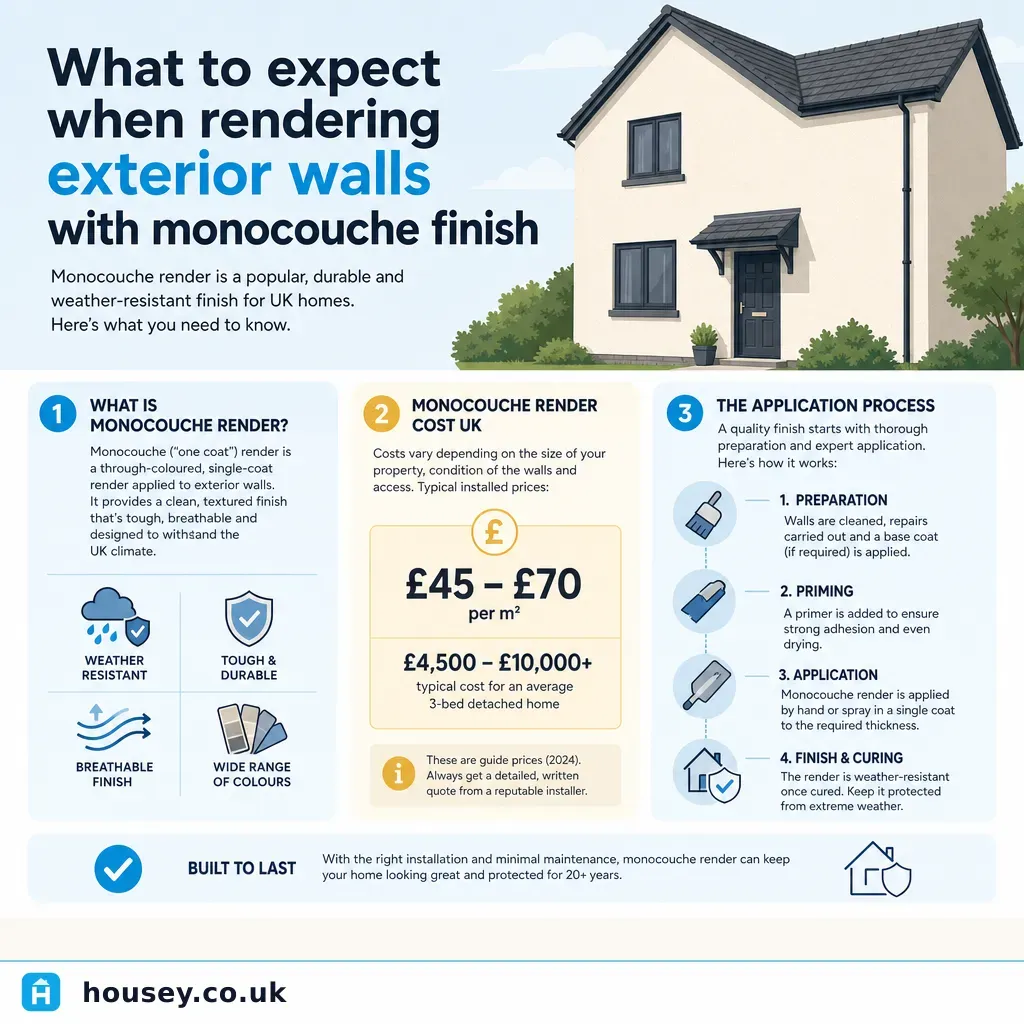
What to expect when rendering exterior walls with monocouche finish
Monocouche render is now common on UK new builds and refurbishments, yet relatively few homeowners know what distinguishes it from traditional sand-and-cement render, which substrates it suits, or what a competent installation actually involves. Questions about monocouche typically arise when planning an extension, refreshing an ageing façade, or reviewing a building survey report on a property under consideration.
Key points
- Monocouche (French for "single coat") is a factory-made, through-coloured, cement-based render applied at 15–20 mm in a single layer, eliminating the separate base and finish coats required by traditional render systems.
- It is governed by BS EN 998-1, the British Standard for factory-made rendering and plastering mortars, and must be applied following the manufacturer's published specification and technical data sheet.
- Monocouche is not suitable for all substrates: it is designed for dense brick, concrete blockwork, and concrete backgrounds; application to timber-framed walls requires a compatible carrier board system rated for render.
- Through-colouring means minor surface chips are less visible than on painted render, but colour matching for localised repairs is difficult once the original batch has cured and weathered over time.
- Application must take place in dry, frost-free conditions; BS EN 998-1 and most manufacturer specifications require substrate and air temperatures to remain above 5 °C during both application and curing.
What is monocouche render?
Monocouche is a pre-blended product — aggregates, cement, and pigments mixed at the factory to a controlled formulation. Unlike traditional sand-and-cement render, which is site-mixed and typically requires a scratch coat, a floating coat, and a finish, monocouche goes on in a single 15–20 mm layer applied directly to the prepared substrate.
The colour runs through the full thickness of the coat, so the finish does not depend on surface paint. The textured surface — usually a scraped or rough-cast effect produced by working the render while it is still green — contributes to durability by increasing the surface area available for moisture evaporation and reducing the cracking risk associated with a flat, dense finish.
Monocouche vs other exterior render types
Render type | Application | Colour options | Typical thickness | Key advantage | Key limitation |
|---|---|---|---|---|---|
Monocouche | Single coat, factory-mixed | Factory-set palette | 15–20 mm | Through-coloured; faster application | Palette is limited; not for all substrates |
Sand-and-cement (traditional) | 2–3 coats, site-mixed | Painted after application | 15–25 mm total | Widely understood; repairable | Needs repainting; prone to cracking if poorly mixed |
Polymer or acrylic thin-coat | Thin coat over scratch base | Wide range including fine textures | 3–6 mm finish coat | Flexible; large colour range | Scratch coat still required; similar overall cost |
EWI render system | Over insulation boards | Various | Depends on insulation depth | Adds meaningful thermal performance | Requires full system compliance; more complex design |
Is your wall suitable for monocouche?
Not every background is appropriate. This guide covers the most common situations:
- New dense blockwork or brick: Generally the most suitable substrate and the standard background for monocouche on UK new builds and extensions.
- Existing sand-and-cement render: Typically requires full removal before monocouche can be applied. Partial removal of failed sections rarely produces a consistent finish or acceptable bond.
- Lightweight aerated concrete blocks (Thermalite, Celcon, and similar): Compatibility varies by manufacturer and product. Always verify with the specific render manufacturer's technical team before proceeding.
- Timber frame: Not suitable without an appropriate carrier board — for example, cement particle board or a render-grade sheathing board — and only with a system specifically rated for timber-frame construction by the manufacturer.
- Listed buildings or conservation areas: Consult your local planning authority before applying any cement-based render to historic masonry. Cement render can trap moisture in traditional lime-bonded walls and cause significant long-term damage. Lime render is often more appropriate, and may be required.
The application process: what to expect
A typical monocouche render project on a UK house follows this sequence:
- Survey and specification — the contractor assesses the substrate for moisture content, cracking, contamination, and adhesion. Background preparation (hacking back loose material, cutting out and filling cracks, applying primer or bonding agent) must follow the manufacturer's instructions for the specific product being used.
- Scaffolding — full-elevation access is standard for any work above 2 m. Scaffold is usually priced separately and hired for the duration of the project.
- Beads and mesh — PVC or stainless steel stop beads are fixed at all edges, reveals, and movement joint positions before any render is applied. Fibreglass reinforcement mesh is embedded around window and door openings, where stress concentrations make cracking most likely.
- Application — monocouche is usually machine-applied using a render pump, then hand-worked to achieve the specified texture. Machine application produces a more consistent finish and colour than hand application and is standard practice on most UK residential projects.
- Texturing — the surface is worked (scraped, brushed, or rolled) while still green to produce the specified texture. This is a skilled, time-sensitive operation and must be carried out consistently across the entire elevation to avoid visible differences in texture or colour.
- Curing and protection — curing time varies by product and ambient conditions. Most manufacturers require protection from rain, frost, and direct sunlight for at least 24–48 hours after application. Full strength development typically takes 28 days.
Red flags to watch for
These are warning signs that a contractor's approach or quote may not meet an acceptable standard:
- A proposal to apply monocouche over existing render without full removal — this risks delamination and significantly reduces the expected lifespan of the new finish.
- No reinforcement mesh specified around window and door openings — this is a known cracking point and omitting it is a common cause of premature failure.
- No movement joints specified on elevations longer than approximately 5 m — monocouche expands and contracts with temperature, and inadequate jointing leads to visible cracking within one to two years.
- Application planned in cold or wet conditions without documented cold-weather protocols — check the weather forecast for the application and curing period and ask the contractor what measures are in place.
- No reference to BS EN 998-1 or the specific product data sheet — a competent contractor should be able to name the product, cite its declared performance class, and describe the mixing and application requirements.
- A price significantly below other quotes without a clear explanation — under-preparation, thinning the render beyond specification, and omitting beads or mesh are common ways to cut costs that lead to expensive failures.
What to ask a monocouche render contractor
Before accepting any quote, ask:
- Which product are you specifying, and can you provide the technical data sheet and manufacturer's application guide?
- What is your assessment of the existing substrate, and what preparation work is included in this quote?
- How will movement joints be positioned, and what material will be used?
- What reinforcement mesh specification will you use around openings and at re-entrant corners?
- What weather conditions do you require, and what is your contingency if frost or heavy rain is forecast during curing?
- What warranty do you provide, and is it a manufacturer-backed system warranty or a workmanship-only guarantee?
- Is VAT included in this quote, and what are the payment terms?
- Will you provide a written scope of works before starting?
Indicative costs
Indicative UK costs, last reviewed 2026-05-08. Costs vary significantly by property size, substrate condition, scaffolding requirements, region, and specification.
- Supply and application of monocouche render, including standard preparation and materials: typically £35–£65 per m², based on publicly available trade and contractor guidance. Additional charges apply for scaffolding, substrate repair beyond normal preparation, and complex movement joint details.
- Scaffolding for a typical semi-detached house: indicative £800–£1,800, varying by height, access, and duration of hire.
- Always obtain at least three written quotes and verify that each is based on the same product, preparation standard, and scope of work before comparing prices.
Verify figures with local contractors; individual project costs will vary.
When to get professional help
Monocouche render is not a DIY product — manufacturer specifications require trained operatives, and poor workmanship is difficult and costly to put right once the render has cured. Consider involving additional professionals in the following situations:
- The property is in a conservation area or is a listed building — consult your local planning authority or a heritage consultant before any cement-based render is applied to historic masonry.
- There are signs of damp penetration in the existing walls — a damp and timber survey before rendering is advisable to ensure moisture is not sealed behind the new finish.
- The existing substrate has significant cracking or visible movement — a structural engineer should assess whether movement is active before rendering proceeds.
- You are combining monocouche with an external wall insulation (EWI) system — this affects thermal performance and building regulations compliance and should be designed by a specialist.
How Housey can help
If you are planning an extension or external refurbishment that includes monocouche render, Housey can connect you with extension builders experienced in external render specifications in your area. Request and compare quotes from multiple contractors in one place.
Frequently asked questions
How long does monocouche render last?
A well-applied monocouche render on a suitable substrate, with correctly positioned movement joints and thorough preparation, can last 20–30 years or more. Lifespan is strongly influenced by application quality, substrate condition, and exposure to driving rain. Through-colouring means surface weathering is less visually obvious than on painted render, which requires repainting every several years.
Can monocouche render be painted?
Monocouche is designed to be left unpainted, and many manufacturers advise against it as paint can trap moisture within the render. It can be painted with a suitable breathable exterior masonry paint if the colour is no longer acceptable, but you should consult the product manufacturer's technical data sheet before doing so to avoid voiding any warranty.
Does monocouche render need planning permission?
In most cases, rendering existing exterior walls does not require planning permission for a standard residential property in England under permitted development rights. However, properties in conservation areas, Article 4 Direction areas, or listed buildings may need consent. Check with your local planning authority before starting work — rules vary and enforcement notices can be costly to deal with.
Why does monocouche render crack?
Cracking most commonly results from inadequate movement jointing, poor substrate preparation, application to a contaminated or structurally weak background, or work carried out in unsuitable weather. Hairline shrinkage cracks are less common with monocouche than traditional sand-and-cement render due to polymer additives, but larger or progressive cracks should be assessed by a qualified contractor or structural engineer.
Is monocouche render suitable for older solid-wall properties?
It can be, provided the substrate is structurally sound and any existing render is fully removed first. However, pre-1919 solid-brick construction typically uses lime mortar joints and traditional brickwork that may not be suited to dense cement-based render. Applying cement render to historic masonry can trap moisture and cause damage. Seek specialist advice — lime render may be more appropriate.
Sources and further reading
- BS EN 998-1: Specification for mortar for masonry — rendering and plastering mortars — BSI (British Standards Institution)
- Permitted development: exterior walls and cladding — Planning Portal
- Render and external wall finishes on historic buildings — Historic England
- Building regulations approval — GOV.UK
Useful next reads
 Improvement & Build
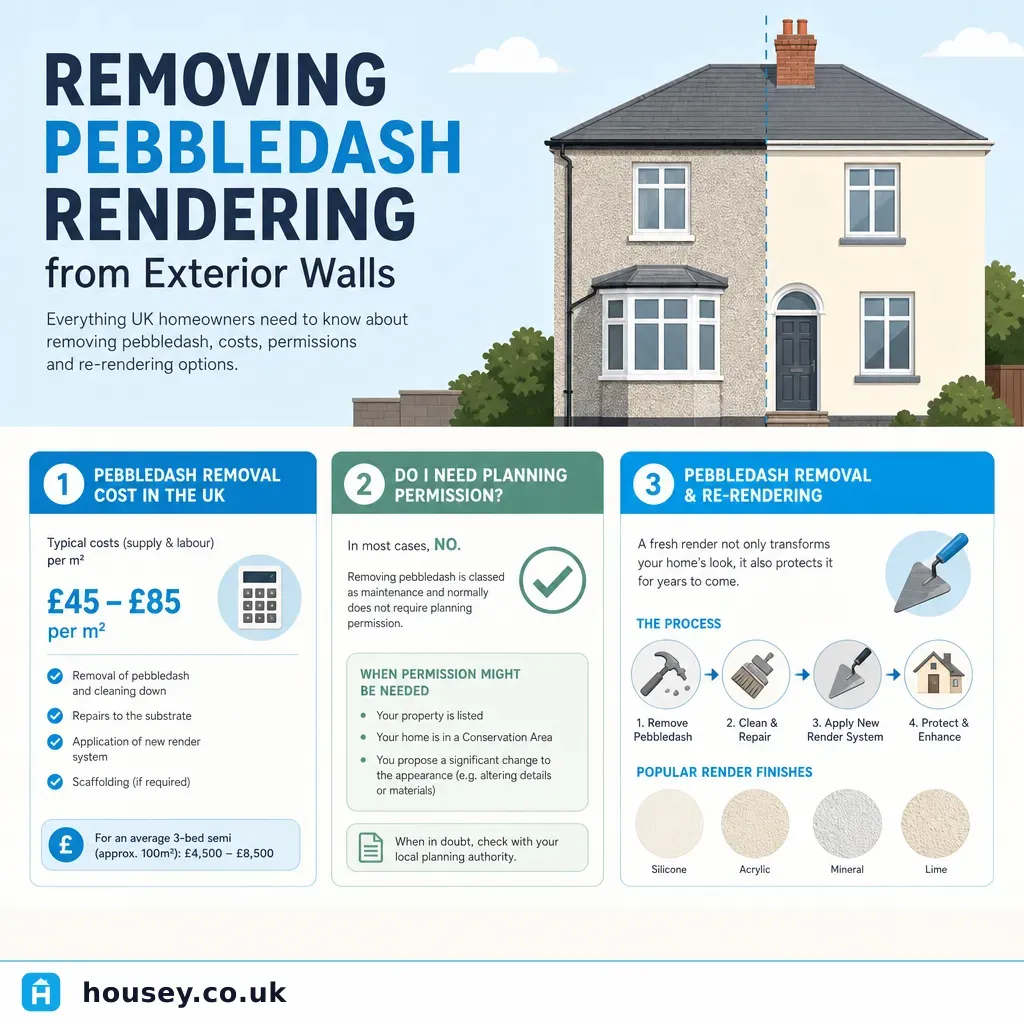
Removing Pebbledash Rendering from Exterior Walls
Removing pebbledash involves chiselling or grinding off the render and base coat, then inspecting and repairing the masonry before applying a new finish.
 Improvement & Build
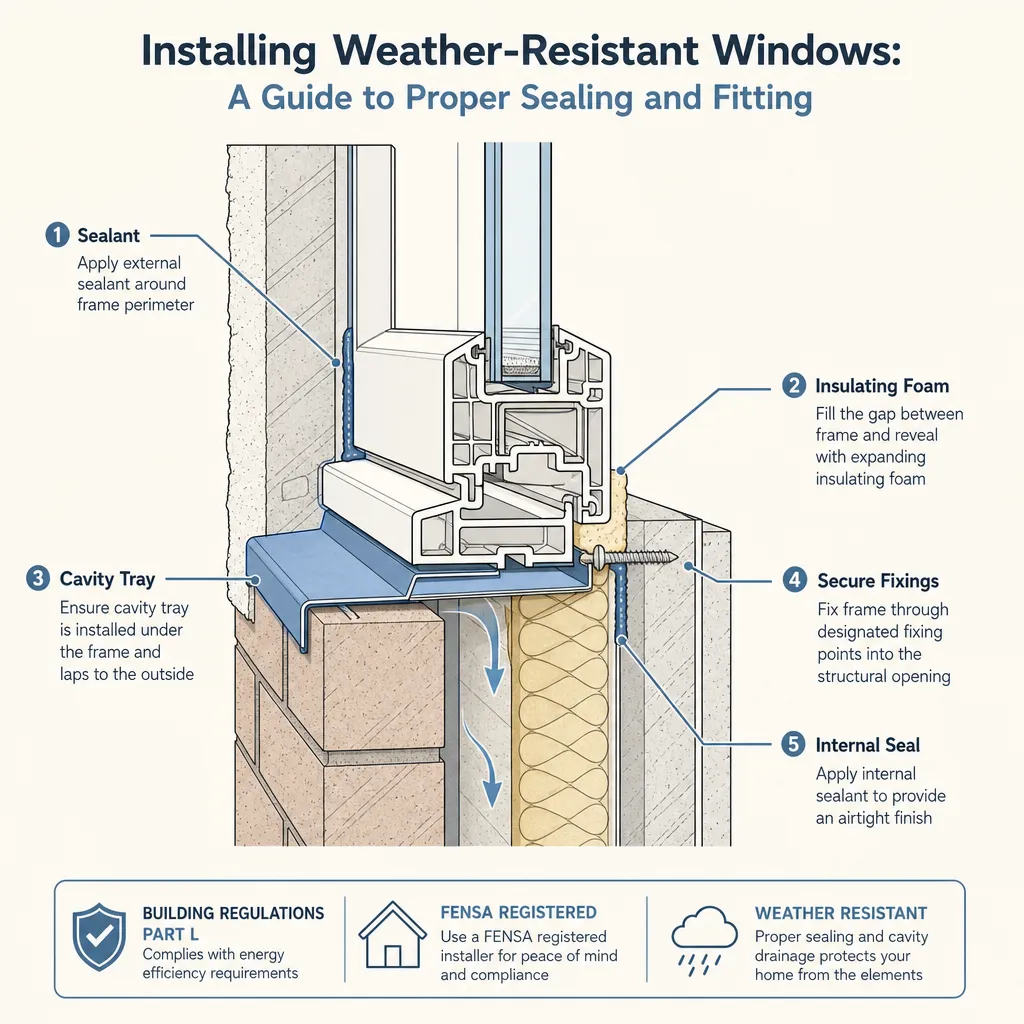
Installing Weather-Resistant Windows: A Guide to Proper Sealing and Fitting
Replacing windows in England requires Building Regulations compliance under Part L — either via a FENSA- or CERTASS-registered installer who self-certifies, or through local authority building control notification.
 Improvement & Build
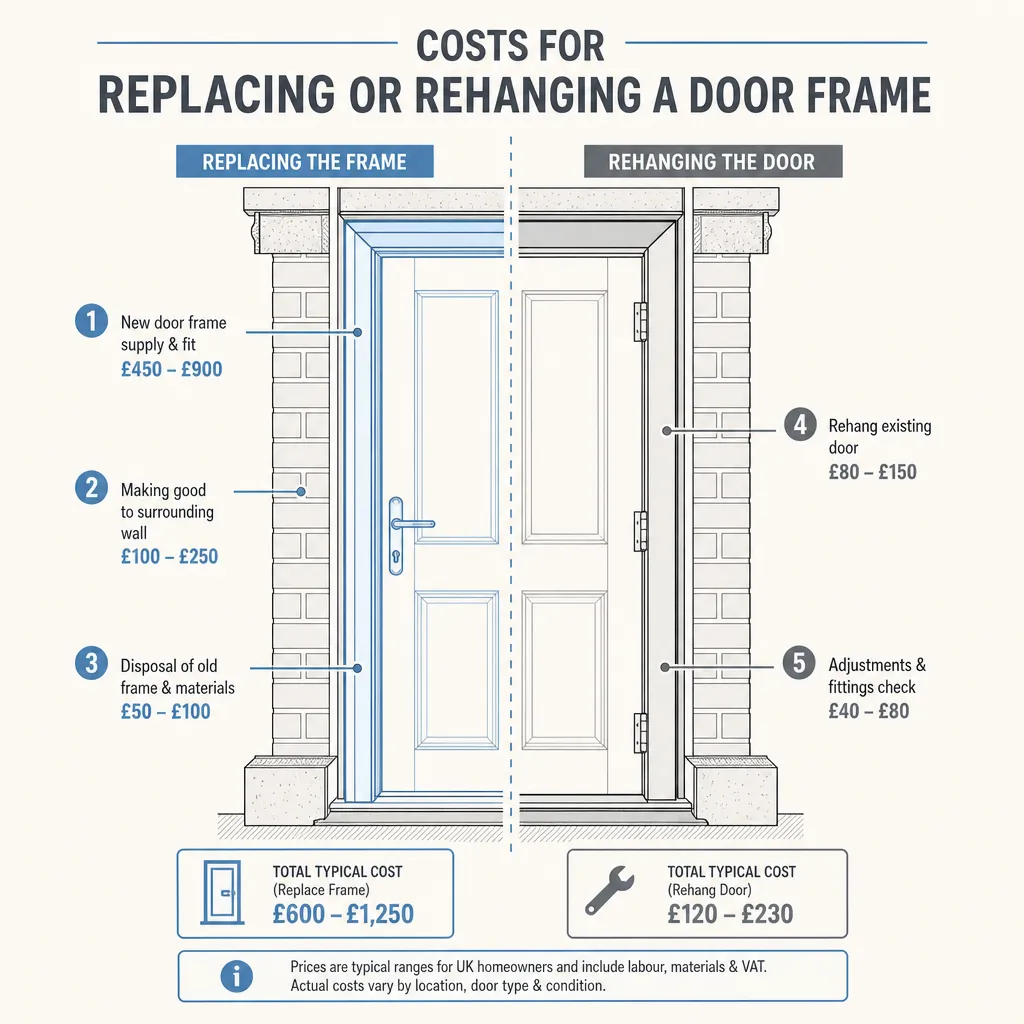
Costs for Replacing or Rehanging a Door Frame
Replacing a door frame in the UK typically costs £150–£600 for an internal door and £400–£1,200 for an external door, including labour and materials.
 Improvement & Build
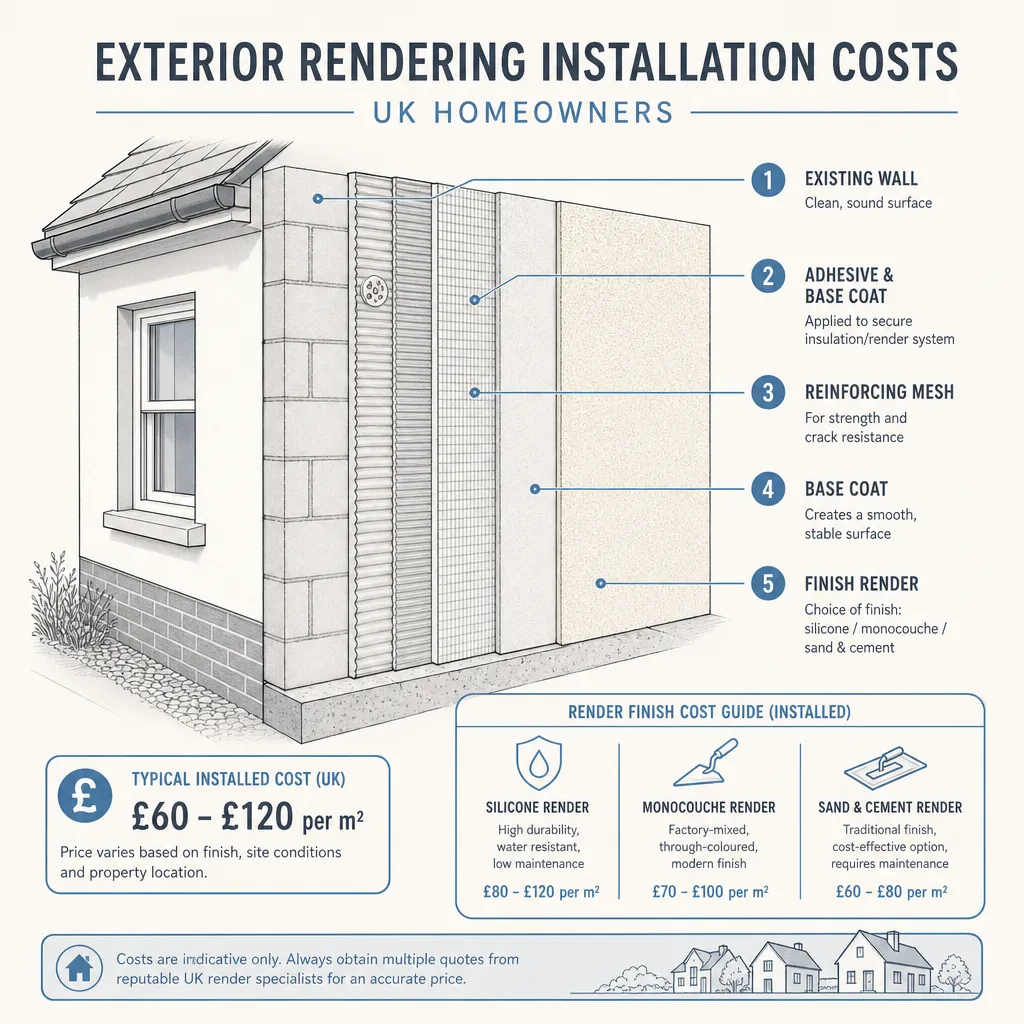
Exterior Rendering Installation Costs
Exterior rendering in the UK typically costs £20–£60 per square metre for standard render systems, or £80–£150 per square metre for External Wall Insulation with a render finish.
 Improvement & Build
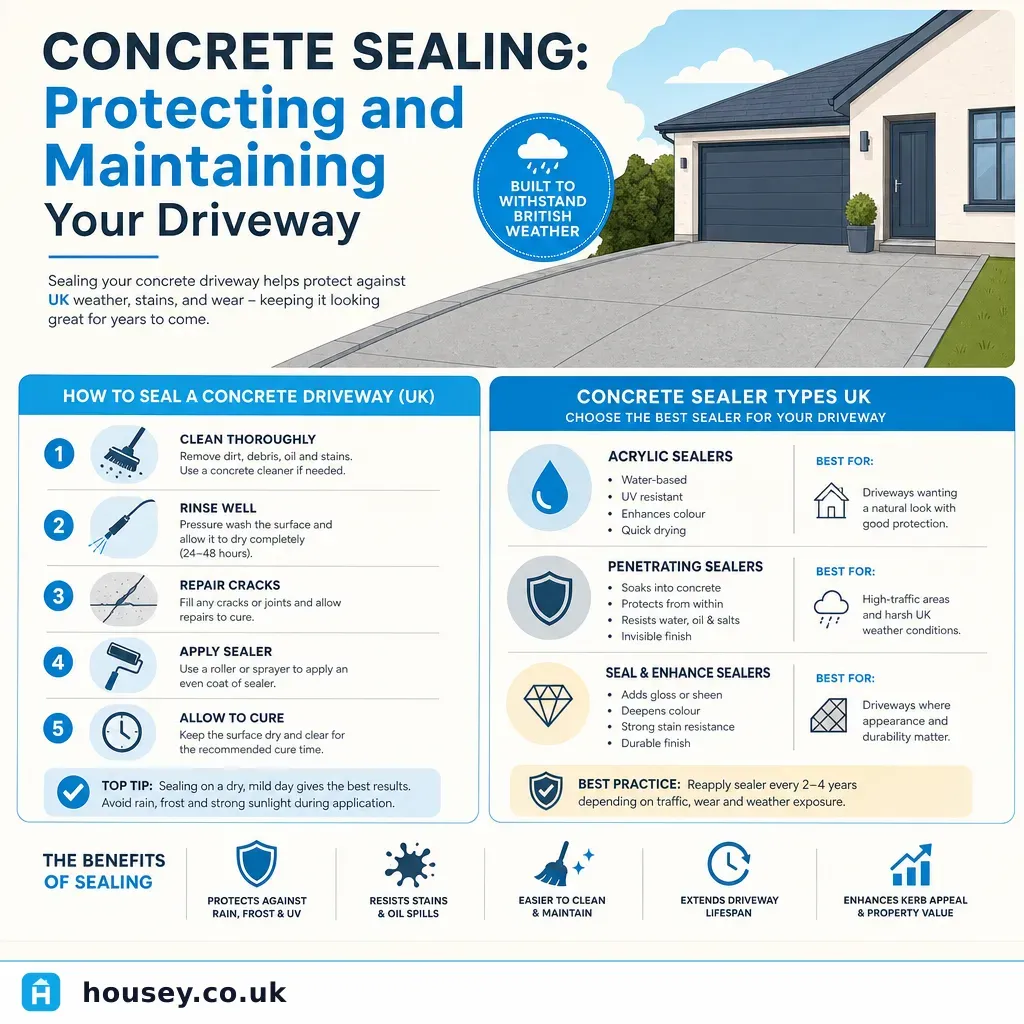
Concrete Sealing: Protecting and Maintaining Your Driveway
Sealing a concrete driveway protects against water ingress, freeze-thaw damage, oil stains, and surface wear.