Door Frame Replacement and Installation Costs
By Housey · Last reviewed 7th of May 2026
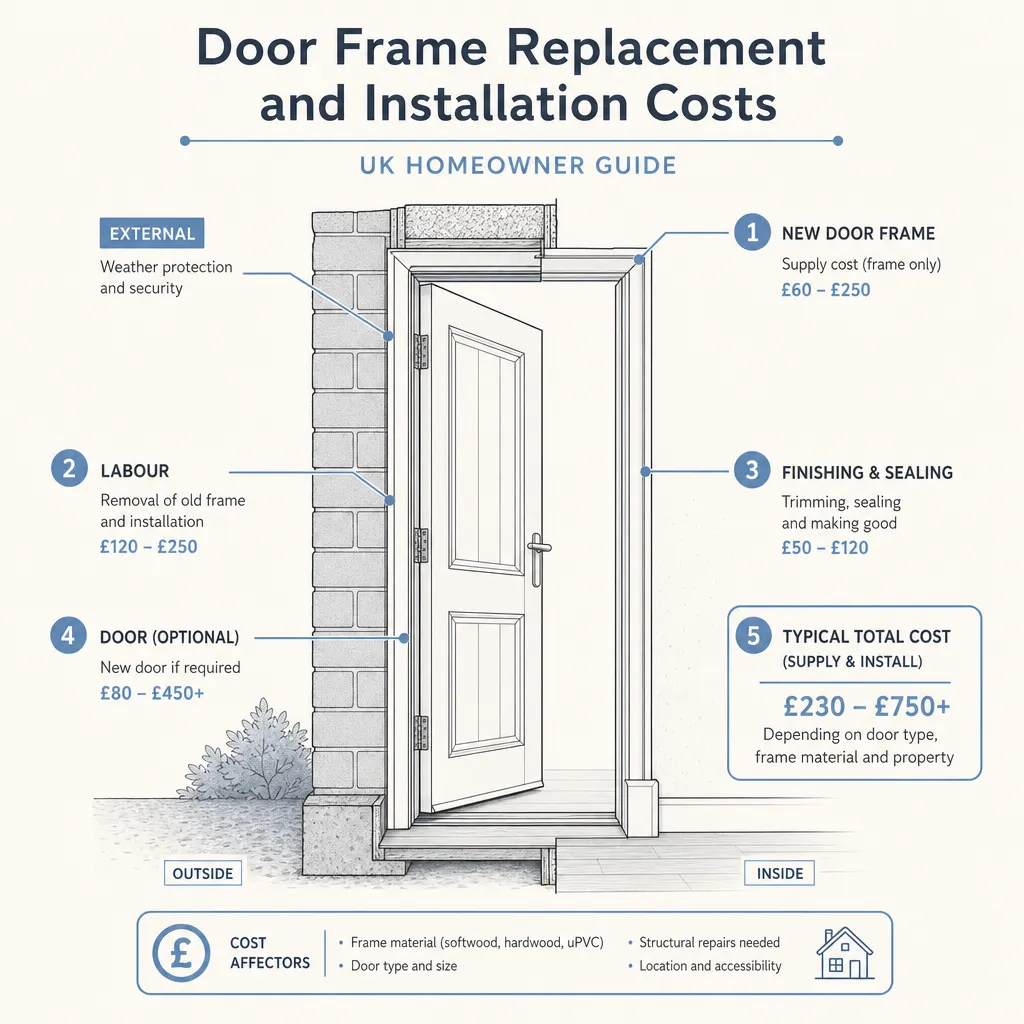
Door Frame Replacement and Installation Costs
Door frames deteriorate over time through rot, impact damage, or simply wear — and a failed frame affects both the security and weatherproofing of a property, particularly on external doors. Homeowners typically face this decision when a door begins to stick badly, persistent draughts appear around the reveal, rot becomes visible in the timber, or an external door is being upgraded as part of wider improvement works. Knowing what the work involves and what a fair price looks like helps you avoid accepting an incomplete quote or commissioning work that addresses symptoms rather than the underlying cause.
Key points
- Replacing an internal door lining in the UK typically costs £100–£300 including labour; external door frame replacements range from £300–£800 for softwood or UPVC and £600–£1,500+ for hardwood or composite frames. (Indicative UK costs, last reviewed 2026-05-07.)
- External door frames that include glazed panels require a FENSA or CERTASS certificate confirming compliance with Part L energy performance requirements — this is a legal obligation under the Building Regulations for replacement glazing in England and Wales.
- Widening or structurally altering a door opening in a load-bearing wall requires structural assessment and may need a Building Regulations application under Approved Document A.
- Timber external frames in older UK homes commonly suffer wet rot at the cill and threshold; a quote that replaces the jambs but omits the cill may leave the primary source of deterioration in place.
- In rented properties, landlords are responsible for maintaining door frames that form part of the structure under section 11 of the Landlord and Tenant Act 1985.
What is a door frame, and when does it need replacing?
A door frame (called a door lining on internal doors) is the fixed surround that the door leaf hinges to and closes against. It comprises two vertical jambs, a head at the top, and on external doors, a sill or threshold at the base.
Signs a frame needs replacing rather than repairing:
- Soft, spongy, or crumbling timber indicating active wet rot
- Warping or twisting that prevents the door from sealing or closing squarely
- A gap at the threshold causing draughts or water ingress beneath the door
- A damaged rebate — the groove the door closes into — from forced entry or repeated impact
- The frame has pulled away from the surrounding masonry or stud wall
Minor issues — a loose hinge, seasonal swelling due to humidity, or small surface cracks in the paintwork — generally do not require a full frame replacement and can often be addressed through targeted repair or adjustment.
How much does door frame replacement cost in the UK?
(Indicative UK costs, last reviewed 2026-05-07. Costs vary by region, material, opening size, and site access.)
Frame type | Material options | Typical supply and fit cost | Notes |
|---|---|---|---|
Internal door lining | Softwood, MDF-wrapped pine | £100–£300 | Excludes door leaf; includes fitting and basic making-good |
External door frame — standard | Softwood, UPVC | £300–£600 | Excludes door leaf; includes weatherseal and threshold |
External door frame — premium | Hardwood (oak, meranti), composite | £600–£1,500+ | Excludes door leaf; longer lifespan, better thermal performance |
Front door frame with sidelights | UPVC, aluminium | £800–£2,500 | Glazed panels require FENSA or CERTASS certificate |
Structural alteration and new frame | Varies by wall type | £1,500–£4,000+ | Requires RSJ or lintel; structural engineer input typically needed |
Fitting an external door frame takes a skilled carpenter or window-and-door installer half a day to a full day. Internal linings typically take 1–3 hours each.
Internal door linings vs external door frames: key differences
Factor | Internal door lining | External door frame |
|---|---|---|
Primary purpose | Aesthetic finish, hinge and latch fixing | Weather seal, security, thermal performance |
Common materials | Softwood, MDF-wrapped | Softwood, hardwood, UPVC, composite, aluminium |
Weatherproofing required | No | Yes — sealant, DPC alignment, threshold seal |
Building regulations | Not usually applicable | Part L if glazed; Part A if opening altered |
Certification required | No | FENSA or CERTASS if glazed panels are included |
Typical lifespan | 20–40 years | 20–30 years (softwood); 40+ years (hardwood, composite) |
Does replacing a door frame need building regulations approval?
For a like-for-like frame replacement — swapping a frame within an existing opening without changing the opening size — building regulations approval is generally not required.
Building regulations may apply in these circumstances:
- Enlarged or altered opening in a load-bearing wall (Approved Document A: Structure): requires structural assessment, possibly a steel lintel or RSJ, and may need a full building regulations application with building control inspection.
- Replacement includes a glazed section in an external wall (Approved Document L: Conservation of Fuel and Power): FENSA or CERTASS self-certification is required, or a separate building control application if the installer is not scheme-registered.
- Fire door frames in flats, HMOs, or converted buildings (Approved Document B: Fire Safety): fire door performance is a regulated requirement in multi-occupancy buildings and conversions where a fire safety management plan is in place.
In a listed building or conservation area, consult your local planning authority before making any external alterations, even a like-for-like replacement that changes material or profile.
Red flags when getting door frame quotes
These signs suggest a quote may be incomplete or that the proposed work may not resolve the underlying problem:
- Sill or threshold excluded from the price: On external frames, the cill is often the most deteriorated section. A quote replacing the jambs but not the cill may leave the primary source of rot in place, meaning the problem returns within a few years.
- No mention of the DPC: External frames should sit above or be bedded onto the damp proof course. Bridging the DPC during installation can introduce damp into the surrounding wall cavity or inner leaf.
- No FENSA or building control provision for glazed units: If a contractor proposes to install a glazed external frame without mentioning certification, ask directly how regulatory compliance will be demonstrated — unapproved glazed installations can create difficulties at resale.
- Reusing a poorly fitting door leaf: A new frame fitted around a badly warped or undersized door will not seal or perform correctly. Confirm whether the door leaf also needs replacing.
- No mention of making-good: Frame removal almost always disturbs plaster around the reveal. Quotes should include plaster patching or re-fixing the architrave, not leave the wall rough for you to arrange separately.
What to ask before accepting a door frame quote
- Does this price include supply and fit of the frame, or is it labour only with materials quoted separately?
- Will the sill, threshold, and weatherseal be replaced at the same time?
- For external frames: how will you handle the DPC alignment and cavity closure?
- If glazed panels are involved, who issues the FENSA or CERTASS certificate, and what is the timescale?
- What happens if rot or damage to the structural opening is found once the old frame is removed?
- Is VAT included in the quoted price, and can it be itemised separately?
- Will you re-hang the existing door leaf, or do you recommend replacing it alongside the frame?
- What workmanship warranty do you offer, and how is it claimed?
When to get professional help
Most door frame replacements are straightforward carpentry work that a competent joiner or window and door installer can complete within a day. Seek additional professional input before proceeding if:
- The opening is in a wall you believe is load-bearing and you are considering widening it
- You can see cracks above the existing frame or the frame is visibly racked out of square — both may indicate structural movement requiring a surveyor or structural engineer's opinion
- The property is listed or in a conservation area and the replacement affects an external elevation
- You are replacing fire doors in a flat, HMO, or converted building where fire safety compliance applies
- There is persistent damp or staining on the internal wall around the door reveal, suggesting moisture is tracking through the frame or cavity
For structural concerns, consult a structural engineer or RICS-chartered surveyor before any work begins. A window and door installer will handle standard frame replacements and can arrange FENSA certification for glazed units as part of the same instruction.
How Housey can help
For internal or external door frame replacement, Housey can help you request quotes from local window and door installers who can supply and fit frames, arrange glazing certification where required, and manage the full installation from removal through to making-good and weather-sealing.
Frequently asked questions
Do I need planning permission to replace a door frame?
Generally no, if you are replacing a frame like-for-like within an existing opening. Planning permission may be required if the property is listed, in a conservation area, or if the change would alter the external appearance significantly. Always check with your local planning authority if you are uncertain about your property's designation or location.
How long does it take to replace a door frame?
An internal door lining takes an experienced carpenter 1–3 hours to remove and replace. An external door frame typically takes half a day to a full day, longer if the sill needs replacing, surrounding masonry requires cutting back, or a cavity closure needs fitting. Allow extra time if plaster repair or new architrave is included in the scope.
What is the difference between a door frame and a door lining?
In UK trade usage, a door lining is the internal version — typically a three-piece softwood set of two jambs and a head, fixed to the stud wall or block surround and finished with an architrave. A door frame refers to the more robust external version, designed with a rebated profile and durable materials to resist weather, draughts, and forced entry.
Can a rotted door frame be repaired rather than replaced?
Small areas of wet rot on an otherwise sound frame can sometimes be treated using a two-part resin wood filler and a fungicidal hardener primer. However, if rot has penetrated more than 20–30% of a section, or if damage affects hinge positions or the door rebate, full replacement is more reliable and cost-effective in the long term.
Does a new door frame include the door?
Not unless it is specified in the quote. Door frame and door leaf are usually priced separately. Confirm when requesting quotes whether you need a new door leaf as well, and whether the installer will supply it or whether you are expected to purchase it separately and arrange delivery to site.
Sources and further reading
- Approved Document A: Structure — GOV.UK
- Approved Document L: Conservation of Fuel and Power — GOV.UK
- FENSA: What work needs to be registered? — FENSA
- Building Regulations Approval — GOV.UK
- Landlord and Tenant Act 1985 — legislation.gov.uk
Useful next reads
 Improvement & Build
Sliding door installation: pricing and what to expect
A new sliding patio door in the UK typically costs £800–£3,000 fully installed, depending on size, material, and glazing specification.
 Improvement & Build
Window Replacement: Planning and Installation Considerations
Most window replacements in England fall under permitted development and do not need planning permission, though listed buildings, flats, and conservation areas are exceptions.
 Improvement & Build
Window and Door Installation: Options and Considerations
Replacing windows and external doors in the UK requires compliance with Building Regulations Part L (thermal performance) and Part K (safety glazing).
 Improvement & Build
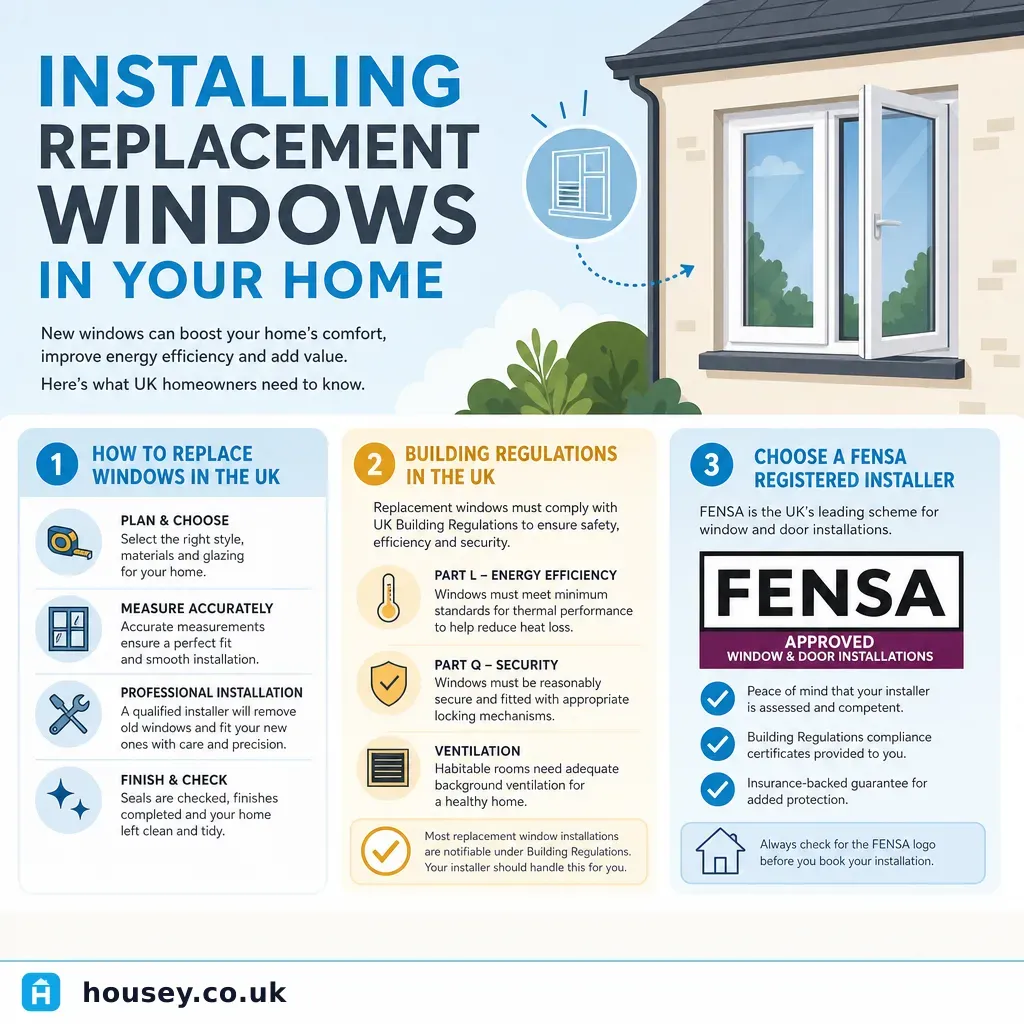
Installing Replacement Windows in Your Home
Replacing windows in the UK requires compliance with Building Regulations Part L — a minimum centre-pane U-value of 1.
 Improvement & Build
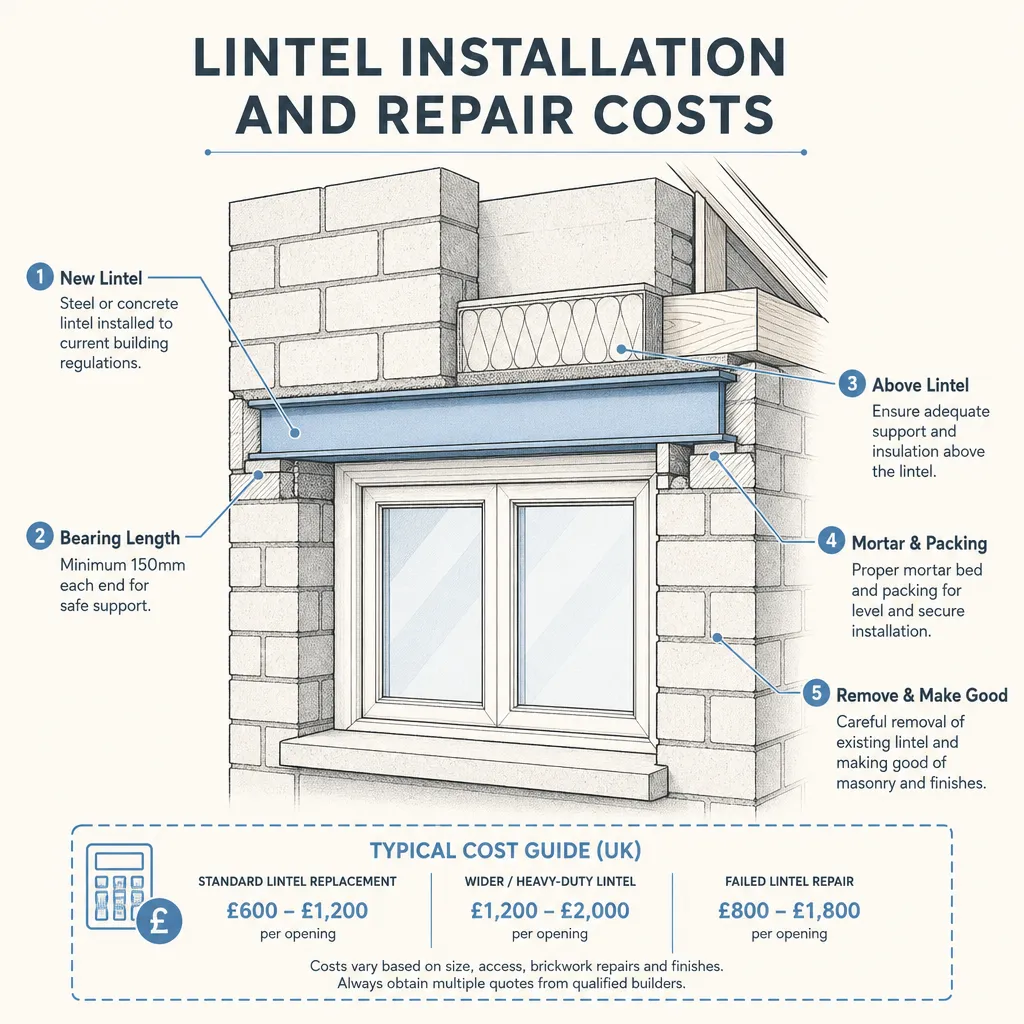
Lintel Installation and Repair Costs
Replacing or installing a lintel in the UK typically costs £400–£1,500 for a standard residential opening, covering supply of a steel lintel and a day's skilled labour.