Lintel Installation and Repair Costs
By Housey · Last reviewed 7th of May 2026
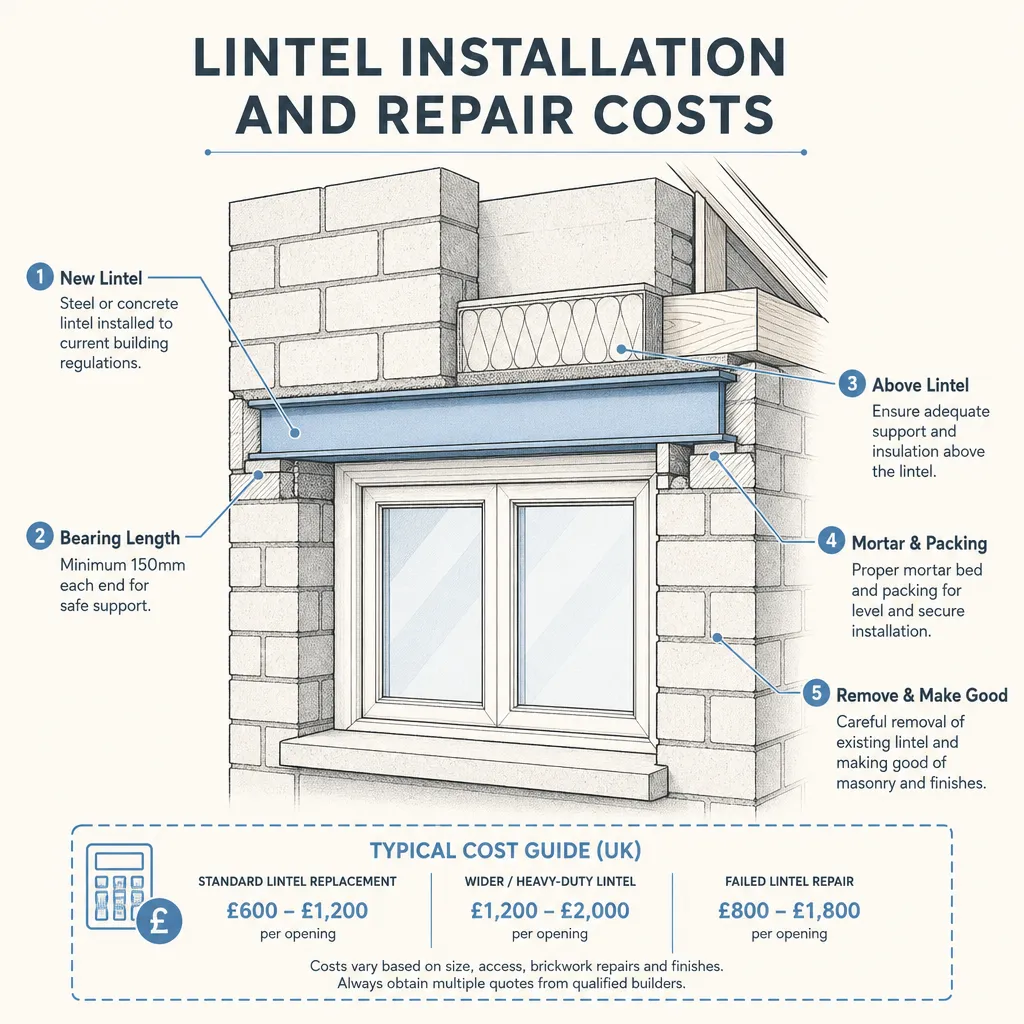
Lintel Installation and Repair Costs
Lintels are one of those structural elements that homeowners rarely think about until something goes wrong. A failed or missing lintel above a door or window opening can cause brick movement, cracked plasterwork, or — in more serious cases — progressive structural damage. Questions about lintel costs typically arise during a property survey, when visible cracking is discovered, or when a homeowner is planning to knock through a wall or enlarge an existing opening.
Key points
- A lintel is a structural beam — steel, concrete, timber, or stone — that carries the load of masonry or structure above an opening such as a door frame, window aperture, or knocked-through wall.
- Steel lintels conforming to BS EN 845-2 are the standard for new openings in modern construction; pre-1980 properties often have concrete or timber lintels that may have deteriorated.
- Creating a new opening in a load-bearing wall or replacing a failed lintel is structural building work governed by Approved Document A (Structure) of the Building Regulations and typically requires building control notification.
- Indicative costs for a standard residential lintel replacement (supply and fit, one opening) range from £400–£1,500; wider or load-bearing openings with temporary propping can significantly exceed this. Indicative UK costs, last reviewed 2026-05-07.
- A RICS survey or structural engineer's report often identifies lintel failure before the homeowner notices visible symptoms, making early inspection the most cost-effective approach.
What is a lintel and why does it matter?
A lintel spans the top of any opening — a door frame, window aperture, or knocked-through wall — and transfers the weight of the material above it (brickwork, blockwork, timber frame) to the jambs on either side. Without a functioning lintel, the masonry above the opening has no support and will begin to sag, crack, or — in severe cases — collapse.
In UK homes built before approximately 1960, lintels were commonly made from:
- Timber: prone to rot, especially above ground-level openings in solid-wall properties where moisture can penetrate.
- Concrete: durable but can spall (surface crumbling and delamination) if the steel reinforcement inside corrodes.
- Stone: found in older or listed properties; may crack under sustained load or differential settlement.
Modern construction uses galvanised pressed-steel lintels — often sold under trade names such as Catnic or IG Lintels — which are lightweight, strong, and resistant to corrosion when correctly specified.
Lintel types compared
Lintel type | Typical setting | Pros | Cons | Approx. supply cost |
|---|---|---|---|---|
Galvanised steel (standard) | New openings, post-1980 builds | Lightweight, strong, readily available | Must be correctly sized for span and load | £20–£120 per unit |
Precast concrete | Pre-1980 residential, garage openings | Durable when intact | Heavy; reinforcement may corrode and cause spalling | £15–£80 per unit |
Timber (structural) | Heritage or listed buildings | Aesthetic, workable | Susceptible to rot and insect damage | £30–£150 per unit |
Steel RSJ / universal beam | Large openings, load-bearing walls | Carries heavy loads over wide spans | Requires lifting equipment and structural design | £100–£600+ supply only |
Supply costs are indicative only; always obtain itemised quotes. Labour, temporary support structures, and making good are additional costs.
How much does lintel installation or replacement cost?
Costs depend on the width of the opening, whether the wall is load-bearing, the depth of masonry to be temporarily supported, access conditions, and whether the work is part of a larger project.
Indicative UK costs, last reviewed 2026-05-07:
- Standard window lintel replacement (up to 1.2 m span, existing opening, non-load-bearing): £400–£800 supply and fit.
- Door opening lintel replacement (up to 1.2 m span, existing opening): £500–£1,000 supply and fit.
- New opening in load-bearing wall (structural propping required, up to 2.4 m span): £1,200–£3,500+, including temporary propping, steel RSJ installation, and making good.
- Structural engineer's assessment and specification: £300–£800 for a residential report; usually required before significant lintel work on a load-bearing wall.
- Building control application: £200–£500 via local authority or approved inspector; required when the work constitutes a material alteration under the Building Regulations.
Quotes vary considerably by region, contractor experience, and site conditions. Always obtain at least three itemised quotes before committing.
Red flags: signs a lintel may be failing
The following signs indicate a lintel is deteriorating and should be inspected by a qualified professional without delay:
- Stepped or diagonal cracks in brickwork or blockwork above or beside a window or door opening — a classic indicator of lintel deflection or failure.
- Sagging or bowing of the masonry or render course directly above an opening.
- Rust staining on or below the lintel, suggesting corroding steel reinforcement within a concrete lintel.
- Cracked or flaking concrete on the underside or face of an existing lintel (spalling).
- Sticking doors or windows below or adjacent to the affected opening, suggesting frame distortion caused by movement above.
- Timber rot or insect damage visible at the ends of timber lintels in older properties, often identified during a damp survey or RICS Level 3 Building Survey.
Do not ignore these signs. A failed lintel that is not addressed early can result in significantly more extensive and expensive structural repairs.
Building regulations and structural requirements
Any work that involves creating a new opening in a load-bearing wall, enlarging an existing opening, or replacing a structural lintel is likely to constitute a material alteration under the Building Regulations (England and Wales). This means:
- Building control notification is required before work starts.
- The structural adequacy of the new lintel must be demonstrated — typically via a structural engineer's calculation or specification.
- The work must be inspected and signed off by a building control body or approved inspector.
In Scotland, equivalent requirements apply under the Building (Scotland) Regulations 2004. In Northern Ireland, the Building Regulations (Northern Ireland) 2012 apply.
Permitted development rights do not remove the need for building regulations compliance on structural work. If you are planning an extension that involves creating a new opening, an experienced extension builder working with a structural engineer will typically manage the building control process as part of the contract.
Important limitations
This article provides general information about lintel costs and the typical regulatory process for UK residential work. It is not a substitute for a structural engineer's assessment or professional advice tailored to your property. Structural adequacy depends on wall type, span, load path, subsoil conditions, property history, and local authority requirements — all of which require site-specific evaluation by a qualified professional. Cost figures are indicative and based on publicly available UK trade guidance as of May 2026; actual costs will vary by region, contractor, and site conditions.
What to ask a qualified professional
Before commissioning lintel work, ask your structural engineer or contractor:
- Is this wall load-bearing, and what loads does the lintel need to carry?
- What lintel type and size do you recommend for this span and load, and why?
- Will temporary propping be required, and how long will it be in place?
- Do you hold professional indemnity insurance, and are you a member of a relevant body (IStructE, ICE, or CABE)?
- Will building control notification and inspection be included in the contract?
- What making-good work is included (plasterwork, repointing, decoration)?
- Can you provide structural calculations for building control submission?
- What warranties or guarantees apply to the completed work?
When to get professional help
Seek professional advice promptly if:
- A RICS survey or building inspection has flagged a lintel as defective or in need of monitoring.
- You can see stepped cracks in brickwork above a window or door that are new or widening.
- A lintel is visibly deflecting or masonry above an opening appears to be sagging.
- You are planning to knock through any internal or external wall and are unsure of its structural role.
For load-bearing work, a structural engineer should assess the opening before any work begins. For wider construction projects where lintel installation is part of an extension or conversion, extension builders experienced in structural alterations can manage the full scope of work including building control.
How Housey can help
Housey can connect you with qualified professionals for structural lintel work. For projects involving load calculations and building control submissions, request quotes from structural engineering specialists. For larger projects — extensions, knock-throughs, or loft conversions — extension builders on the Housey platform can manage structural alterations as part of a full build contract.
Frequently asked questions
Do I need a structural engineer for lintel replacement?
For a like-for-like replacement of a clearly non-load-bearing lintel where the original specification is known, a competent builder may proceed without a structural engineer. However, for any new opening, any load-bearing wall, or any case where the original lintel has failed unexpectedly, a structural engineer's specification provides assurance and satisfies building control requirements.
How long does lintel installation take?
A standard single-opening lintel replacement typically takes one to two days, including temporary propping, masonry removal, lintel installation, and initial making good. Wider openings requiring RSJ installation may take two to four days. Plasterwork and decoration are separate and usually require additional drying and curing time.
Does lintel work require planning permission?
Replacing a like-for-like lintel does not normally require planning permission. However, enlarging a window or door opening — thereby changing the external appearance of the property — may require consent in a conservation area or for a listed building. Building regulations approval is separate from planning permission and is required for most structural lintel work regardless of planning status.
Can I claim on buildings insurance for a failed lintel?
It depends on your policy and the cause of failure. Sudden structural damage caused by a specific event such as subsidence or impact may be covered; gradual deterioration or maintenance-related failure is typically excluded. Check your policy wording and contact your insurer before arranging repairs, as carrying out work before a claim assessment can affect settlement.
Sources and further reading
- Approved Document A: Structure — GOV.UK, Building Regulations guidance on structural requirements including openings in walls
- Building Regulations: when you need approval — GOV.UK
- Institution of Structural Engineers (IStructE) — professional body for structural engineers in the UK; find a registered engineer
- RICS Home Surveys guidance — RICS, on survey standards that identify structural defects including lintel failure
- Historic England: Practical Building Conservation — guidance on repairs to historic masonry including structural elements
Useful next reads
 Improvement & Build
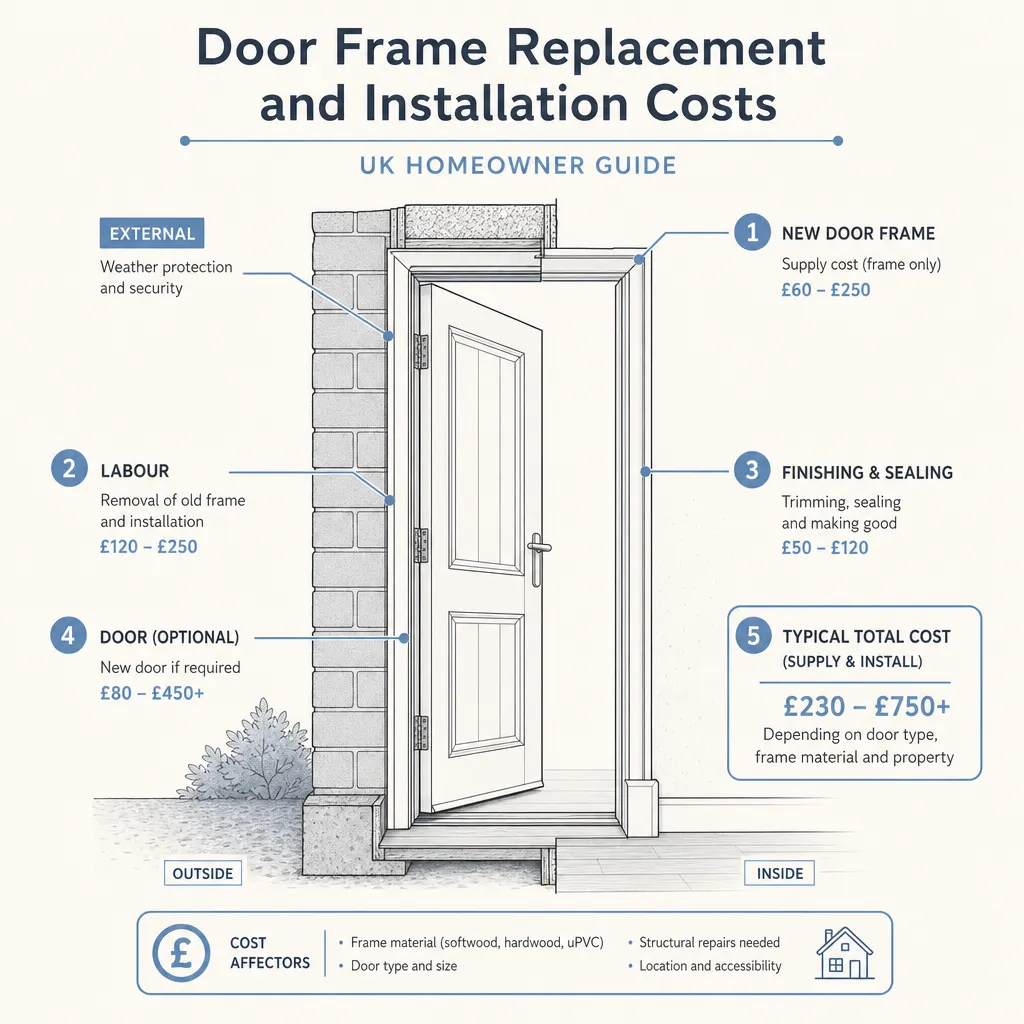
Door Frame Replacement and Installation Costs
Replacing an internal door lining in the UK typically costs £100–£300 including labour; an external door frame costs £300–£800 for softwood or UPVC and £600–£1,500 or more for hardwood or composite.
 Improvement & Build
Laundry Room Renovation and Fitting Costs
A basic UK laundry room fit-out typically costs £2,000–£6,000 where plumbing and electrics are already in place, rising to £8,000–£15,000 or more when structural work, new drainage connections, or new electrical circuits are needed.
 Improvement & Build
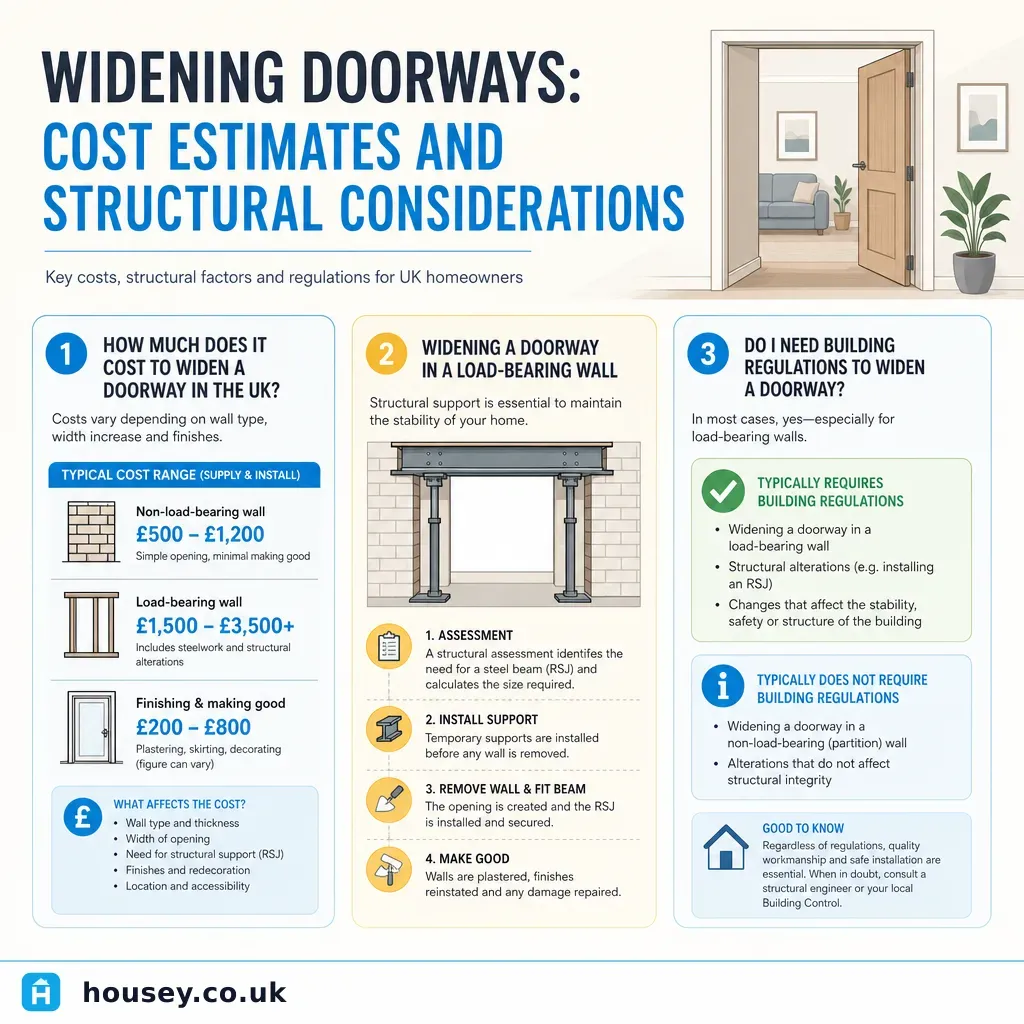
Widening Doorways: Cost Estimates and Structural Considerations
A doorway in a non-load-bearing partition can usually be widened for £500–£1,500.
 Improvement & Build
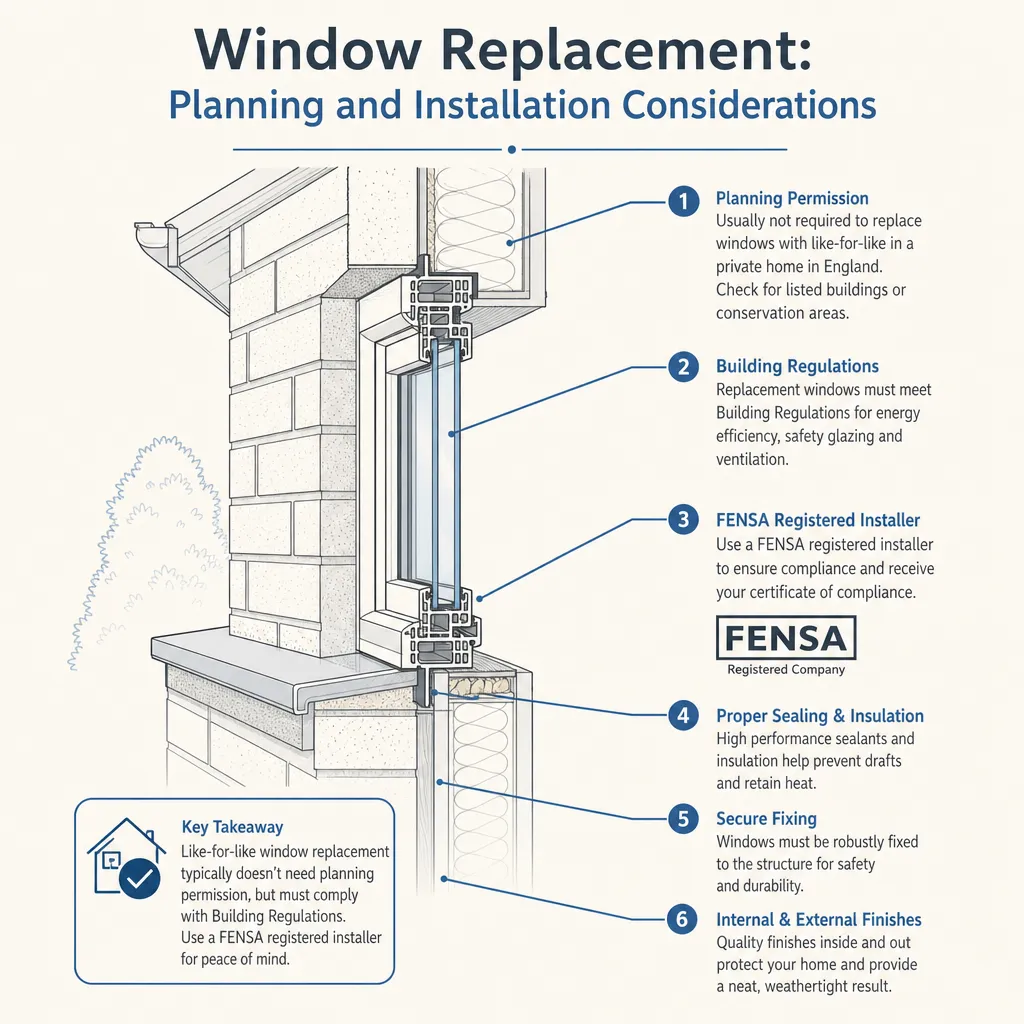
Window Replacement: Planning and Installation Considerations
Most window replacements in England fall under permitted development and do not need planning permission, though listed buildings, flats, and conservation areas are exceptions.
 Improvement & Build
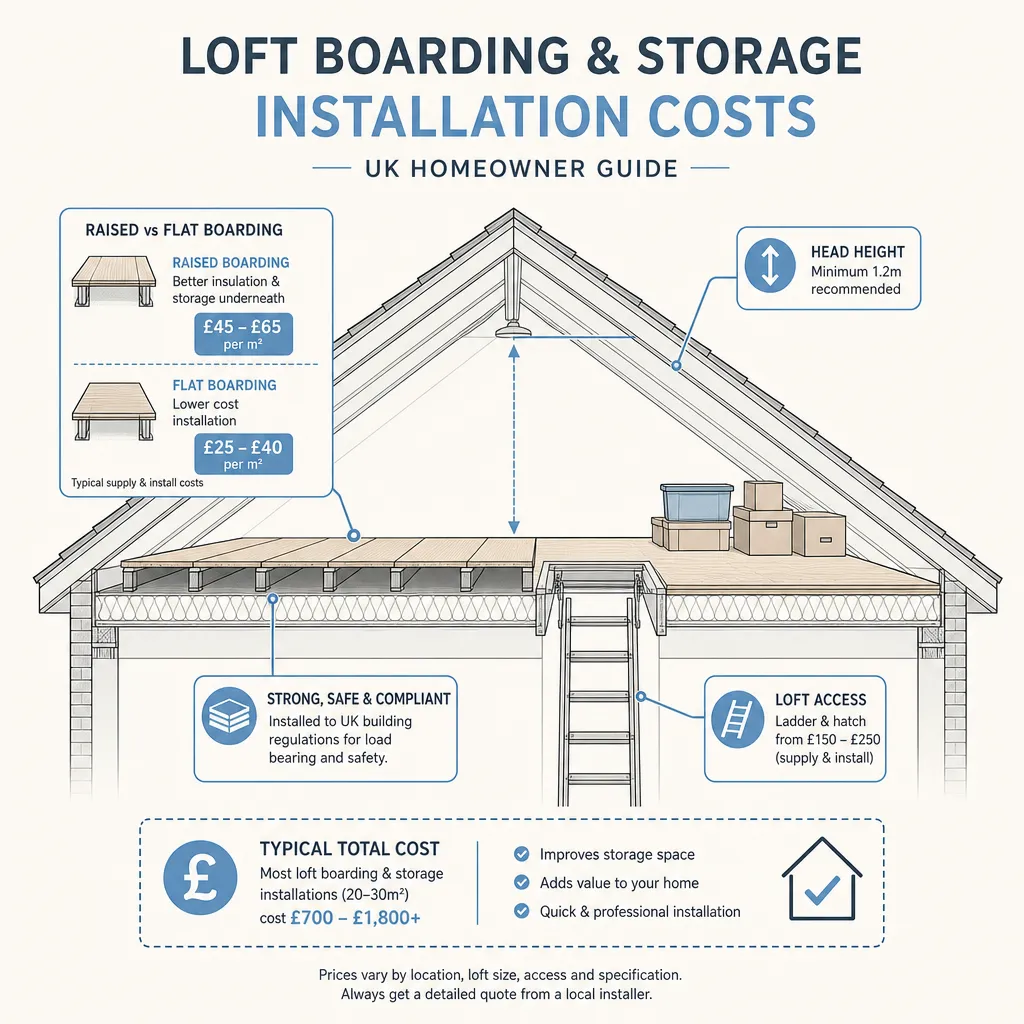
Loft Boarding and Storage Installation Costs
Basic loft boarding for an average semi-detached home costs £500–£1,500; a raised system that preserves insulation runs £800–£2,500.