Door Installation Costs and Fitting Expenses
By Housey · Last reviewed 6th of May 2026
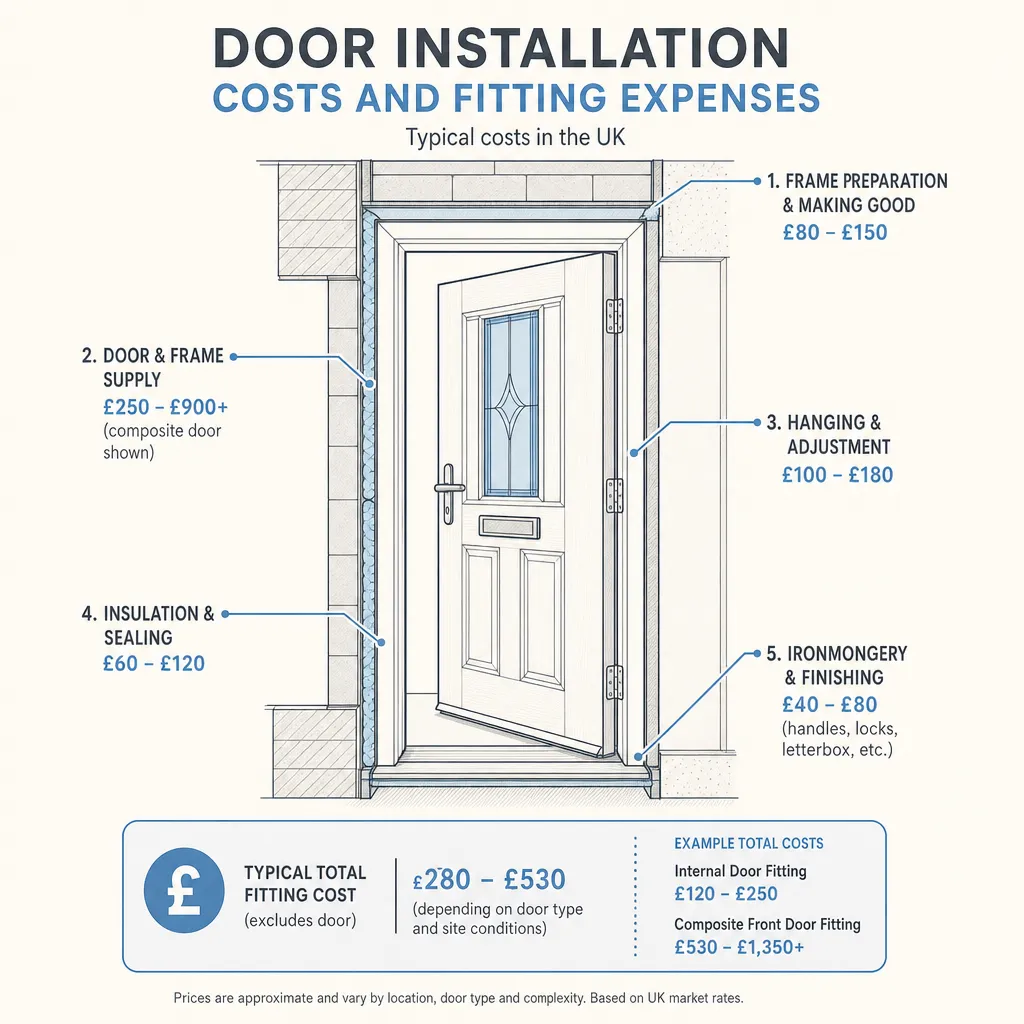
Door Installation Costs and Fitting Expenses
Whether you are replacing a weathered front door, fitting a new internal door after a renovation, or upgrading to a composite door for better security and insulation, the total cost depends on a range of factors that are easy to misjudge without guidance. Door installation sits at the intersection of practical home improvement and regulatory compliance — external doors in particular must meet Building Regulations requirements that affect both your choice of installer and the products you can use.
Key points
- External door replacements involving a glazed frame must be registered with a competent person scheme such as FENSA or CERTASS, or inspected by local building control under Building Regulations.
- Building Regulations Part Q (Security) requires that external doorsets in new dwellings and replacements meet a minimum security standard, typically satisfied by PAS 24:2022 certification.
- Approved Document L (2021) sets a minimum whole-doorset U-value of 1.4 W/m²K for replacement external doors in England.
- Indicative UK supply-and-fit costs range from around £400–£900 for a UPVC external door to £800–£2,000+ for a composite door (last reviewed 2026-05-06; costs vary by region, size, and specification).
- Fitting a single internal door typically costs £50–£150 in labour alone, rising considerably if the frame or lining also needs replacement.
What affects the cost of door installation?
Several independent variables drive the final price. A new internal flush door hung into an existing frame in good condition is a straightforward job; replacing an external doorset with new brickwork reveals, a new frame, and decorative glazing involves significantly more work and material.
Key cost drivers:
- Door type and material — UPVC, composite, solid timber, engineered timber, or aluminium
- External vs internal — external doors require compliance with Part L (thermal performance) and Part Q (security)
- Door size and configuration — standard sizes cost less than bespoke; French doors and bi-fold doors cost considerably more than a single leaf
- Frame condition — reusing a sound existing frame lowers cost; a rotten or damaged frame must be replaced
- Ironmongery and hardware — locks, handles, hinges, and letterboxes can add £50–£300 or more
- Location and access — first-floor flats, narrow passageways, or properties requiring scaffold affect labour time
- Decoration — painting or staining after installation may be included or quoted separately
Indicative cost ranges by door type
Indicative UK costs, last reviewed 2026-05-06. Costs are supply-and-fit estimates for a standard single door and vary by region, specification, and installer. Always obtain at least three quotes.
Door type | Typical installed cost | Best for | Key consideration |
|---|---|---|---|
Internal hollow-core (new frame) | £150–£350 | Budget-conscious internal refits | Short lifespan; poor soundproofing |
Internal solid-core | £200–£500 | Fire doors, noisy households | Heavier — check hinge capacity |
UPVC external single door | £400–£900 | Low maintenance, budget | Less thermally efficient than composite |
Composite external door | £800–£2,000+ | Security, insulation, kerb appeal | Higher upfront; lower long-term maintenance |
Solid timber external door | £700–£1,800+ | Period properties, listed buildings | Requires periodic painting or staining |
Aluminium bi-fold (2 panels) | £2,500–£5,000+ | Garden access, light, open-plan living | Structural opening alteration may be needed |
French doors (UPVC or composite) | £1,200–£3,000+ | Rear garden access | Requires a sufficient structural lintel |
Building Regulations and compliance
External door installations are not simply a like-for-like swap — they carry regulatory obligations that affect which products and installers you can use.
Part L (Conservation of Fuel and Power) sets minimum thermal performance values for replacement external doors. Under Approved Document L (2021), door units must achieve a minimum U-value of 1.4 W/m²K for the whole doorset. Your installer should confirm the product meets this and provide documentation.
Part Q (Security) requires that external doors in new dwellings and replacements where the full doorset is being changed meet a minimum security standard. Products certified to PAS 24:2022 satisfy this requirement. Your installer should supply a certificate or specification confirming compliance.
Competent person schemes: If the door contains glazing — including glazed side panels in the frame — the installation must be registered under a competent person scheme such as FENSA or CERTASS, or notified to local building control. Your installer should handle this registration and issue you a compliance certificate. Keep this certificate safely, as you will need it when selling the property.
Listed buildings and conservation areas: If your property is listed or in a conservation area, you may need listed building consent or local authority approval before replacing external doors. Check with your local planning authority before ordering.
Which door do you need? A decision guide
- Replacing an internal door in an existing frame? Standard carpentry job; no building control notification required. Choose solid-core for better sound insulation.
- Replacing an external door with no structural changes? Part L and Part Q apply; use a FENSA-registered installer or notify building control.
- Replacing an external door involving changes to the structural opening? A full Building Regulations application is required; a structural engineer may need to specify the lintel.
- Property listed or in a conservation area? Contact your local planning authority before ordering; the original door style may need to be retained.
- Installing fire doors in a flat or HMO? Part B (Fire Safety) applies; FD30 or FD60 ratings are required and installation must be verified by a competent person.
- Visible settlement or cracking around the existing frame? Ask a chartered building surveyor or structural engineer to inspect before ordering new doors.
What to ask before accepting a quote
- Is VAT included in the quoted price?
- Is the door certified to PAS 24:2022 (for external doors)?
- Does the installer hold FENSA or CERTASS registration, or will they notify building control?
- What frame condition is the quote based on — new frame, or reuse of the existing frame?
- What hardware (locks, handles, hinges, and letterbox) is included?
- Who is responsible for making good any decoration or plastering after installation?
- What is the door manufacturer's warranty, and does the installer's labour carry a separate guarantee?
- Is disposal of the old door included in the price?
Red flags to watch for
- A quote that makes no mention of building control compliance for an external door with glazing.
- Pressure to proceed without a written specification of the product being supplied.
- Unusually low quotes that do not itemise the door leaf, frame, hardware, and labour separately.
- An installer who cannot provide FENSA registration details or refuses to supply a compliance certificate after completion.
- No mention of U-value or PAS 24 certification when quoting for an external doorset replacement.
When to get professional help
Most door installations are straightforward for a qualified joiner or window-and-door specialist. However, seek additional professional input in these situations:
- The existing opening shows signs of settlement or cracking around the frame — ask a structural engineer or chartered building surveyor to inspect before ordering.
- You are installing bi-fold or sliding doors requiring a new or enlarged structural opening — a structural engineer must specify the lintel and provide structural calculations.
- The property is listed or in a conservation area — consult your local planning authority and, where required, a heritage architect.
- Fire doors are being installed in an HMO or converted building — ensure specification and installation are verified by a competent person familiar with Part B requirements.
How Housey can help
If you are planning a door replacement or new installation, Housey can connect you with vetted window and door installers who can provide itemised quotes for your specific property and door type.
Frequently asked questions
Do I need building regulations for a replacement front door?
If the replacement door contains glazing — including glazed side panels in the frame — the installation must comply with Building Regulations Part L and Part Q, and be registered with a competent person scheme such as FENSA, or notified to local building control. A solid external door swap still needs to meet Part L thermal standards. Your installer should handle compliance and issue a certificate.
How long does door fitting take?
A single internal door hung into an existing frame typically takes 1–3 hours. An external doorset replacement, including new frame and hardware, usually takes a half to a full day. Bi-fold or French door installations involving new or enlarged structural openings may take 2–3 days depending on complexity and whether structural work is required.
Can I fit a door myself?
Internal doors are within DIY reach for a competent carpenter. External doors involving glazed frames require FENSA registration or building control notification, which DIY installers cannot easily achieve. For fire doors, security doors, or anything requiring structural work, use a qualified professional who can provide the necessary compliance certificate.
Will a new front door add value to my home?
A well-chosen composite front door is widely regarded as a high-return home improvement, improving energy performance, security, and kerb appeal. Estate agents often note that a visually appealing, secure front door positively influences buyer perception, though no specific value uplift can be guaranteed and outcomes vary by property and market.
What is the difference between a door leaf and a doorset?
A door leaf is the moving panel alone. A doorset includes the leaf, frame, threshold, and all integrated hardware such as hinges, lock, and seals. For external door replacements, you will almost always replace the full doorset to maintain weatherproofing, thermal performance, and the security standard required under Part Q.
Sources and further reading
- Approved Document L (2021): Conservation of Fuel and Power — GOV.UK / MHCLG
- Approved Document Q: Security — GOV.UK / MHCLG
- FENSA: Competent Person Scheme for Windows and Doors — FENSA
- Planning Portal: Home Improvements — Planning Portal
Useful next reads
 Improvement & Build
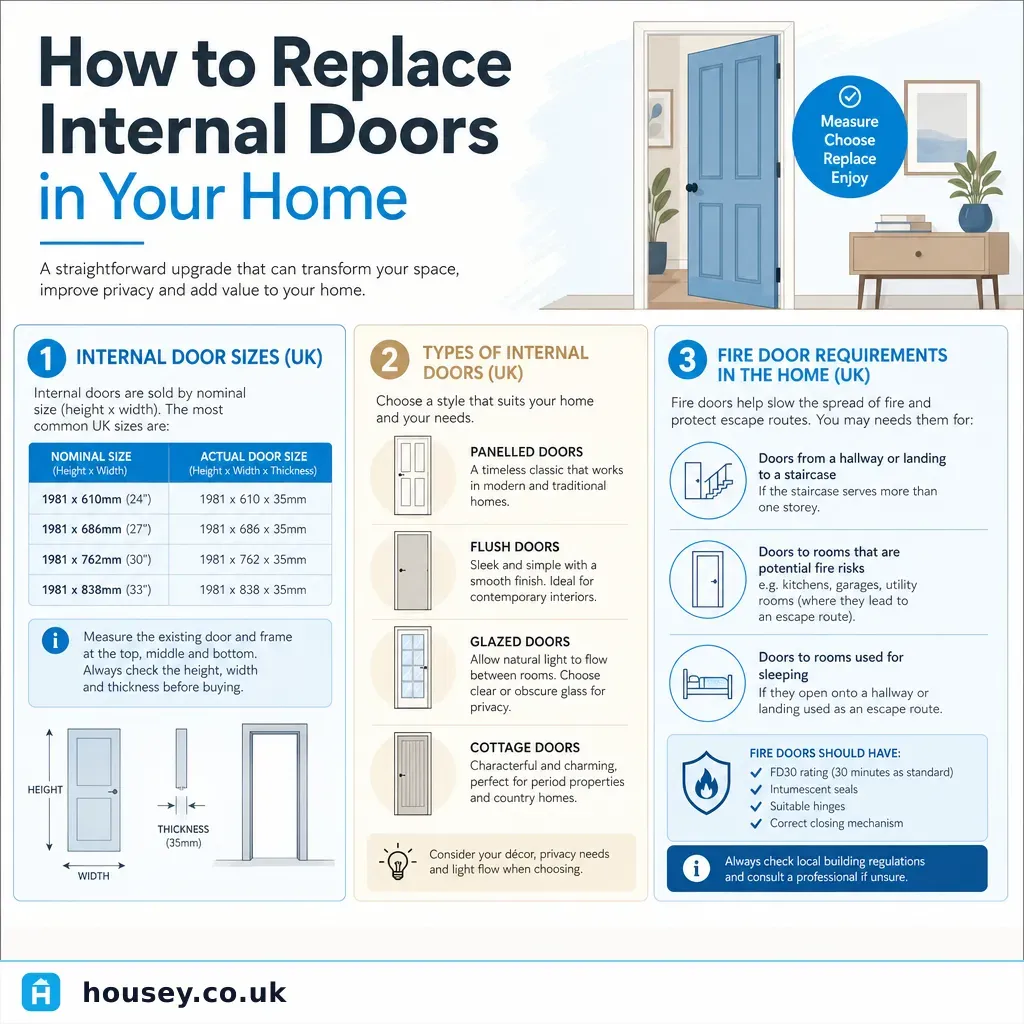
How to Replace Internal Doors in Your Home
Replacing internal doors is a straightforward home improvement that most competent DIYers or a joiner can complete.
 Improvement & Build
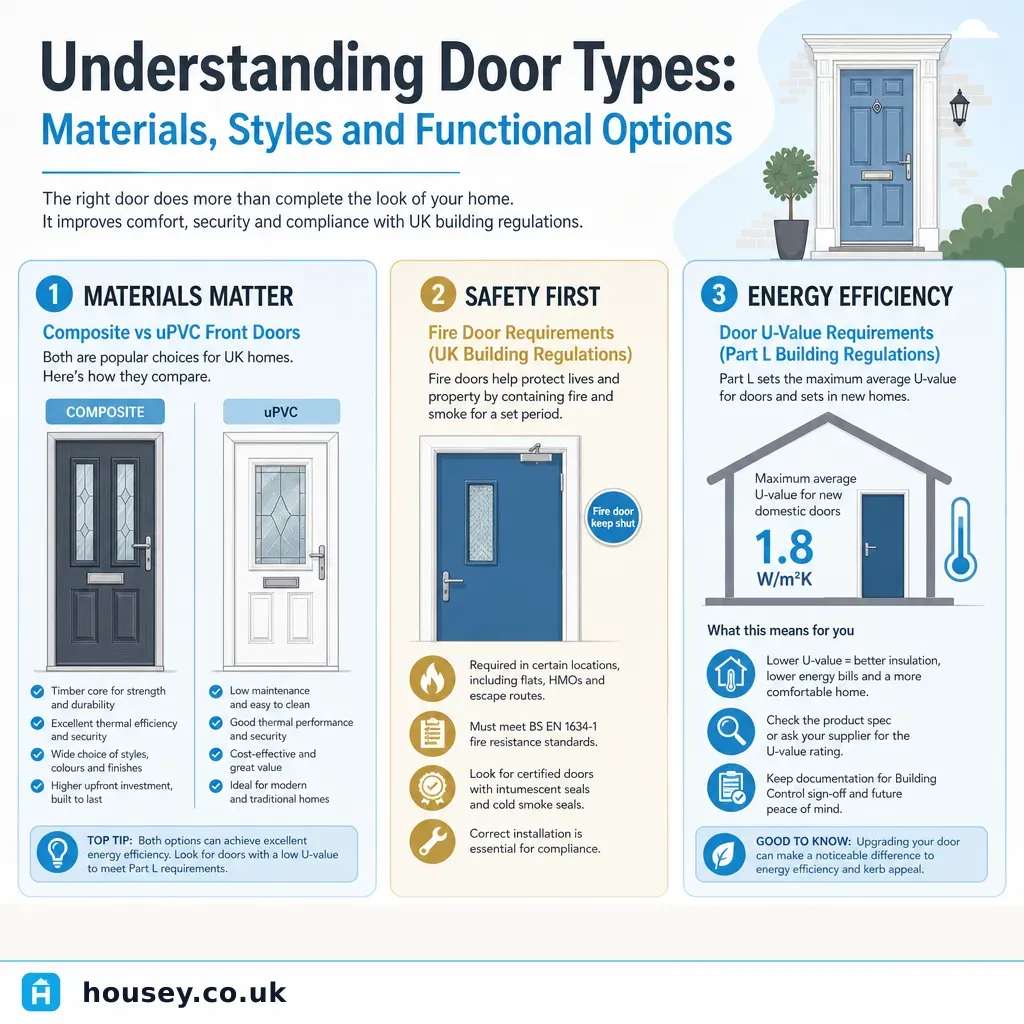
Understanding Door Types: Materials, Styles and Functional Options
Doors are available in timber, uPVC, aluminium, steel, and composite materials, each suited to different budgets, locations, and performance requirements.
 Improvement & Build
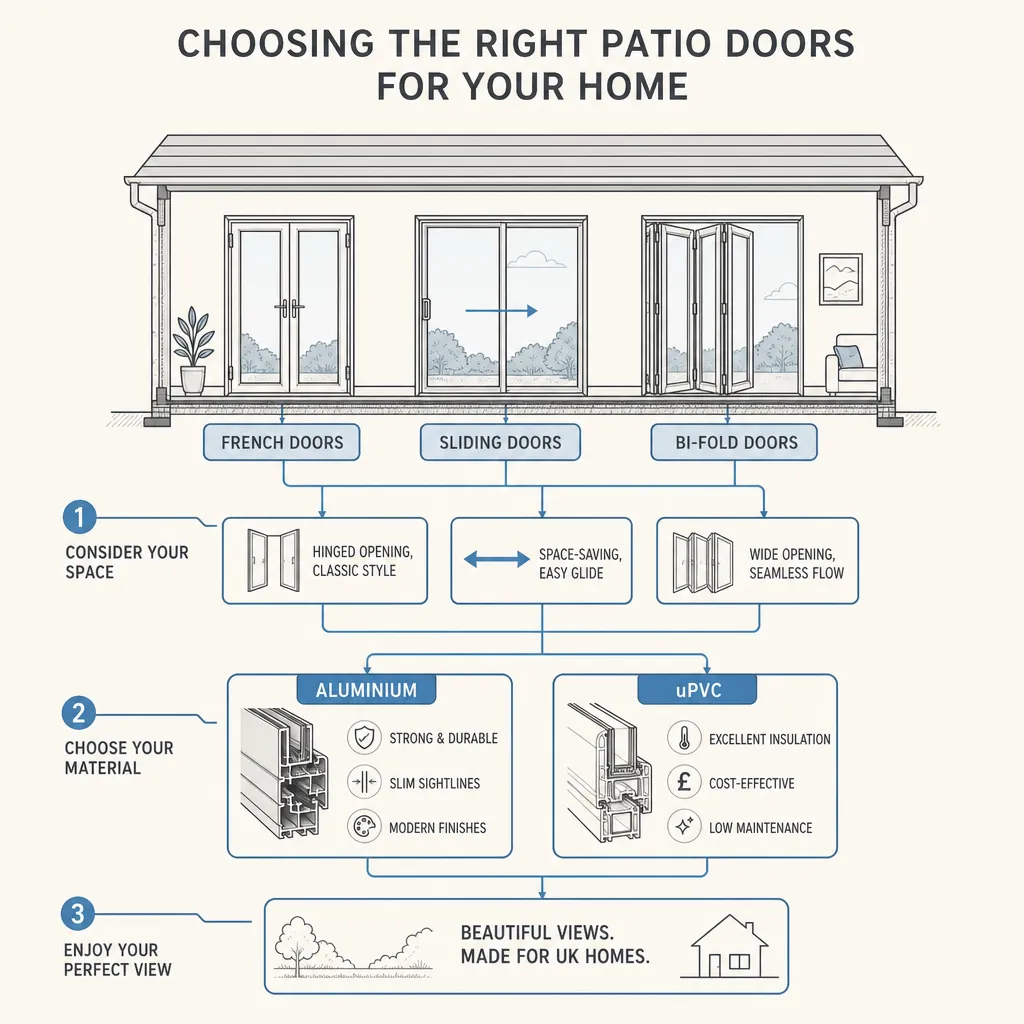
Choosing the Right Patio Doors for Your Home
The right patio doors depend on your opening width, available swing space, home style, and budget.
 Improvement & Build
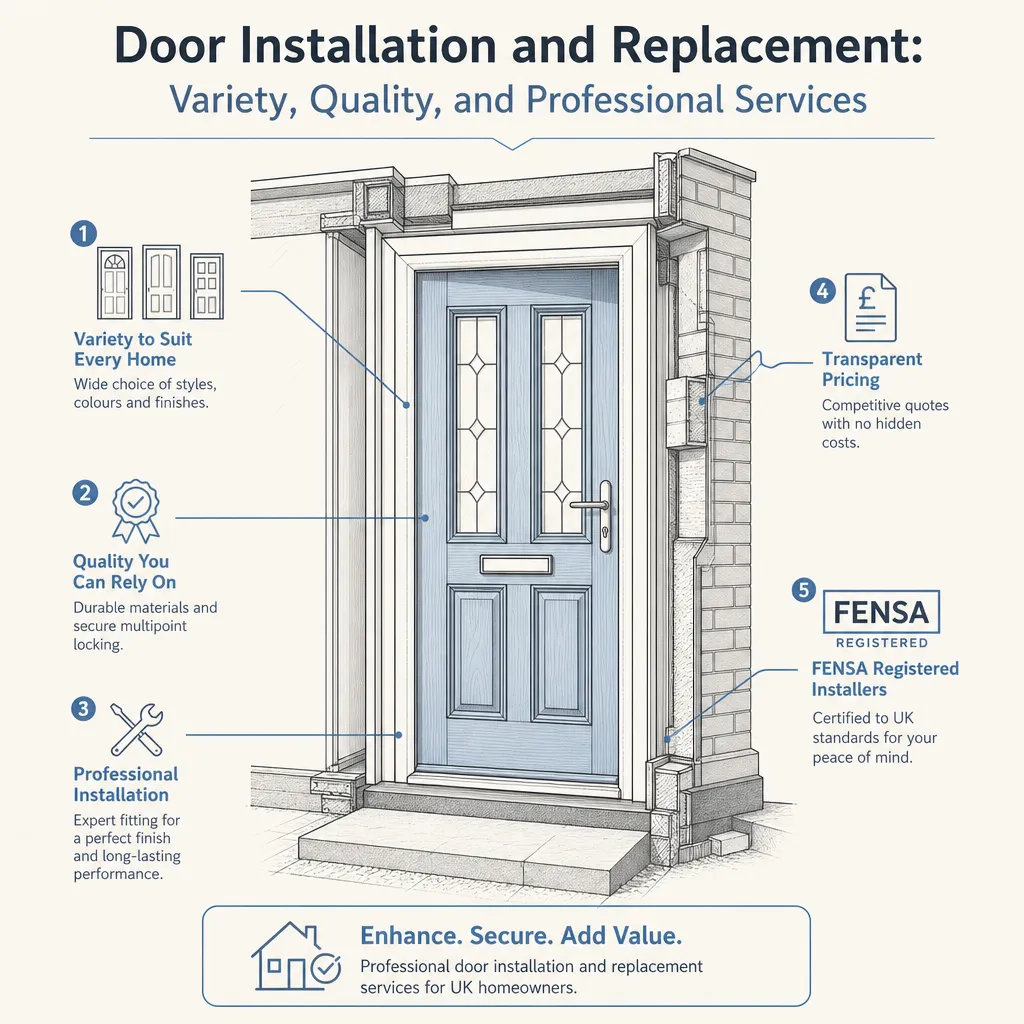
Door Installation and Replacement: Variety, Quality, and Professional Services
Door installation in UK homes ranges from straightforward interior hanging, which requires few regulations, to external replacements subject to Building Regulations Part L.
 Improvement & Build
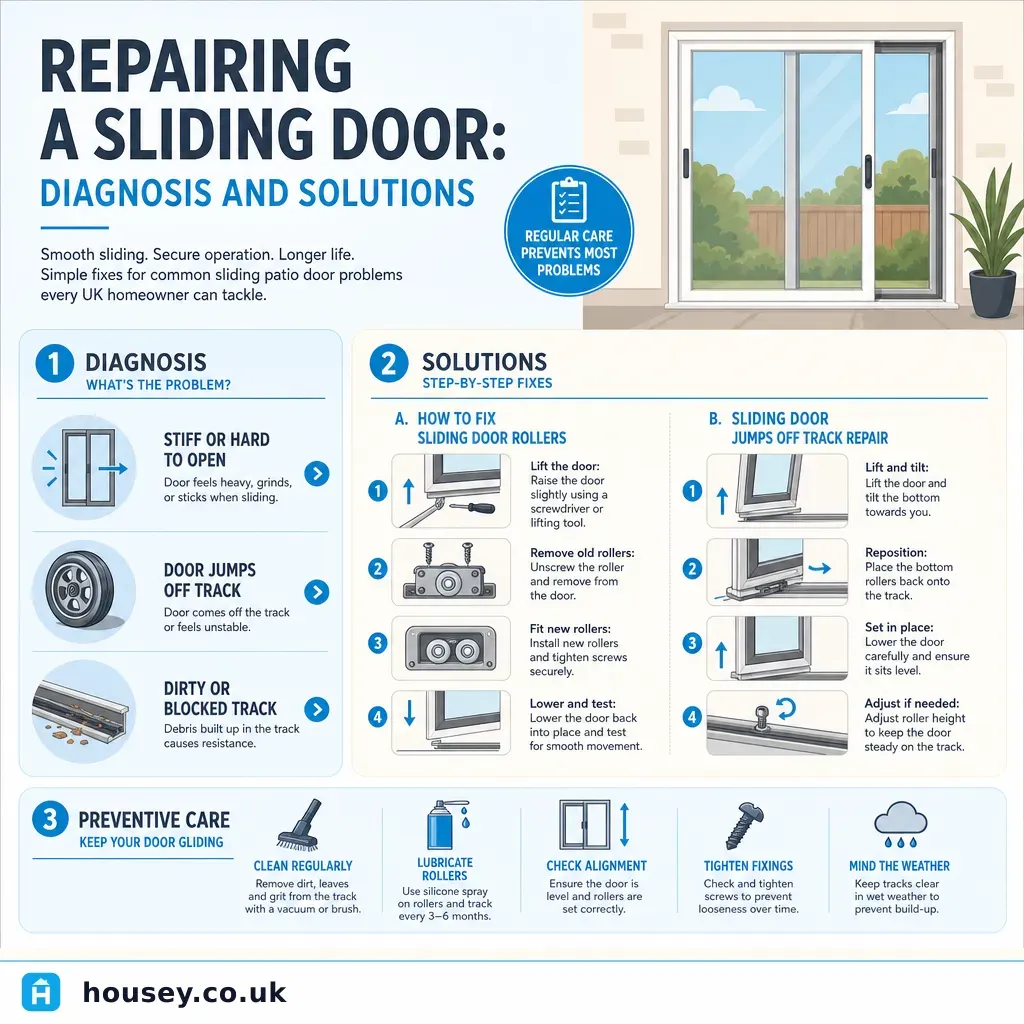
Repairing a Sliding Door: Diagnosis and Solutions
Most sliding door problems — stiffness, jumping off track, or draughts — are caused by dirty tracks, worn rollers, or misaligned guides.