Patio Door Types and Styles for Home Extensions
By Housey · Last reviewed 30th of May 2026
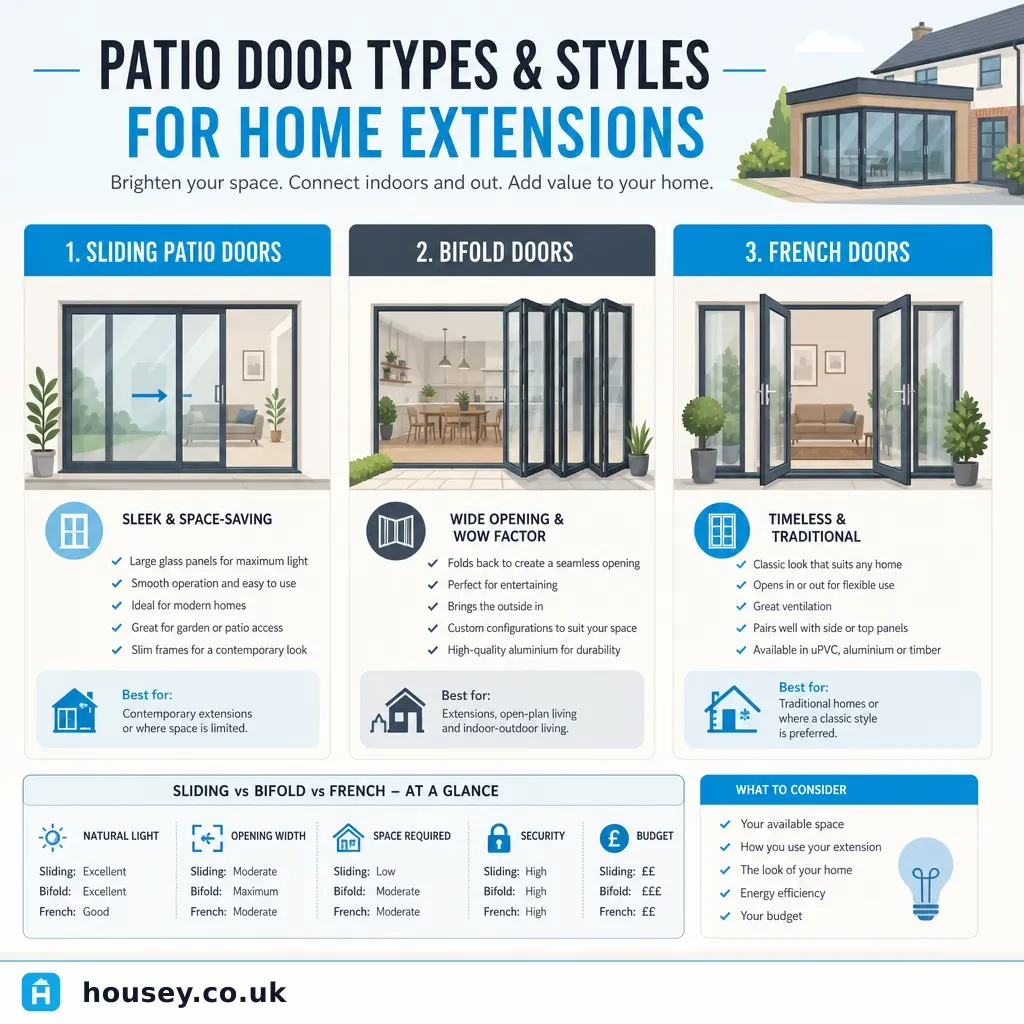
Patio Door Types and Styles for Home Extensions
Choosing a patio door for a rear extension or garden-facing elevation is one of the most visible design decisions in any home improvement project. The right choice affects natural light, ventilation, garden access, thermal performance, and — depending on your property and local planning rules — whether any consent is needed before installation begins. With several distinct systems on the market, understanding the practical differences before committing to a specification will save both cost and frustration.
Key points
- Bifold and sliding doors are the two most popular choices for UK extensions, but French doors, lift-and-slide systems, and pivot doors each suit different opening widths and design contexts.
- All new external doors fitted as part of a UK extension must comply with Building Regulations Part L (thermal performance, whole-door U-value of 1.4 W/m²K or better), Part N (safety glazing in critical locations), and Part Q (security, including multi-point locking systems tested to PAS 24).
- In conservation areas and listed buildings, the external appearance of new doors is subject to planning scrutiny — uPVC and certain aluminium finishes are often not acceptable.
- Bifold doors require clear floor space beside the opening for stacked panels; this matters in smaller rooms or where decking, planters, or furniture are close to the door line.
- The British Fenestration Rating Council (BFRC) window and door energy rating scheme provides an independent benchmark for comparing the thermal performance of different products.
The main patio door types compared
Indicative UK costs, last reviewed 2026-05-30.
Door type | Best for | Not ideal for | Typical frame materials | Approximate supply-and-fit cost |
|---|---|---|---|---|
Sliding patio doors | Openings of 1.5–3.6 m, contemporary style, lower budgets | Wide openings needing full clear access; traditional aesthetics | uPVC, aluminium, timber | £1,000–£3,500 |
Bifold doors | Openings of 2.4–6 m+, maximising garden connection, open-plan living | Tight rooms with no stack-back space; uneven thresholds | Aluminium, timber | £2,500–£8,000+ |
French doors | Period properties, conservation areas, openings under 2 m | Wide openings requiring full unobstructed access | Timber, aluminium, uPVC | £1,200–£3,500 |
Lift-and-slide | Very large glazed areas, high thermal specification, luxury projects | Tight budgets; installations without specialist setting-out | Aluminium, timber-aluminium | £4,000–£12,000+ |
Pivot doors | Statement contemporary entrances, architect-designed projects | Openings requiring full clear width; narrow adjacent spaces | Aluminium, steel | £3,000–£8,000 |
Costs vary significantly by size, specification, and region. Always obtain at least three written, like-for-like quotes.
Sliding patio doors
Sliding doors operate on a track system with one or more panels sliding past a fixed panel. They are the most affordable option for medium-width openings and suit contemporary rear extensions particularly well.
Advantages: the sliding panel parks behind the fixed one, so no clearance space is lost to the room interior; modern aluminium sliding doors with thermally broken frames offer good thermal performance; flush-track threshold designs are available for level access.
Limitations: the maximum unobstructed opening is approximately half the total door width in a standard two-panel system; wider openings need three or four panels, which reduces the clear gap proportionally; older uPVC sliding tracks can suffer wear over time.
Bifold doors
Bifold doors fold and stack to one or both sides, creating a very wide opening and a strong visual connection between inside and outside. They became a defining feature of many UK kitchen extension projects during the 2000s and remain popular where opening width is the priority.
Advantages: maximum clear opening for a given wall width; a wide range of configurations including an integrated traffic door for everyday use without opening the full set; suitable for openings up to 6 m or more with appropriate structural support.
Limitations: stacked panels need clearance beside the opening — typically 300–500 mm per leaf depending on the frame system; threshold design is critical for drainage and accessibility; lower-specification systems can develop draught issues at fold joints over time.
Frame choice: aluminium is the most common material for bifolds in UK extensions — slim profiles, structural strength, and a wide range of RAL powder-coat colours. Timber bifolds are available for conservation or traditional settings but require more maintenance and are less common for wide spans.
French doors
French doors — a pair of outward- or inward-opening hinged leaves — remain the most appropriate choice for period properties, conservation areas, and smaller openings. They are also the lowest-cost option for a standard double-door opening.
Advantages: wide range of timber styles compatible with conservation area requirements; lower cost than bifold or sliding for a comparable-width opening; straightforward installation with no track system or stacking space requirements.
Limitations: the open leaves obstruct adjacent decking or furniture when open; a standard set typically covers a 1.2–2.0 m opening; not suited to the wide, unobstructed access an open-plan kitchen-diner extension often calls for.
Which patio door should you choose?
- Choose sliding doors if your opening is 1.5–3.6 m wide, you prefer a contemporary look, and you do not need full-width unobstructed access.
- Choose bifold doors if your opening is wider than 2.4 m, maximising the connection to the garden is the primary aim, and your budget allows for a quality aluminium system.
- Choose French doors if your property is a period home or in a conservation area, the opening is under 2 m, or you want the lowest installation cost for a traditional double-door finish.
- Choose lift-and-slide if you are specifying a very large glazed area and require maximum thermal performance — for example, in a near-Passivhaus extension or a high-specification self-build.
- Ask a conservation officer or heritage architect before committing to any door type if your property is listed or in a conservation area. Acceptable materials and finishes vary significantly by area and by individual property history.
Building regulations and planning
Any new or replacement external door fitted to a UK residential extension must comply with:
- Part L (energy efficiency): whole-door unit U-value of 1.4 W/m²K or better in England.
- Part N (safety glazing): all glazing in critical locations — within 300 mm of a door closing edge, within 800 mm of floor level, and within door leaves — must be toughened or laminated safety glass.
- Part Q (security): all externally accessible doors must meet the security standard PAS 24 or equivalent, requiring multi-point locking, tested glazing, and secure framing.
If the patio door forms part of a new extension, Building Regulations compliance for the whole project is typically handled through a single building control application. Creating a new opening in an existing structural wall also requires lintel design approval.
Planning permission: most rear extensions with patio doors are permitted development, but conservation areas, listed buildings, and Article 4 Direction areas restrict or remove this right. Always check with your local planning authority (LPA) before ordering materials.
What to ask before accepting a quote
- What is the specified U-value of the complete door unit, and does it meet Building Regulations Part L?
- Is the glazing independently certified to Parts N and Q? Will you provide written documentation?
- Does the quote include the lintel (if required), threshold, and making good to surrounding walls and floor?
- What warranties apply to the frame, glass unit, hardware, and installation labour?
- Who will carry out the installation — directly employed fitters or a subcontractor?
- Is VAT included in the price?
- How will the opening be protected from weather during installation?
- What building control documentation or compliance certificate will I receive on completion?
When to get professional help
- Structural opening: if the new door opening requires removal or modification of a structural wall or load-bearing lintel, a structural engineer should design the replacement beam before work begins.
- Conservation area or listed building: a planning consultant or conservation architect can advise on acceptable specifications before you approach your LPA — some areas accept slim aluminium systems, others insist on timber.
- Large spans: bifold or lift-and-slide systems wider than approximately 4 m usually require structural engineering input for the head beam and jamb posts.
- Threshold and drainage: if the proposed threshold is at or near external ground level, a builder or surveyor should advise on DPC continuity and drainage to prevent damp ingress.
How Housey can help
Housey connects homeowners with experienced window and door installers across the UK who can quote on sliding, bifold, French, and other patio door systems. Describe your opening width, property type, and any local planning constraints to receive comparable written quotes from installers familiar with your area and Building Regulations requirements.
Frequently asked questions
Do bifold doors need planning permission?
In most cases, no. Installing bifold doors as part of a rear extension is usually permitted development. However, in conservation areas, listed buildings, and Article 4 Direction areas, planning consent may be required for the doors themselves — particularly if materials or appearance differ from the existing property. Always confirm with your local planning authority before ordering.
What is the most energy-efficient patio door type?
Lift-and-slide systems with thermally broken aluminium frames and triple glazing can achieve whole-unit U-values below 0.8 W/m²K. Quality aluminium bifold and sliding systems with double glazing typically achieve 1.2–1.4 W/m²K — compliant with current Building Regulations. The BFRC energy rating label provides a useful independent benchmark when comparing products.
How wide can bifold doors be?
Residential aluminium bifold systems can span up to approximately 7–8 m in practice, though wide spans require substantial structural support — typically a steel or glulam beam across the full opening. Most domestic bifold installations are in the 2.4–5 m range, where standard head beams are sufficient.
Can I install a patio door myself?
Physically yes, but the work must still comply with Building Regulations Parts L, N, and Q. Without a registered installer self-certifying, you must submit the work to local authority building control for inspection and approval. For most homeowners, using a FENSA- or CERTASS-registered installer is the more straightforward compliance route.
Sources and further reading
Useful next reads
 Improvement & Build
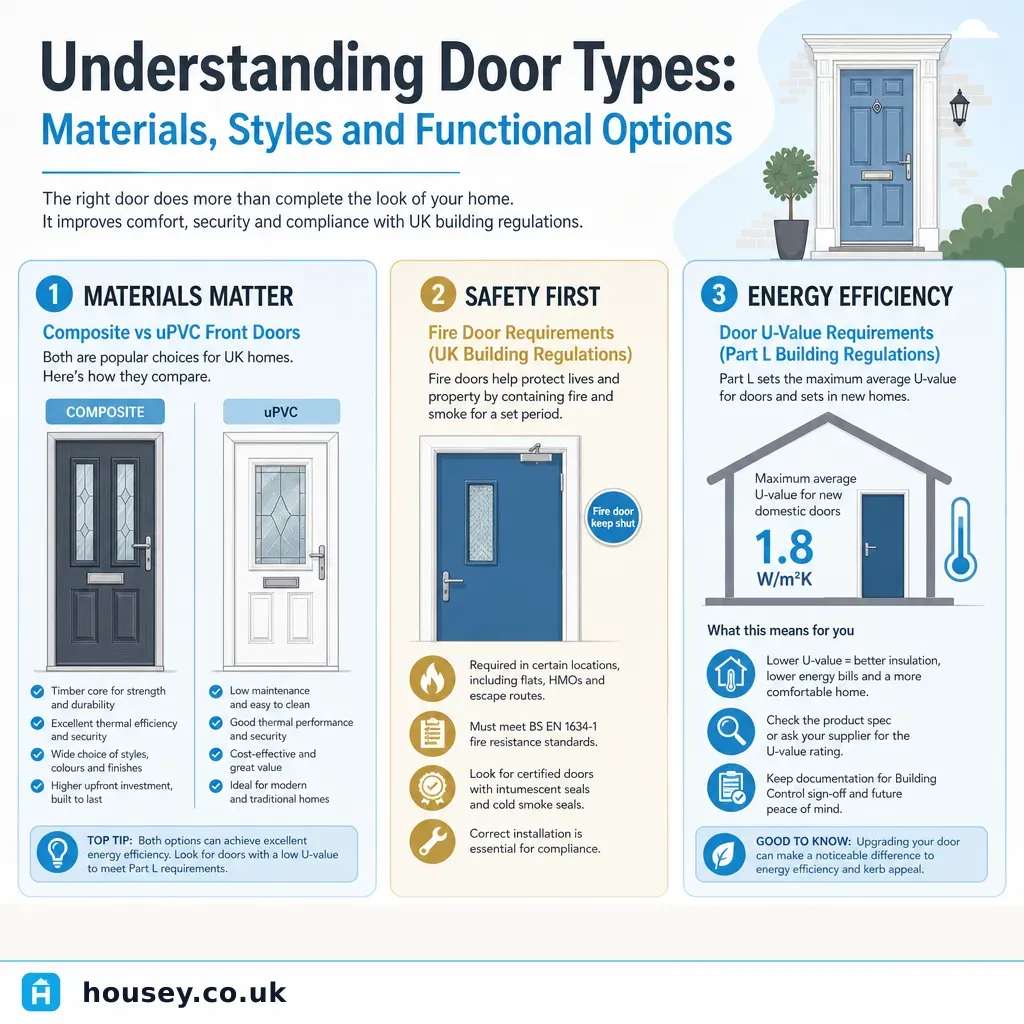
Understanding Door Types: Materials, Styles and Functional Options
Doors are available in timber, uPVC, aluminium, steel, and composite materials, each suited to different budgets, locations, and performance requirements.
 Improvement & Build
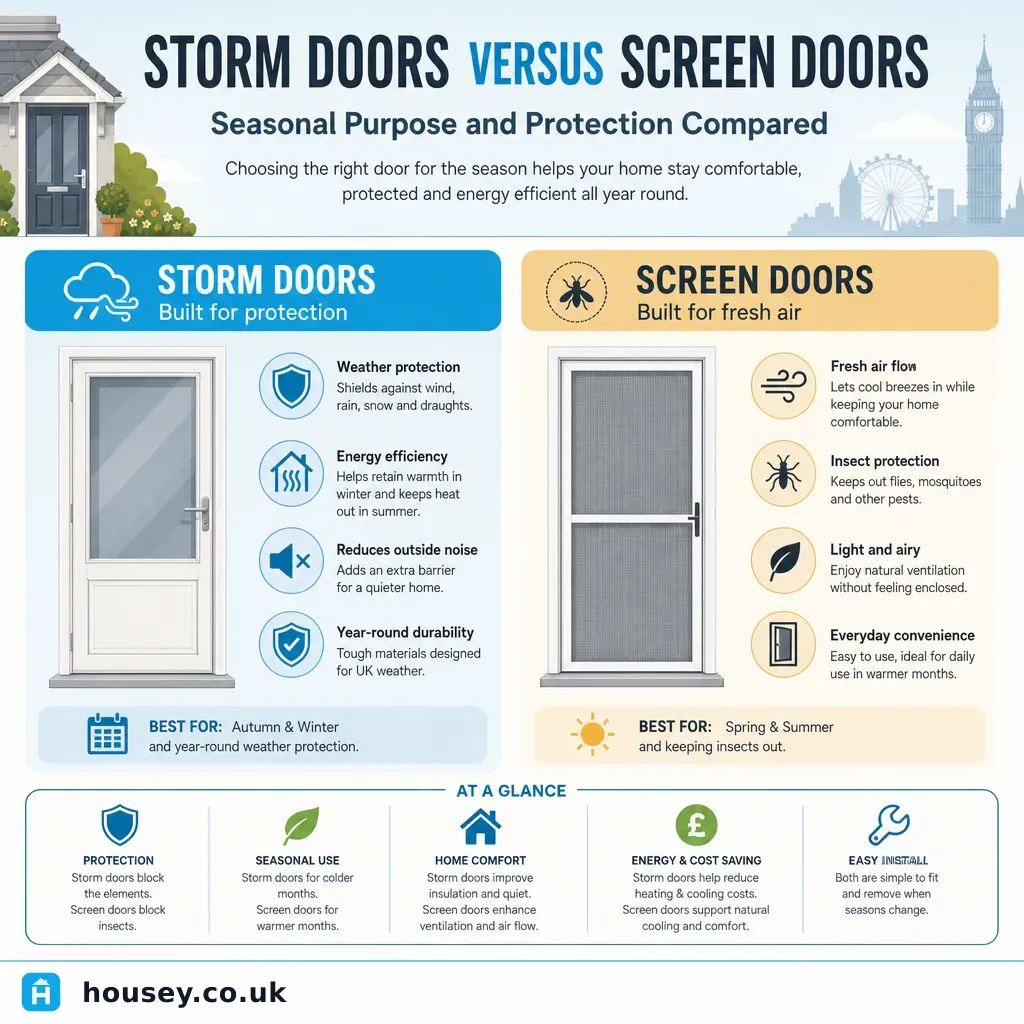
Storm Doors versus Screen Doors: Seasonal Purpose and Protection Compared
Storm doors are secondary outer doors that reduce draughts, rain ingress, and heat loss year-round, while screen doors are lightweight mesh panels that block insects during warm-weather ventilation.
 Improvement & Build
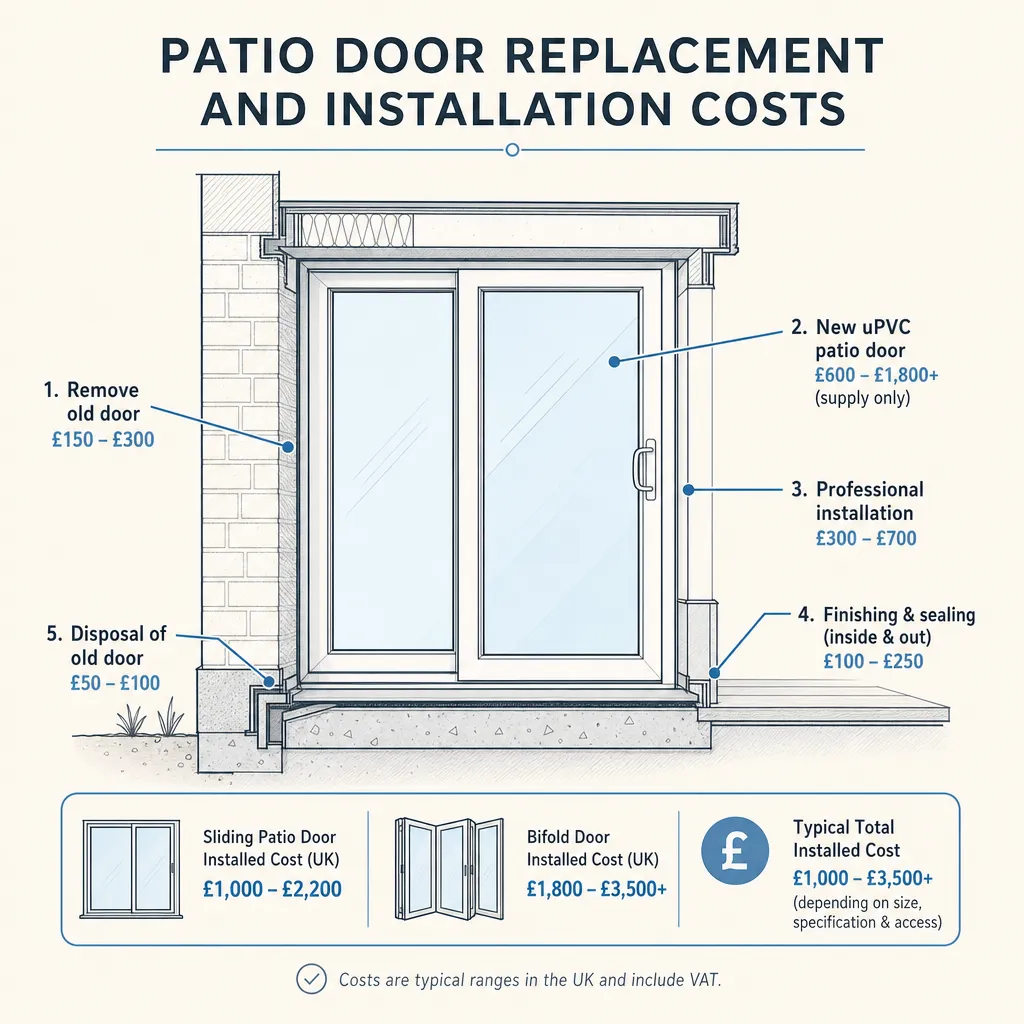
Patio Door Replacement and Installation Costs
Replacing patio doors in the UK typically costs £800–£2,000 installed for a standard uPVC sliding unit, rising to £3,000–£8,000 or more for aluminium bifold doors.
 Improvement & Build
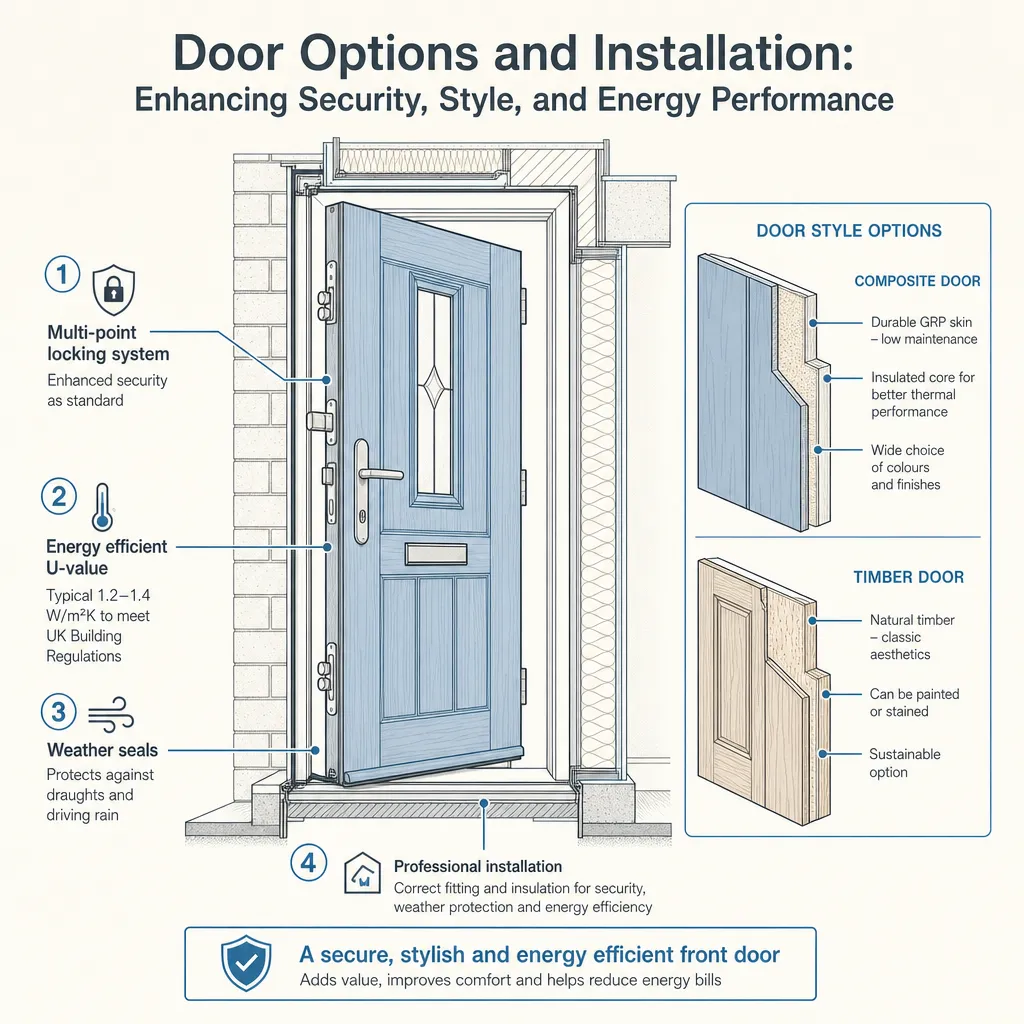
Door Options and Installation: Enhancing Security, Style, and Energy Performance
Choosing a new external door involves balancing security ratings, thermal performance, and style.
 Improvement & Build
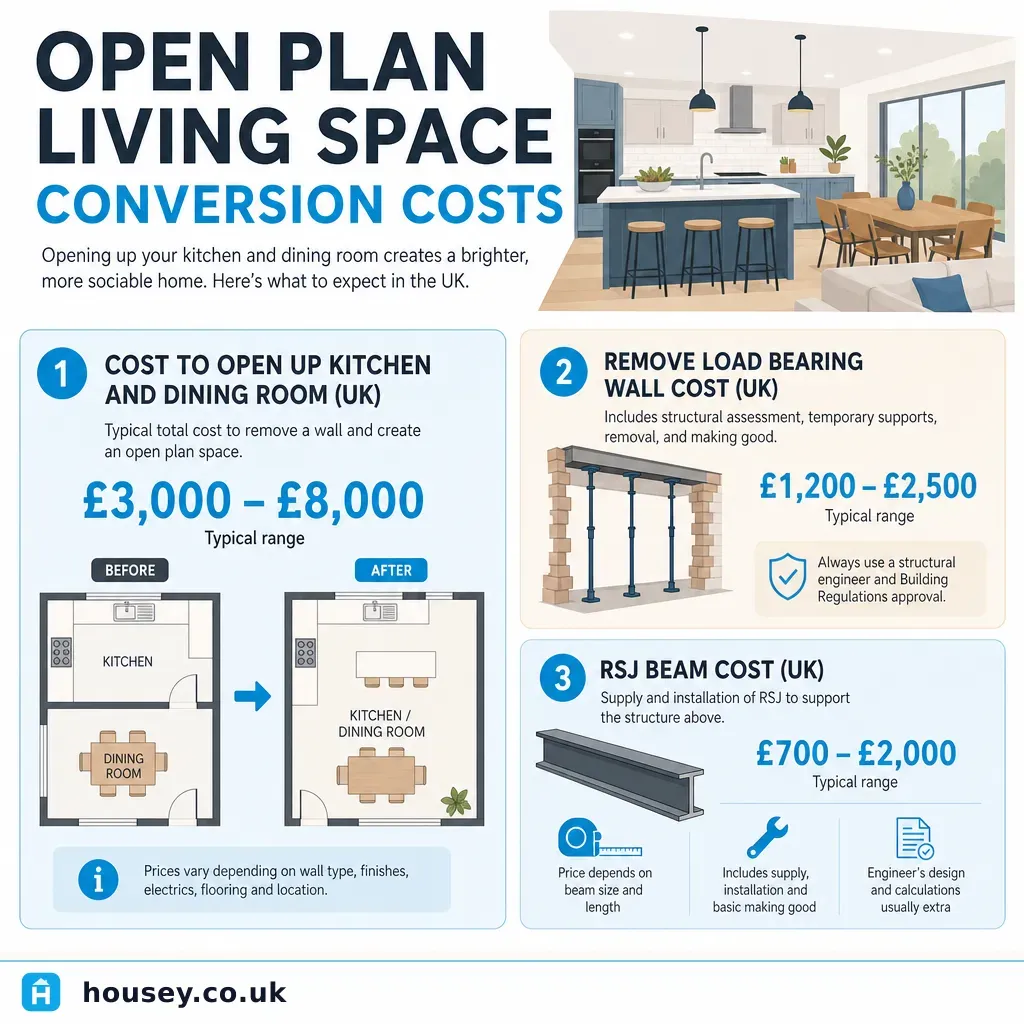
Open Plan Living Space Conversion Costs
Opening up a living space in the UK typically costs £3,000–£15,000+ depending on whether walls are load-bearing, the beam specification required, and the extent of remodelling.